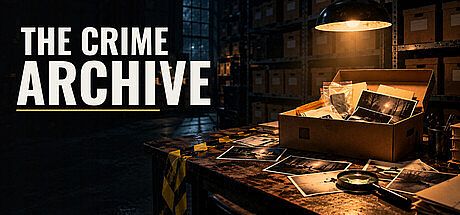


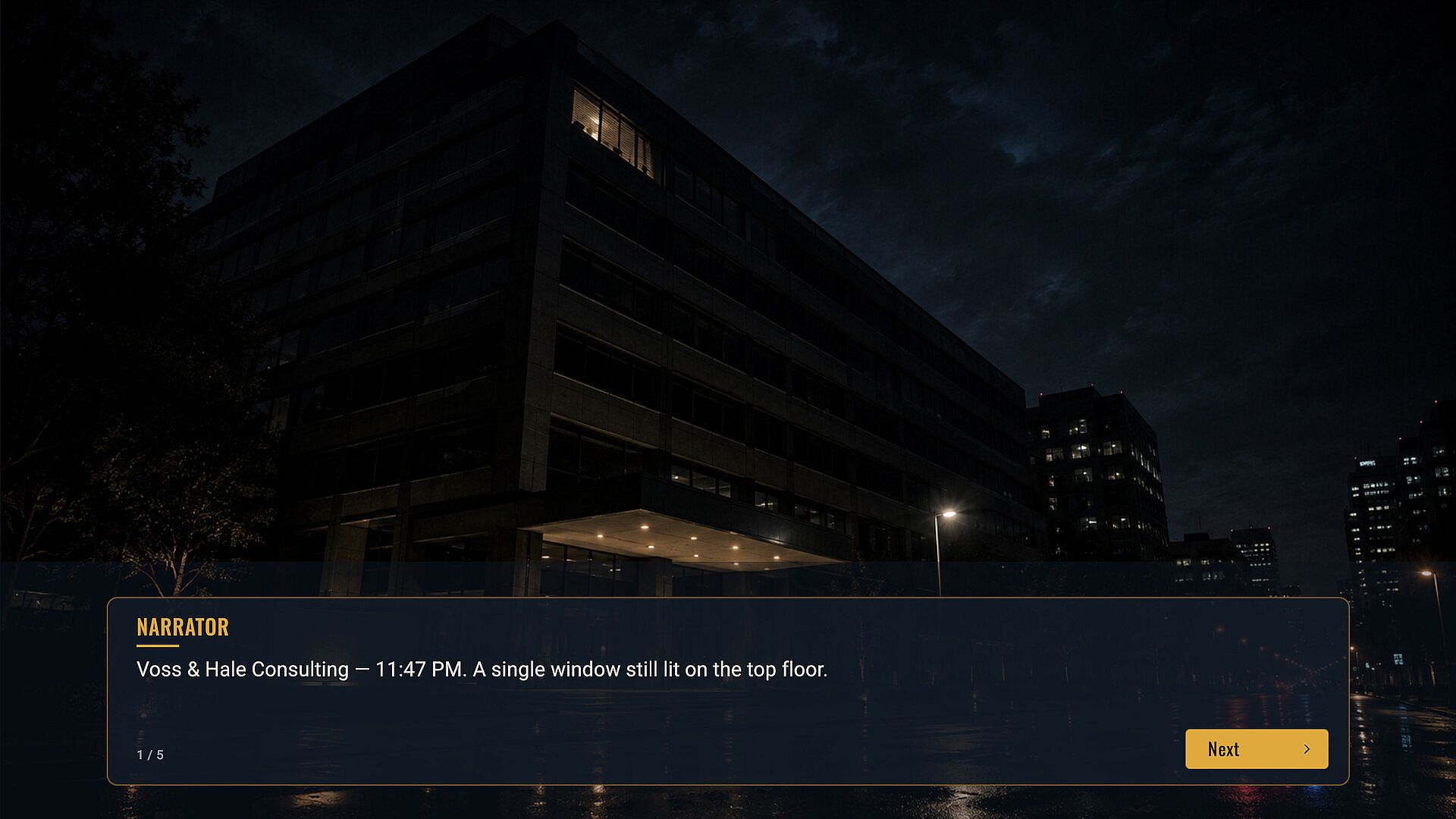




The Crime Archive is a story-driven noir detective adventure game developed for PC. Players examine self-contained crime scenes, solve evidence-based puzzles, question suspects, and determine the guilty party based on gathered proof. Each investigation stands alone, with no guidance systems directing progress through the environments or narratives.
Gameplay
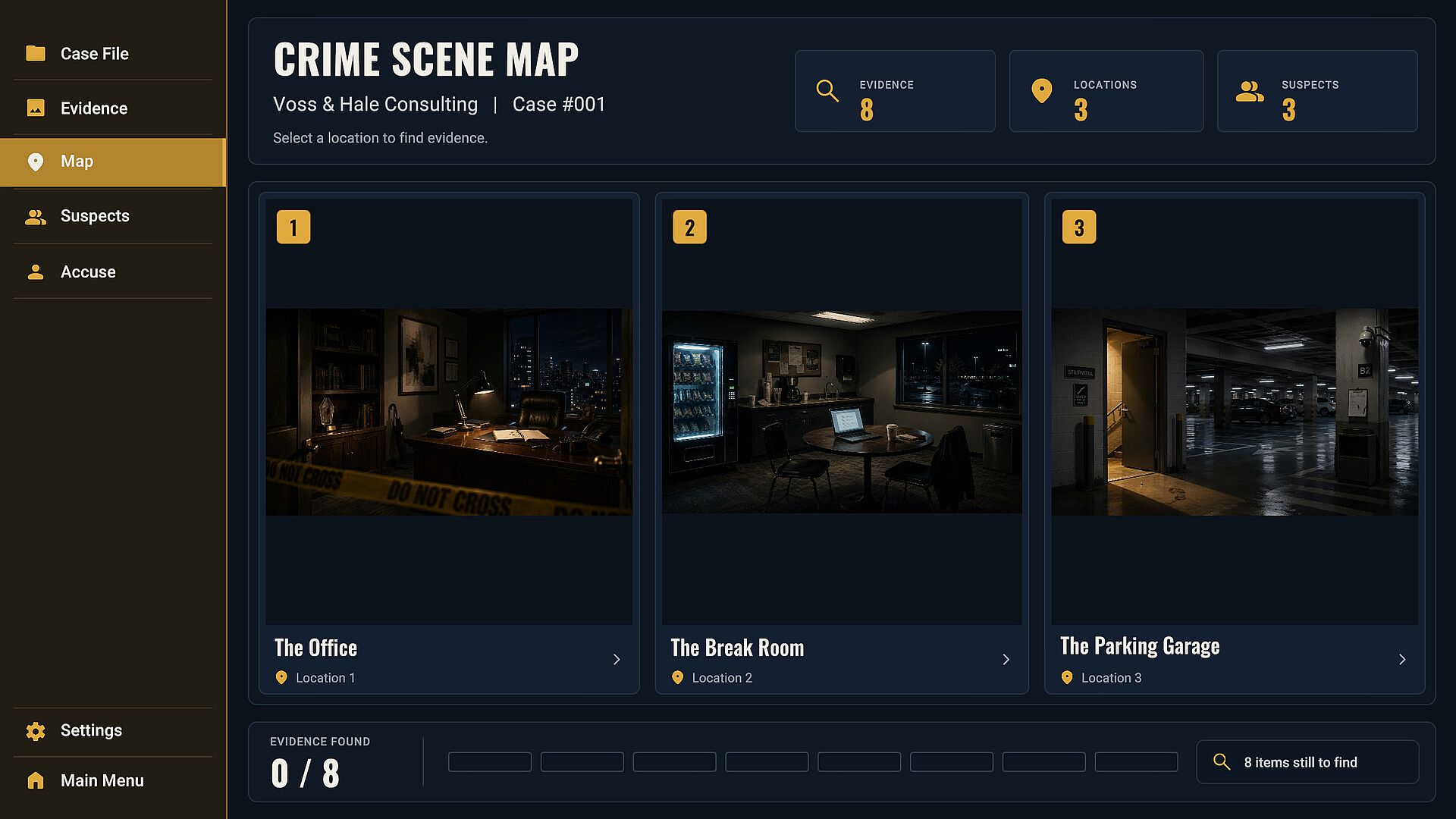
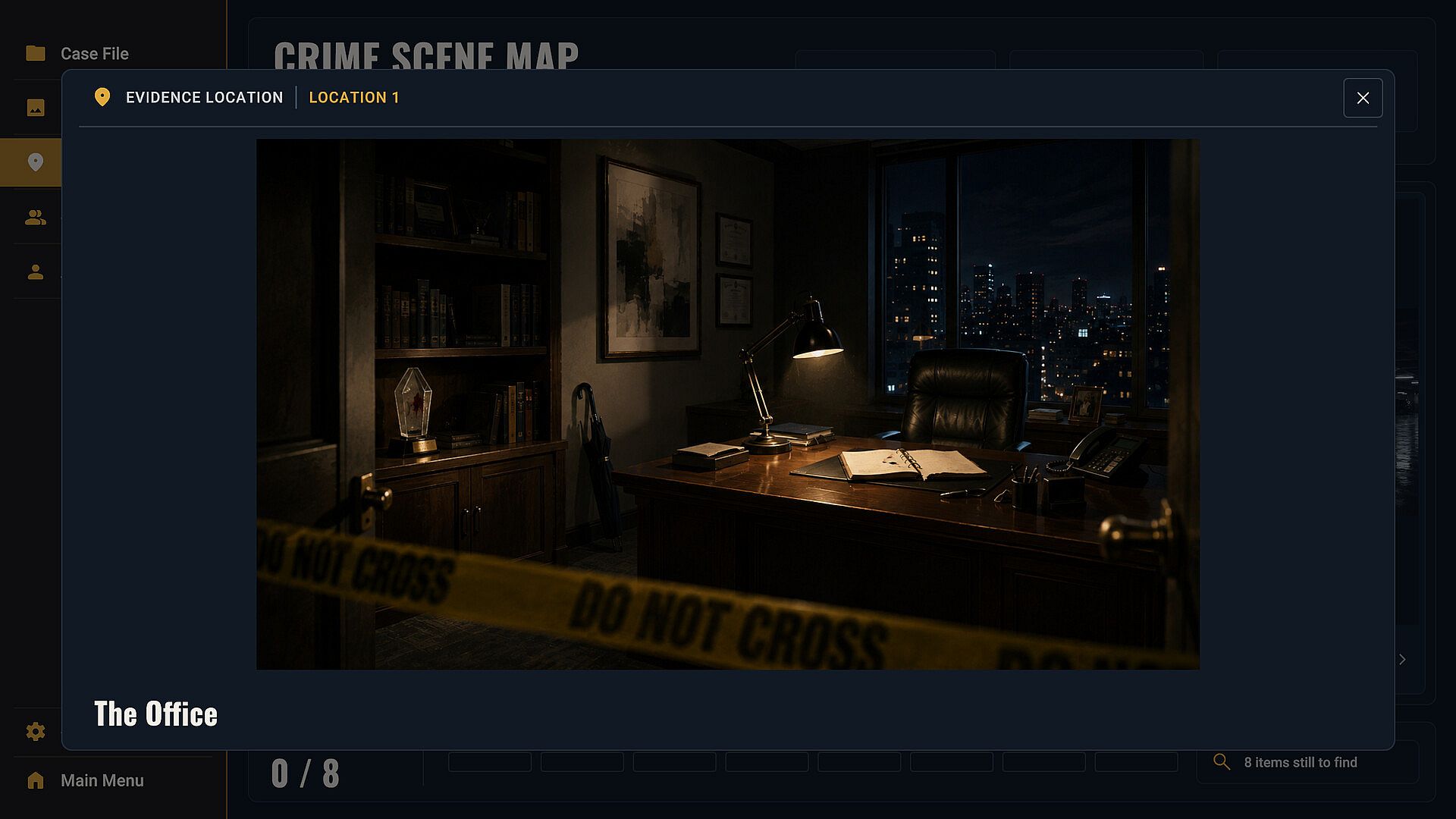
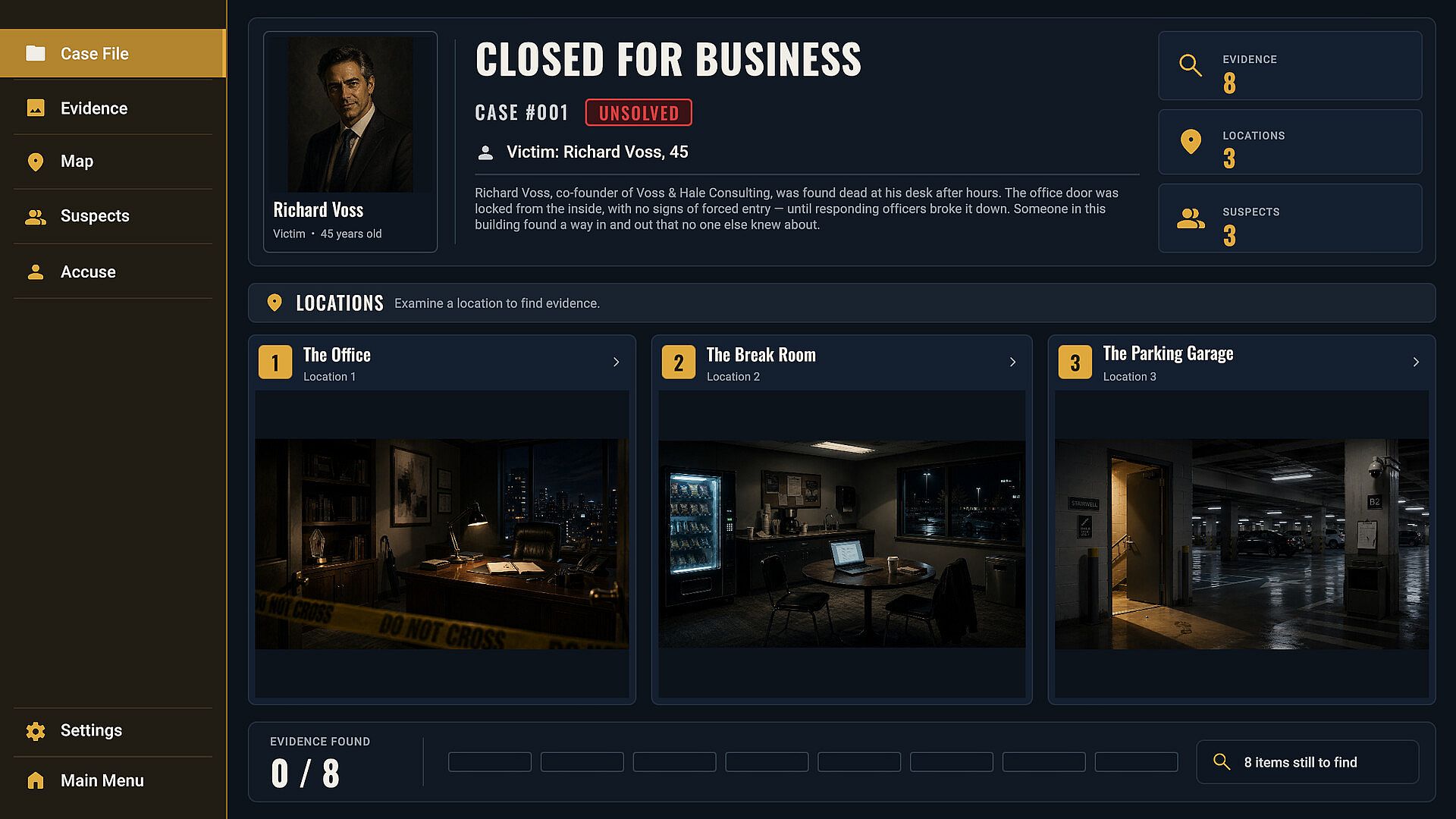
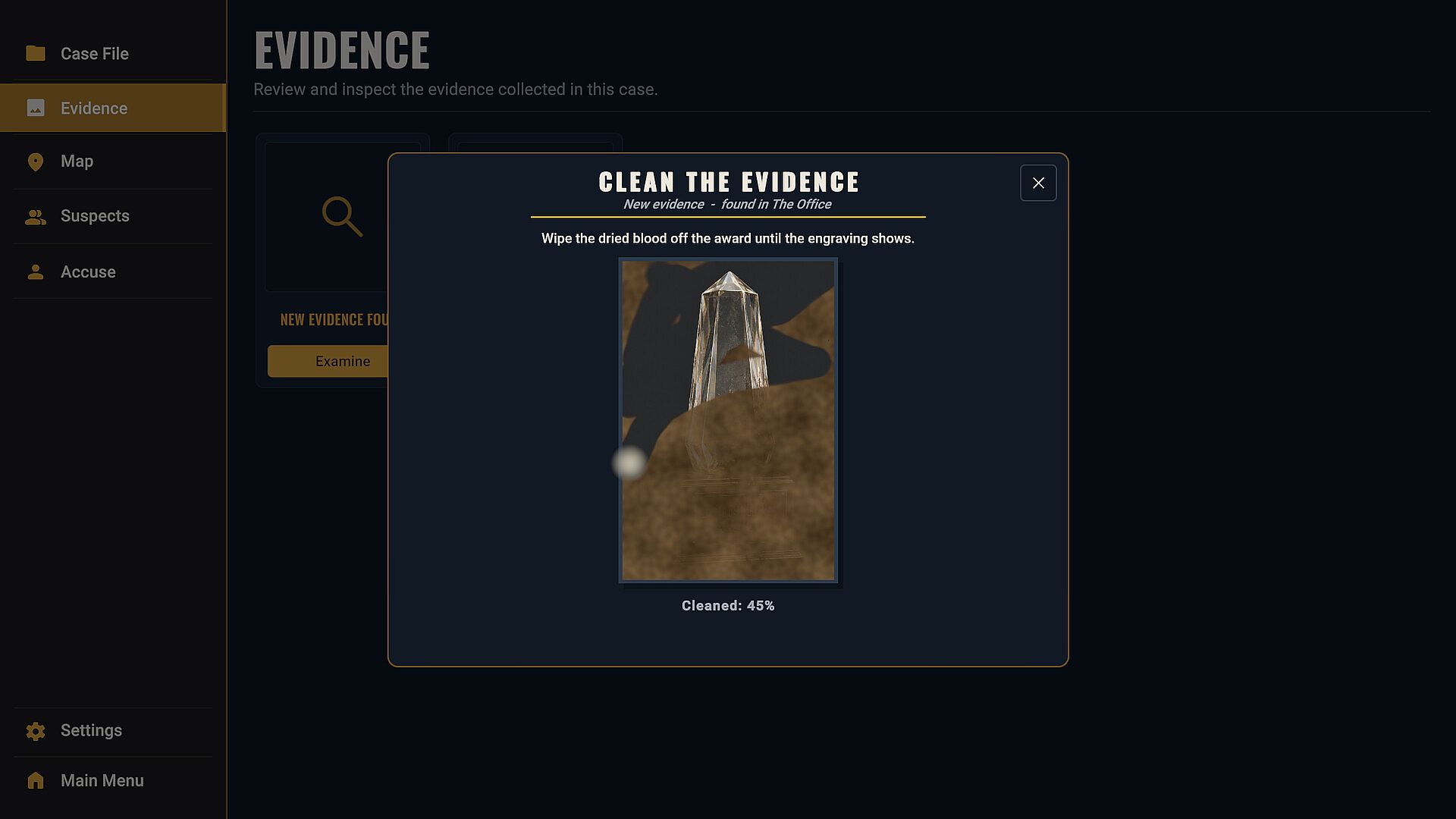
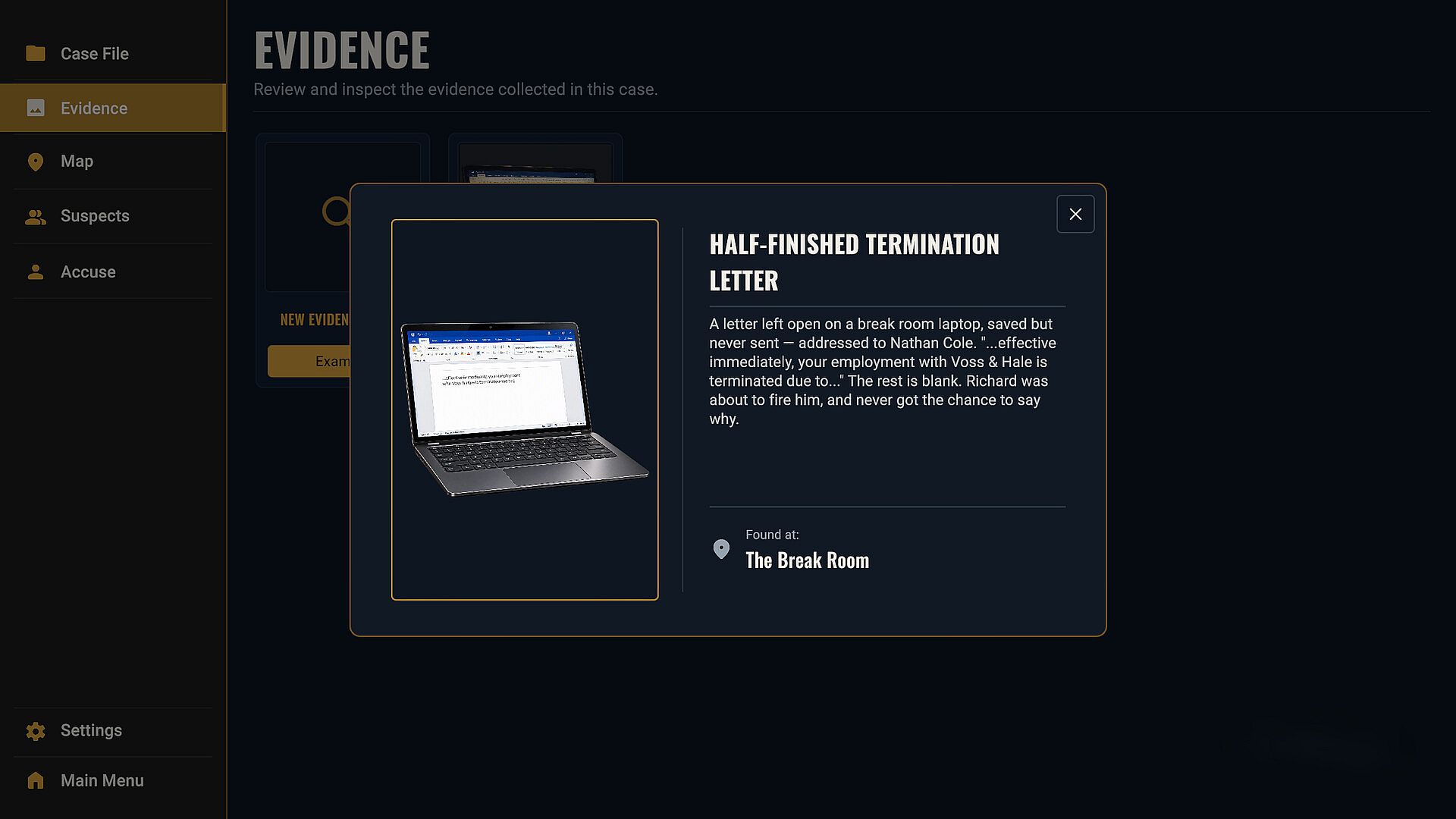
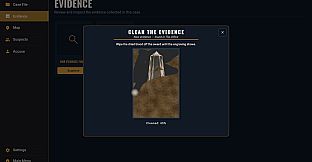
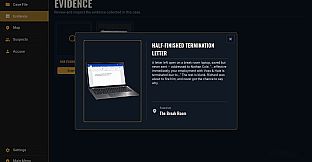
Investigation begins with exploration of detailed locations where players search for evidence items. Some objects contain genuine clues while others serve as distractions. Finding an item does not immediately reveal its significance. Instead, each piece of evidence requires completion of a dedicated puzzle before it becomes usable in the case file. These puzzles vary across six distinct types and include tasks such as reassembling torn documents, cleaning surfaces to uncover marks, identifying anomalies in printed records, or using a magnifying glass on specific objects.
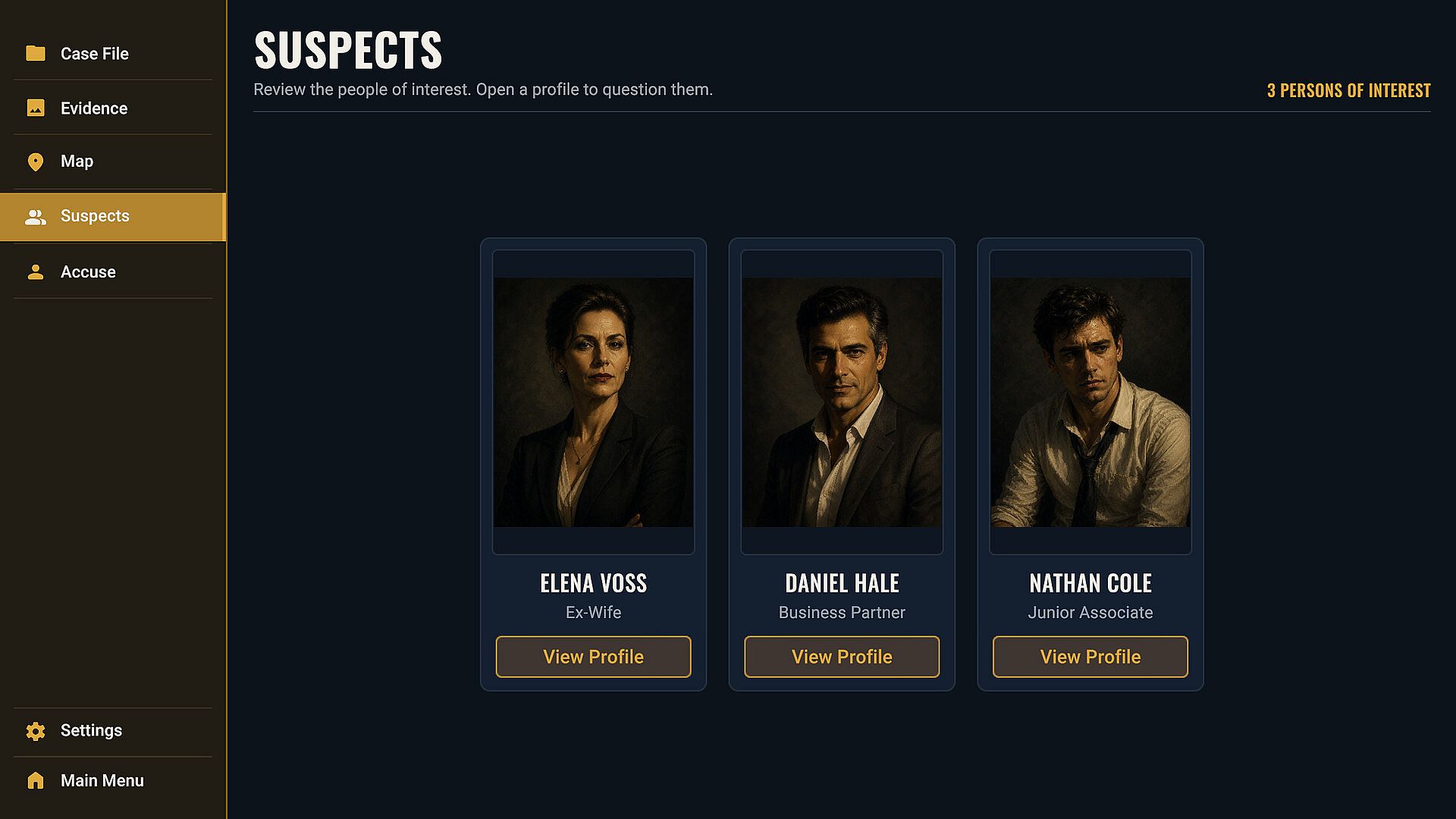
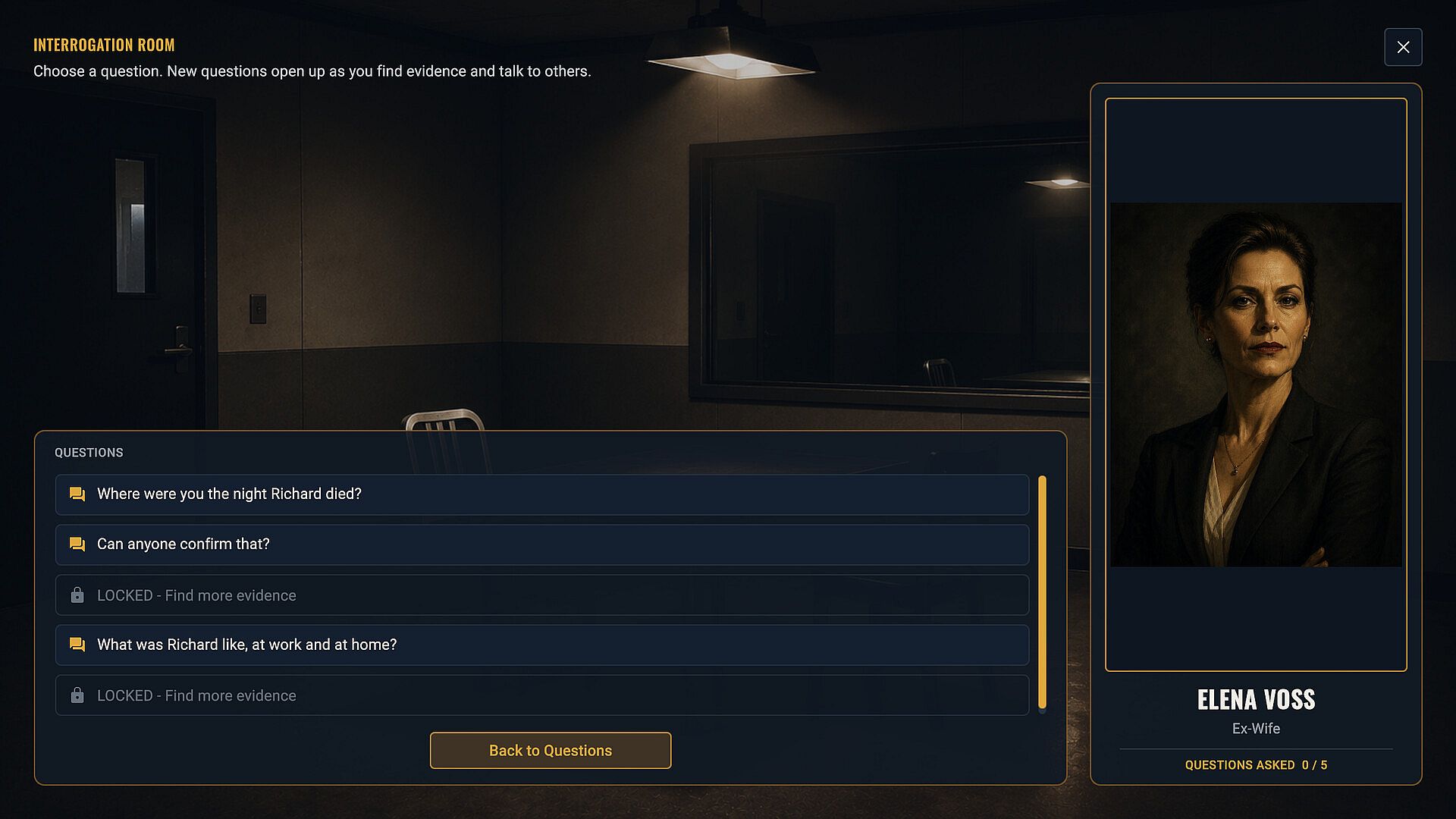
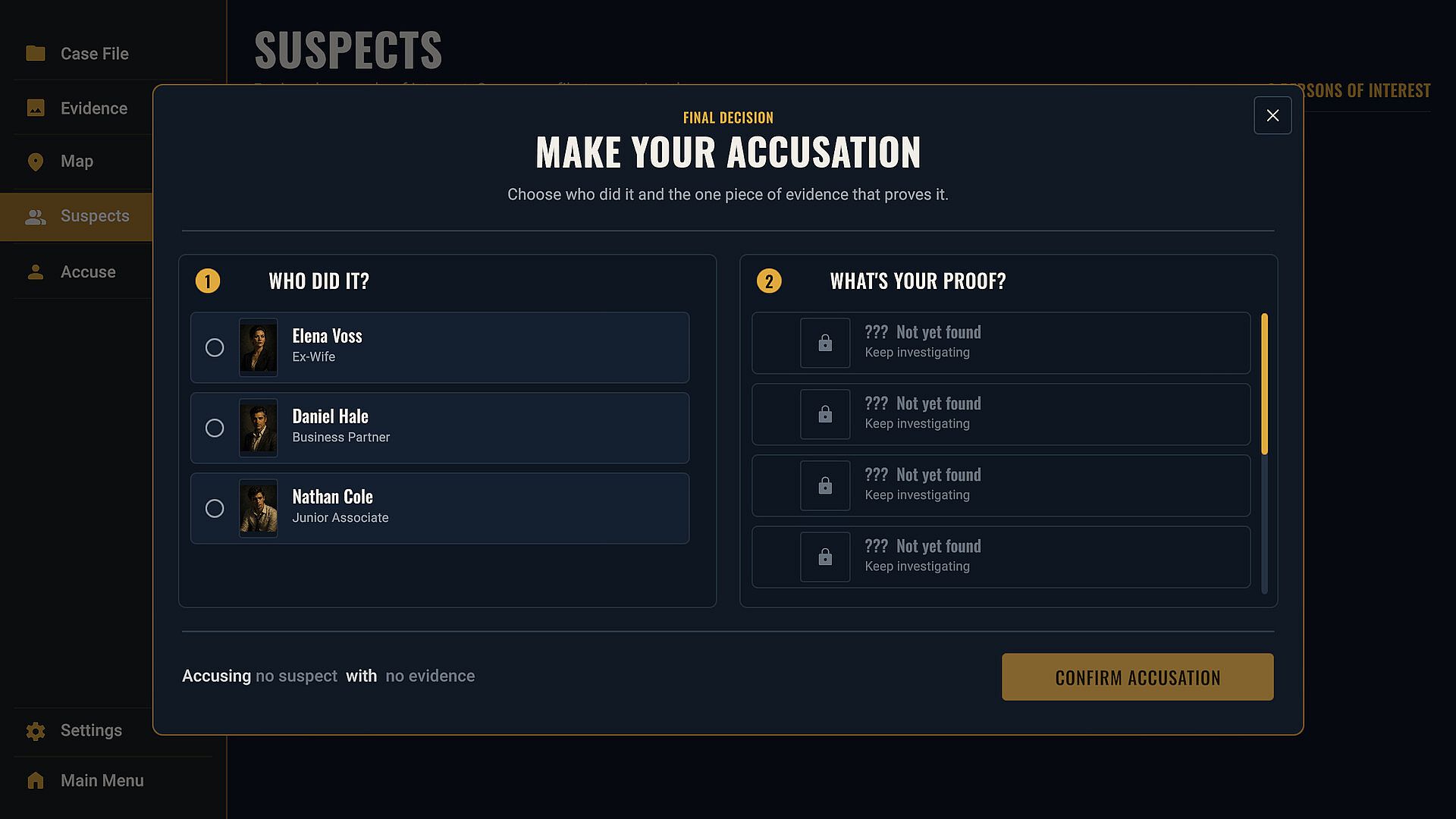
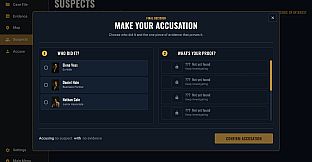
Once clues enter the case file, players track their connections and completeness. Interrogation sequences follow, where suspects respond to questions. New dialogue options and revelations appear only after contradictions surface between statements from different individuals. The process builds toward a final accusation supported by specific evidence. An incorrect choice concludes the case without resolution.
Visual presentation uses a moody, lamp-lit noir aesthetic across hand-built scenes. Original music accompanies the investigations, reinforcing the atmospheric tone without on-screen violence beyond evidence details.
Game Modes
The game operates entirely in single-player format. Six separate cases form the core structure, each functioning as an independent mystery. The first case serves as an accessible introduction. Later entries increase in complexity, incorporating red herrings, staged evidence, and interconnected witness accounts. The final case spans two timelines separated by decades and involves multiple perpetrators.
Progression follows a consistent loop of exploration, puzzle resolution, analysis, interrogation, and accusation within each case. Branching elements appear during interrogations, where one suspect's truthful responses depend on prior confrontations with others. No additional modes or variations exist beyond this single-player case format.
Story and Cases
Six distinct mysteries await resolution. The opening case involves a co-founder discovered dead in a locked office. Subsequent investigations cover a poisoned dinner host, a strangled performer during a show intermission, a staged train accident at a station, a suspicious staircase fall in a family estate, and dual deaths at a lighthouse separated by 27 years. Each case supplies its own set of suspects, locations, and evidence chains without carrying over between stories.
Consequences remain case-specific. Failure to identify the correct individual with supporting proof ends that investigation unsuccessfully. The design emphasizes deduction from available materials rather than external direction.
Is It Worth Playing?
The Crime Archive targets players who enjoy methodical detective work and puzzle-solving without hand-holding. Its structure of independent cases allows flexible play sessions, and the free demo includes the initial investigation for direct evaluation. Release is scheduled for November 2026, with no post-launch updates or additional content confirmed at this stage. Those drawn to noir-themed point-and-click adventures with logical evidence assembly and branching dialogue will find the mechanics align closely with that preference. Early access through the demo provides the clearest basis for deciding suitability.