







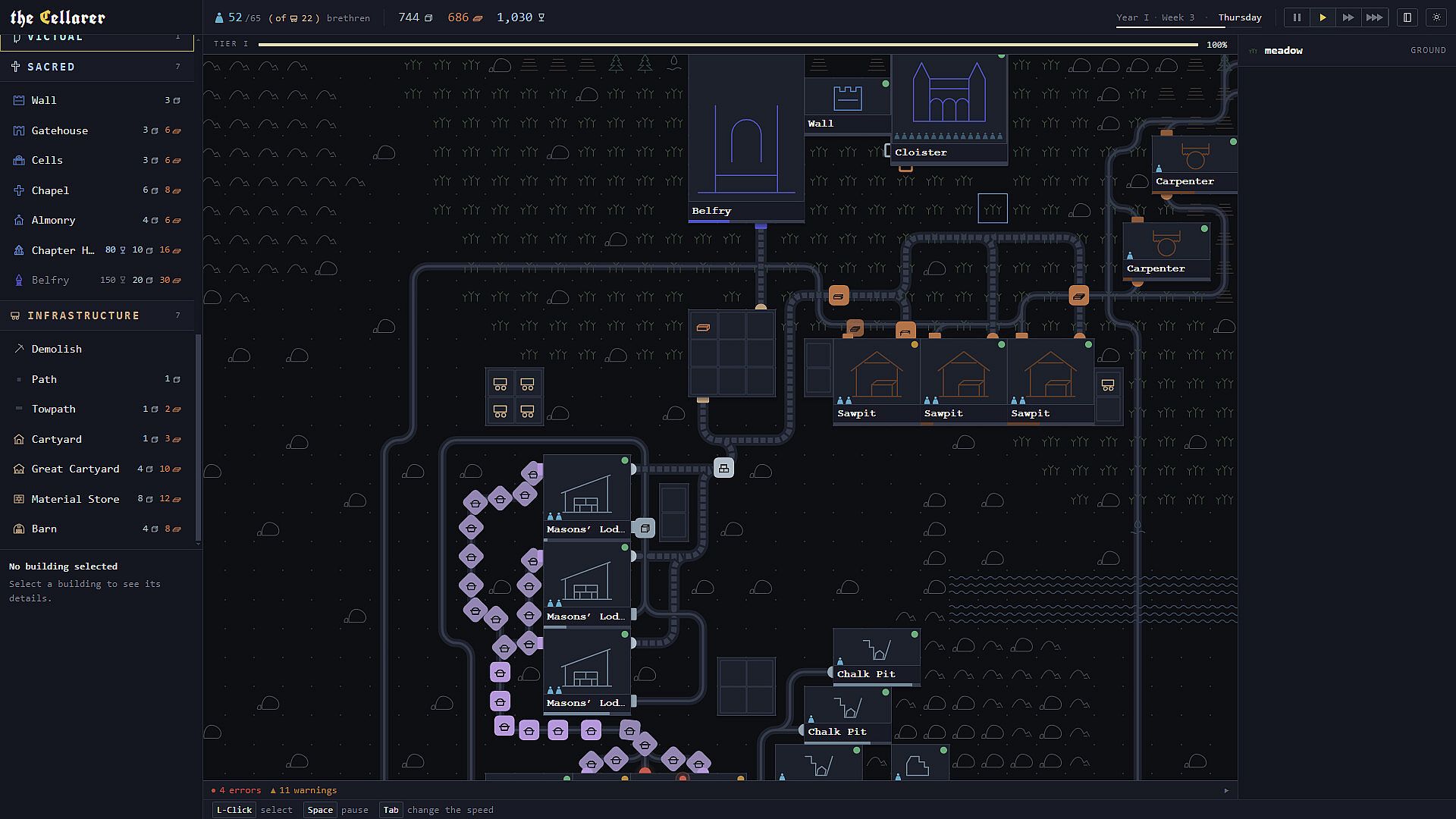

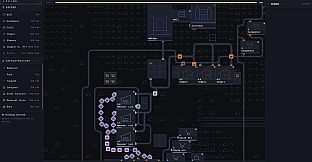
The Cellarer is a single-player strategy and simulation game set in a medieval monastery where players take on the role of the cellarer responsible for provisioning the entire community. The core experience centers on expanding a cloister through careful land clearing, workshop construction, and the establishment of efficient supply lines using paths and carts pulled by lay brothers.
Gameplay
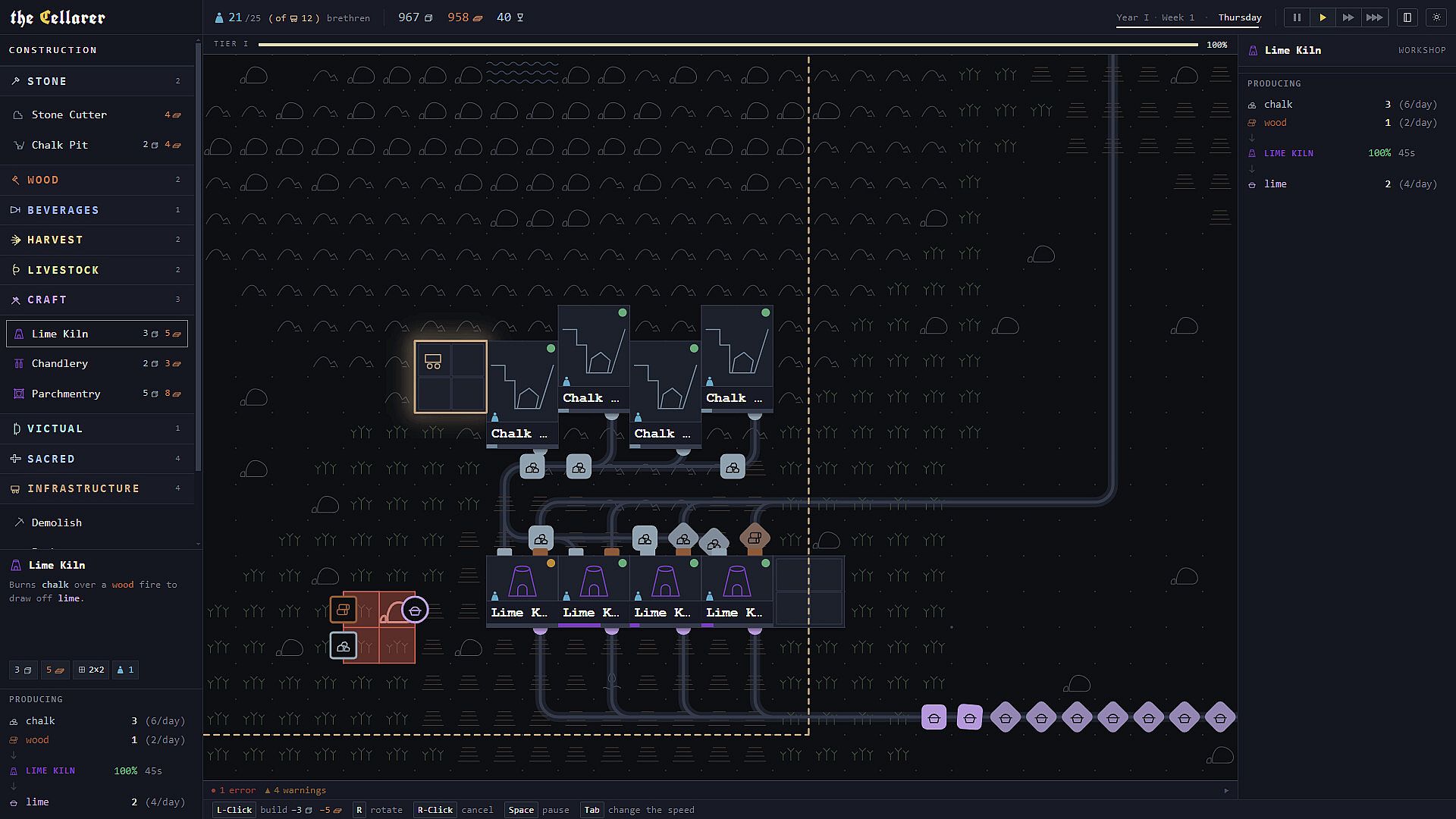
Players begin with a basic cloister and a small group of lay brothers. The primary loop involves clearing surrounding land to place workshops that produce essential goods such as food, candles, and other supplies needed for daily operations. Production chains interconnect across multiple buildings, requiring players to balance output with storage and distribution needs.
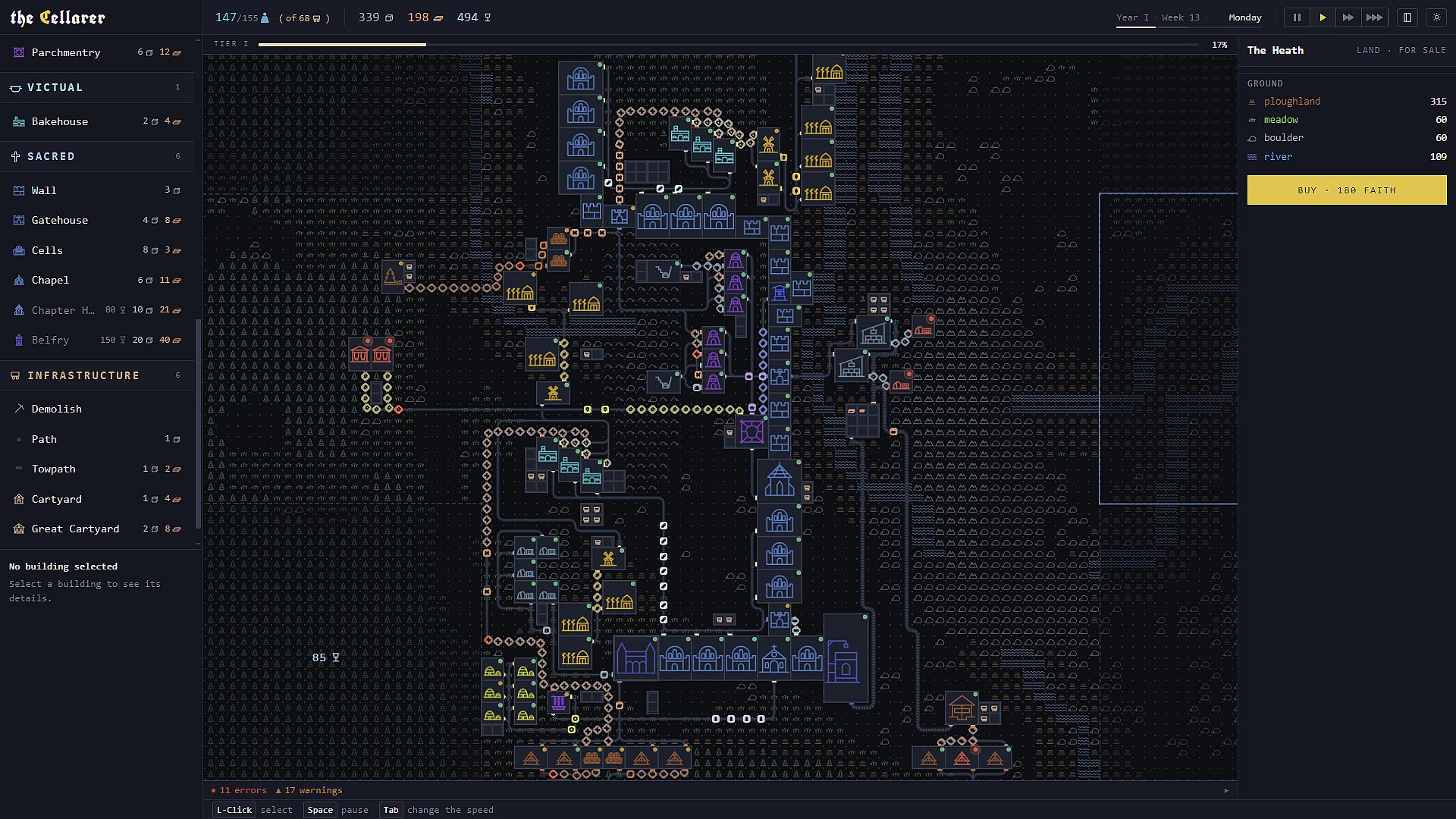
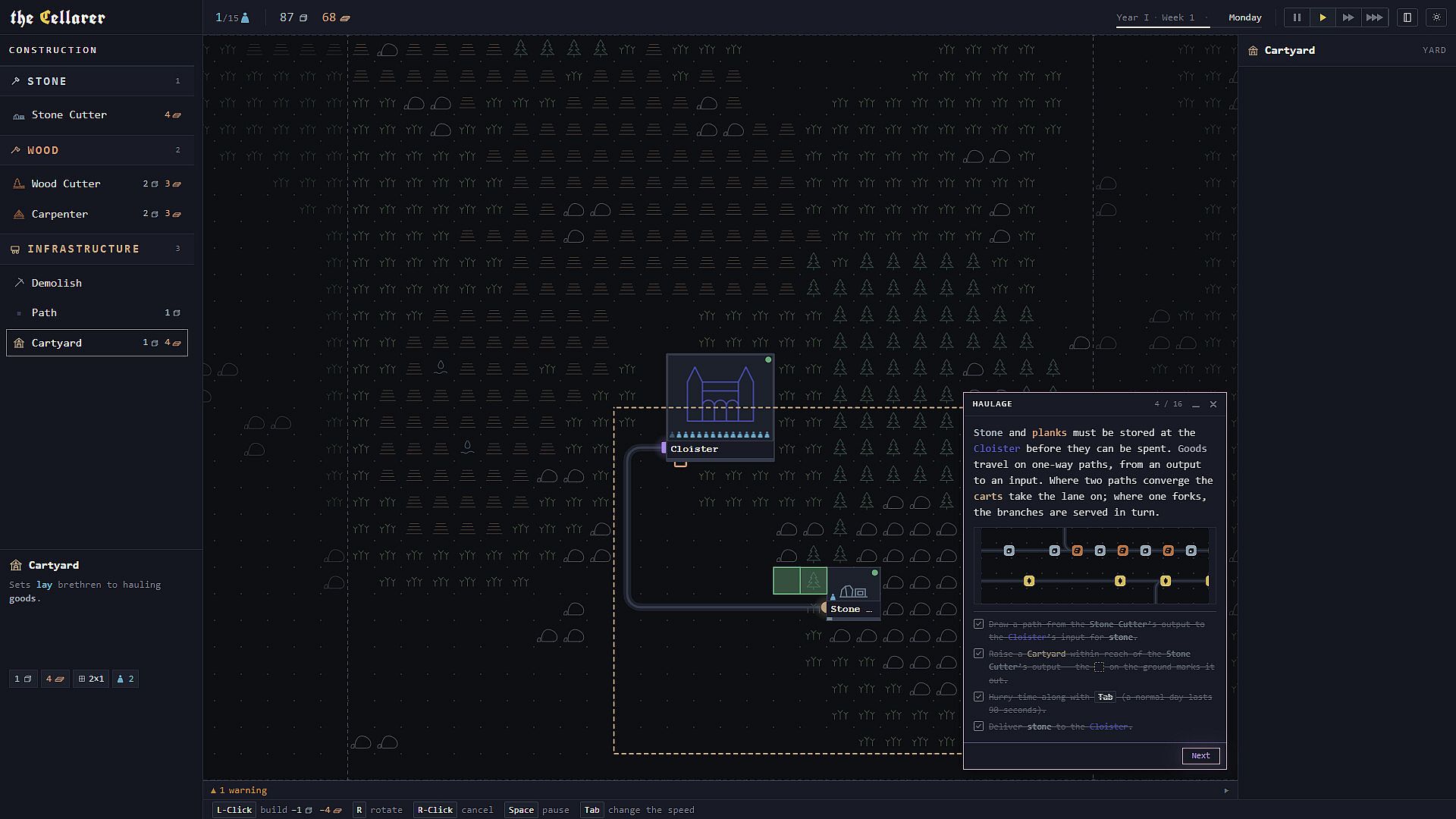
Logistics form the heart of the simulation. Paths function as one-way lanes with junctions that demand deliberate routing decisions to prevent bottlenecks. Each cart requires a housed and fed lay brother to operate it, so workforce management directly limits network capacity. As output scales, congestion emerges as a central challenge that can halt the entire economy if a single workshop becomes blocked.
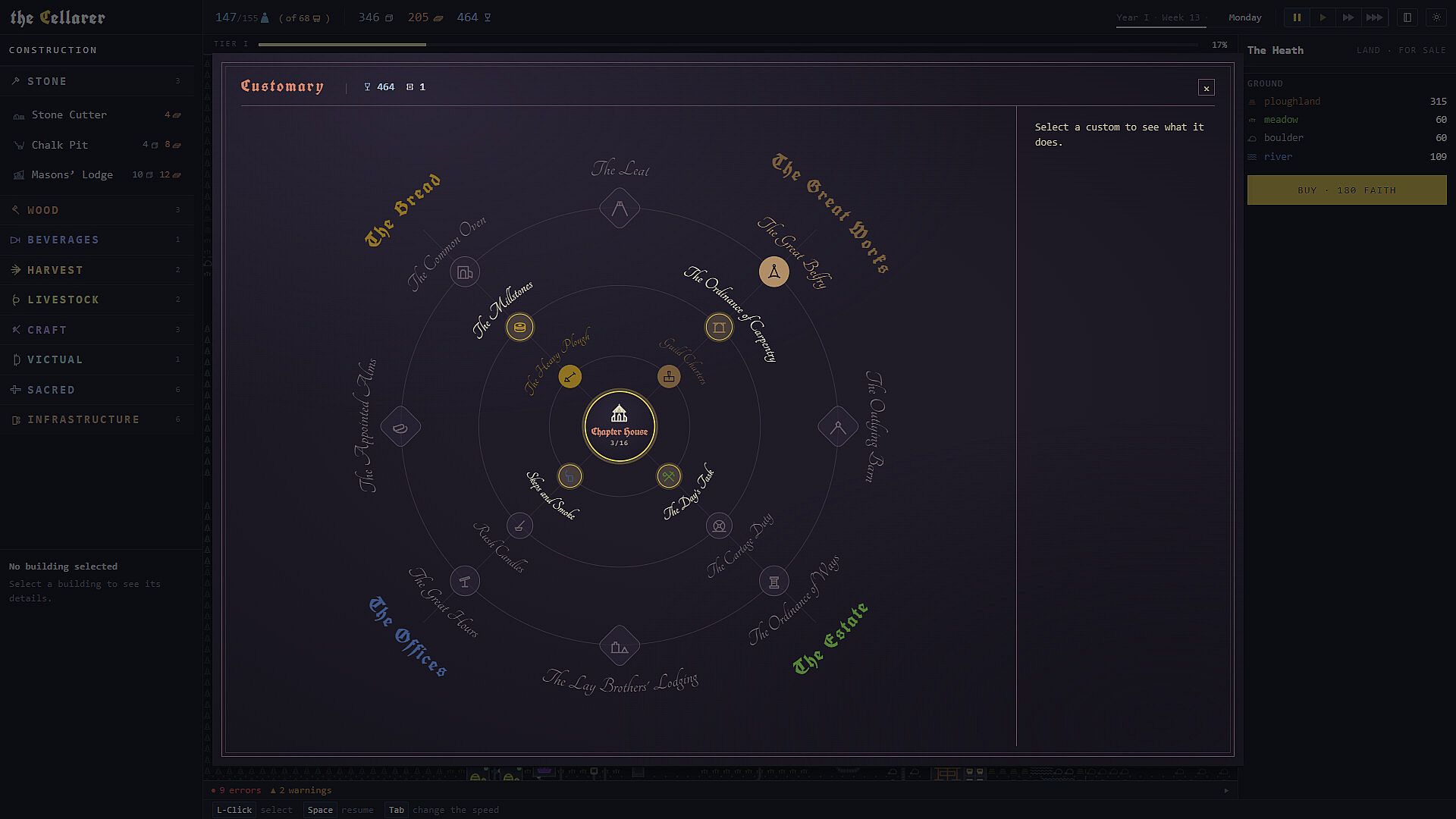
Beyond basic production, the monastery requires ongoing support for its religious functions. Supplying the daily Offices with appropriate items generates Prestige, which in turn opens access to additional production chains and related structures. Faith and Parchment resources enable the Chapter to adopt customs that provide permanent upgrades and new building options.
Construction of major edifices differs from standard building placement. Materials move along dedicated construction routes to complete each stage progressively. This system applies to larger projects that advance from the initial belfry toward more ambitious monuments like a cathedral.
The interface draws inspiration from modern development environments, keeping production data, logistics flows, storage levels, transport routes, and construction progress visible simultaneously for rapid analysis and adjustments.
Game Modes
The Cellarer operates as a single-player experience focused on progressive monastery development. A free demo scheduled for release on Steam includes the complete Tier I content, allowing players to manage initial lay brothers, establish early production chains, maintain food supplies, and complete the belfry as the first major edifice. The full game expands this foundation with further tiers that introduce additional production options, customs, and larger construction projects.
No separate competitive or multiplayer modes are present. Progression follows a linear expansion path driven by Prestige gains and resource management, with the demo serving as an entry point to the core systems before the complete release.
Key Mechanics and Progression
Interdependent production chains require constant oversight of material flows and worker allocation. Prestige earned from properly supplied Offices acts as the main unlock currency for new content. Permanent improvements come through customs selected via Faith and Parchment, altering long-term monastery capabilities without resetting progress.
Great edifices demand phased construction supported by a parallel transport network separate from regular logistics. This adds depth to late-game planning as the economy must sustain both daily operations and monumental building efforts simultaneously.
The IDE-style interface supports complex optimization by surfacing all relevant data layers at once rather than burying details in nested menus. Players can monitor and tweak traffic patterns, storage distribution, and construction queues in real time.
Is It Worth Playing?
The Cellarer targets players who enjoy detailed logistics simulations and economic management in a historical monastery setting. Its emphasis on path design, congestion avoidance, and phased monument construction offers a focused alternative to broader city-building titles. The upcoming free demo provides direct access to the foundational systems up through the belfry, giving a clear preview of the full experience before purchase.
With no user reviews available yet due to the game remaining in the pre-release phase, interest depends on appreciation for intricate single-player strategy gameplay centered on supply networks and incremental expansion. The described mechanics around workforce limits, one-way paths, and Prestige-driven unlocks suggest strong appeal for those who value precise optimization over action or narrative elements.











