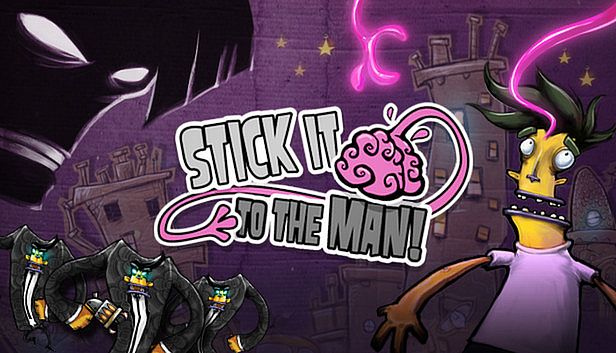













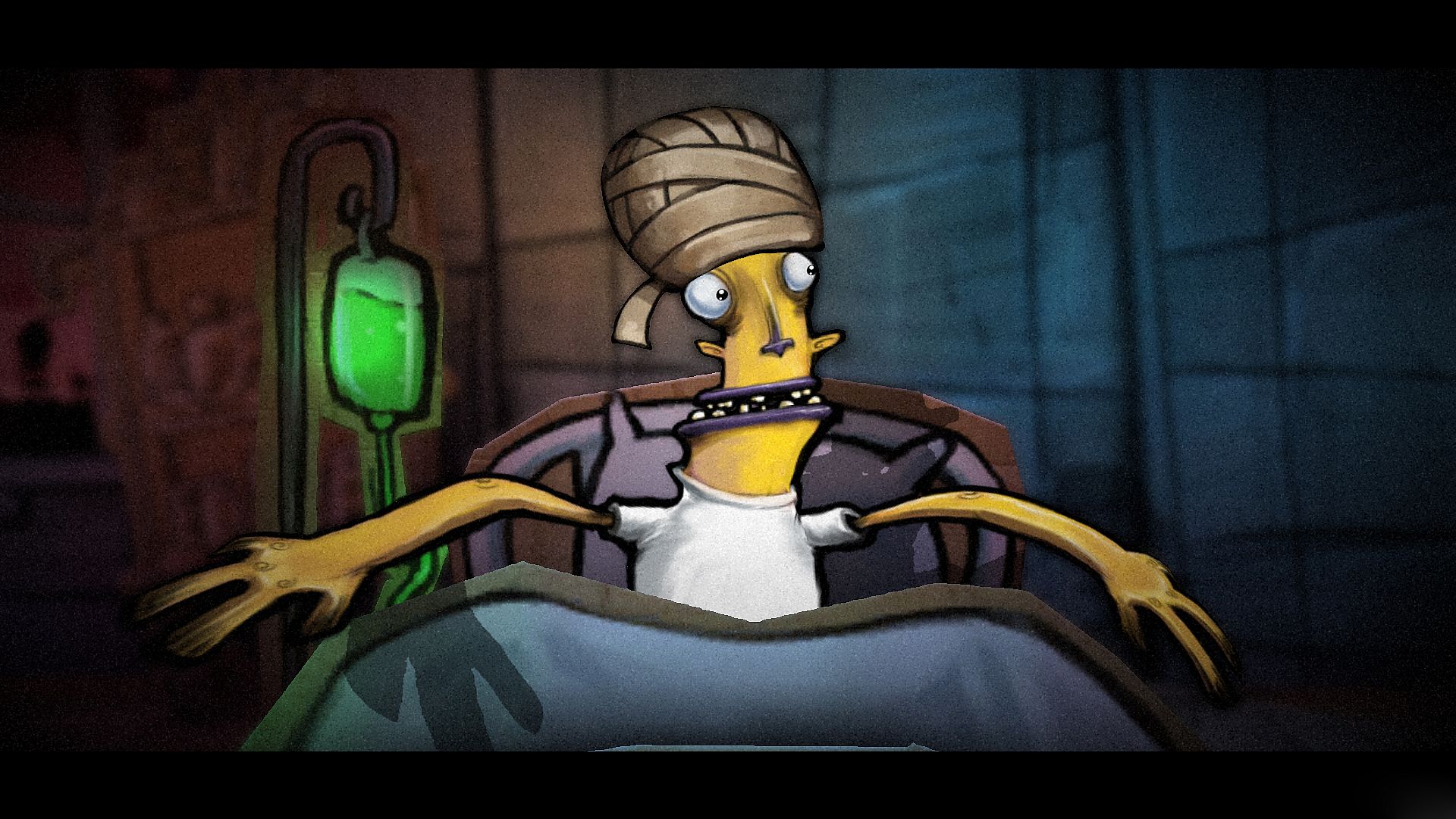
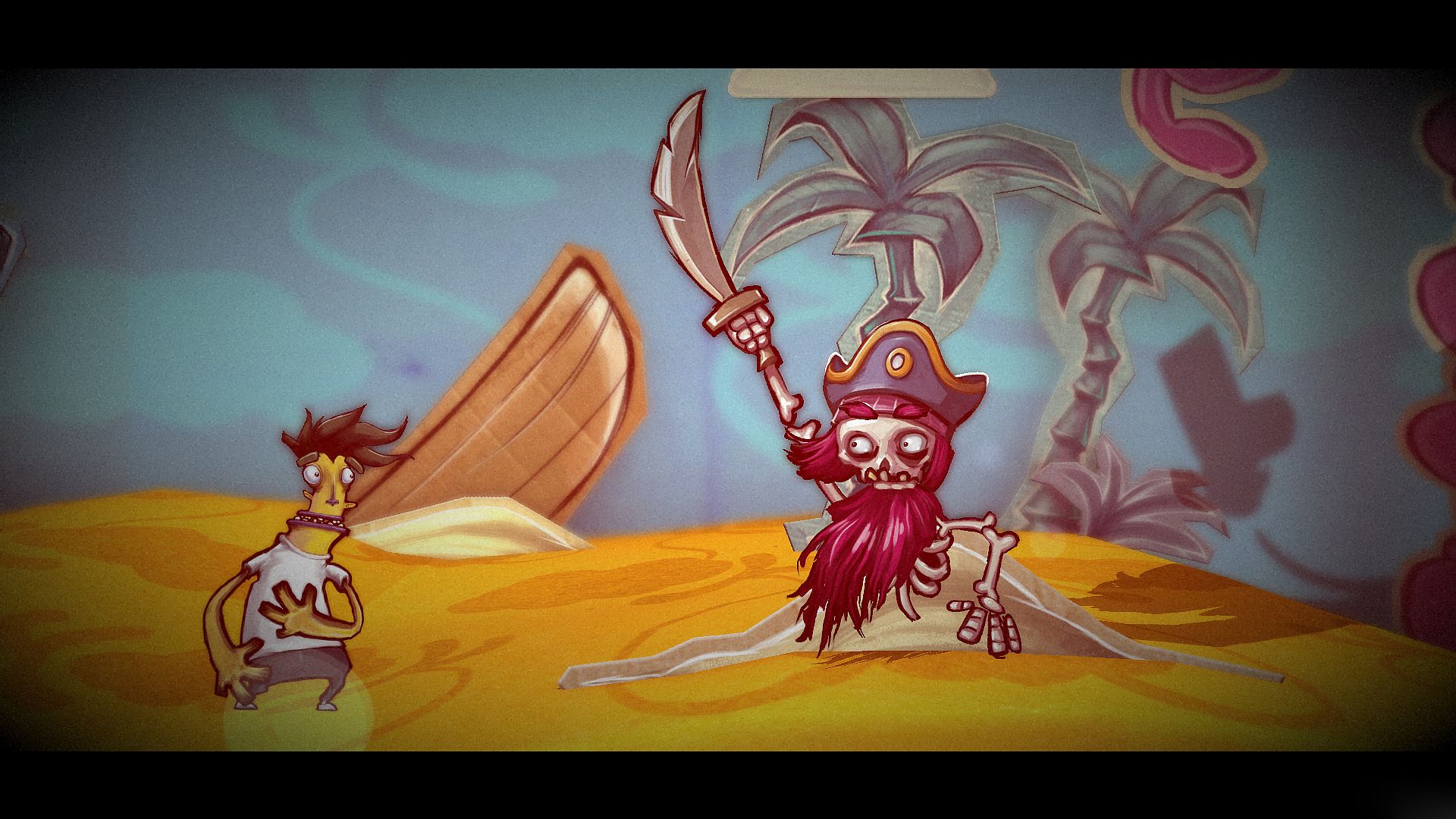
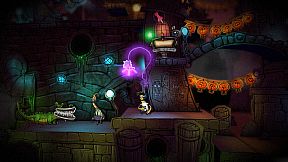
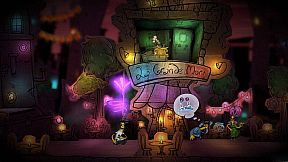
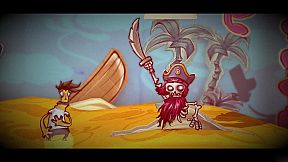
Stick it to The Man! is a 2D action-adventure game developed by Zoink Games and released on PC in 2013. Players control Ray, a hard hat tester who gains unusual abilities after an accident leaves a giant pink spaghetti-like arm protruding from his head. The title blends puzzle-solving, light platforming, and exploration in a distinctive paper-and-sticker world where the environment itself becomes a tool for progression.
Gameplay
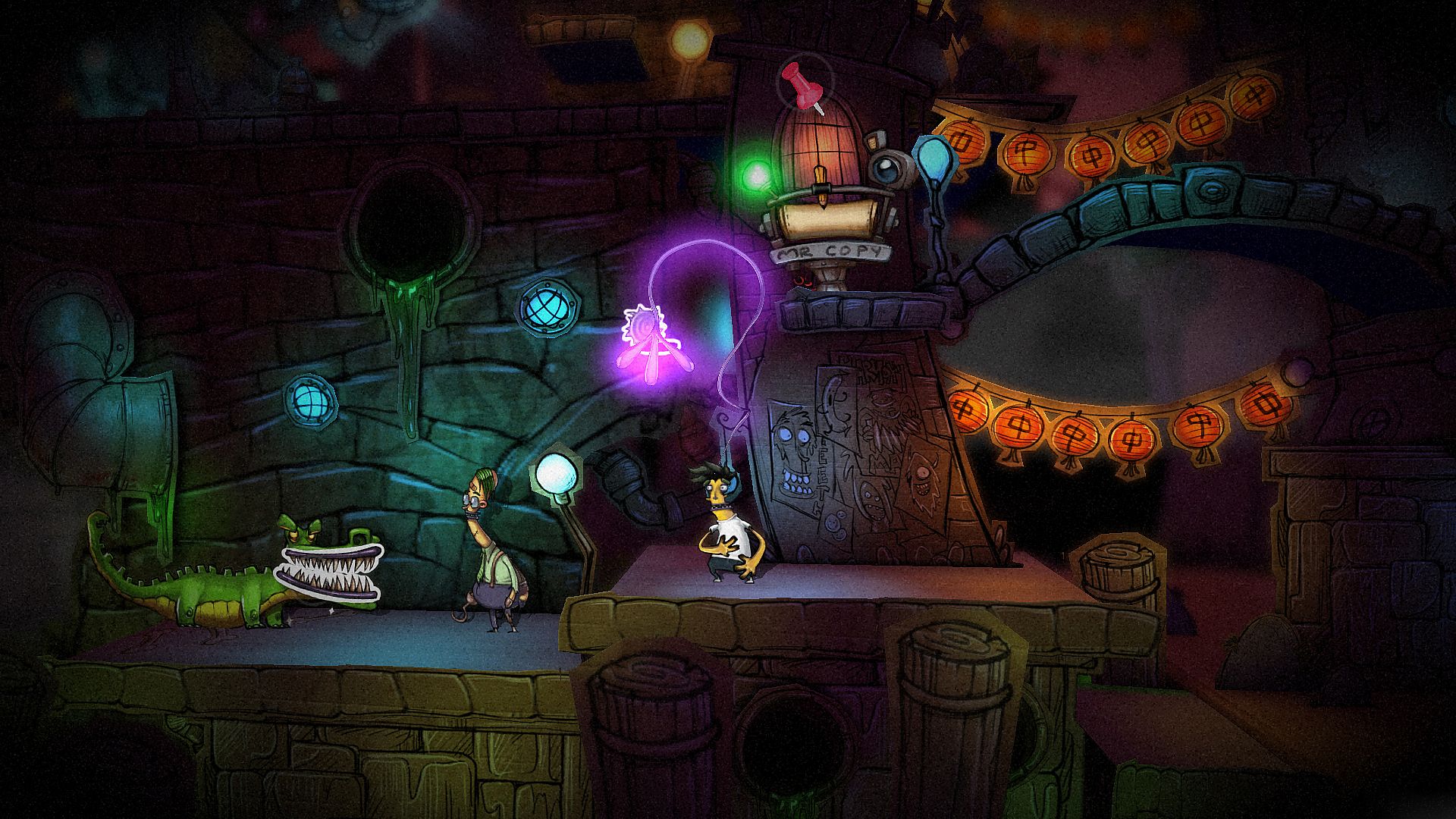
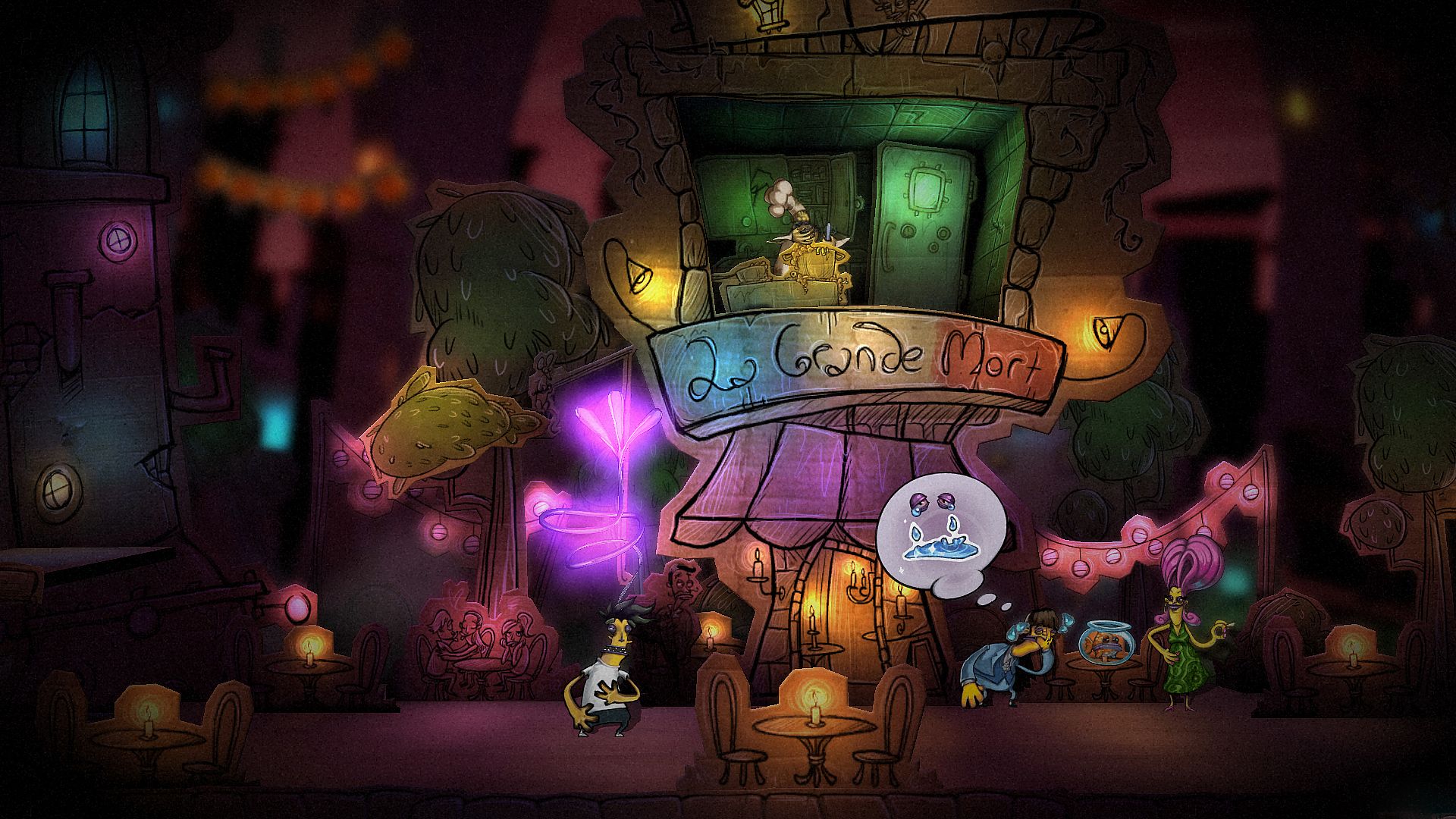
The core loop centers on using Ray's pink arm to interact with the paper-based surroundings. Players fold sections of the world to create new paths, tear away obstacles, or peel and reposition stickers to alter objects and open routes. Mind reading adds another layer, allowing Ray to tap into the thoughts of nearby characters for hints, clues, or comedic insights that guide puzzle solutions. These abilities combine with basic movement and jumping to navigate levels filled with environmental challenges. The game emphasizes creative problem-solving over combat, with puzzles often requiring players to experiment with sticker placement and paper manipulation in sequence. Voice acting supports the narrative beats, and the short overall length keeps the focus on a compact series of interconnected challenges rather than extended grinding or repetition.
Game Modes
Stick it to The Man! offers a single-player campaign with no multiplayer options or separate modes. The experience unfolds as a linear adventure where players progress through story-driven levels by applying the central mechanics. Achievements tied to specific actions, such as creative sticker uses or mind-reading moments, encourage thorough exploration within the main sequence. There are no competitive, cooperative, or alternate play styles available.
Story and Setting
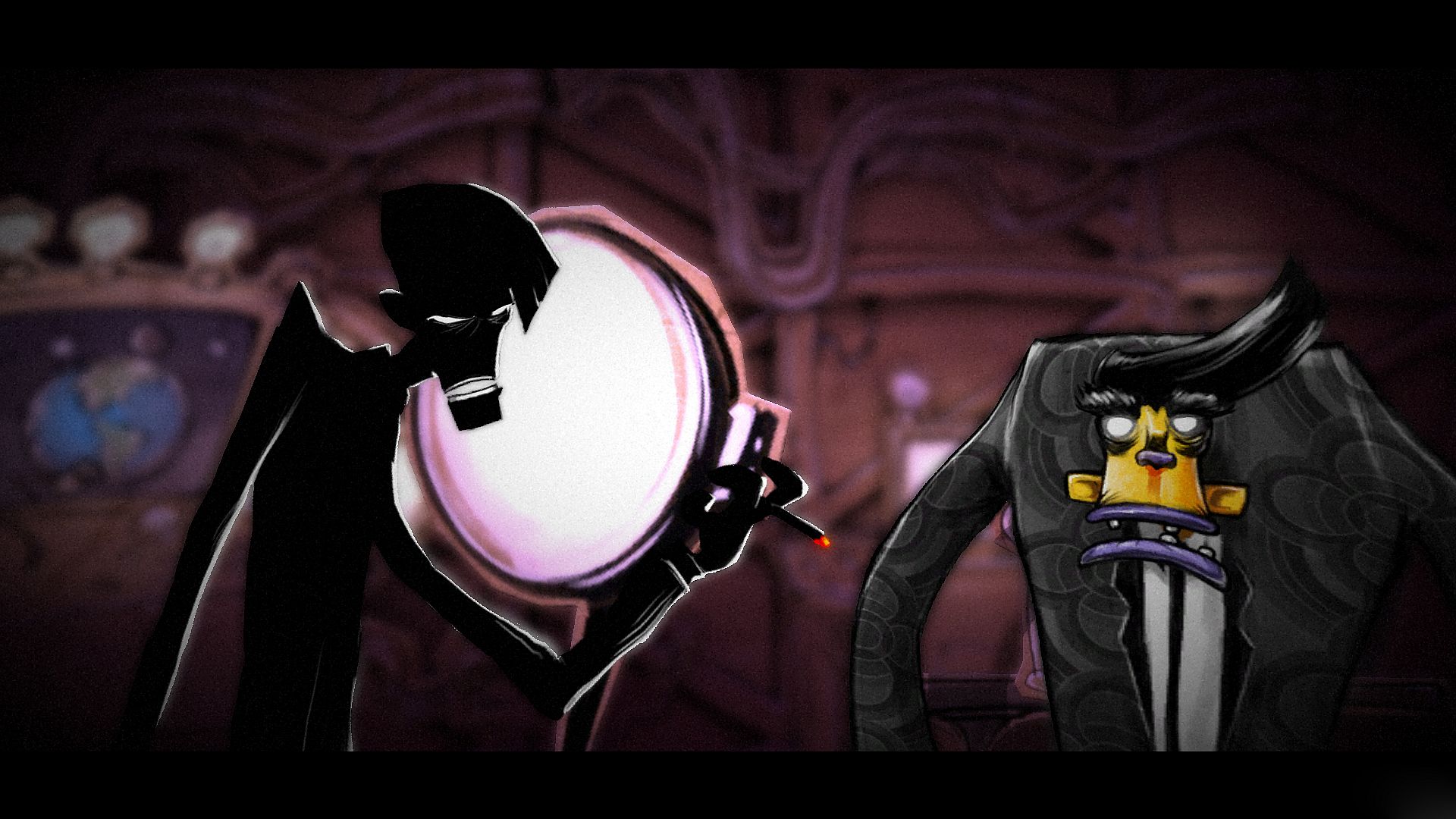
Ray lives in a whimsical universe constructed entirely from paper and adhesive elements. After his accident grants him the protruding arm and telepathic abilities, he finds himself wrongly accused by a powerful figure known as The Man. The plot follows his efforts to evade capture while uncovering the truth behind the framing. Humor arises from absurd situations, character interactions, and the contrast between the cartoonish world and the escalating chase. The narrative advances through environmental storytelling and dialogue triggered by mind reading, keeping the focus on Ray's personal predicament without branching choices or multiple endings.
Visual Style and Audio
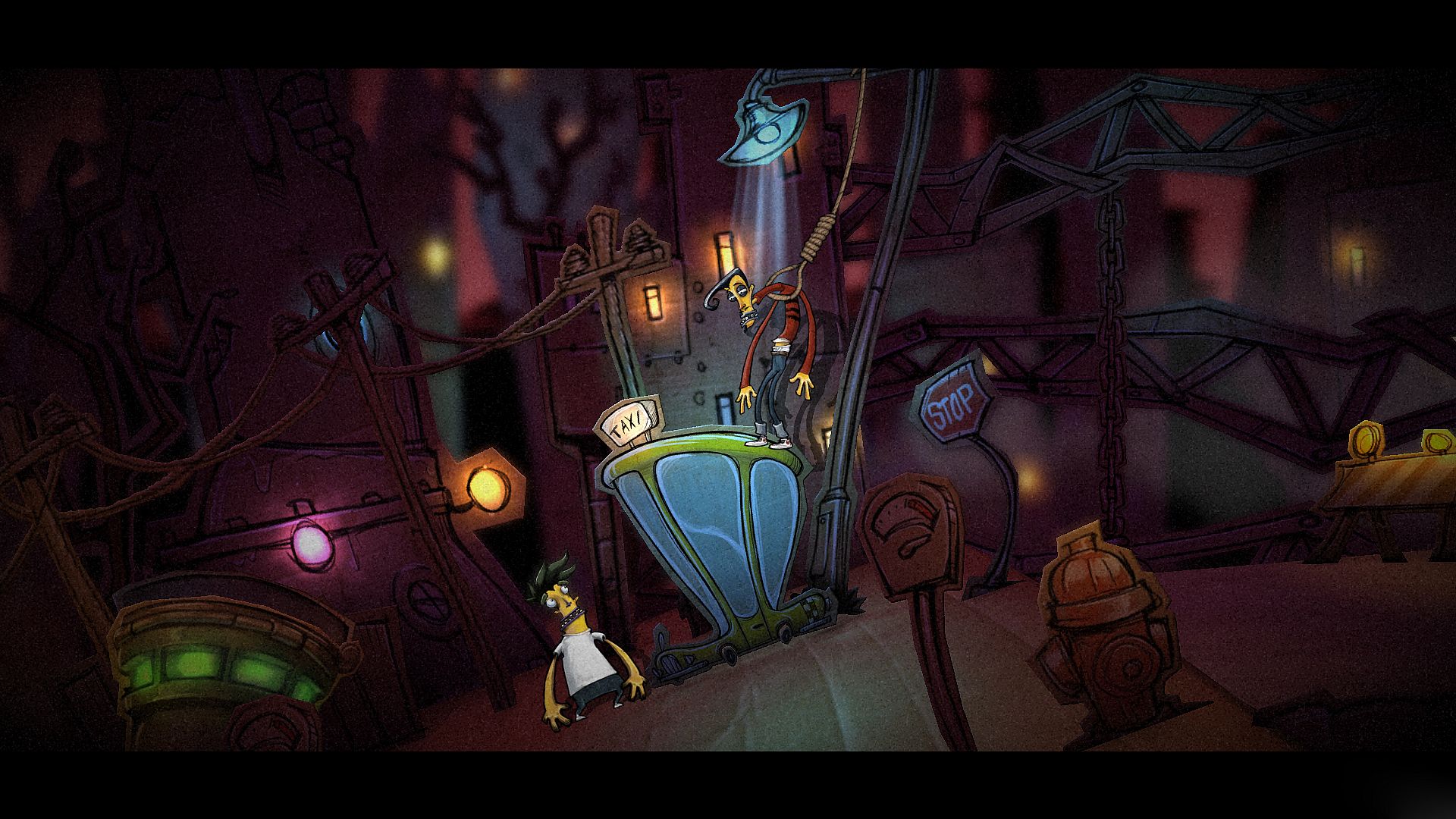
The presentation relies on a handcrafted paper aesthetic with layered cutouts, visible seams, and sticker details that reinforce the manipulation theme. Backgrounds and objects shift dynamically as players interact with them, creating a tactile sense of the world responding to input. Voice work delivers the dialogue in a straightforward manner that matches the game's light tone, while sound effects highlight the tearing and sticking actions. The overall design remains consistent across the levels, using the limited color palette and textures to maintain visual cohesion without overwhelming the puzzle focus.
Is It Worth Playing?
Player feedback on the PC version highlights the inventive mechanics and consistent humor as standout elements, with the title earning a Very Positive rating from hundreds of reviews. The compact structure suits those seeking a focused puzzle adventure rather than lengthy campaigns or ongoing content updates. Individuals who enjoy creative environmental interaction and quirky narratives will find the core loop satisfying, though the absence of replayability features or additional modes limits long-term engagement. Availability on PC makes it accessible for anyone interested in a self-contained indie experience from the early 2010s that prioritizes clever puzzle design over expansive systems. Those drawn to the described powers and paper world will likely appreciate the direct implementation of those ideas throughout the story.