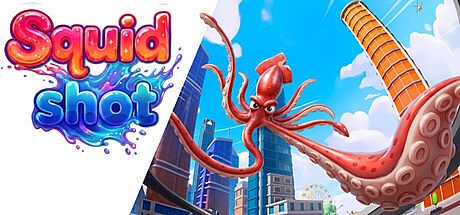










SquidShot is an action indie adventure physics platformer for PC in which players control Squiddy, a squid fleeing a rooftop sushi restaurant. The core premise centers on momentum-driven movement through an urban environment filled with obstacles, pursuers, and opportunities for speed boosts. This setup creates a focused escape sequence that emphasizes precise tentacle launches and environmental interaction over traditional combat or narrative branches.
Gameplay
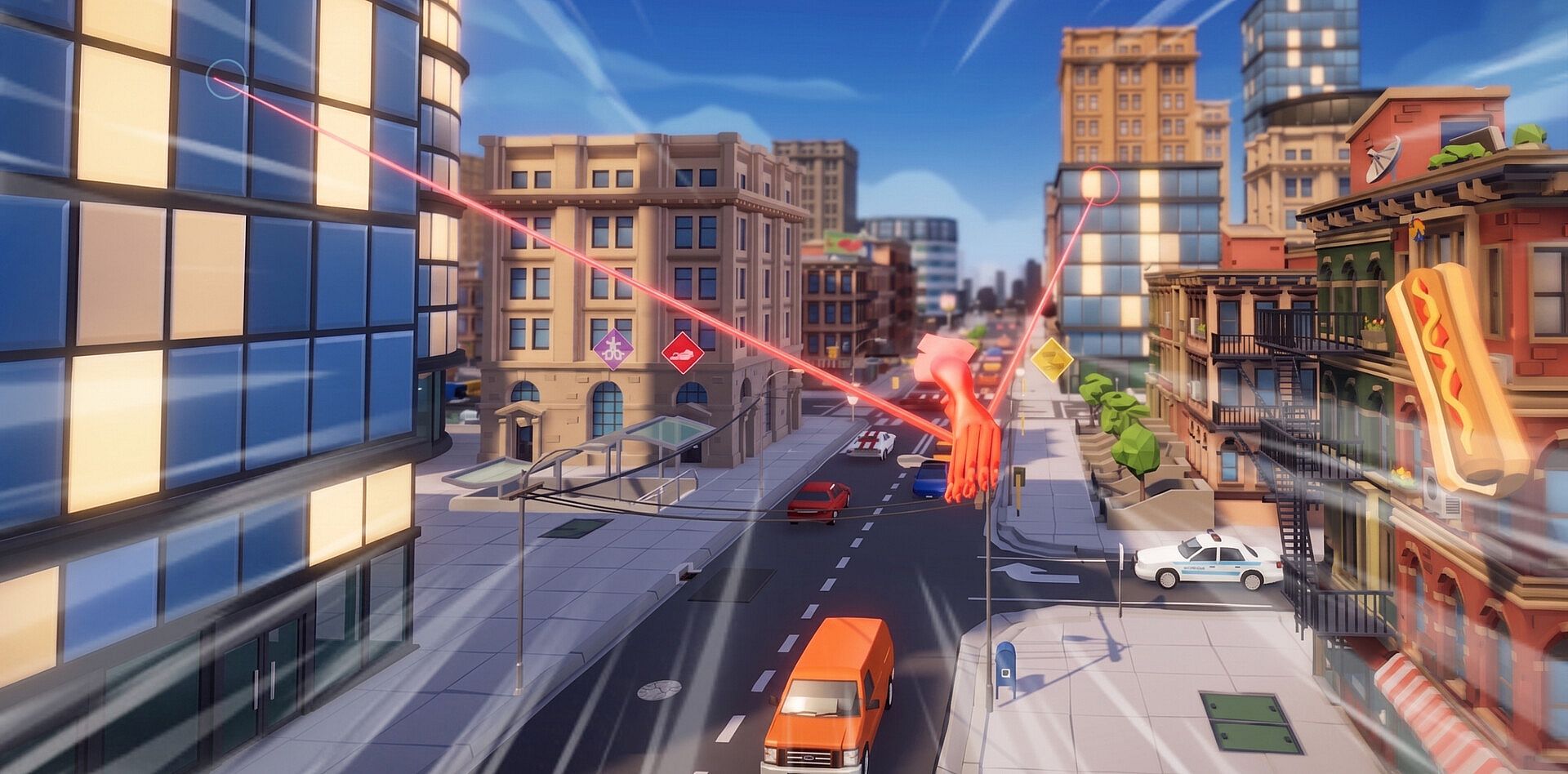
The movement system relies on floppy grappling physics. Players launch tentacles to swing between rooftops, build momentum for longer jumps, and catapult across gaps. Each swing carries forward velocity that must be managed carefully to avoid overshooting ledges or losing control on landing.
Hydration mechanics tie directly into speed. Skimming puddles or drains increases velocity, while dry surfaces slow the character and require wall clinging to recover. This creates a rhythm of seeking water sources amid the chase while avoiding hazards like open streets or exposed areas.
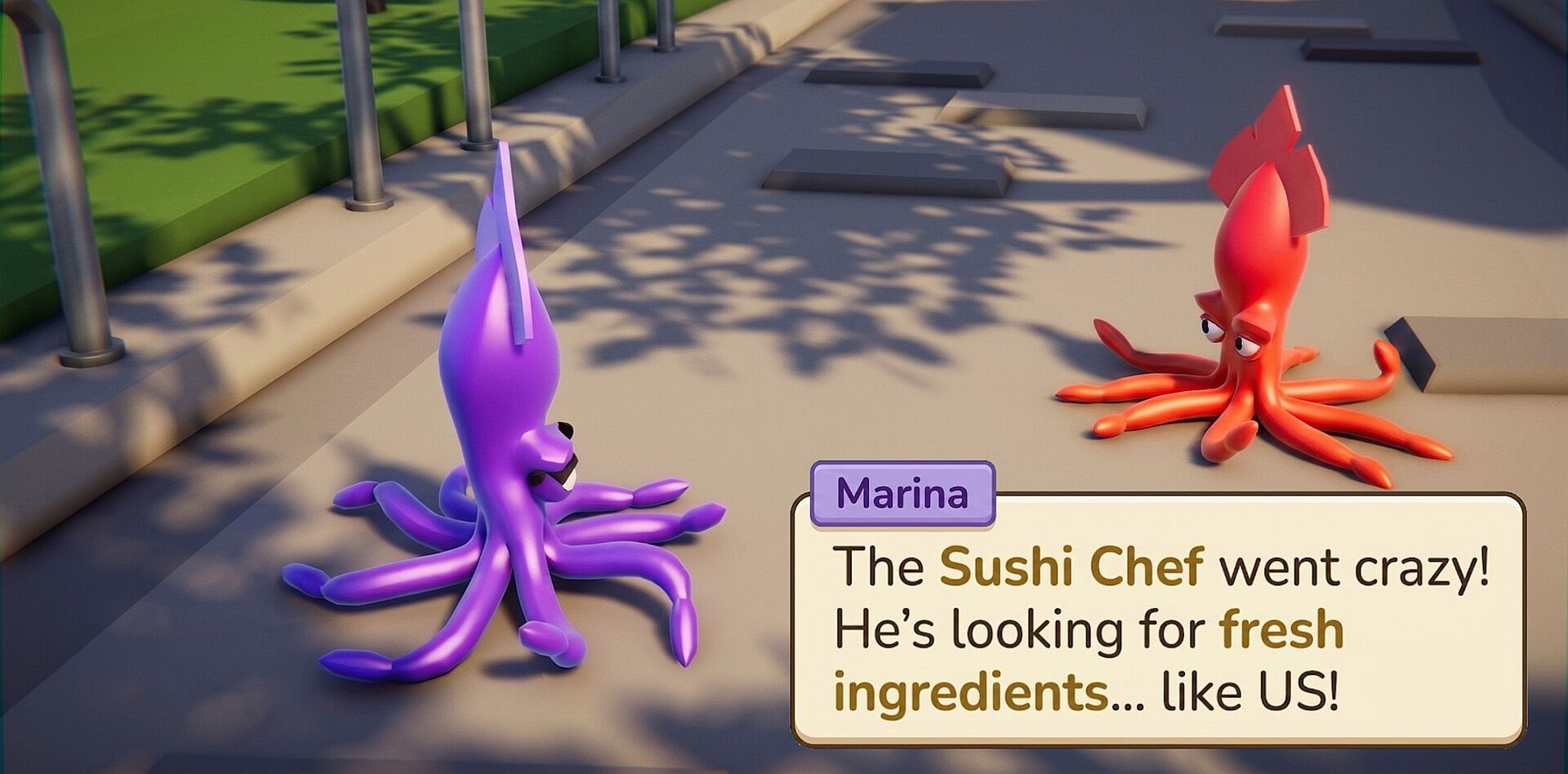
Seagulls and sushi chefs provide constant pressure. Aerial dives from birds and ground-level pursuits from chefs force route adjustments and quick recoveries. The physics model allows creative recoveries, such as using a chef's position for an unintended boost or swinging around obstacles to gain distance.
Rescuing marine allies unlocks upgrades and checkpoints. These encounters appear throughout the city layout and reward exploration of side paths without derailing the main forward momentum. Upgrades focus on tentacle reach, hydration efficiency, or grip strength to handle longer or more complex sequences.
Game Modes
SquidShot operates as a single continuous run focused on survival and distance. There are no separate multiplayer sessions or competitive leaderboards described. The experience centers on one extended escape attempt through the city, with checkpoints serving as progress markers rather than distinct modes.
Progression occurs through repeated attempts that build familiarity with the physics and optimal routes. Each run incorporates the same core loop of swinging, sliding, and managing hydration while responding to dynamic threats from chefs and seagulls. No additional modes such as time trials or challenge variants appear in available information.
Key Mechanics and Progression
The grappling system rewards timing and angle selection. A well-placed tentacle swing can chain into wall runs or puddle skims for sustained speed, while poor execution leads to falls or direct encounters with pursuers. Vertical wall sticking provides brief recovery windows when momentum drops.
Ally rescues integrate into the main path as optional detours. Each rescued friend contributes to a growing set of upgrades that alter handling in subsequent attempts. Checkpoints secured through these rescues allow players to restart from further points after failures.
Environmental variety comes from rooftops, alleys, and drainage systems. The city layout encourages learning sightlines for efficient swings and identifying safe hydration spots amid the pursuit. Hazards remain consistent across runs, shifting the focus to execution and route optimization.
Is It Worth Playing?
SquidShot suits players who enjoy momentum-based platformers with tight physics and a clear survival objective. The single-player structure delivers repeated attempts at mastering the escape, with upgrades providing tangible improvements to handling over time. Those seeking cooperative or competitive elements will find the experience limited to solo runs.
Reception details remain sparse in public sources, with the game positioned as an indie title built around its unique cephalopod movement. Availability is limited to PC through standard digital storefronts. Players interested in short, replayable sessions centered on physics mastery may find the core loop engaging, while those preferring expansive stories or varied modes should consider the focused scope before purchasing.