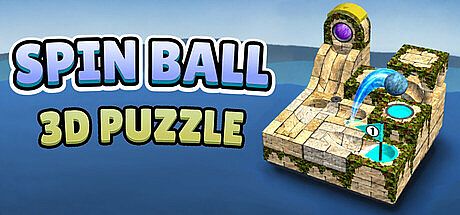


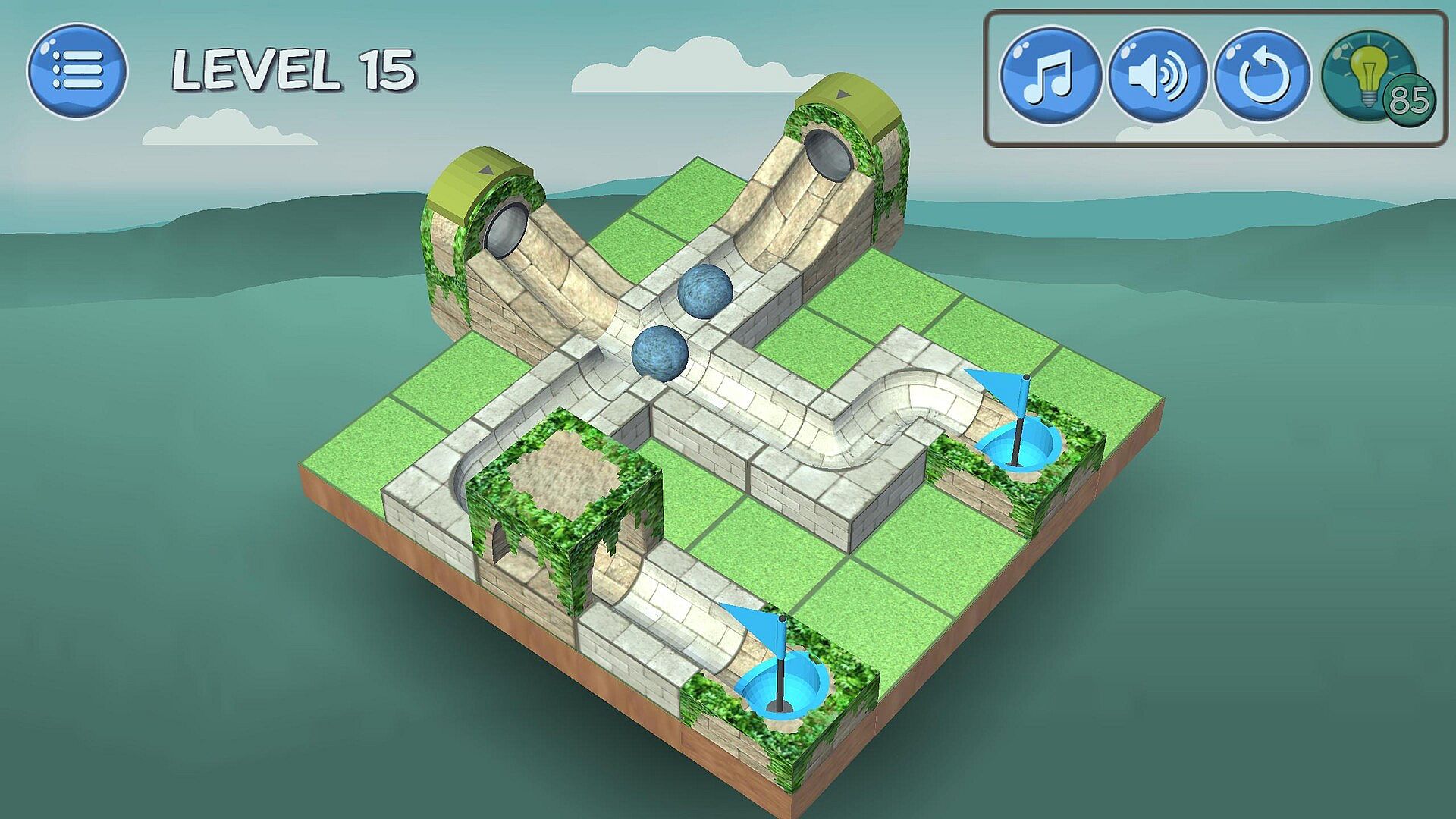
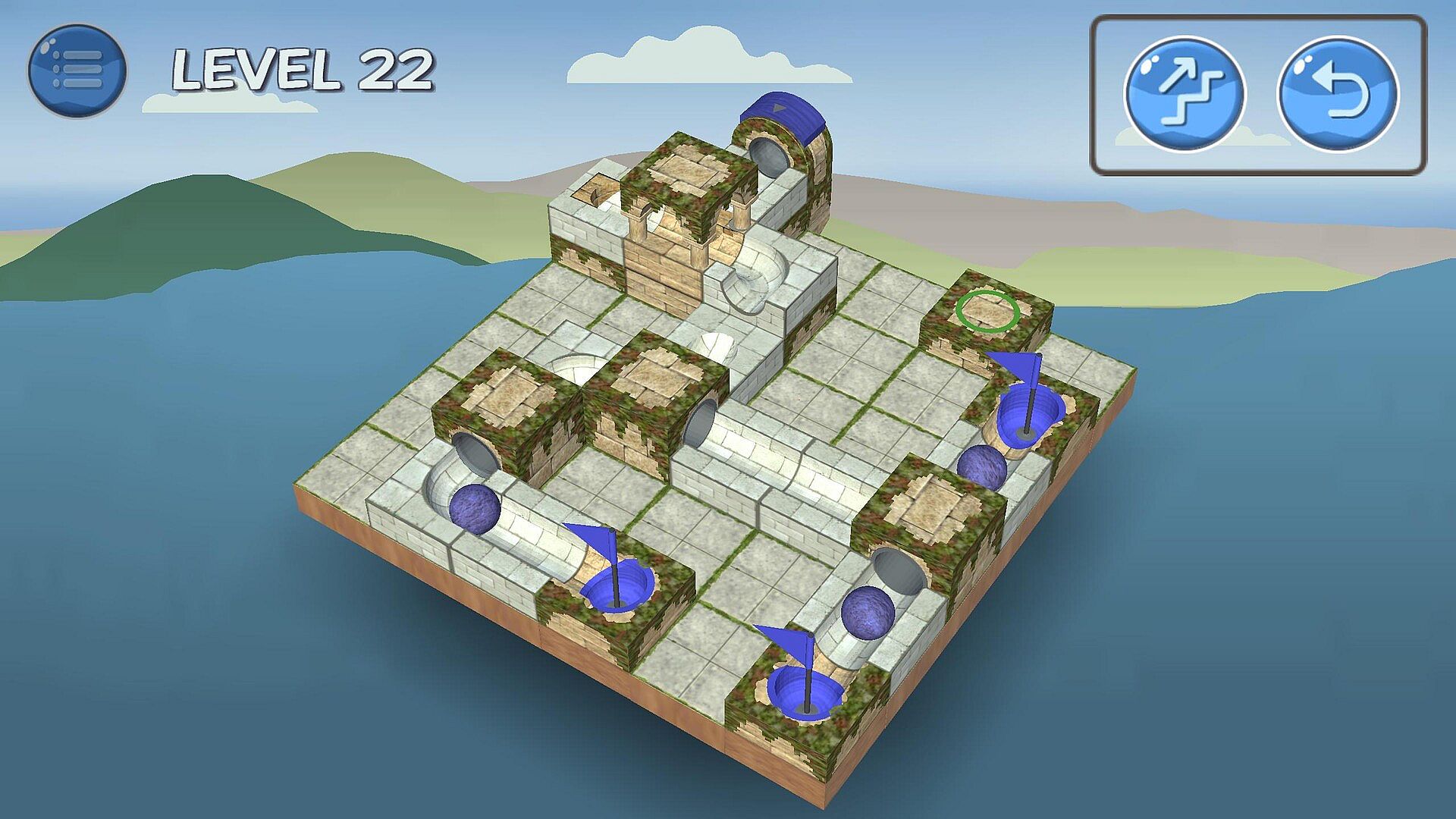
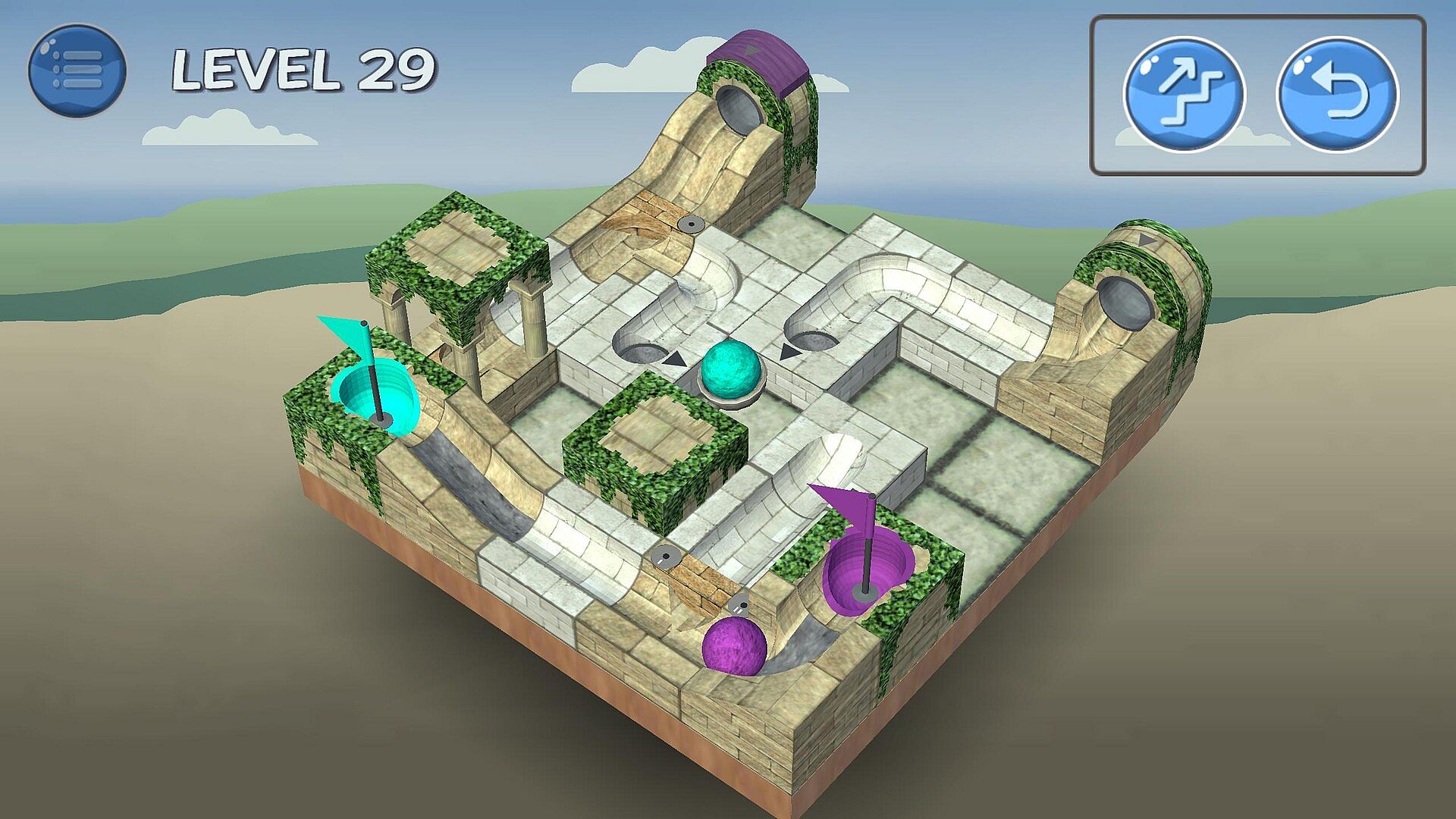
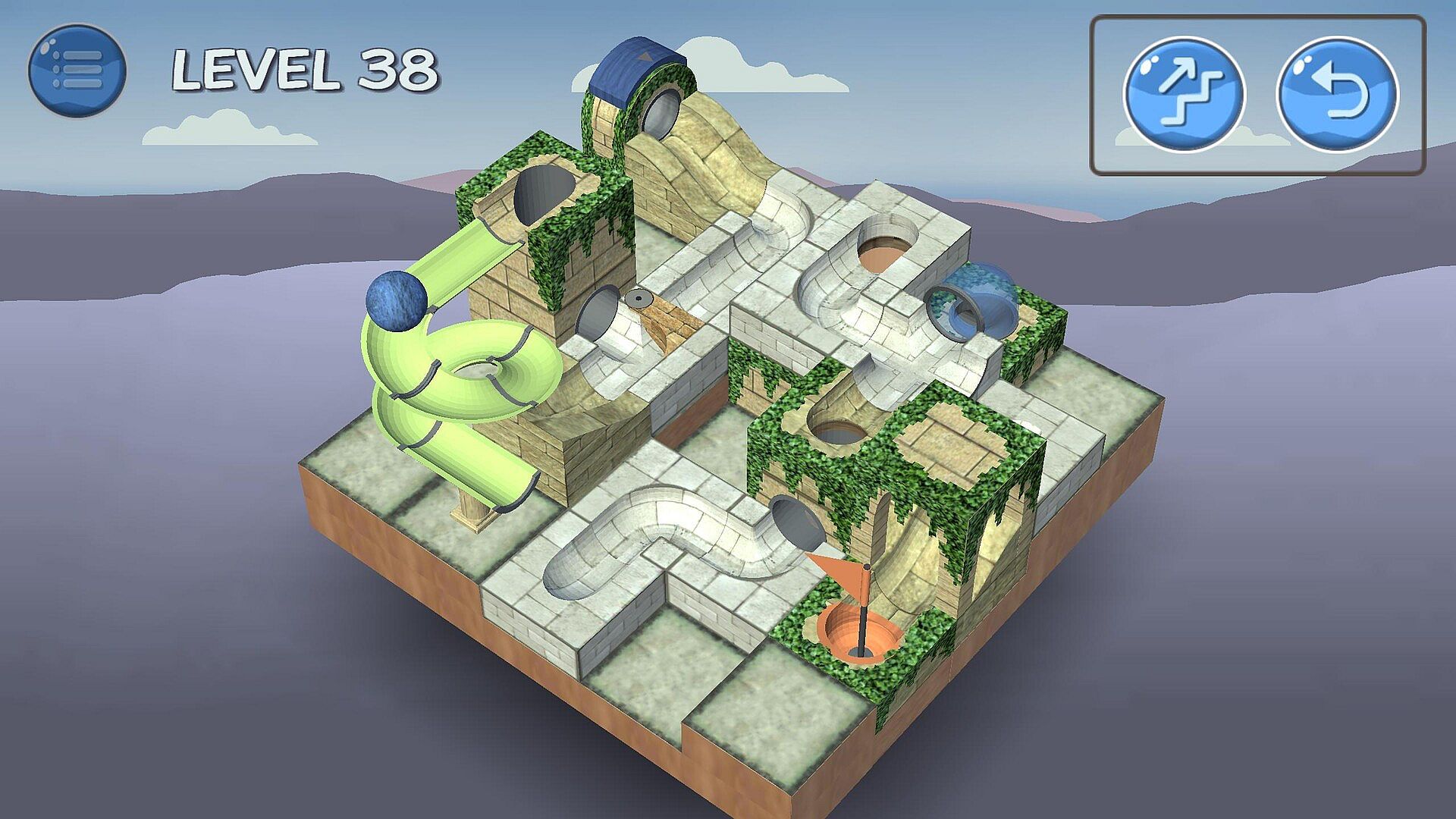
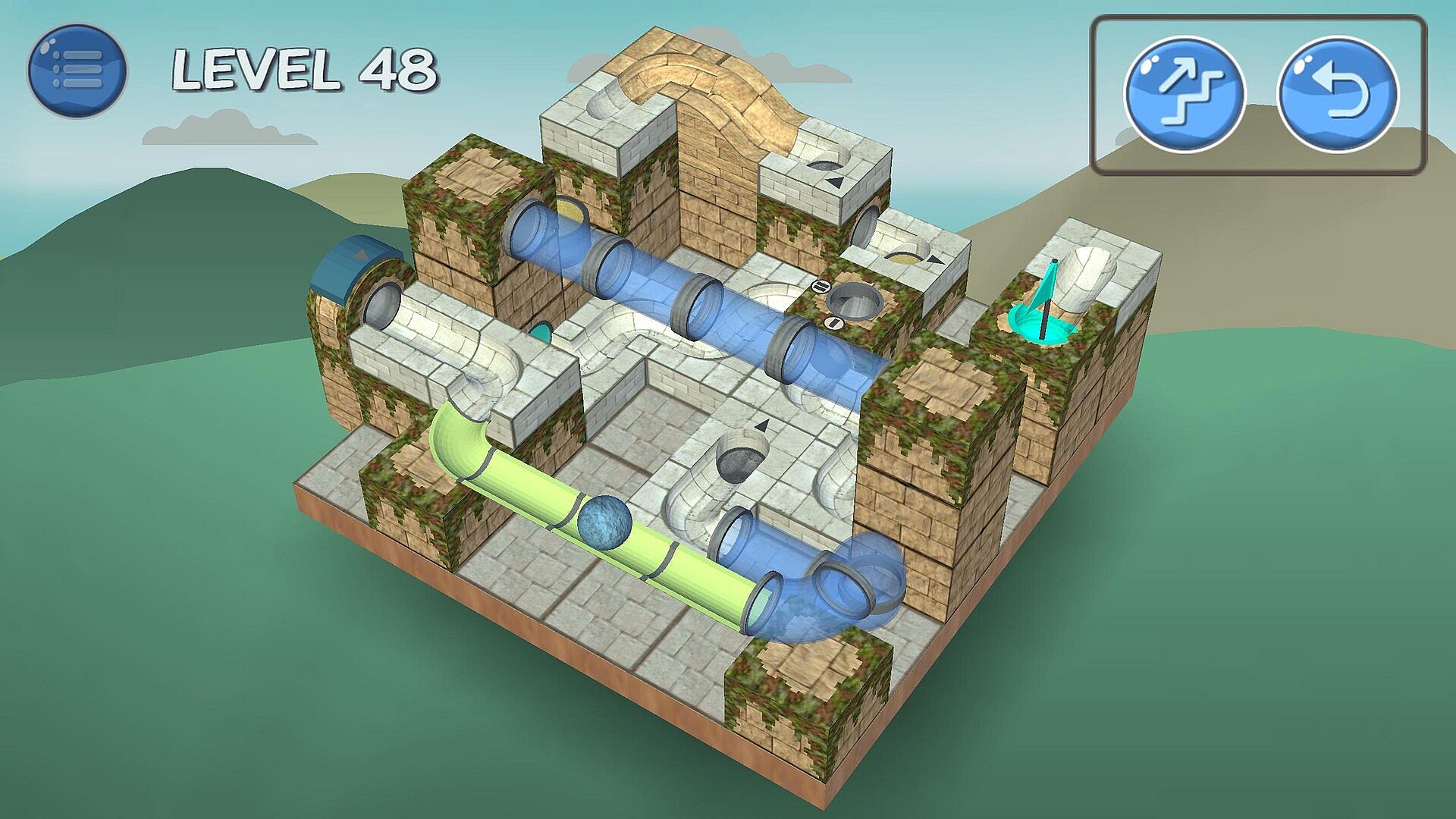
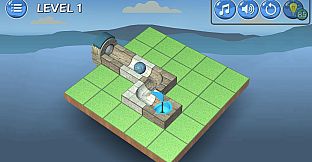
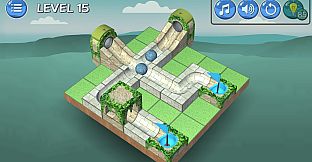
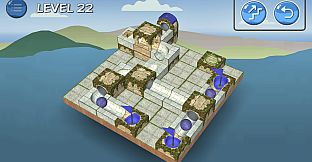
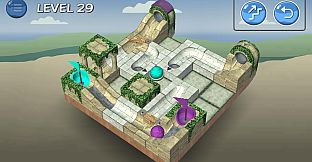
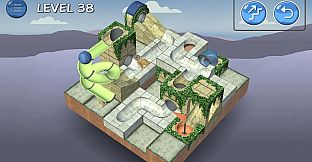
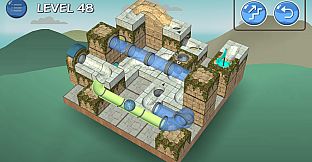
Spin Ball 3D Puzzle is a casual singleplayer logic puzzle game built around spatial reasoning and precise block placement on PC. Players arrange movable pieces to create routes for colorful balls that must reach matching flags, all while navigating realistic physics that include jumps, bounces, tunnels, duplication, and color shifts.
Gameplay
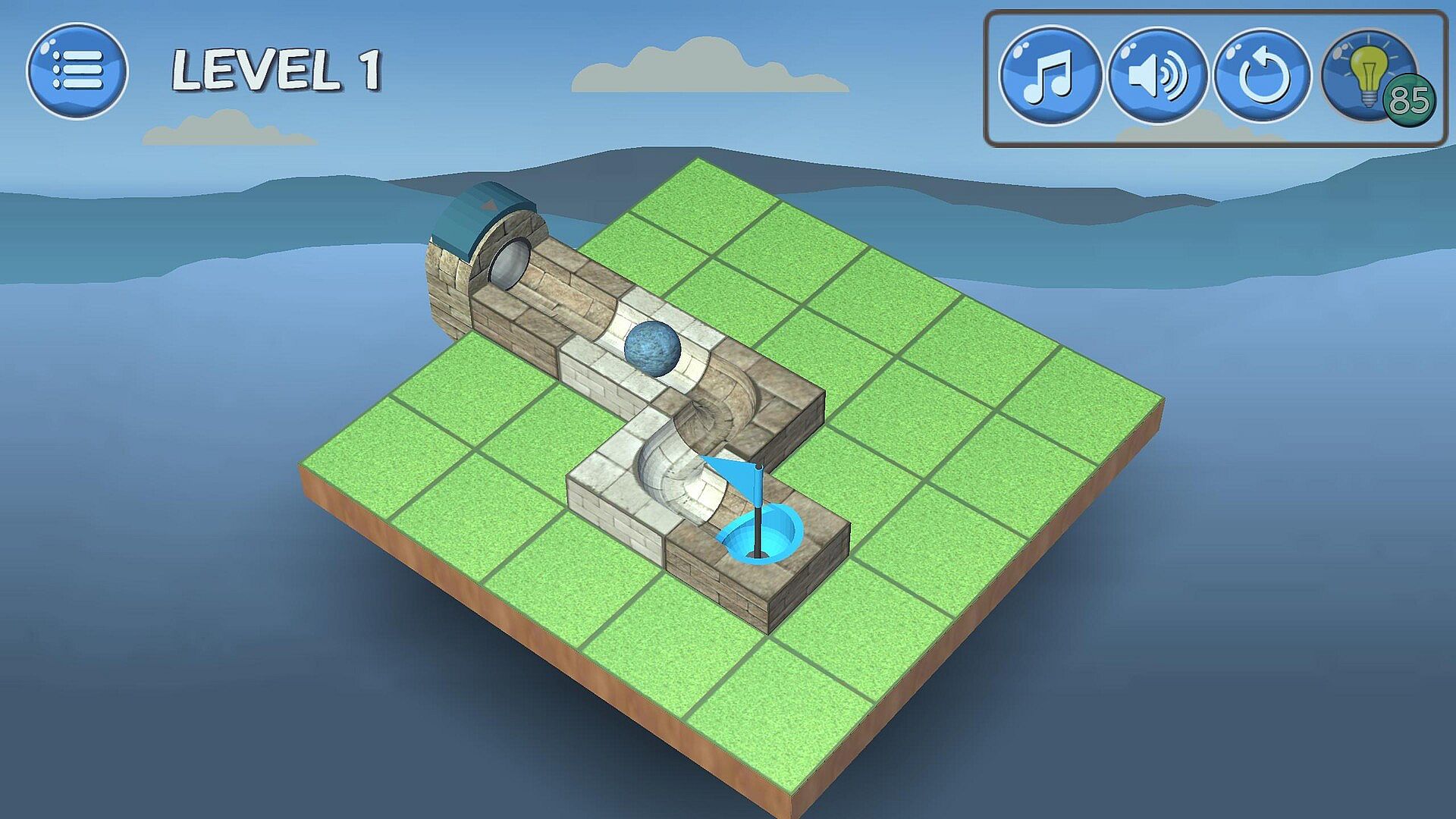
The core loop centers on planning and experimentation. Each puzzle presents a 3D board where blocks, ramps, and tunnels can be repositioned to form a continuous path. The ball starts moving once the layout is set, and its behavior follows consistent physical rules that reward careful observation of angles, heights, and momentum. Early stages focus on straightforward rolling paths, but later ones introduce layered interactions where a single adjustment can trigger multiple effects across the board.
Mechanics evolve steadily without overwhelming new players. Balls can split into multiples that must all reach their destinations, change color mid-route to match different flags, or bounce off surfaces in ways that demand exact positioning. Tunnels allow vertical or hidden connections, while interactive mechanisms in certain packs require activation through specific alignments. The absence of timers encourages repeated testing of different configurations until the solution clicks.
Visuals emphasize clarity with bright, distinct colors and smooth 3D rendering that highlights the ball's trajectory and any collisions. Controls remain straightforward, relying on direct manipulation of pieces, which keeps attention on the puzzle itself rather than interface friction. Progressive packs build familiarity with one concept before layering the next, creating a steady sense of mastery.
Game Modes
The game organizes its 400 handcrafted puzzles into eight distinct packs that each emphasize different layouts and rulesets. Basic introduces core movement and path-building. Easy expands on simple combinations while keeping demands modest. Medium adds intermediate logic requirements that test foresight with multiple balls or slight elevation changes.
Mech introduces interactive elements that must be triggered in sequence. Mix shifts to larger 6x6 grids that increase spatial complexity. Hard and Master raise the density of obstacles and interactions, forcing tighter integration of bounces, splits, and color changes. Genius serves as the final tier with the most intricate combinations of every prior mechanic.
Each pack maintains its own identity through unique board shapes and emphasis on particular interactions, encouraging players to adapt their thinking rather than repeat the same strategies. All content remains available for singleplayer progression at any pace.
Puzzle Design and Progression
Levels are individually crafted to highlight specific interactions while avoiding repetition across the full set. Early packs establish reliable patterns, such as using ramps for elevation or tunnels for shortcuts, before later ones combine those patterns in unexpected ways. This structure supports both quick sessions and extended problem-solving marathons.
Realistic ball physics remain consistent throughout, so solutions discovered through trial remain valid on subsequent attempts. Colorful 3D environments provide clear visual feedback on ball paths and piece placements without unnecessary distractions. The design favors logical deduction over speed or reflexes, making it suitable for players who prefer deliberate, thoughtful play.
Is It Worth Playing?
Spin Ball 3D Puzzle appeals most to players who enjoy methodical logic challenges and spatial puzzles without time pressure. Its structure of eight themed packs with steadily increasing complexity provides substantial content that rewards careful planning and repeated experimentation. Those familiar with similar block-and-path games often note the fresh feel introduced by the ball's dynamic behaviors and the variety across packs.
Feedback from players highlights the satisfying progression from accessible early levels to demanding later ones, along with the relaxing yet engaging pace. The game supports extended play sessions through its lack of timers and emphasis on personal discovery. It suits anyone seeking a focused singleplayer experience that sharpens spatial reasoning and patience.
Availability on PC alongside its mobile versions makes it accessible for desktop play, where the larger screen can aid in visualizing complex 3D arrangements. For fans of casual puzzle games centered on building paths and observing physics, the title delivers consistent value through its handcrafted levels and evolving mechanics.