










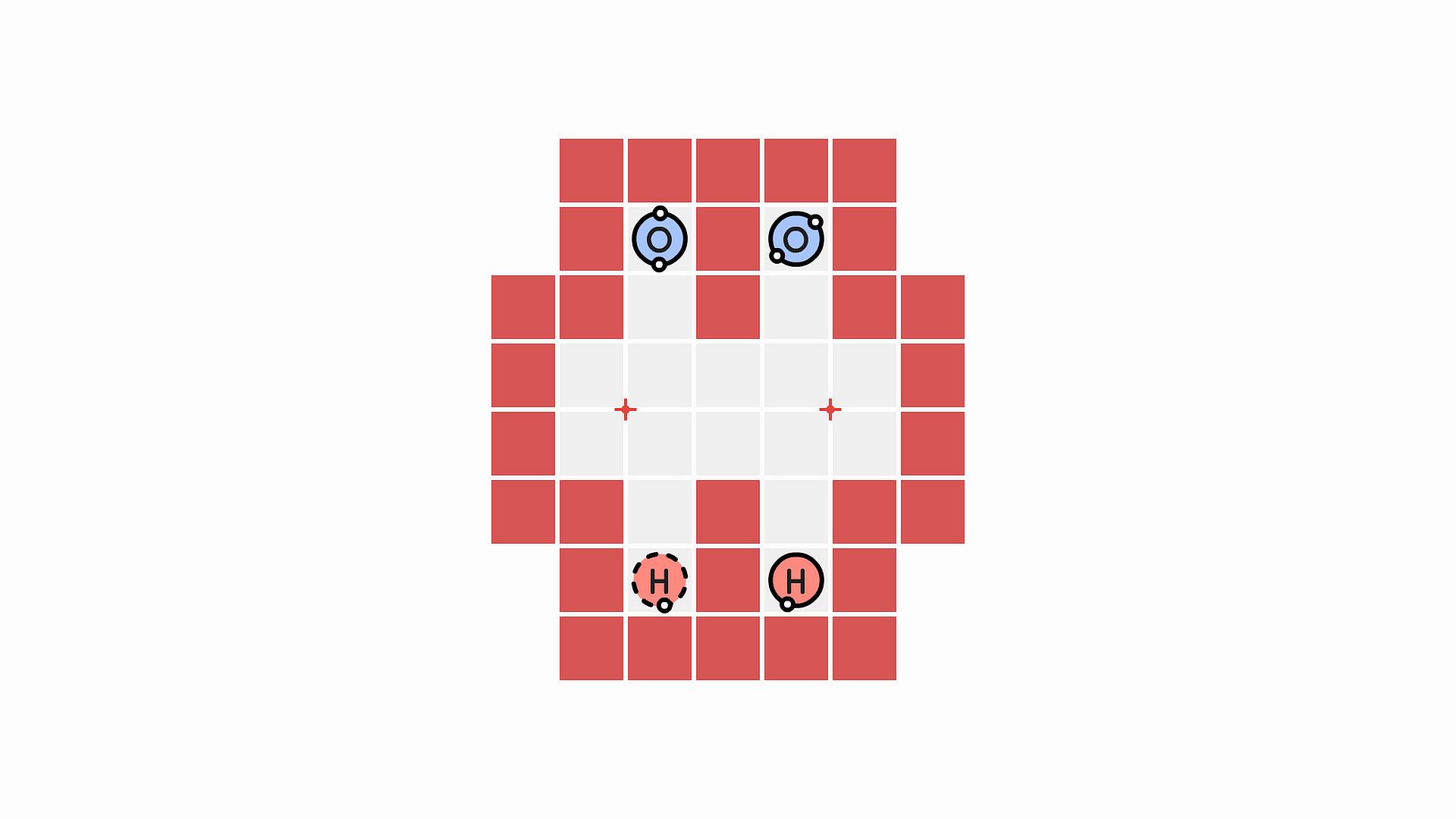
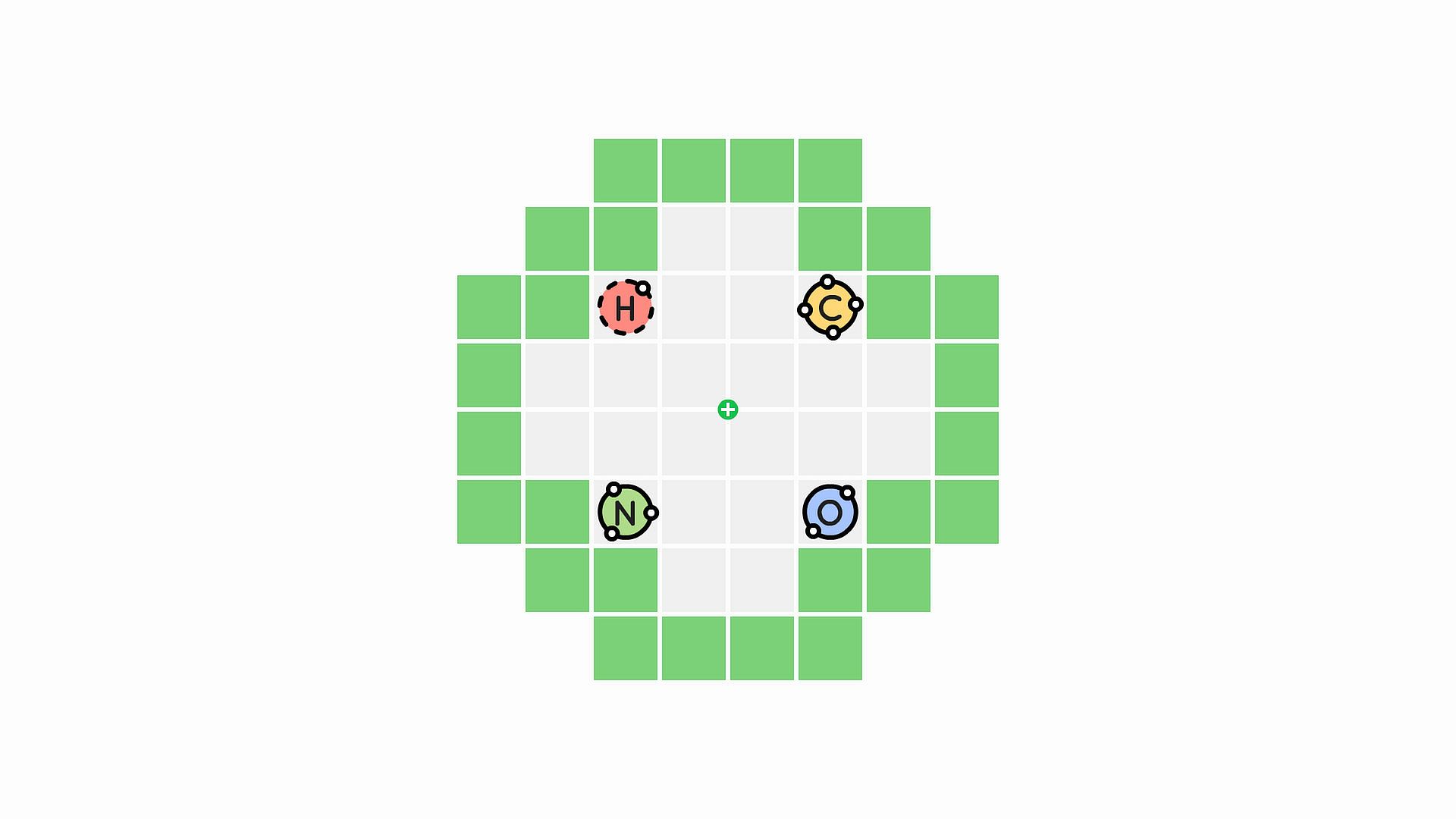
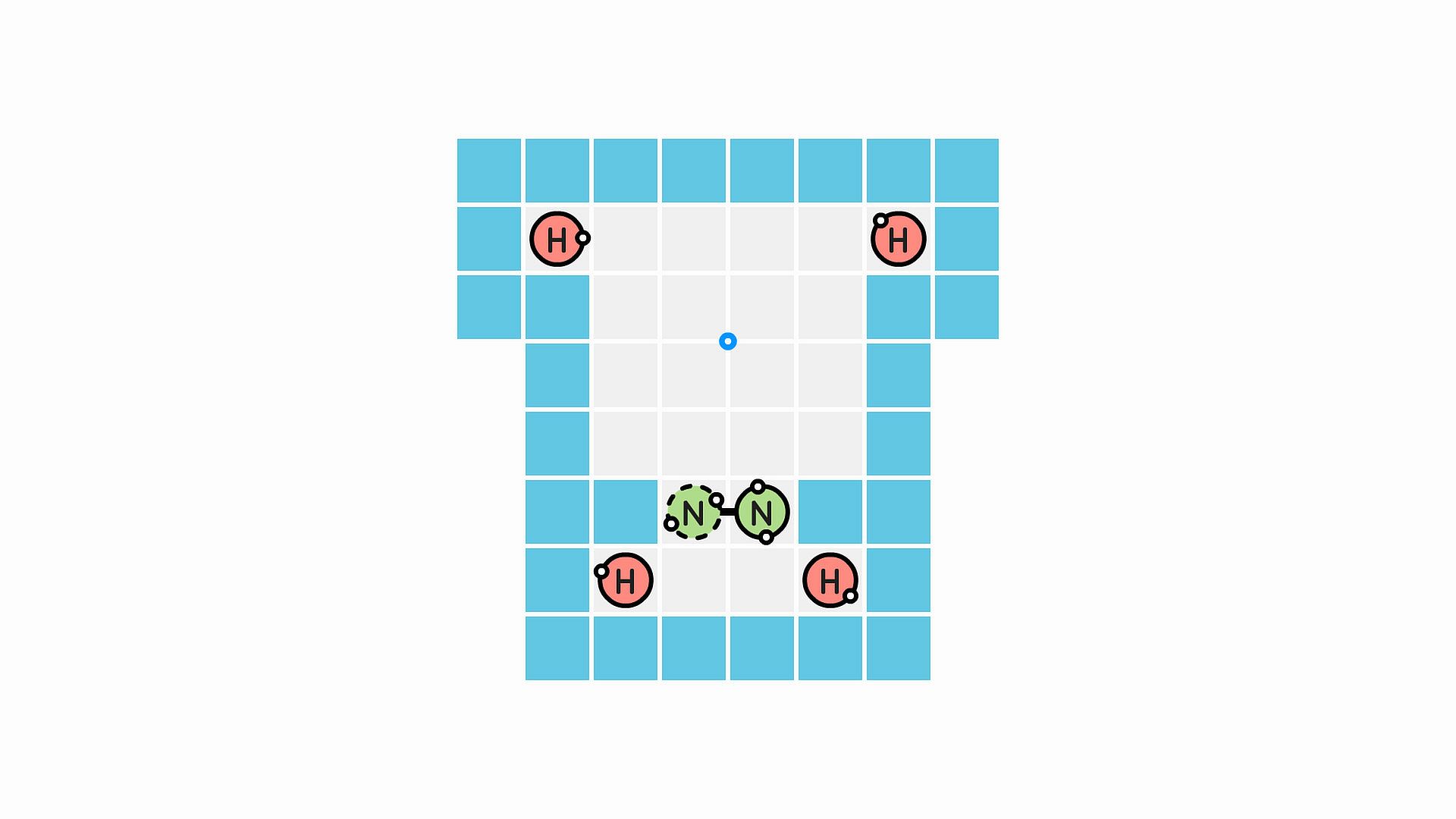
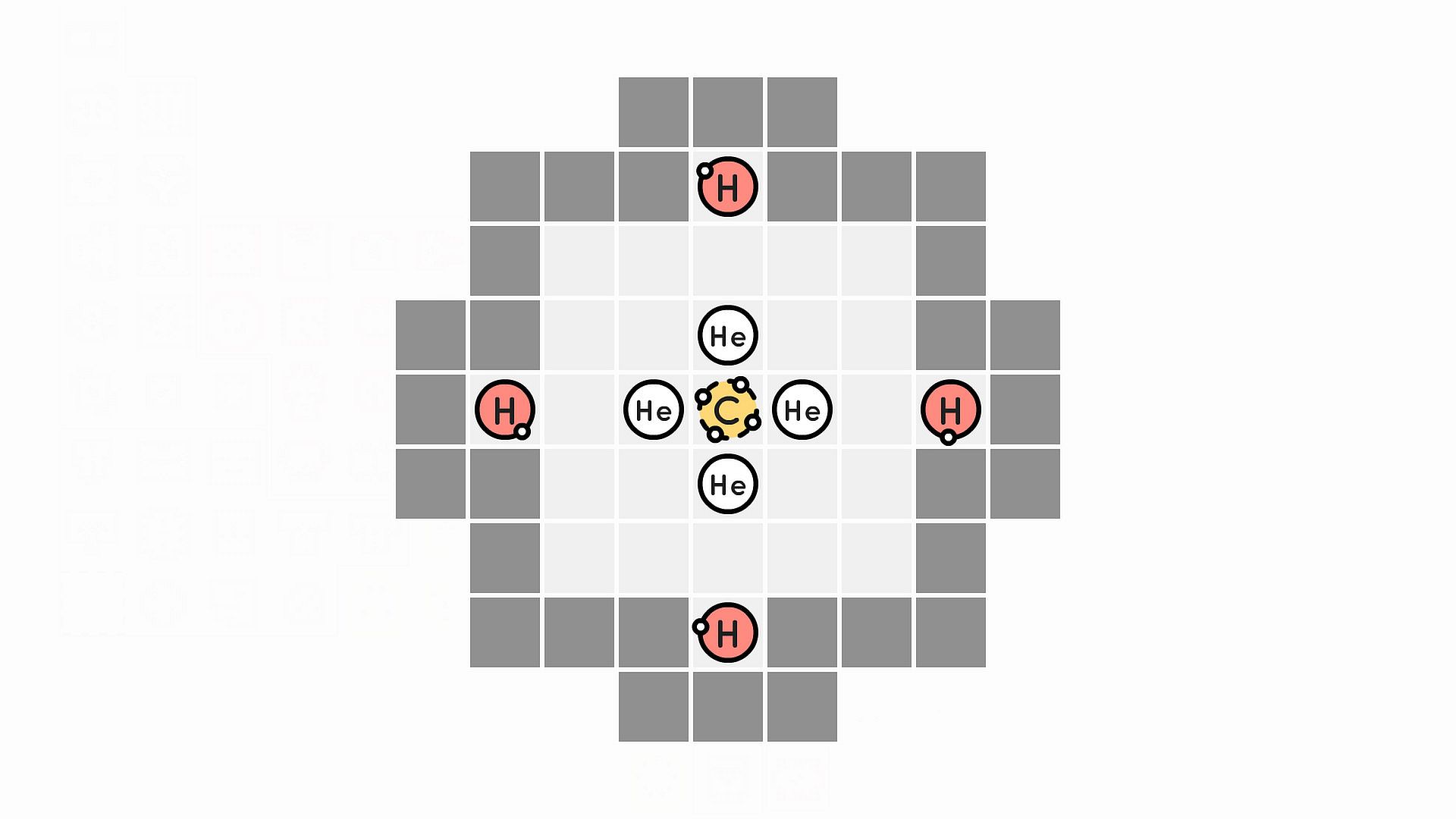
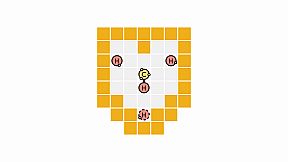
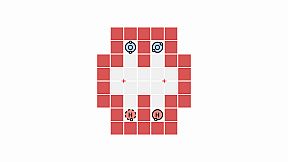
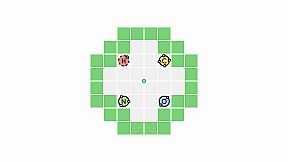
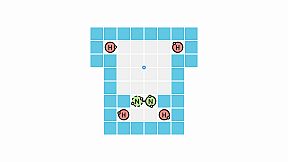
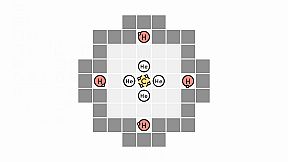
Sokobond is an indie puzzle game centered on chemistry themes and logical molecule construction. Players manipulate atoms across grid-based levels to form stable compounds, relying on spatial reasoning rather than any prior scientific background. The experience emphasizes clean mechanics and progressive challenges across more than one hundred stages on PC.
Gameplay
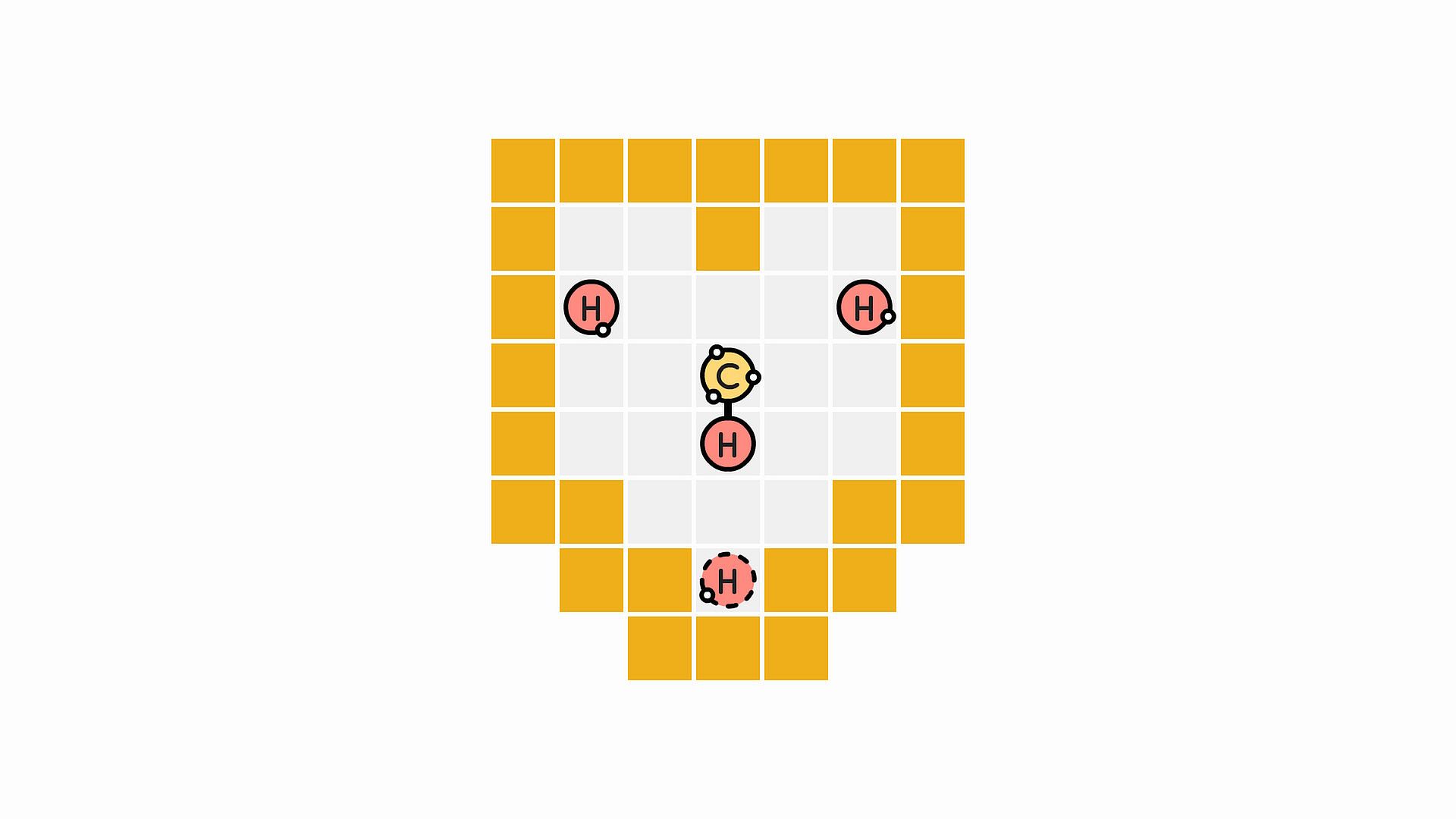
Core movement follows Sokoban principles where the player directs a single highlighted atom through a confined space filled with walls and other elements. Contact between compatible atoms creates bonds, after which the connected group travels as one unit. Five elements appear throughout the levels, each with fixed bonding capacities that dictate possible molecular structures.
Early stages introduce basic bonding rules using hydrogen, helium, carbon, nitrogen, and oxygen. Subsequent sections add specialized objects capable of severing existing bonds, altering bond strength, or shifting entire molecular assemblies. These additions layer complexity without overwhelming the minimalist presentation, encouraging repeated experimentation to discover valid configurations.
Visual design remains sparse and functional, highlighting atom positions and bond connections against neutral backgrounds. An original soundtrack accompanies the action, providing understated audio cues that align with the deliberate pacing of each puzzle solution.
Game Modes
The game operates entirely in single-player format with no multiplayer or competitive elements. All content unfolds through a linear sequence of levels divided into themed sections that gradually introduce new mechanics and element combinations.
Progression relies on completing each stage to unlock the next, with no alternative paths or optional side challenges confirmed in the design. The structure focuses on mastery of bonding logic, rewarding careful planning over speed or external competition.
Level Design and Progression
Levels total 105 and group into distinct sections that build upon prior concepts. Initial areas stress simple atom placement and basic compound formation, while later ones incorporate bond-manipulation tools to create more intricate spatial puzzles.
Each section maintains consistent rules while varying grid layouts and element distributions, promoting adaptation rather than rote memorization. Solutions often require testing multiple bond orders and molecular rearrangements before settling on the correct arrangement.
Is It Worth Playing?
Players seeking thoughtful, self-contained puzzle experiences will find consistent satisfaction in the logical depth and elegant presentation. The absence of chemistry prerequisites makes the title accessible to a broad audience interested in spatial challenges and incremental discovery.
Reception highlights the refined balance between simplicity and increasing difficulty, with many noting the sense of accomplishment derived from independent problem solving. The game remains available on PC with no reported ongoing seasonal content or major updates, preserving its original focused scope.
Those who appreciate minimalist design paired with precise mechanics will likely value the complete package, while individuals preferring action-oriented or narrative-driven titles may find the deliberate pace less engaging. The core loop of atom movement and bonding delivers reliable mental engagement across its full level count.