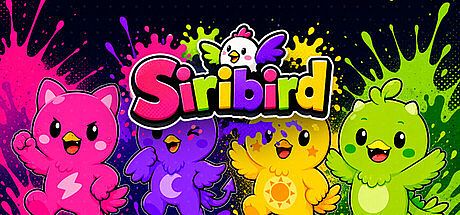


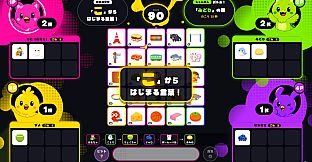
Siribird is an indie casual game for PC that blends Japanese shiritori word chaining with fast typing on a compact 5x5 emoji board. Up to four players compete to claim tiles by entering valid readings that match the current starting kana, turning each match into a quick scramble for control of the grid. The first player to input a correct reading snatches the emoji and splashes their chosen bird's ink across it, building toward the highest score before the timer ends.
Gameplay
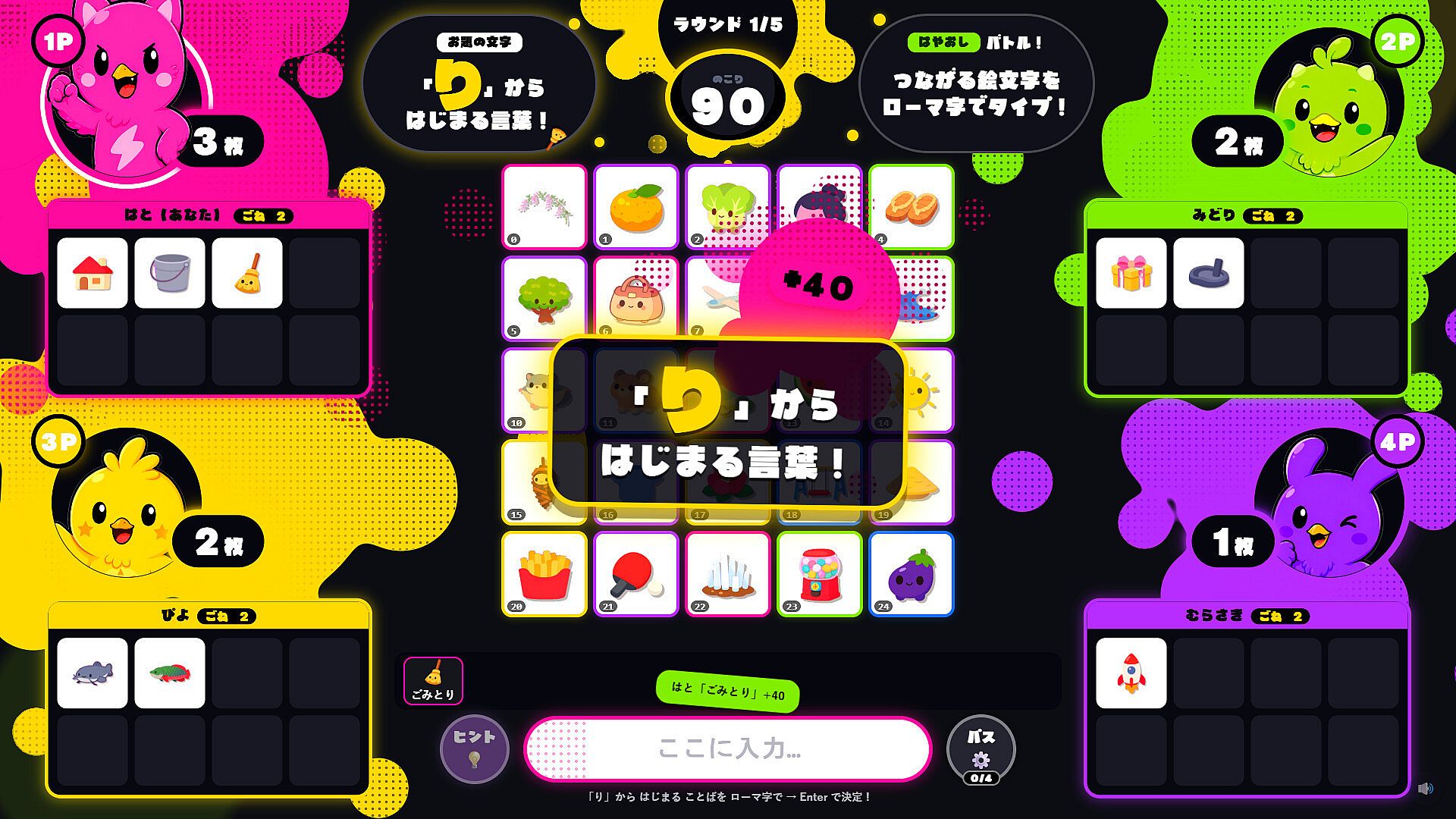
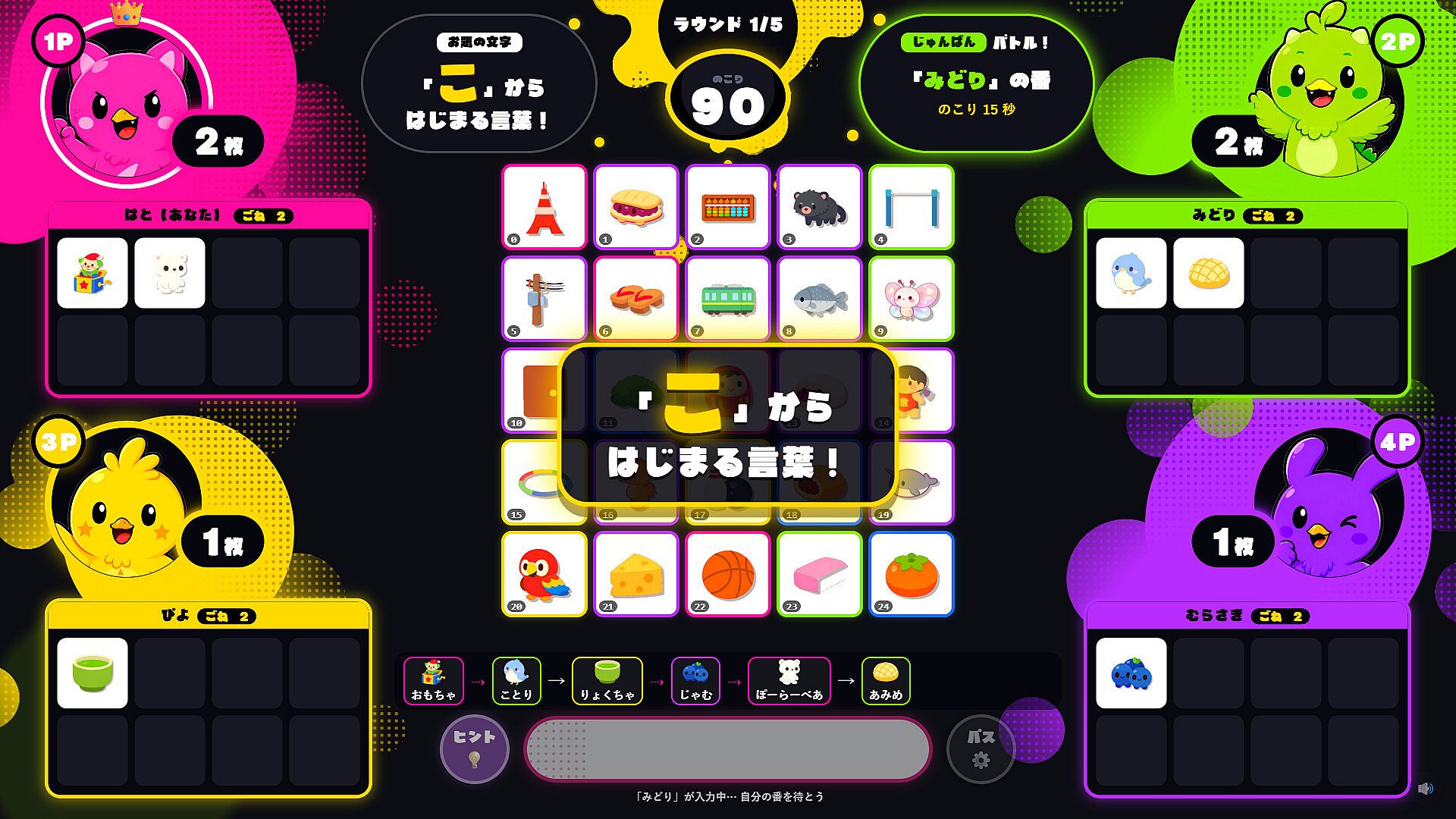
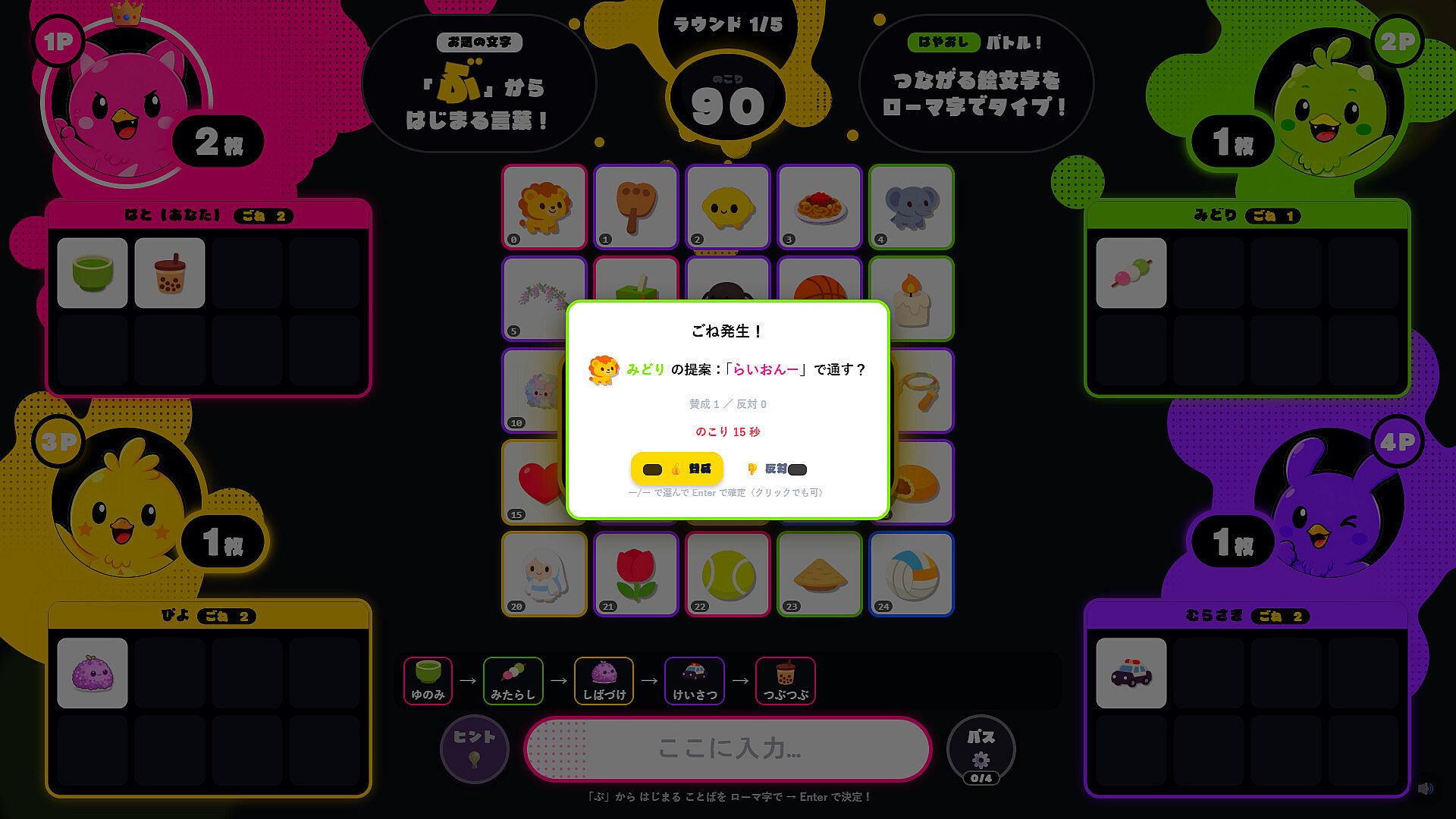
Each round centers on the shared emoji grid where every tile carries several possible Japanese readings. A single emoji such as the cat face might accept neko, nyanko, or kyatto, giving knowledgeable players an edge when obscure options appear. The active kana shifts with each successful capture, forcing everyone to adapt quickly and type or select the next valid word that begins with the new sound. Captures trigger a short animation of the player's bird jumping and spreading colored ink, visually marking territory on the board.
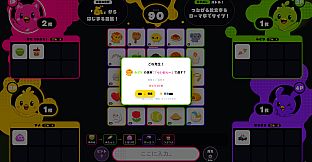
Progress comes from accumulating the most tiles before time expires, creating a straightforward yet tense loop of observation, recall, and rapid input. Multiple readings per emoji reward familiarity with Japanese vocabulary while the shared board keeps every participant engaged in the same space. When a proposed reading fails to register, the Gone button lets players submit it for a group vote, and majority approval adds the new entry to the room's growing dictionary that persists across matches.
Game Modes
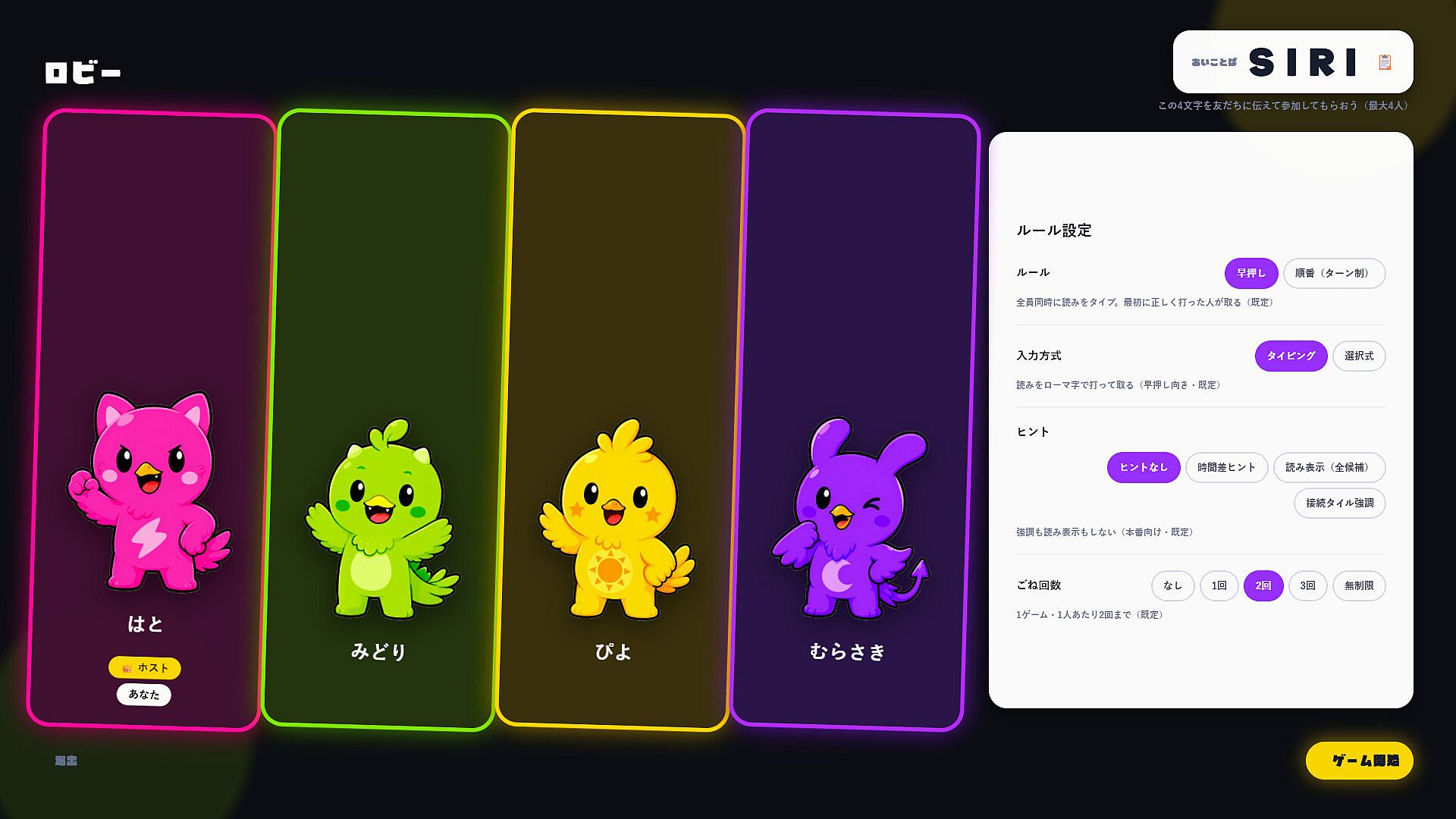
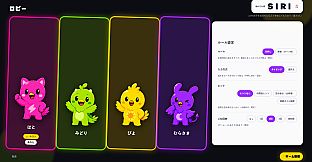
Six distinct combinations arise from pairing two rule sets with three input methods. Speed rules emphasize real-time competition where the fastest correct input wins the tile. Turn-based rules slow the pace so each participant takes sequential turns, suiting groups that prefer deliberate pacing over split-second reactions. Input options include standard keyboard typing, cursor selection for those who prefer pointing and clicking, and voice input for hands-free play.
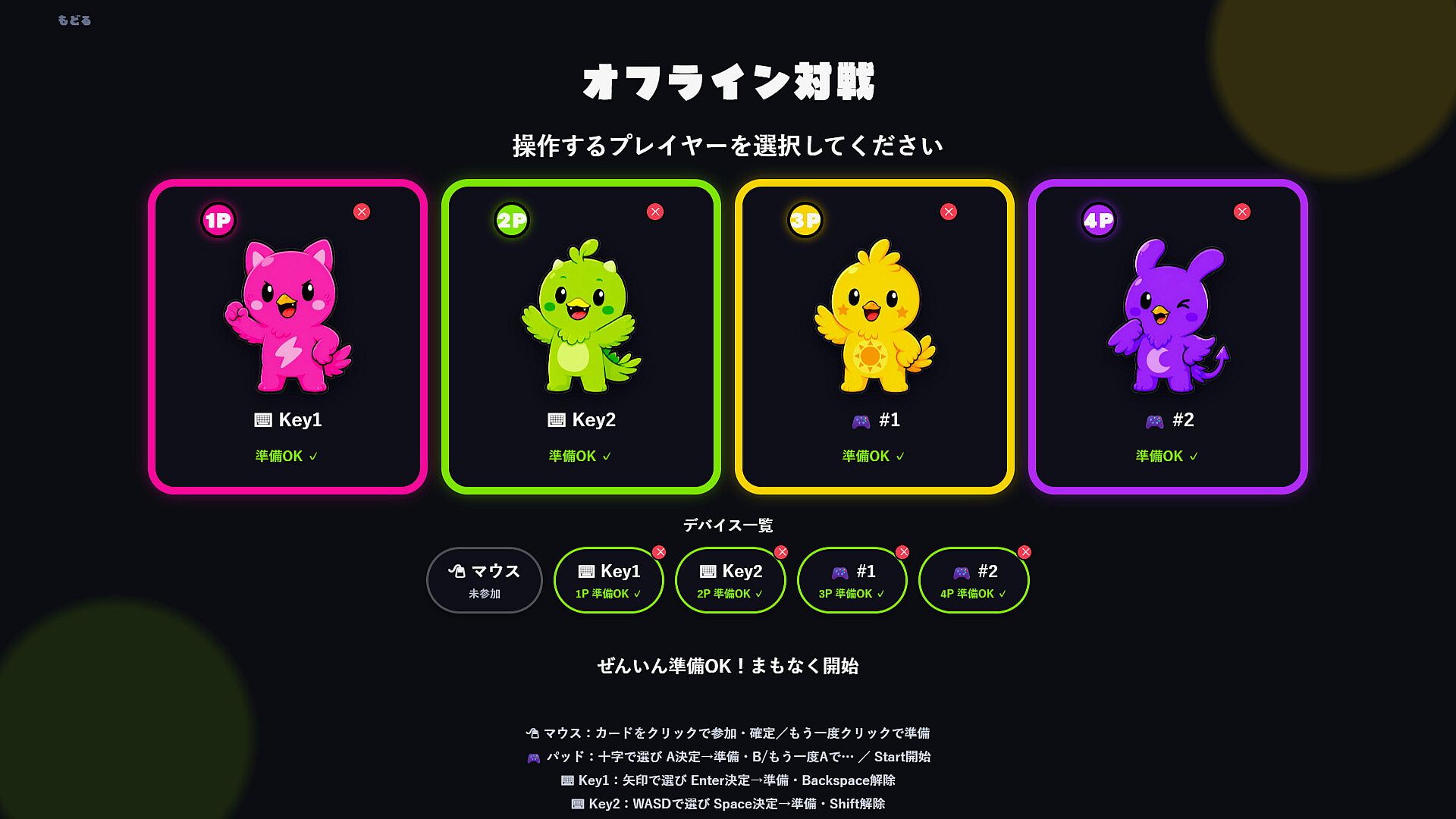
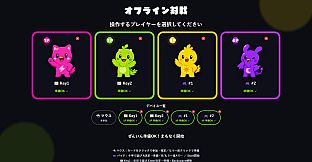
These pairings support varied group compositions. Cursor Select and voice modes allow non-typists or younger players to join without disadvantage. Online sessions use a simple four-letter room code to connect up to four participants across different devices. Offline sessions run on a single PC with support for two keyboards, two gamepads, and mouse controls, enabling local multiplayer without additional hardware.
Multiplayer and Accessibility
Four colorful birds pink, green, yellow, and purple serve as player avatars, each leaving distinctive ink splatters when they claim a tile. The dictionary system encourages repeated play because approved readings remain available in the current room and eventually contribute to a broader shared pool used by all players. This progression adds long-term depth to casual sessions without complicating the core loop.
Accessibility features extend participation beyond experienced typists. Cursor Select and voice inputs lower the barrier for family gatherings or mixed-skill groups, while the voting mechanic lets creative suggestions expand the available vocabulary over time. Both online and offline formats accommodate up to four players, making the game suitable for quick remote matches or shared-screen gatherings on one computer.
Is It Worth Playing?
Siribird remains in a coming-soon state with no user reviews available yet. Its design targets players who enjoy word games, quick reflexes, and light-hearted competition rather than complex strategy or long campaigns. The combination of shiritori mechanics, emoji variety, and flexible input styles creates a distinctive casual experience that works well for short sessions with friends or family.
Those seeking a fresh take on multiplayer word play on PC will find the core loop accessible and replayable through the growing room dictionaries and multiple rule-input combinations. The absence of established ratings means prospective players should watch for launch feedback, yet the verified features already indicate strong potential for groups that value inclusive, language-focused battles over traditional action or puzzle formats.