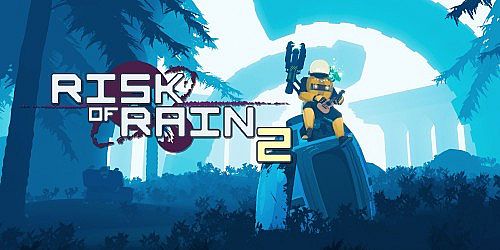


Risk of Rain 2 on Nintendo Switch delivers a third-person roguelike shooter experience centered on survival against escalating threats on an alien world. Players crash-land on Petrichor V and must navigate procedurally influenced stages filled with aggressive monsters while gathering powerful items that interact in unexpected combinations. The core appeal lies in building increasingly potent loadouts through loot accumulation, all while a difficulty timer steadily ramps up enemy strength and numbers. This setup creates runs that shift from cautious exploration to overwhelming chaos as power grows.
Gameplay
The action unfolds in a third-person perspective with fluid movement and shooting mechanics tailored for both precise aiming and rapid repositioning. Each stage presents handcrafted environments packed with enemies, interactables, and chests that yield items with stacking effects. Collecting more loot amplifies abilities in synergistic ways, turning basic attacks into devastating combinations over the course of a run. A teleporter event marks the end of each stage, requiring players to clear a wave of foes before advancing, with bosses appearing at key points to test accumulated strength.
Difficulty scales automatically during a session, forcing constant adaptation as both player and opponents grow stronger. Randomized elements in enemy spawns, item drops, and stage layouts ensure no two attempts play out identically. The Nintendo Switch version supports portable sessions alongside docked play, with online co-op allowing up to three additional players to join for shared progression and combined firepower.
Game Modes
The primary experience revolves around standard survival runs where the goal centers on reaching and defeating the final boss to escape the planet or pushing further into looped stages for greater challenges. These runs emphasize item management and survivor selection to handle the rising threat level.
Prismatic Trials offers a distinct rotating challenge format with fixed seeds that reset periodically, pitting players against identical conditions in a race for the fastest completion times. Leaderboards track performance across the community, adding a competitive layer to the otherwise cooperative or solo-focused gameplay. Artifacts serve as optional modifiers that alter core rules, such as changing item availability or introducing friendly fire, providing further variety within these modes.
Survivors and Progression
A roster of distinct survivors forms the foundation of replayability, each equipped with signature weapons, abilities, and alternate skill options unlocked through play. Progression involves mastering these characters while experimenting with item builds that complement their strengths. Logs scattered throughout stages reveal additional lore and strategic insights tied to specific items and enemies.
Unlock systems encourage repeated runs, as new survivors, skills, and artifacts become available through targeted challenges or consistent survival. The scaling system ensures that even veteran players encounter fresh pressure as runs extend, rewarding careful resource decisions and quick reflexes.
Current Content and Updates
Risk of Rain 2 on Nintendo Switch has received multiple content additions over time, including expansions that introduce new survivors, items, stages, enemies, and interactables. Recent updates have focused on performance refinements, enabling more stable longer sessions even during intense late-game encounters with heavy visual effects. The game maintains active support with balance adjustments and new features that expand the base experience without requiring separate purchases for core play.
These additions integrate seamlessly into existing runs, allowing players to encounter fresh content alongside established mechanics. The Switch edition benefits from ongoing patches that align it closely with other platforms while preserving its portable strengths.
Is It Worth Playing?
Risk of Rain 2 suits players who enjoy roguelike progression combined with third-person shooting and cooperative elements. Its emphasis on item synergies and escalating difficulty creates engaging sessions that reward experimentation and teamwork in online co-op. The Switch version excels for on-the-go play, though late-stage intensity can test hardware limits in the most crowded moments despite recent optimizations.
Reception remains strongly positive across platforms, with sustained player engagement driven by the depth of builds and replayability. Those drawn to fast-paced survival loops and character variety will find substantial value, especially when playing with friends or tackling the rotating trials for added competition. The combination of accessible entry points and high skill ceiling makes it a strong choice for fans of the genre on Nintendo Switch.