




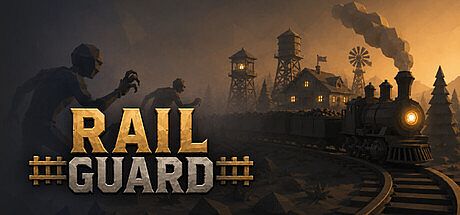


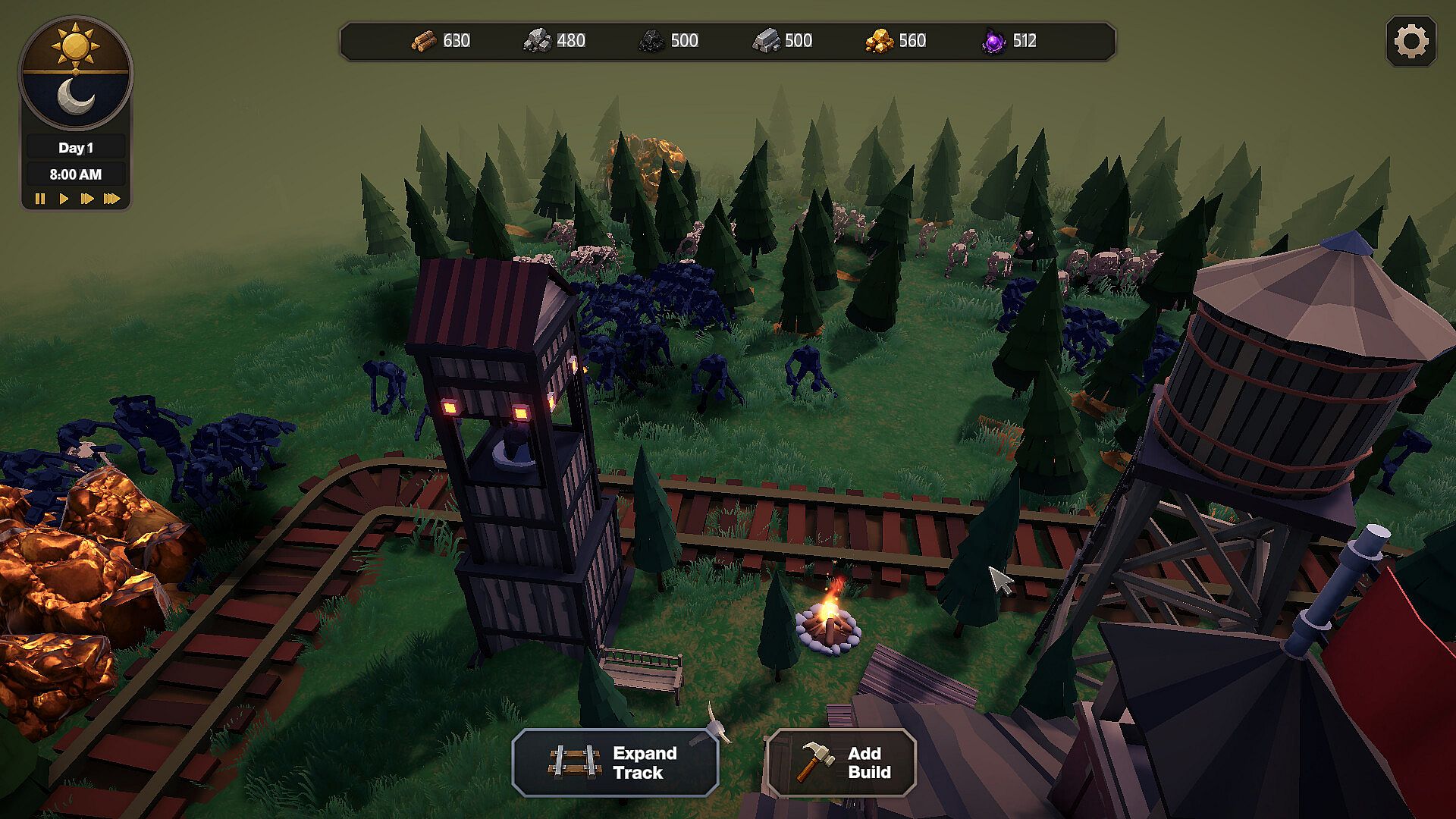
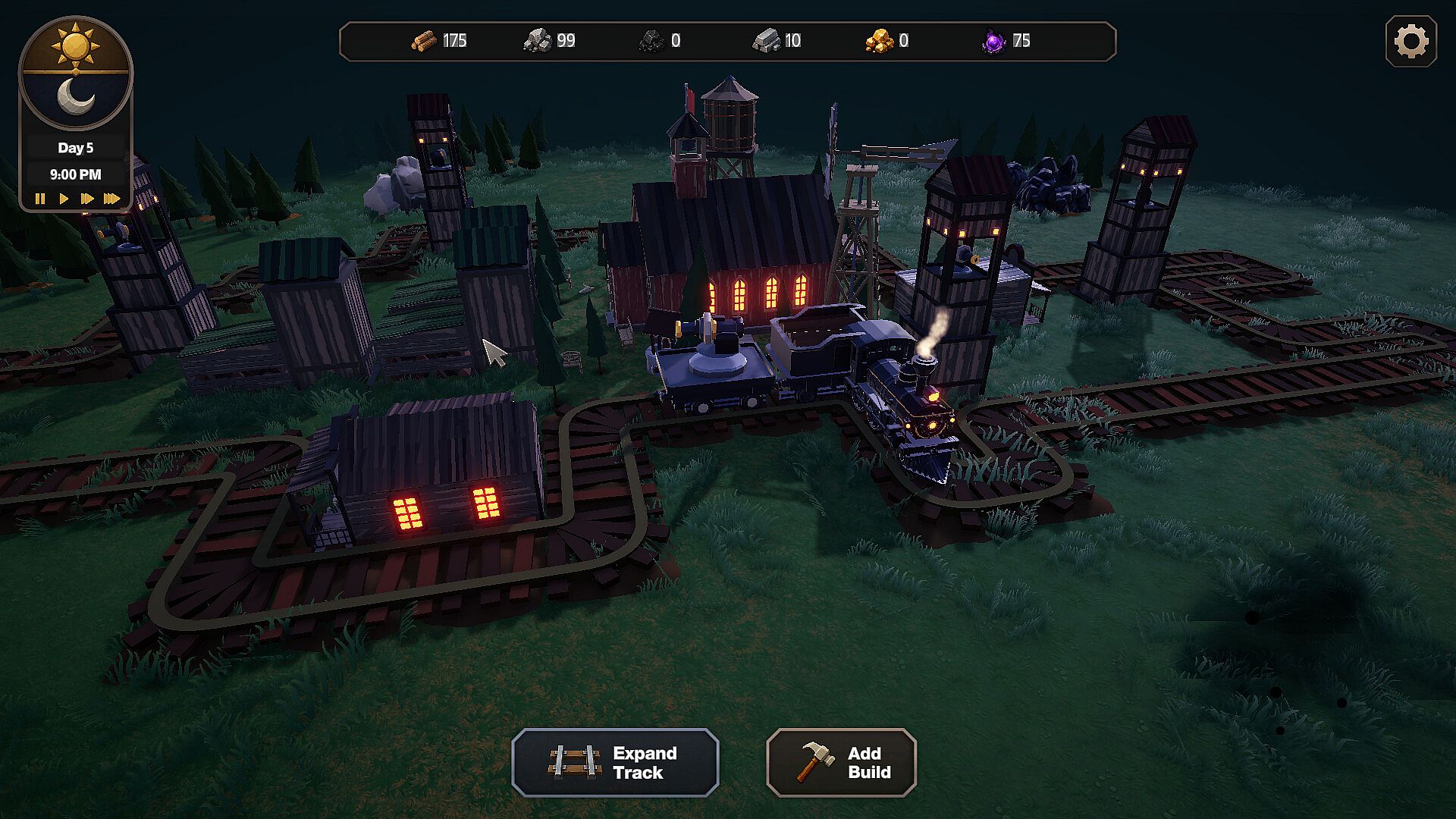
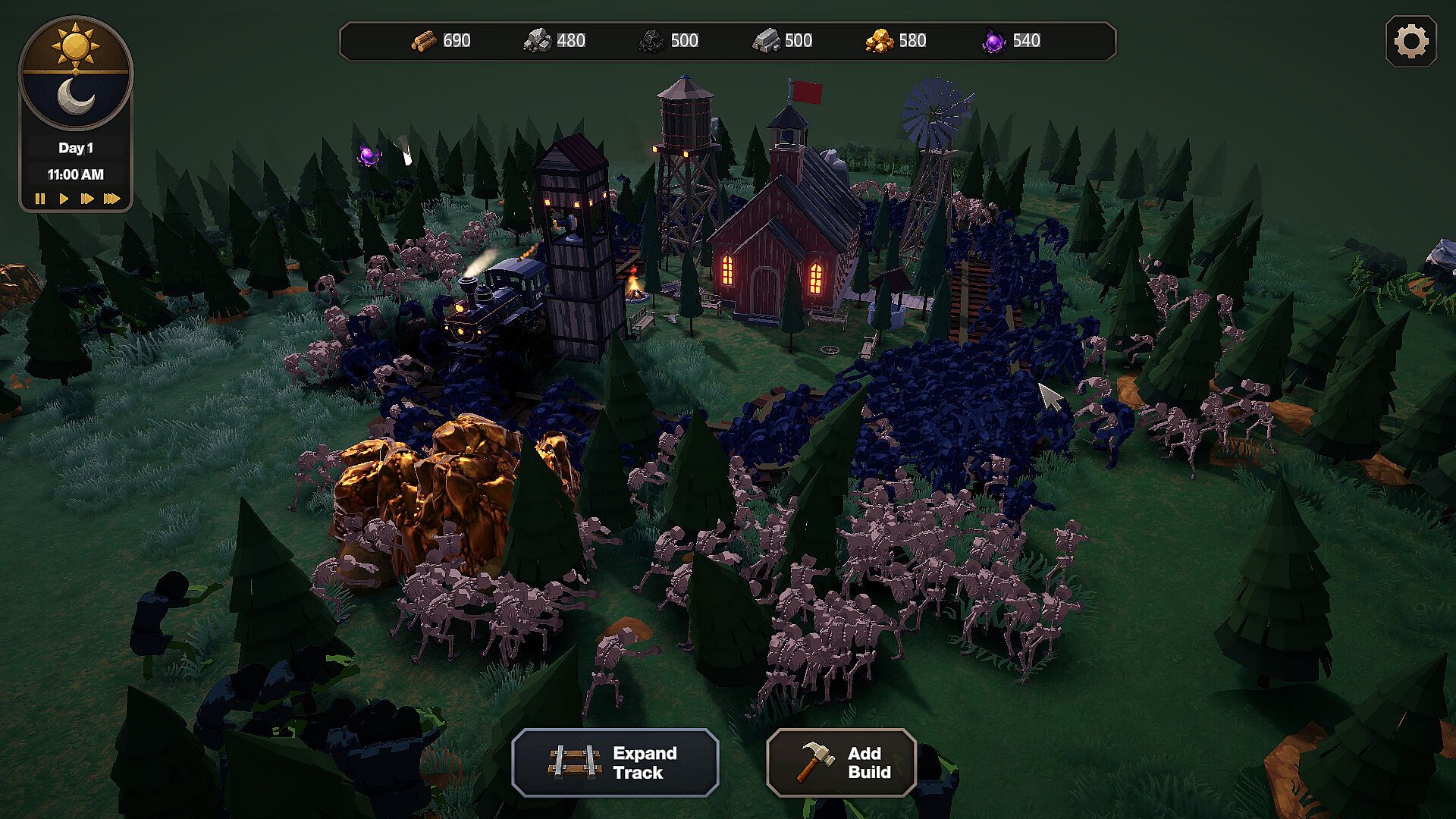
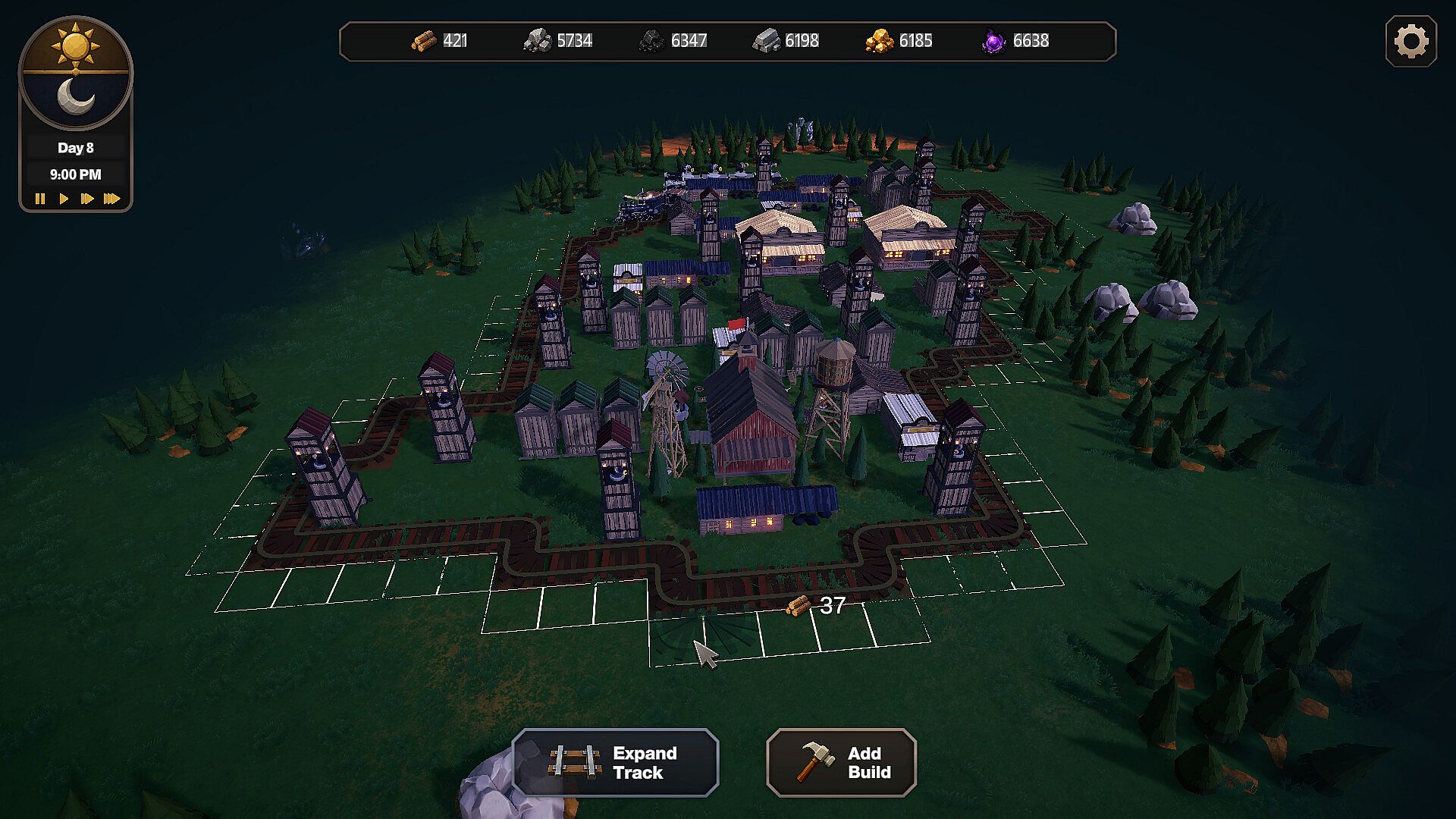
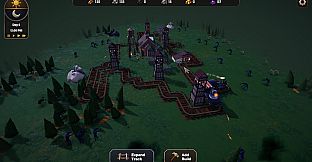
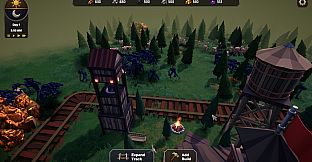
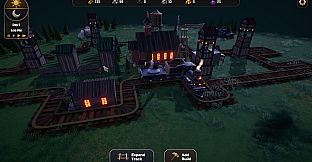
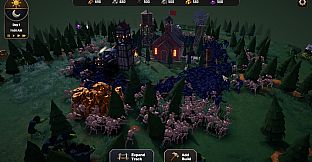
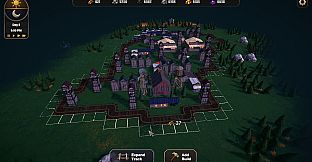
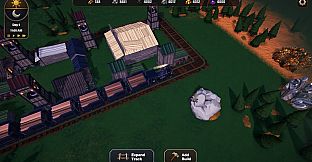
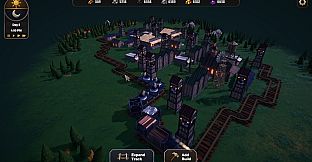
Rail Guard is a single-player incremental idle tower defense game that blends action and strategy elements in an indie package for PC. Players manage a growing railway network while fending off constant enemy assaults that threaten to overrun the tracks and collapse the headquarters. The core experience revolves around expansion, resource automation, and defensive positioning in sessions that reward careful planning and adaptation.
Gameplay
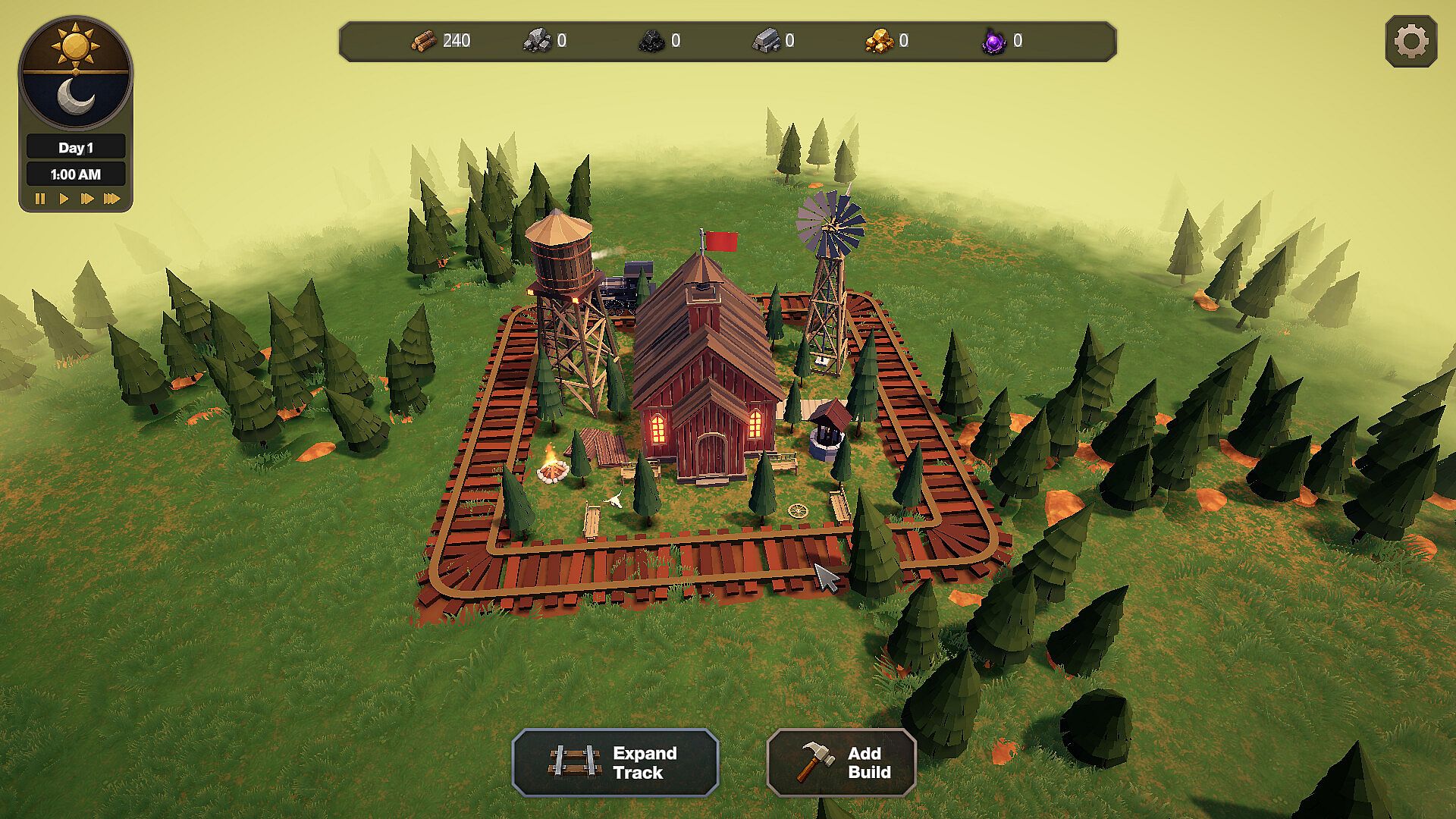
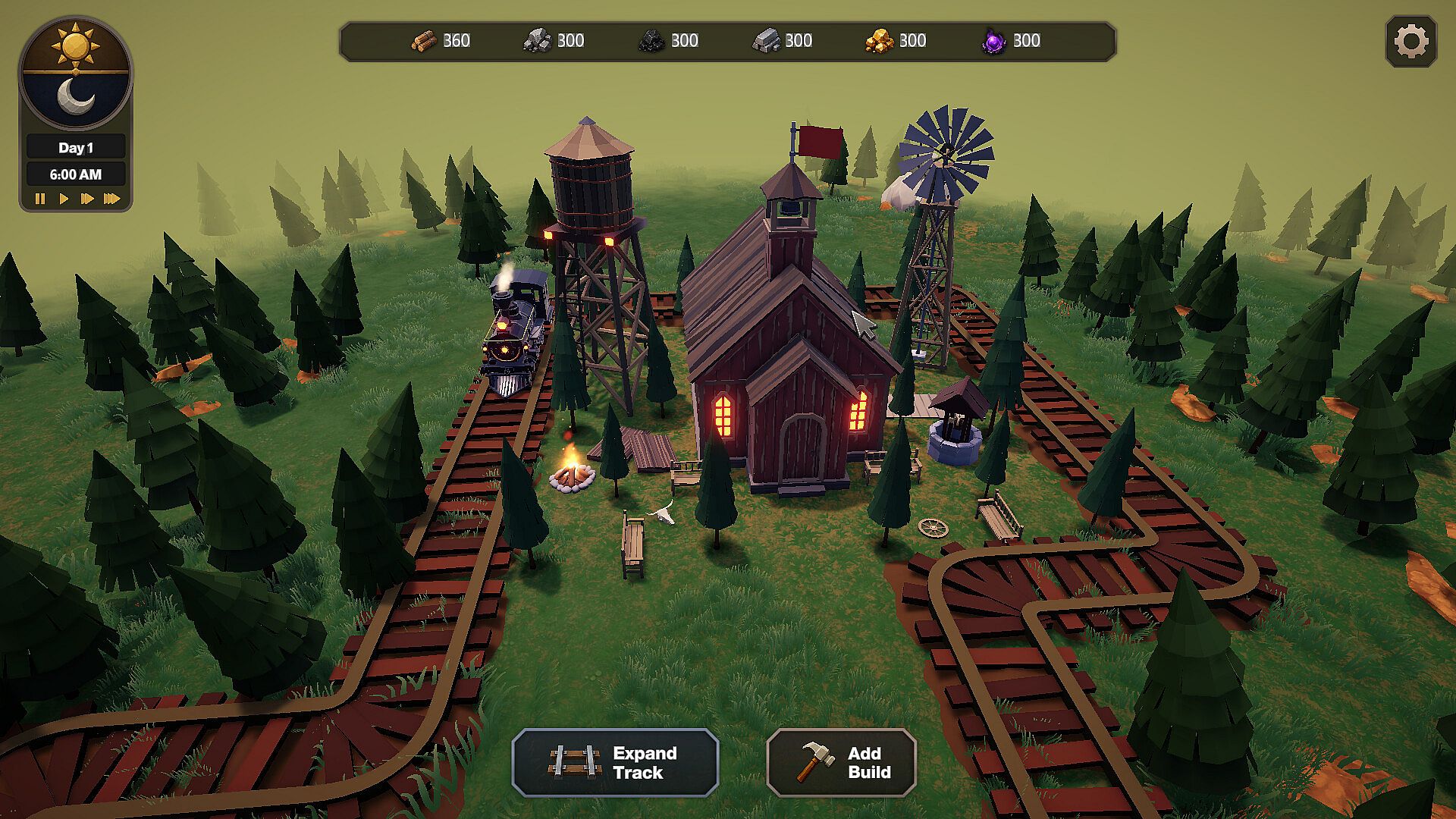
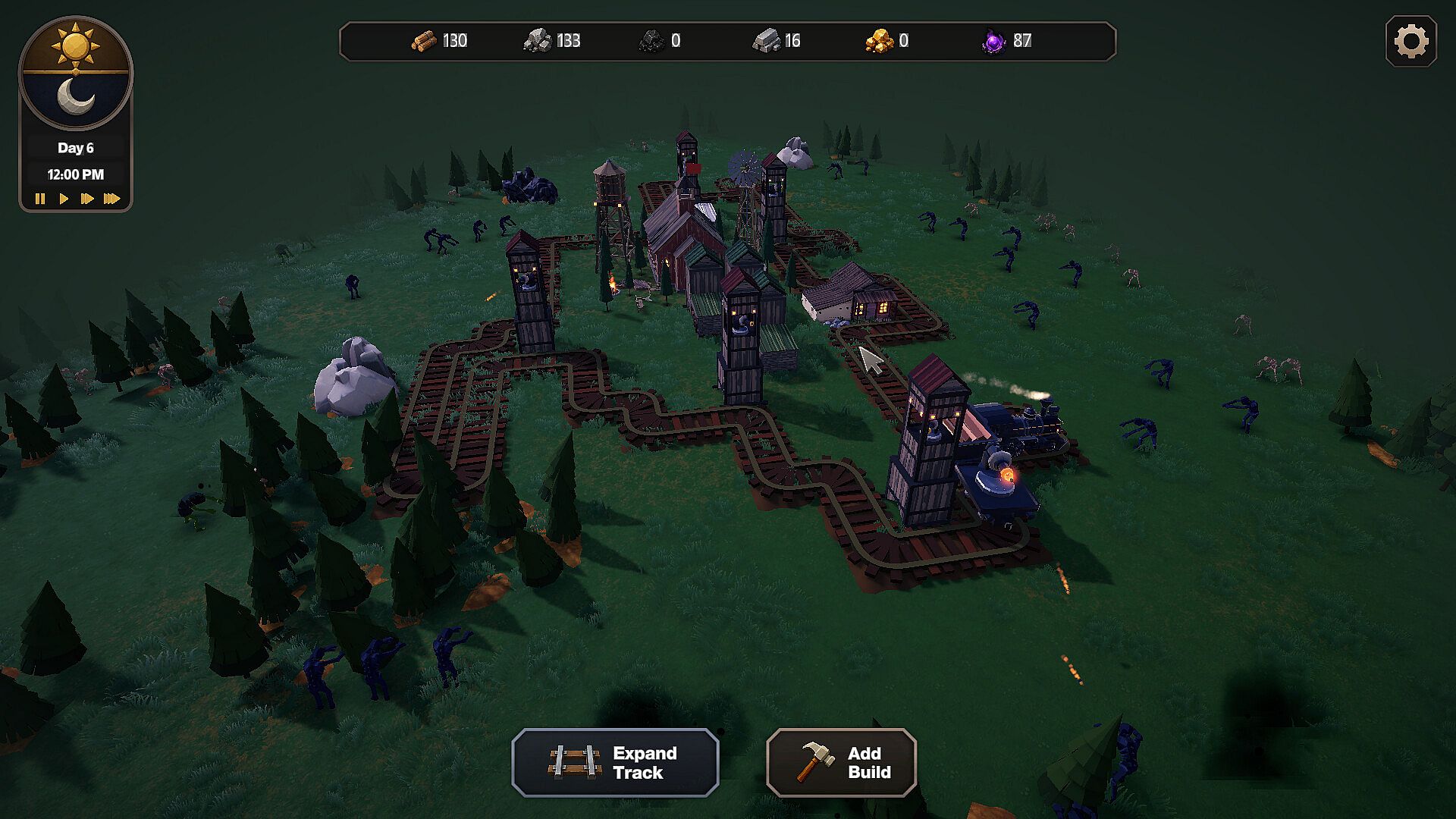
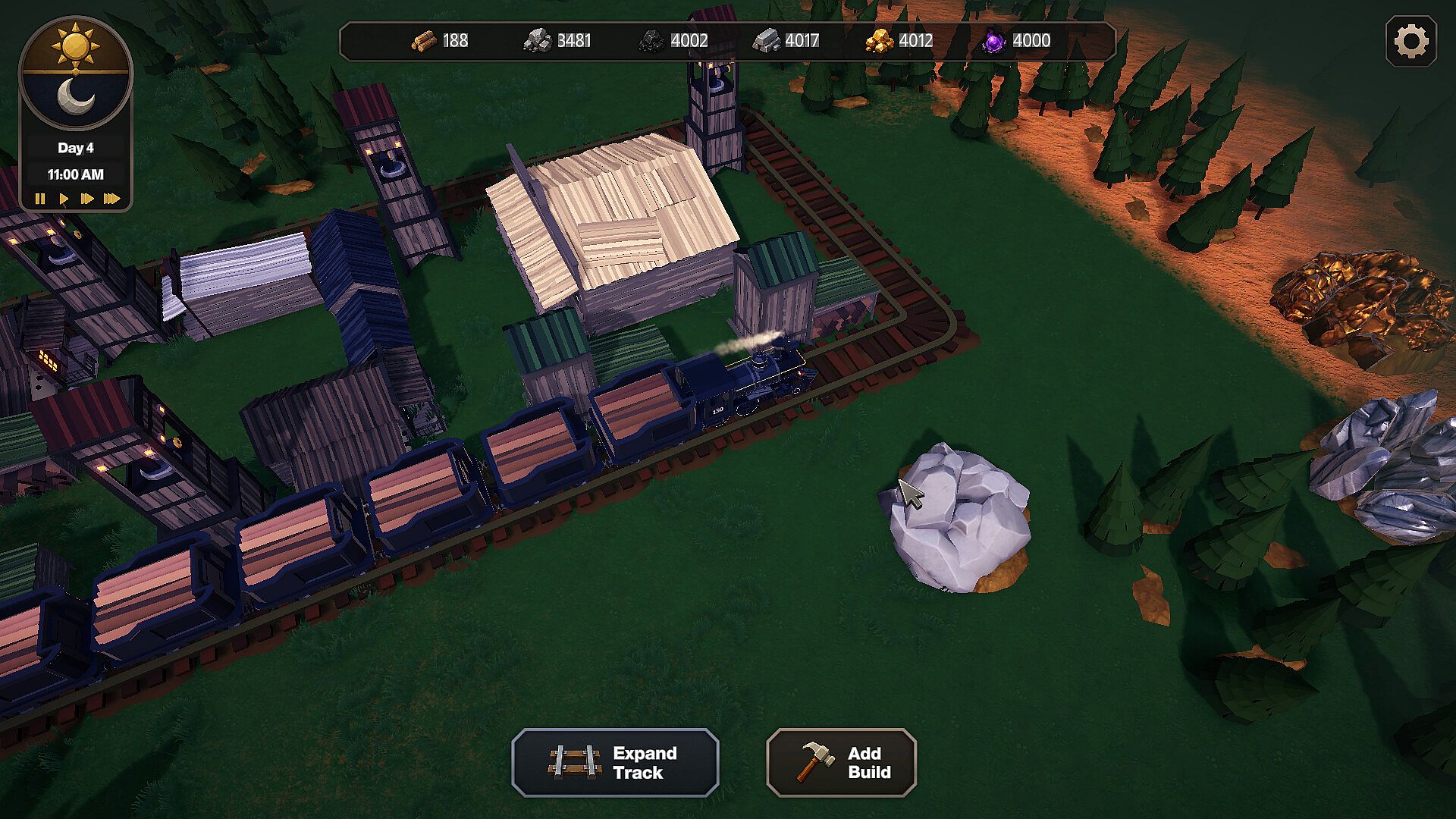
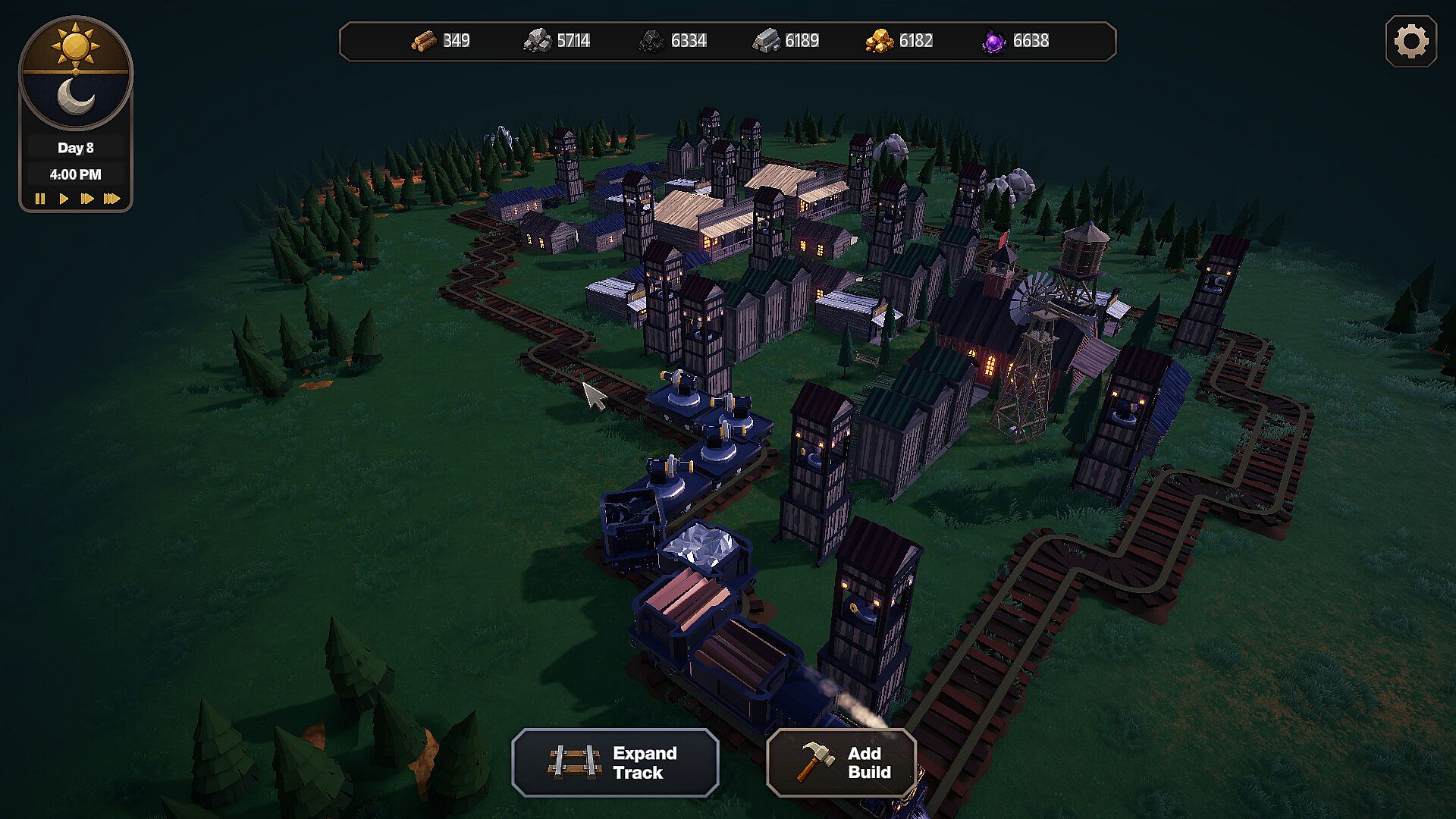
The central loop begins with laying tracks to expand territory and access new resources such as wood, stone, coal, silver, and gold. Larger networks provide more building space and collection opportunities, yet they demand greater defensive coverage against waves that push rails backward toward the base. A train travels continuously along the tracks, gathering output from specialized production buildings that process resources automatically once constructed.
Defenses form the other half of the equation. Turrets mounted on the train and stationary towers placed along the network slow or eliminate approaching enemies. Layout decisions matter because production structures and defensive emplacements share limited space within the railway boundaries. Players must balance economic growth with immediate survival needs as enemy pressure escalates over time.
Each day concludes with a choice among three random perk cards that grant permanent upgrades for the current run. Available improvements include faster train movement, higher turret damage, increased attack speed, stronger rail durability, boosted resource output, and reduced building costs. Different combinations appear across attempts, pushing players to experiment with varied priorities rather than repeating the same approach.
Game Modes
Rail Guard operates entirely as a single-player experience with no multiplayer components. The primary activity consists of successive runs in which players expand, automate, and defend until the railway can no longer hold against advancing enemies. Each attempt ends when tracks reach the headquarters, after which a new run begins with fresh perk selections.
The structure encourages repeated playthroughs through the daily perk system and the need to optimize layouts under increasing difficulty. No separate competitive or cooperative modes exist, keeping the focus on individual strategy refinement and incremental progress within each session.
Progression and Strategy
Longer survival depends on efficient placement of production buildings and defensive structures to maintain resource flow while countering enemy advances. Legendary upgrades appear among the perk options in some runs, offering stronger or more specialized bonuses that can shift the entire approach. Resource types scale in value, and automation buildings free the player to focus on placement and timing rather than manual collection.
Adaptation becomes essential because enemy waves grow steadily and the expanding railway creates more points of vulnerability. Successful runs typically involve early investment in production to fuel later defensive upgrades, followed by targeted perks that address specific weaknesses such as slow collection or fragile rails.
Is It Worth Playing?
Rail Guard suits players who enjoy tower defense combined with idle automation and light roguelike progression through perk choices. The single-player format delivers focused sessions that reward experimentation with layouts and upgrade paths. A demo is available for those who want to test the core systems before the full release.
With no user reviews available yet and the game listed as coming soon, the decision rests on interest in the described mechanics rather than established community feedback. Those drawn to incremental growth, defensive positioning, and adapting strategies across short runs will find the most direct appeal in its design.











