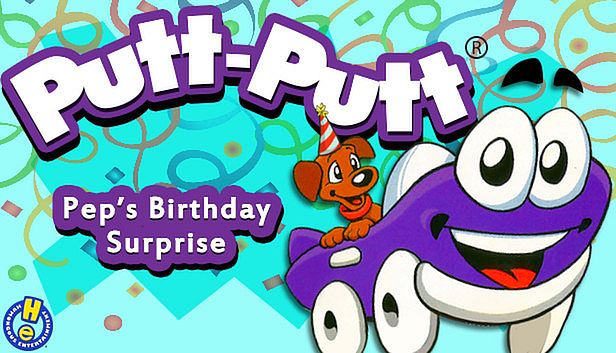














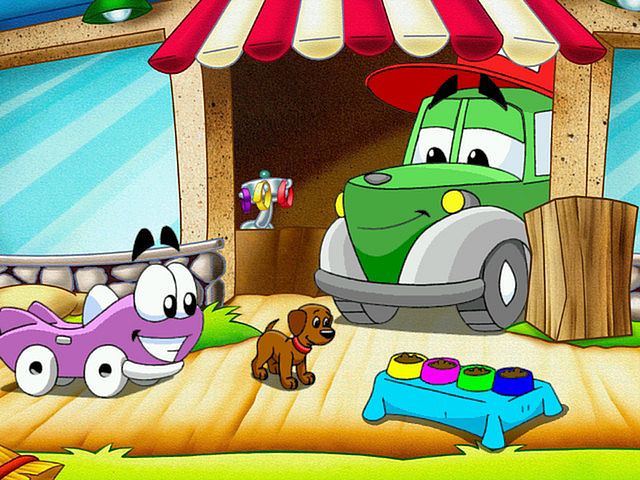
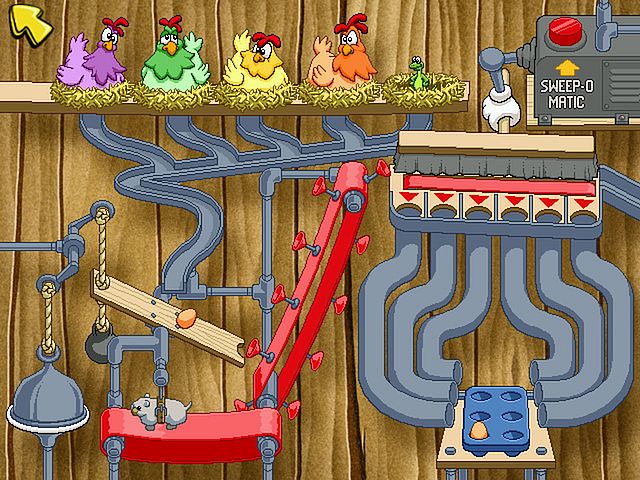
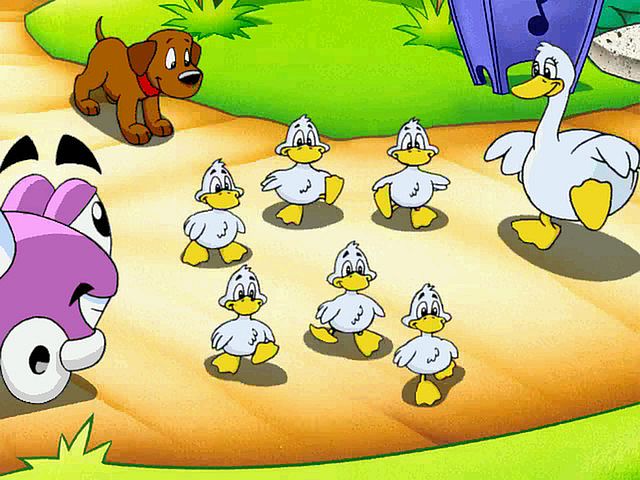
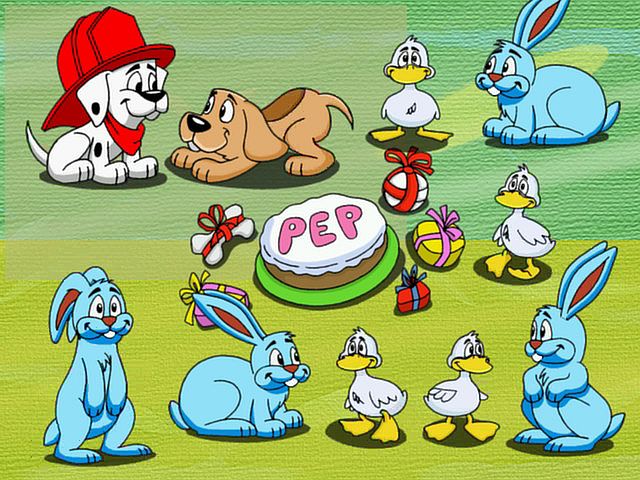
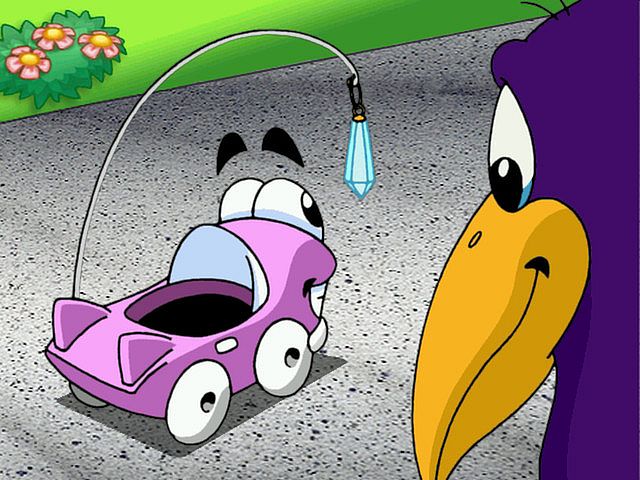
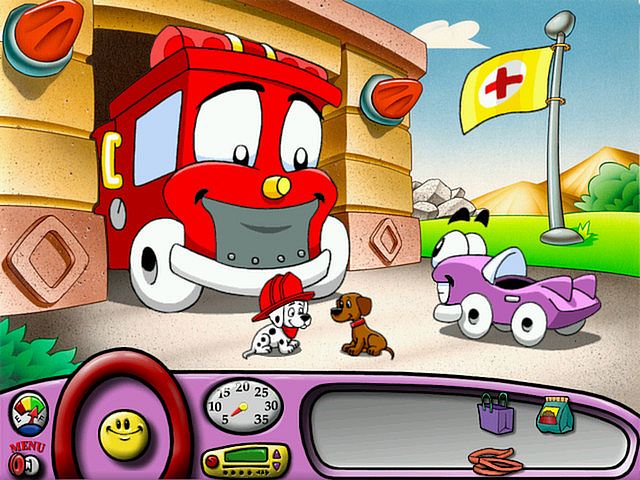

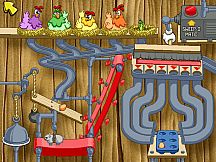
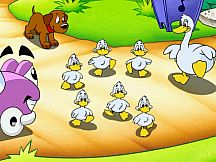
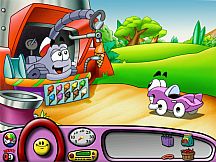
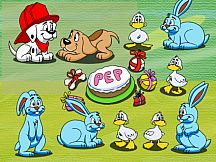
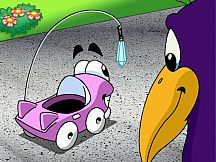
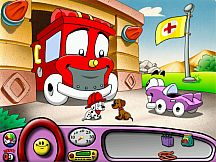

Putt-Putt: Pep's Birthday Surprise is a casual adventure game developed by Humongous Entertainment and released in 2003 for the PC. Players guide the friendly purple car Putt-Putt through the town of Cartown to organize a surprise birthday party for his dog companion Pep. The experience centers on exploration and light problem solving aimed at younger audiences.
Gameplay
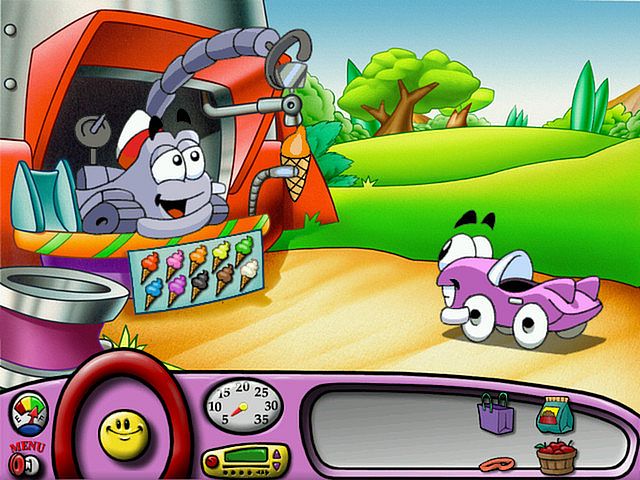
The core loop involves traveling between locations in Cartown to assist various residents with small tasks. Completing these tasks yields rewards that help collect the necessary items for the party, such as a birthday cake, presents, decorations, and invitations for friends. Putt-Putt interacts with characters by selecting dialogue options or performing simple actions that advance the story while keeping the event a secret from Pep.
Over twenty distinct spots appear throughout the town, and the order of events shifts with each new play session. This structure encourages repeated visits without identical repetition. Navigation relies on point-and-click mechanics typical of the era, where children select destinations and interact with objects or people on screen. The game reinforces polite behavior through Putt-Putt's consistent friendly responses during conversations.
Problem solving appears in the form of figuring out what each resident needs and how to obtain the required supplies. These challenges stay accessible and promote logical thinking rather than complex puzzles. The adventure remains entirely single-player with no competitive or cooperative elements.
Game Modes
The title offers one primary experience centered on the birthday preparation adventure. No separate modes such as free play, timed challenges, or alternative scenarios exist. Replay value comes from the randomized sequence of events and locations encountered during each run. Players progress through the same overall goal of gathering party supplies while meeting new characters and resolving their requests along the way.
The single continuous adventure encourages exploration across the full set of locations without branching into distinct gameplay styles or difficulty levels. All content stays focused on the surprise party preparation narrative.
Educational Elements
Throughout the journey, the game weaves in lessons on manners and social interaction as Putt-Putt demonstrates polite exchanges with every resident. Children practice critical thinking by determining the right sequence of actions to complete tasks and gather items. Creative problem solving emerges when players experiment with different approaches to help characters and collect rewards.
Teamwork concepts appear indirectly through the cooperative feel of assisting multiple townsfolk toward the shared goal of the party. The design ensures these elements surface naturally during play rather than through direct instruction, allowing kids to absorb the concepts while enjoying the story.
Is It Worth Playing?
Player feedback on the Steam release shows mixed results, with 52 percent positive ratings from a modest number of reviews. Older professional assessments from the early 2000s praised the colorful presentation and suitability for preschoolers new to adventure games. The title suits families seeking a gentle introduction to interactive stories for young children.
Its straightforward structure and emphasis on exploration without pressure make it appropriate for short play sessions. Those looking for modern graphics, voice acting depth, or ongoing content updates will find the 2003 production dated by current standards. Parents who value educational reinforcement alongside entertainment may appreciate the focus on social skills and basic reasoning. The game remains available as a standalone purchase with no additional modes or expansions required to experience the full adventure.