


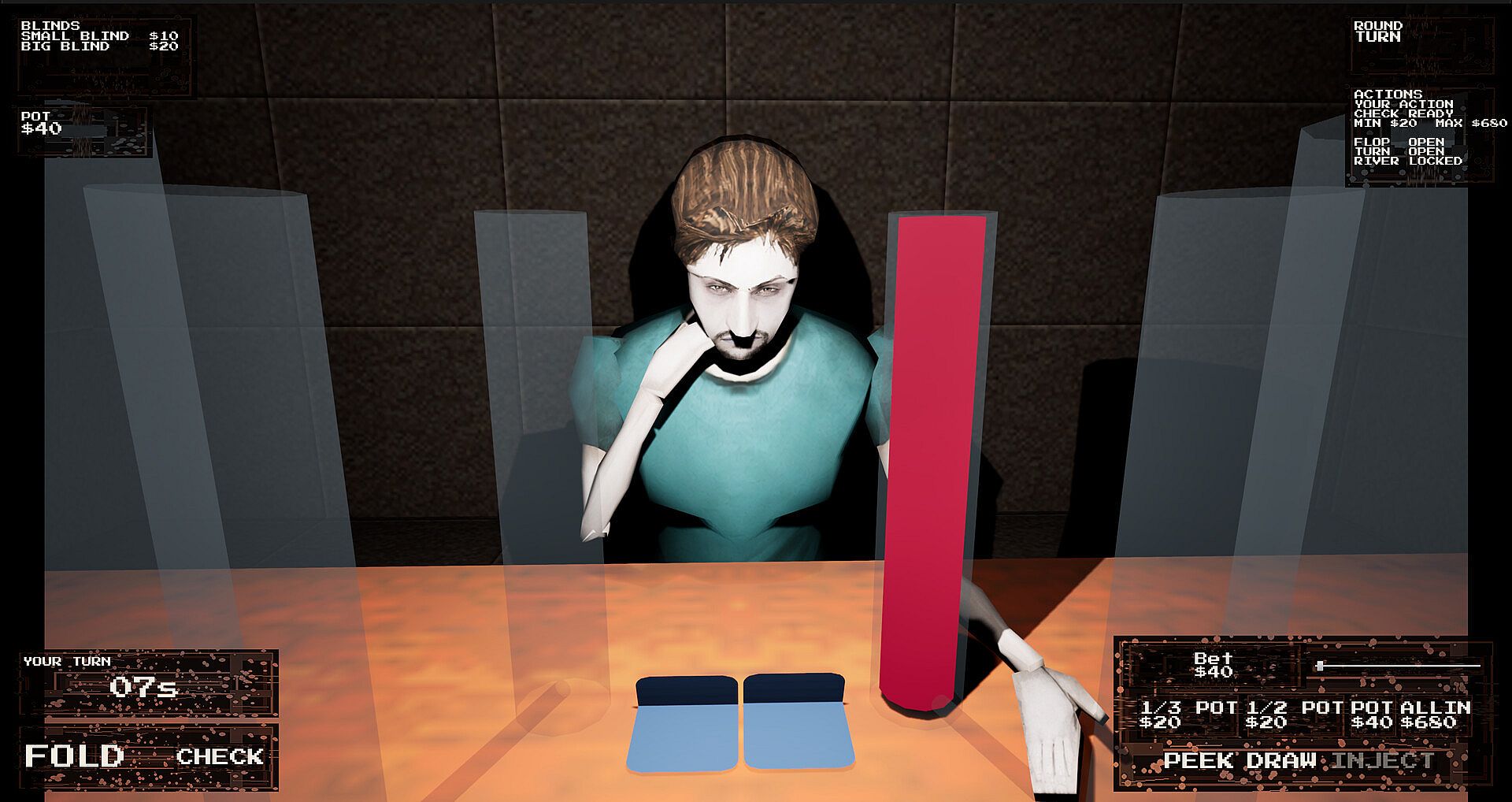
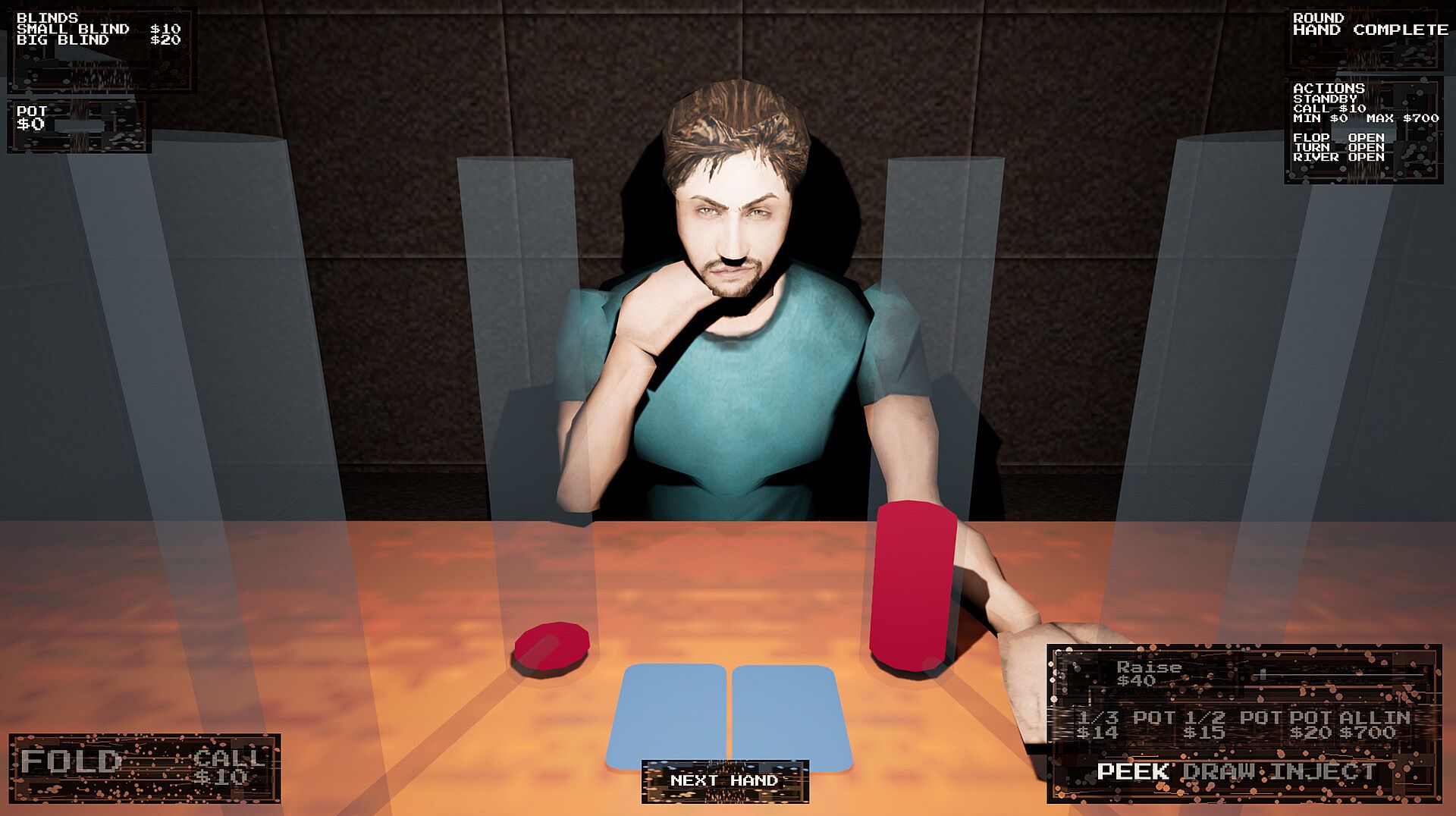



Poker in Blood stands out as a strategy indie simulation game on PC that transforms standard Texas Hold'em into a direct 1v1 contest centered on blood as the betting medium. Players enter online matches where the currency comes directly from their own bodies, creating immediate physical consequences for every wager. The setup demands constant attention to both the cards and the body's remaining capacity, as blood removal accelerates the loss of life.
Gameplay
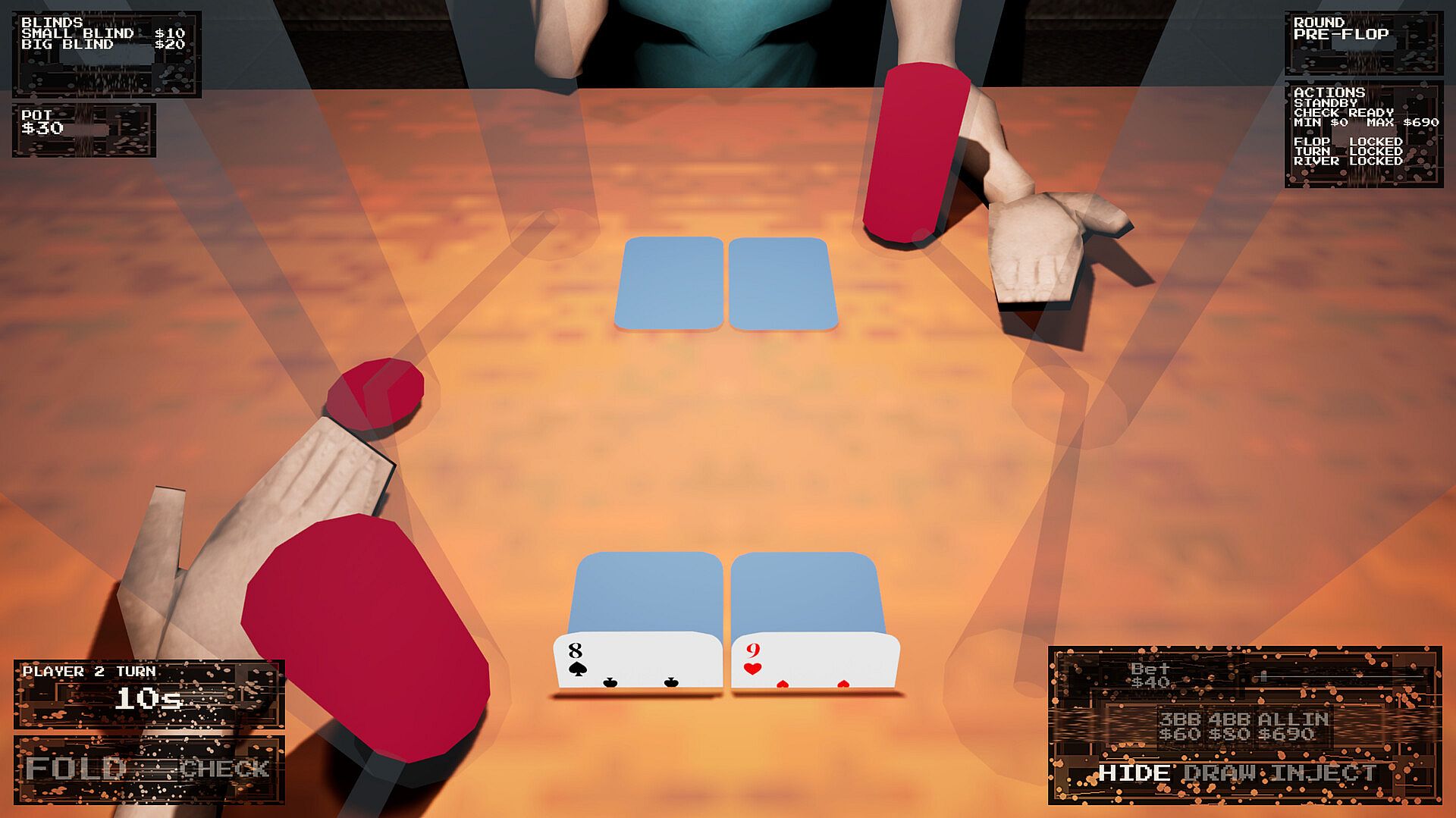
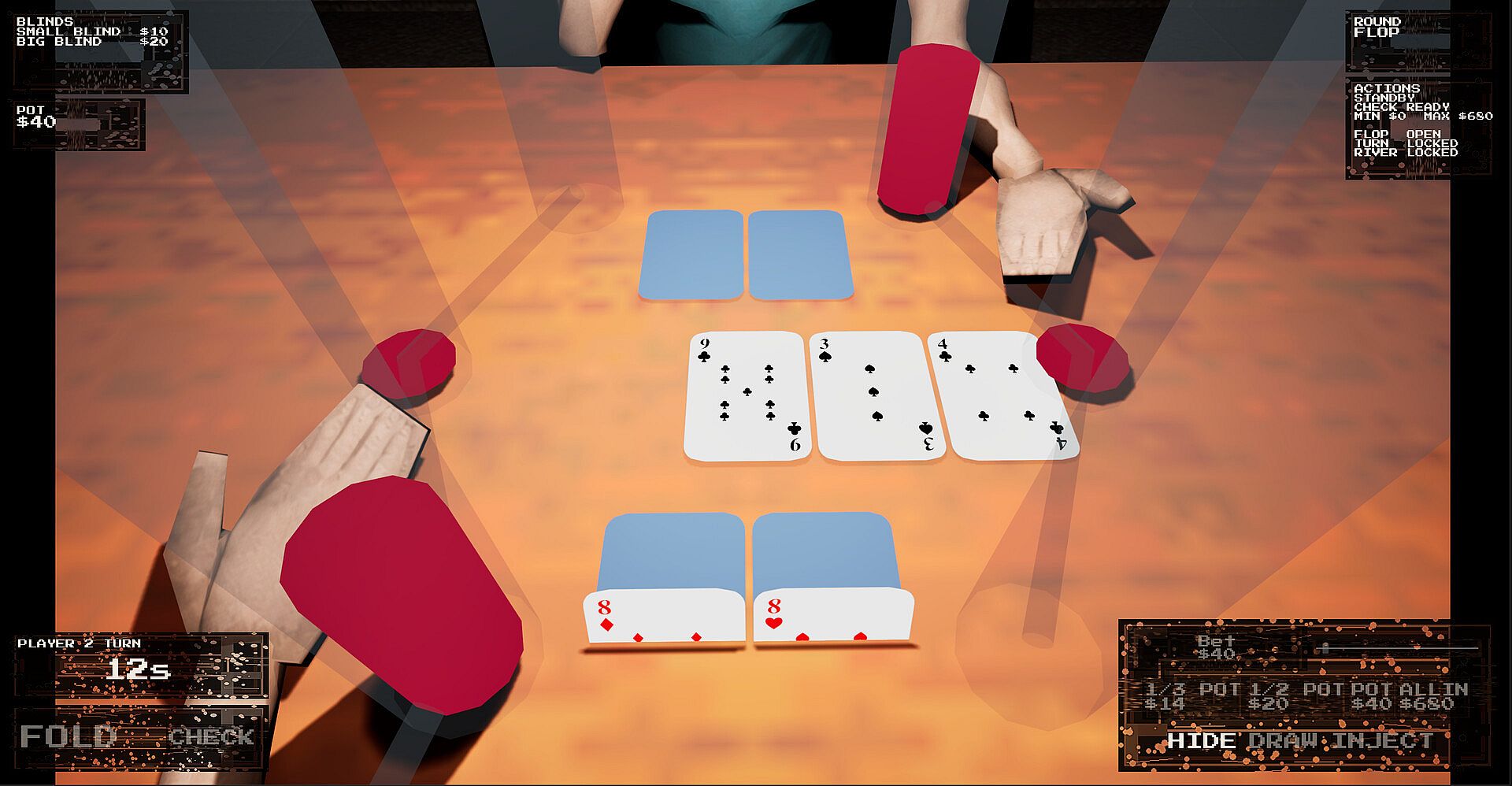
Matches unfold through familiar Texas Hold'em rules adapted to the blood chip system. Each participant starts with a supply of blood that can be extracted to place bets or returned through injection to restore reserves. Extraction turns the blood into usable chips for raising, calling, or folding under pressure. Re-injection reverses the process but requires deliberate timing to avoid overcommitting during active hands.
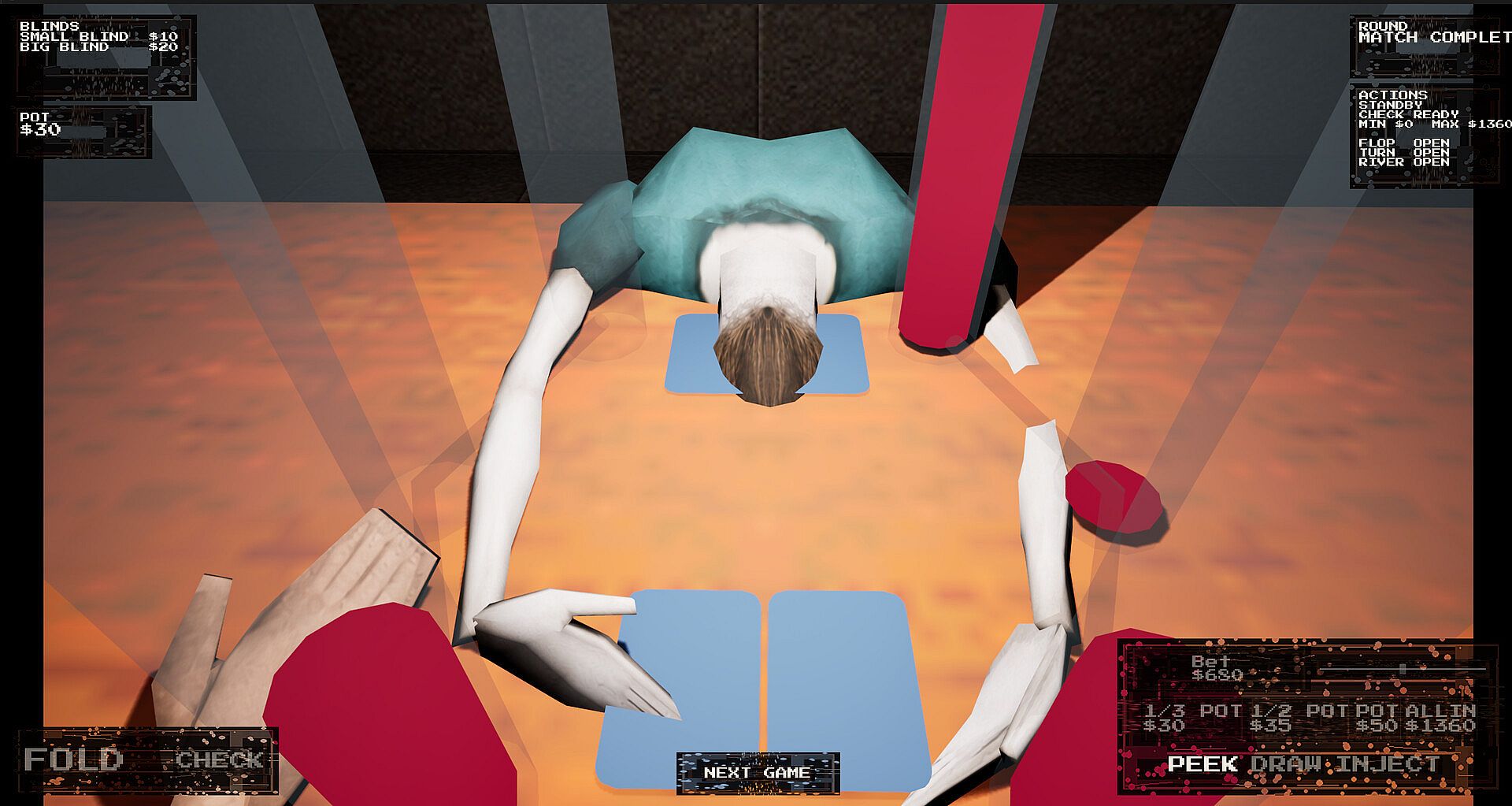
The core loop revolves around balancing aggression at the table with survival outside it. Every chip bet removes blood volume, which in turn shortens the window before life runs out. In prolonged exchanges this window can shrink to mere tens of seconds, forcing rapid choices between pushing for a win or preserving enough blood to stay conscious. Opponents appear to weaken visibly as their own blood levels drop, adding a layer of observation to standard poker reads.
Strategy emerges from the dual resource management. A player might choose to reinject blood mid-hand to extend playtime, only to face a larger bet that demands further extraction. The simulation aspect tracks these bodily changes in real time, turning each decision into a calculation of risk versus remaining endurance. Friends can join sessions to test this system head to head, turning the experience into a contest of endurance as much as card skill.
Game Modes
The game focuses exclusively on online 1v1 Texas Hold'em encounters. These direct confrontations pit two participants against each other with the blood chip rules fully active. No additional modes appear in the available details, keeping the emphasis on repeated head-to-head sessions where the physical toll builds across multiple hands.
Within these 1v1 matches the structure supports both casual and intense play. Participants can engage with friends for repeated rounds or enter open online pairings. The single format means every session follows the same core flow of betting blood, managing life depletion, and aiming to outlast the opponent through superior play or better endurance management.
The Physical Stakes
Blood functions as both currency and countdown timer. Once removed it cannot be used again until reinjected, which itself consumes time and attention. Greater volumes extracted lead to faster life drain, narrowing the margin for error in later stages of a match. This mechanic creates natural tension as hands progress and both sides lose blood at different rates.
Observation becomes part of the strategy. One player can track how much blood the opponent has committed and how quickly their life appears to fade. The result is a poker variant where table position and card strength share importance with the visible effects of blood loss on the other participant. Matches often conclude when one side can no longer sustain further extraction or when life reaches its limit.
Is It Worth Playing?
Poker in Blood suits players who enjoy strategy titles that layer physical consequences onto traditional card play. The 1v1 online format delivers short, focused sessions driven by the blood depletion timer rather than extended tournaments. Those comfortable with high-pressure decisions and the grim visual feedback of opponents weakening may appreciate the direct confrontation style.
The indie simulation approach keeps the experience contained and repeatable without extraneous systems. Availability on PC supports straightforward access for anyone seeking a fresh take on Texas Hold'em. The combination of familiar poker rules with the blood-as-chips constraint produces a distinct loop centered on resource trade-offs and rapid adaptation. Individuals drawn to tense, personal duels rather than large-scale multiplayer will find the core loop aligns with that preference.