




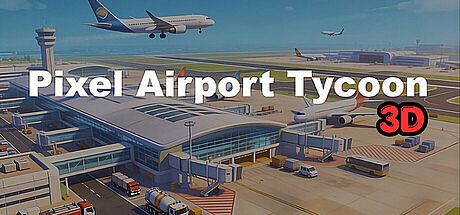







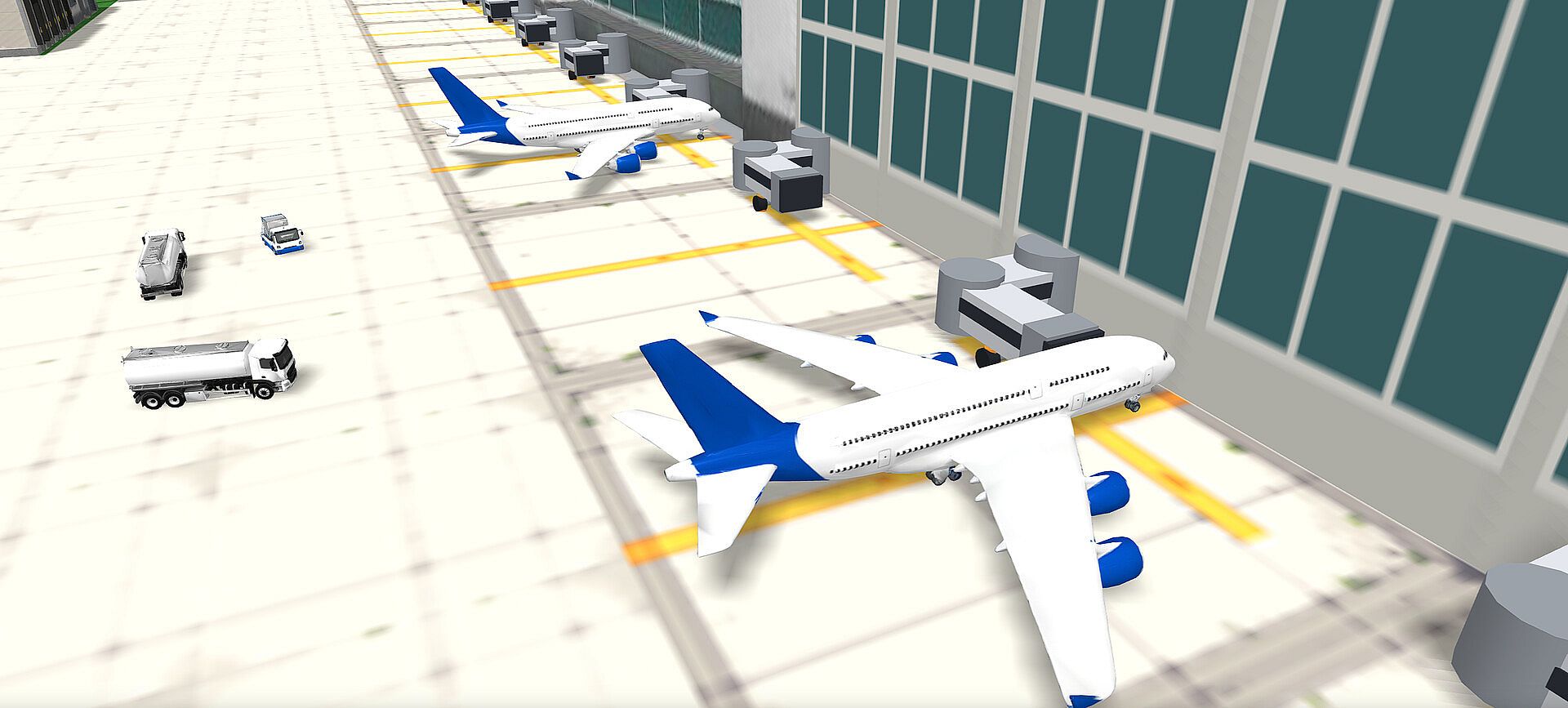
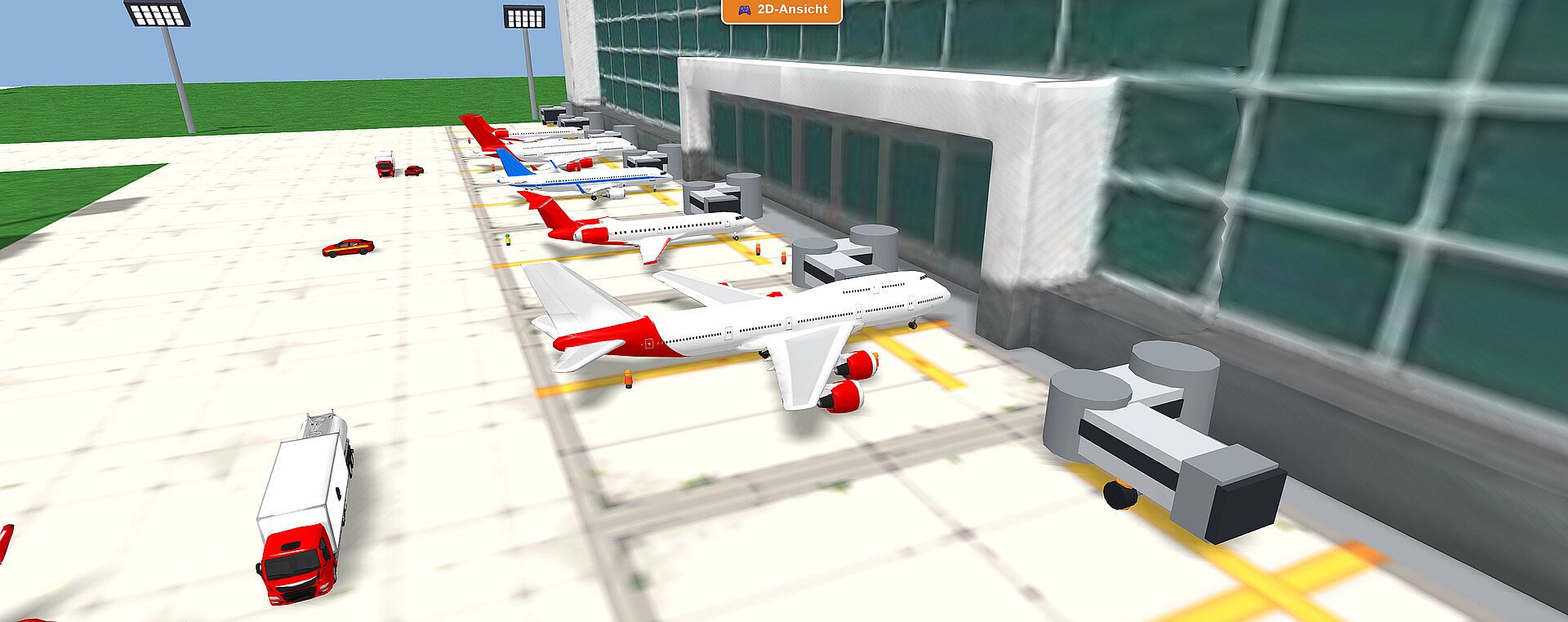
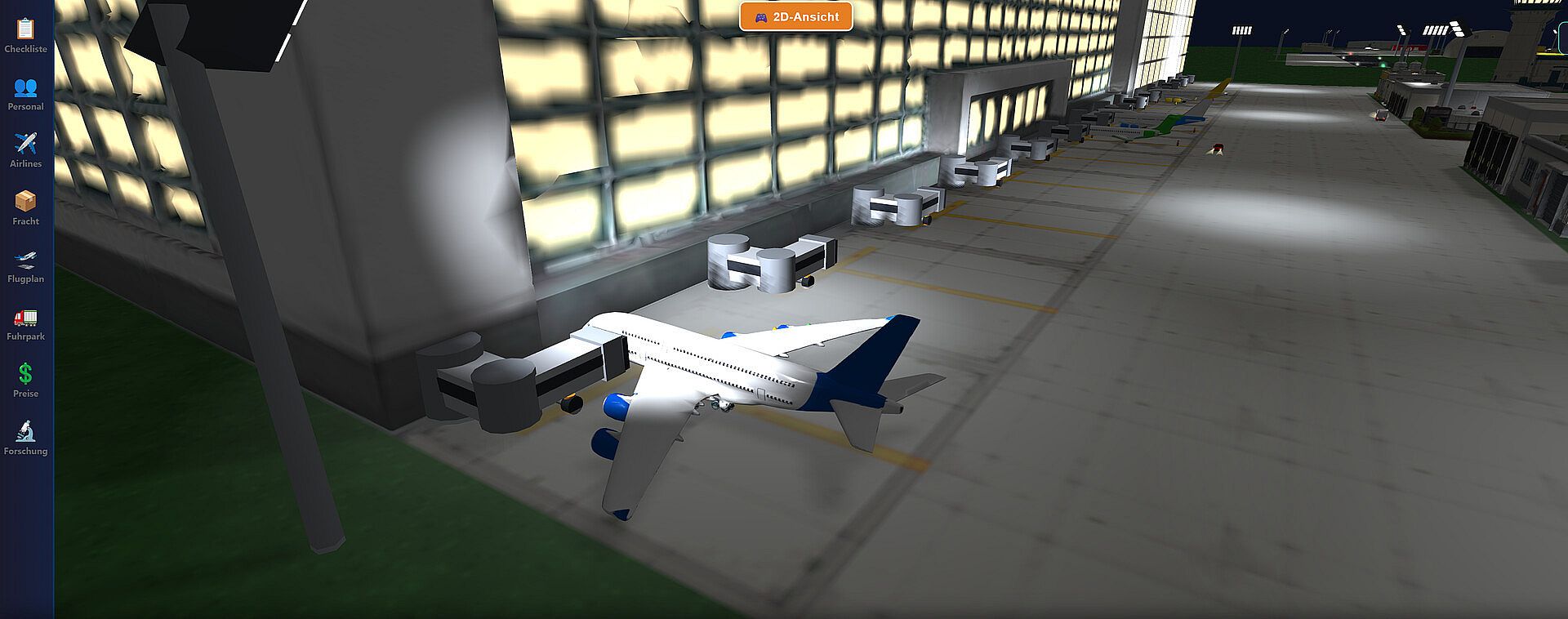
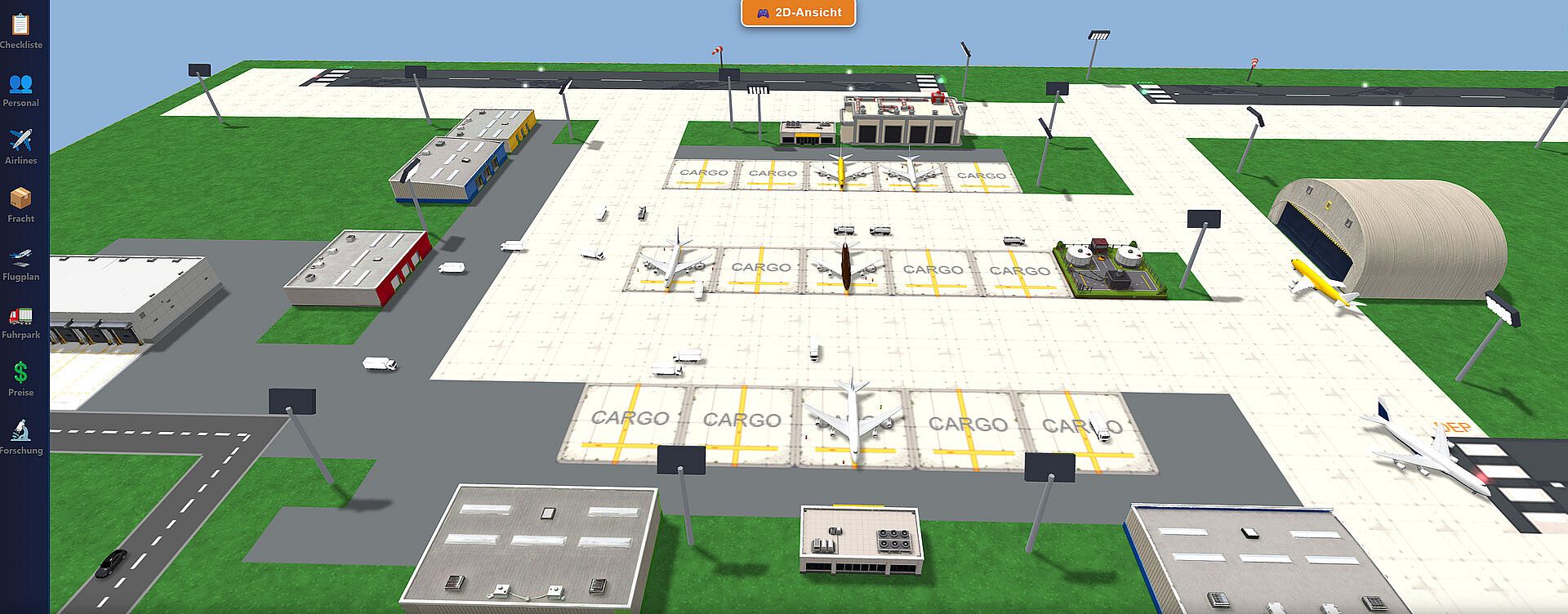
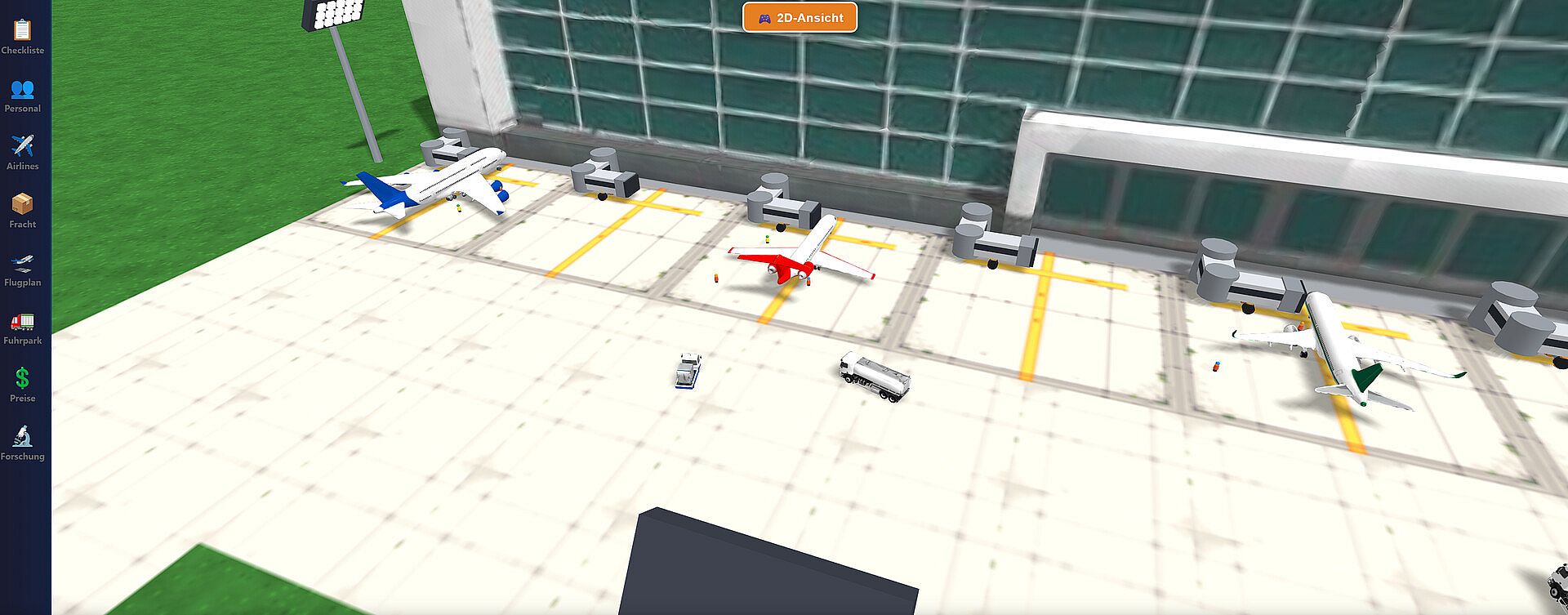
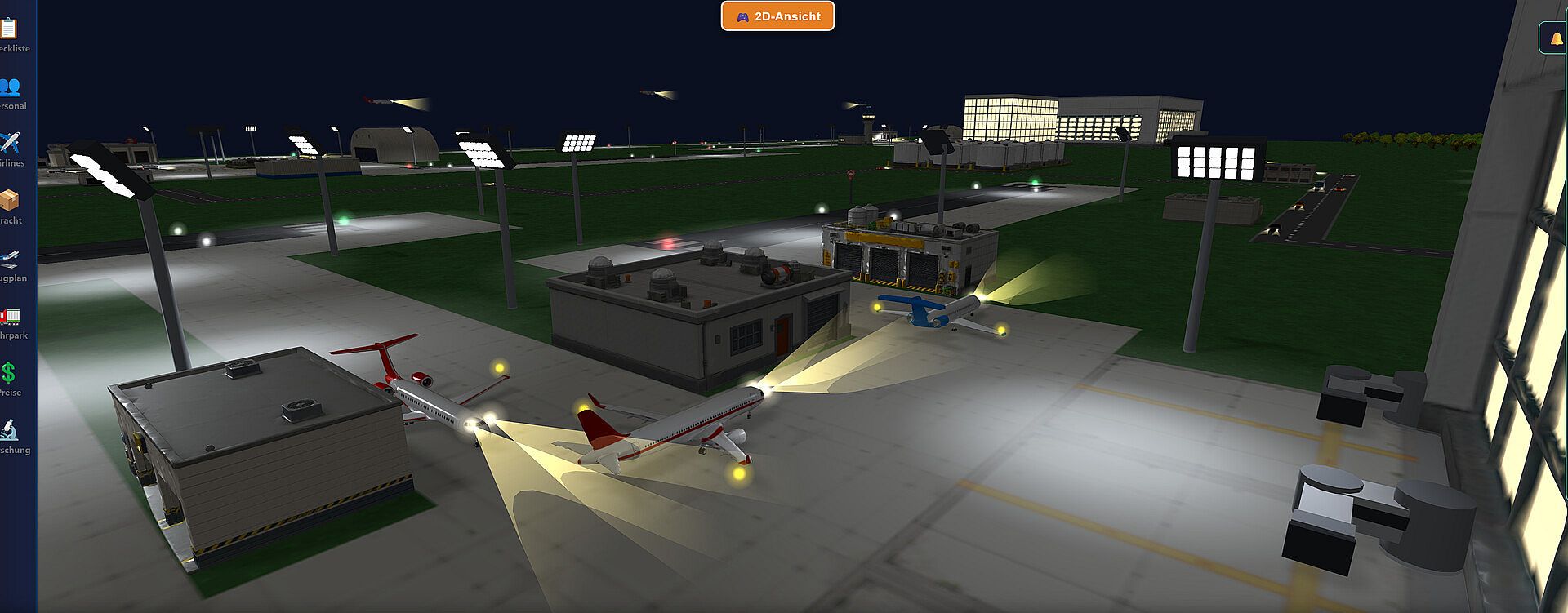
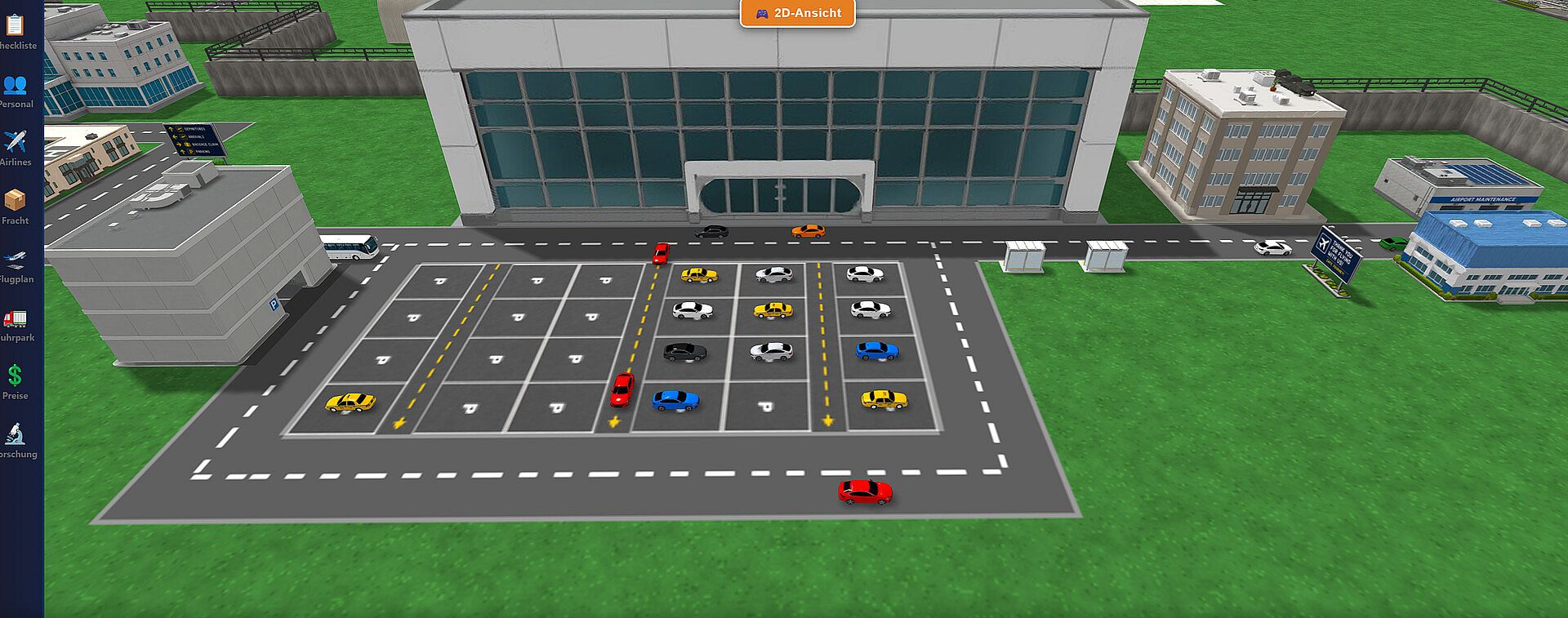
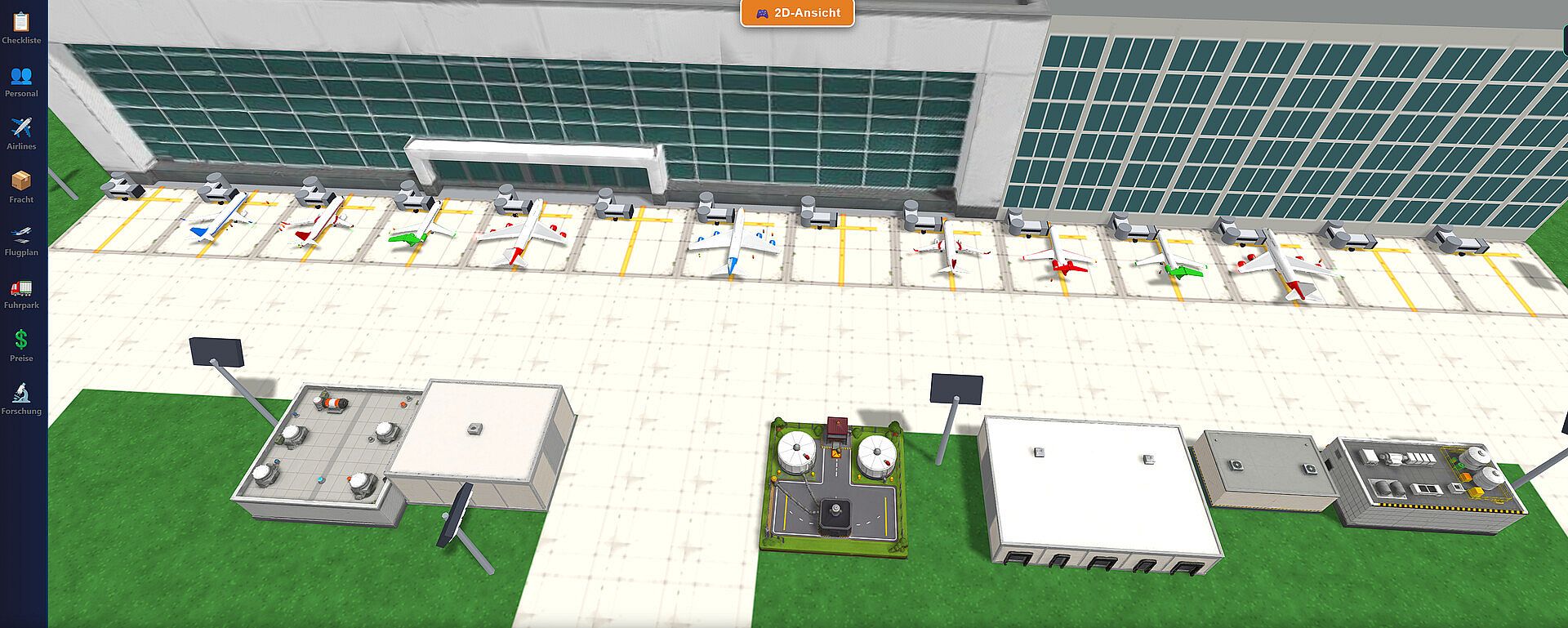
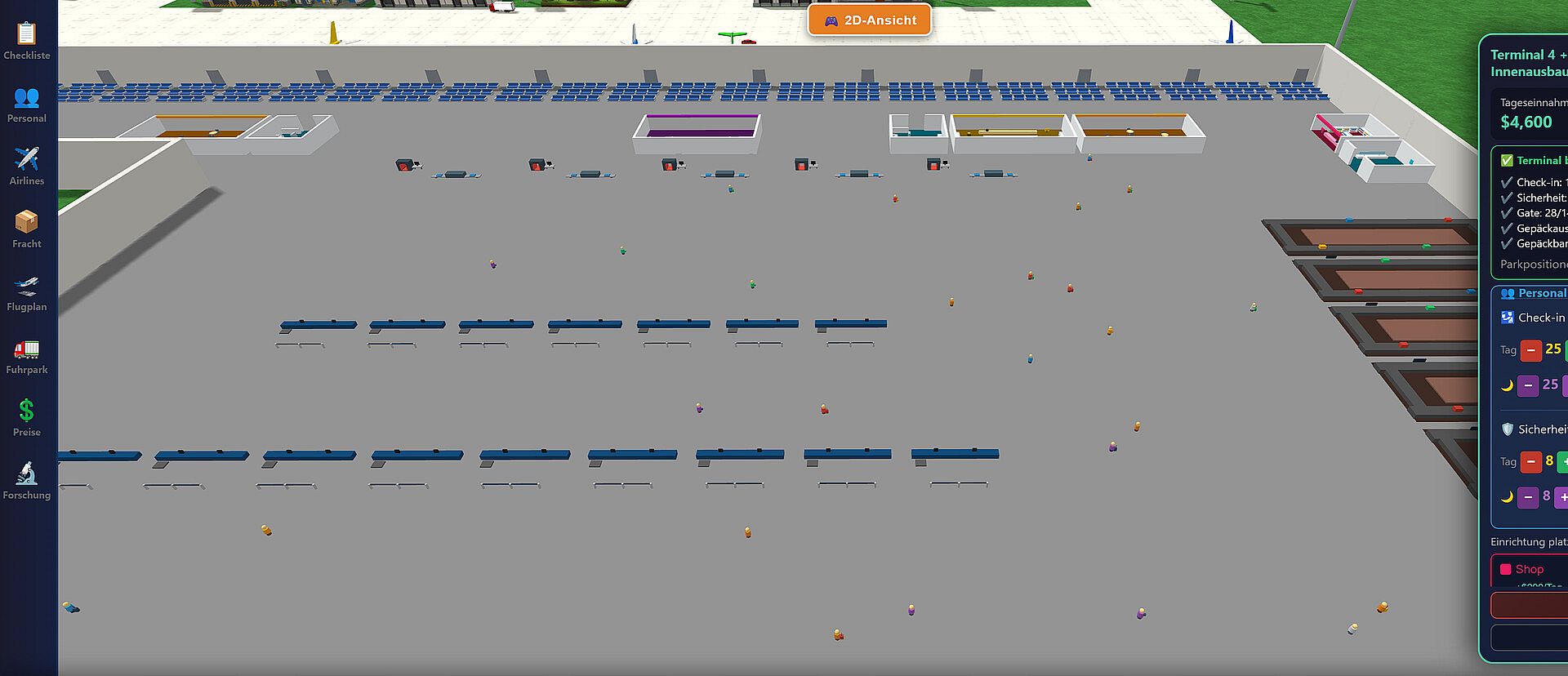
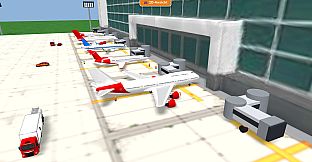
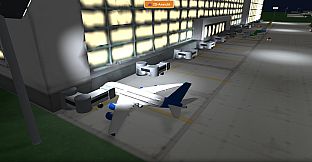
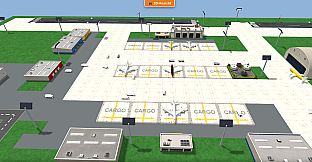
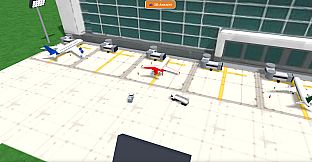
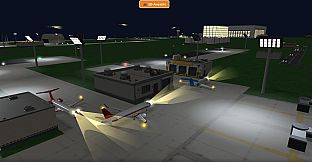
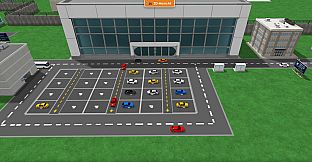
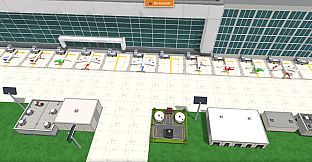
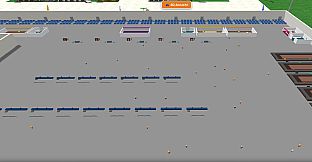
Pixel Airport Tycoon 3D is a single-player strategy and simulation game where players plan, construct, and operate an airport from its earliest stages to a full-scale international operation. The title blends classic top-down management with optional 3D visualization, allowing free camera movement, dynamic lighting, and day-night cycles that affect visibility and operations. Core loops revolve around infrastructure placement on a grid, staff and vehicle coordination, real-time flight handling, and financial decisions that balance fees, contracts, and expenses.
Gameplay
Players begin with basic runway construction and expand through free placement of more than 40 building types, including terminals with interior layouts, multiple runway sizes, towers, fuel depots, and support facilities. Underground pipelines, baggage systems, and road networks connect everything, while a power grid requires plants or solar options to keep operations running. Aircraft arrive and depart in real time, needing taxiing, servicing, and takeoff slots managed via towers of varying capacity.
Staff hiring covers roles from fuel operators to air traffic controllers, with vehicles such as fuel trucks and de-icing units navigating the site automatically. Weather events like snow trigger mandatory de-icing procedures, and a research tree unlocks upgrades for terminals, cargo handling, sustainable fuels, and electric fleets. Revenue comes from adjustable landing fees, passenger services, cargo contracts, and ancillary businesses like hotels and shops, supported by loans and reputation-building deals with airlines.
Additional systems track passenger satisfaction across six stars through amenities and security measures up to four stars, alongside emissions management and emergency responses using fire and medical assets. Controls support mouse-wheel zoom, keyboard movement, and context menus, with speed settings from pause to four times normal and multiple save slots.
Game Modes
The game offers two distinct airport types that shape the entire experience. Commercial airports require full terminals, passenger flows, cargo infrastructure, and extensive support buildings to reach major-hub scale. Private propeller airfields focus on smaller runways and stands for light aircraft, skipping terminal construction for a more compact setup.
Both types support the same underlying mechanics of flight operations, staff management, and expansion, but differ in scale and required facilities. Players switch between 2D top-down and 3D perspectives at any time to suit planning or observation preferences.
Building and Expansion Systems
Infrastructure grows zone by zone through land purchases and research that adds new terminal tiers, runway configurations, cargo depots for specialized freight, and service upgrades. Interior terminal design lets players position check-ins, security, retail, and lounges, while fleet management tracks vehicle condition and enables electric conversions. Sustainability options include solar power, recycling, and CO2 tracking to offset taxes.
Economy features real-time fuel pricing fluctuations and nine adjustable fee categories that influence traffic volume. Contracts with airlines and freight firms provide steady income once reputation thresholds are met, and banking allows accelerated growth at the cost of interest.
Is It Worth Playing?
Pixel Airport Tycoon 3D targets players who enjoy detailed single-player management simulations with layered systems for construction, logistics, and finance. The switchable 2D and 3D views, combined with weather impacts, staff logistics, and contract negotiations, create a focused tycoon loop without multiplayer elements. As a new release scheduled for August 2026 with no user reviews available yet, its appeal rests on the depth of verified mechanics such as de-icing requirements, research progression, and dual airport styles. Those seeking relaxed yet intricate airport-building gameplay will find the feature set comprehensive, while the single-player focus and adjustable speeds suit both casual sessions and deeper planning. The predecessor title has received positive feedback for similar management elements, suggesting this evolution maintains that direction.














