


Mind Forge is a single-player cognitive training game on PC that blends strategy elements with focused mental exercises. Players engage in short, deliberate sessions to sharpen key cognitive skills through data-driven drills rather than traditional gameplay loops.
Gameplay
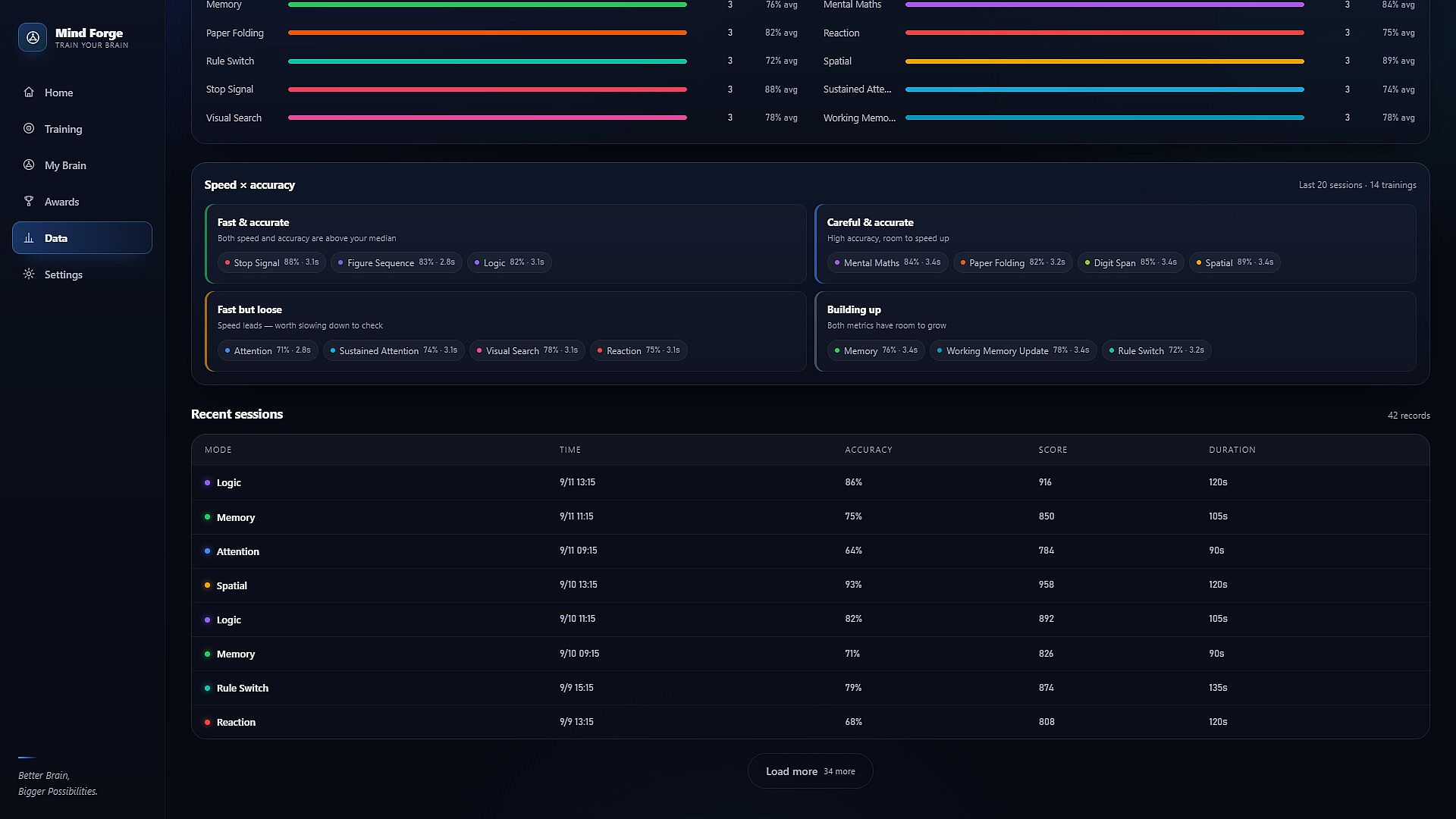
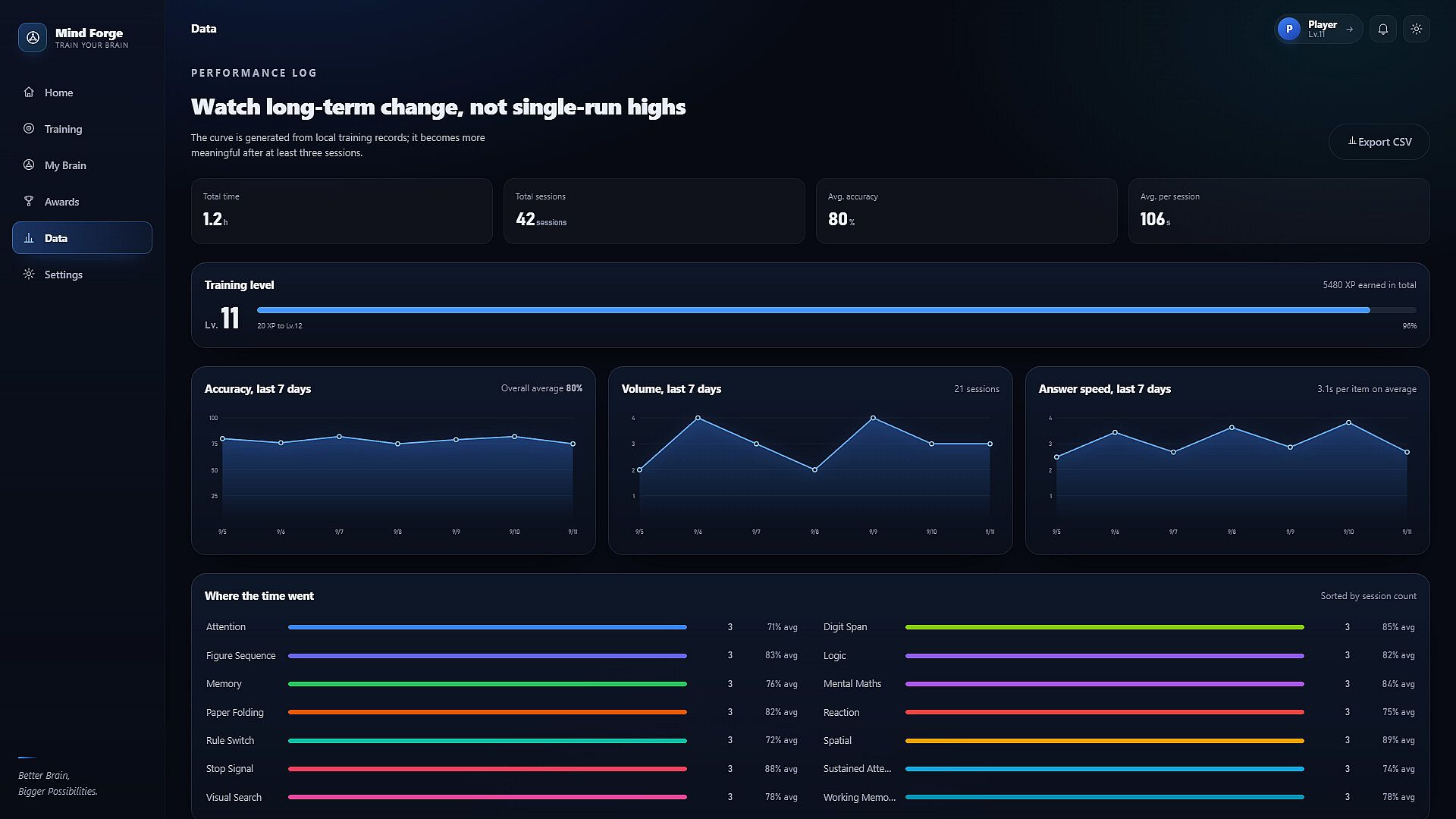
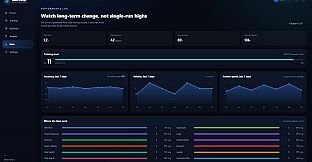
The core loop revolves around completing brief training sessions that last roughly three minutes each. Users select or follow suggested drills that target attention, memory, logic, spatial reasoning, and reaction speed. Every action feeds into transparent performance tracking, including accuracy trends, response times per item, and consistency measures. The system avoids fabricated numbers by leaving uncomputable metrics blank until enough data accumulates.
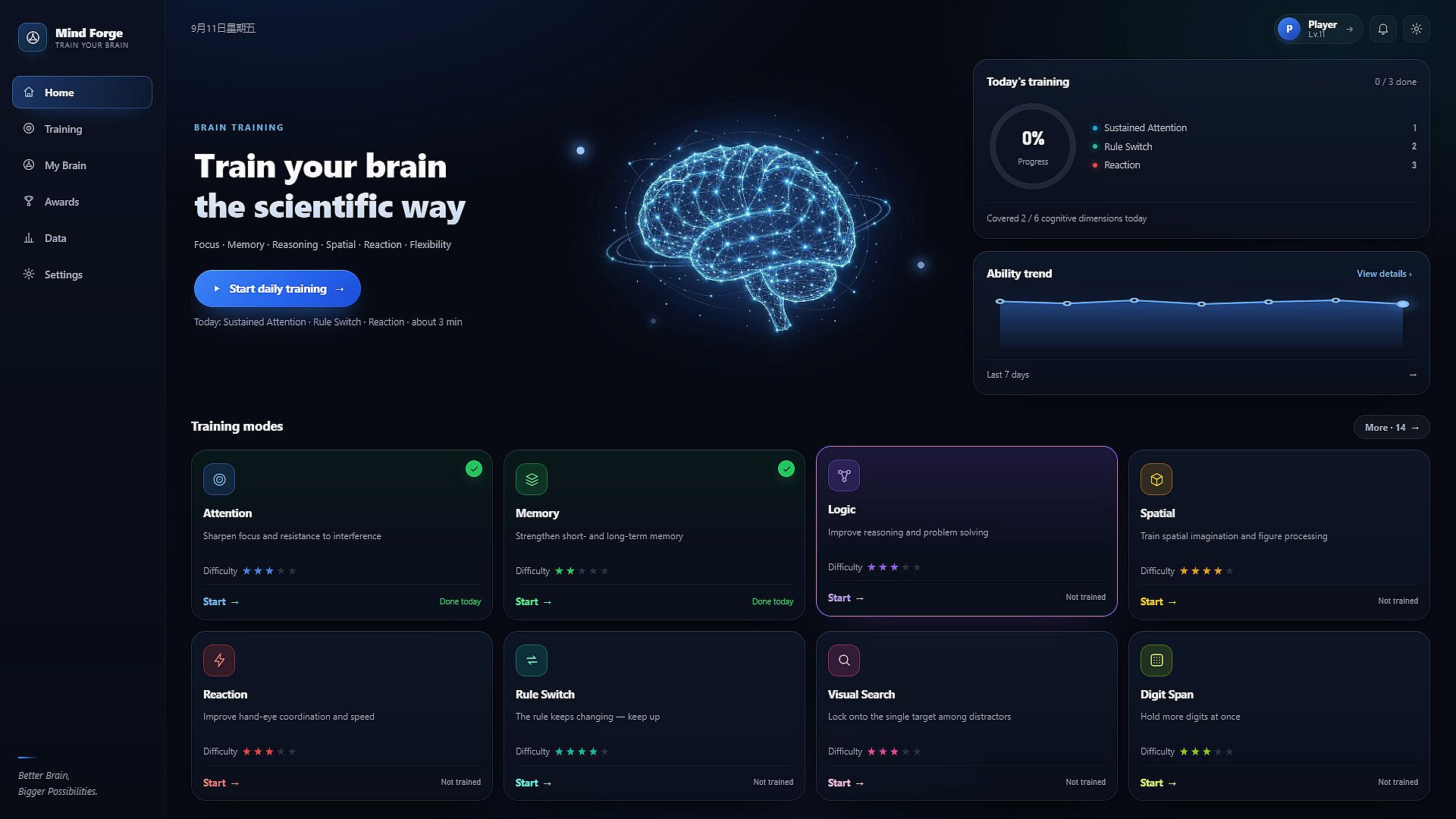
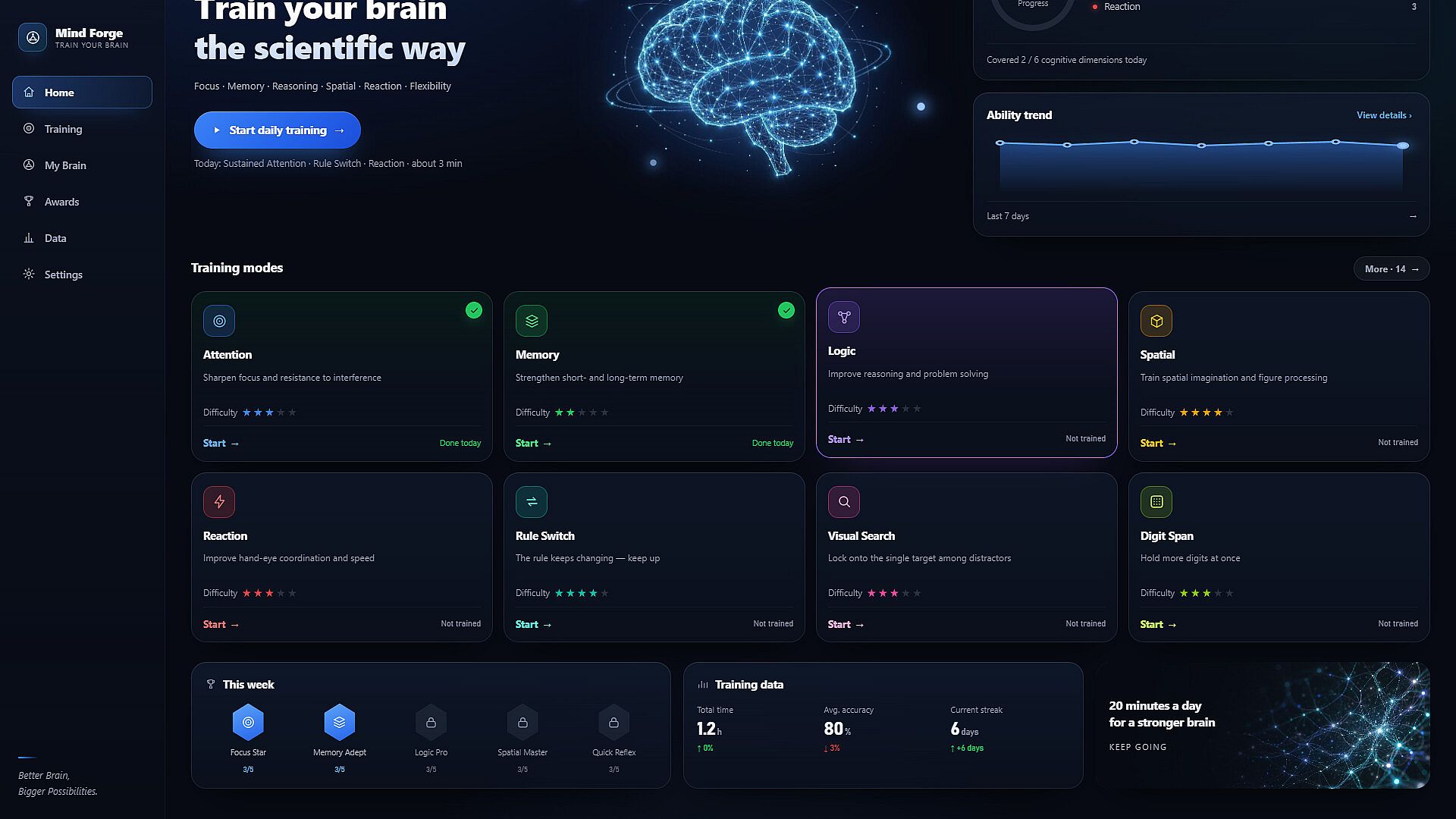
Adaptive difficulty adjusts automatically based on individual progress, scheduling review sessions when skills show signs of fading. A due-for-review indicator highlights tasks needing attention. Daily plans consist of three targeted items matched to the player's weakest areas, each accompanied by a straightforward explanation of the rationale. Time limits appear as clear countdowns tied to the current difficulty level, with timeouts handled honestly in scoring.
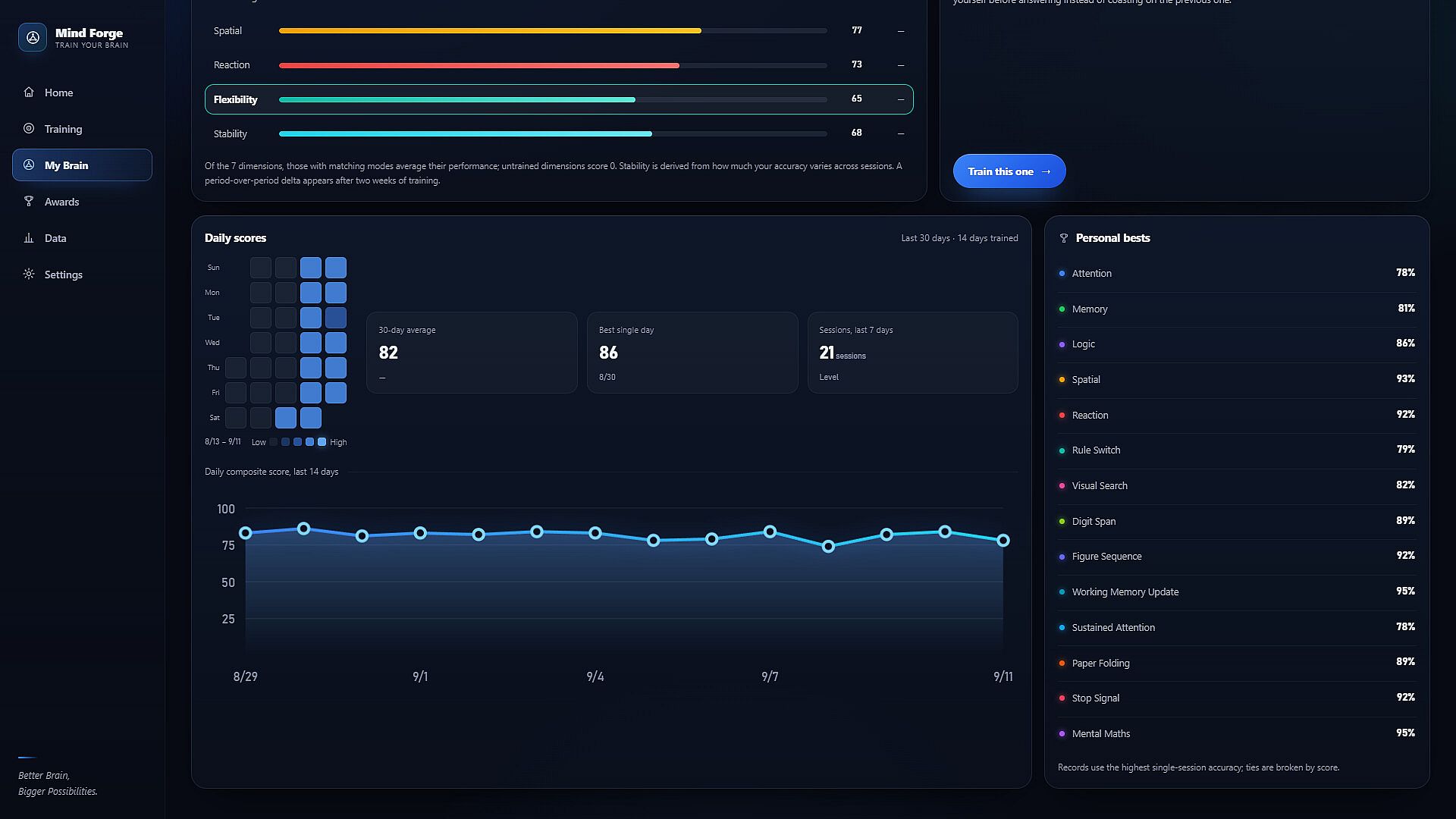
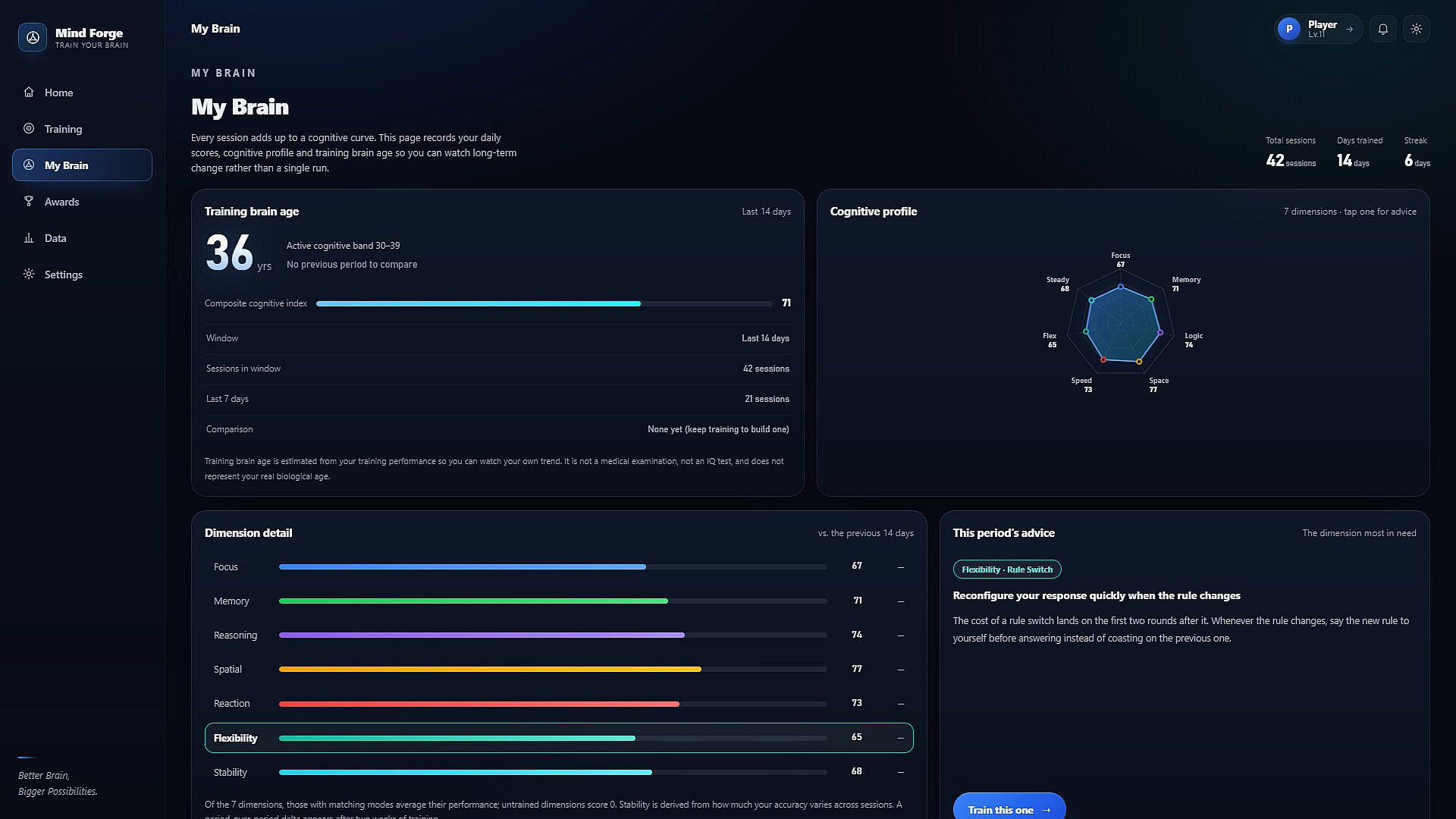
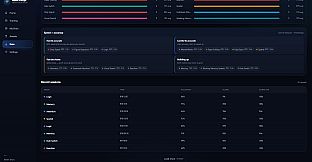
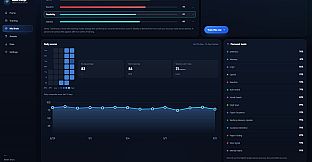
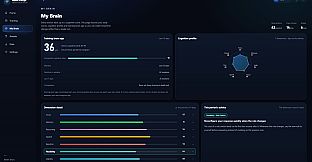
Progress visualization includes a seven-dimension radar chart for the cognitive profile, a 30-day activity heatmap, and a labeled training brain age that serves purely as an indicator rather than any medical claim. All metrics receive plain-language explanations to keep the experience straightforward and free of unnecessary complexity.
Game Modes
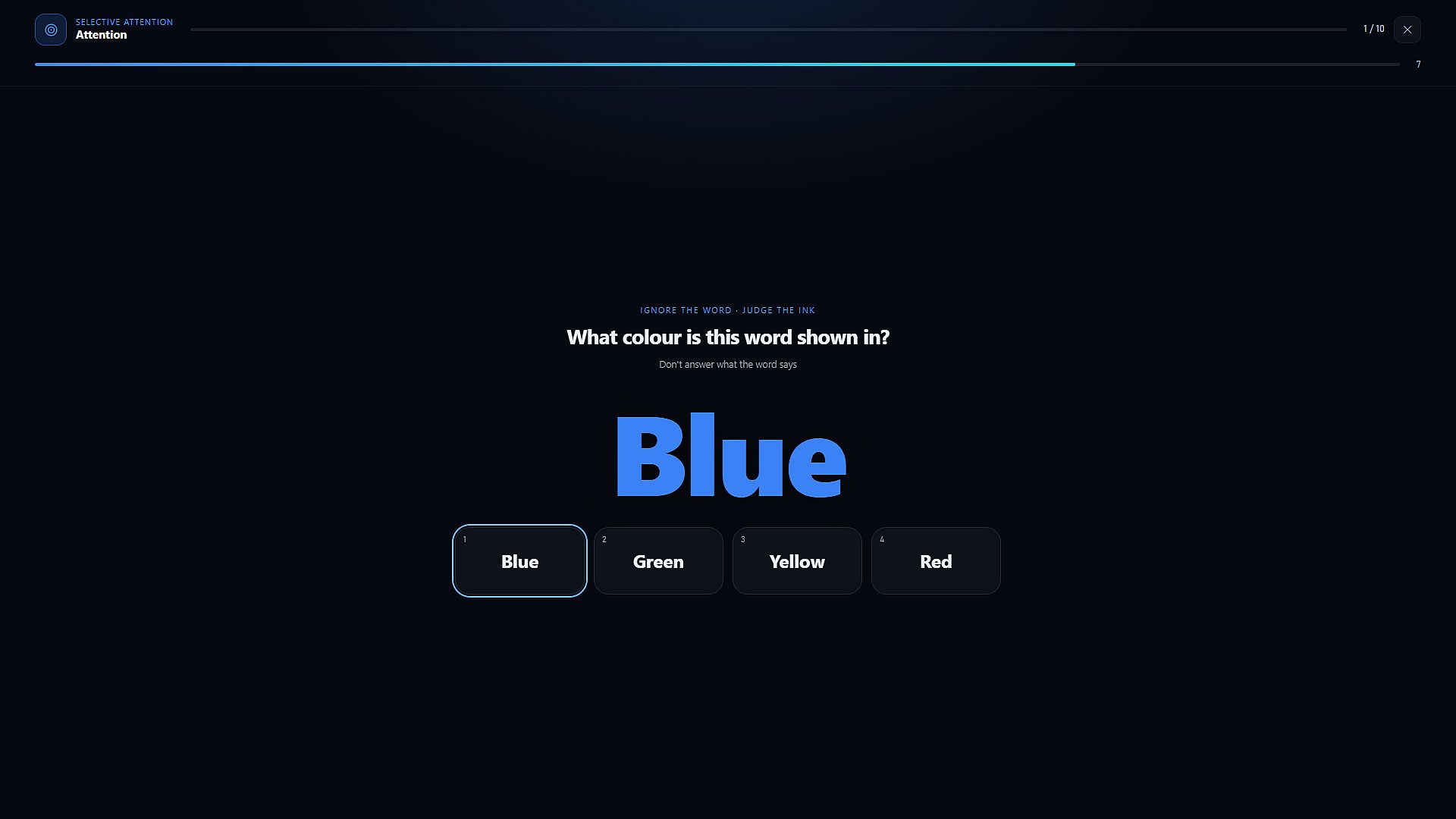
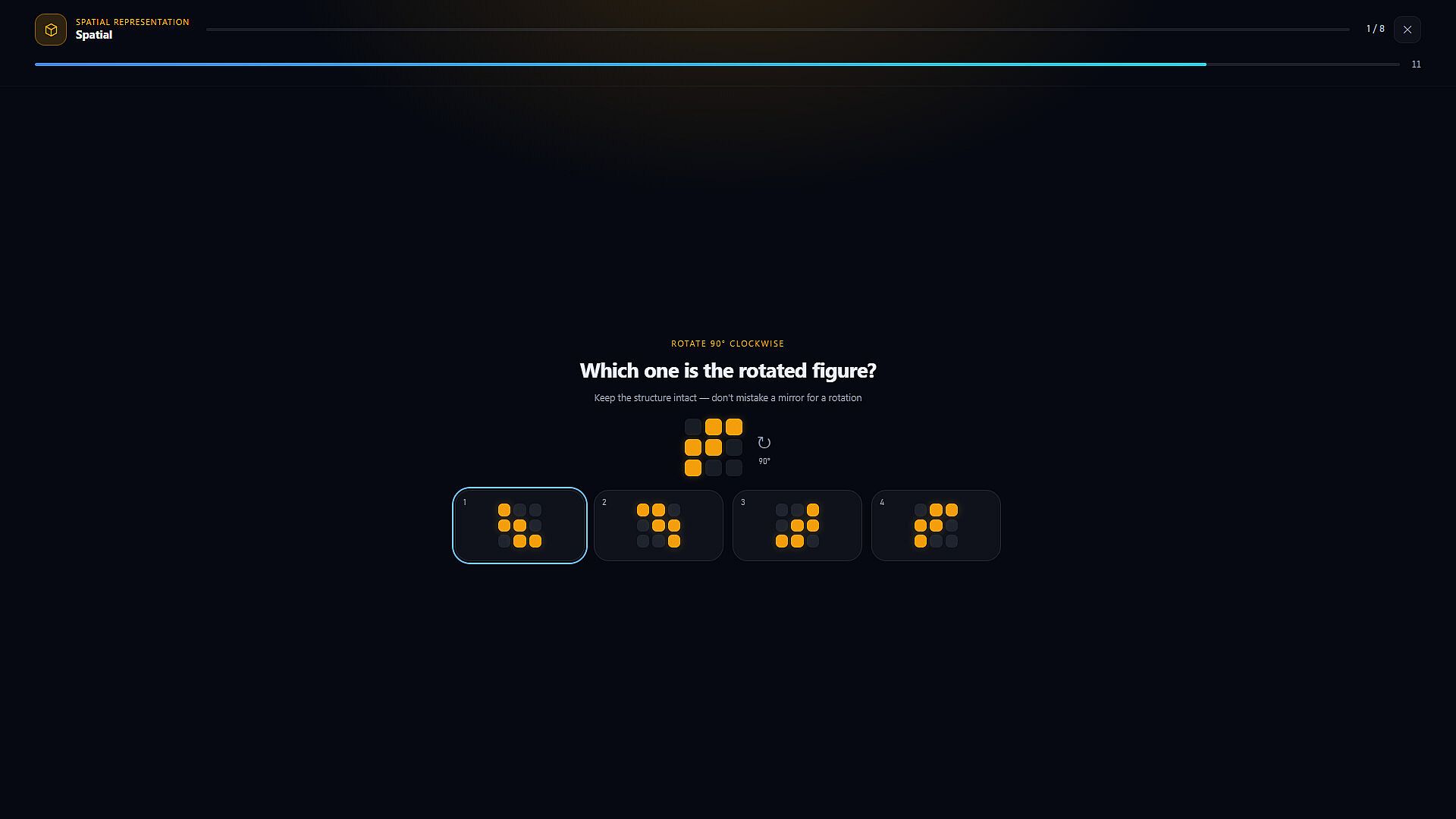
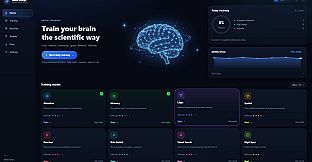
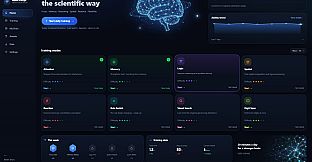
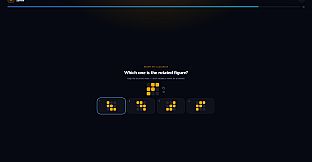
Fourteen distinct training modes form the foundation of the experience. Verified examples include Stroop inhibition tasks that test response control, n-back exercises for working memory updating, paper folding challenges for spatial reasoning, and stop-signal tasks that measure inhibition under time pressure. Additional modes cover attention, logic, and reaction speed without overlapping or repeating core mechanics.
Each mode supports per-item time limits and contributes to the overall statistics dashboard. Sessions remain short by design, allowing consistent daily use without fatigue. The structure emphasizes variety across cognitive domains while maintaining a calm, distraction-free environment.
Key Features and Design
Mind Forge prioritizes user respect through its implementation choices. No account creation is required, and all data remains stored locally on the device. The interface avoids streak pressure or manipulative patterns, with an optional Calm difficulty setting that provides more generous time windows. Twenty-four achievements integrate with Steam support for those who track milestones.
Language options include English along with Simplified and Traditional Chinese. The emphasis stays on honest feedback and clear presentation rather than gamified pressure tactics common in other trainers.
Is It Worth Playing?
Mind Forge suits individuals seeking a quiet, evidence-based approach to cognitive training on PC. Its honest statistics, adaptive scheduling, and short session length make it practical for regular use without requiring long commitments. The absence of accounts, ads, or dark patterns supports focused sessions for users who value privacy and transparency.
With a planned release in Q4 2026 and no reviews available yet, potential players should consider whether the verified mechanics align with their interest in strategy-infused brain training. Those drawn to data-driven drills across attention, memory, logic, spatial, and reaction areas will find the design matches the described goals closely. The game stands ready for those who prefer substance over spectacle in their daily mental routines.