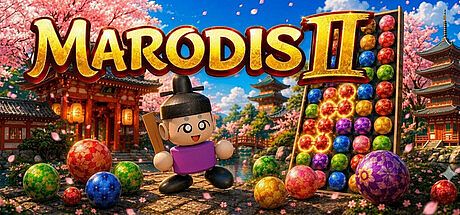



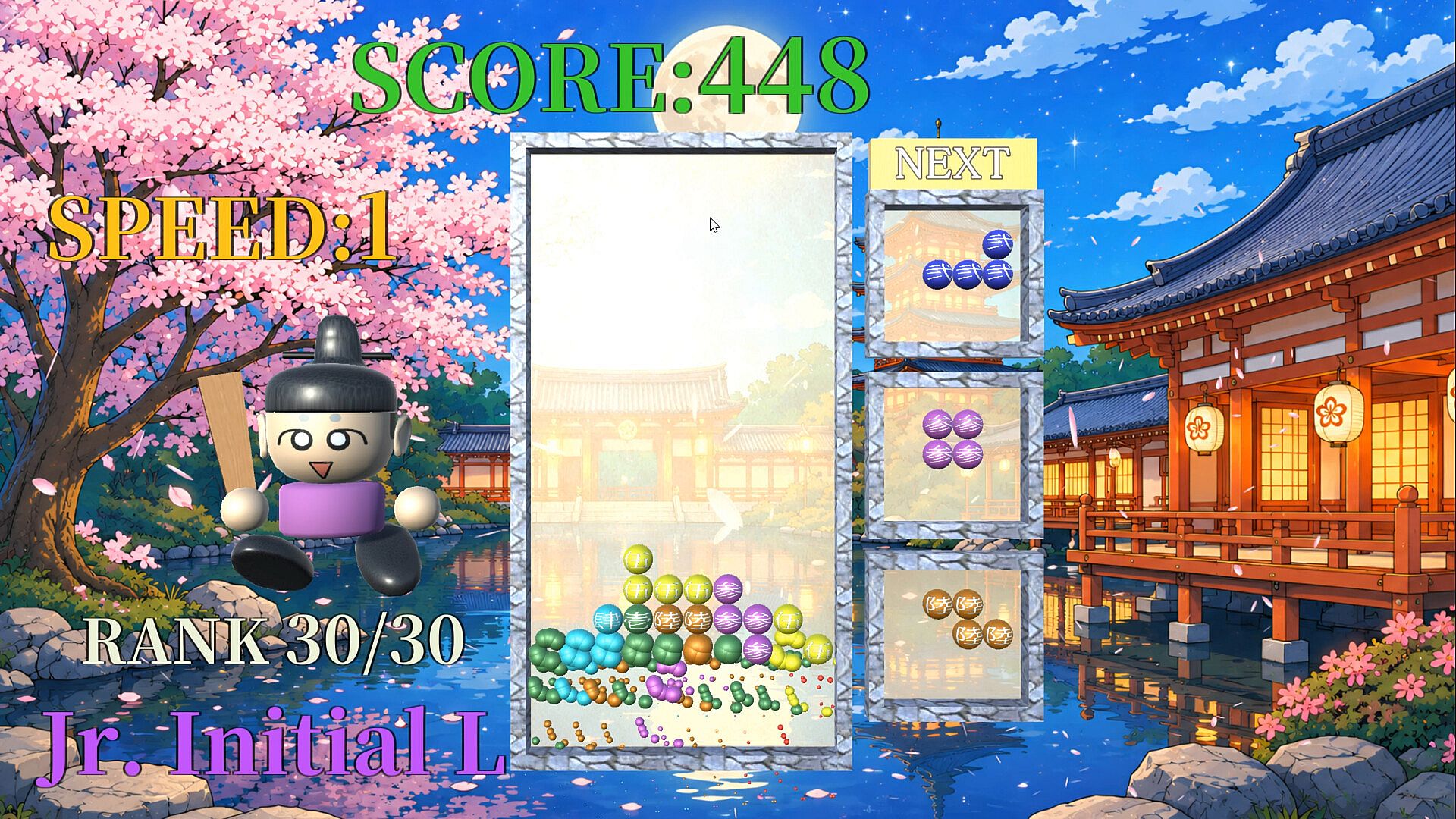
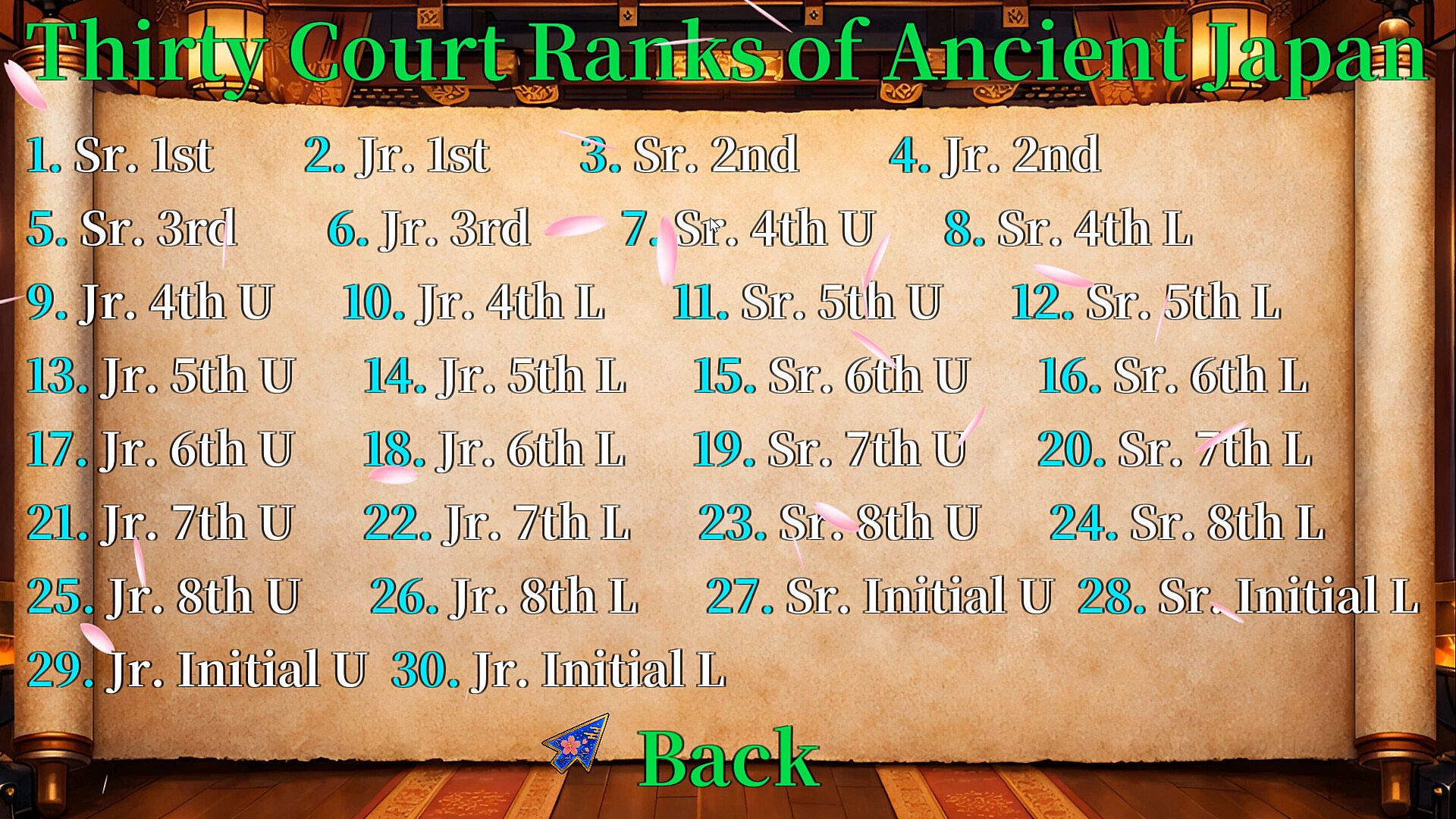
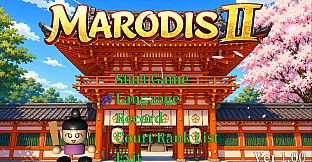
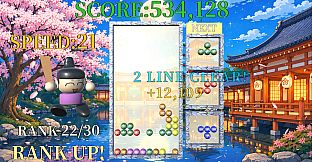
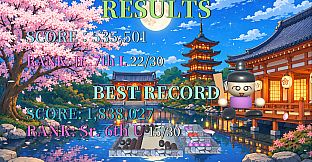
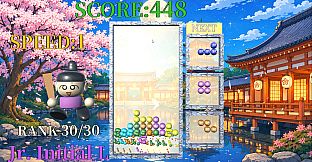
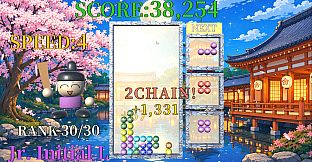
MARODIS2 is an indie casual falling-block puzzle game for PC that blends traditional stacking mechanics with a distinctive Heian period Japanese court theme. Players control colorful temari balls to build scores and advance through a 30-stage court rank system, starting at the lowest position and aiming for the top rank of Sr. 1st. The experience centers on precise placement, color matching, and chain reactions in a single-player score attack format.
Gameplay
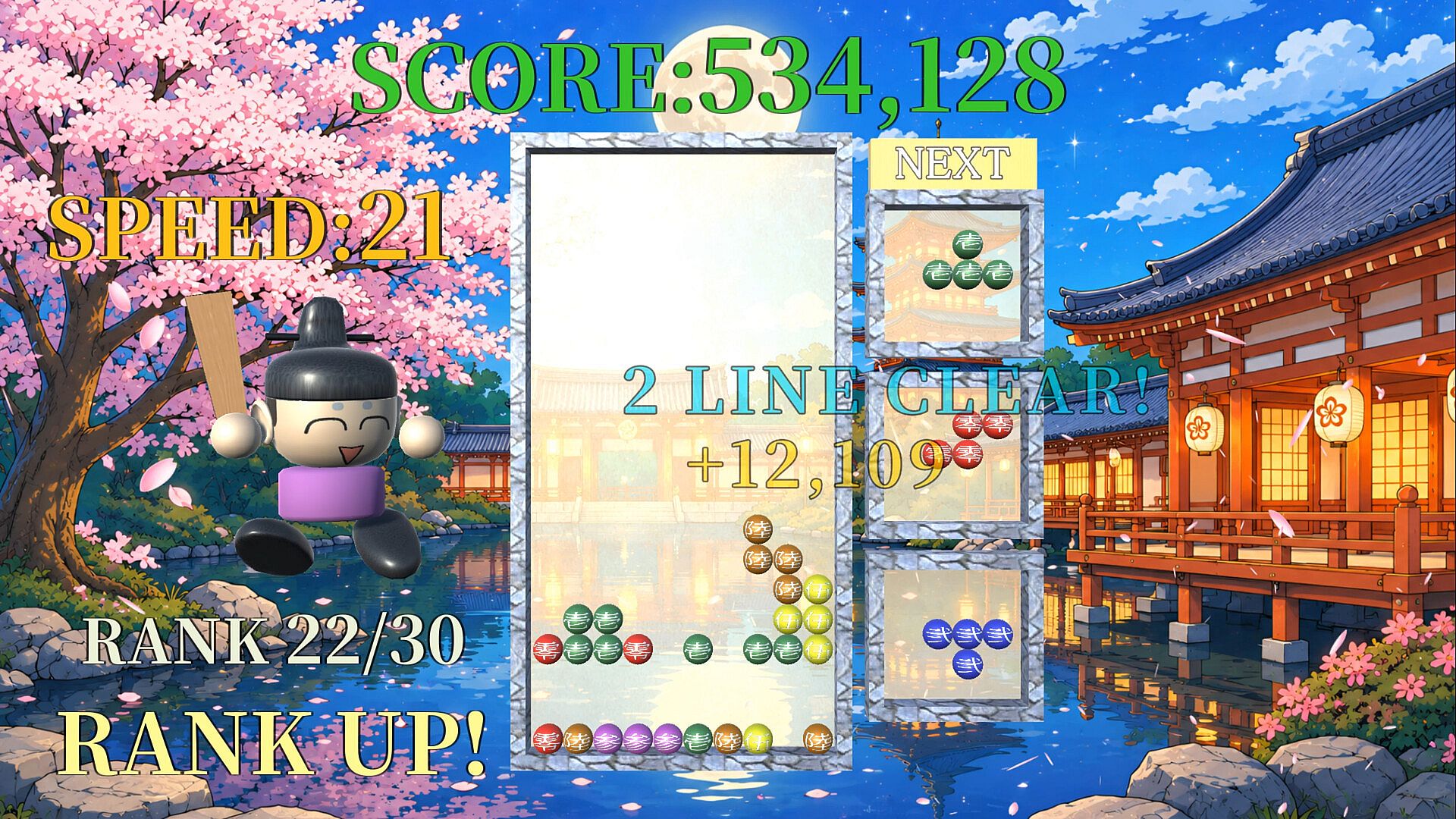
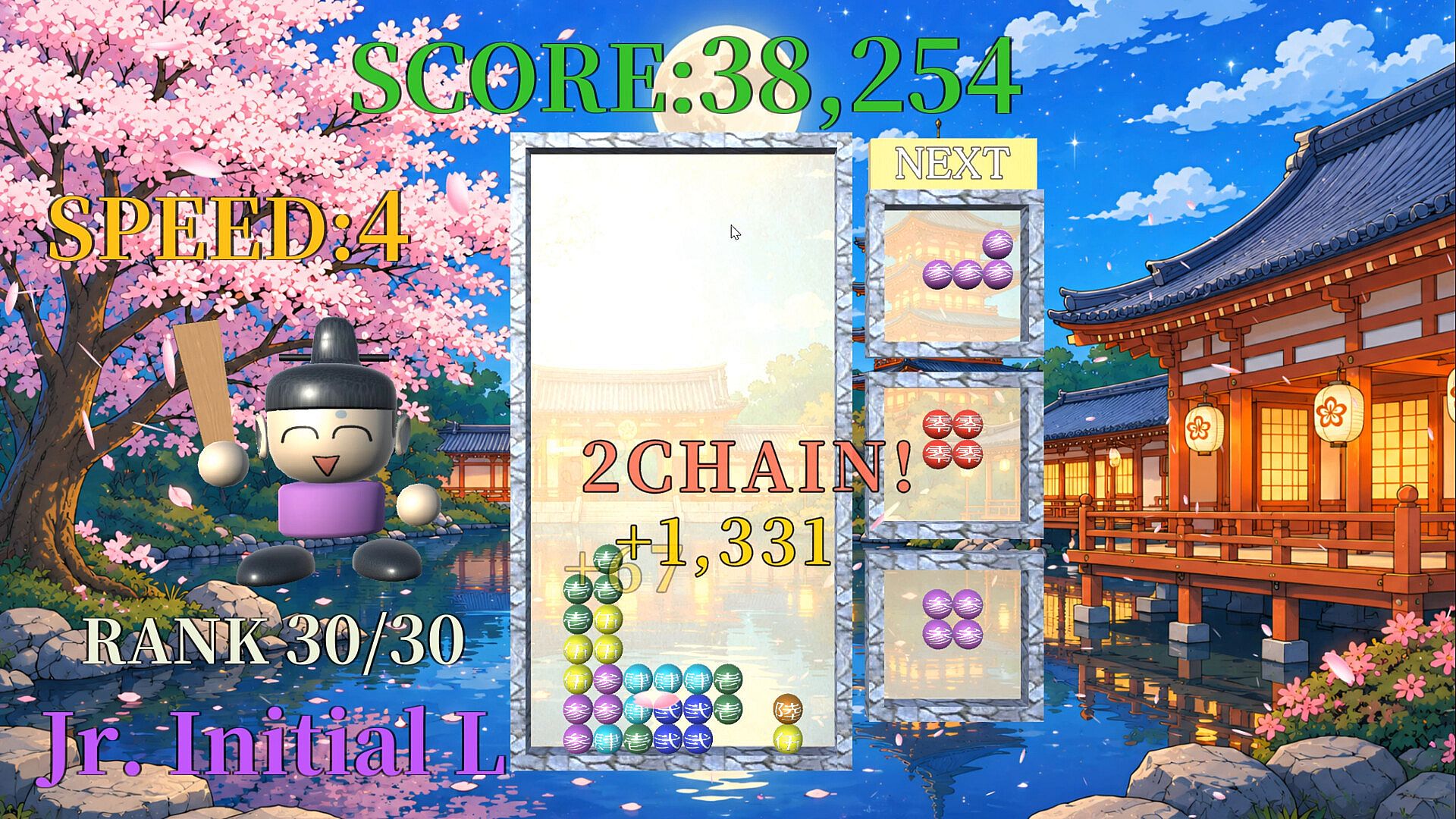
The core loop involves seven different colored temari balls that fall from the top of the play area. Players rotate and position each ball to stack them efficiently on the board. Clearing occurs through two main methods: forming a Color Clear by connecting eight or more balls of the same color or completing a Line Clear by filling an entire horizontal row. These actions remove balls and open space for continued play.
Chains form when one clear causes additional balls to drop and trigger further removals, multiplying the score. Combos build when clears happen with every new ball drop, increasing a multiplier that rewards consistent rhythm. The game ends once the stack reaches the top and overlaps with incoming balls, demanding careful planning to delay this outcome as long as possible. Speed increases over time, requiring quicker decisions and forward thinking to maintain high scores.
Controls support both keyboard and gamepad inputs, allowing left and right movement of the falling ball, rotation in either direction, downward acceleration, and cursor adjustments for placement. A pause function helps during intense sequences. The visual style evokes refined Heian elegance through the temari ball designs and court-inspired progression tracking.
Game Modes
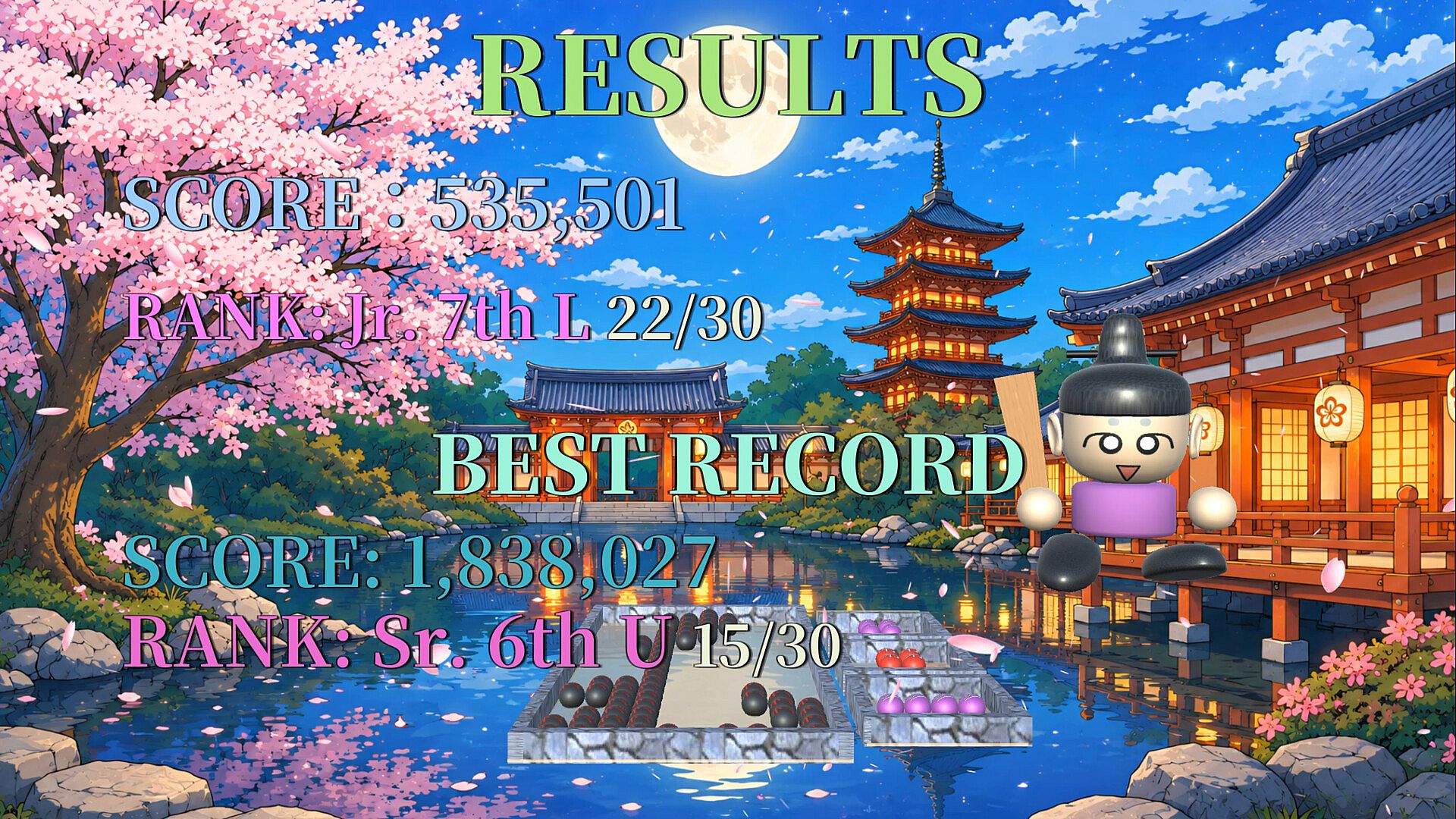
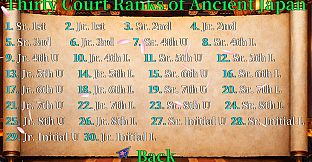
MARODIS2 operates as a focused single-player score attack experience without separate modes or variations. All play revolves around the core stacking and clearing rules applied across endless or high-score runs. The Court Rank Progression System serves as the central structure, where cumulative scores unlock advancement through 30 distinct ranks from Jr. Initial L up to Sr. 1st. Each rank reflects overall achievement and skill level rather than a separate gameplay variant.
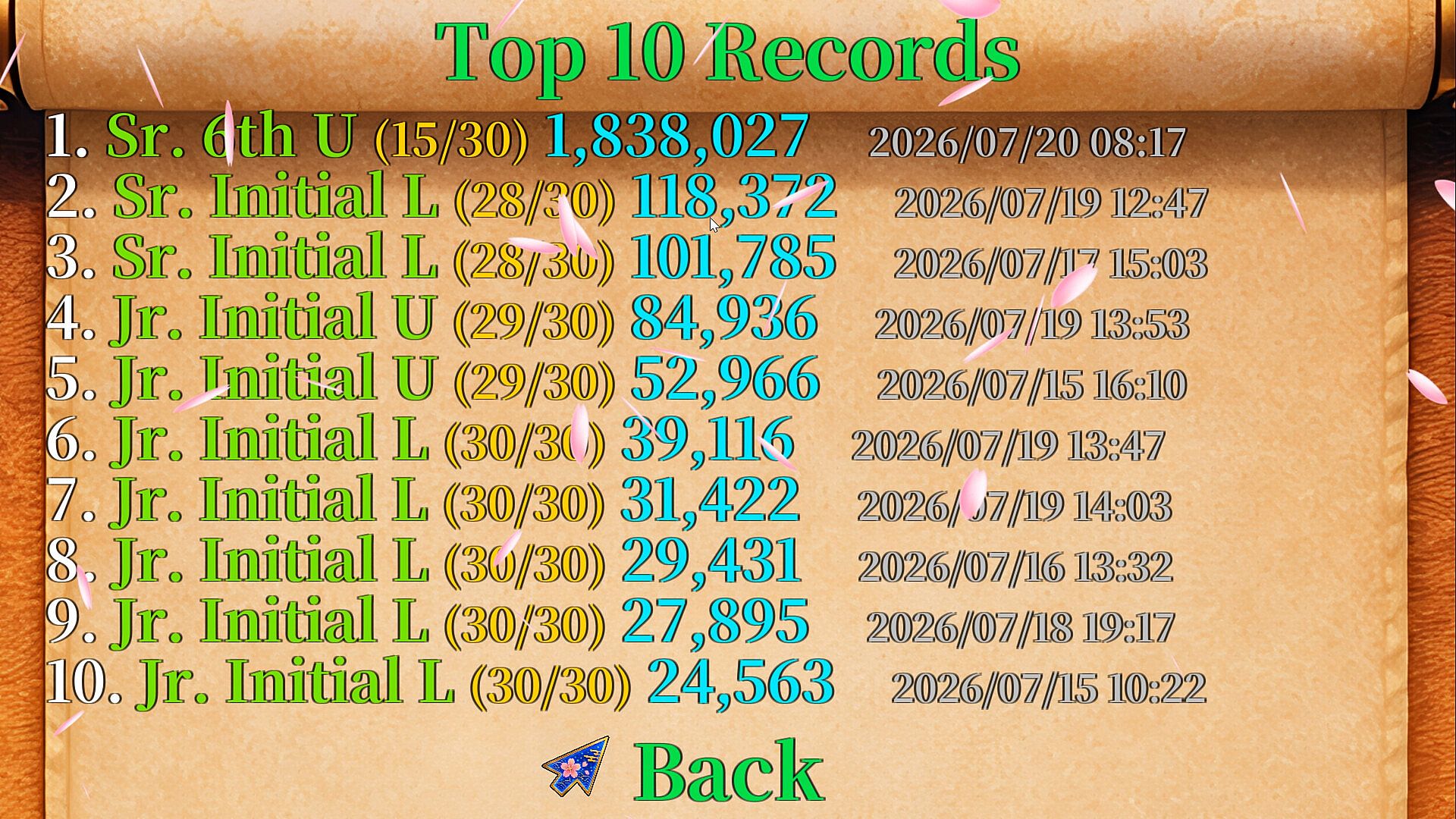
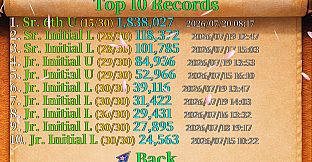
Progress is recorded based on the highest rank attained, encouraging repeated attempts to improve totals through better chains, larger clears, and sustained combos. No multiplayer, co-op, or alternate rule sets appear in the design. The single experience emphasizes mastery of speed, accuracy, and long-term strategy within the fixed mechanics.
Court Rank Progression System
Total score directly determines rank advancement in a linear hierarchy that mirrors ancient Japanese court positions. Players begin at the bottom and climb by accumulating points from Color Clears, Line Clears, chains, and combos. Reaching Sr. 1st represents the ultimate challenge, as faster ball drops and tighter board space test both reaction time and placement foresight.
Every session contributes to the permanent record of the highest rank achieved. This system transforms standard puzzle sessions into a measurable journey of improvement, where small optimizations in combo maintenance or multi-line clears can push a player several ranks higher over time.
Is It Worth Playing?
MARODIS2 suits players who enjoy deliberate, high-precision puzzle games that reward planning and quick adaptation. The Heian court theme adds a distinctive atmosphere to the familiar falling-block format, while the rank system provides clear, ongoing goals without requiring external competition. Those who appreciate chain-building and multiplier management will find depth in optimizing each drop.
The game presents a steep but fair difficulty curve that escalates naturally with speed, making it accessible for casual sessions yet demanding for those chasing the top rank. Availability on PC supports straightforward keyboard or gamepad play. For fans of score-focused puzzle titles, the combination of mechanical clarity and thematic uniqueness offers a solid reason to invest time in climbing the court hierarchy.