







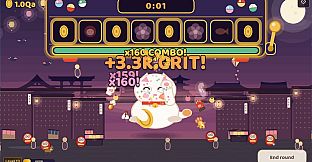
Maneki Mania is an indie casual incremental game set on PC where players actively manage a fortune shrine through repeated petting and spinning actions. The experience centers on a lucky cat statue that generates resources only when interacted with directly, creating a focused loop of manual effort and progression without any passive income.
Gameplay
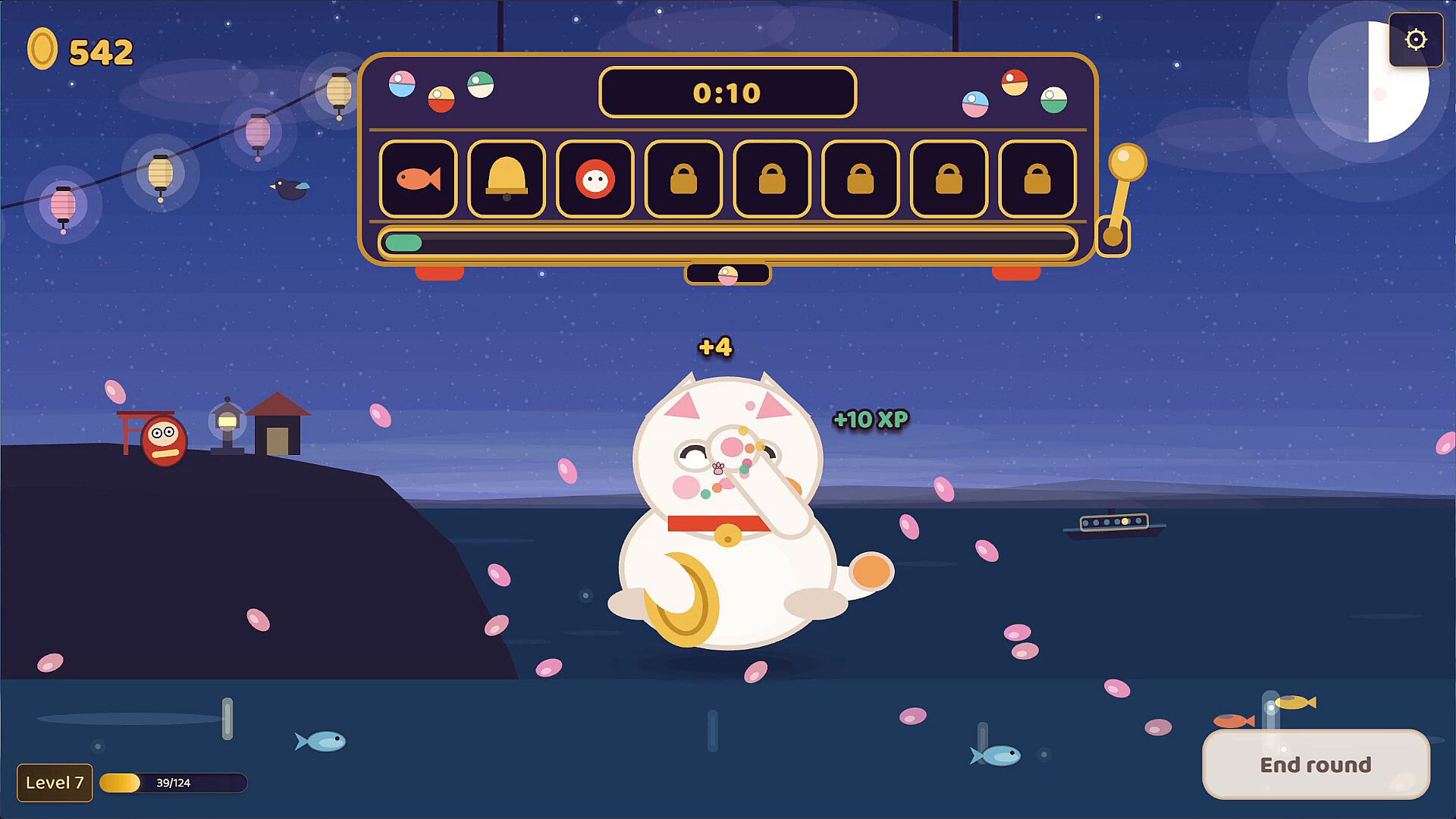
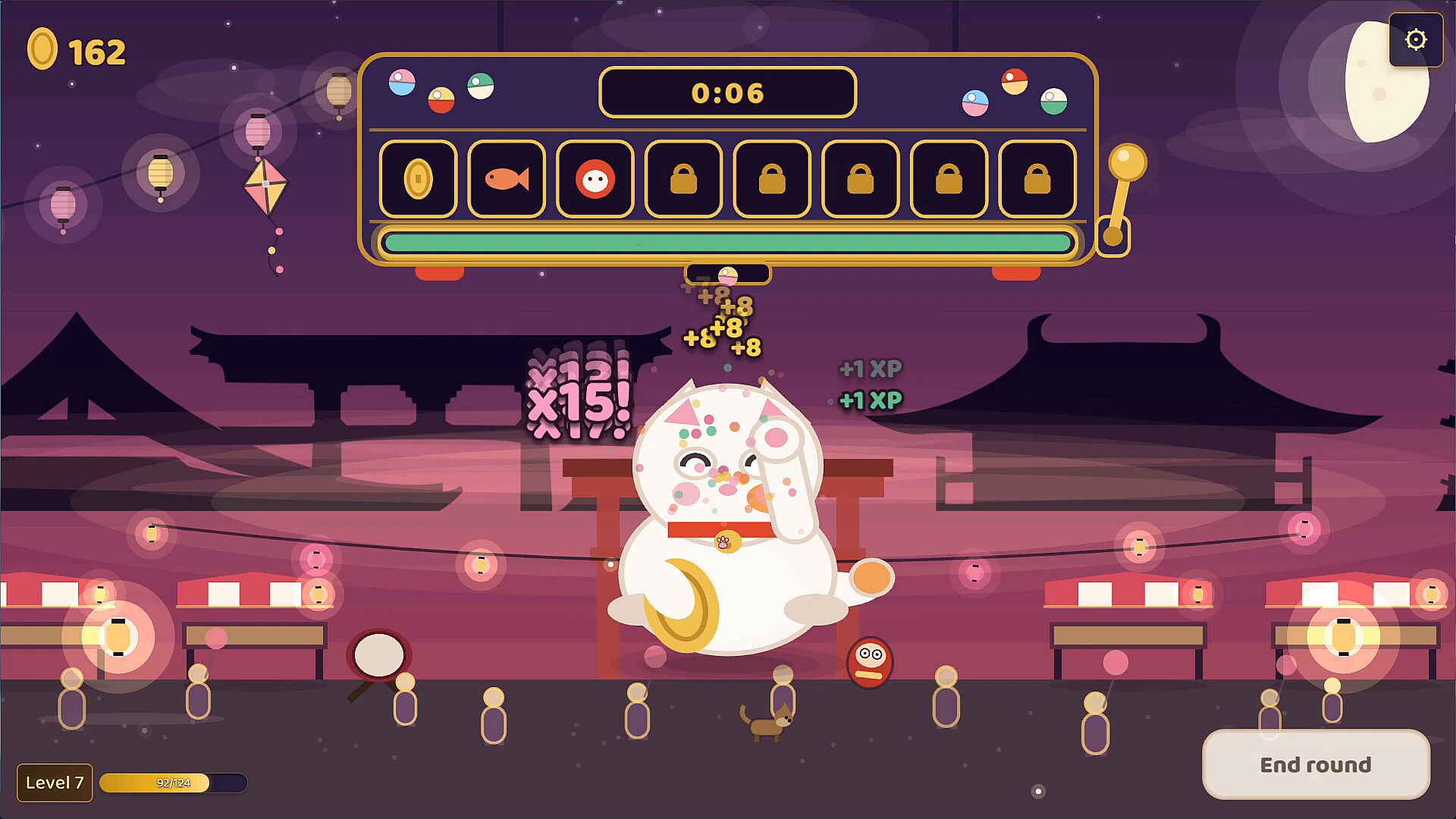
The core loop begins at night in the shrine, where lanterns glow and the neko waits for attention. Players pet the cat using either mouse clicks or keyboard inputs to earn koban coins while gradually charging a fortune meter. Each pet contributes directly to both currency and meter progress, keeping every action meaningful.
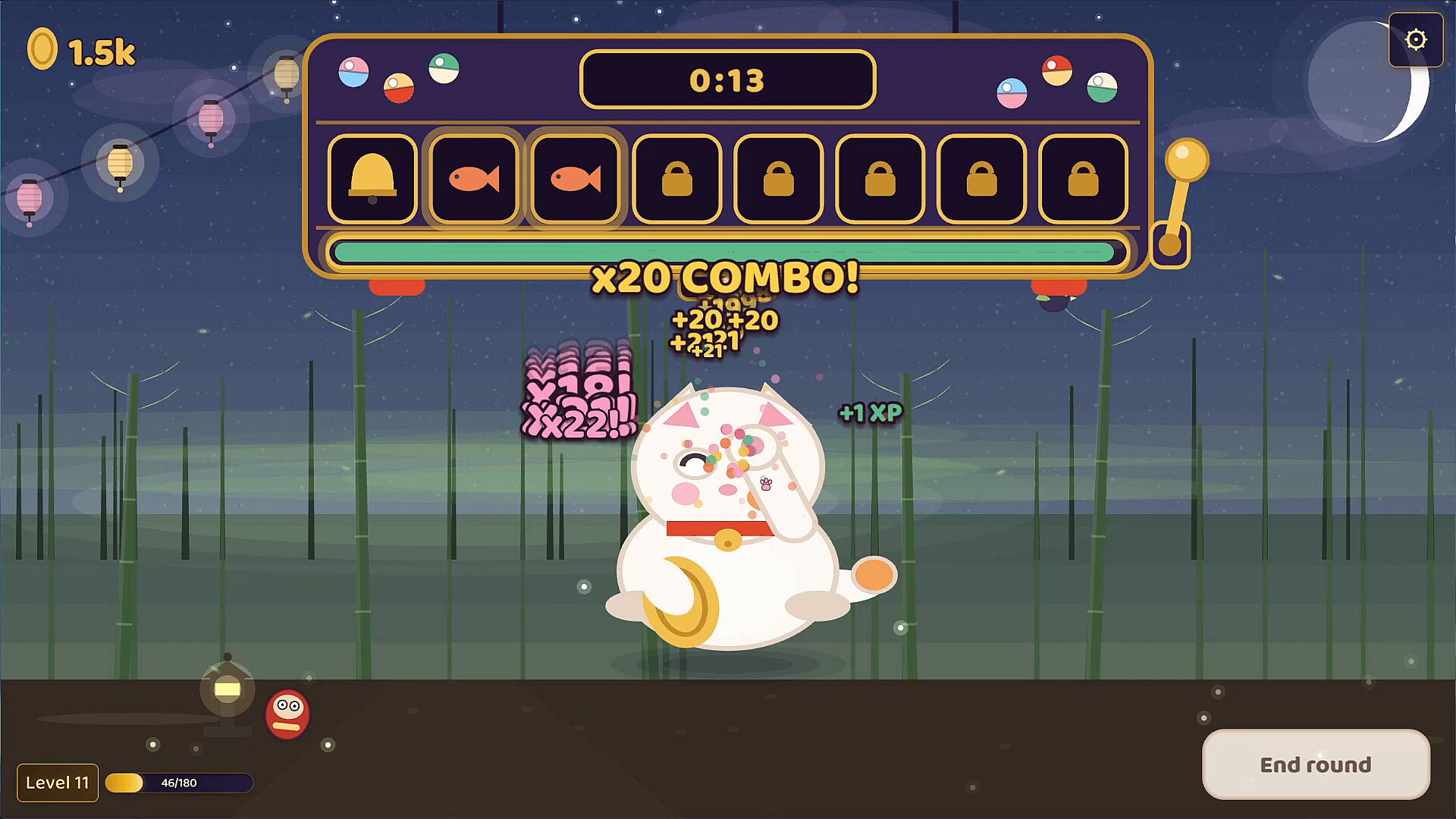
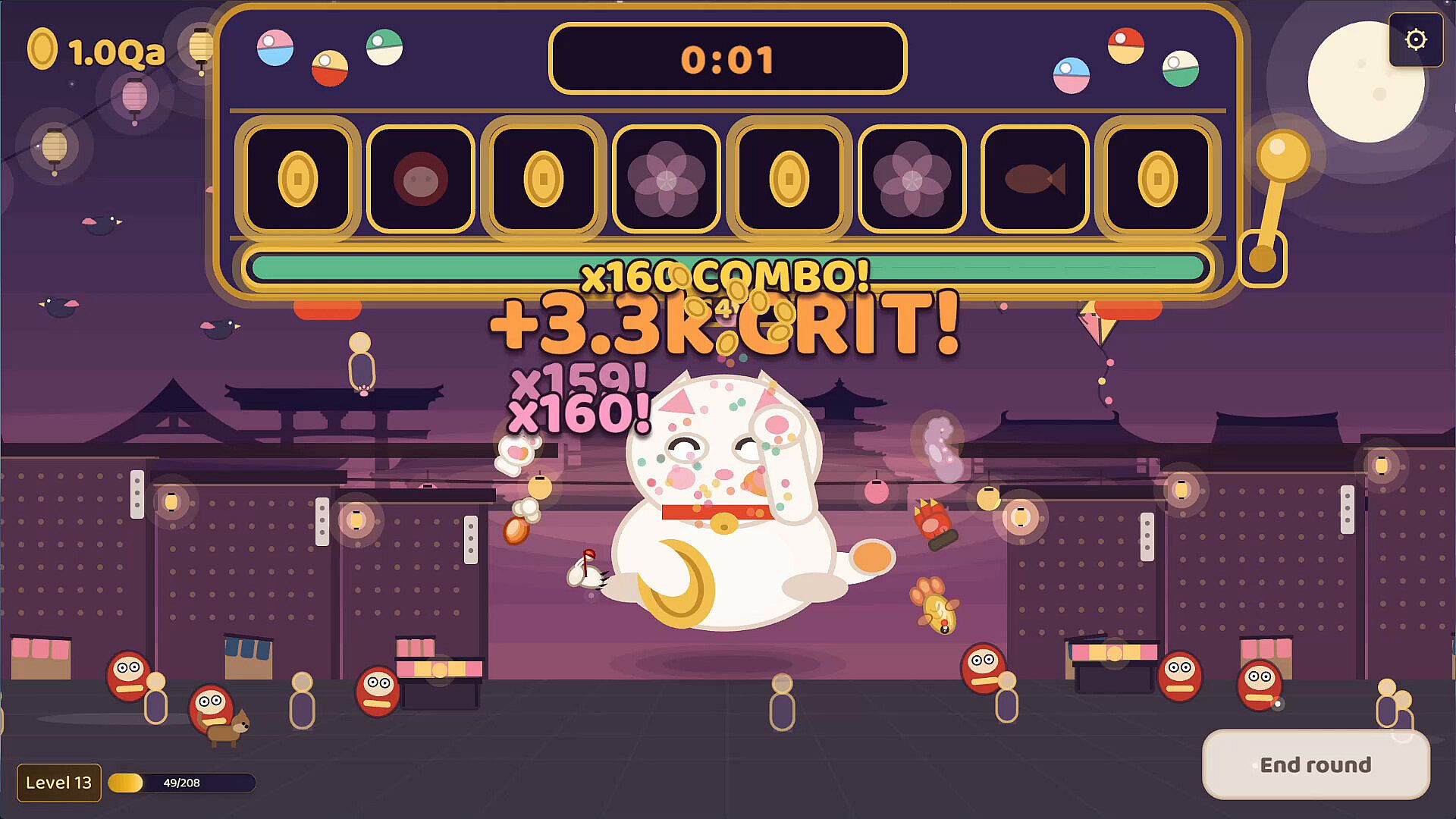
Once the meter fills, players spin the charm slots. The reels deliver payouts based on combinations, including pairs, triples, and a special triple-koban jackpot. Audio feedback from casino-style synth tracks builds with larger wins, reinforcing the rhythm of collection and reward.
Progression expands through an upgrade tree that reaches 95 nodes. Players collect ten distinct lucky charms, each functioning as a relic that adds unique powers alongside stacking income bonuses. A tanuki element provides interest on collected resources from each round, adding another layer to resource management.
Further growth comes from shrine ranks that multiply all earnings and the Wheel of Fortune, which grants talents through spins. The entire system rewards consistent interaction, with controls supporting both mouse and controller for comfortable sessions.
Game Modes
Maneki Mania operates as a single cohesive experience built around its incremental systems rather than separate named modes. The primary activity revolves around the pet-and-spin cycle that drives koban collection and meter filling in the shrine setting.
Players advance by focusing on charm collection and the upgrade tree, where each of the ten relics contributes specific abilities and bonuses. Shrine rank increases and Wheel of Fortune spins serve as integrated progression paths that enhance the main loop without branching into distinct play styles.
Support for 31 in-game languages broadens accessibility, while the active-only income rule ensures every session stays hands-on. No separate competitive or cooperative elements appear, keeping the focus on personal shrine development through repeated cycles.
Progression and Upgrades
The 95-node upgrade tree forms the backbone of long-term advancement. Each node ties into charm effects or general multipliers, encouraging players to balance immediate koban gains with strategic relic placement.
Shrine ranks scale earnings across the board, while talents from the Wheel of Fortune introduce variability to each run. Interest from the tanuki on round hauls rewards efficient collection without altering the no-rest rule.
Controls remain straightforward across mouse and controller inputs, allowing sessions to flow naturally from petting to spinning to tree navigation. The structure supports extended play through layered bonuses that build on prior efforts.
Is It Worth Playing?
Maneki Mania suits players who enjoy active incremental gameplay where every koban requires direct input. The absence of idle mechanics creates a deliberate pace centered on the shrine loop and charm collection.
Those drawn to casual titles with upgrade trees and visual progression will find the 95-node system and ten charms provide steady goals. The game supports controller use and multiple languages, broadening its reach for solo sessions on PC.
With its focused design and emphasis on repeated pet-spin cycles, the title appeals to fans of hands-on resource management rather than passive accumulation. The current state aligns with an upcoming release focused on these core systems.