







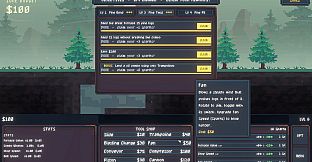
Log Drop is a strategy simulation game for PC that blends physics automation with puzzle solving and creative building. Players direct logs toward the earth's core using custom contraptions in a 2D environment where every placement and timing decision matters.
Gameplay
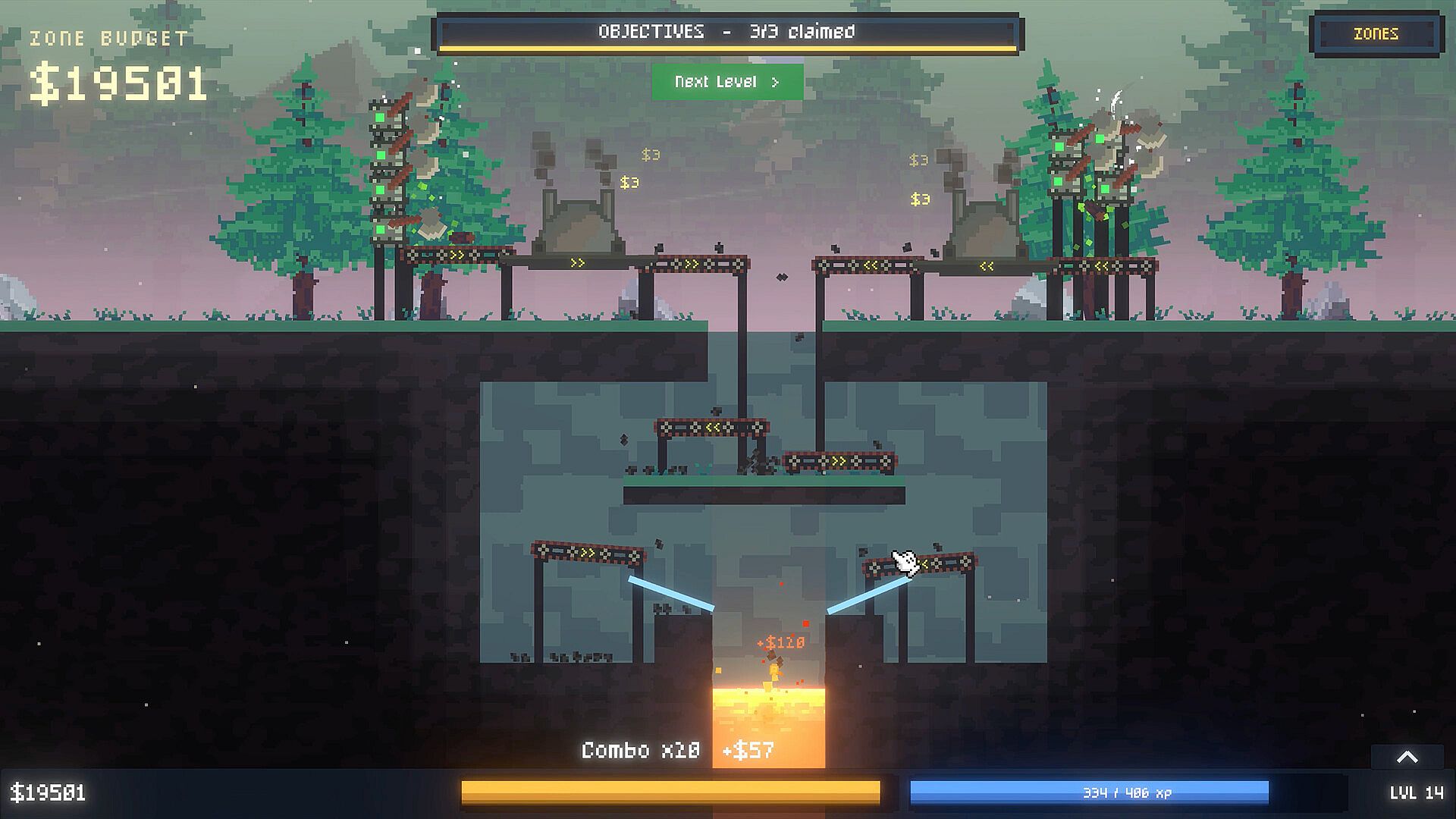
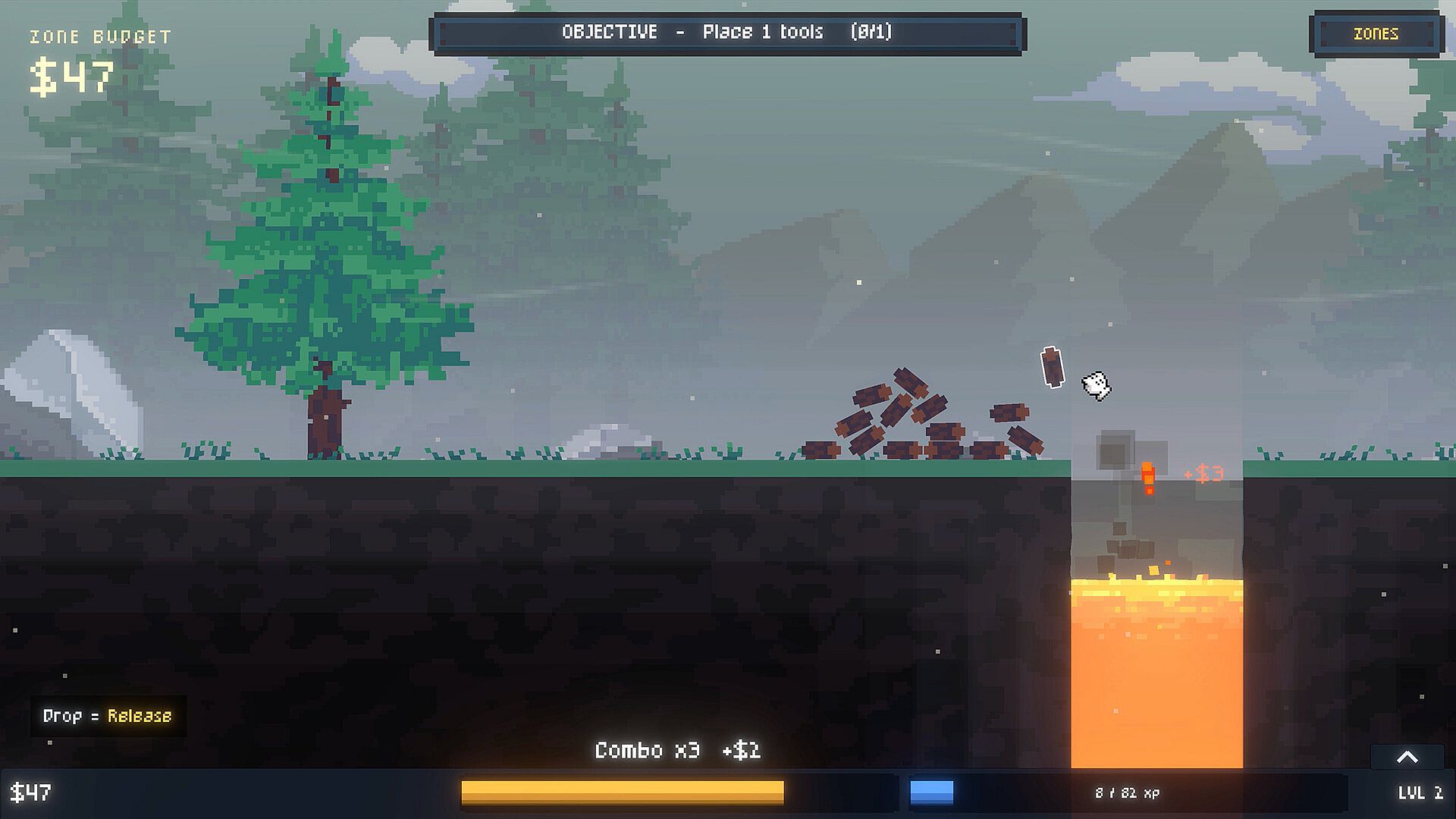
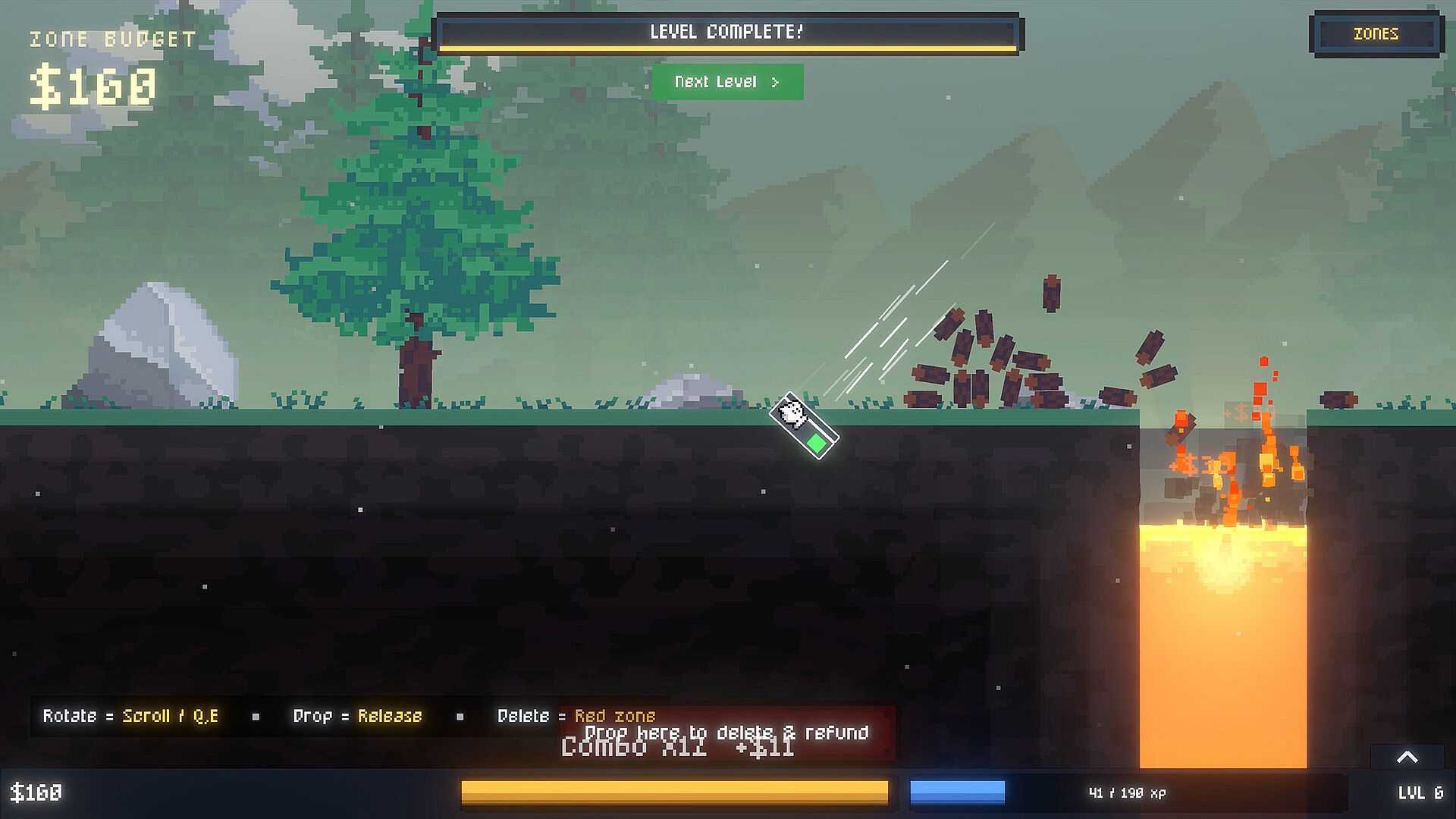
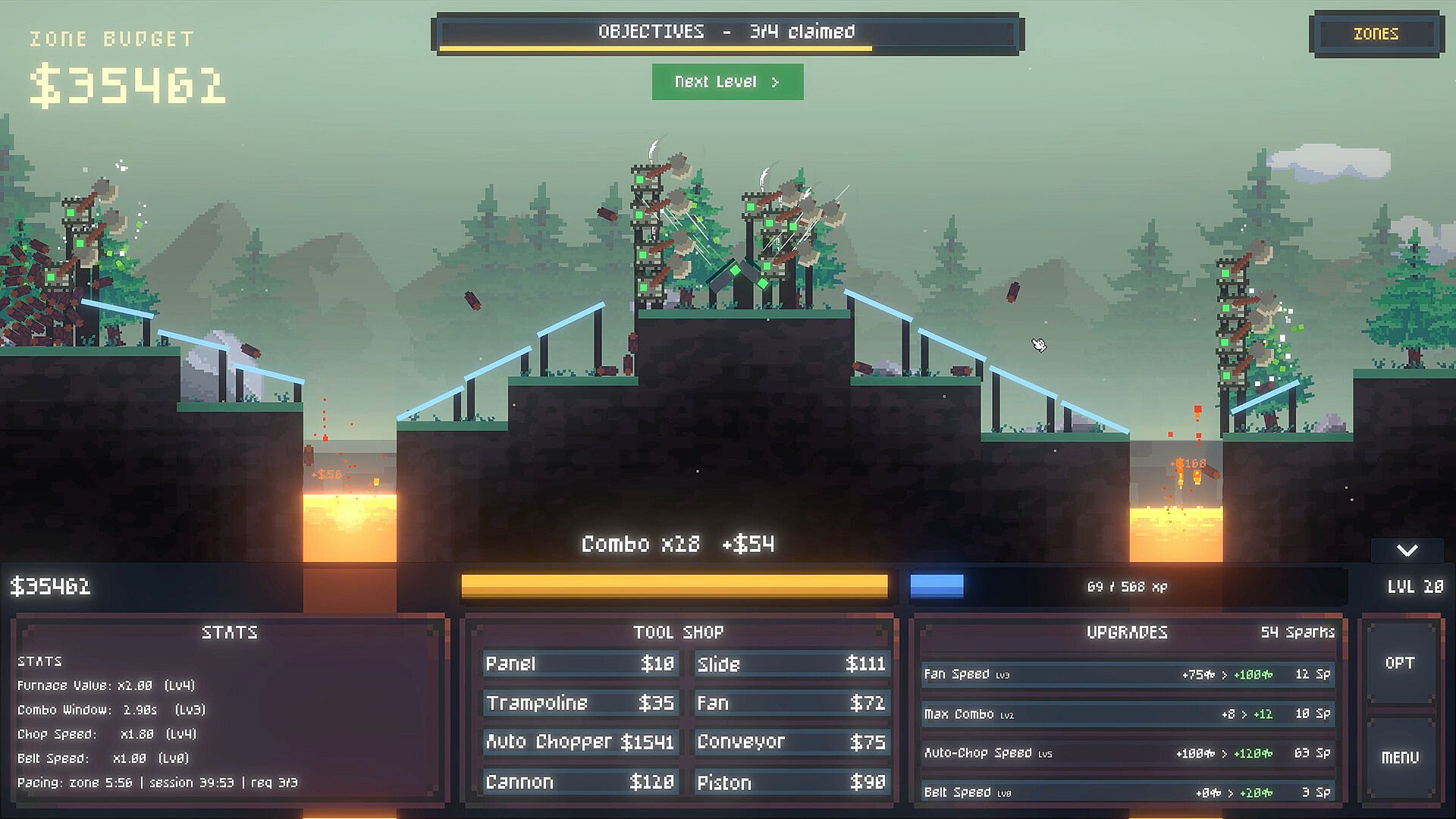
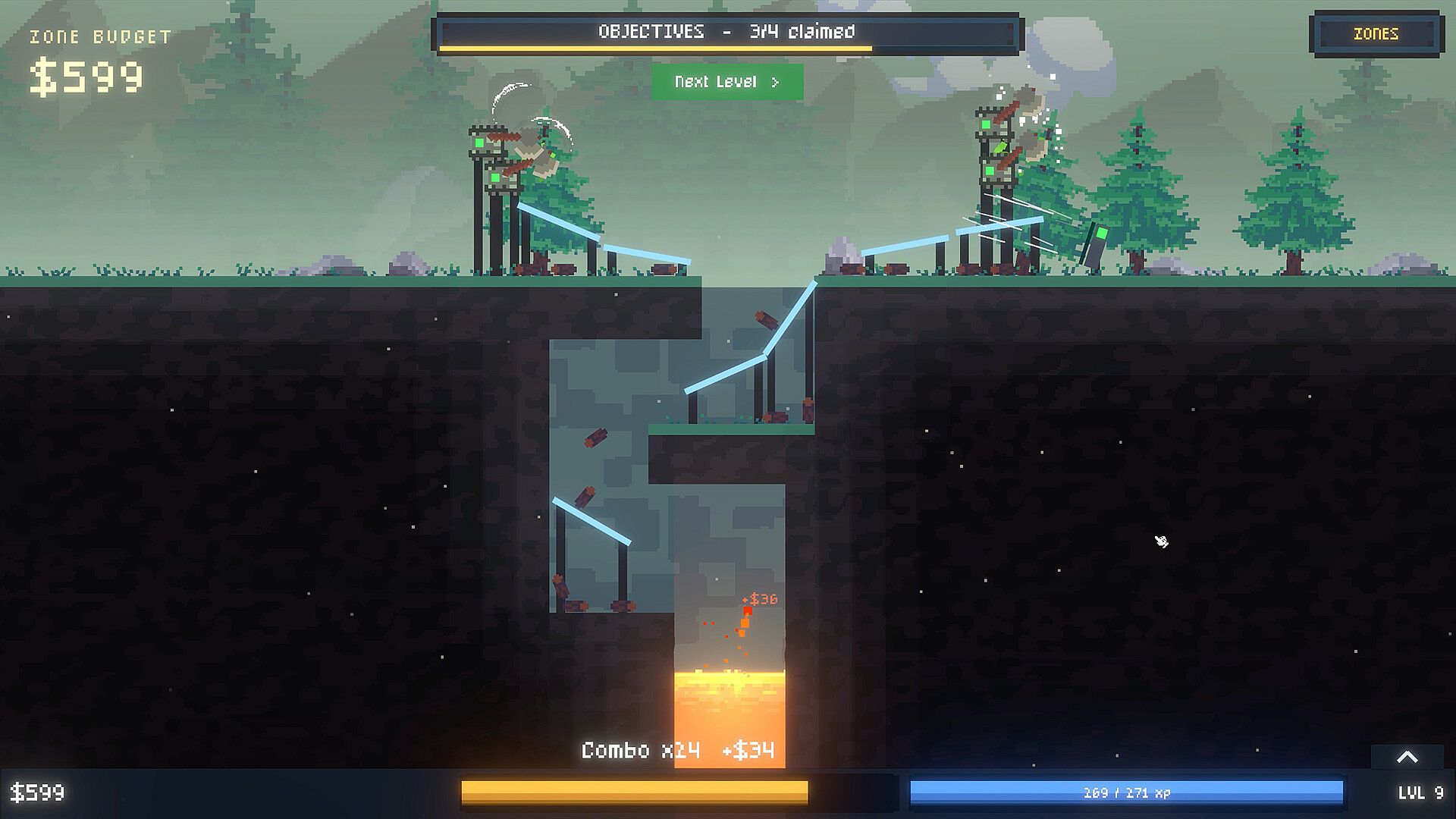
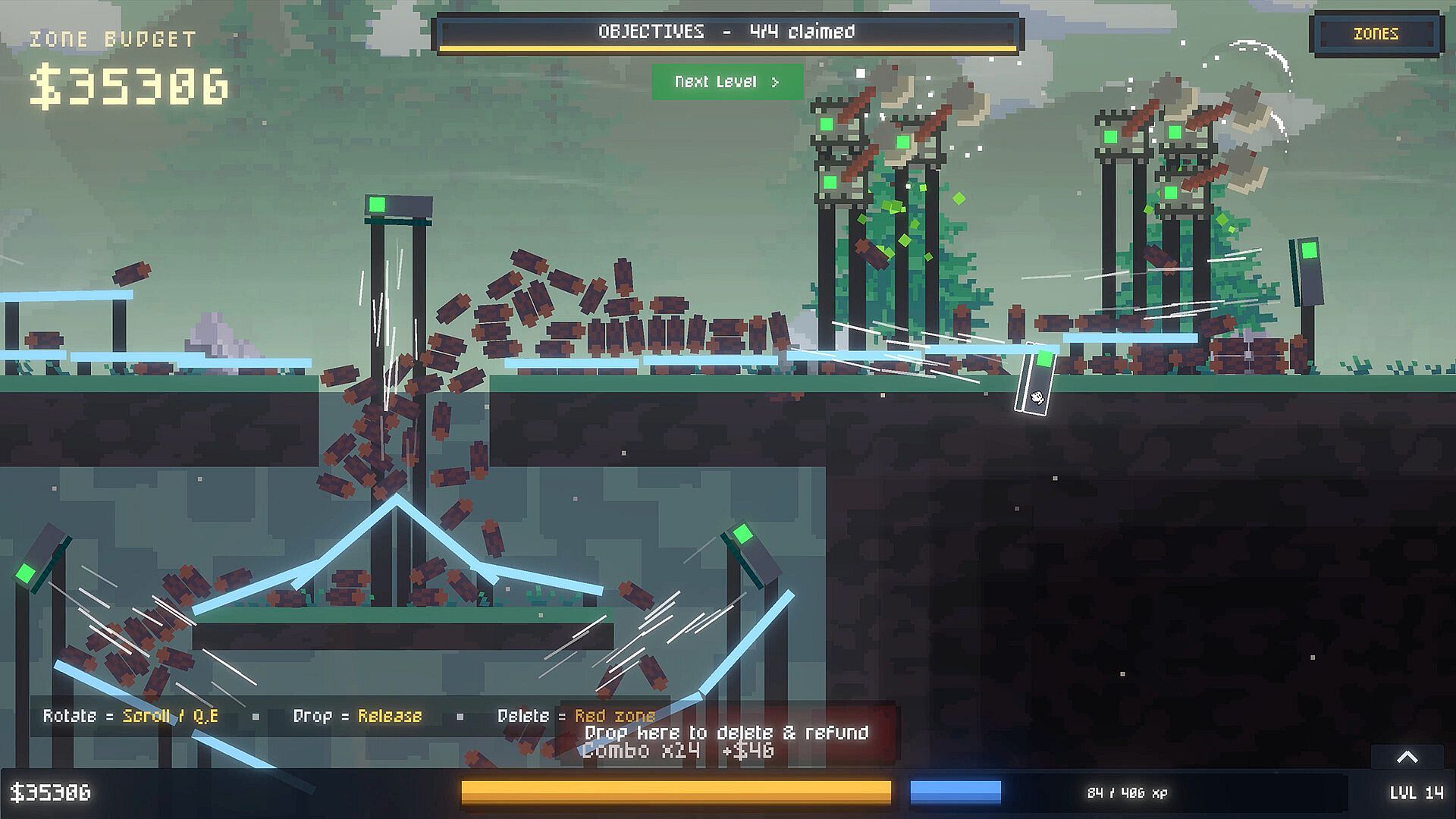
The central loop revolves around constructing setups that guide and accelerate logs downward. Tools allow players to fling logs across gaps, funnel them through narrow paths, or dam them up to create controlled releases. A single large drop often produces better results than constant small pushes, so timing the release of accumulated logs becomes a key part of efficient progress. New tools appear for purchase as play continues, and upgrades improve reliability or capacity for tools that prove useful in repeated attempts. The physics system responds realistically to angles, momentum, and obstacles, rewarding careful planning while still permitting chaotic experiments that sometimes succeed through unexpected interactions.
Each session involves balancing resource management with mechanical creativity. Logs must reach the core in sufficient quantity, yet the path to that goal remains open to individual interpretation. Players adjust structures between attempts, learning from failed drops and refining layouts to minimize waste or blockages. The automation aspect emerges naturally as stable contraptions run with minimal intervention once logs begin moving through them.
Game Modes
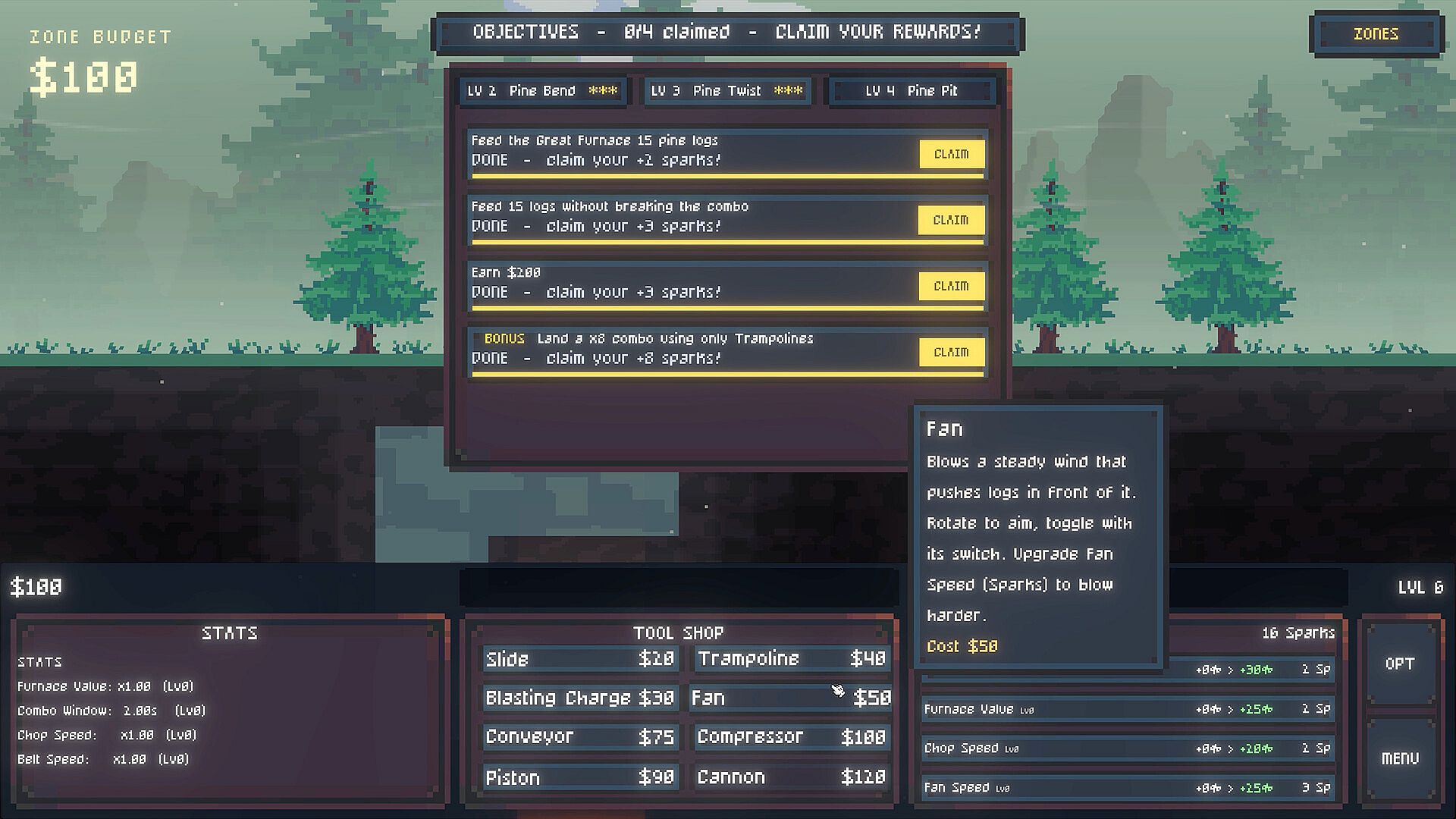
Campaign mode presents a series of distinct zones, each functioning as a self-contained puzzle. Objectives vary by zone and guide the player toward specific performance targets without restricting the methods used to achieve them. Progress through these zones introduces new tools gradually and builds familiarity with core mechanics in structured settings.
Sandbox mode removes all restrictions on tool access, allowing unrestricted construction of any contraption imaginable. This environment supports open experimentation, large-scale builds, and testing of ideas that might not fit campaign constraints. The core itself remains indifferent to the route taken, so success depends entirely on the effectiveness of the design.
Tools and Progression
Tool acquisition follows a steady pace tied to performance in earlier stages. Upgrades focus on enhancing existing pieces rather than adding entirely new categories, which keeps the emphasis on mastery of fundamentals. Players often develop personal preferences for certain combinations that handle different terrain or log volumes reliably. Experimentation with placement order and spacing reveals how small changes compound into major differences in throughput.
The simulation layer tracks log movement in real time, highlighting inefficiencies such as jams or overshoots. Adjustments can be made on the fly in many cases, though major redesigns usually require a fresh start. This iterative process mirrors other automation titles while remaining grounded in simple 2D physics interactions.
Is It Worth Playing?
Log Drop suits players who enjoy physics-driven puzzles and the satisfaction of optimizing automated systems. The campaign provides clear direction through its zone-based structure, while the sandbox offers freedom for those who prefer unrestricted creation. Both modes share the same core loop of building, testing, and refining, so the experience remains consistent regardless of chosen path. Those drawn to casual strategy and simulation games with a focus on creative problem solving will find the available tools and physics interactions engaging over multiple sessions. The game runs on PC and supports both methodical and experimental approaches without enforcing a single correct solution.