




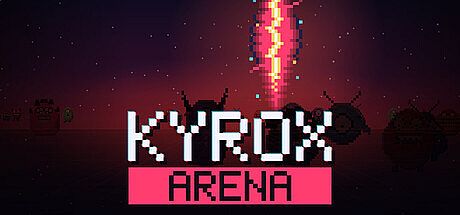


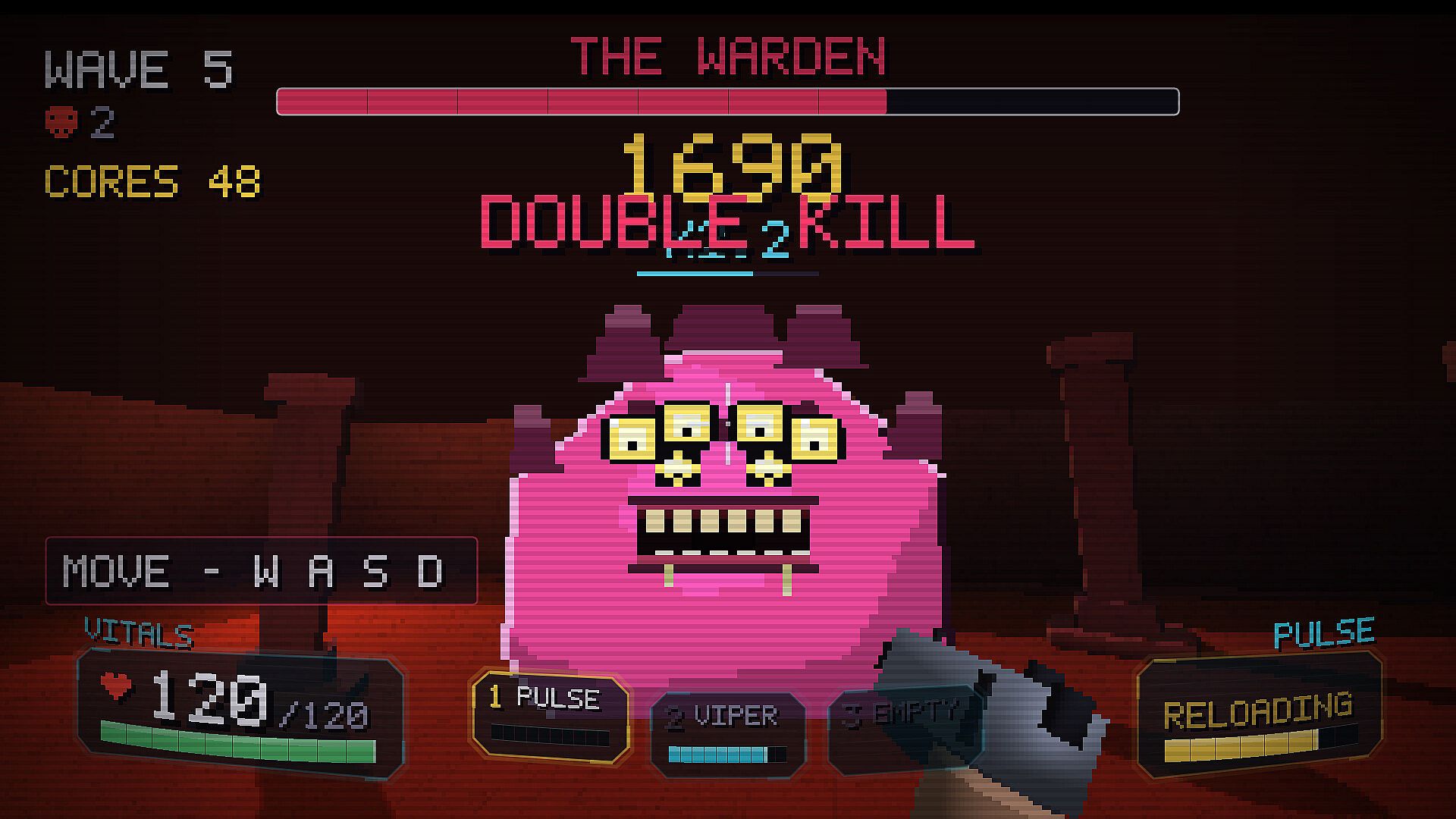
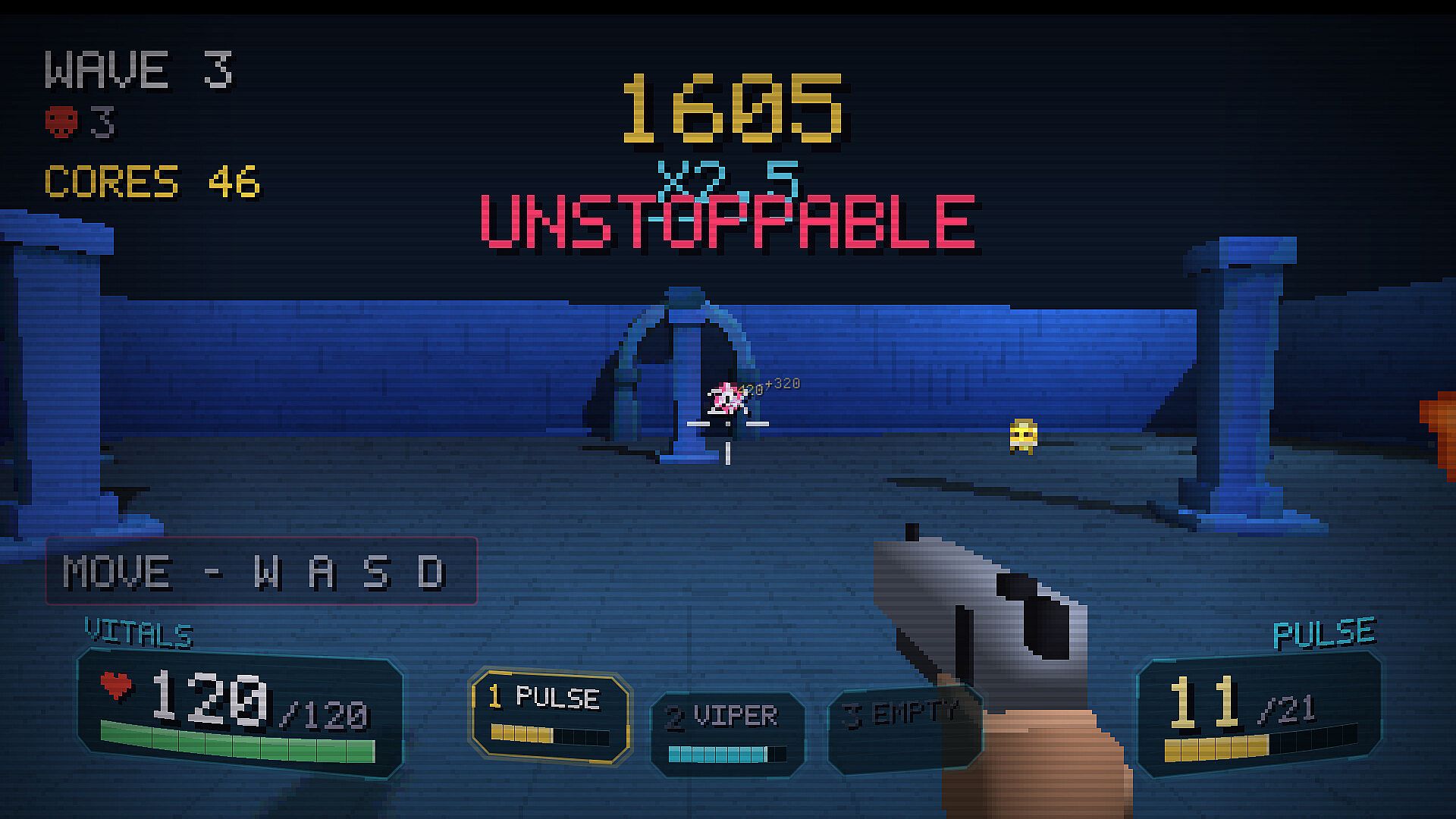
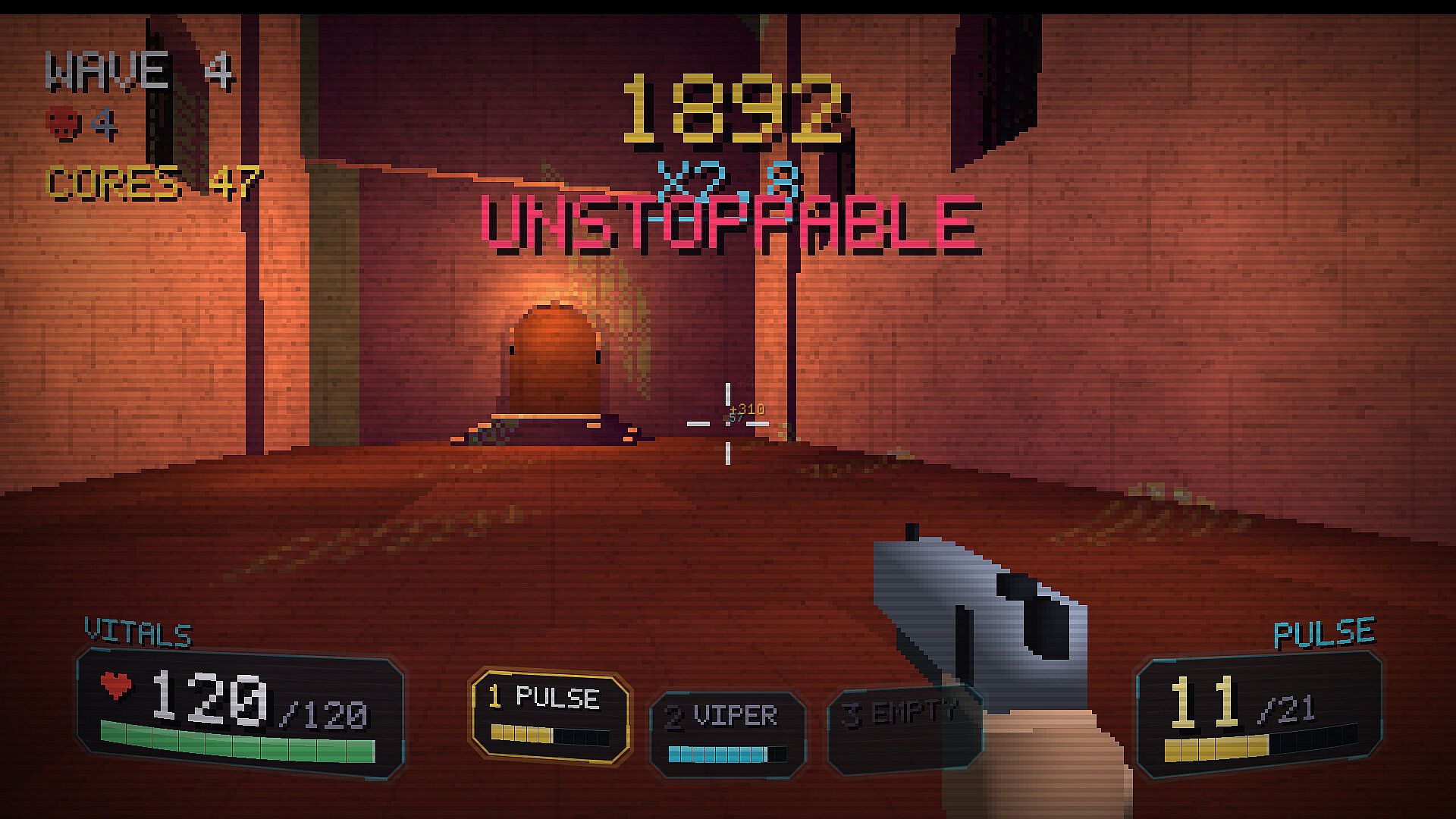
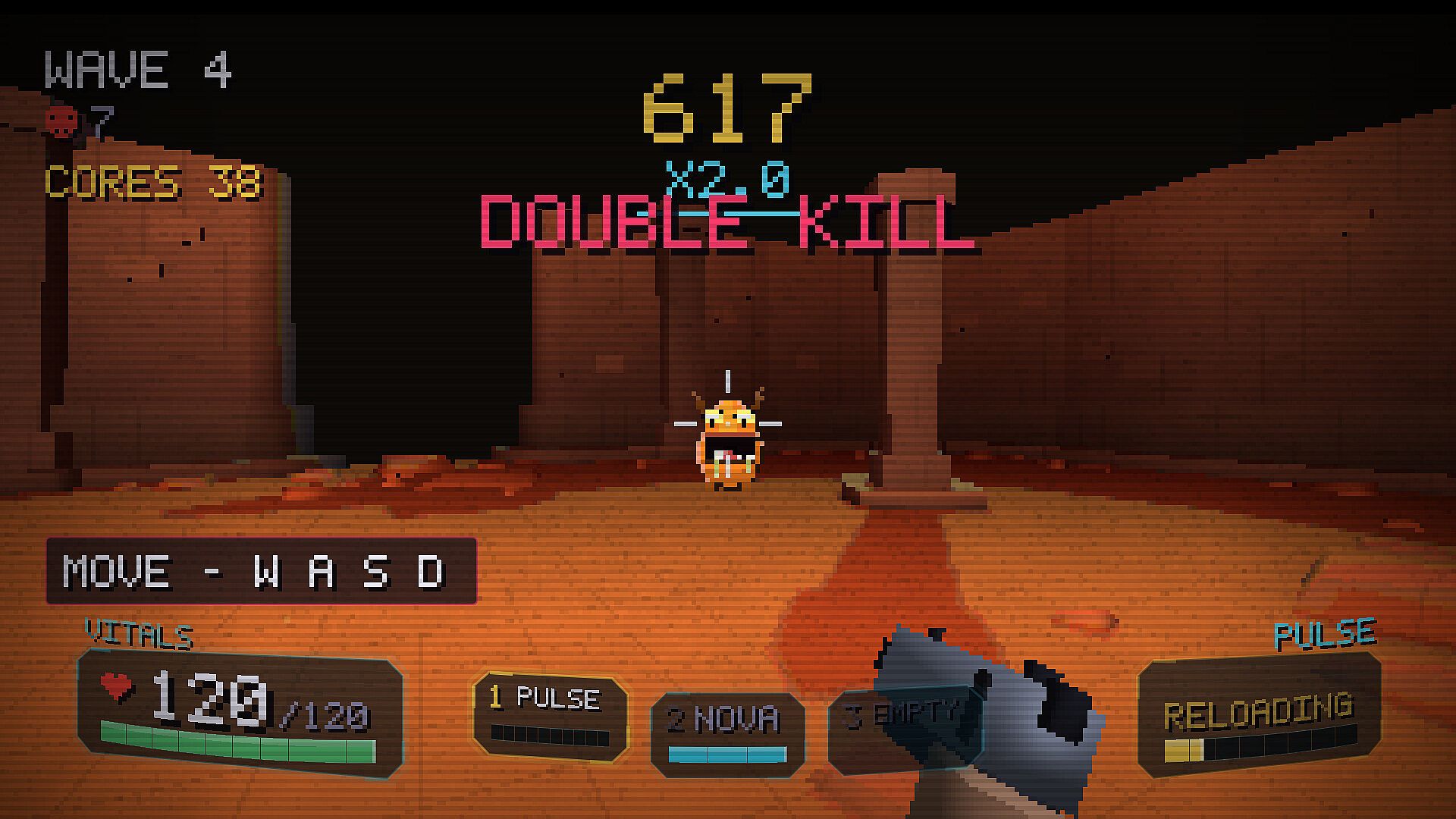

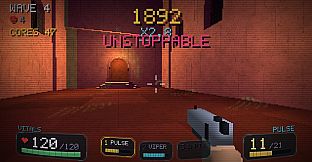
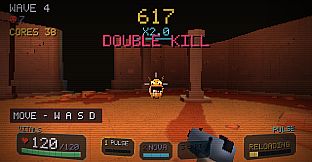
Kyrox Arena is a first-person action shooter built in a distinctive pixel art style with heavy CRT effects. Players take control of a KYROX-pattern operative tasked with holding back an endless invasion from another dimension. The core experience centers on wave-based survival where every run demands quick adaptation, precise shooting, and smart upgrade choices.
Gameplay
The action begins simply with a basic pistol and escalates rapidly as enemies fall. Weapons are stripped directly from defeated foes, creating a constant cycle of scavenging and improvisation. Over twenty distinct monster types appear across waves, each with unique attack patterns and behaviors that force players to stay mobile and aware of their surroundings.
Seven primary weapons define the combat feel. The PULSE sidearm serves as a reliable starter, while the LANCE railgun delivers piercing shots that can eliminate multiple targets in a straight line. Recoil patterns vary significantly between guns, rewarding players who learn to control each one during intense firefights. Between waves, more than forty upgrades become available for drafting. These range from critical hit stacking and piercing rounds to lifesteal effects, explosive projectiles, and enhanced dodge rolls. Upgrades compound across a run, turning early modest gains into powerful synergies that can break through later waves.
Threat tiers introduce escalating difficulty and better rewards, while shards collected during runs can be banked in the Armory for permanent upgrades that carry over between attempts. The entire loop emphasizes tight movement, accurate aiming, and build experimentation in short, repeatable sessions.
Game Modes
The primary single-player experience involves surviving successive waves of the Swarm across multiple arenas. Runs can be extended by pushing higher threat levels, and the procedural elements in certain maps ensure variety even on repeated attempts. A daily mode locks one specific seed for all players worldwide, creating a shared challenge where leaderboards track performance on identical waves, drafts, and layouts.
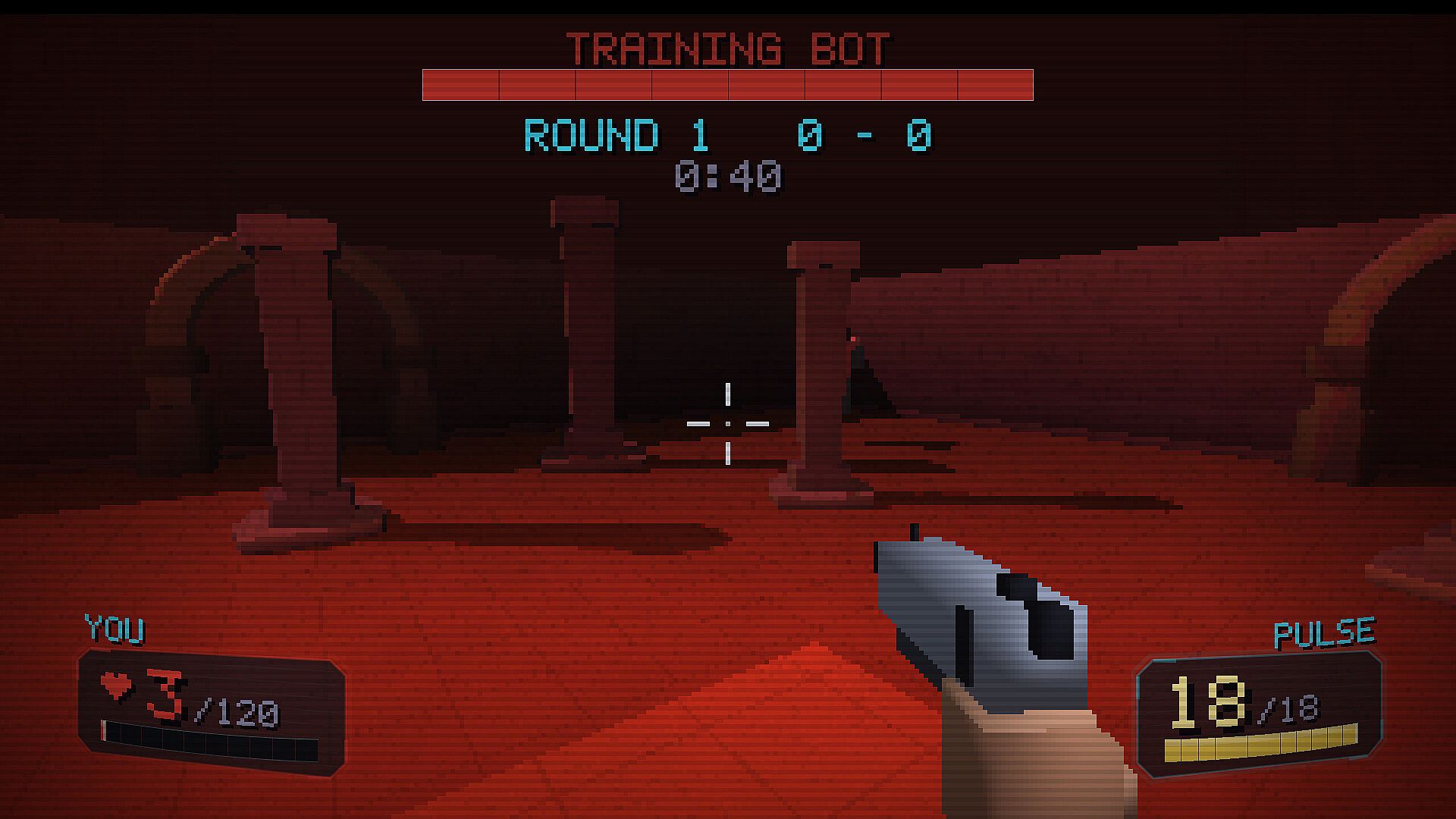
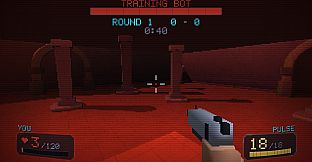
Competitive play shifts to online 1v1 duels conducted in a best-of-five format. All weapons, recoil behaviors, and movement mechanics transfer directly from the single-player campaign, ensuring consistent feel between modes. Matches emphasize direct skill comparison without external variables, with lag compensation supporting fair play over Steam connections.
The Arenas and Enemies
Six distinct arenas provide the battlegrounds. Neon-lit kill-boxes favor aggressive positioning, while an ember-red fighting pit creates a more claustrophobic atmosphere. One arena uses procedural generation for layouts that change with each visit, and a hand-crafted cathedral features atmospheric details including a pipe organ soundtrack. Each environment influences movement and line-of-sight options differently.
The Swarm consists of varied enemy types that attack in coordinated waves. Four boss archetypes serve as major obstacles, each featuring three distinct phases and supported by elite variants carrying random affixes. These encounters test both mechanical execution and prior upgrade decisions, as nothing in the Swarm is designed to allow easy progress.
Is It Worth Playing?
Kyrox Arena targets players who enjoy roguelike progression layered onto fast-paced first-person shooting. The combination of weapon looting, deep upgrade drafting, and permanent Armory perks creates meaningful long-term progression alongside the immediate tension of each wave. Those who appreciate pixel-art aesthetics and deliberate recoil management will find the combat satisfying, while the daily mode and 1v1 duels add structured challenges for competitive players.
Because the game remains in development ahead of its July 2026 release, current information is limited to the developer's detailed description and trailer footage. The single-developer approach has produced a focused, visually consistent package that avoids common indie clichés. Fans of wave survival shooters with build-crafting depth and optional PvP should monitor further updates and consider the title once it launches, particularly if they value tight mechanical feedback over expansive narratives or large-scale multiplayer.












