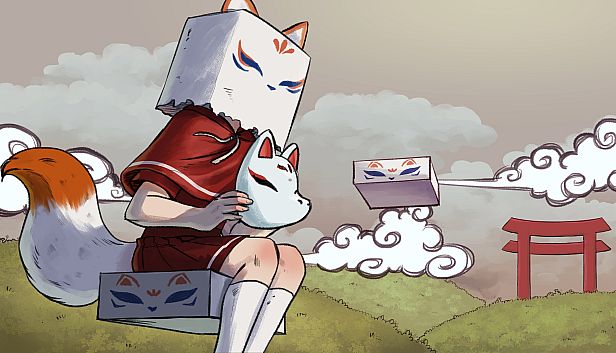


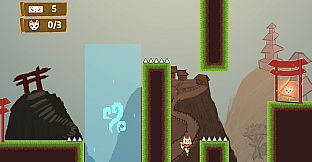
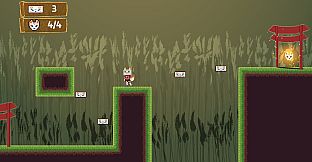
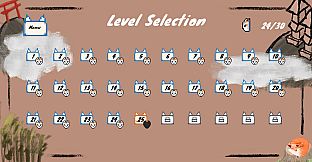
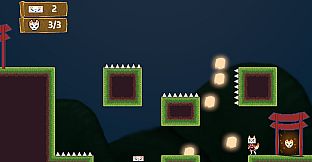
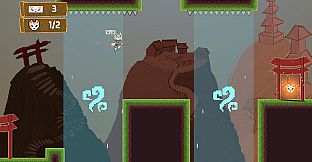
Kitsune Kaeru is a single-player action and strategy platformer that combines precise movement with creative environmental manipulation. Players control a small kyubi fox in a world rendered through pixel art and sumi-e brushwork, where the core loop revolves around creating cardboard boxes with spiritual powers to alter the terrain and reach distant portals across more than thirty levels.
Gameplay
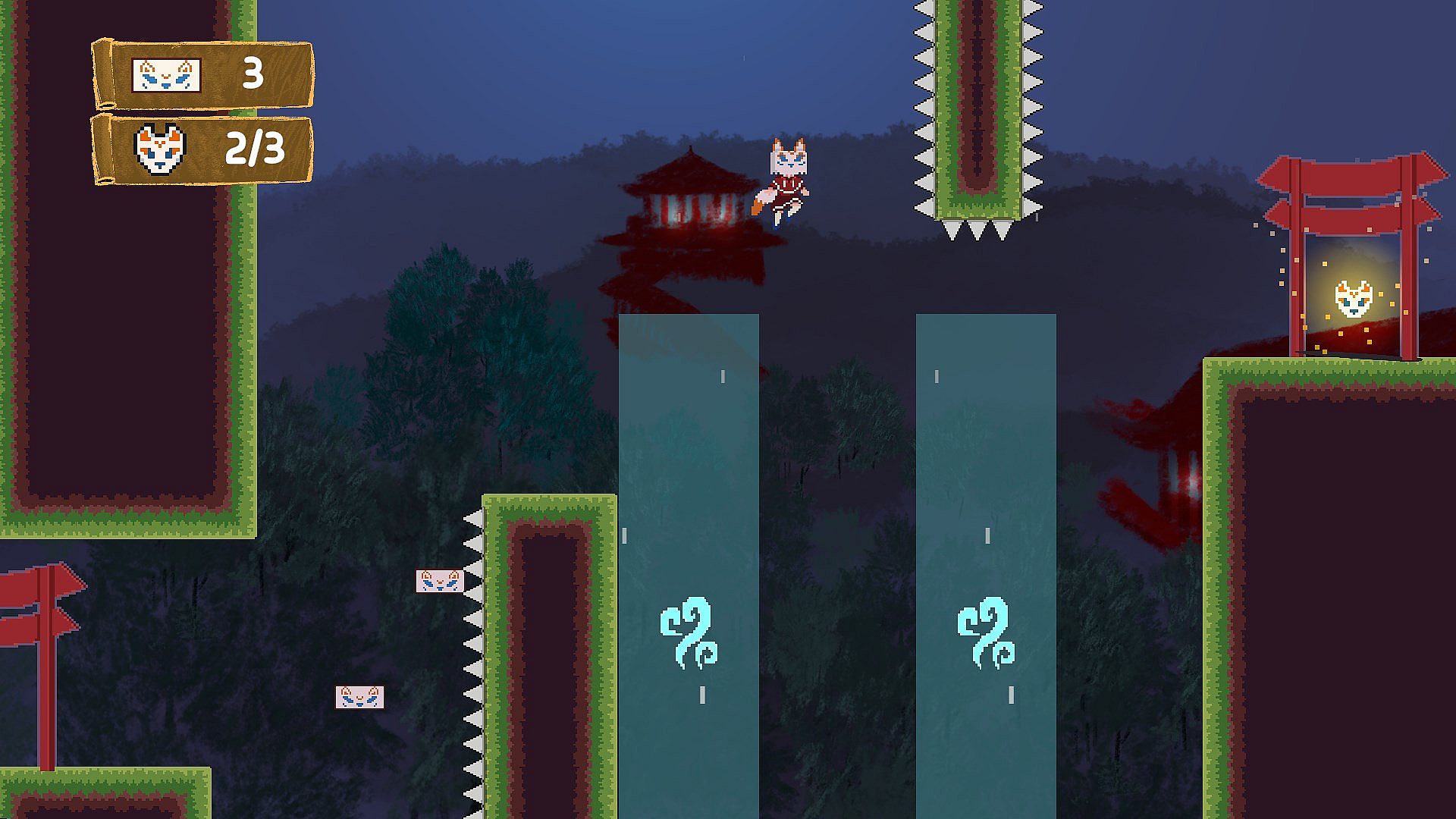
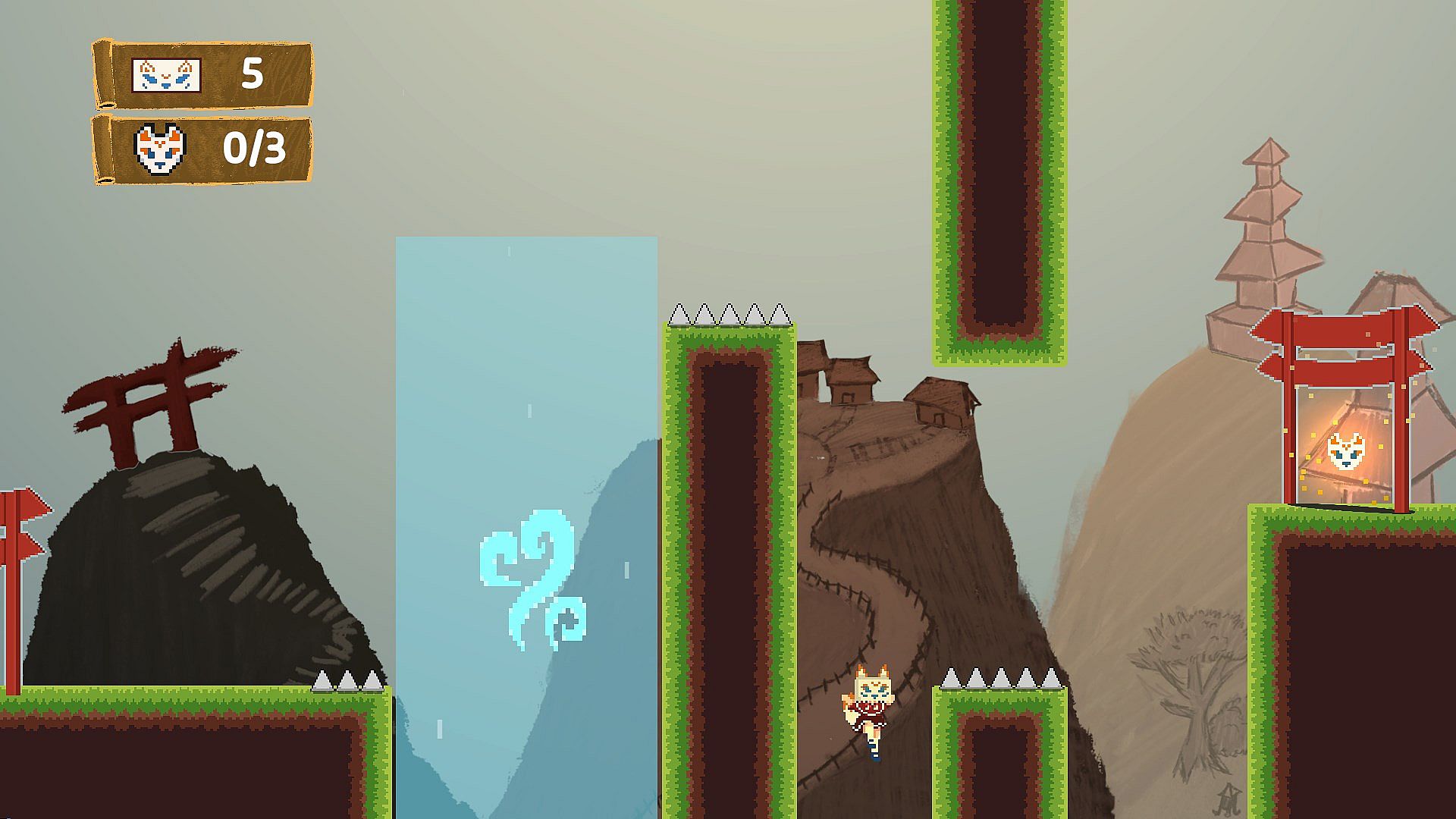
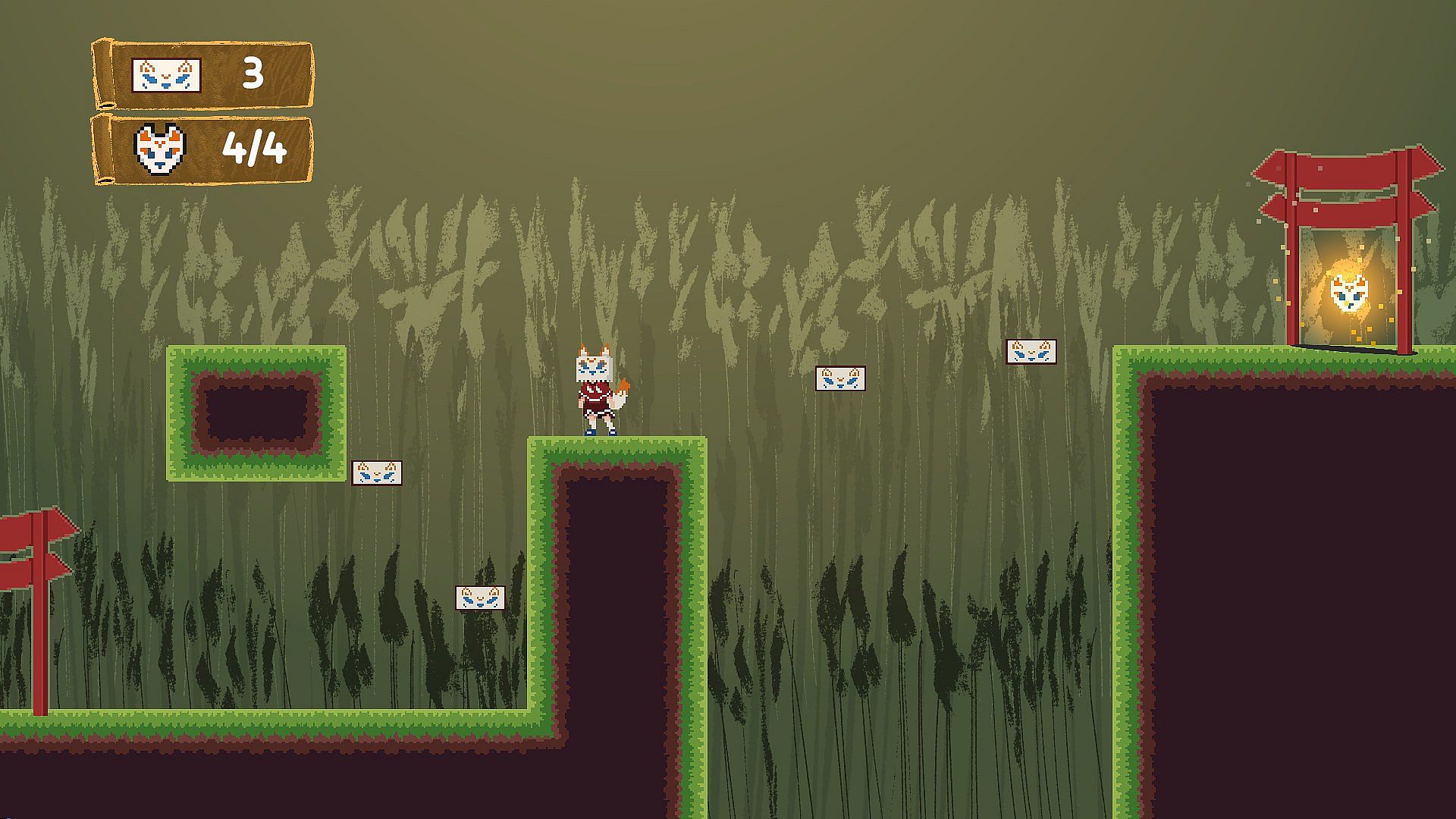
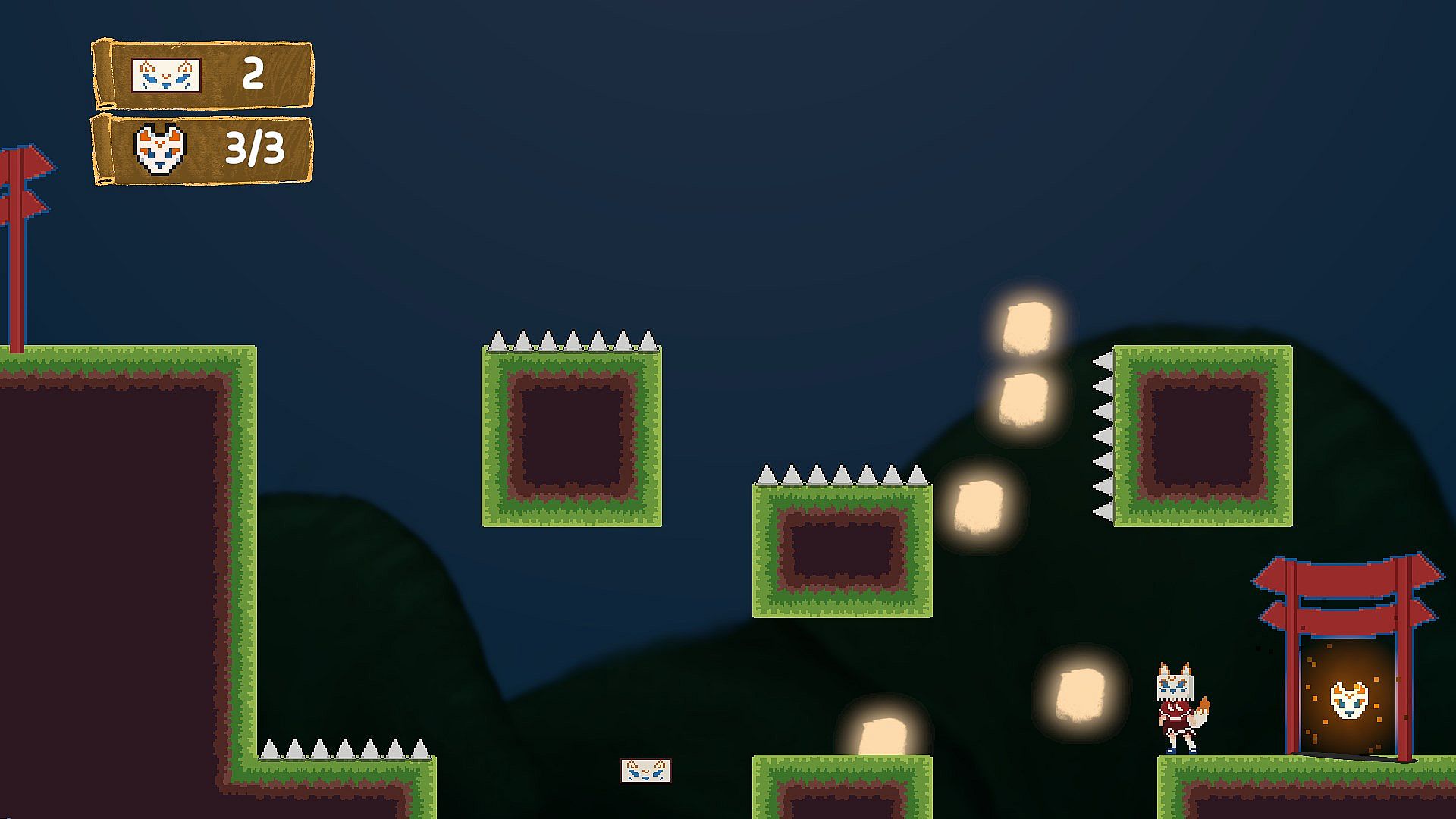
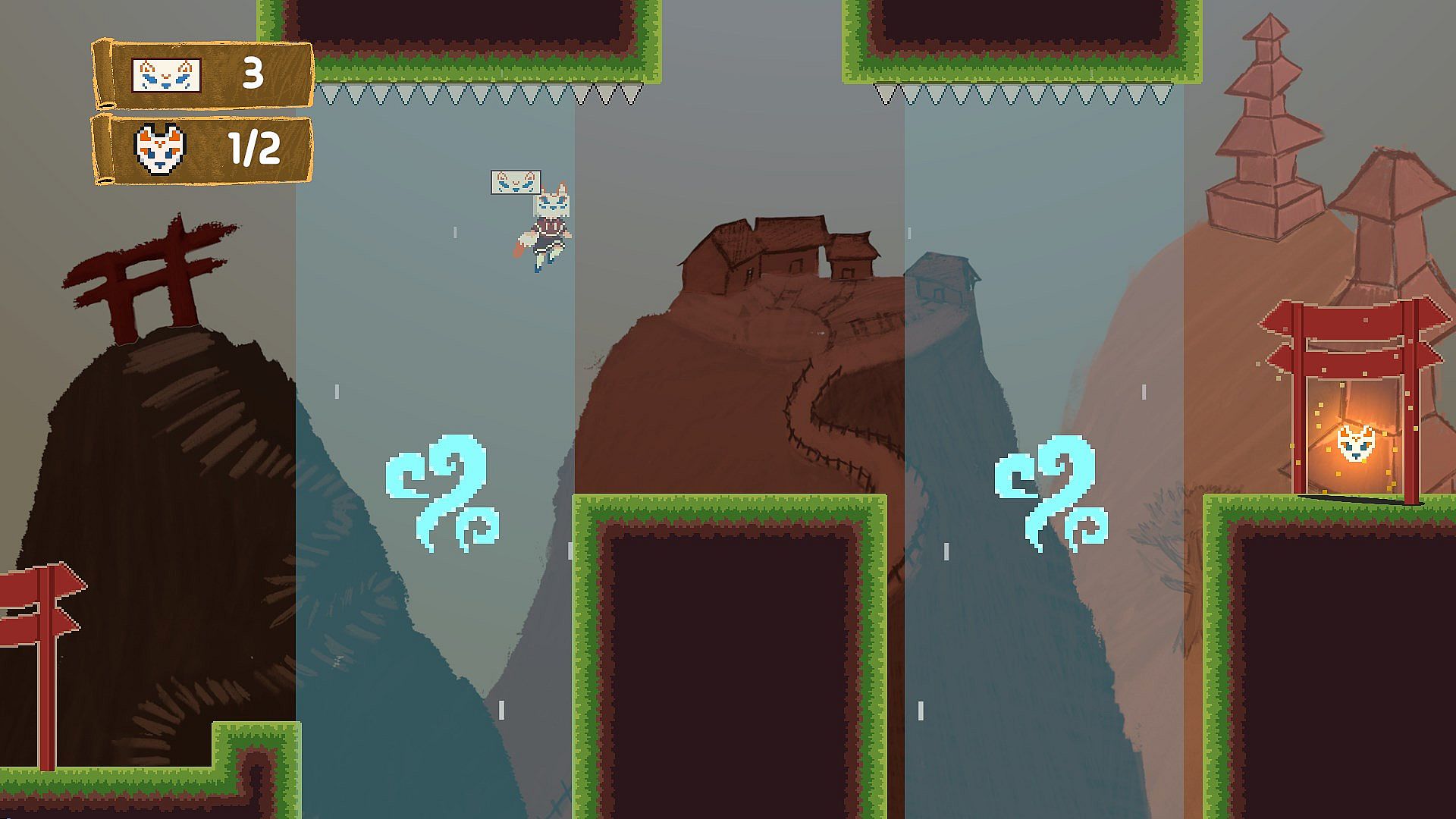
The central mechanic lets the kyubi summon boxes that function as platforms, bridges, or stepping stones. These boxes allow players to bridge gaps, climb to higher ledges, or redirect wind currents that push the character across stages. Each level presents deadly spikes, deep chasms, and shifting winds that force constant adjustments to placement and timing. The fewer boxes used to complete a stage, the higher the mastery rank awarded at the end.
Levels support multiple solutions because box placement can be approached in different sequences or configurations. This encourages experimentation while rewarding careful planning and efficient execution. The art style keeps every stage visually distinct, with ink-like strokes and pixel details that emphasize the hand-crafted feel of the environments without overwhelming the focus on movement and positioning.
Game Modes
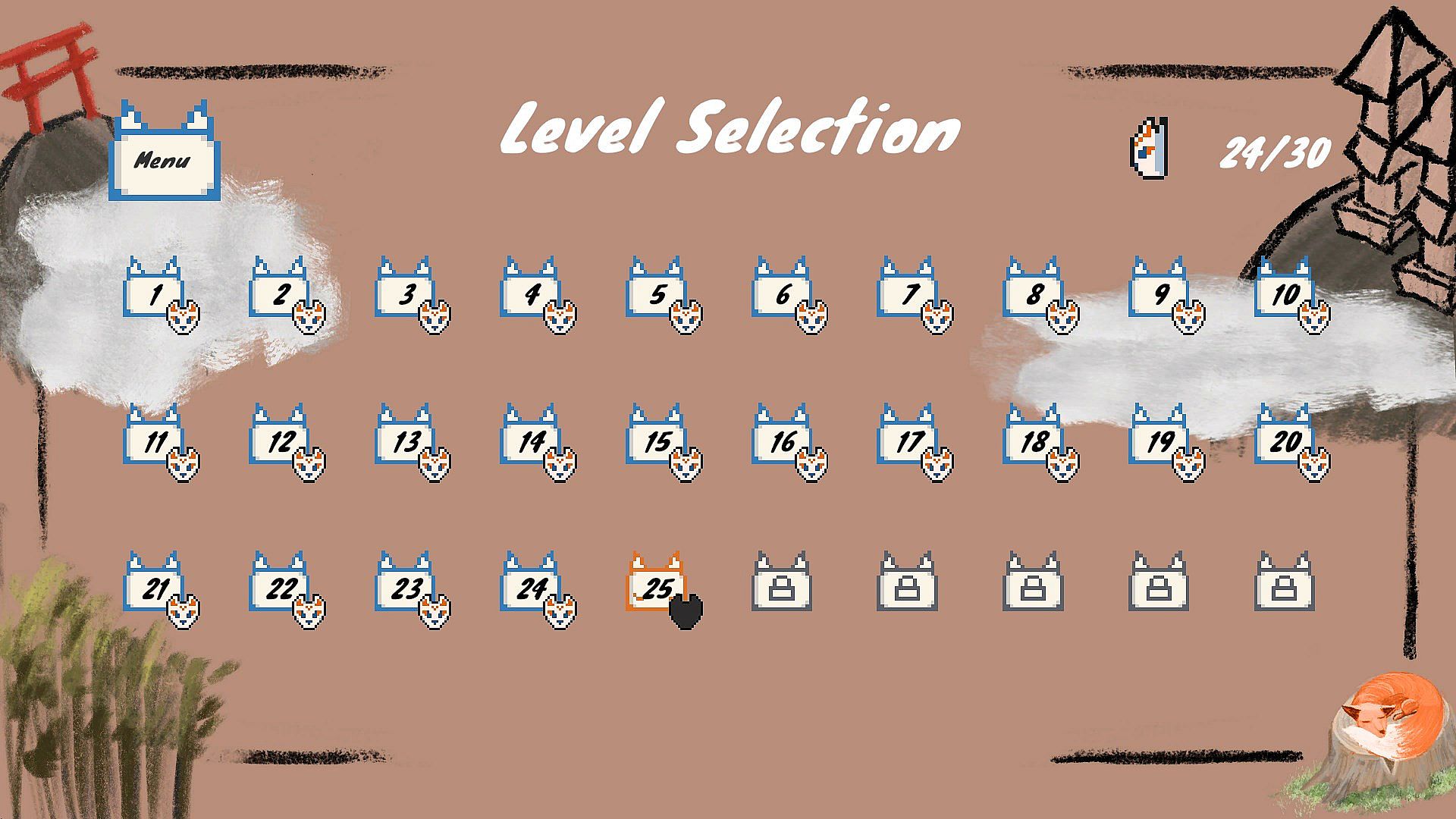
Kitsune Kaeru operates entirely in single-player format. Progression follows a linear sequence of more than thirty individual levels, each designed around the box-creation system and the efficiency challenge. There are no separate competitive or cooperative modes. Instead, replay value comes from returning to completed stages to improve box counts and achieve better ranks. Optional objectives within levels further extend playtime by encouraging alternative routes or stricter resource limits.
Core Mechanics and Progression
Spiritual box creation serves as both a puzzle tool and a platforming aid. Players must account for box durability, wind interaction, and exact positioning to avoid hazards. The strategy element emerges from deciding when to summon additional boxes versus relying on precise jumps and existing structures. As levels advance, wind patterns grow more disruptive and spike arrangements more intricate, increasing the demand for foresight. The efficiency system tracks box usage per stage and feeds directly into the final ranking, creating a clear incentive to refine solutions over multiple attempts.
Is It Worth Playing?
The game suits players who enjoy deliberate, skill-based platforming paired with light puzzle solving. Its short campaign length and focus on mastery make it accessible for short sessions, while the ranking system provides motivation for repeated play. Reception has been mixed, with praise for the inventive box mechanic and visual style alongside criticism of level repetition and control responsiveness. At its modest price point, the title offers a compact experience for those drawn to precision challenges and creative problem solving rather than expansive worlds or multiplayer features. If the described mechanics align with personal preferences for thoughtful platformers, it delivers a focused and distinctive outing.