







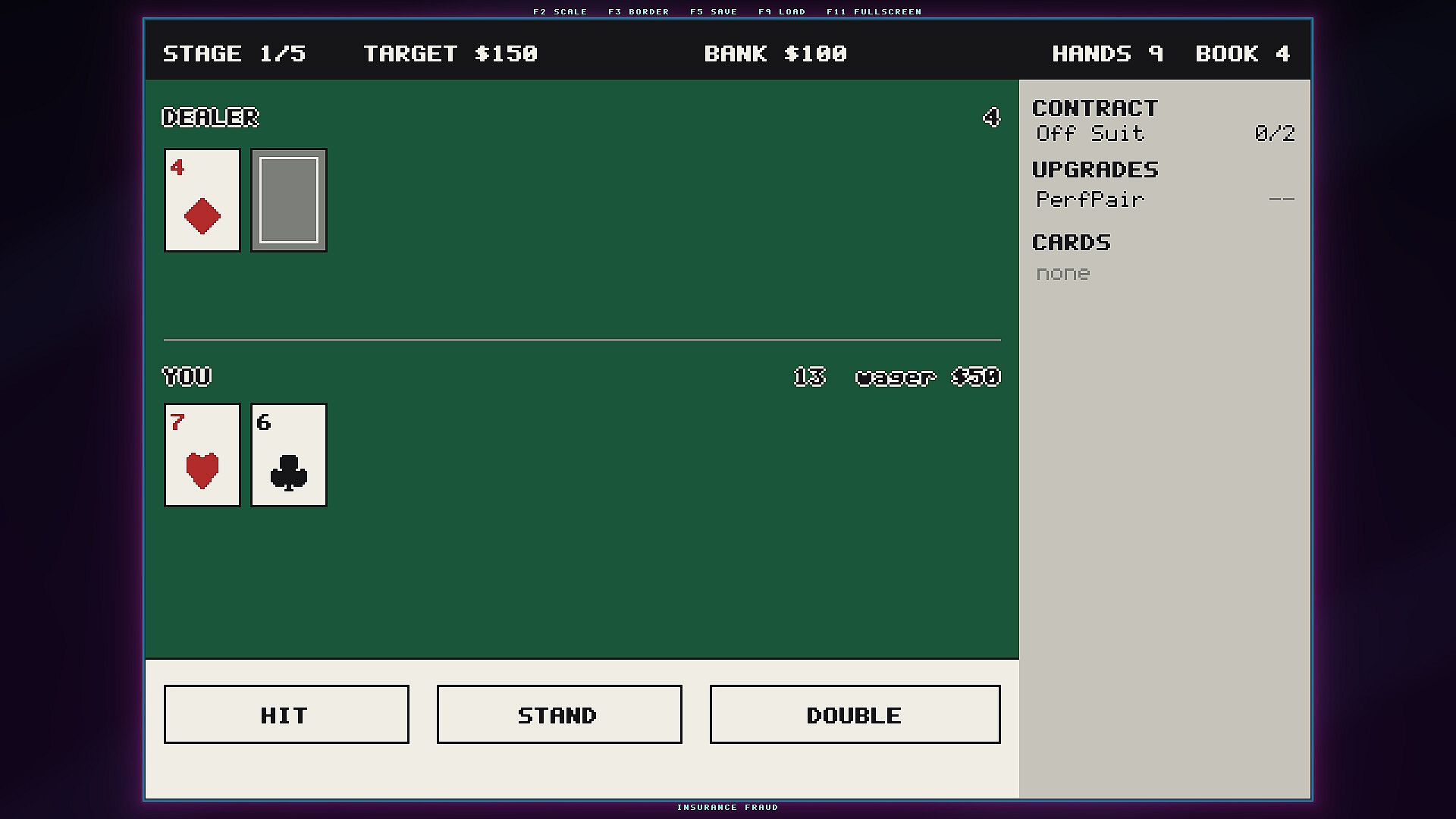

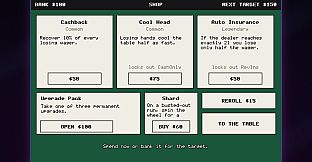
Insurance Fraud is a single-player strategy simulation game that reimagines blackjack as a roguelike experience focused on hand shapes and multipliers rather than totals alone. Players manage a bankroll that serves as health, score, and upgrade currency while facing five dealers across tables that demand specific outcomes beyond standard twenty-one. The core loop revolves around hitting, standing, and doubling down while pursuing pairs, straights, flushes, and other combinations that stack multipliers through purchased upgrades.
Gameplay
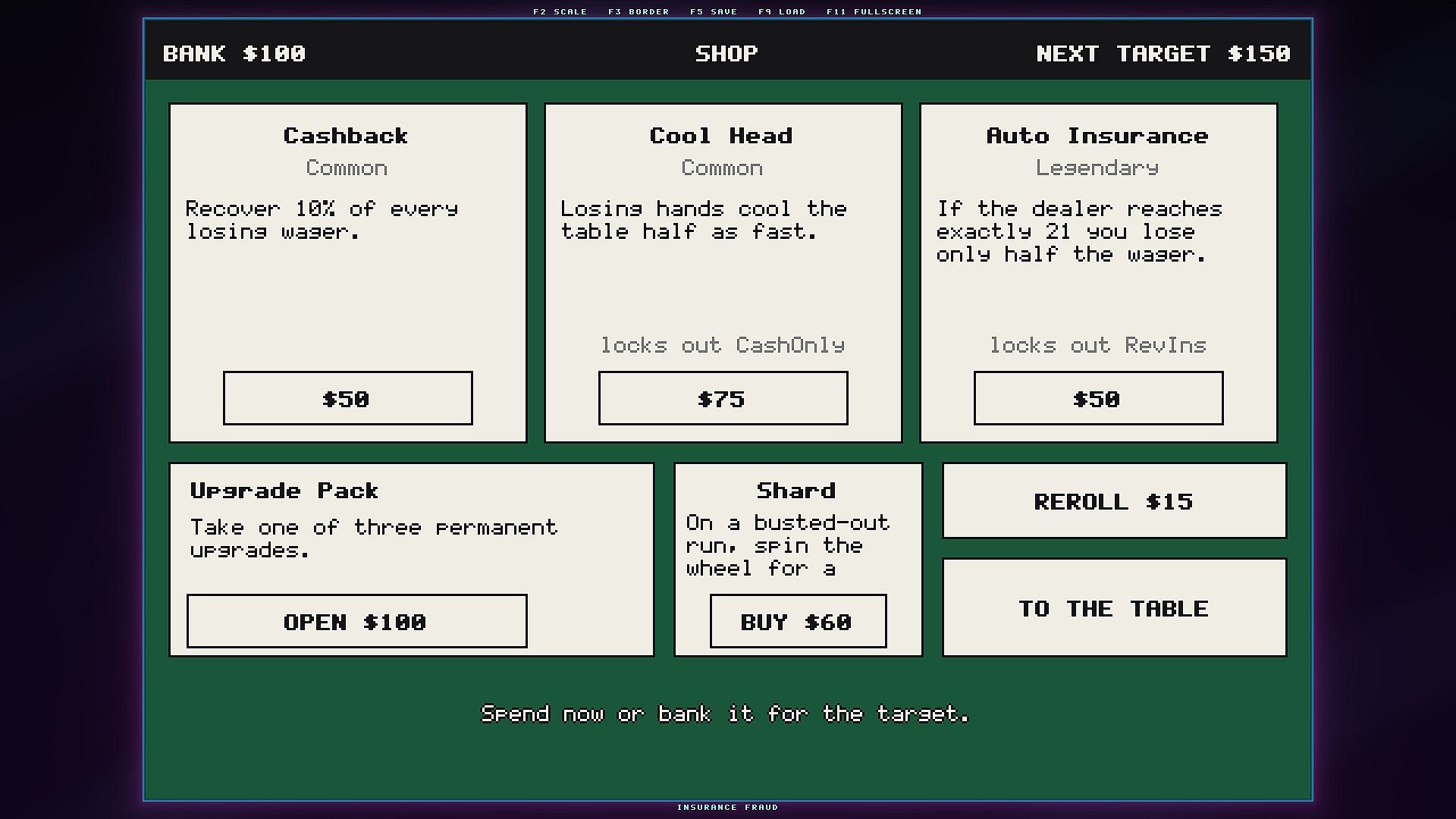
The bankroll functions as the central resource. Spending it on upgrades leaves the player with less resilience for future hands, while hoarding it risks falling short of progression targets. Each hand builds value through both its numerical total and its structural elements, such as straight flushes or four of a kind. Upgrades influence which hand types receive extra payouts, and chain reactions reward repeated stacking of combinations. Contracts appear at every table, requiring players to achieve shapes like flushes or survive multi-card hands without busting to earn additional cash.
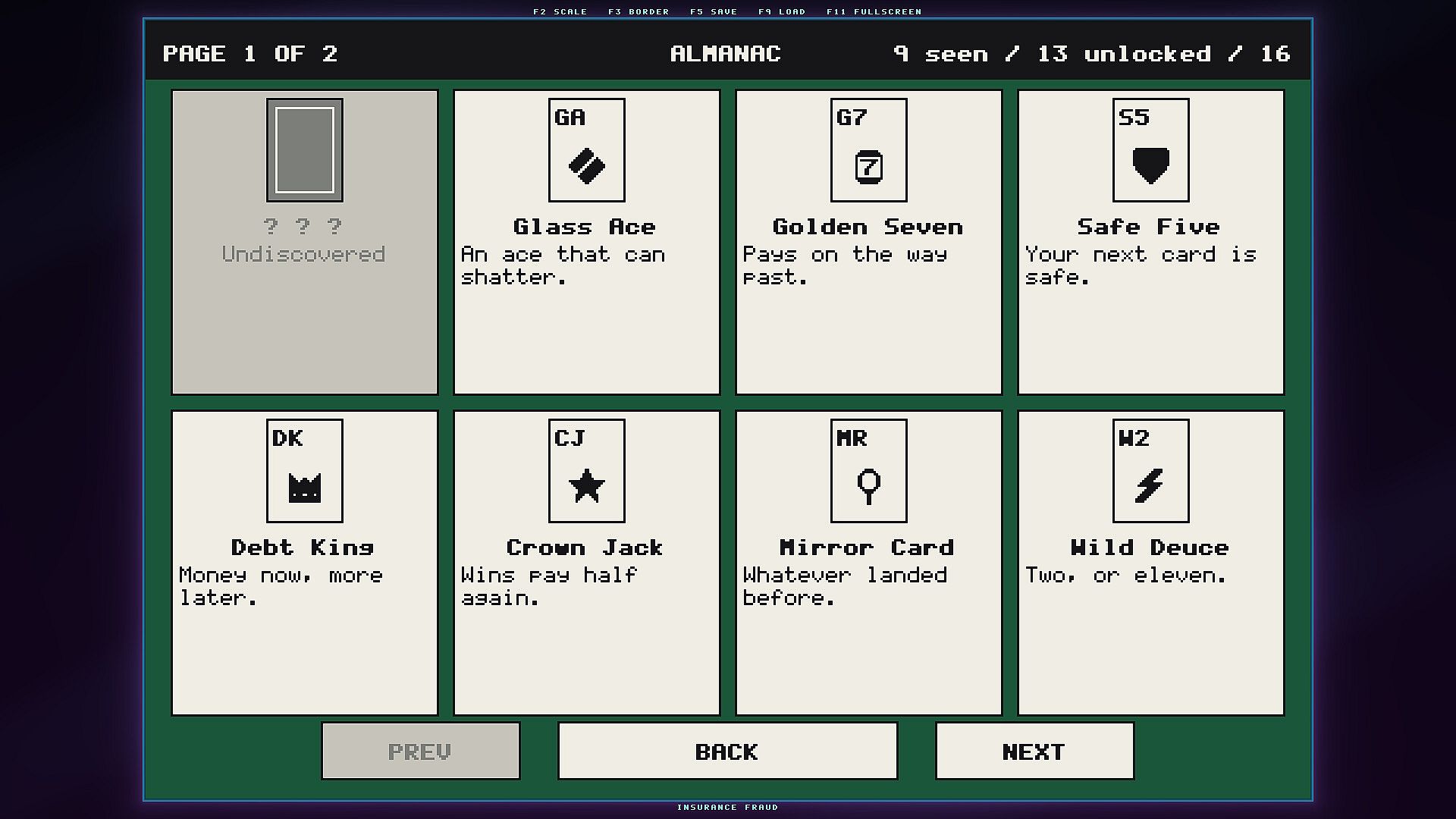
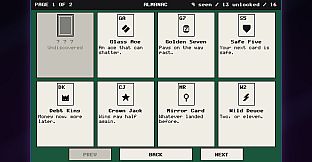
Special cards expand the possibilities beyond a standard deck. The Rainbow Nine contains all four suits in one card to preserve flush potential. The Ladder Six fills gaps in runs. The Split Seven registers as two sevens. The Void Card contributes nothing to totals yet supports other mechanics effectively. The Iron Eight nullifies the first bust. These cards unlock progressively during play, altering strategies across sessions. Controller support allows comfortable play on various setups, and the authentic retro aesthetic extends to included versions that run on period hardware from the 1990s.
Game Modes
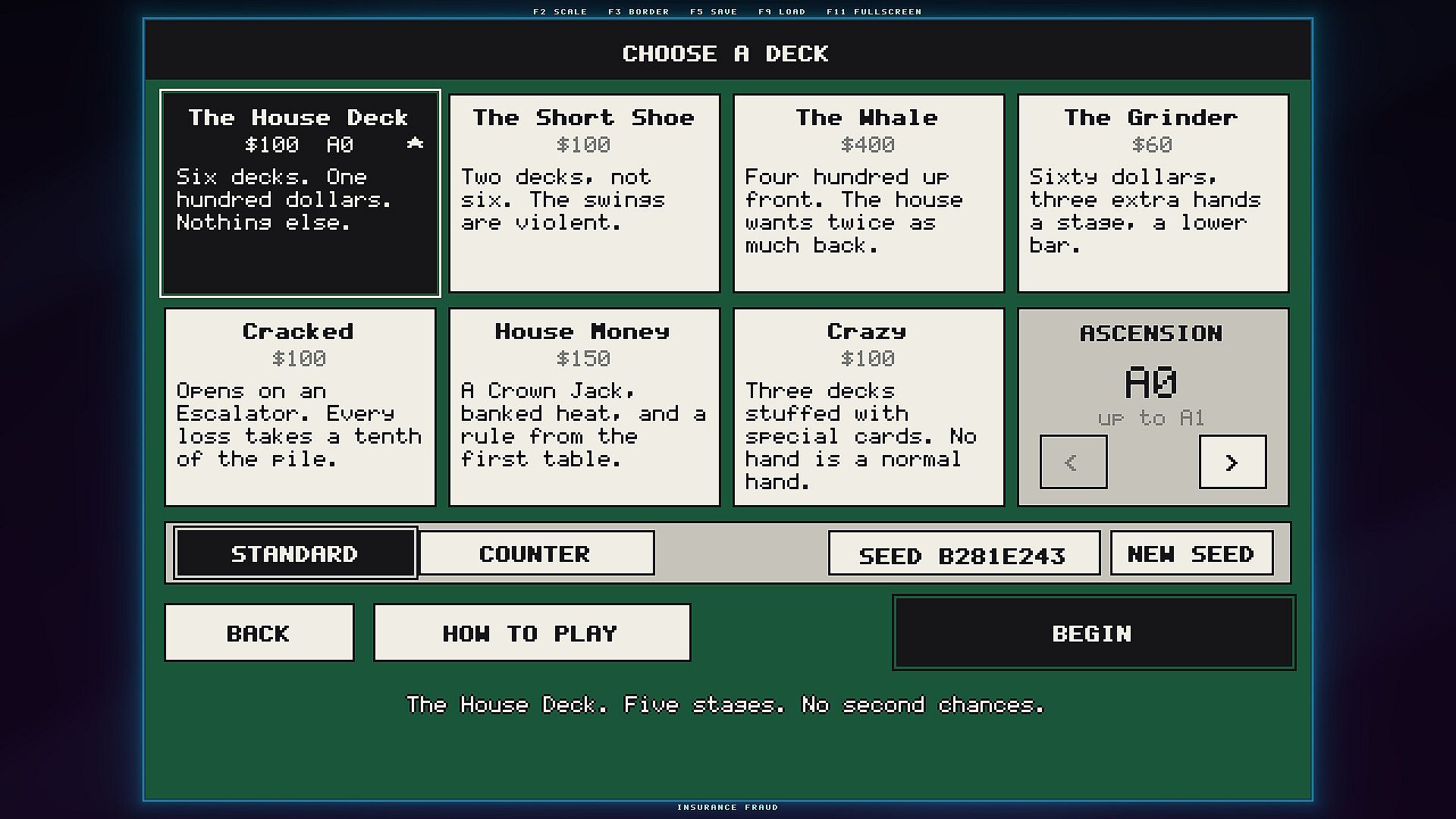
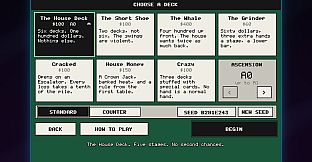
Seven distinct decks shape the experience, each requiring tailored approaches. The House Deck provides a straightforward entry point, while the Crazy Deck introduces greater variability. Completing a deck unlocks ascensions that increase difficulty through stricter conditions and stronger opposition. Six ascensions layer additional challenges onto the base decks. Contracts and house rules further differentiate runs, with ten different rules available to modify table behavior. A seed system enables sharing of specific run configurations for repeated attempts or comparison.
Five named bosses appear as part of the progression structure, each tied to particular tables and demanding consistent performance across multiple hands. The house mechanics introduce pushback in the form of earnings rakes and escalated targets, ensuring that successful runs adapt to shifting demands rather than repeating the same patterns.
Progression and Strategy
Progression centers on unlocking cards and upgrades while navigating the tension between immediate spending and long-term survival. Each table presents a fresh set of contracts that reward shape-based play over pure numerical success. The roguelike elements emerge through permadeath-style runs where bankroll depletion ends the attempt, pushing players to balance aggressive combo building with defensive choices. Different decks and ascensions encourage experimentation with upgrade paths that favor specific hand families or chain reactions.
Is It Worth Playing?
Insurance Fraud appeals to players who enjoy strategic card games with roguelike depth and simulation elements around resource management. Its focus on hand shapes and stacked multipliers creates a distinct loop from traditional blackjack, supported by varied decks, ascensions, and special cards that reward adaptation. The single-player format and controller support make it accessible for solo sessions on PC. With no user reviews available prior to release and a coming-soon status, interested players should monitor for launch to assess personal fit based on the described mechanics. Those drawn to indie strategy titles that blend familiar card rules with unconventional twists will find the core systems worth exploring once available.












