

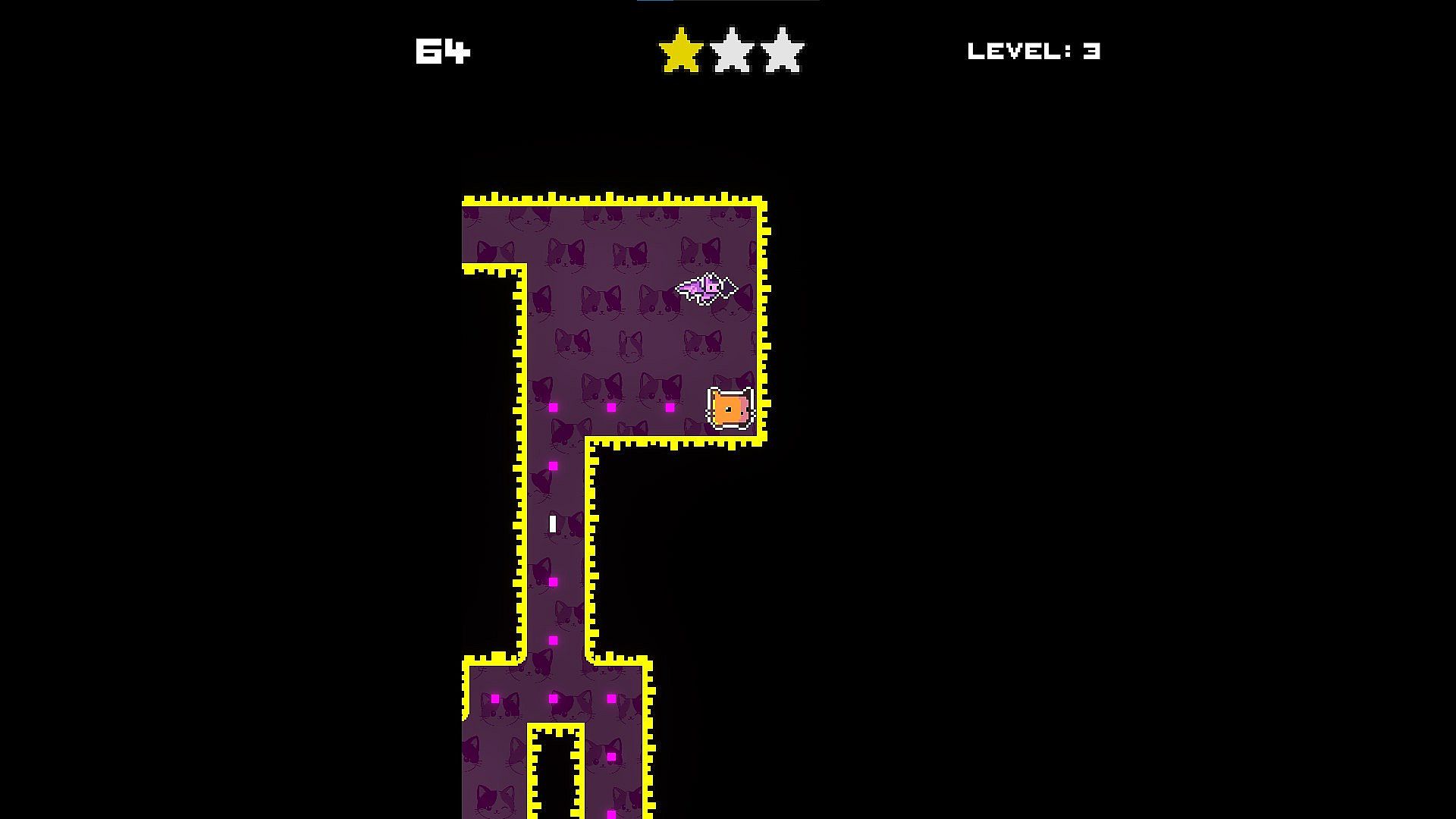
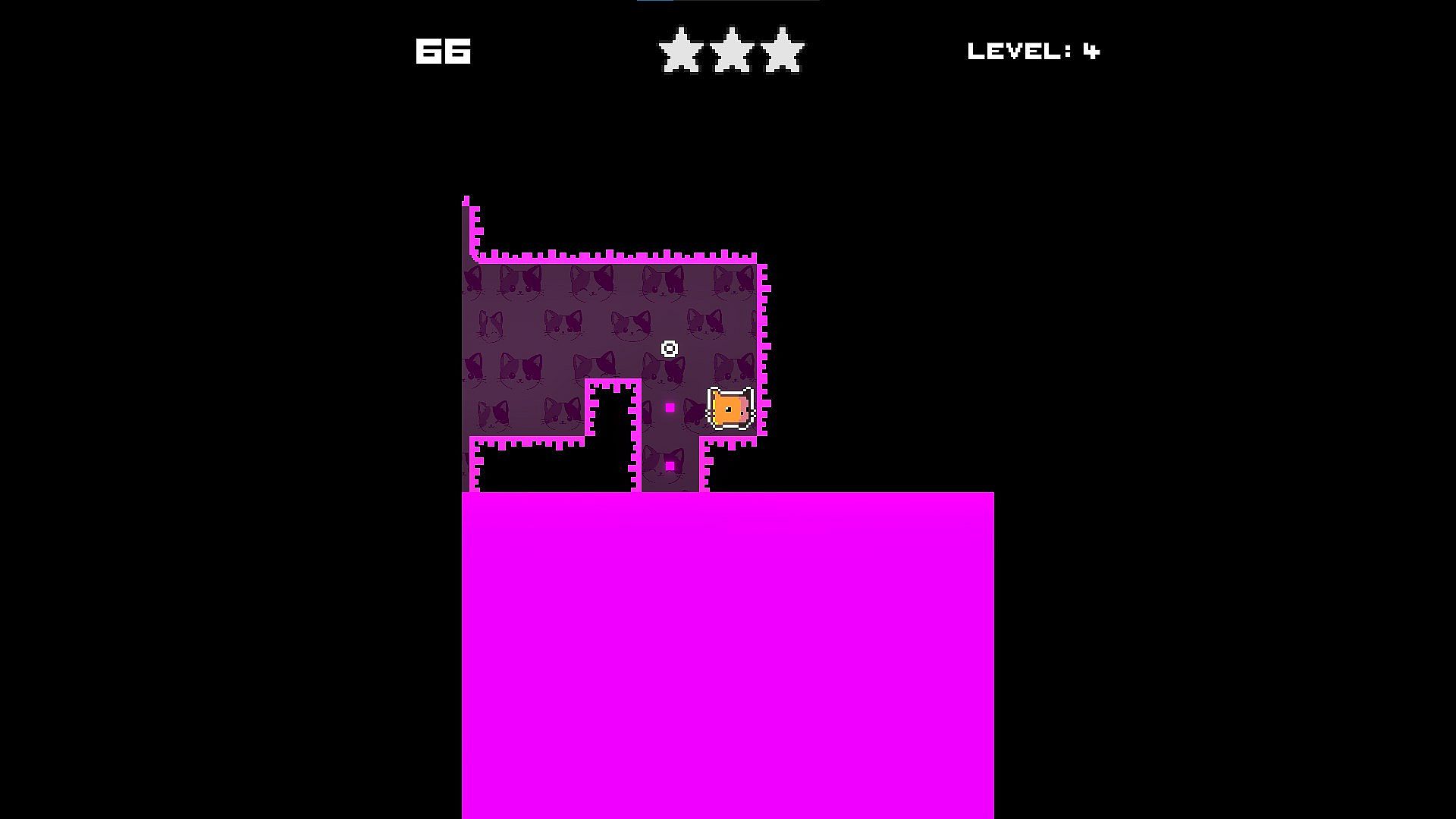
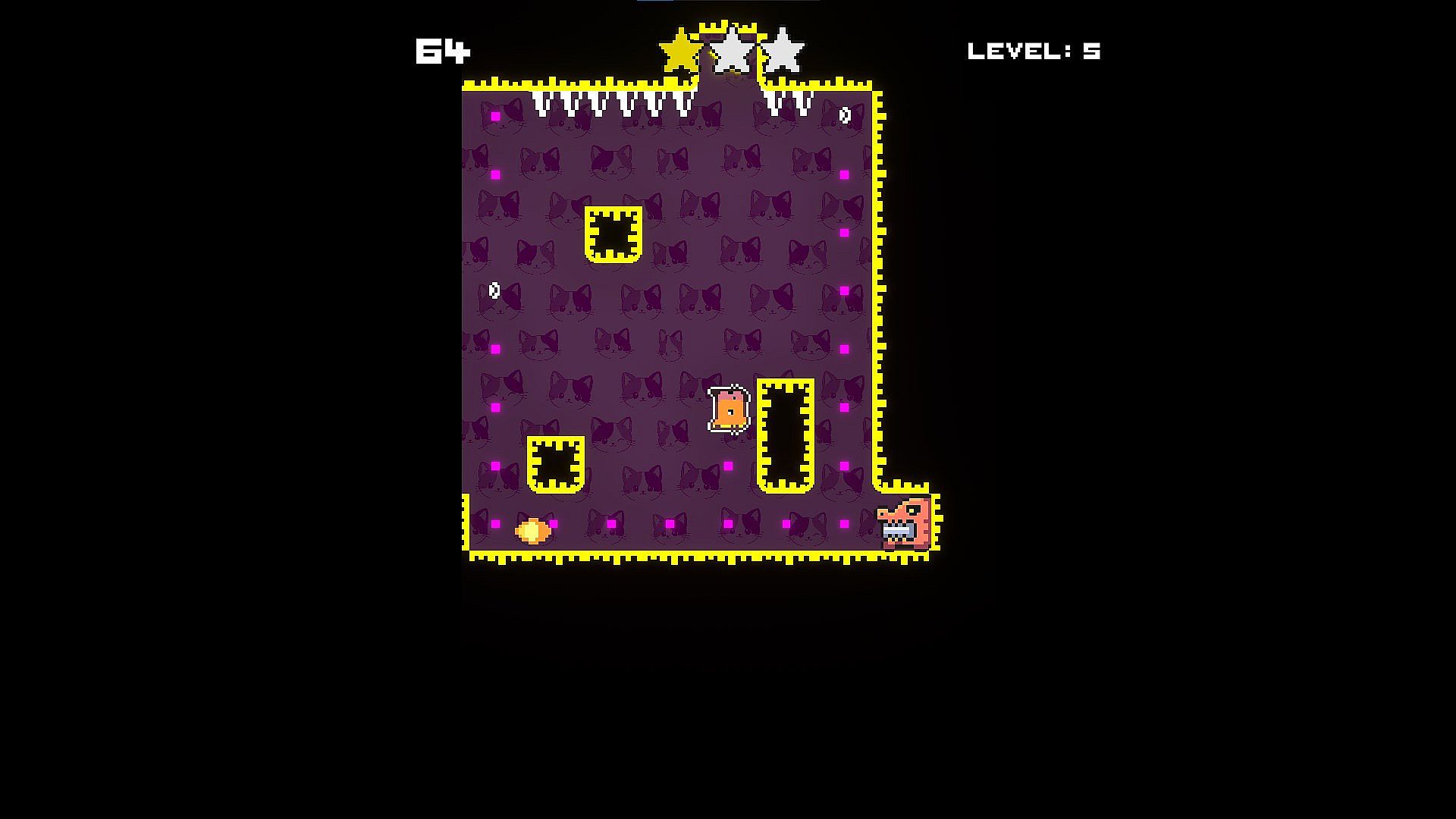
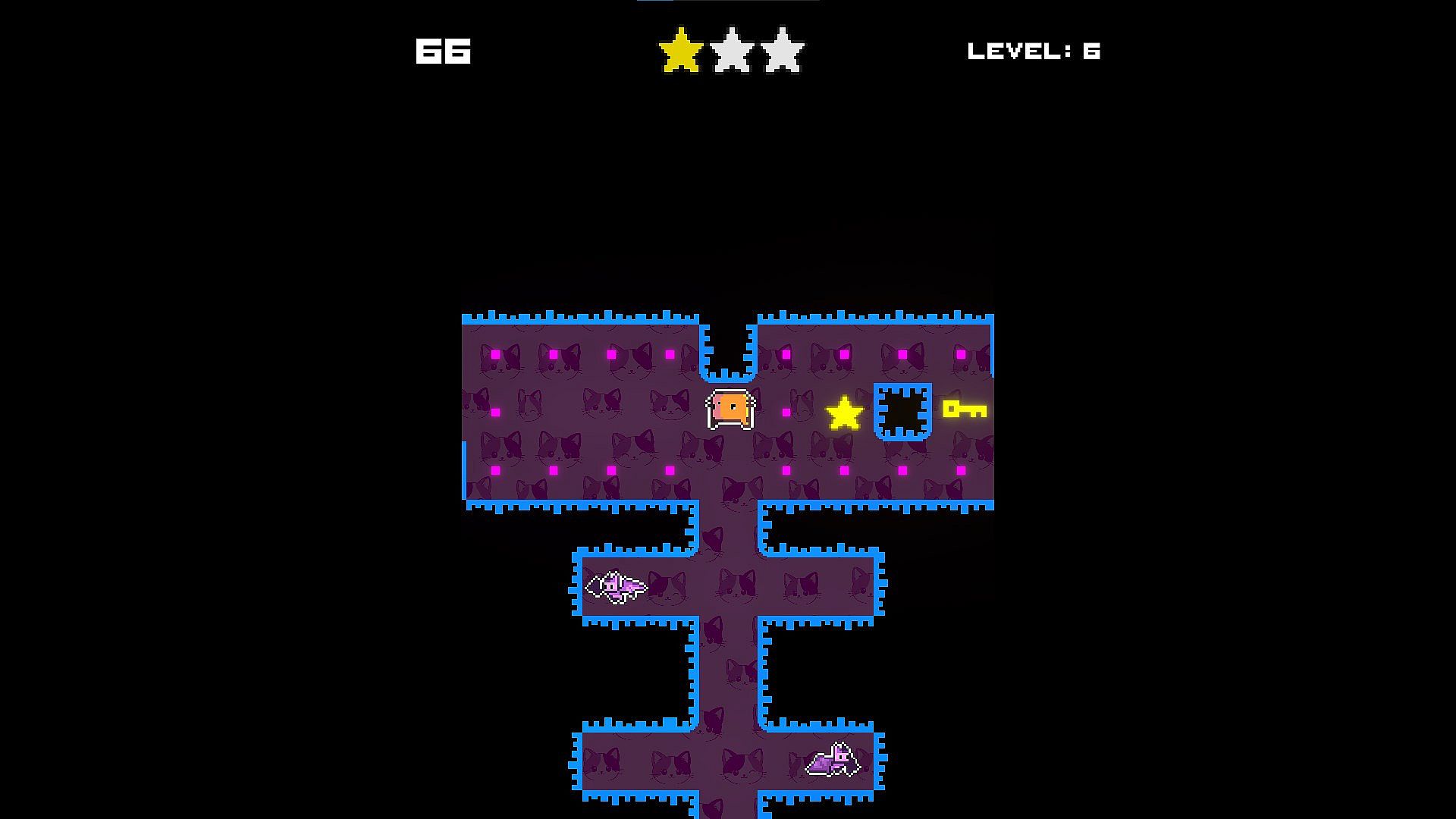
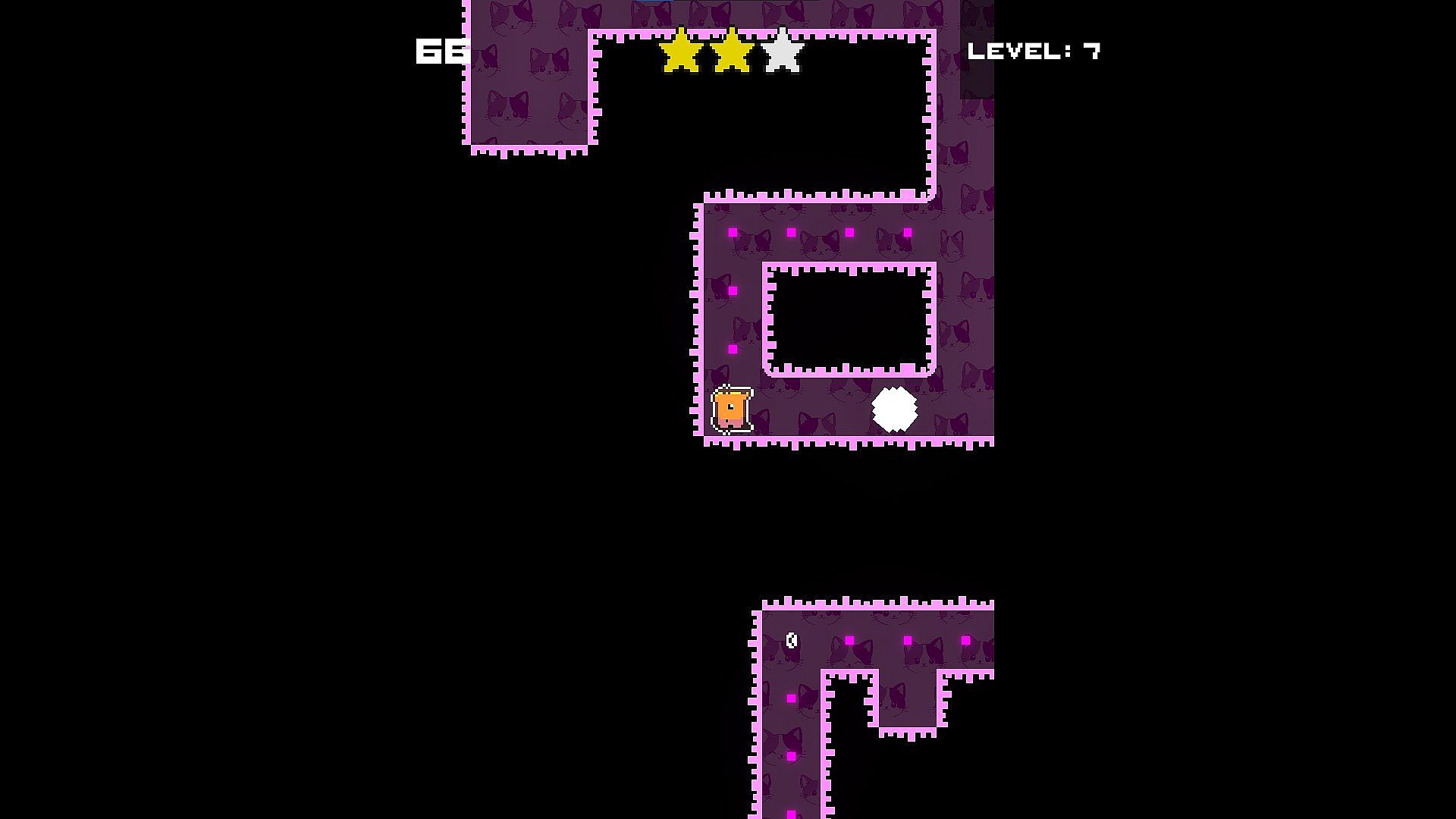
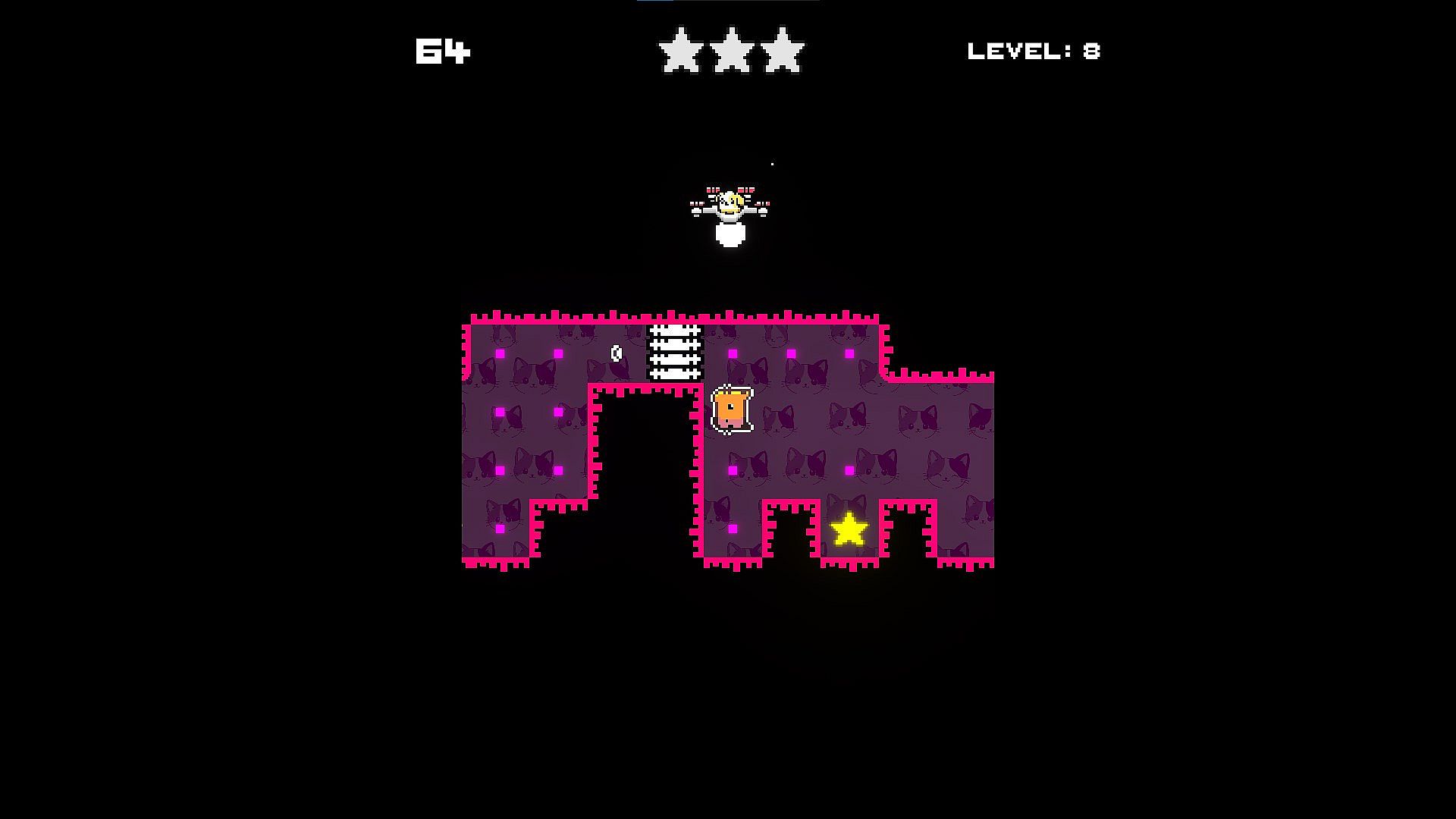
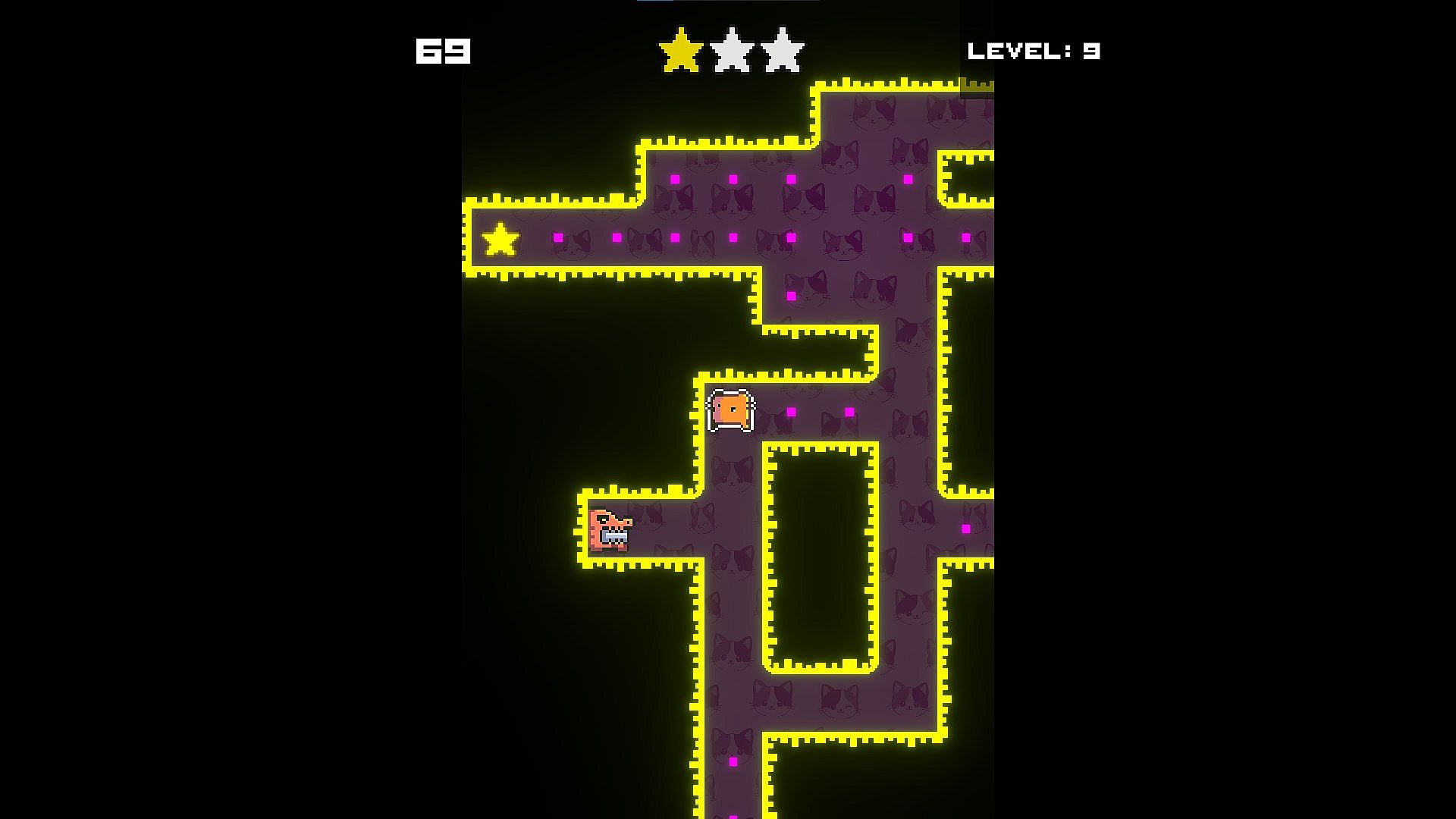
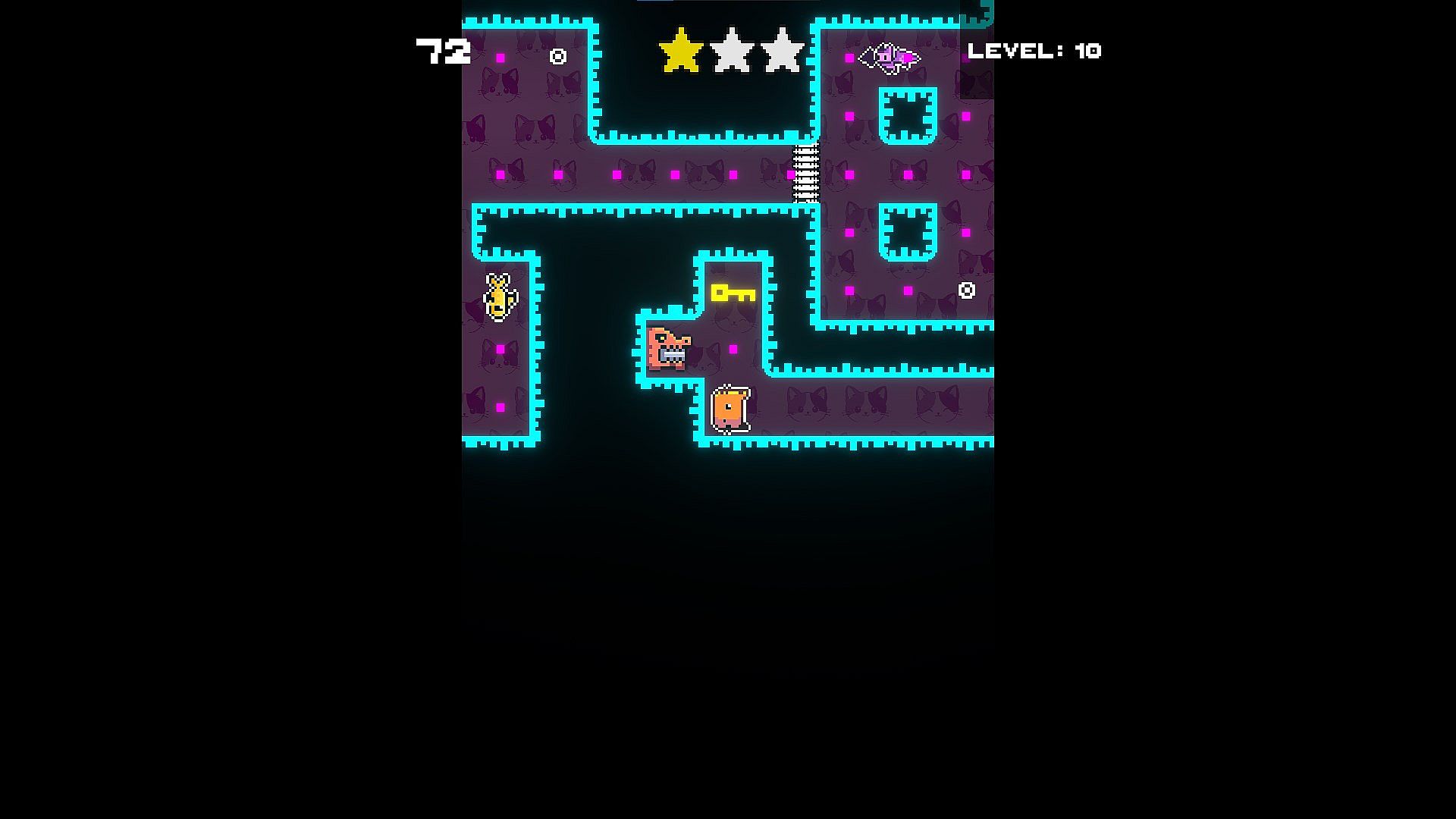
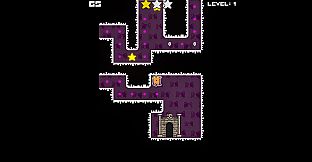
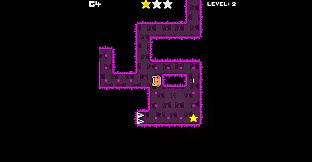
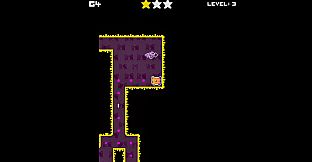
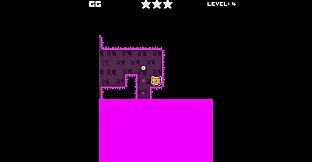
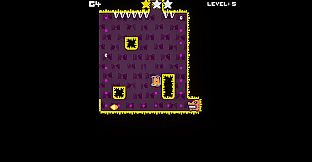
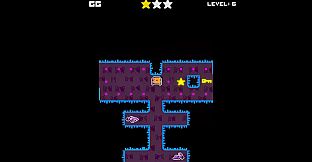
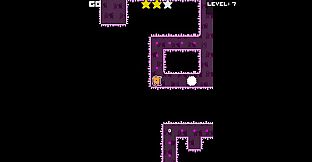
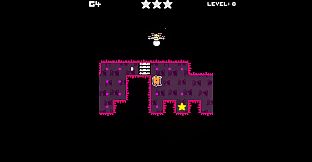
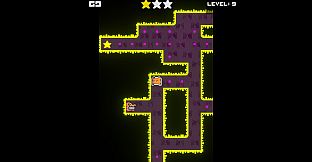
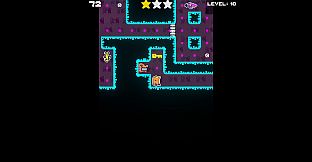
I Think I Saw a Kitten is a casual action puzzle game on PC that puts players in control of a kitten navigating intricate labyrinths. The experience blends relaxed exploration with precise movement challenges, where success depends on planning each slide to avoid instant failure from hazards or enemies.
Gameplay
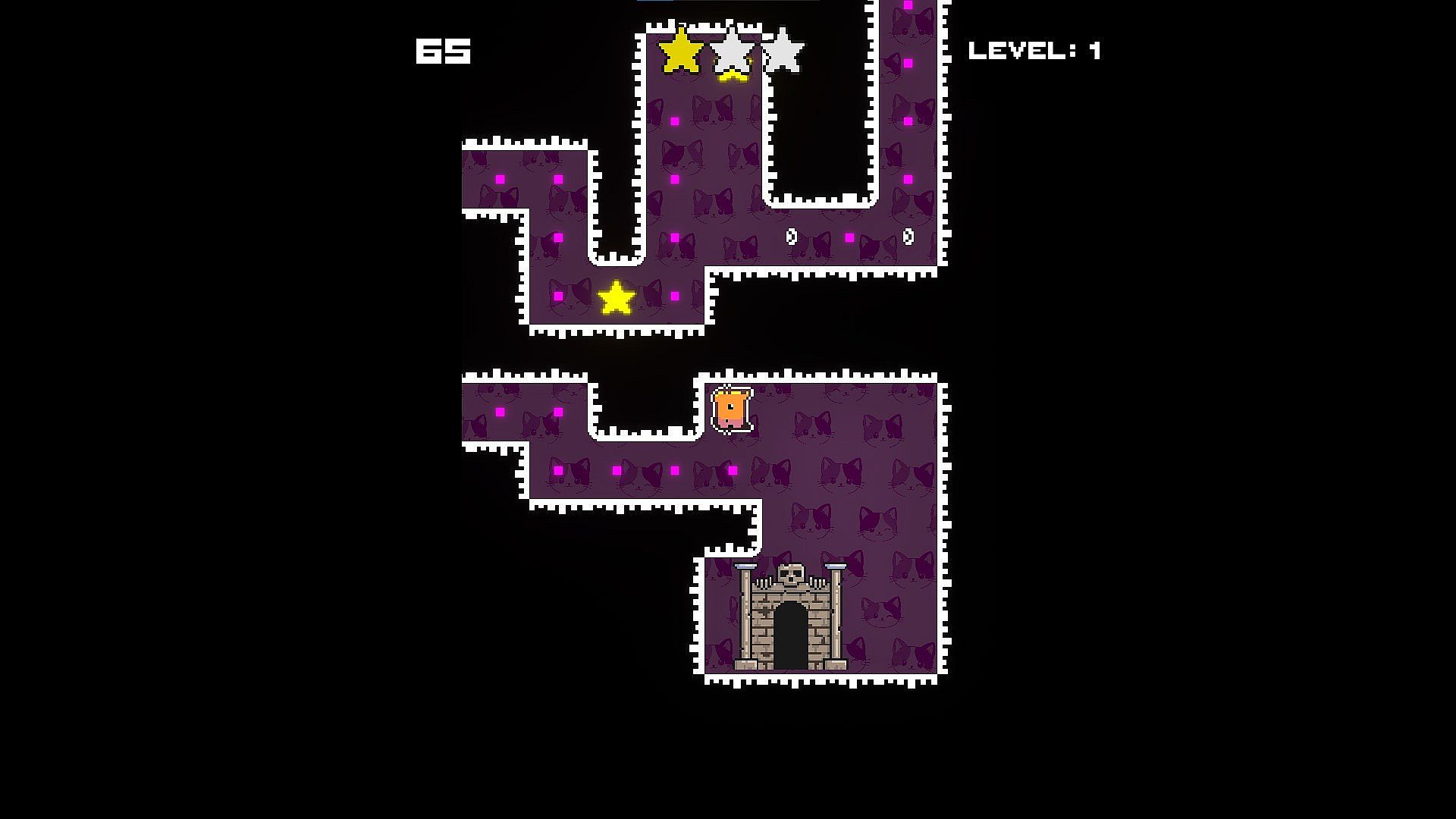
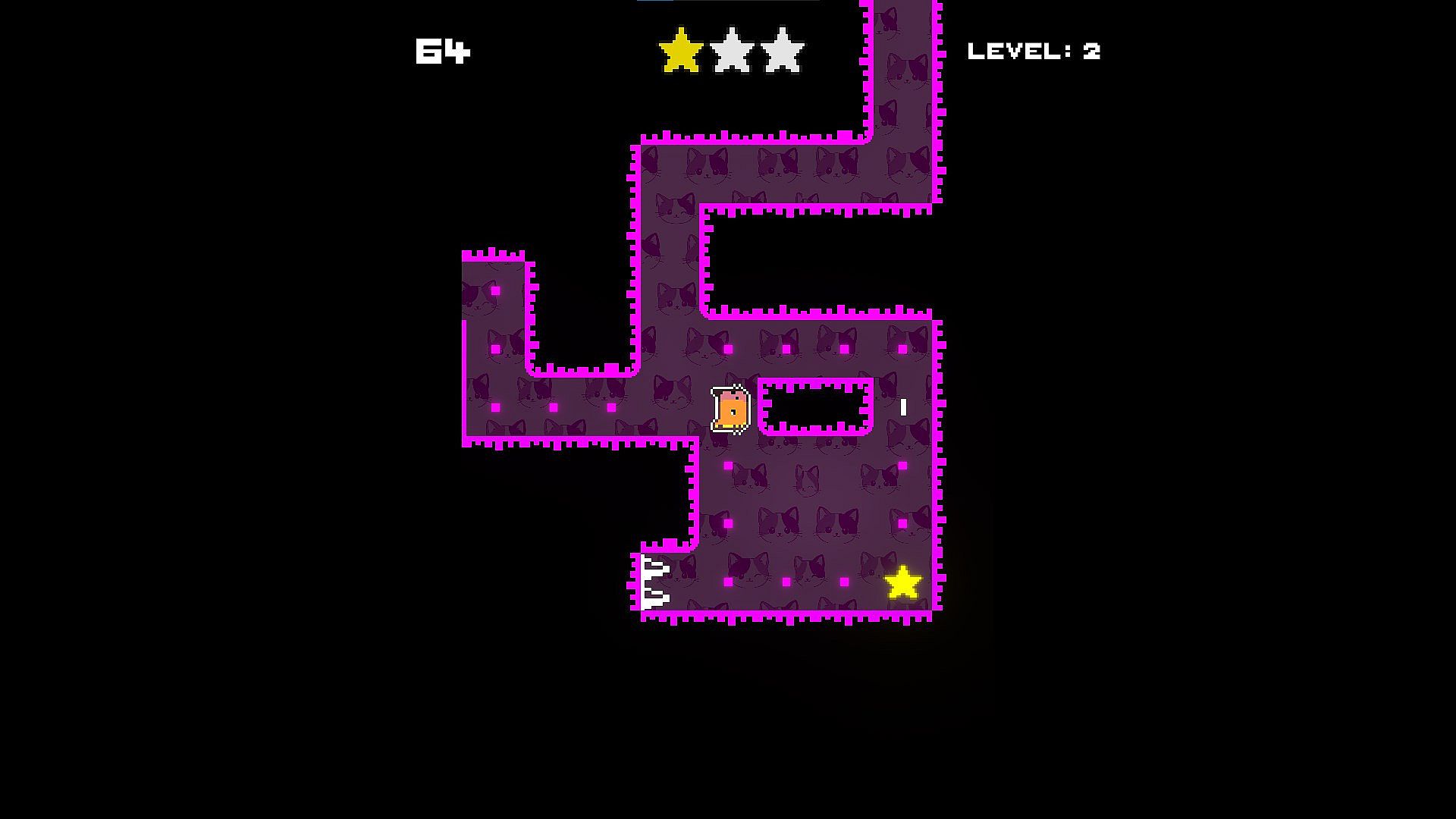
The central mechanic involves sliding the kitten across each stage until it collides with a wall or object. This movement style demands careful consideration of momentum and positioning, as the kitten continues in a straight line once started. Players must collect all three stars scattered throughout the maze while steering clear of enemies and environmental dangers such as falling rocks and lava floors. Reaching the fish at the end of the level completes the objective and unlocks the next stage.
Levels build in complexity as players advance. Early stages introduce basic sliding paths and simple obstacle placement. Later ones add new movement patterns, tighter enemy placements, and layered hazards that require multiple steps of forward planning. The focus remains on mastering the kitten's slide to thread through narrow safe zones and time movements around moving threats. Every decision carries weight because one miscalculated slide can end the attempt immediately.
Game Modes
The game presents its content as a continuous sequence of stages with no separate competitive or multiplayer options. All activity takes place in solo sessions where the goal is to clear each labyrinth while gathering every star. Progression occurs naturally through level completion, with difficulty scaling handled entirely within this single flow of challenges rather than through distinct playlists or variants.
Level Progression
Stages are arranged to introduce mechanics gradually. Initial puzzles emphasize straight-line navigation and basic hazard avoidance. Subsequent levels layer additional elements such as shifting enemy positions and combined environmental threats. This structure encourages repeated attempts on the same stage to discover optimal paths that secure all three stars. The design rewards observation and route optimization over speed or reflexes alone.
Is It Worth Playing?
Players who enjoy methodical puzzle solving with a lighthearted theme will find the sliding mechanics and hazard navigation engaging. The absence of time pressure allows for deliberate planning, while the star collection objective adds replay value to each stage. Those seeking fast-paced action or social features may find the solo, level-based format less appealing. The game suits short sessions focused on clearing individual labyrinths or longer stretches spent refining routes through tougher stages.