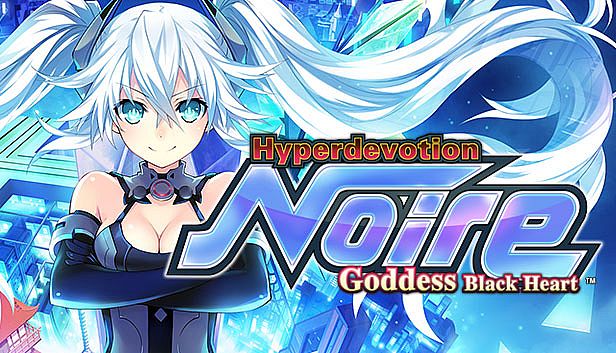














































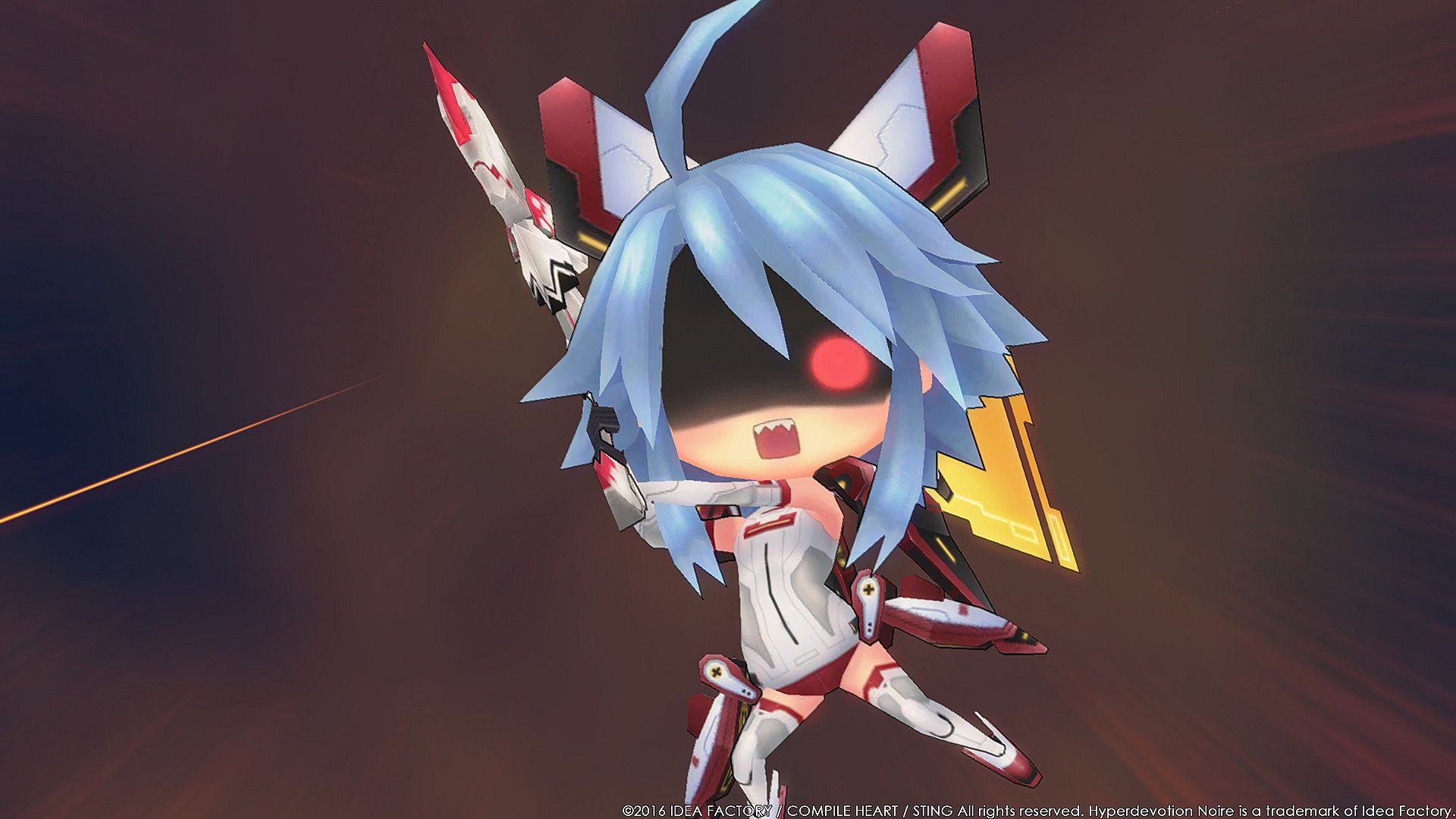
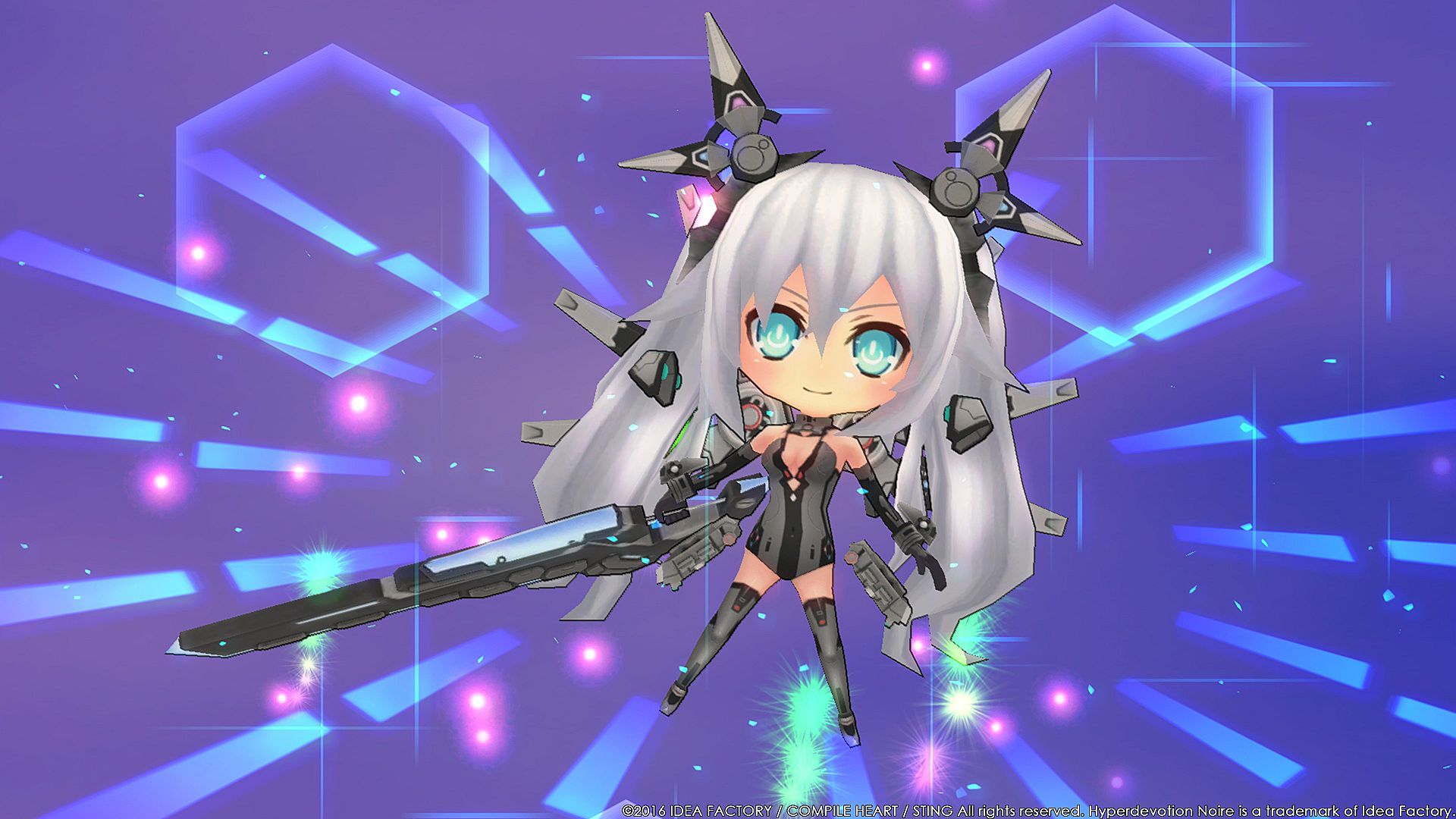
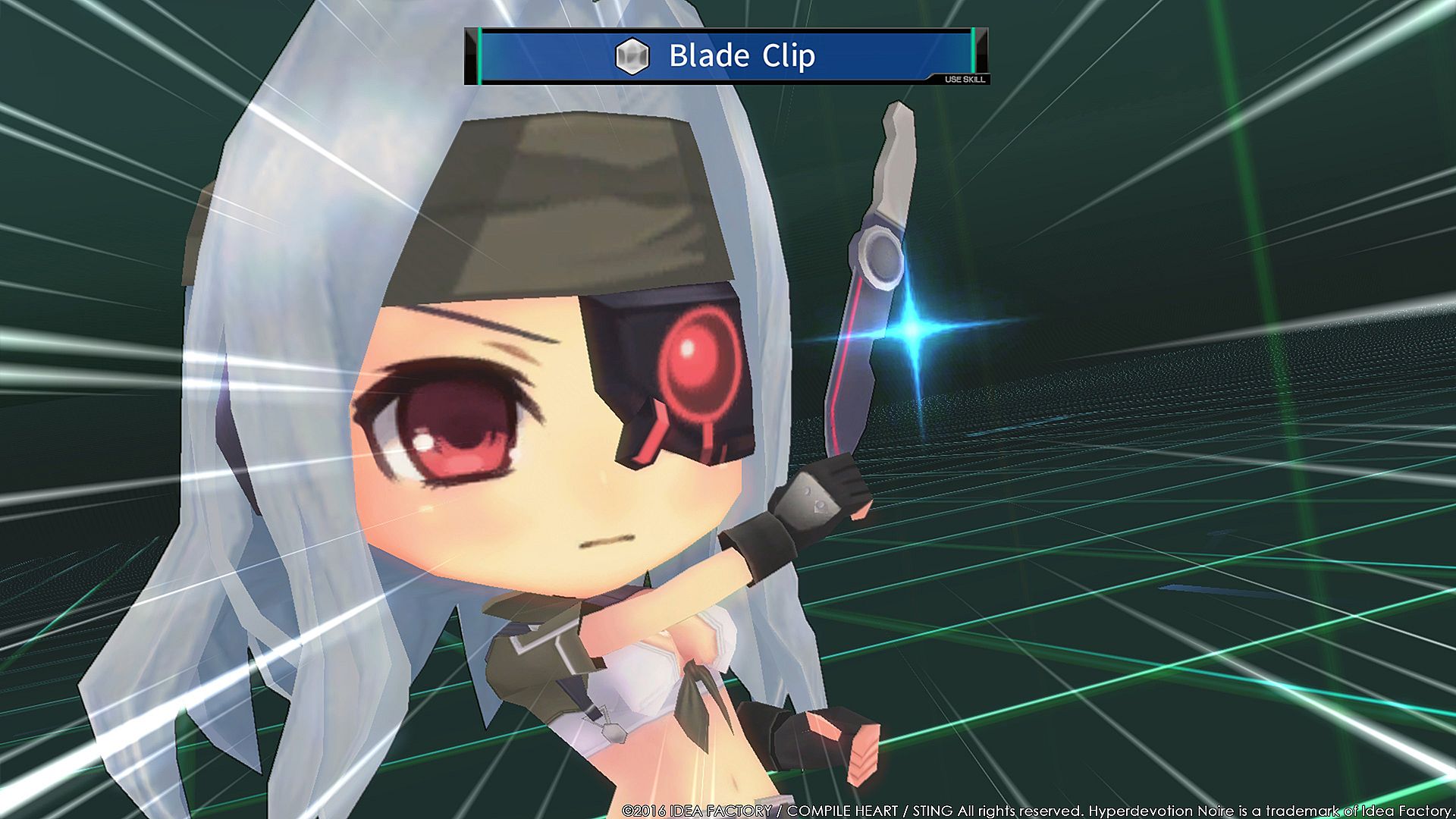
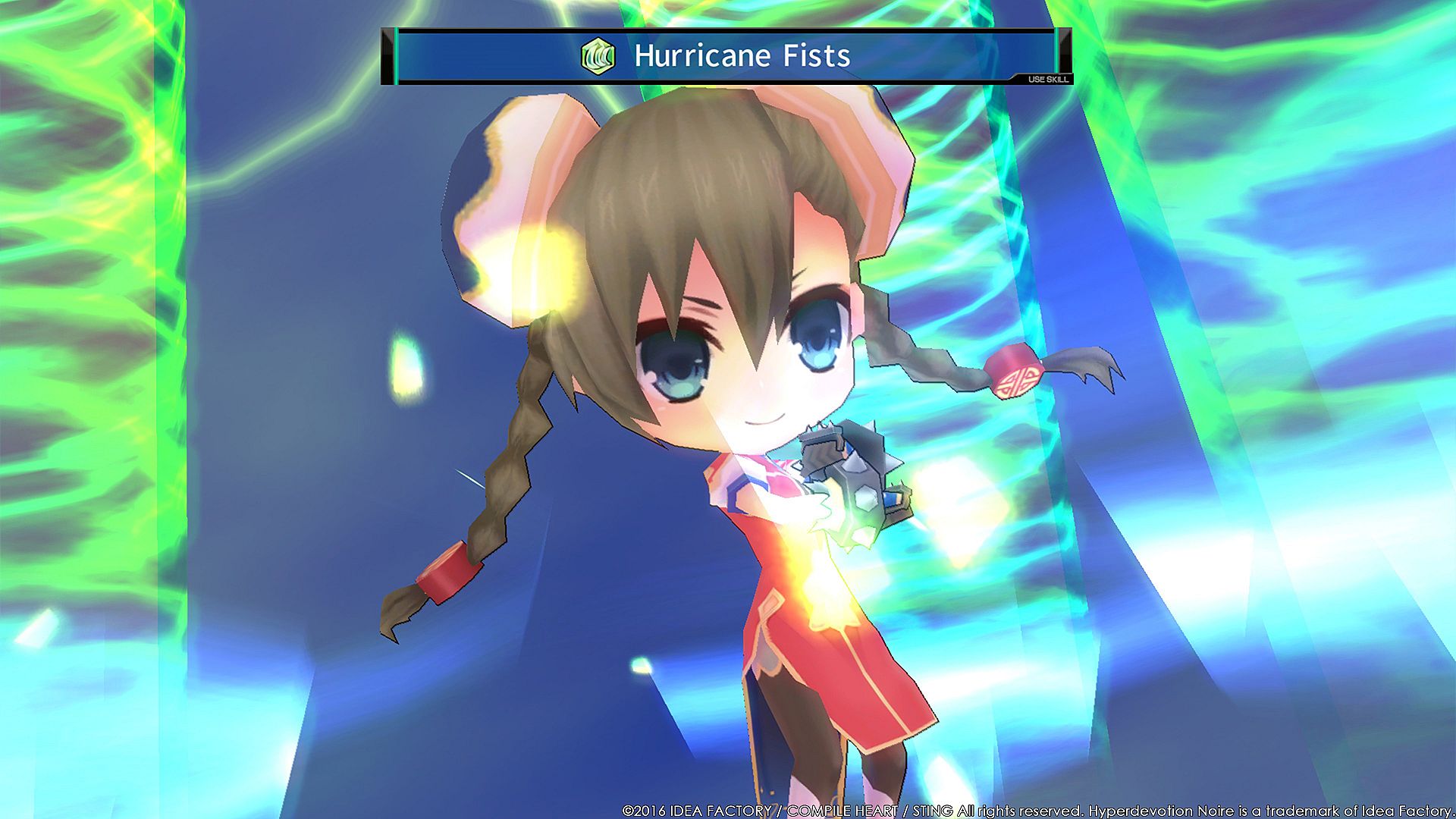

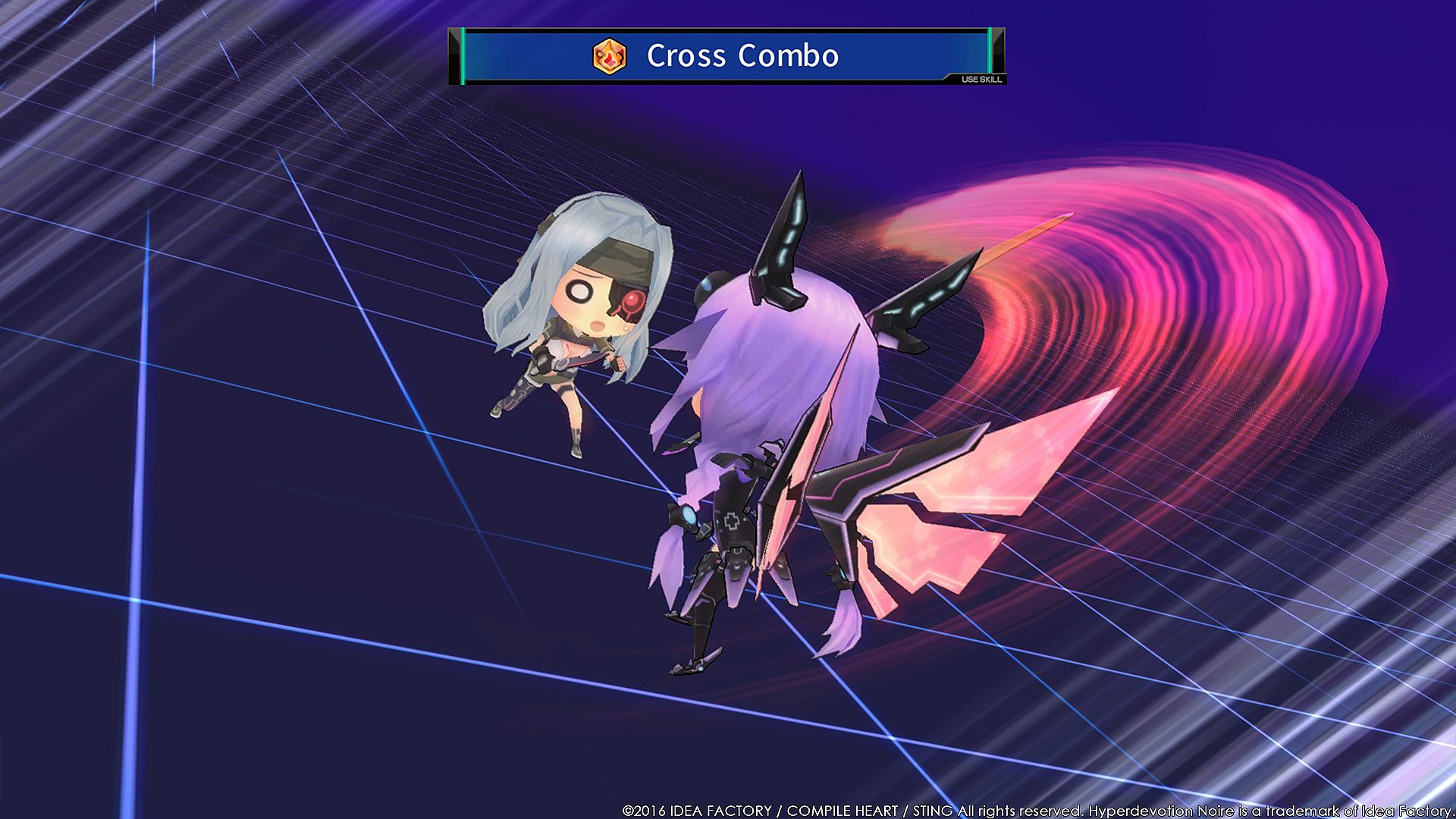
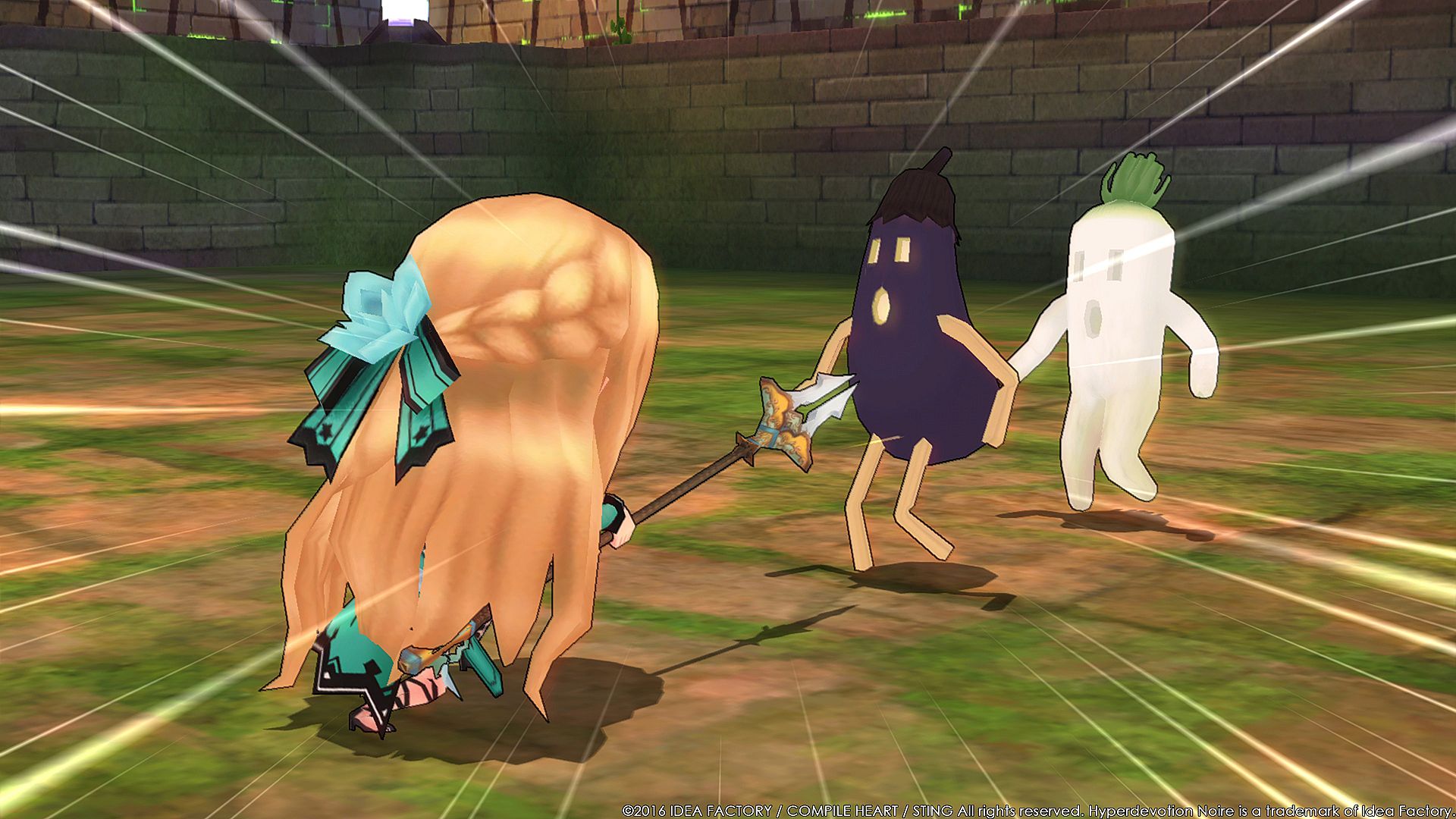

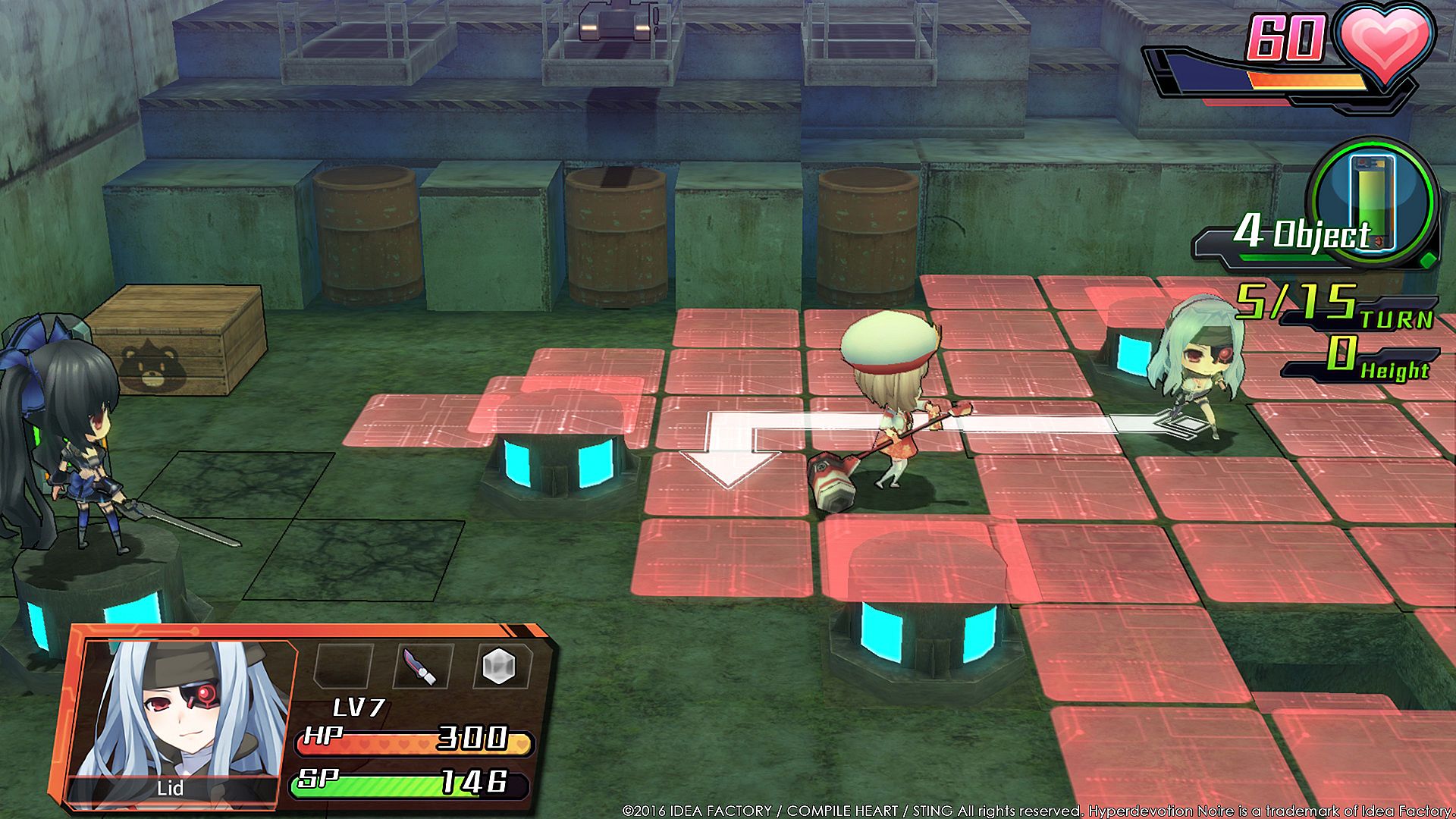
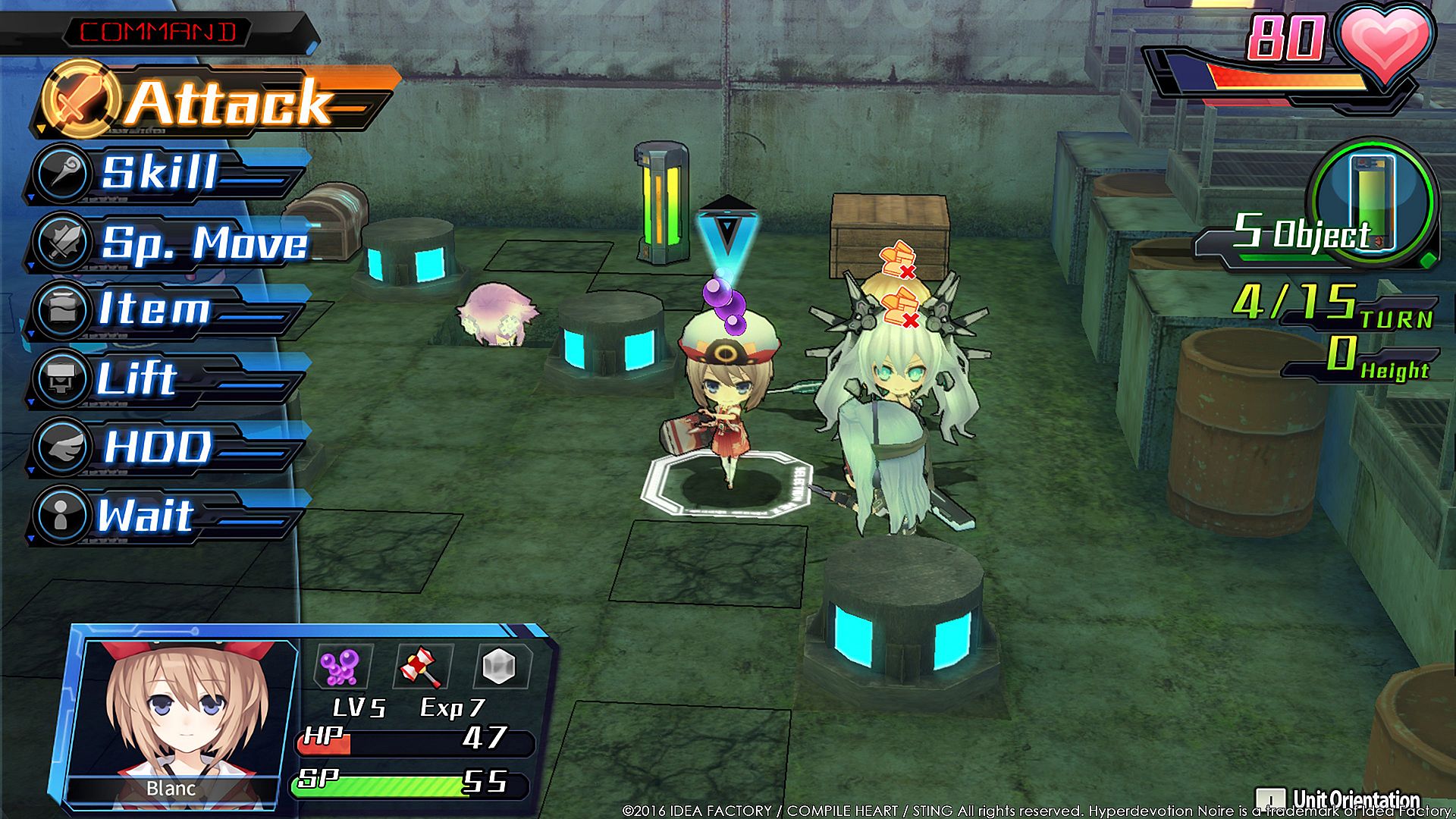
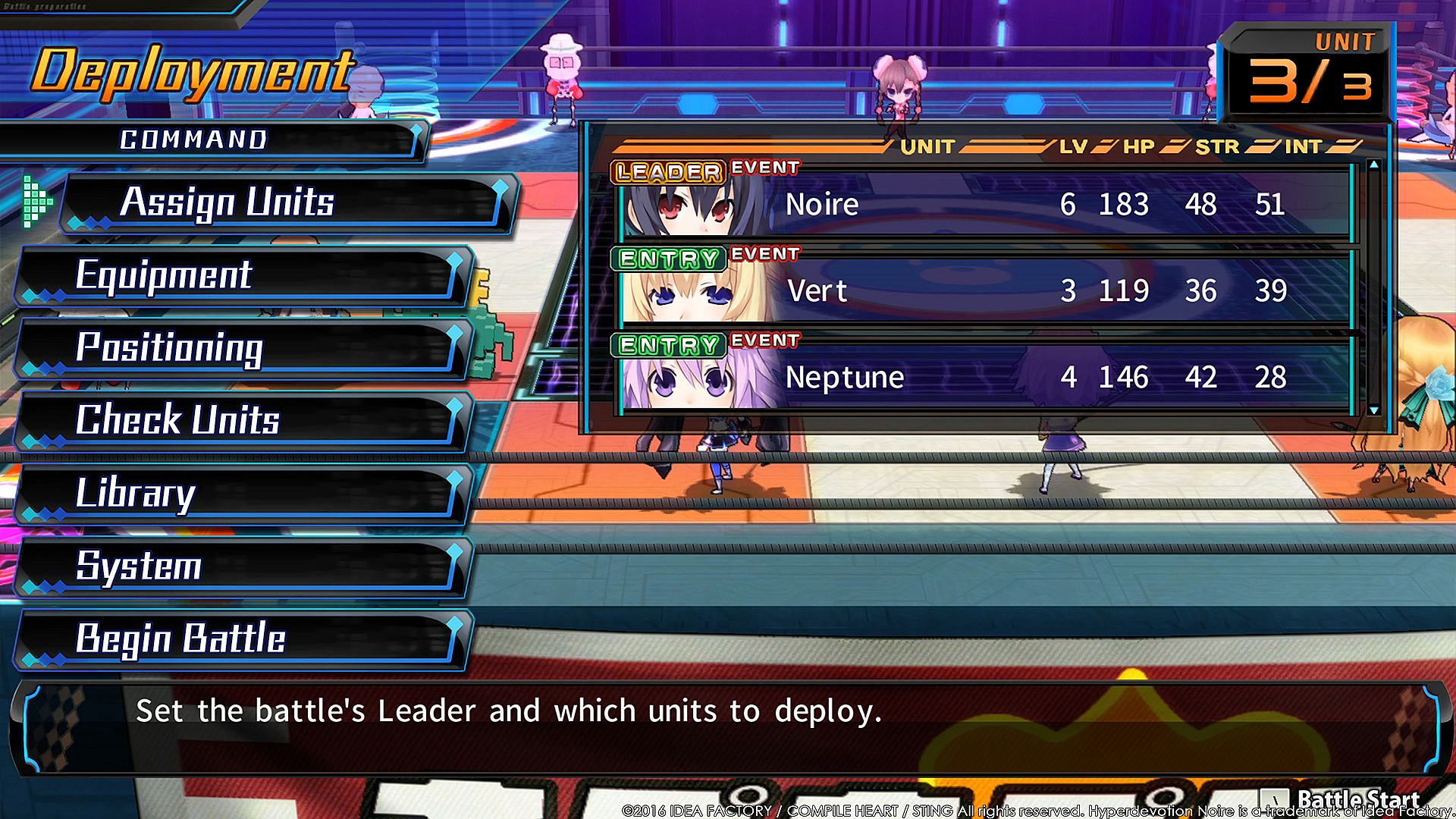
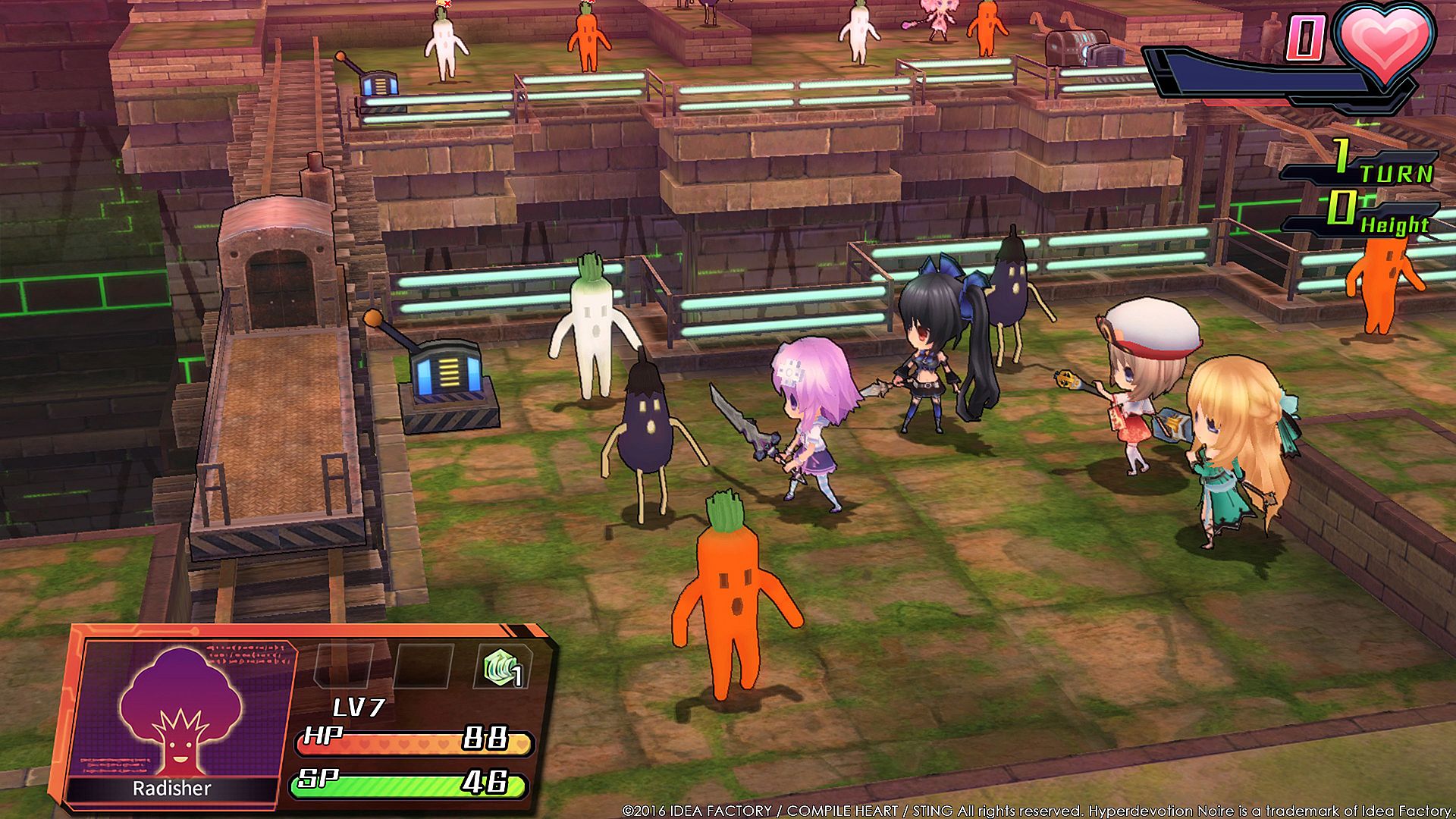
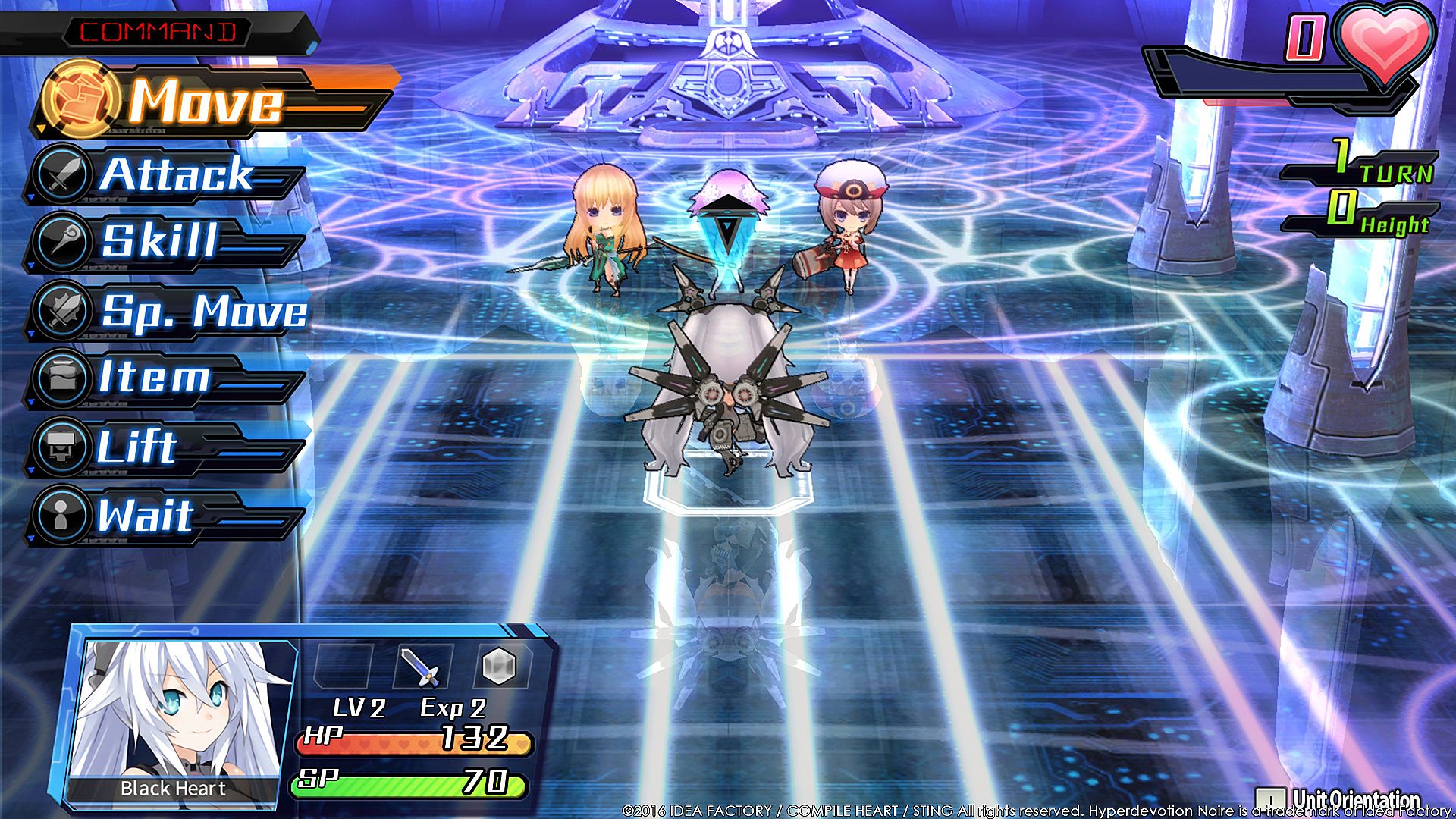





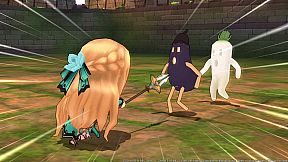

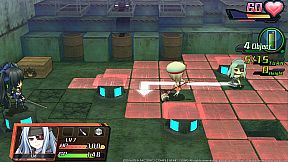
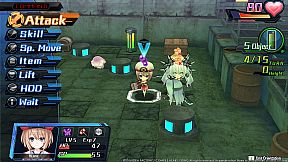
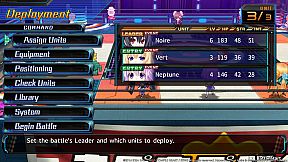
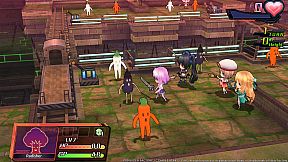
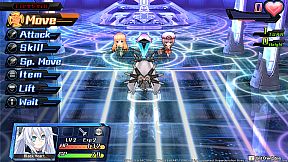
Hyperdevotion Noire: Goddess Black Heart is a strategy RPG that places players in control of chibi-style versions of the Neptunia cast. The game centers on turn-based tactical battles across grid maps filled with environmental hazards and enemy placements that demand careful positioning. Combat unfolds in distinct player and enemy phases, with movement restricted to individual grid squares and some larger enemies occupying multiple spaces. Elevation influences mobility and attack reach, while falling from heights inflicts damage. Traps and interactive elements such as laser beams, flaming pits, rail cars, logs, artillery, and moving platforms appear frequently on the maps.
Gameplay
The core loop revolves around assembling a team of allies drawn from game references and guiding them through SRPG encounters. Each character possesses distinct strengths and weaknesses that affect how they navigate terrain and engage foes. Status ailments add layers of risk and occasional advantage during fights. Common effects include turning characters into blocks of tofu, rendering them pixelated in an 8-bit style, zombification, inducing cowardice, or causing infatuation. These changes alter movement, damage output, or behavior in ways that require adaptation mid-battle.
Bonds between units grow through repeated joint participation in combat. Higher affinity unlocks the Lily Boost, which provides temporary stat improvements and new abilities. Accumulated Lily Points enable powerful combination attacks or reduced-cost goddess transformations. Item systems support extensive customization. Defeated enemies yield materials that players use to craft and upgrade equipment, allowing repeated experiments with stat distributions across multiple playthroughs.
Game Modes
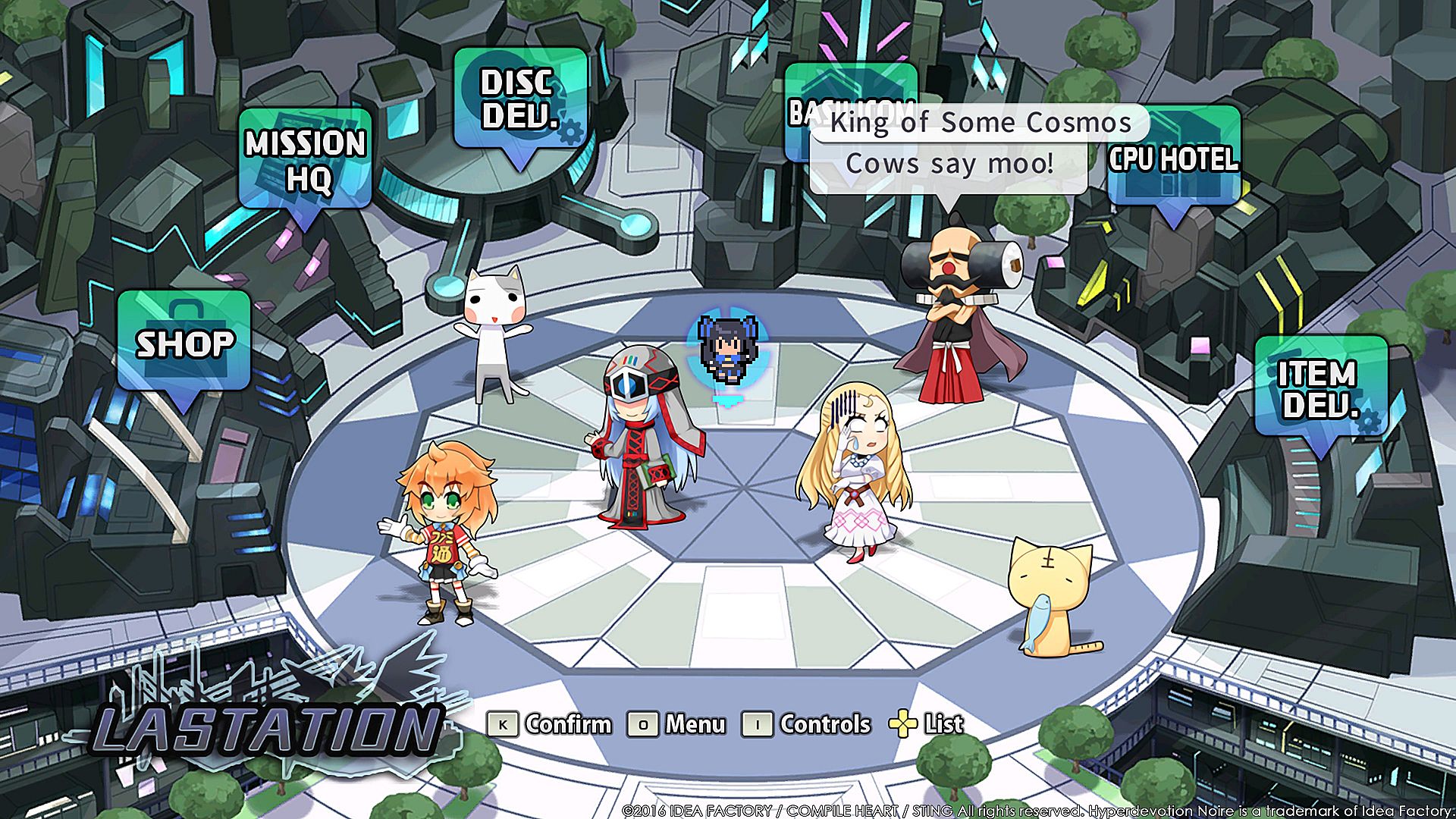
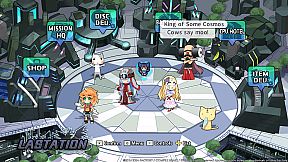
The primary experience consists of grid-based tactical battles that advance the central narrative. These encounters emphasize planning around map hazards and enemy formations rather than simple attrition. A separate simulation mode called Sim Noire lets players manage Noire's living space outside of combat. Points earned in battles fund purchases of furniture and accessories that alter the room's appearance. Changes made here trigger additional story scenes and character interactions that expand on daily life elements.
No other distinct modes exist beyond these two pillars. Progression flows linearly through story-driven battles while the simulation component serves as an optional break that rewards consistent play with extra narrative content.
Character Interactions and Progression
Twenty-six unique characters join the roster over time, each bringing specialized skills suited to different tactical roles. Relationships develop organically through shared battlefield time, and the resulting affinity system directly influences combat effectiveness. Transformations into goddess forms become accessible once sufficient Lily Points accumulate, shifting individual units into more powerful states for key moments. The emphasis remains on single-player campaign structure with no multiplayer components.
Is It Worth Playing?
This title suits players who enjoy tactical RPGs with anime aesthetics and light relationship-building mechanics. The combination of grid tactics, status variety, and the room-customization side activity provides consistent variety across sessions. Those familiar with the broader Neptunia series will recognize the cast and tone, while newcomers can approach it as a self-contained strategy experience focused on positioning and affinity management. The game remains available as a complete single-player package without ongoing seasonal content or required updates. Reception among strategy fans tends to highlight the solid battle systems and customization depth, though story elements receive more mixed responses. If grid-based combat and character bond systems appeal, the game delivers a focused experience worth considering for its mechanics alone.