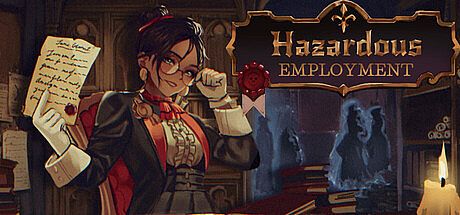


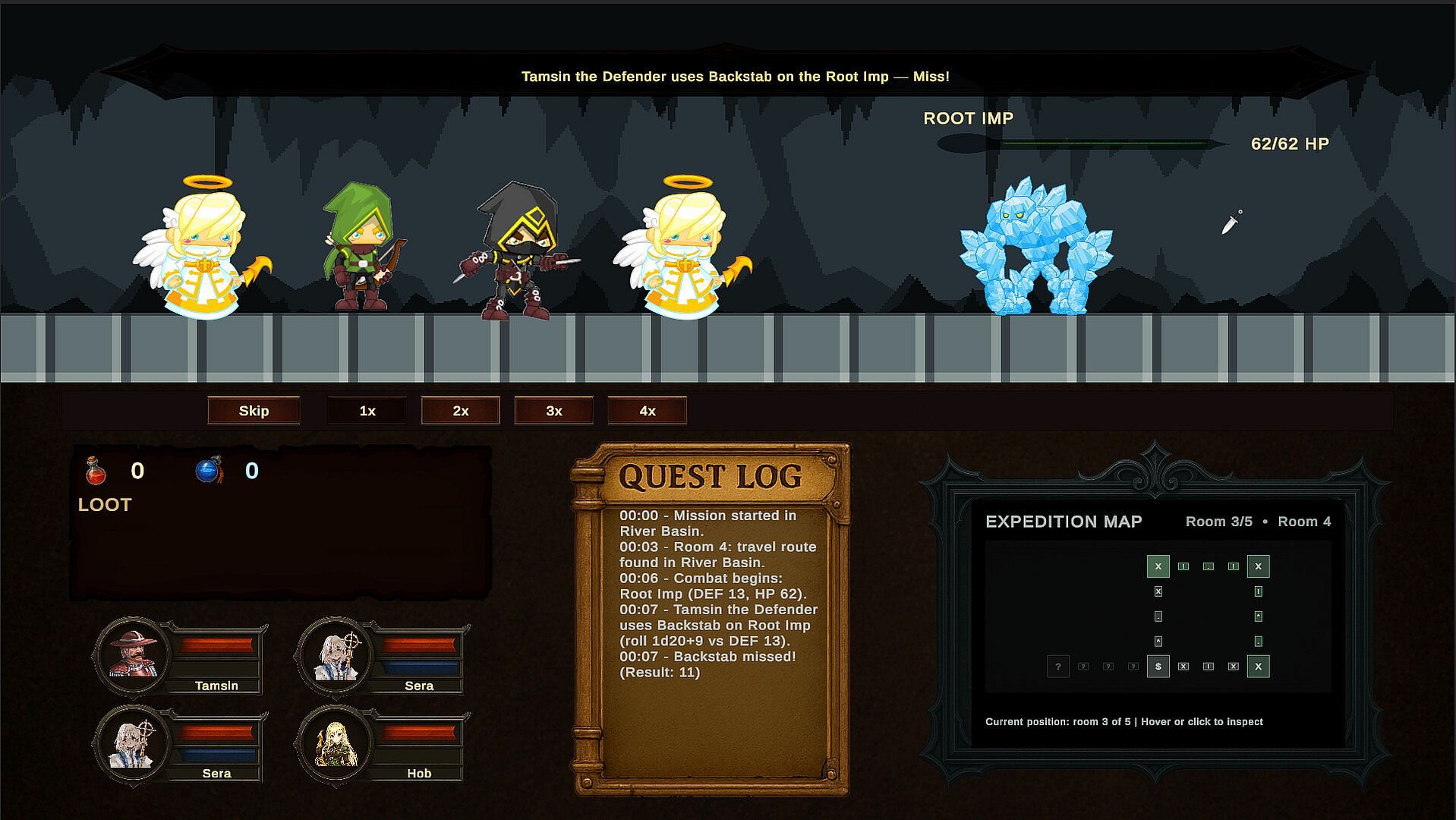
Hazardous Employment is a single-player strategy indie RPG simulation that puts players in charge of a fantasy guild as an overworked administrator rather than a frontline adventurer. The core loop revolves around hiring replaceable mercenaries, assigning them to perilous contracts, balancing budgets against survival odds, and restarting after inevitable collapses in a roguelite structure.
Gameplay
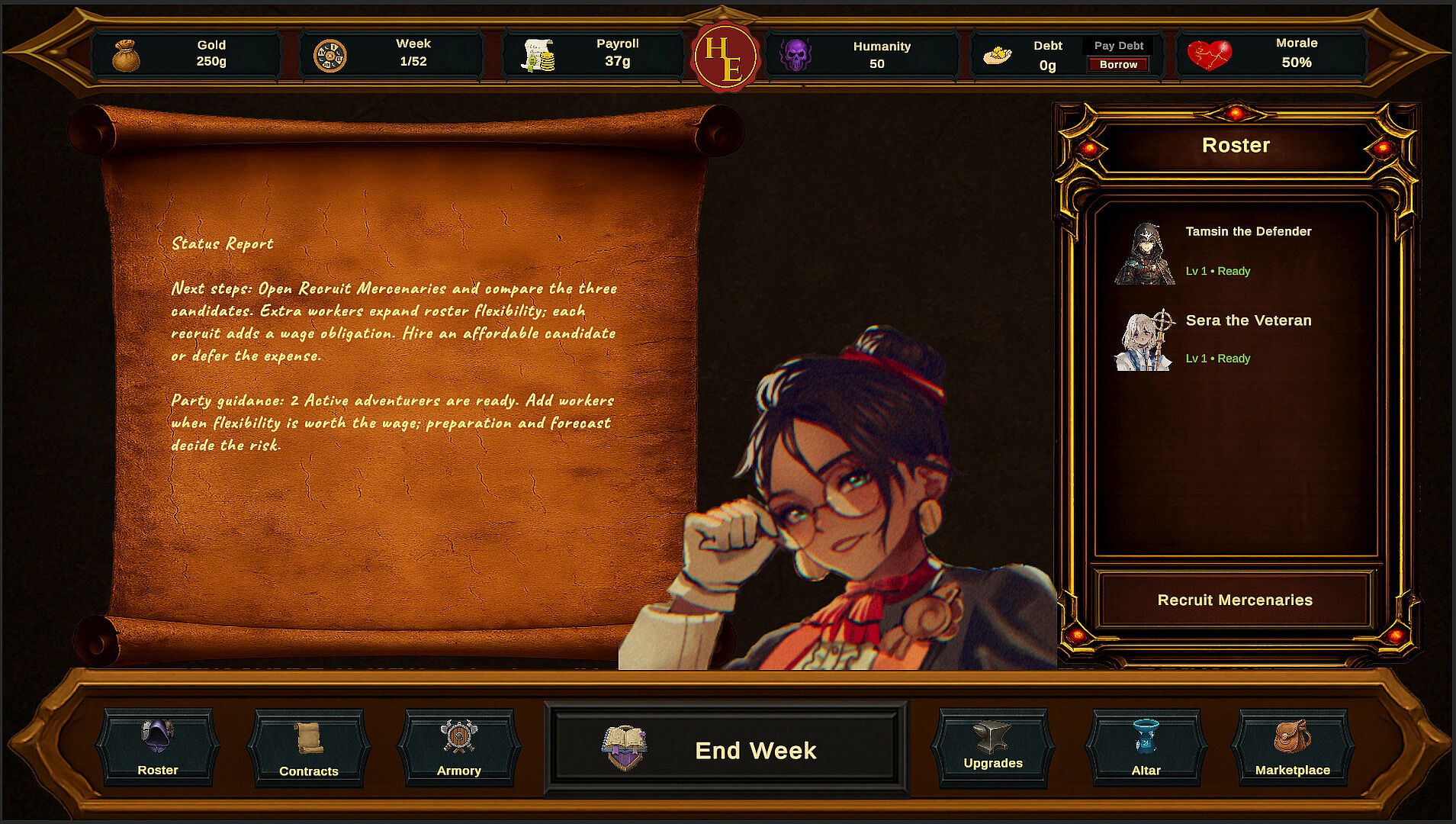
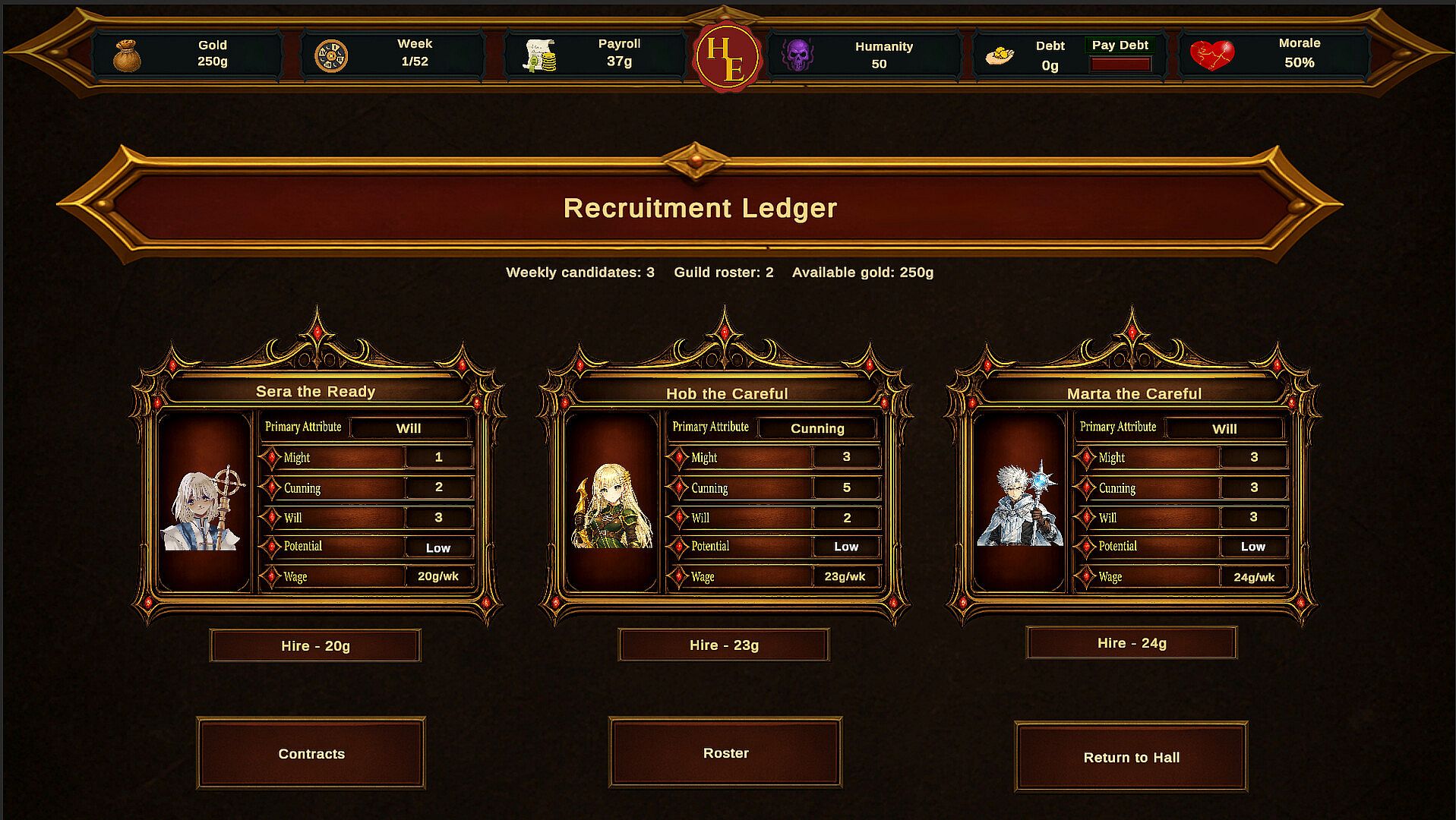
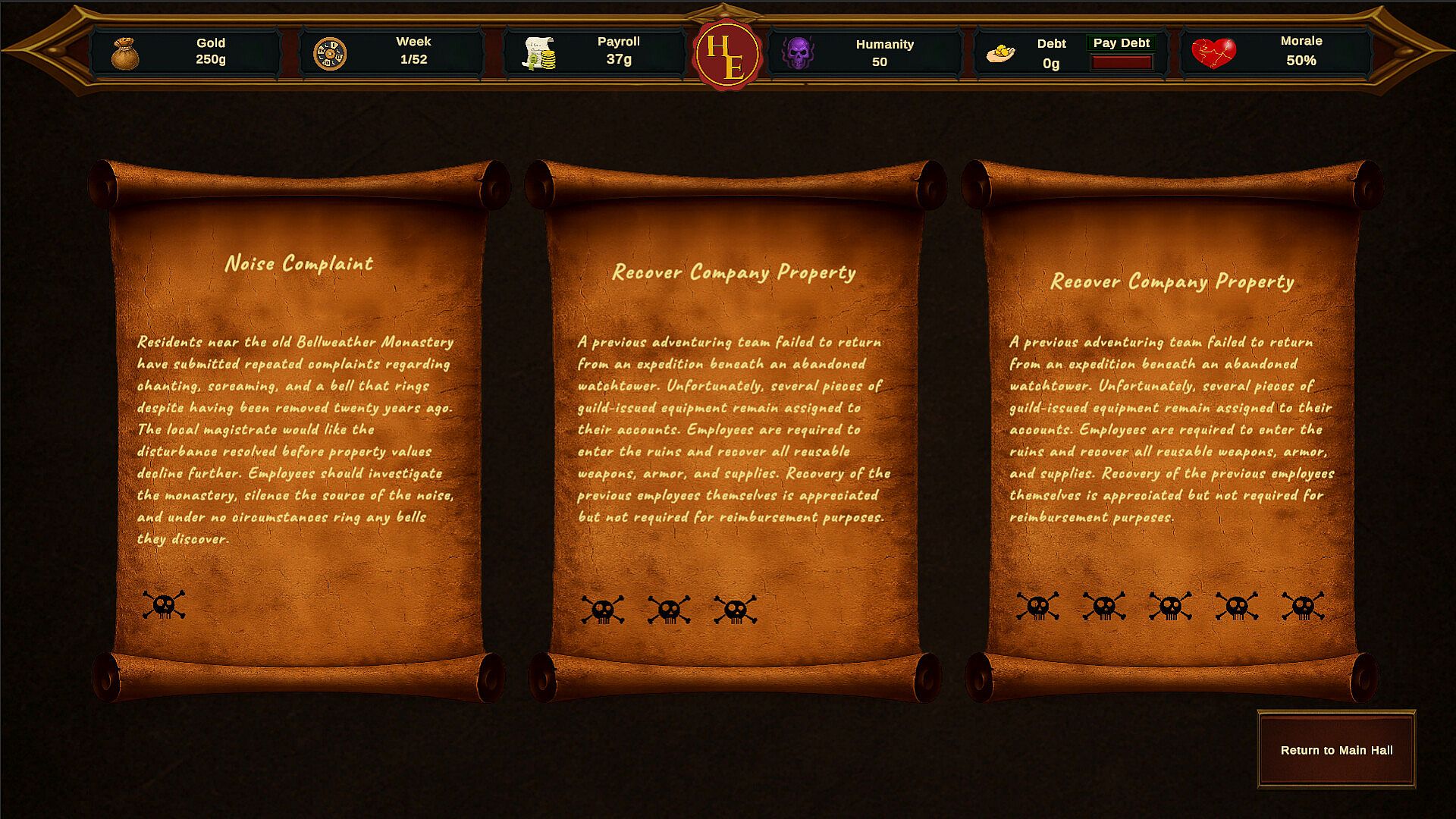
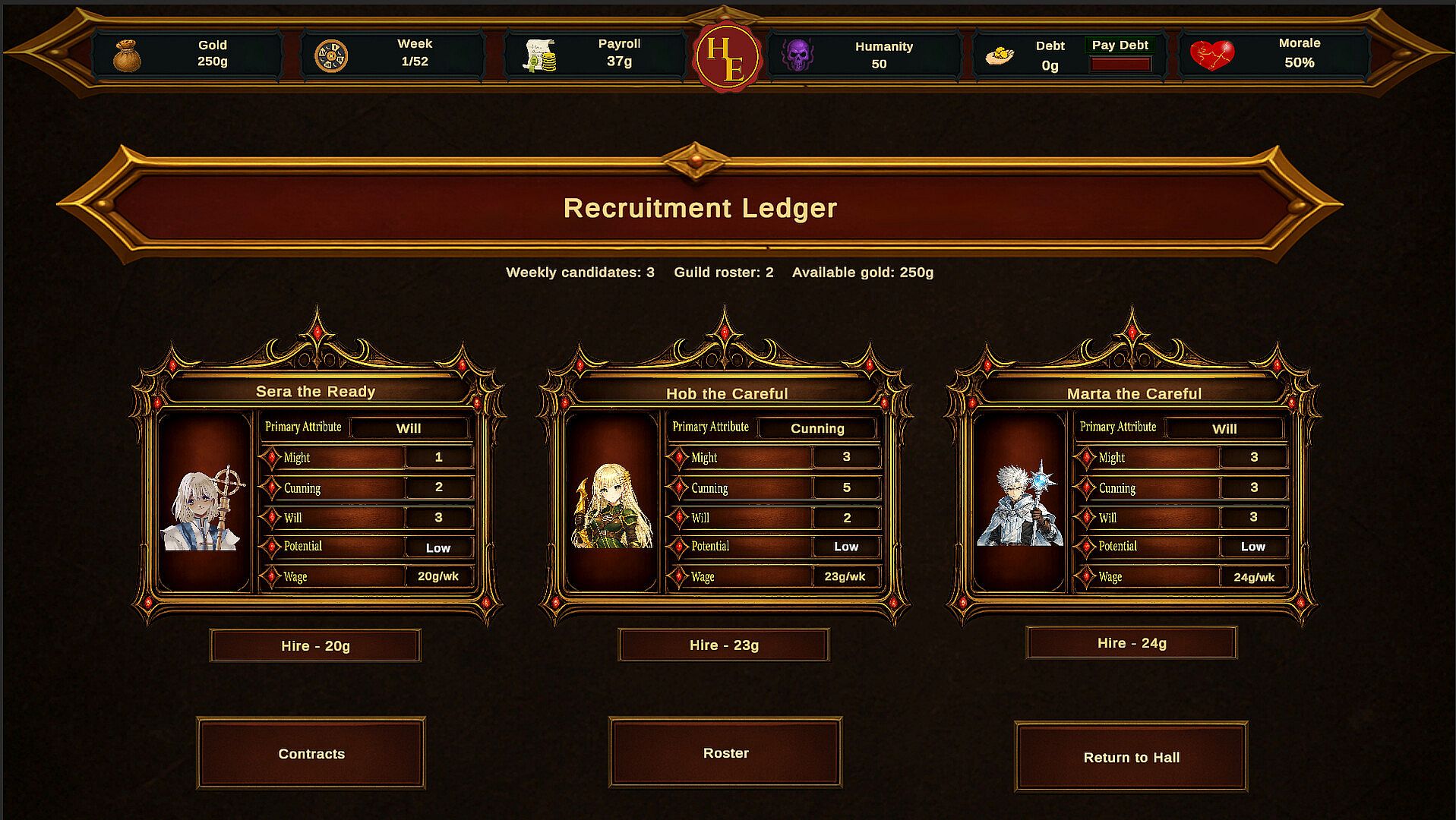
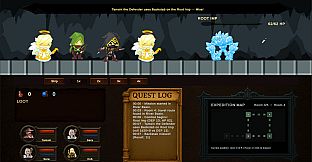
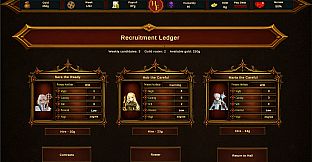
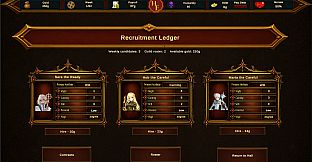
Players recruit adventurers who bring unique skills, personality traits, salary demands, and potential flaws. Each contract requires assembling a team while weighing equipment costs, expected payouts, and the financial impact of injuries or fatalities. Survivors return with experience that shapes their future performance, while losses can trigger debts, grievances, or valuable heirlooms that carry over in limited ways. Progression comes through persistent upgrades unlocked across failed runs, allowing better starting options or recovered equipment for subsequent attempts. The absence of direct combat shifts focus entirely to administrative choices, such as deciding whether a high-skill hire justifies the payroll risk or if cheaper recruits can handle the job despite higher casualty likelihood.
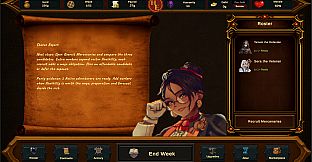
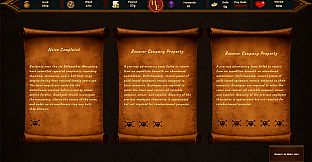
Debt management and morale tracking add layers to every decision. Payroll delays can escalate into operational problems, and medical expenses from returning employees eat into profits. Randomized elements ensure each guild attempt features fresh recruits, contract details, injury outcomes, and disasters that force adaptation. The tone stays dry and bureaucratic even when describing dragon encounters or cursed artifacts, highlighting the absurdity of treating fantasy hazards like standard workplace incidents.
Game Modes
The game operates as a single-player roguelite experience centered on repeated guild runs. Each run begins with new recruitment opportunities and contract selections, building toward guild collapse under accumulated debt, casualties, or mismanagement. Between runs, players carry forward select upgrades and advantages to refine future strategies. No separate competitive or cooperative modes exist, keeping the emphasis on iterative single-player management where the goal is extending the guild's lifespan through smarter risk assessment rather than perfect outcomes.
Key Mechanics and Progression
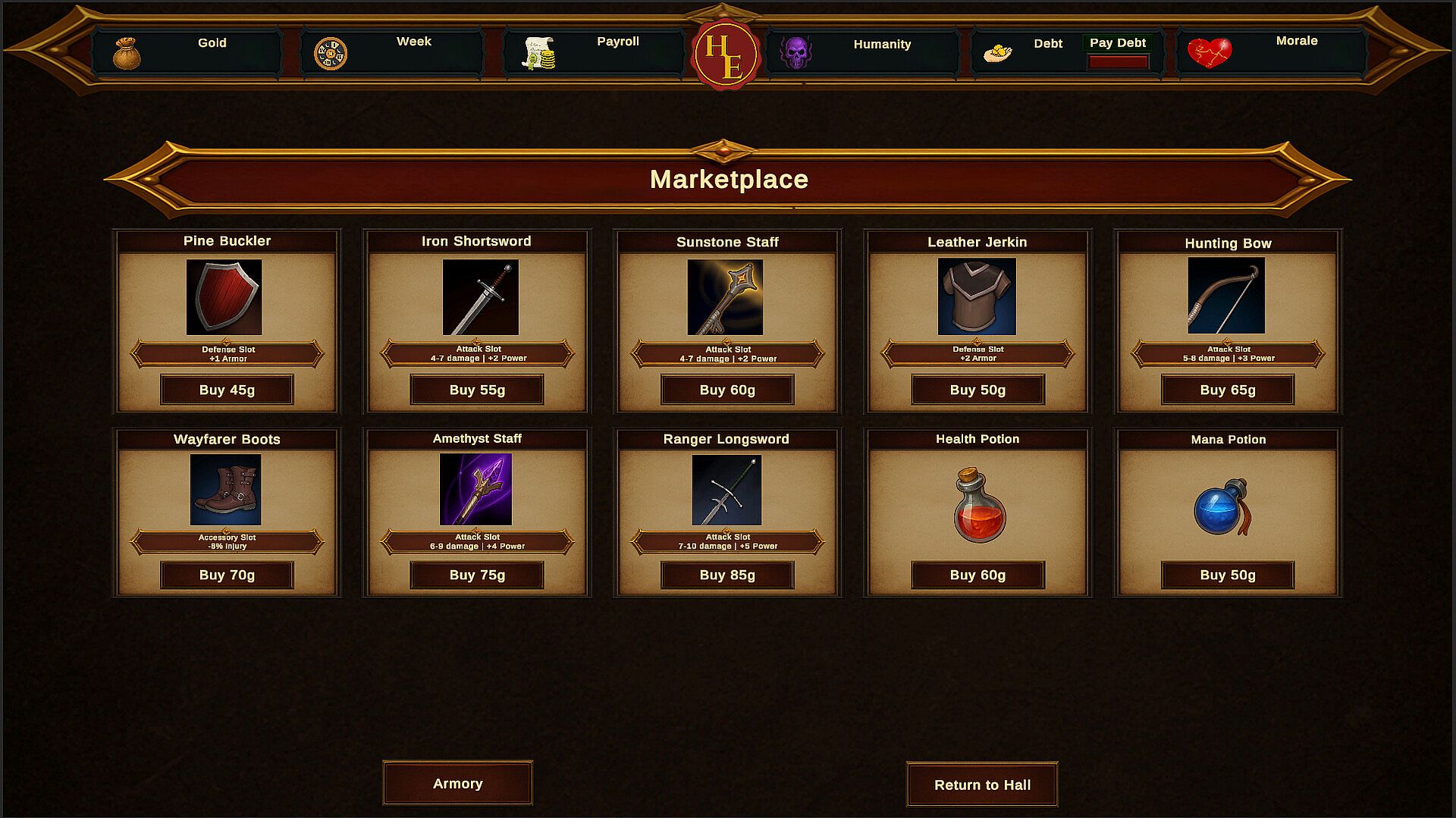
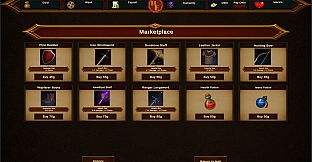
Team assembly demands constant trade-offs between capability and cost. A veteran warrior might excel at dangerous tasks but command a salary that strains limited funds, while entry-level hires reduce expenses at the expense of reliability. Equipment remains basic and guild-funded, with no player-controlled combat resolution. Lasting consequences for individuals include experience gains that improve future utility, permanent injuries that alter availability, and personal histories that influence later interactions or paperwork burdens. When a guild fails, the next attempt incorporates lessons through unlocked persistent elements, encouraging experimentation with different hiring priorities or contract selections over multiple cycles.
Is It Worth Playing?
Hazardous Employment targets players who enjoy management simulations blended with roguelite failure and retry loops. Its focus on financial and personnel decisions in a fantasy setting appeals to those interested in resource allocation under uncertainty rather than action or exploration. With a planned release in March 2027 and no user reviews available yet, the experience remains untested by the broader audience. Those drawn to darkly comedic takes on guild operations and bureaucratic absurdity may find the administrative judgment mechanics engaging, particularly if they appreciate games where success means surviving one more week rather than heroic victories. Availability will be limited to PC at launch, and the single-player format suits solo sessions focused on strategic depth over multiplayer coordination.