

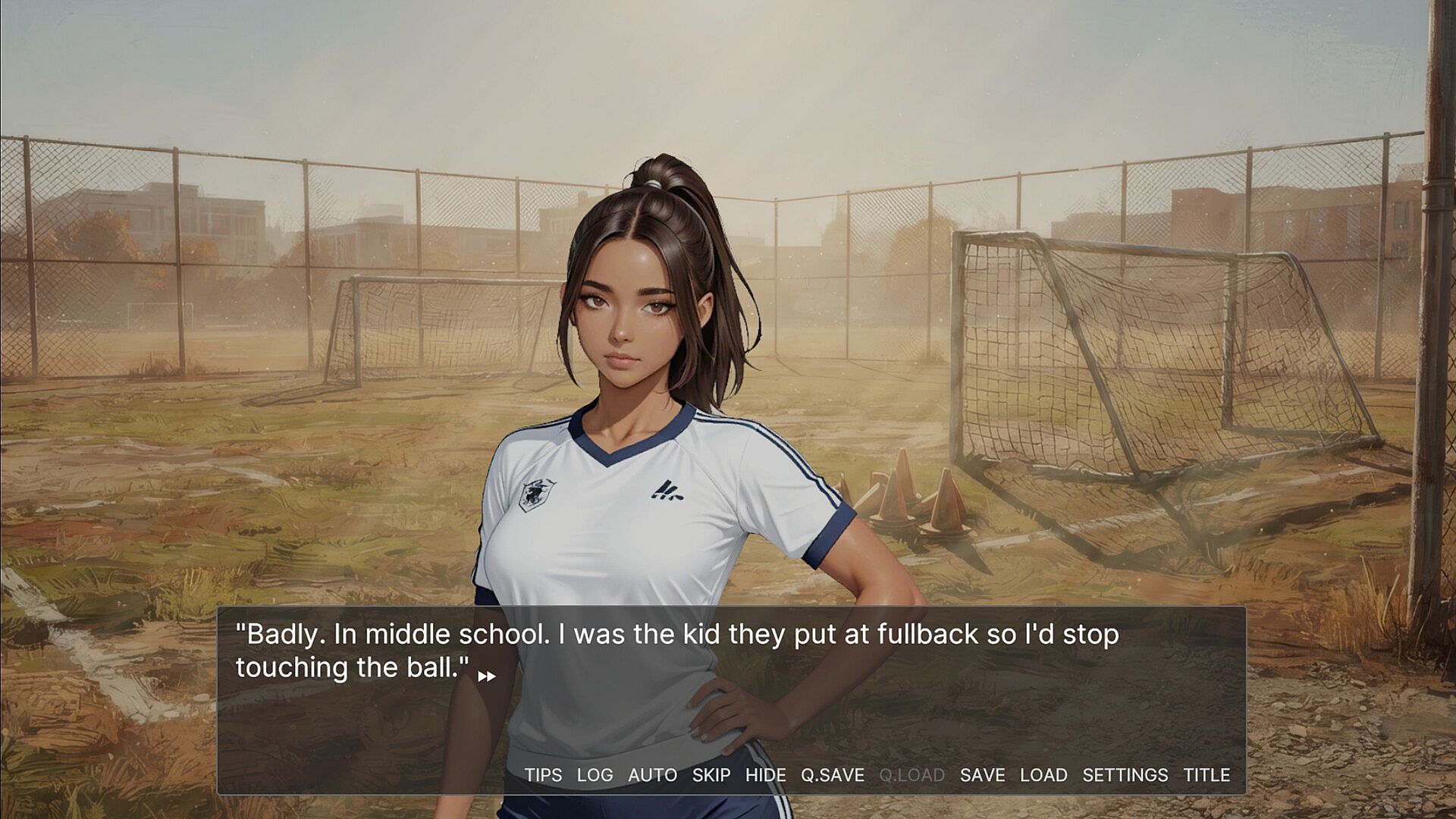
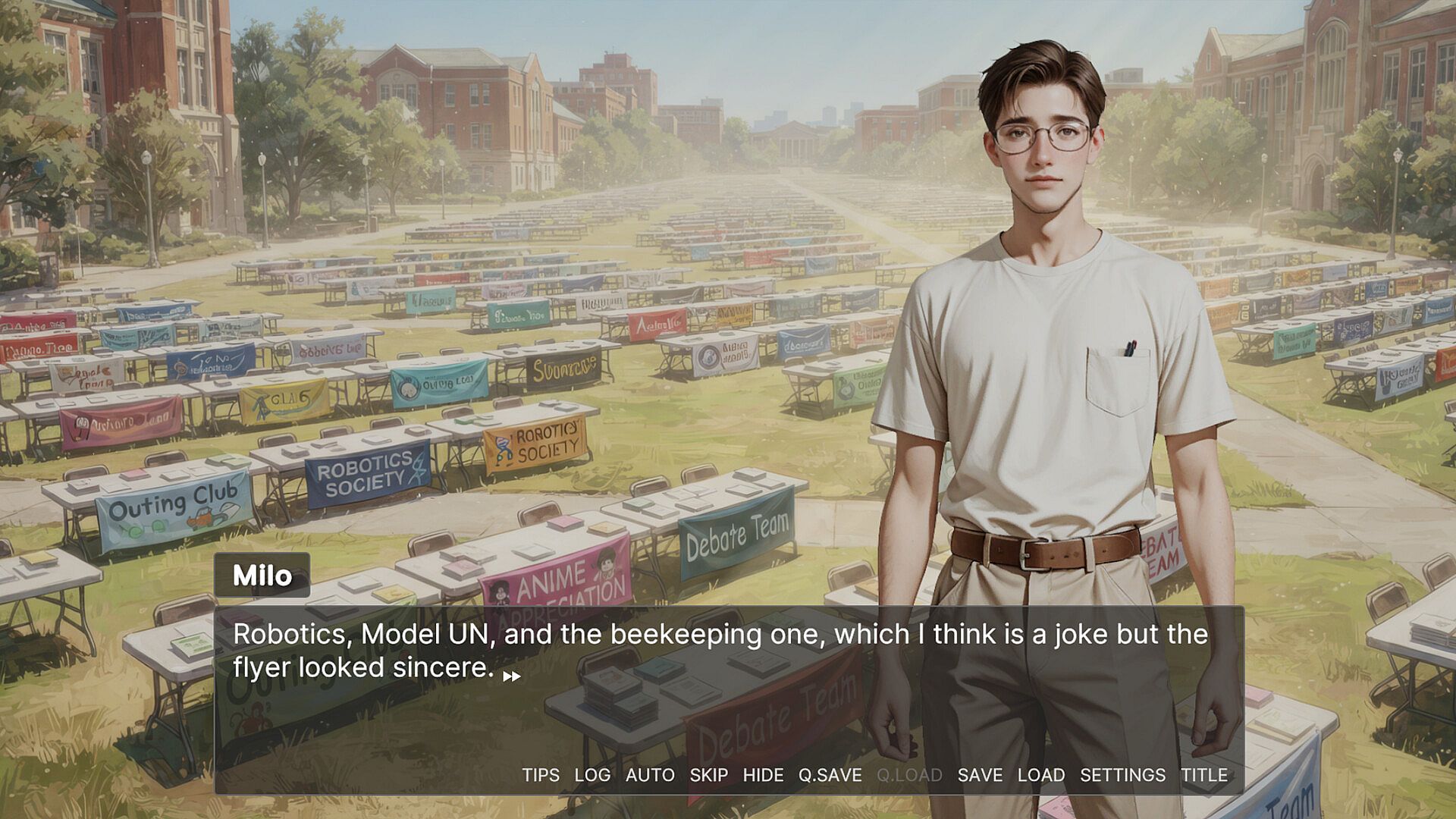



Greek Row, Fall Semester is a single-player visual novel role-playing game with casual elements developed for PC. Players step into the shoes of a college freshman navigating one academic year through narrative choices, character interactions, and personal growth on a campus lined with sorority houses.
Gameplay
The core loop centers on reading through branching dialogue and making decisions that shape relationships and outcomes across three distinct acts spanning August to May. Time management plays a key role as the player balances involvement in campus events, conversations with six women living nearby, and an independent storyline involving the roommate. Affection, trust, and a quiet arrogance counter track progress, with earlier choices determining which paths remain open later. Some of the most meaningful moments come from choosing silence rather than speech, and the game emphasizes noticing details about each character that exist independently of the player.
Mechanics include a player-named protagonist, rollback to rewind any point including mid-animation, and a backlog to review prior lines. Cinematic elements like dynamic camera work and depth of field punctuate emotional beats. An original score features character leitmotifs that evolve based on player actions, with one theme reserved for a minor key only under specific conditions. The experience totals over 6,500 lines of text delivered in a full school-year arc.
Game Modes
The structure unfolds in three acts that function as sequential phases with limited opportunities to alter course once time advances. August covers an initial three-day involvement period filled with fairs, rallies, and early meetings. October spans four weekends focused on deepening connections amid competing demands. January brings two final weekends where prior decisions lock in results without fresh starts.
Six character routes provide distinct narrative paths, each with its own focus and complications, alongside a separate arc for the roommate that resolves regardless of romantic pursuits. Seven endings are available in total, and reaching May without pursuing anyone counts as a complete, fully written outcome rather than a default state. No single path grants every possible resolution.
Story and Characters
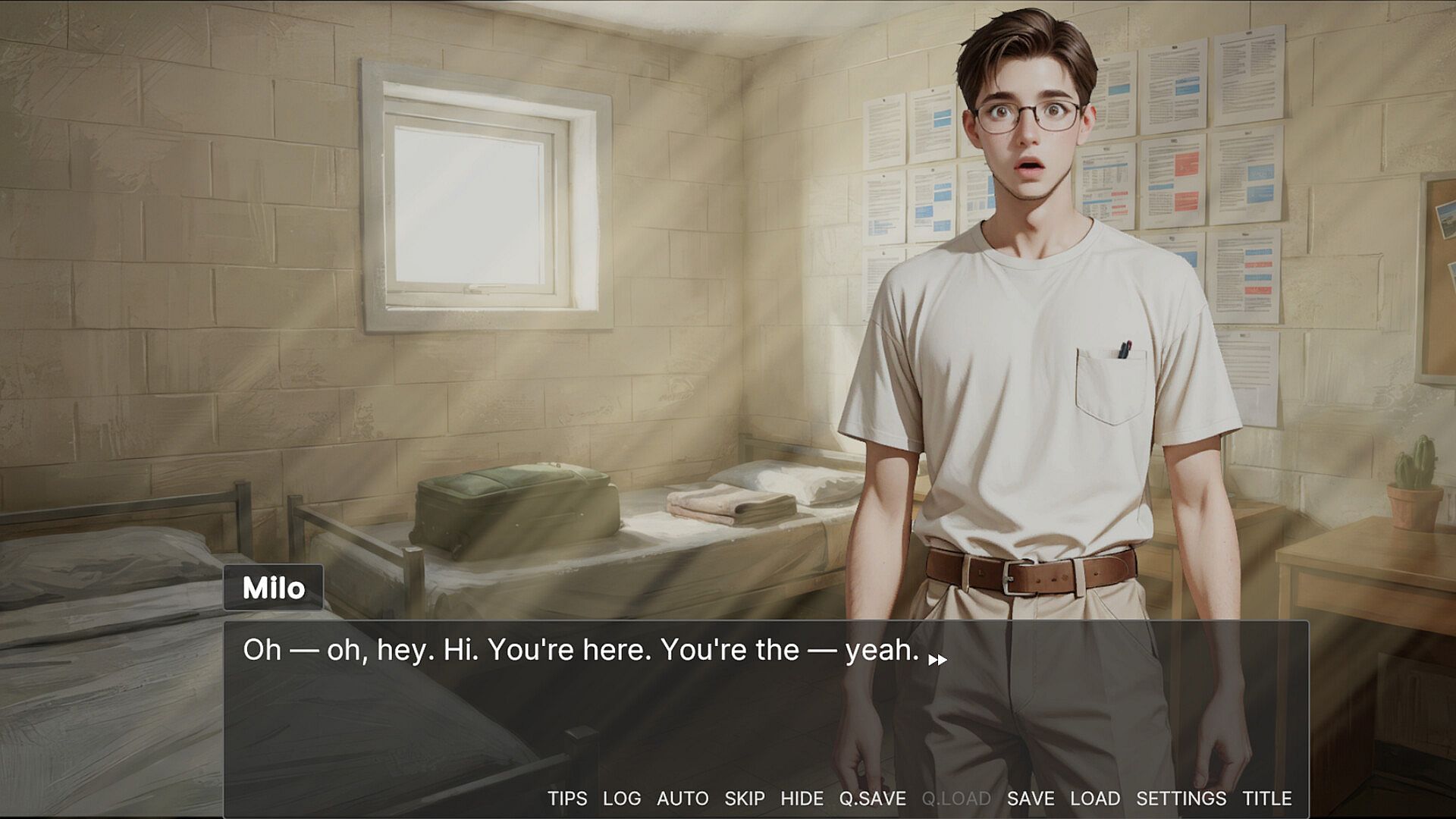
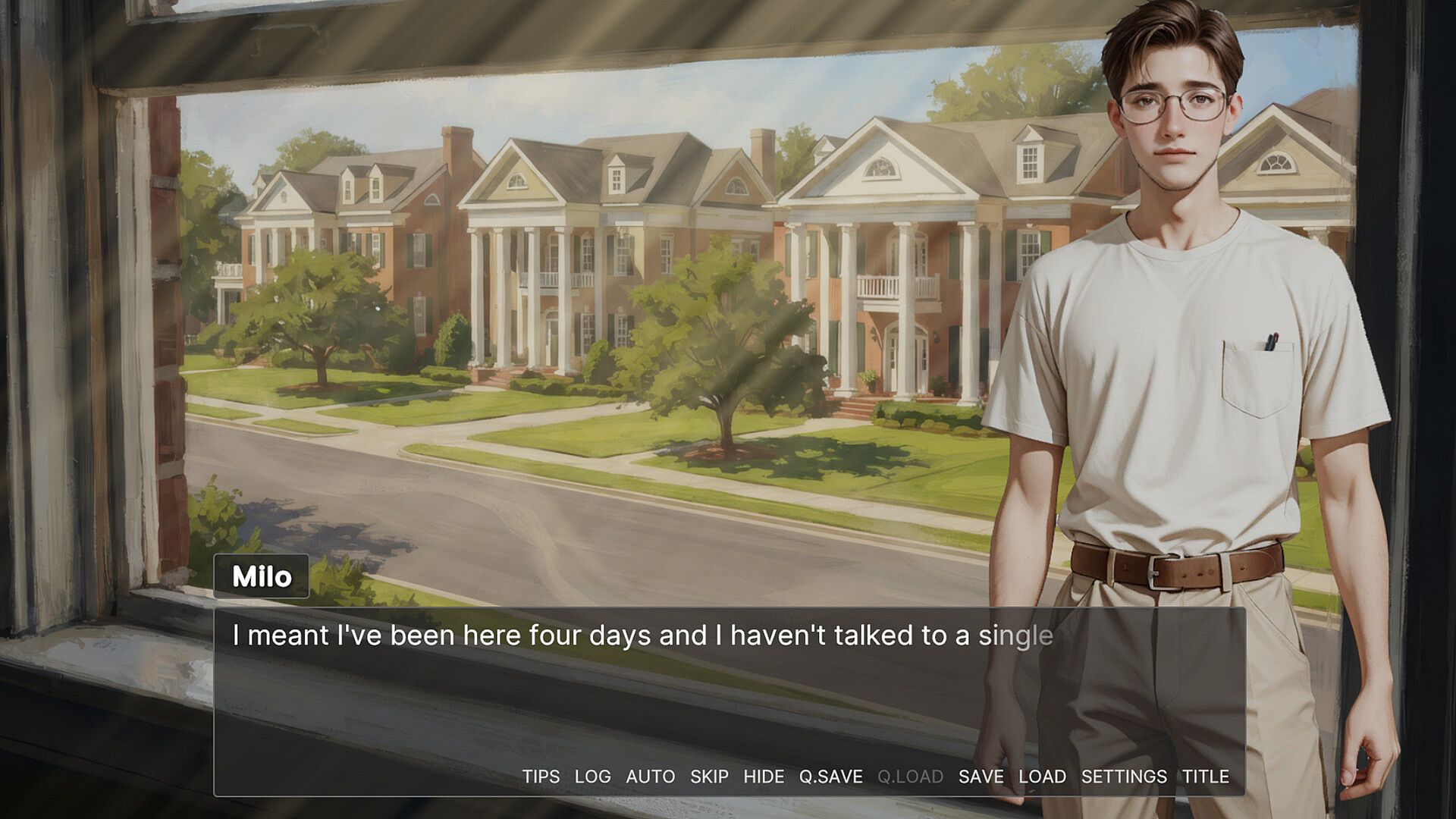
The narrative follows the realization that attempting to solve another person's problems rarely works out as planned. The player arrives with a roommate named Milo Brandt, whose organized approach to campus life contrasts with the social scene just sixty feet away in the sorority houses. Six women each bring personal stakes involving family expectations, athletic setbacks, legacy pressures, financial realities, artistic observation, and leadership responsibilities. Every route highlights how these individuals have lives and conflicts separate from the player's involvement.
Mature themes appear through depictions of alcohol use, class differences, sports injuries, family obligations, and the everyday social dynamics among nineteen-year-olds. The story rewards observation over intervention and avoids framing any character as an object to be won.
Features
Key systems support replayability and accessibility. Save and load functions work at any point with automatic saves at act transitions. Configurable text speed, skip for previously read sections, and a full CG gallery unlock as moments are reached. The game runs on Windows 10 or higher with modest hardware requirements including 8 GB RAM and integrated sound support.
- Three acts covering one full school year
- Choices that carry forward across acts
- Independent resolution for the roommate storyline
- Original soundtrack with evolving motifs
Is It Worth Playing?
The game remains unreleased with a planned launch in October 2026 and currently carries no user reviews. It targets players who enjoy narrative-driven visual novels centered on realistic interpersonal dynamics rather than power fantasies or collection mechanics. Those drawn to stories about college transitions, the limits of good intentions, and multiple meaningful endings will find the structure and character focus aligned with that interest. Availability will depend on the final release, after which reception can be assessed directly from completed playthroughs.