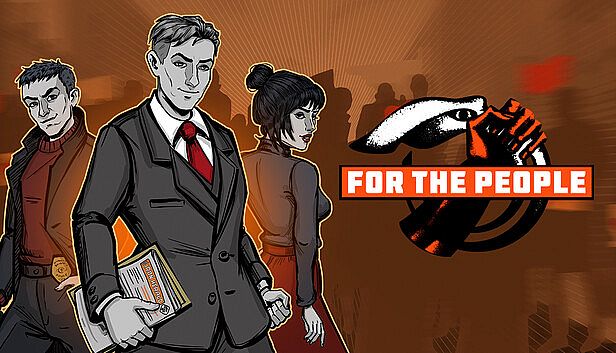





















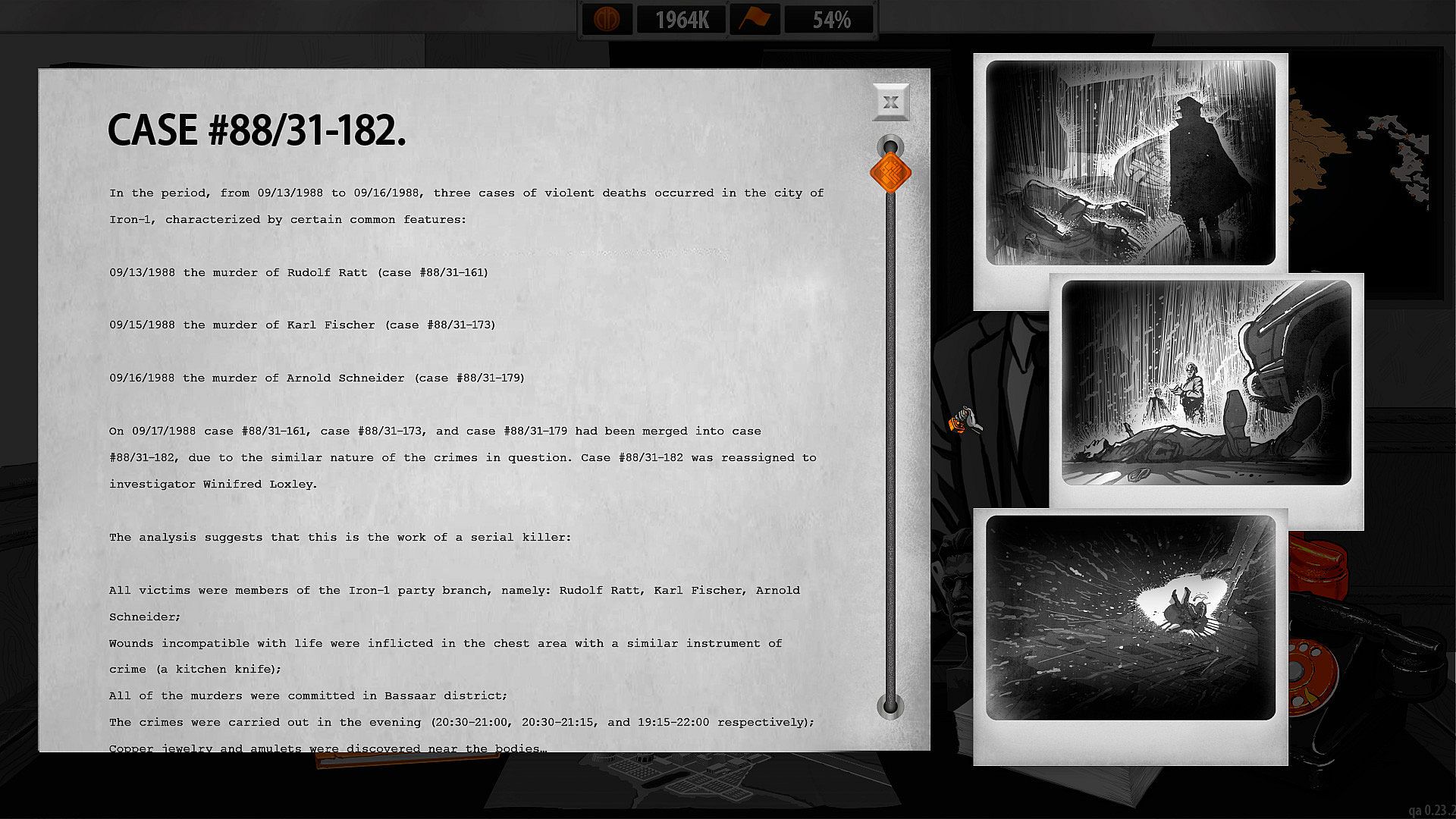







For the People is a strategy and simulation game that blends political management with visual novel storytelling. Players take on the role of a state official overseeing the industrial center of Iron-1 in a setting shaped by the aftermath of revolution and the rise of a new regime. The experience centers on resource allocation, citizen appeals, and navigating conflicting demands from various departments and political interests.
Gameplay
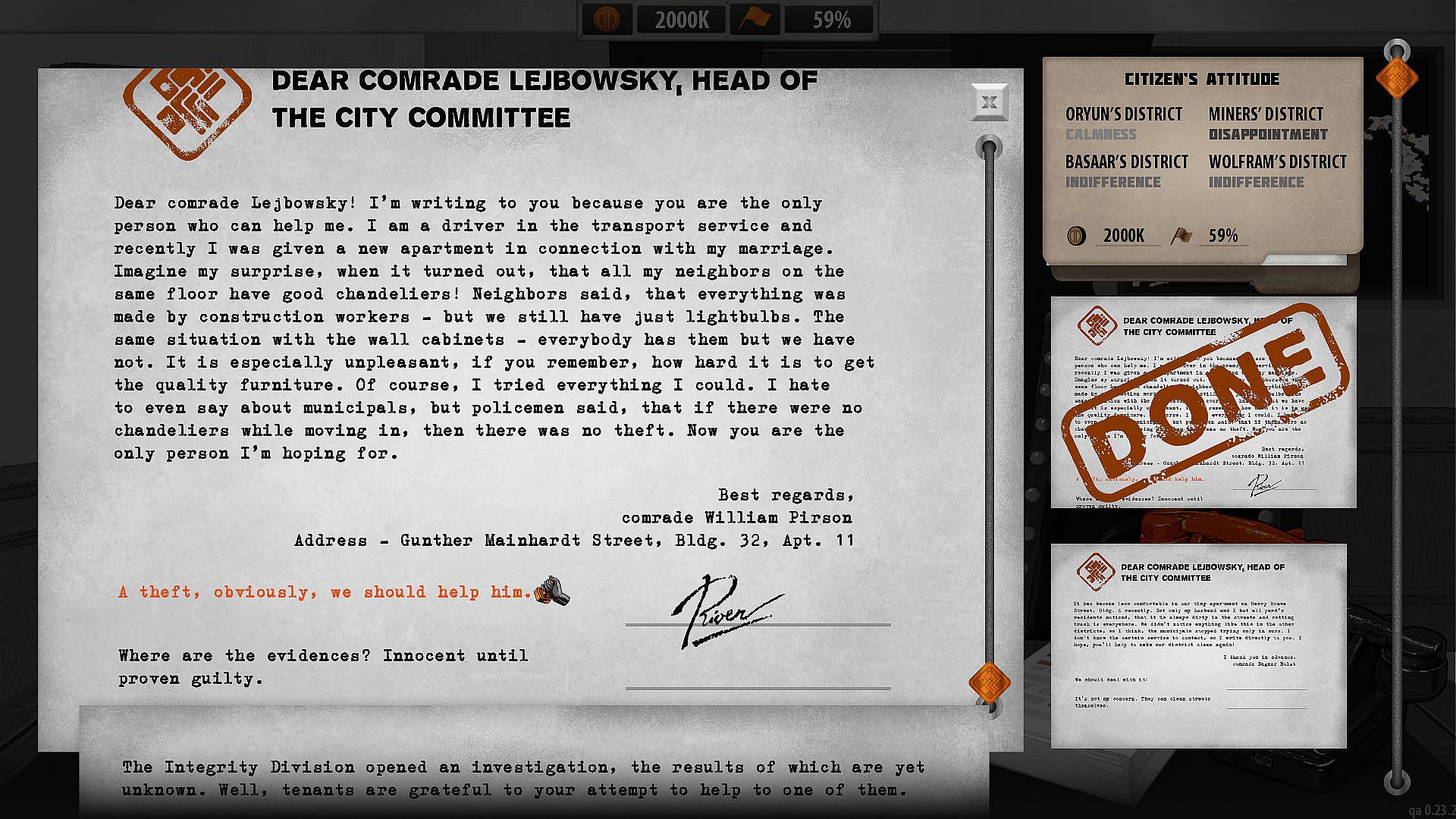
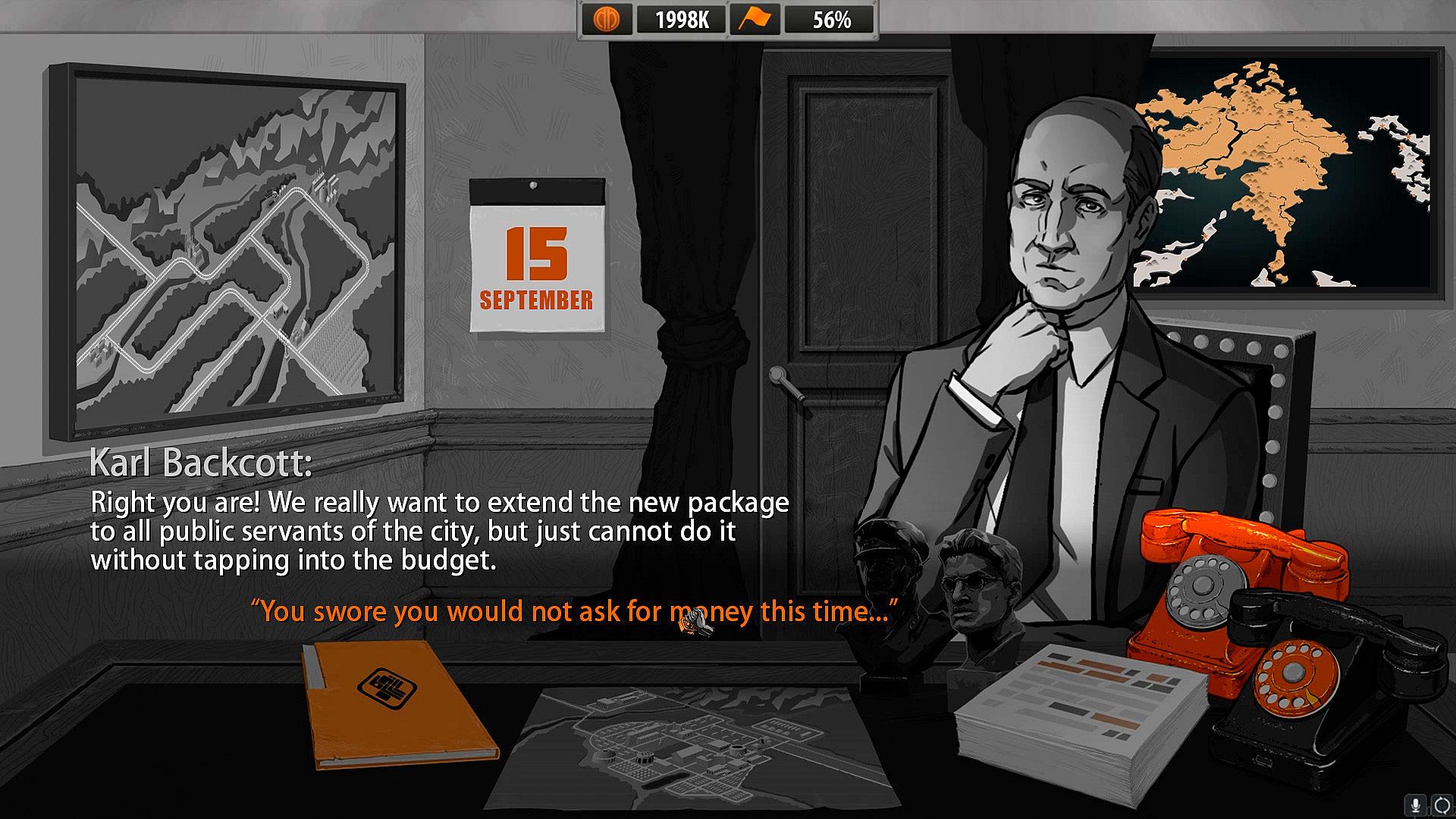
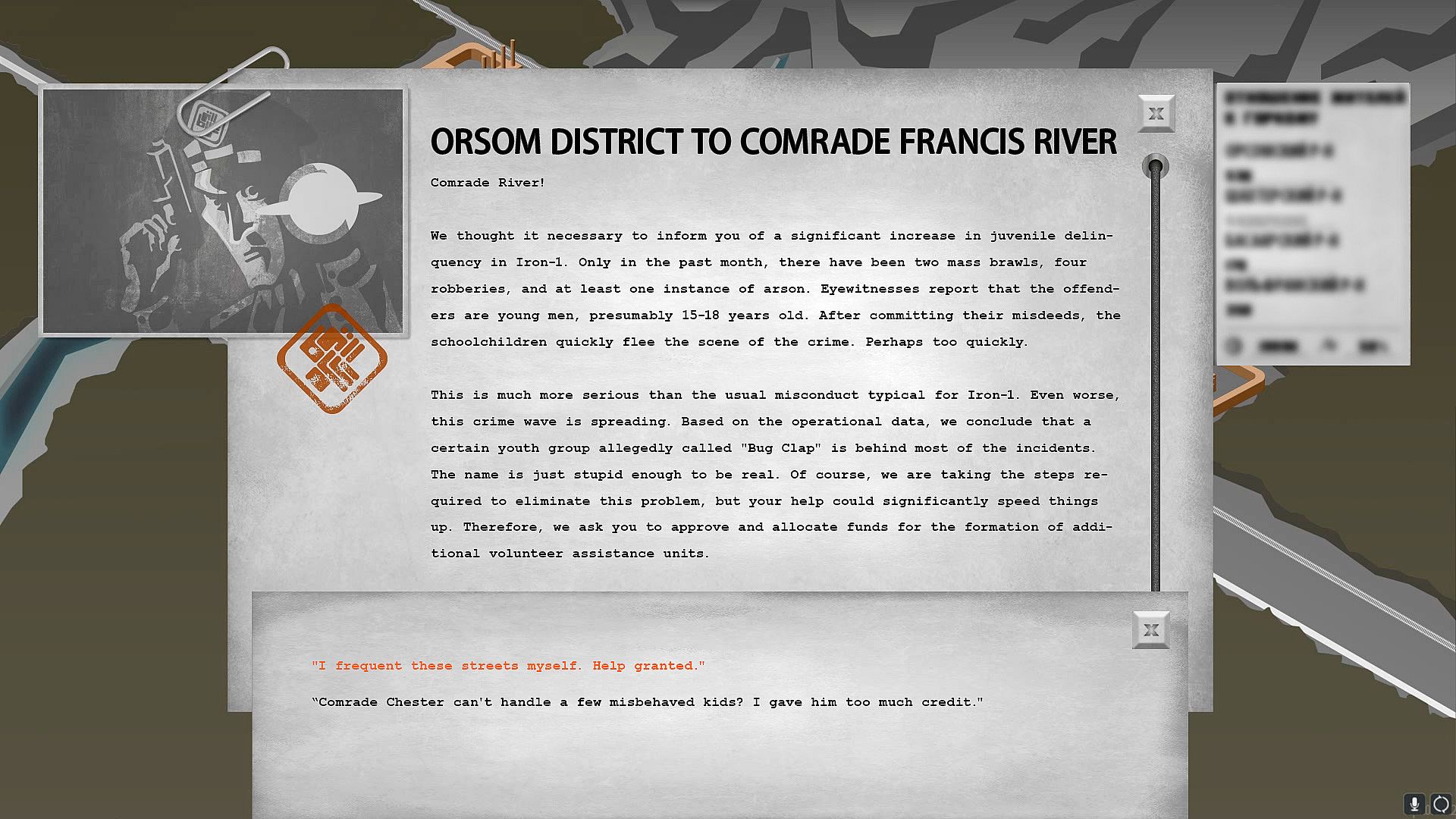
The core loop involves reviewing requests from citizens and departments, then deciding how to allocate a limited budget across districts. Each choice affects trust levels and personal influence while advancing the story through text-based scenes and dialogue. Information gathering plays a key role, as players weigh incomplete details before acting on matters of justice or security. Decisions often force trade-offs between party directives, long-term stability, and immediate citizen needs, with consequences that ripple through subsequent events.
Strategic elements focus on prioritization rather than complex building or production chains. Players must identify which areas require attention first and accept that not every request can receive support. This creates ongoing tension around influence and loyalty, as favoring one group may alienate another. The system rewards careful reading of available context to anticipate outcomes.
Game Modes
The game operates as a single-player experience built around a central campaign of sequential decisions and narrative branches. There are no separate multiplayer or competitive modes. Progression follows a linear structure punctuated by choice points that lead to different resolutions, including multiple endings based on accumulated decisions. The emphasis remains on replaying to explore alternate paths rather than on distinct game variants or seasonal content.
Narrative and Setting
Players manage Iron-1 during a period of social crisis and economic strain following revolutionary changes. The story unfolds through official duties that intersect with personal and ideological conflicts. Characters present appeals that reveal broader tensions within the regime, requiring officials to interpret motives and weigh risks. The tone stays grounded in administrative realism, highlighting the practical difficulties of governance under constrained conditions.
Over five endings emerge from the cumulative impact of choices, reflecting different balances of power, citizen welfare, and alignment with higher authorities. This structure encourages multiple playthroughs to observe how early decisions shape later events and final outcomes.
Is It Worth Playing?
For the People suits players interested in narrative-driven strategy and simulation titles that prioritize decision-making over action or expansion mechanics. The game delivers a focused experience centered on political trade-offs and branching stories within a single-player format. Reviews on major platforms describe it as mostly positive, with praise for its thematic consistency and replay value through varied endings.
Those who enjoy managing limited resources while untangling conflicting interests will find the systems engaging. The title offers no ongoing updates or additional modes, positioning it as a complete, self-contained release best approached for its story and choice consequences rather than long-term progression systems. If the premise of overseeing a post-revolutionary industrial district appeals, the game provides a concise yet layered exploration of those themes.