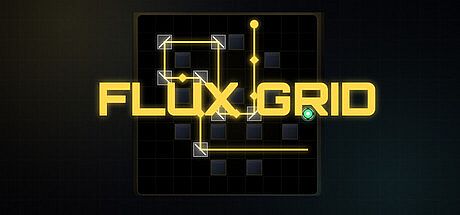



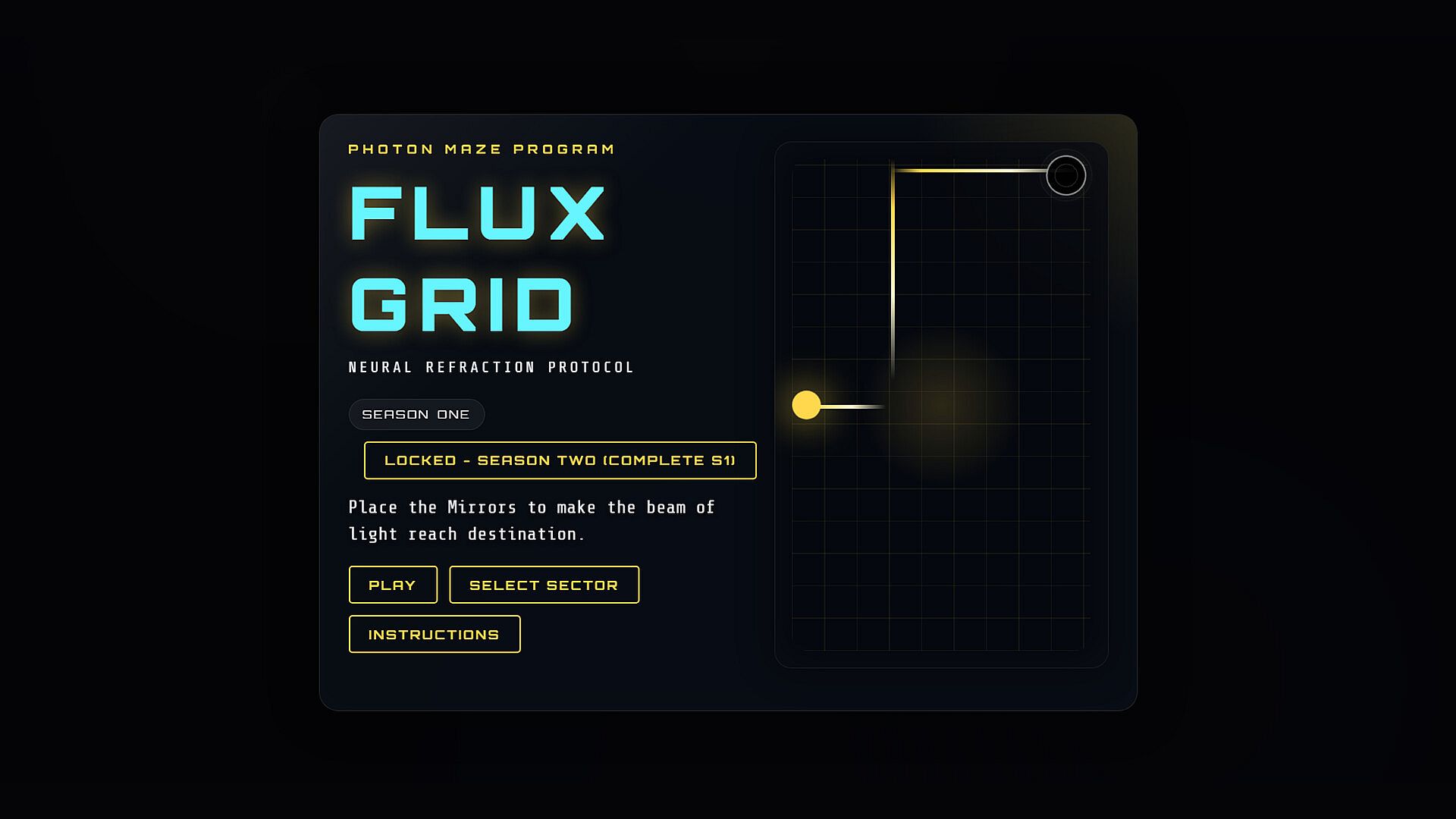
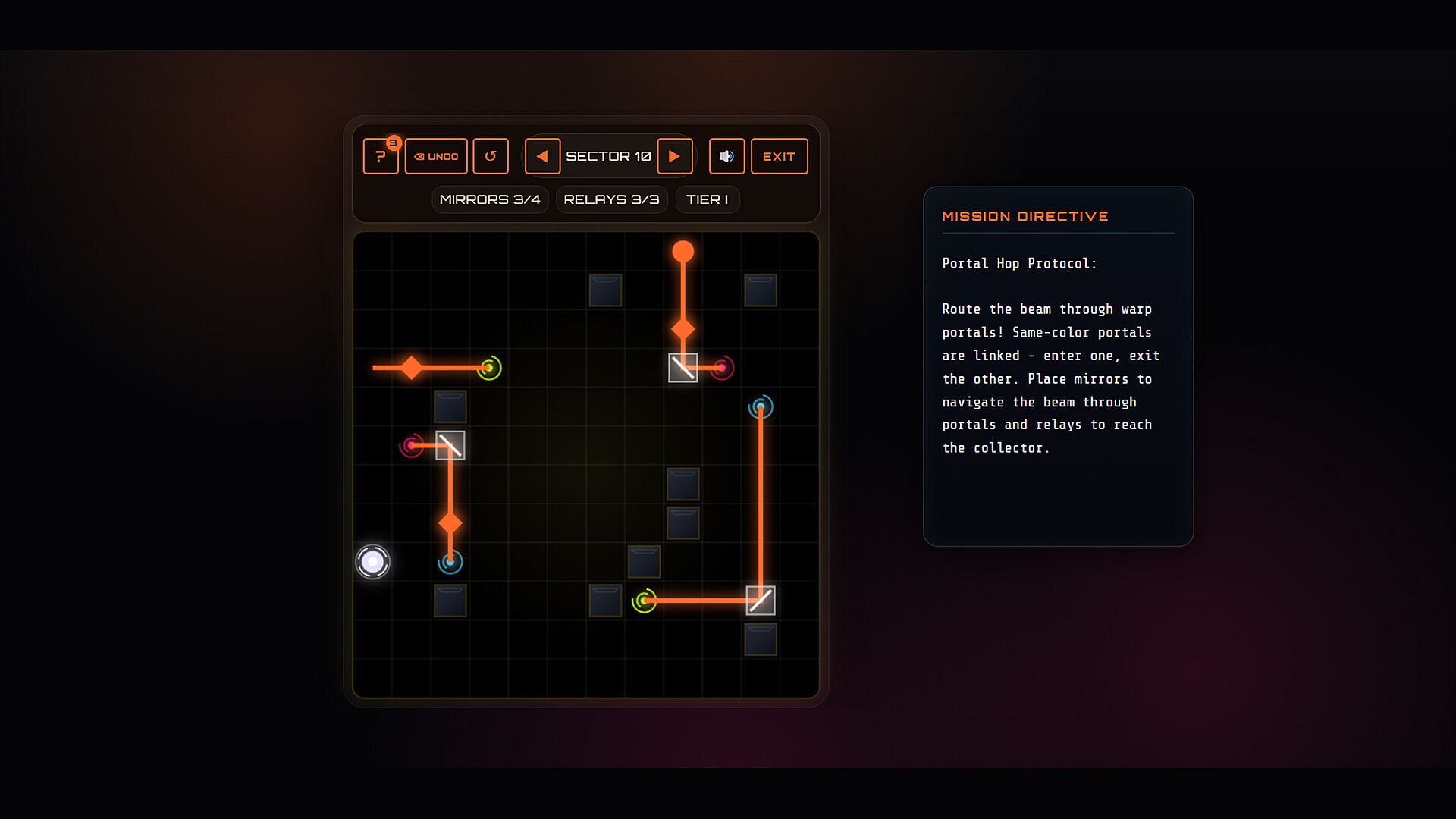
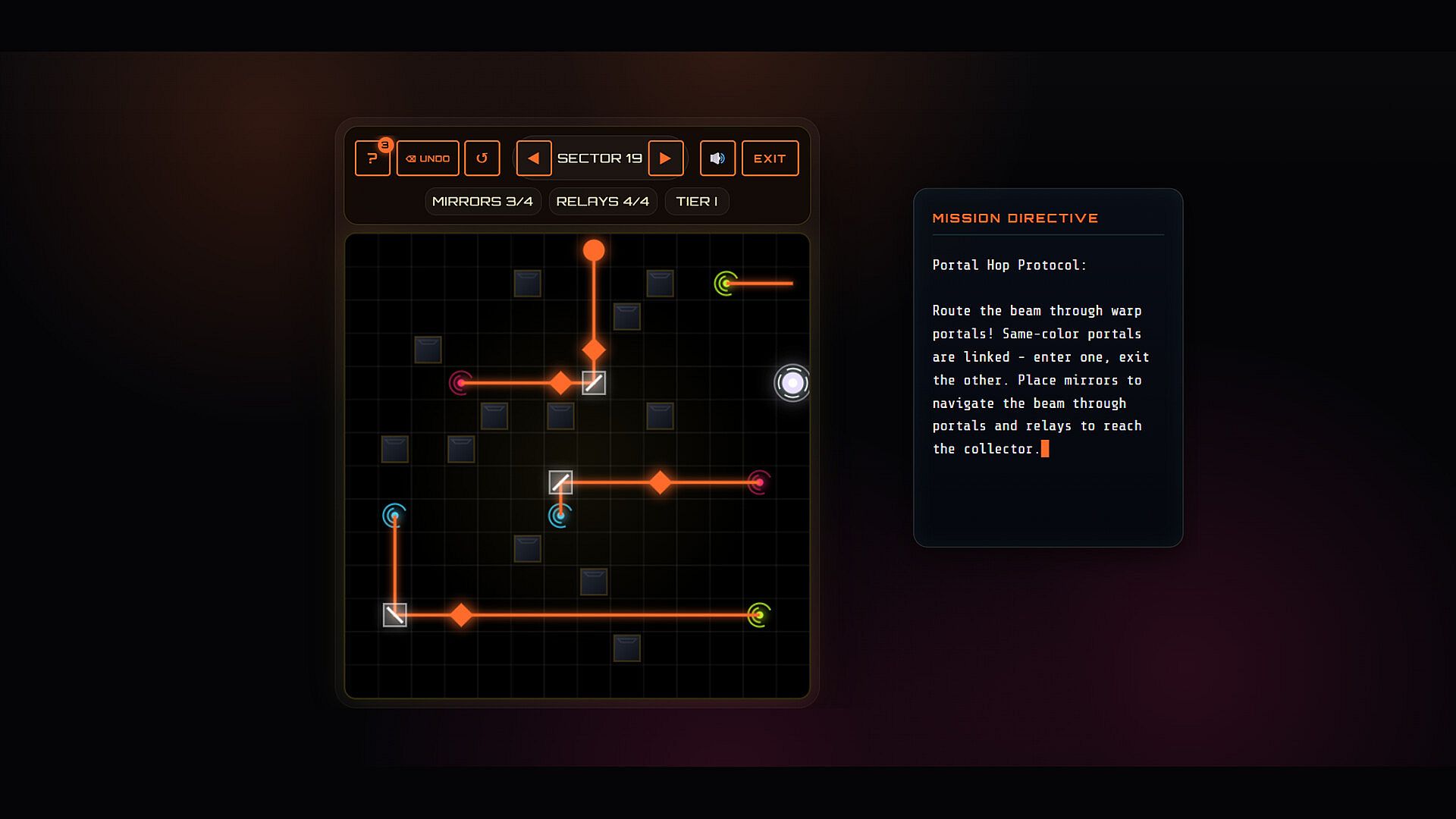

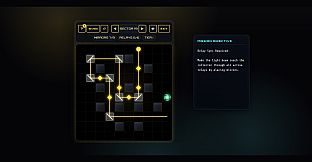
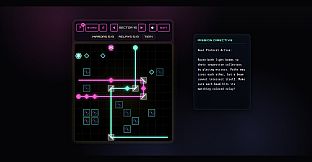
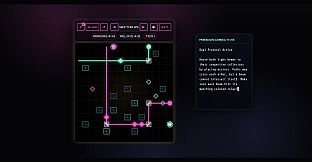
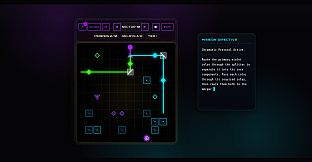
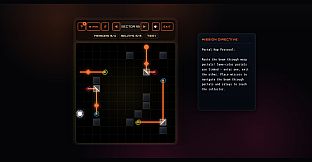
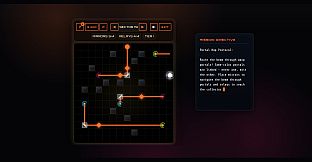
Flux Grid is an indie casual puzzle game for PC that challenges players to route beams of light across a grid by placing mirrors and interacting with specialized mechanics. The core loop revolves around precise placement to connect sources with collectors while managing increasing layers of complexity. This single-player experience emphasizes logical thinking and spatial reasoning over speed or reflexes.
Gameplay
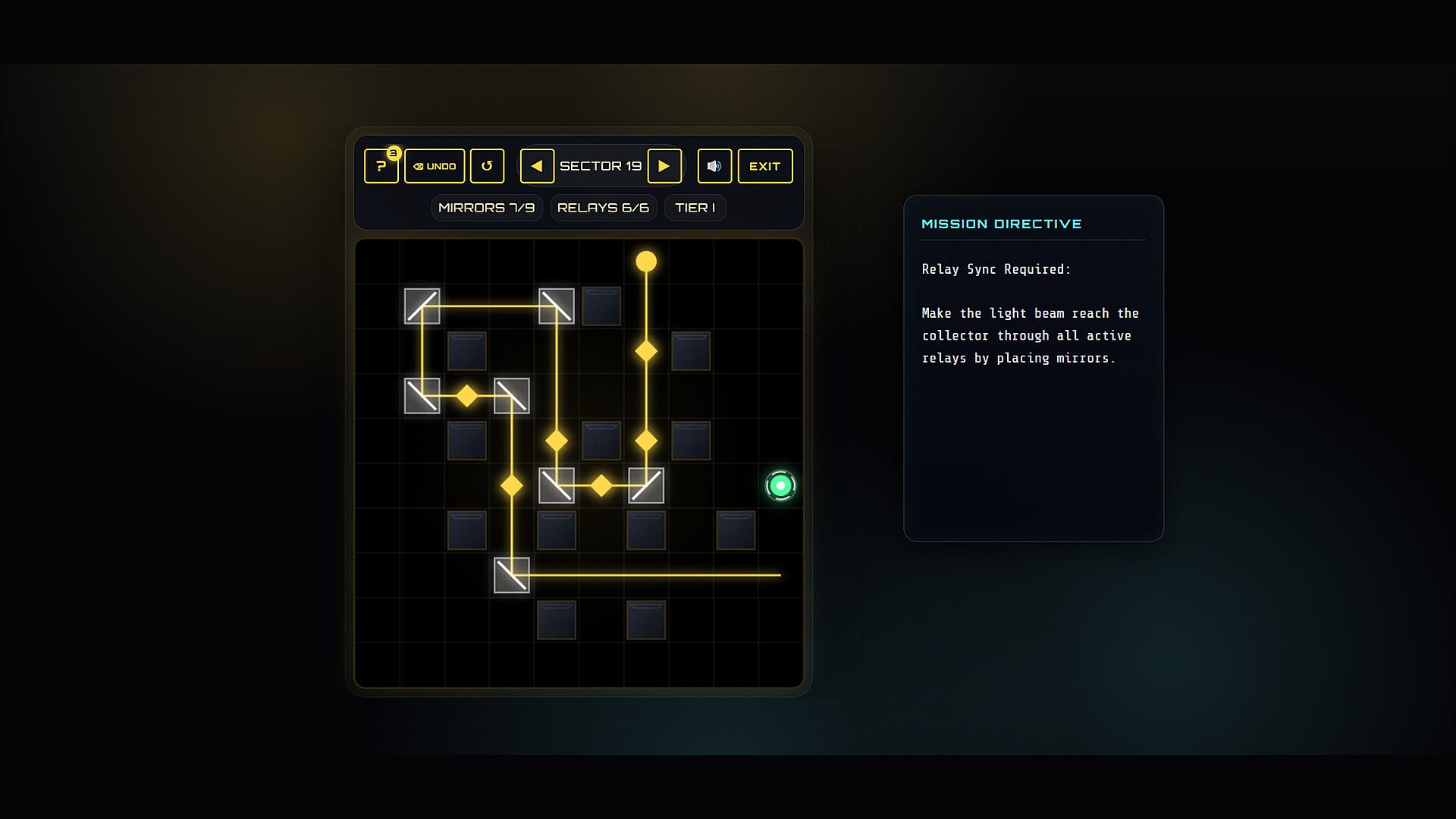
Players begin by positioning mirrors on a grid to direct a beam from its origin point to a designated collector. Early challenges focus on basic refraction and relay activation using straightforward mirror placements. As levels progress, additional elements require simultaneous management of multiple paths and interactions that affect beam behavior across the entire grid. The minimalist neon aesthetic pairs with reactive audio cues that respond to successful connections and adjustments. A hint system provides timed nudges to assist without revealing full solutions, supporting a steady progression from straightforward setups to intricate configurations.
Each puzzle maintains guaranteed solvability through procedural verification. The design encourages experimentation with mirror angles and positions while enforcing rules such as non-intersecting paths for certain beams. This creates a focused loop of observation, adjustment, and verification that builds mastery over successive challenges.
Game Modes
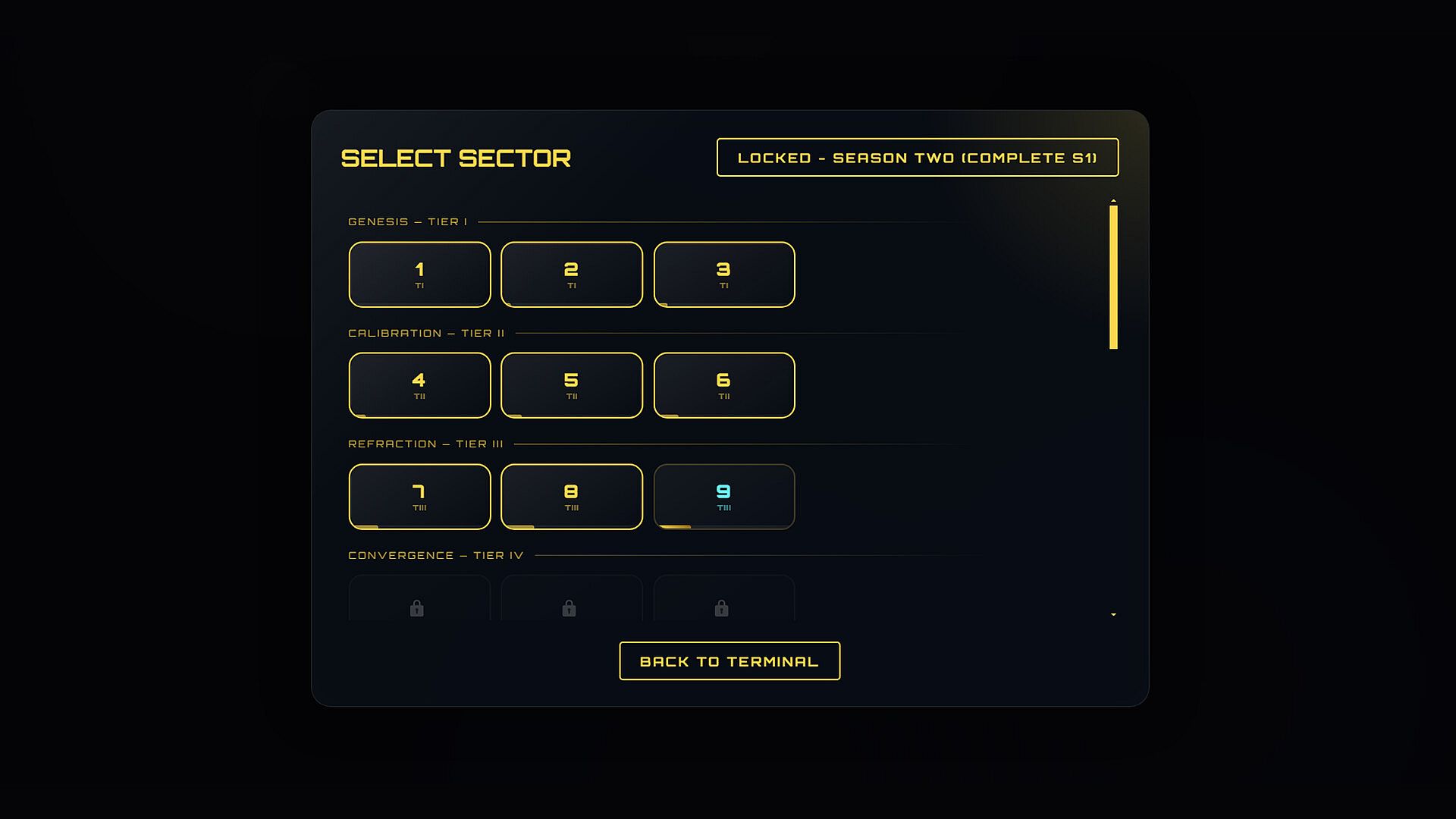
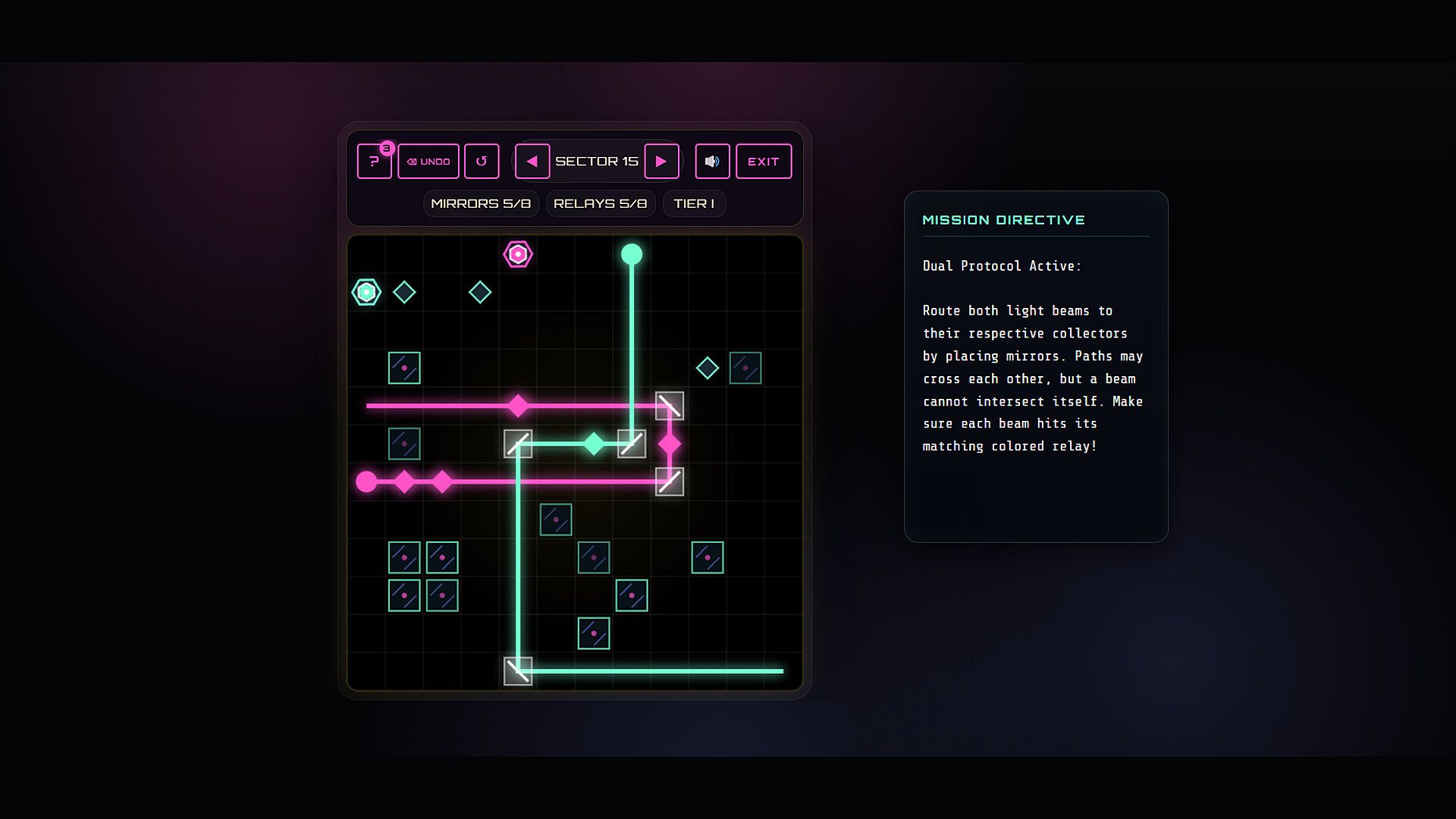
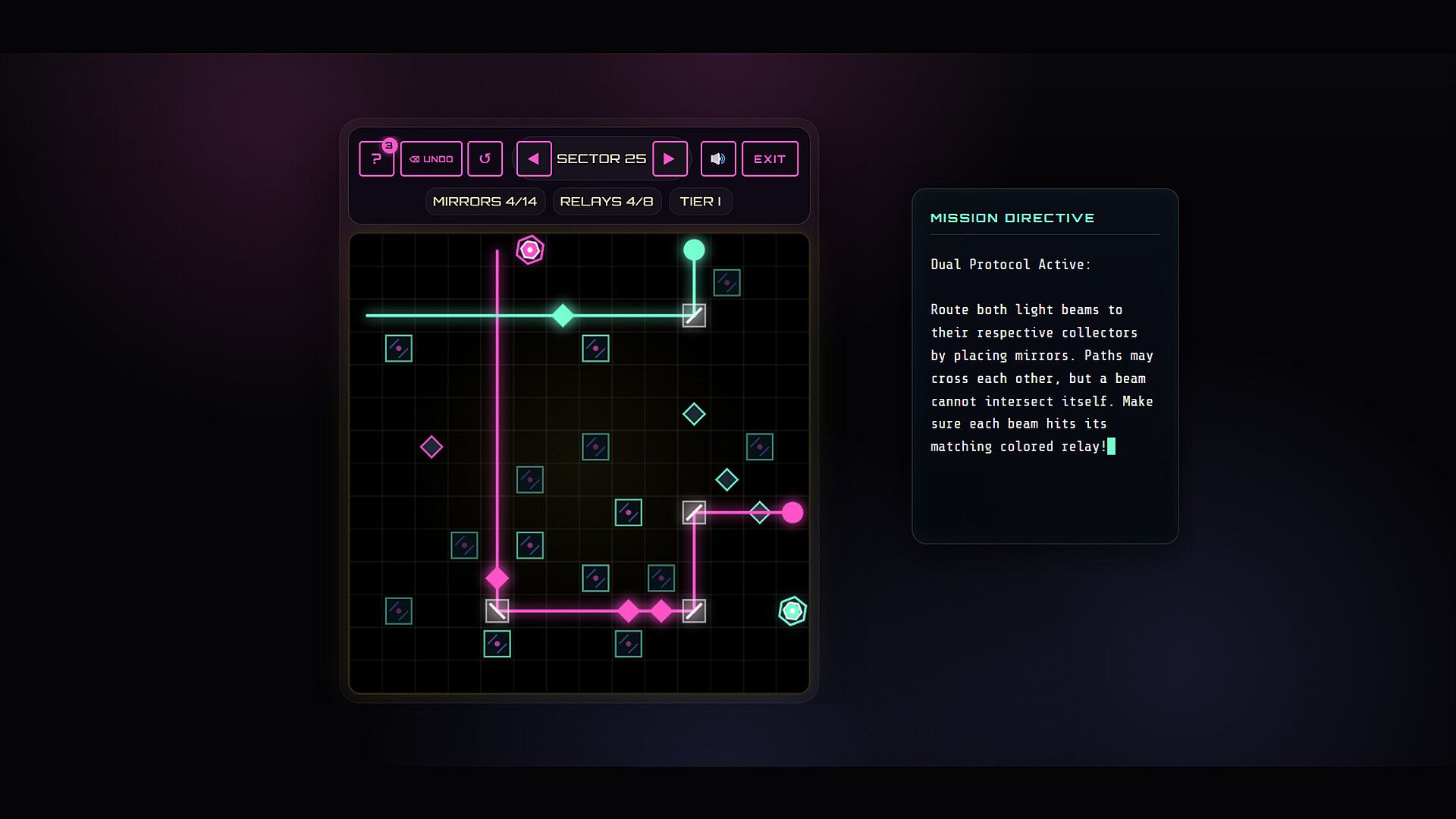
The game structures its 175 levels into five seasons, each introducing distinct mechanics that build on prior ones. Season 1, Mirror Protocol, covers fundamental routing of a single beam through relays on an open grid. Season 2, Dual Beams, requires coordinating two separate beams and collectors where paths may cross but cannot self-intersect.
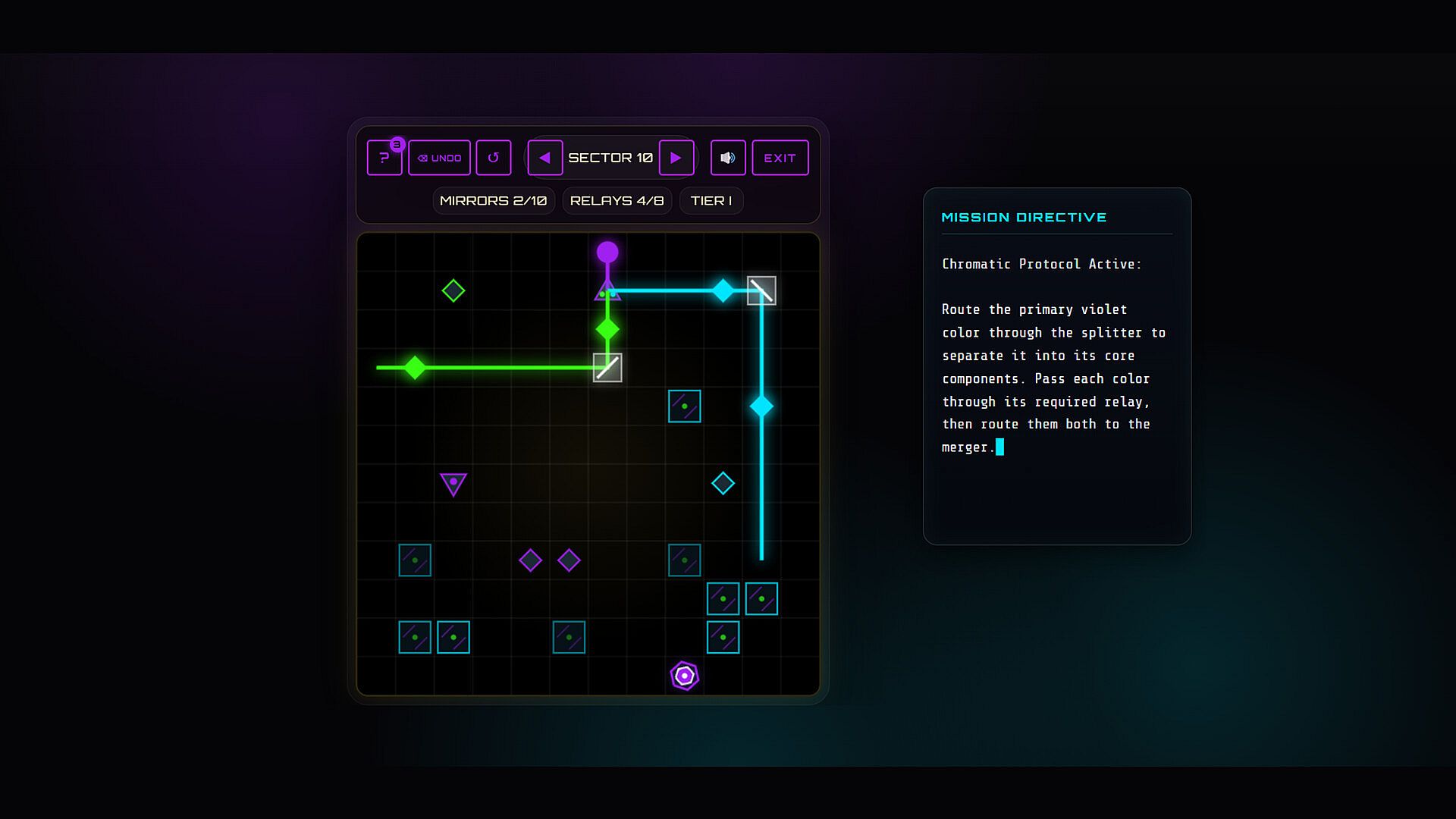
Season 3, Chromatic Split, adds splitters that divide a violet beam into component colors, each needing routing to matching relays before recombination. Season 4, Portal Warps, incorporates linked portals of matching colors that allow beams to teleport between points while navigating relays. Season 5, Multi-Source Convergence, presents multiple sources directing beams toward one collector, where every mirror placement influences all paths simultaneously.
These seasons deliver progressive difficulty that shifts from relaxed entry points to demanding later stages, all within a single-player format.
Core Mechanics and Features
Mechanics expand methodically across the seasons without overwhelming new players at the start. Mirrors serve as the primary tool for redirection, while relays, splitters, and portals add targeted constraints and opportunities. The absence of ads or microtransactions keeps the focus entirely on puzzle solving. Procedural verification ensures every level has at least one valid solution, reducing frustration from impossible setups.
Reactive audio enhances the tactile feel of placements and completions. The overall structure supports repeated attempts with a cooldown-based hint option that offers guidance rather than direct answers. This combination suits extended sessions of deliberate problem solving.
Is It Worth Playing?
Flux Grid appeals directly to players who enjoy cerebral puzzle experiences such as those found in Baba Is You, The Witness, or Patrick's Parabox, along with classic light-manipulation challenges. Its single-player campaign offers a self-contained collection of 175 levels divided across five seasons with escalating mechanics. The design prioritizes logical depth and clean presentation over external distractions.
Those seeking a pure puzzle game with guaranteed solutions and a hint system that respects player agency will find a consistent experience here. The progressive structure from basic routing to multi-source coordination provides clear value for fans of the genre. As an upcoming release with no additional monetization layers, it delivers focused content centered on its core light-routing loop.