




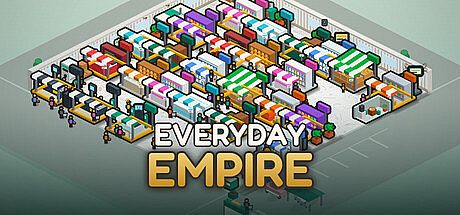


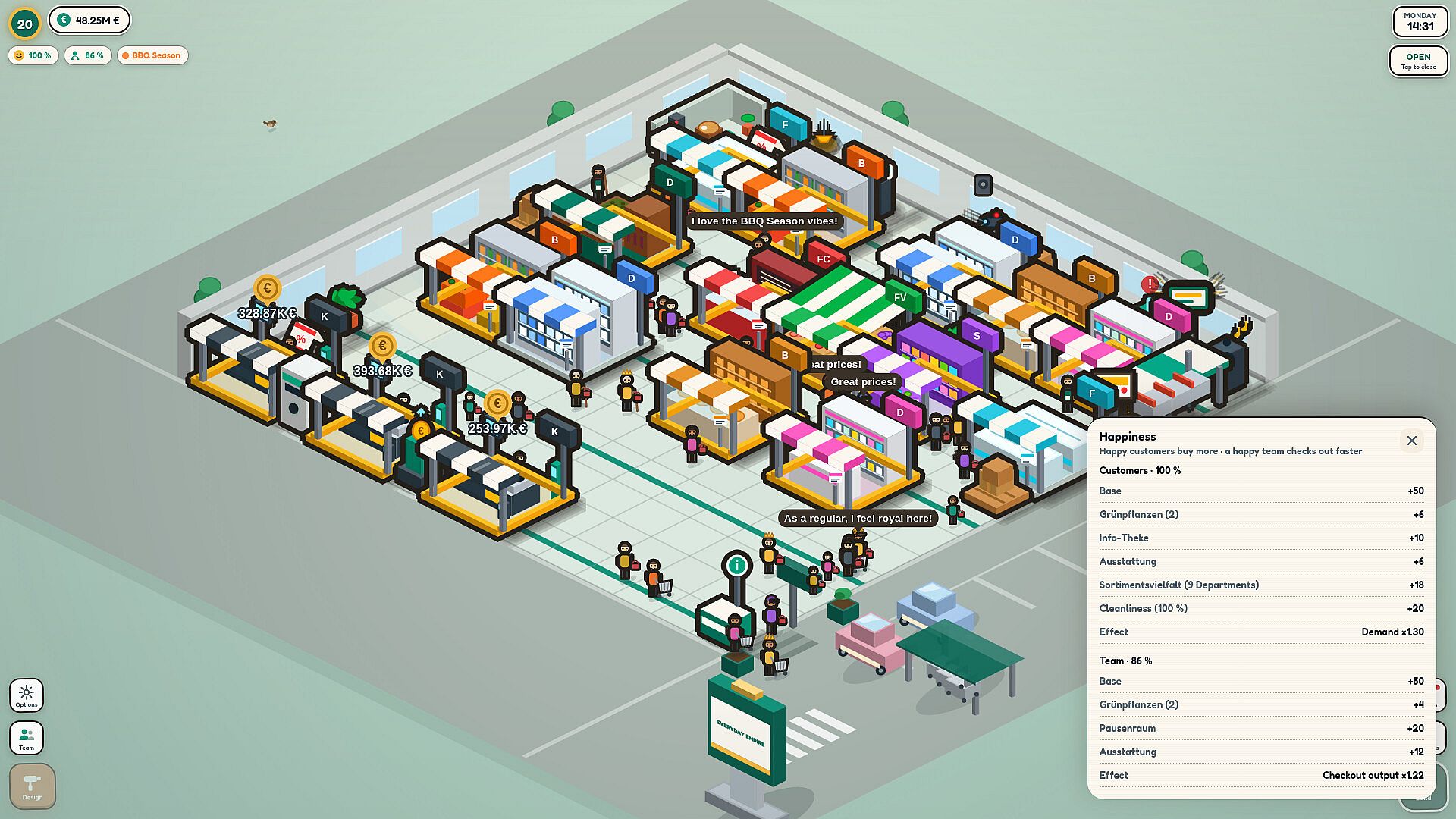
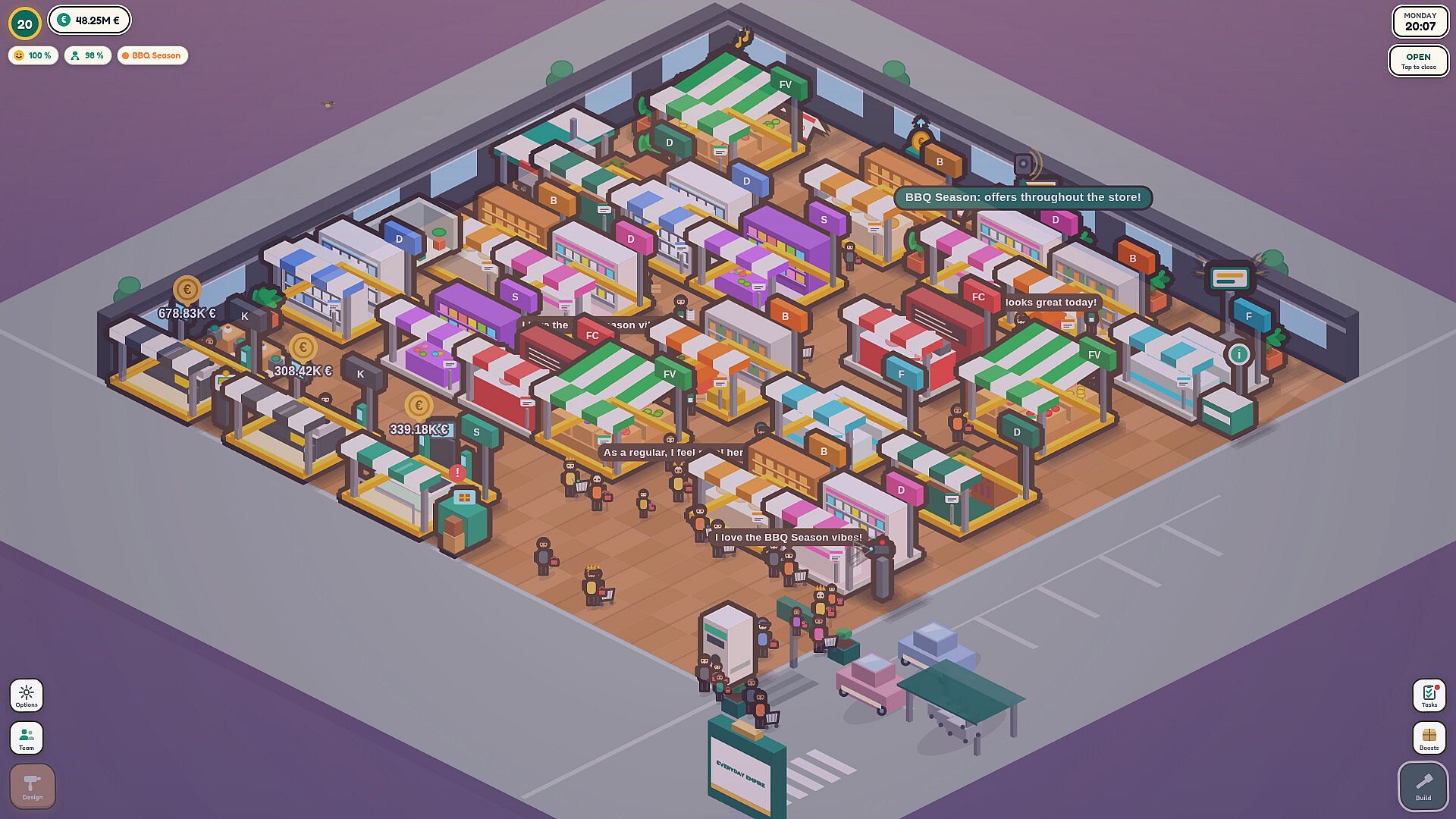
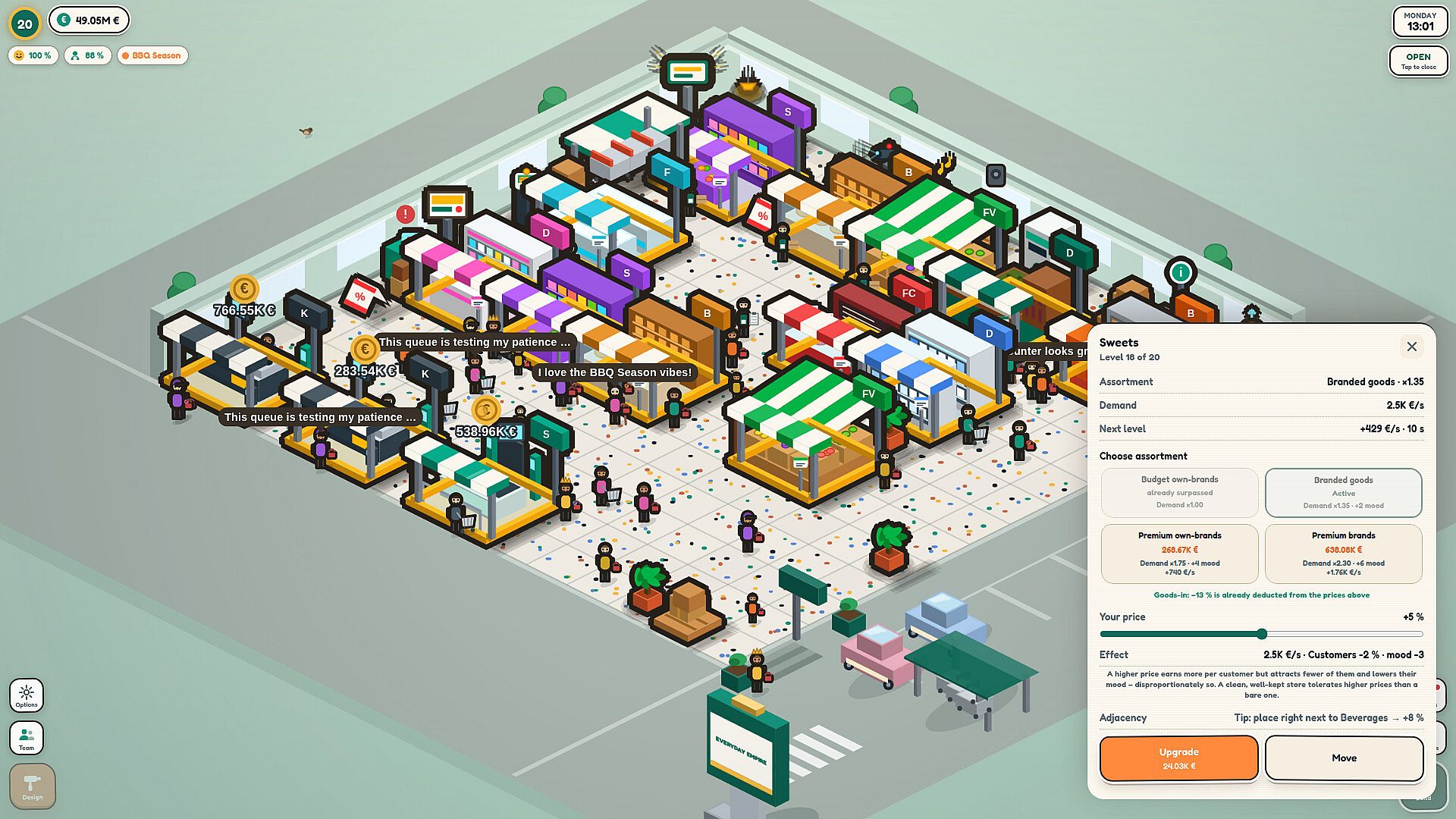
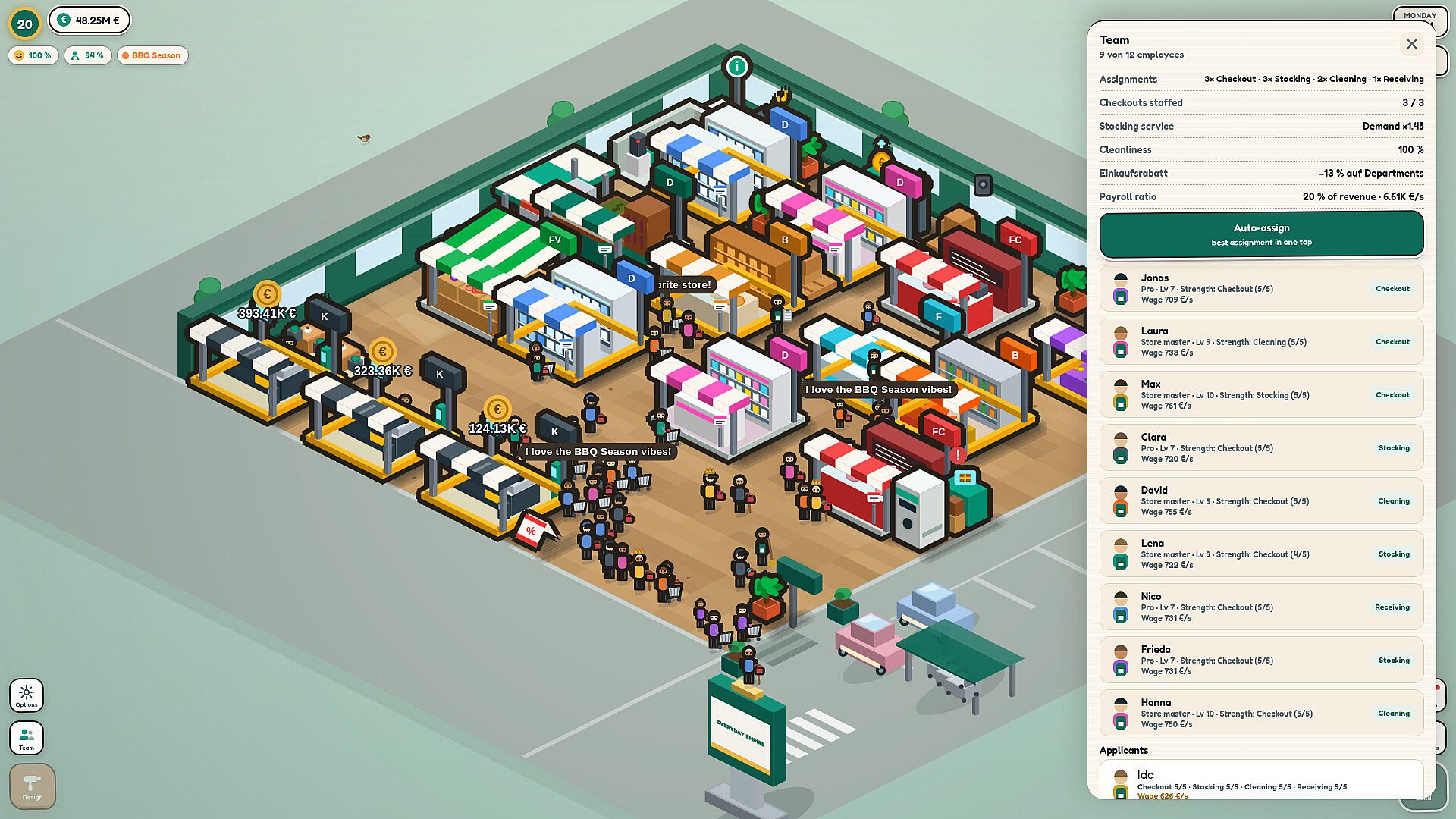
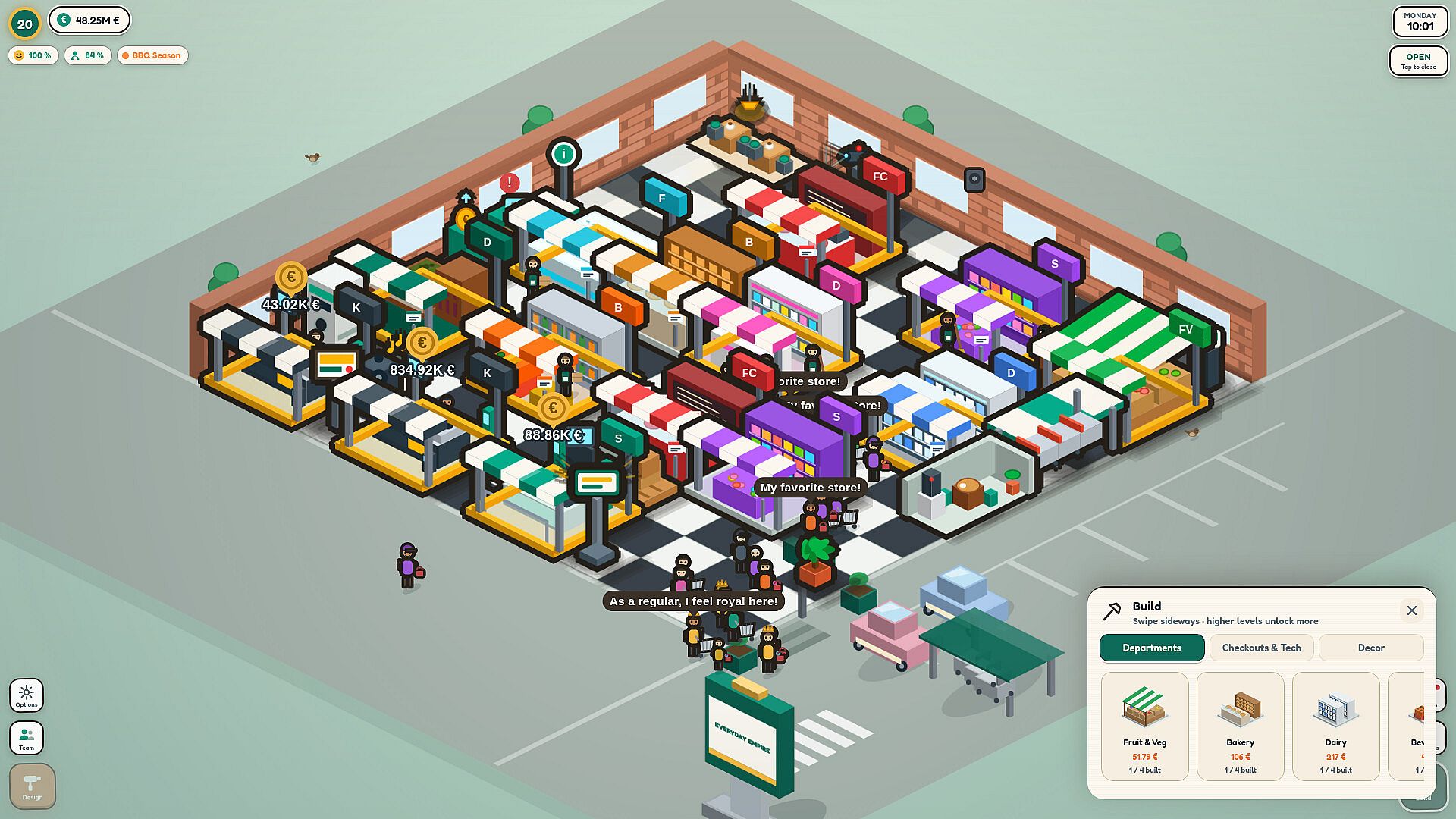
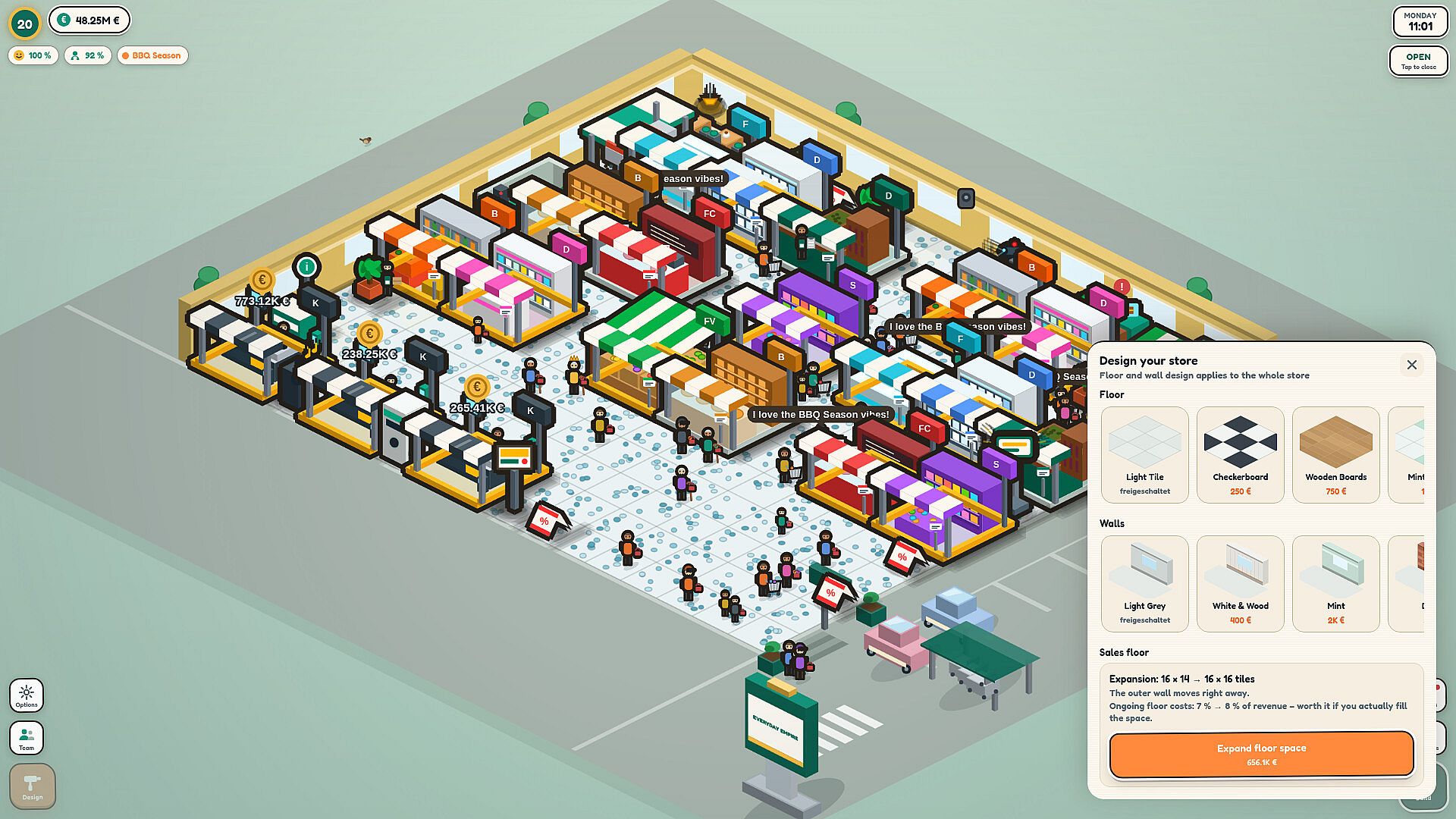
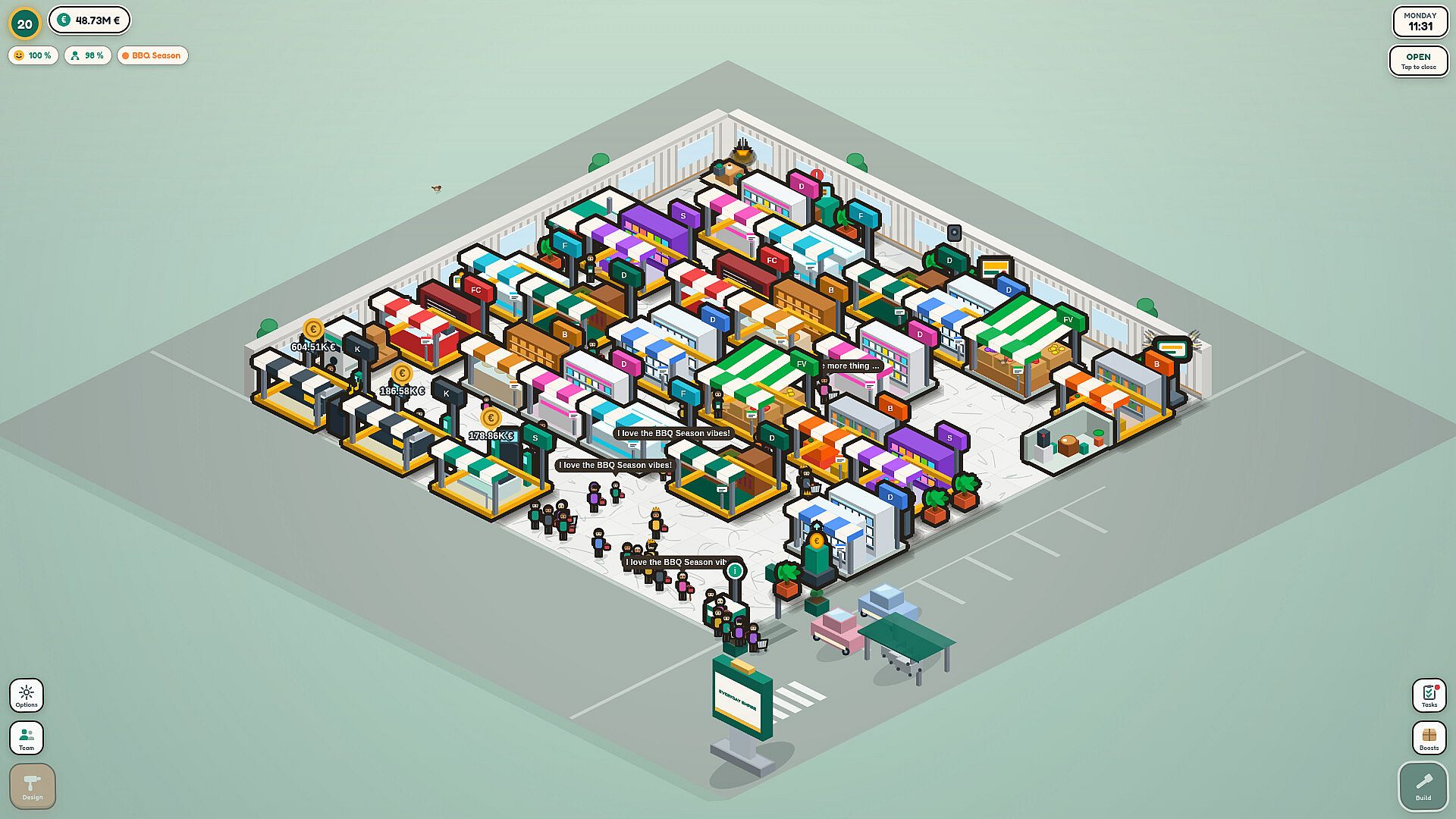
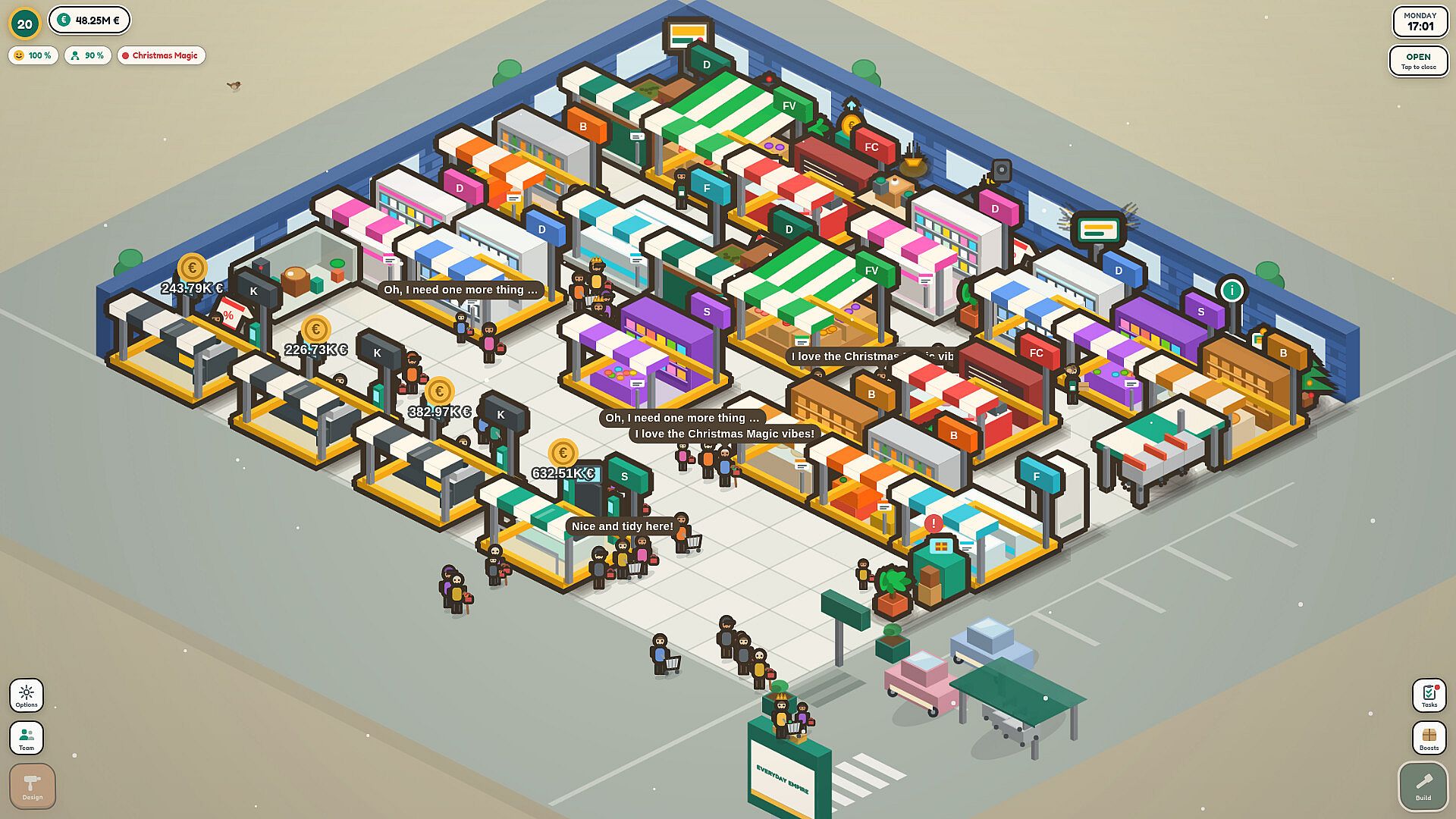




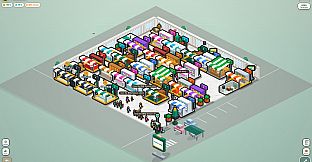

Everyday Empire is a strategy, indie, casual, and simulation game for PC in which players build and manage a supermarket from a single checkout counter to a multi-level market. The core experience centers on daily operational choices that shape revenue, customer flow, and long-term growth across multiple towns.
Gameplay
Players begin with a small coastal supermarket featuring one checkout, empty shelves, and no staff. Expansion occurs across twenty store levels, transforming the location into a full market before handing it over and relocating to a new town with retained knowledge from prior runs. Four key decisions shape each day. Assortment choices assign one of four ranges to every department, ranging from budget own-brands to premium options, with switches functioning as permanent upgrades. Budget own-brands remain free at all times. Pricing balances higher margins against reduced customer volume and mood effects, with an optimum that shifts as the store improves. Layout requires careful placement because customers navigate around shelves rather than through them, and adjacent compatible departments can increase sales by up to sixteen percent. Team management involves hiring staff with individual strengths in checkout, stocking, cleaning, and goods-in, each drawing a wage even during breaks, where the fifth stocker often costs more than the value added.
Operating costs deduct payroll and floor space as percentages of revenue. Expansions must be utilized fully, or they become ongoing losses. Every department, upgrade, and assortment tier recovers its cost within one in-game day. The sales floor expands from eight by eight to sixteen by sixteen tiles, supported by eleven floors, eight wall designs, and twenty-two fittings. Customers interact dynamically by pulling trolleys, forming queues, voicing complaints about crowding, and sharing opinions when tapped. Lighting shifts from morning sun to evening blue, while six seasons each bring distinct demand changes and permanent decorations. Occasional theft attempts add further realism to daily operations.
Game Modes
The game centers on a single continuous management loop without separate named modes. Progression unfolds through repeated store builds, each advancing from basic setup to full operation before the prestige hand-over. This structure encourages iterative improvement as players apply lessons from earlier locations to subsequent towns. Prestige allows retention of the team while collecting merchant stars that boost revenue across all future branches. Daily and weekly goals provide short-term targets alongside twenty-eight achievements and thirty-six career milestones. Automatic progress saving ensures the store continues generating income during player absence, supporting steady advancement without timers or interruptions.
Progression and Features
Store growth incorporates nine departments and four assortment tiers per department. The physical space scales significantly, and visual customization includes multiple floor, wall, and fitting options. In-game elements such as seasonal decorations persist across hand-overs, reinforcing the sense of cumulative achievement. English and German language support allows seamless switching. All content remains accessible after a single purchase, with no additional barriers to continued play.
Is It Worth Playing?
Everyday Empire suits players who enjoy deliberate, numbers-driven simulation with clear cause-and-effect mechanics. The absence of advertising, in-app purchases, energy systems, or skippable timers keeps focus on core decisions and steady expansion. Automatic saving and offline earnings support flexible play sessions. Those seeking a measured supermarket management experience with permanent upgrades and town-to-town progression will find consistent depth across the twenty store levels and prestige system. The emphasis on realistic cost structures and customer behavior provides tangible feedback on every choice, rewarding careful planning over extended play.











