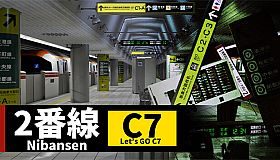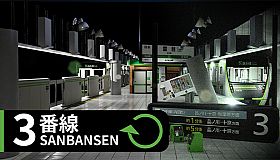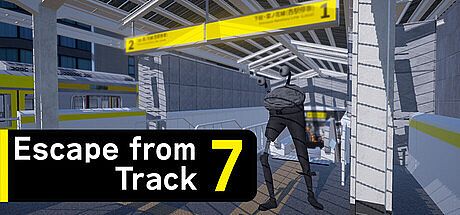


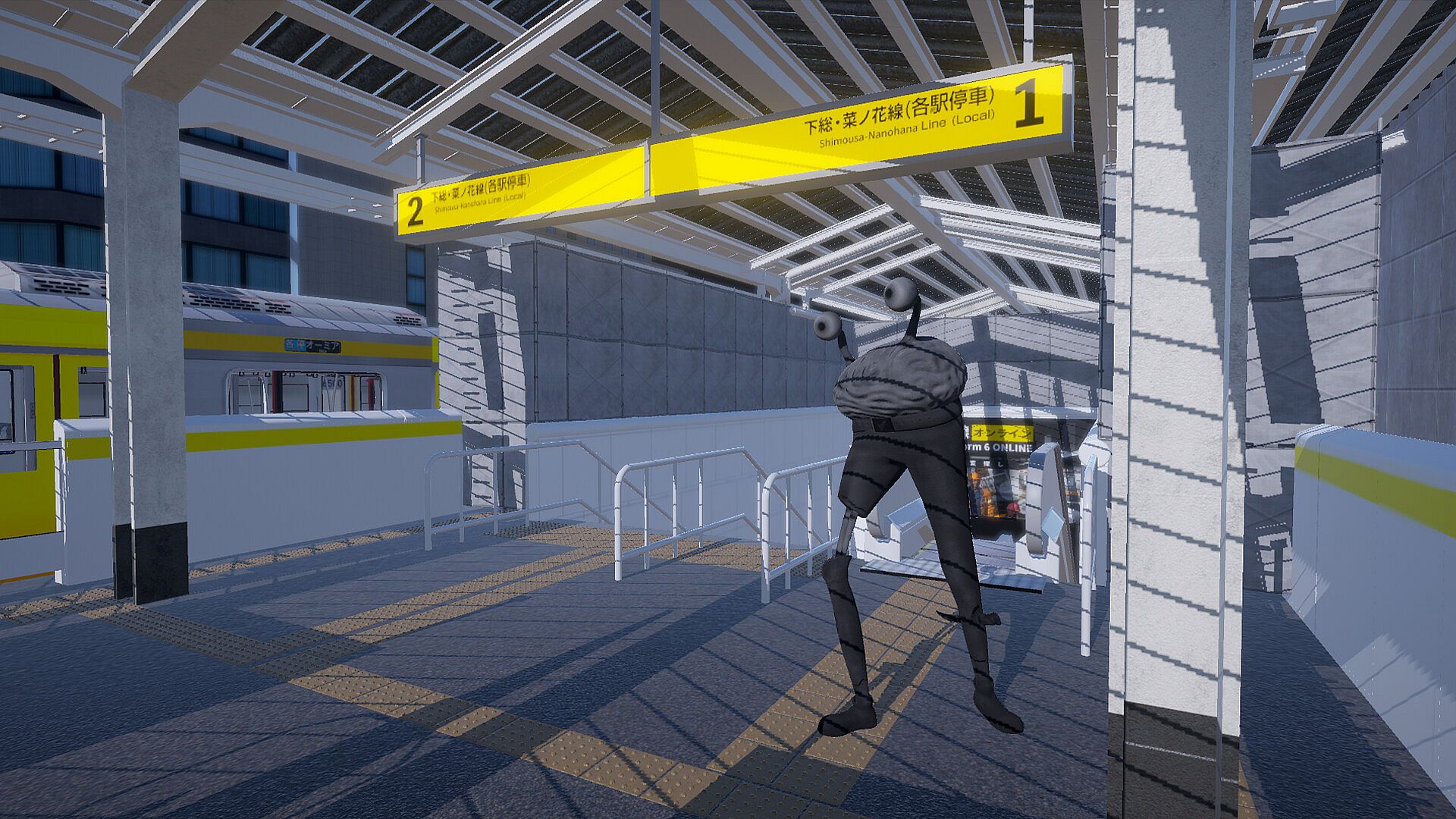
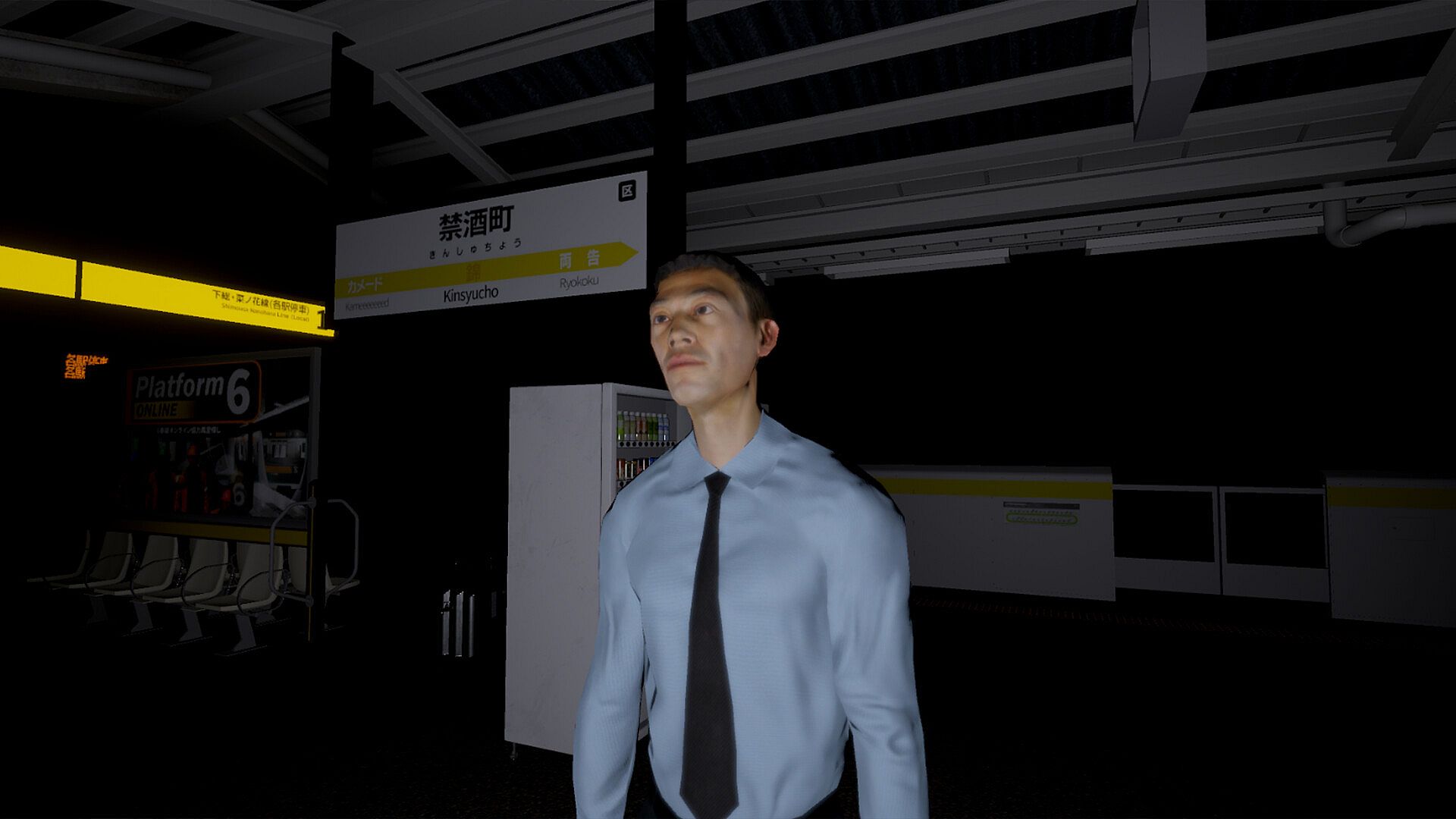

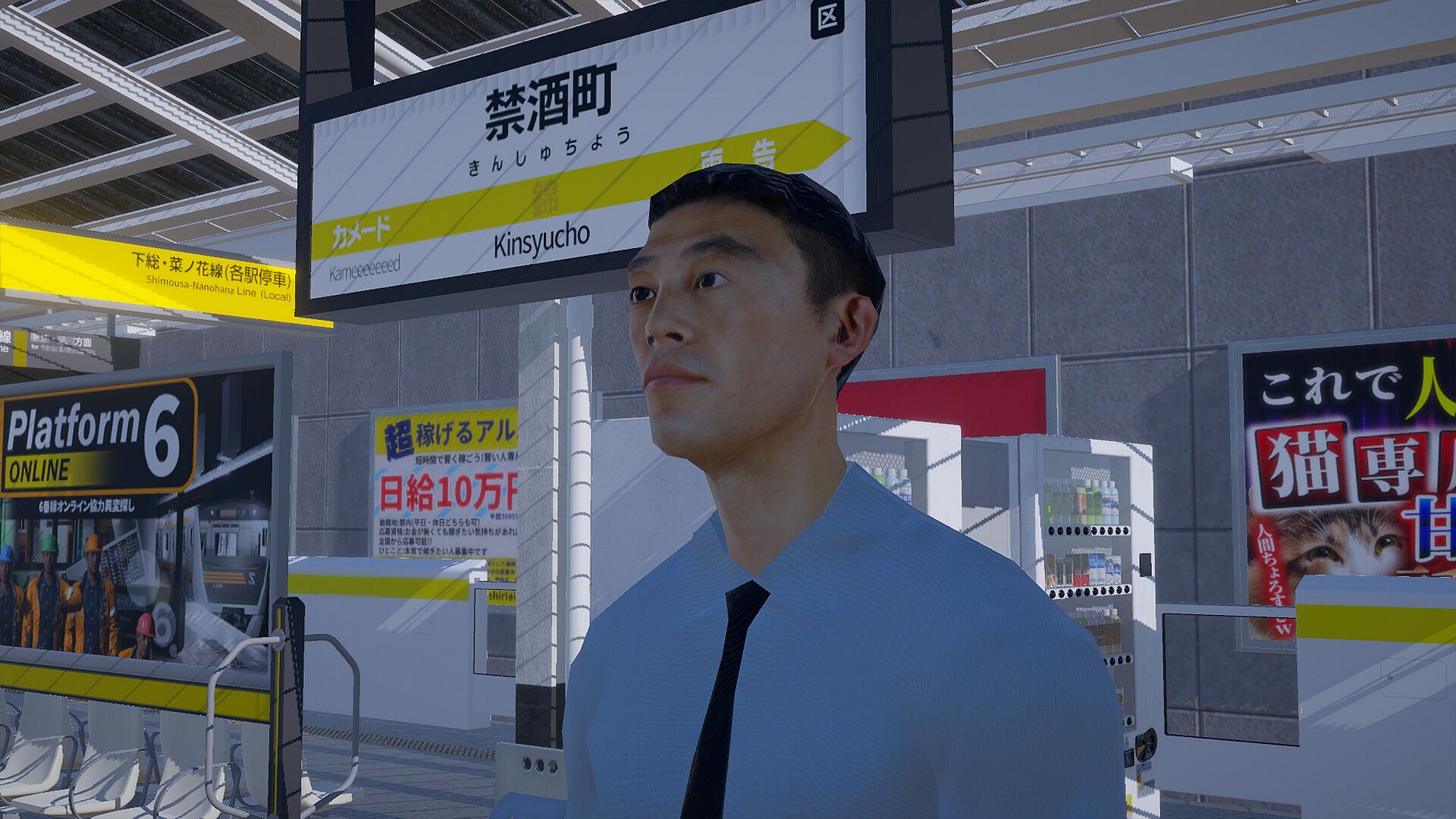
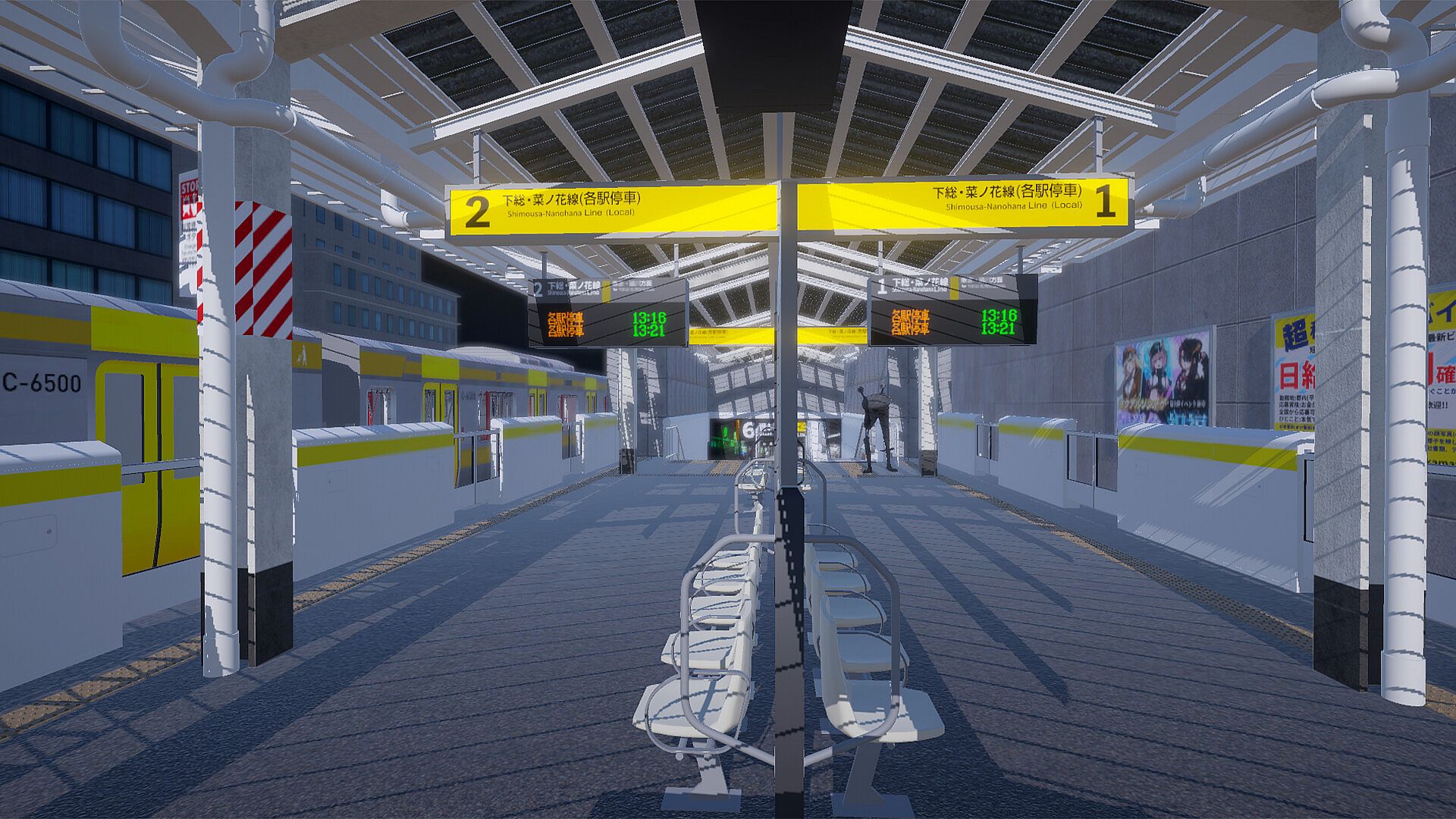



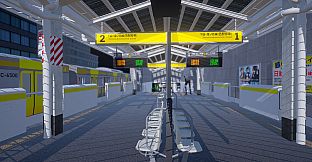
Escape from Track 7 is a single-player anomaly detection game set on a meticulously recreated Japanese railway platform. Players navigate the station after the last train has departed, examining every detail to identify changes that signal danger. The experience blends elements of action, indie, simulation, and adventure genres through observation and decision-making rather than combat or exploration in the traditional sense.
Gameplay
The core loop centers on walking along Track 7 while scanning the environment for anomalies. Signs, timetables, vending machines, and even the stranger behind the yellow line can shift in subtle or obvious ways across repeated attempts. Spotting an anomaly requires an immediate turn back to avoid failure, while the absence of changes allows continued progress toward the exit. A single misjudgment resets the player to the start, emphasizing careful attention over speed.
Controls remain straightforward with options limited to walking, looking around, and making the binary choice to proceed or retreat. The platform itself features rail-fan accurate details including authentic signage, ambient sounds, and operational signals that enhance the sense of place. Sessions typically last between thirty and sixty minutes for a successful escape, though hunting every variation extends the time considerably.
Forty-four distinct anomalies range from barely noticeable alterations to striking elements that stand out immediately. This variety encourages multiple runs as players refine their observational skills and learn to distinguish genuine changes from consistent background elements.
Game Modes
The game operates through a single focused experience built around repeated escape attempts on the station platform. Each run follows the same rules of anomaly detection without additional variations or separate modes. Players progress by correctly identifying safe paths or reversing course when something appears out of place, creating a loop that rewards precision and memory of prior attempts.
Progression comes from familiarity with the station layout and the specific anomalies that appear. There are no branching paths, competitive elements, or alternate objectives beyond reaching the end of Track 7 without error. The structure supports short, repeatable sessions that highlight the tension of each decision point along the platform.
Atmosphere and Presentation
The setting captures the quiet isolation of a small Japanese railway station past midnight. Blank departure boards, closed ticket gates, and the empty platform create an unsettling baseline that makes any deviation feel significant. Sound design reinforces the realism with platform announcements, distant signals, and subtle environmental audio that matches the visual fidelity.
Attention to detail extends to every visible element, from the placement of signs to the operation of signals, giving the location a lived-in quality drawn from real rail infrastructure. This level of accuracy supports the anomaly mechanic by making inconsistencies stand out against an otherwise consistent backdrop.
Is It Worth Playing?
Escape from Track 7 suits players who enjoy observation-based challenges and short, focused sessions rather than extended campaigns or action sequences. The emphasis on spotting differences rewards patience and repeated play without requiring complex inputs or combat skills. Those interested in Japanese railway culture or simulation elements will find the platform recreation particularly engaging.
The game supports streaming well, with brief runs that allow viewers to participate in anomaly hunting. No combat or multiplayer components exist, keeping the focus entirely on individual judgment calls. For anyone drawn to precise, detail-oriented experiences in an indie simulation format, the title delivers a consistent and self-contained challenge built around its core anomaly system.