




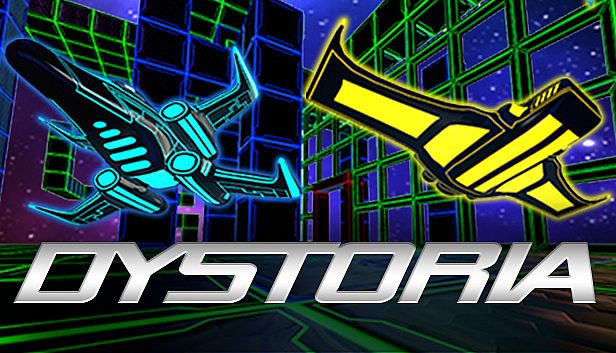















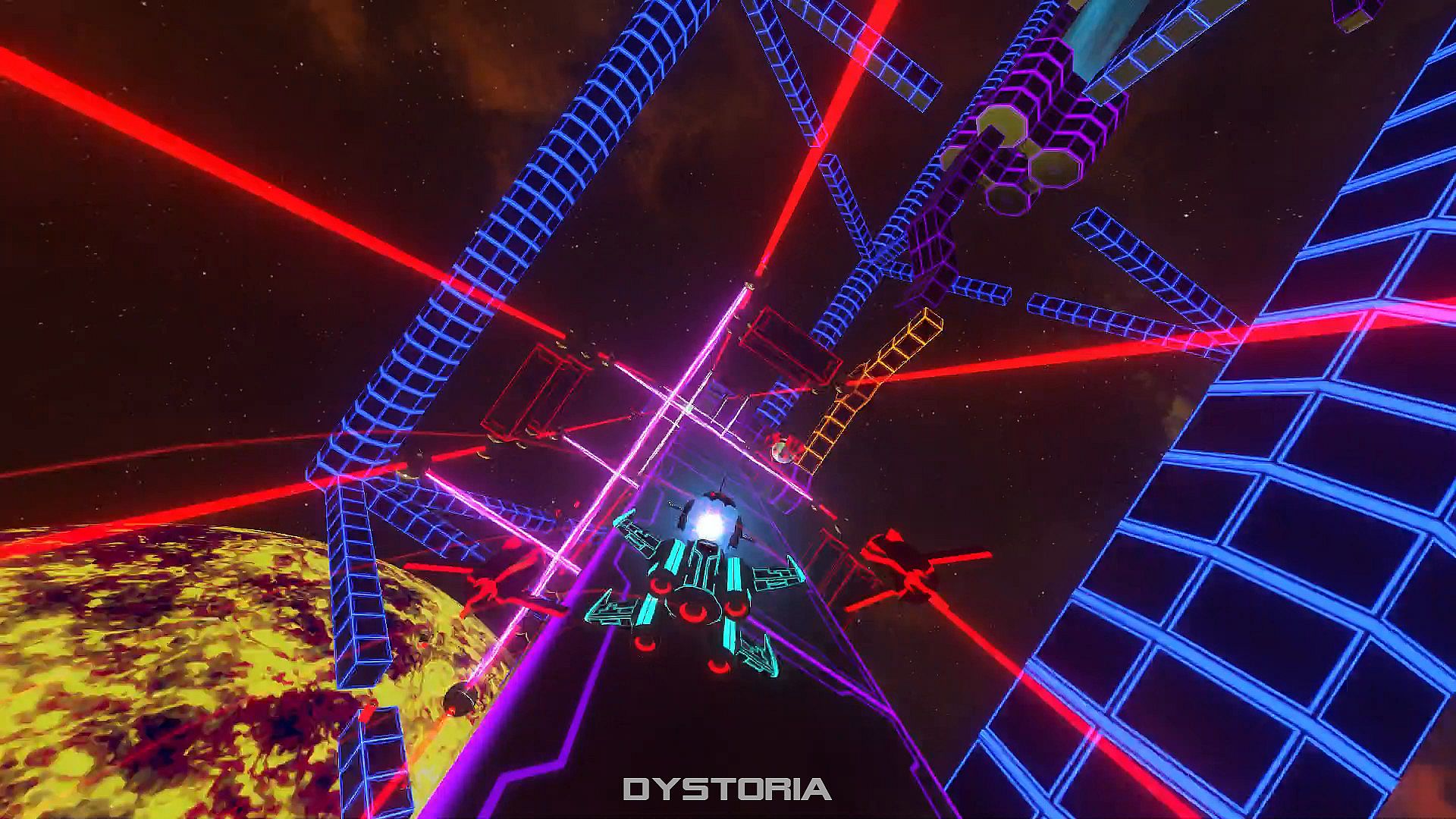
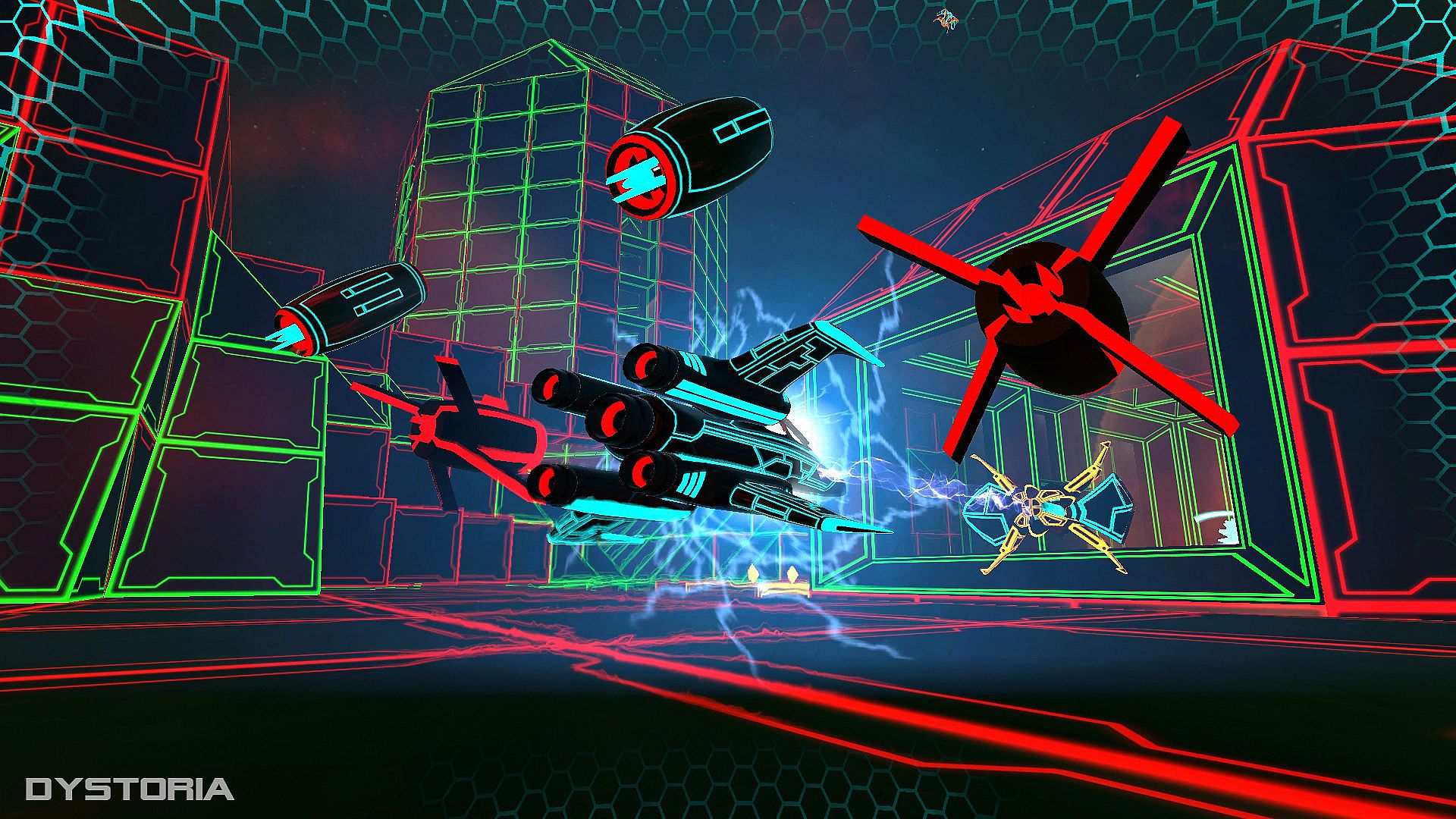
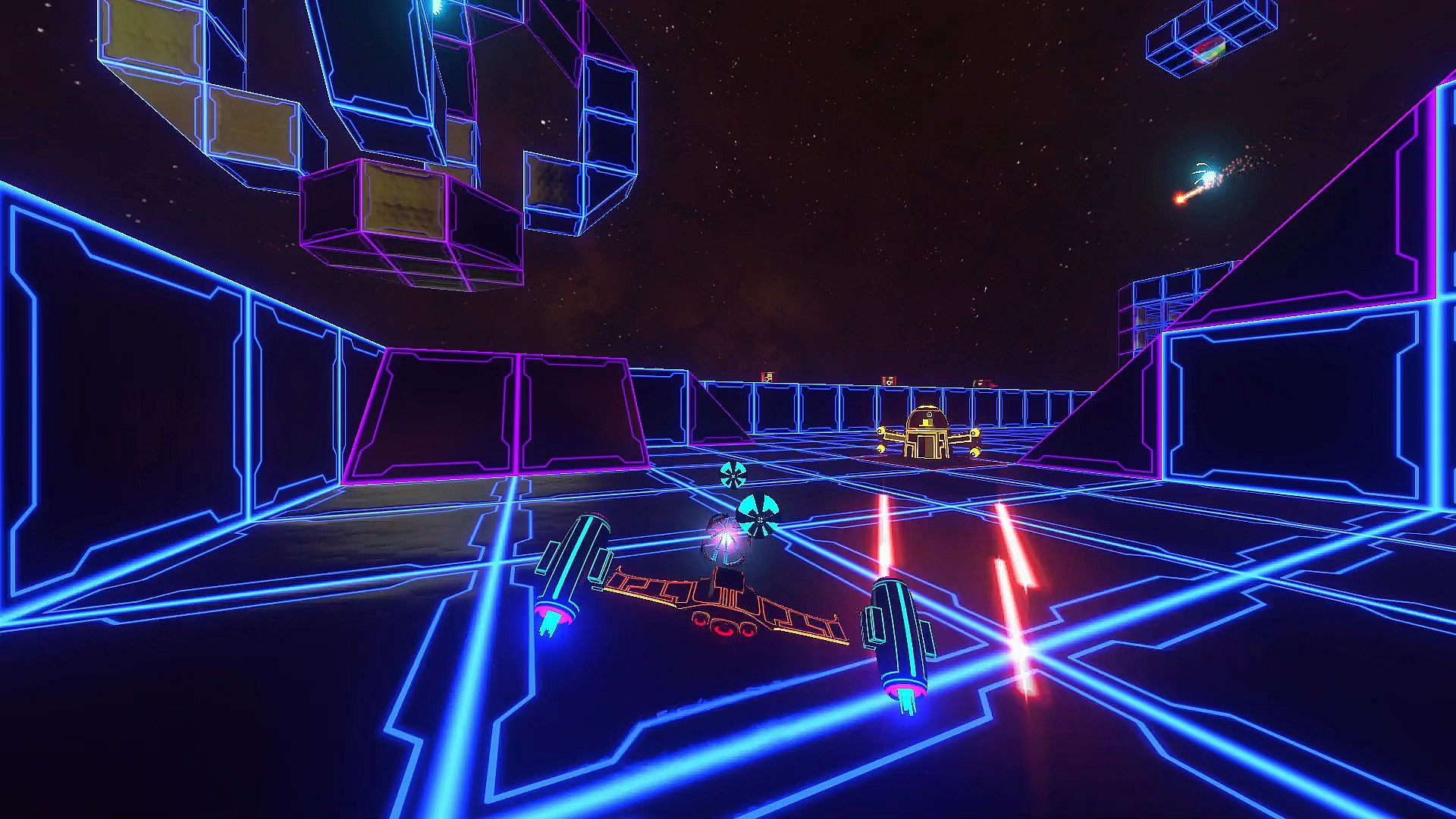
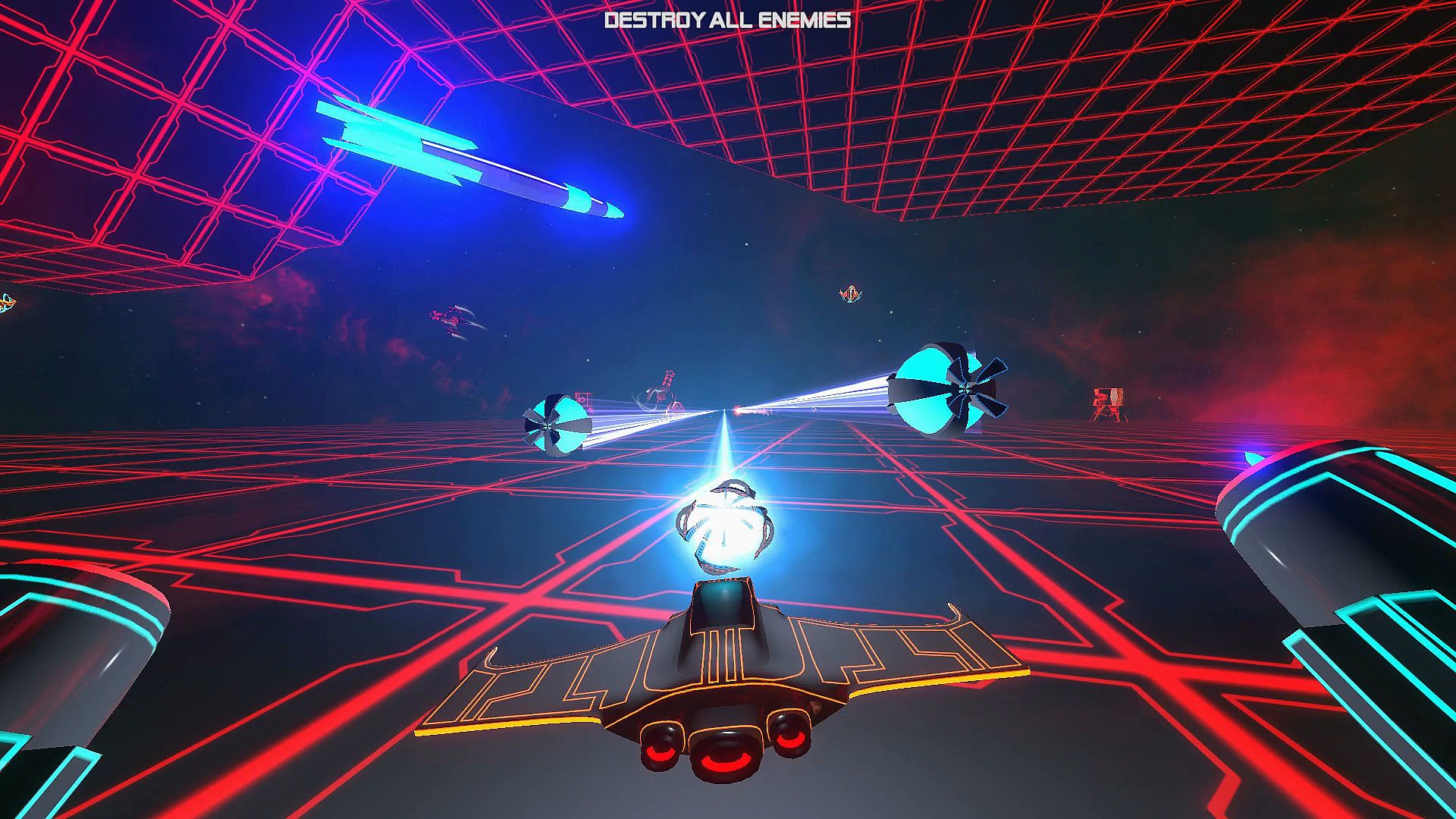
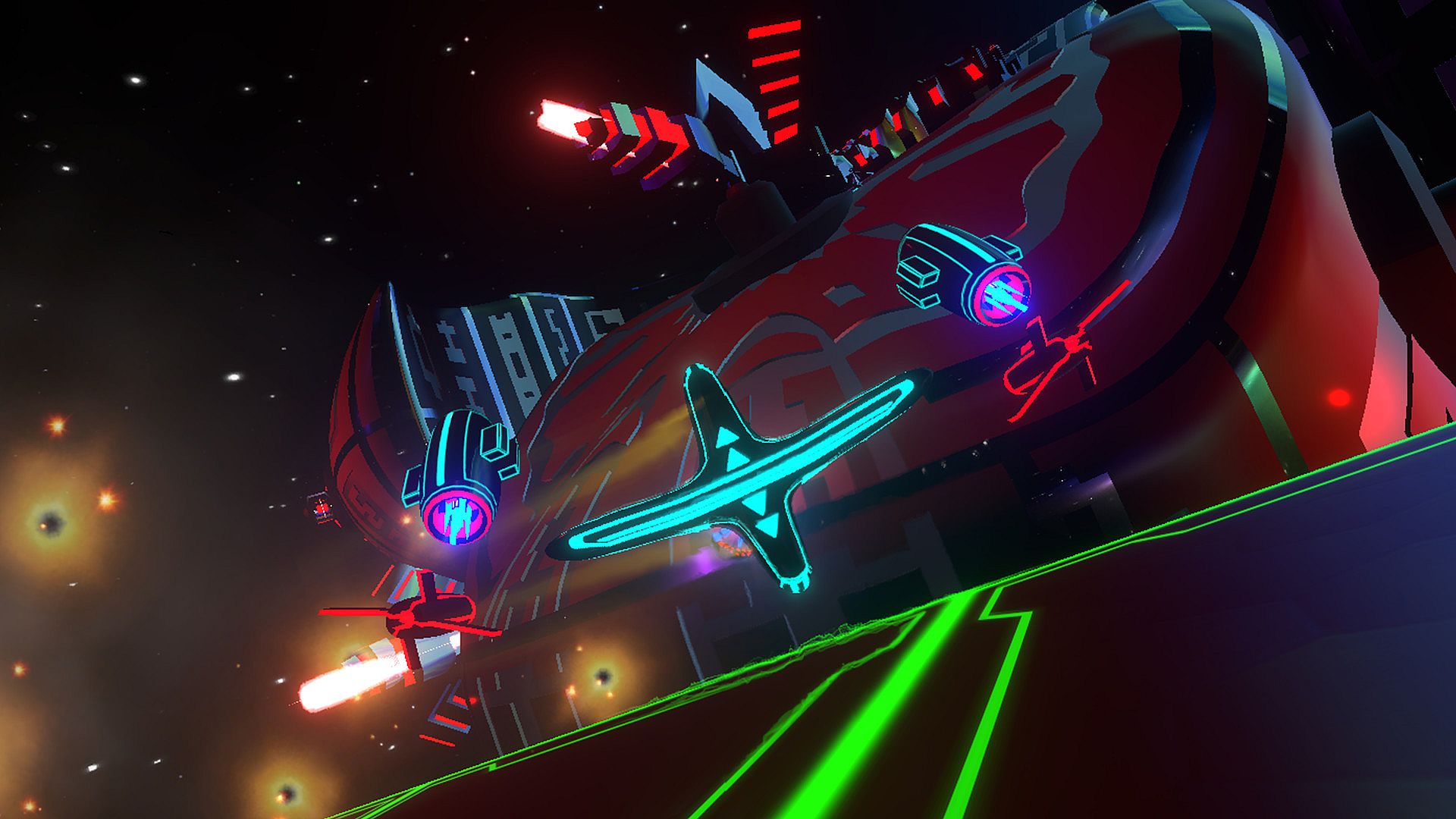
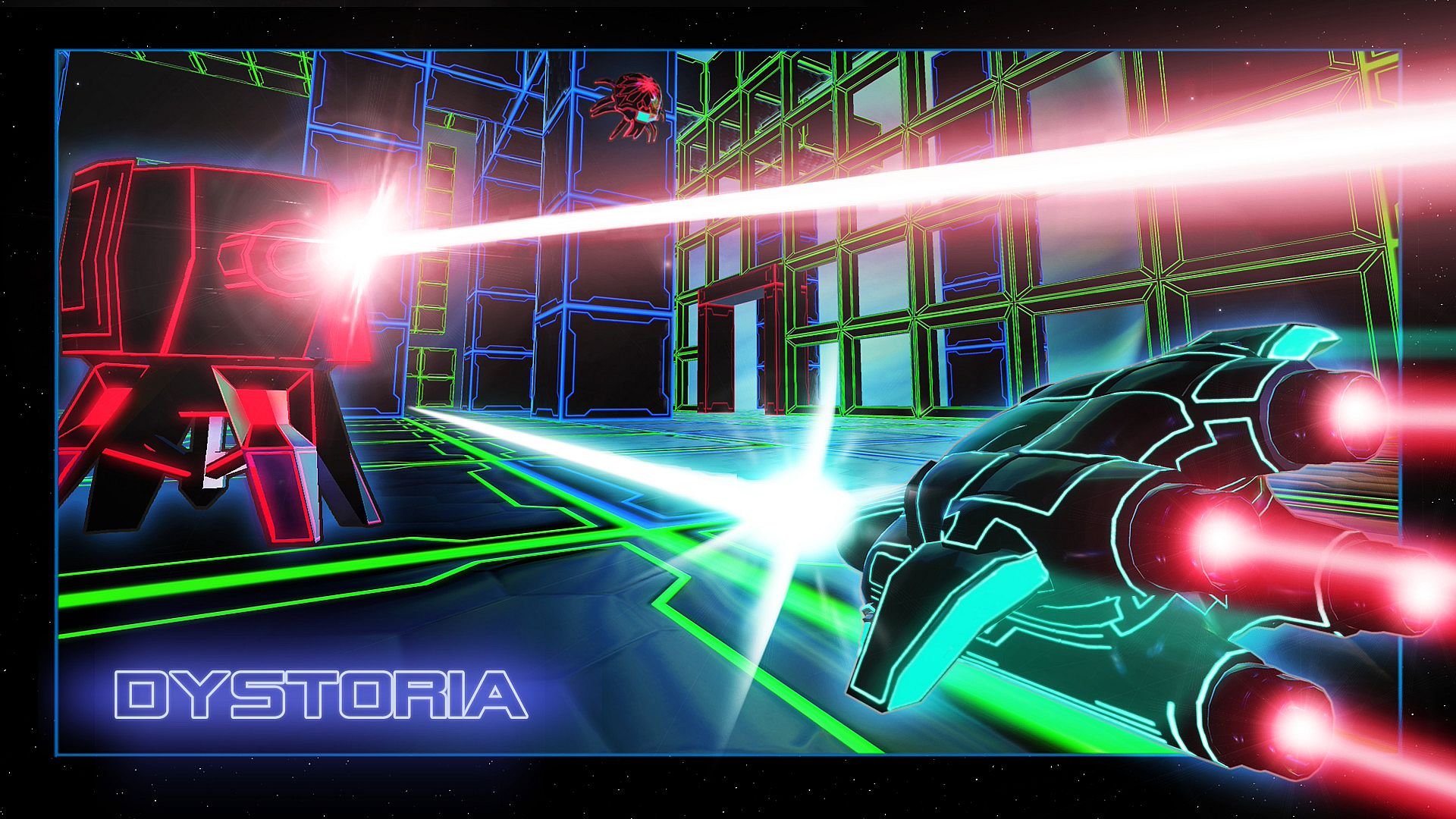
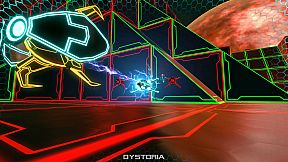
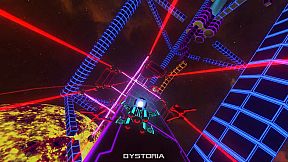
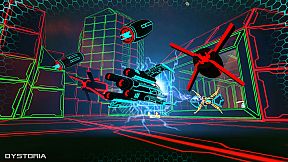
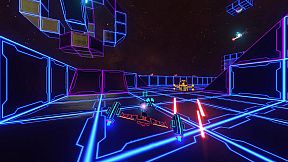
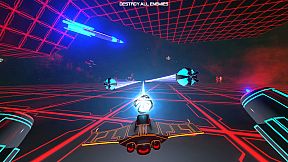
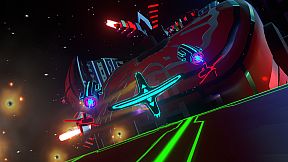
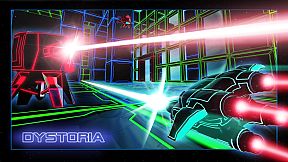
DYSTORIA is a six-axis arcade shooter that blends action, strategy, indie creativity, casual accessibility, and racing elements on PC. Players control a hover ship in zero-gravity environments where movement occurs across every surface and angle in enclosed space labyrinths.
Gameplay
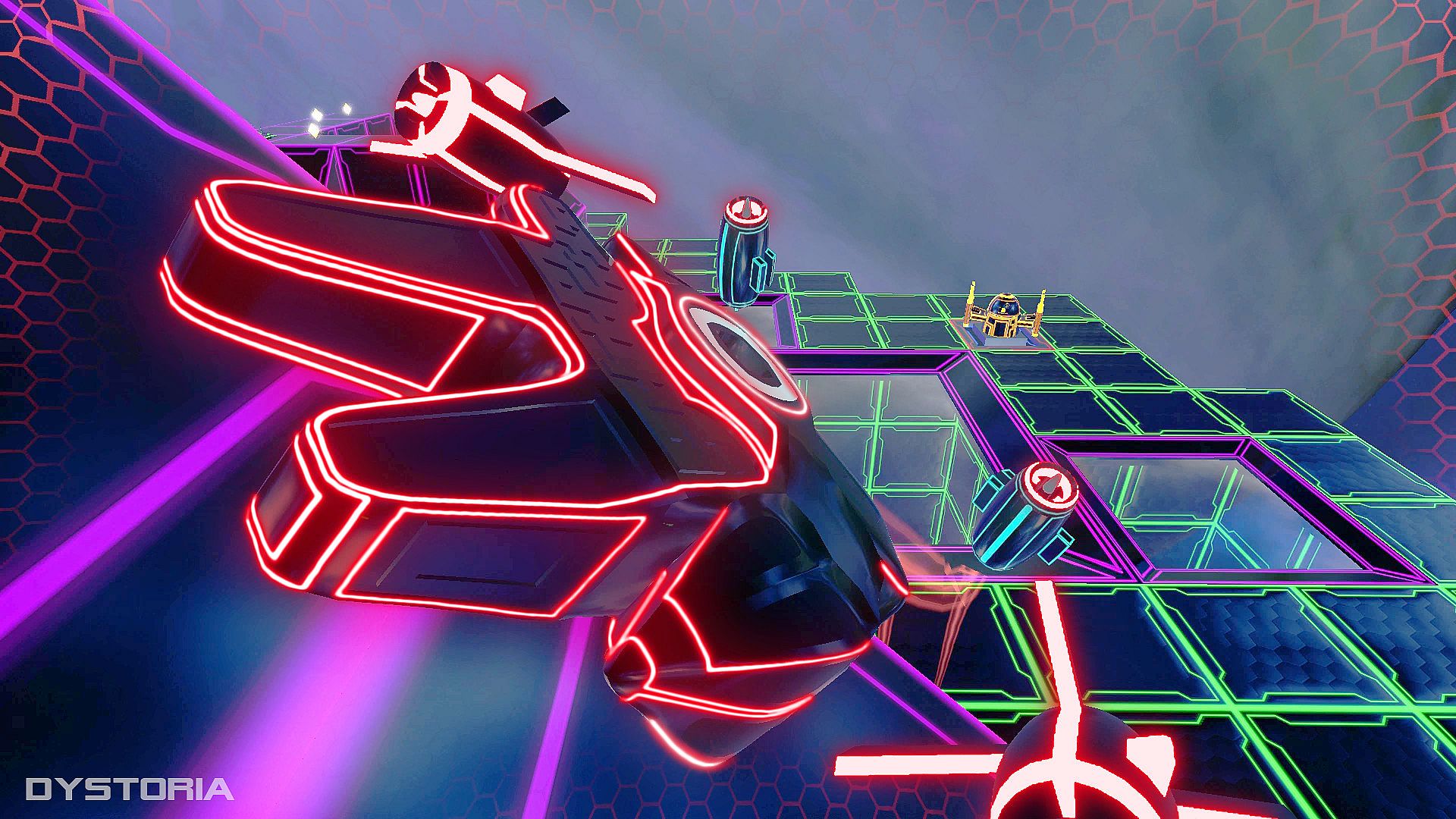
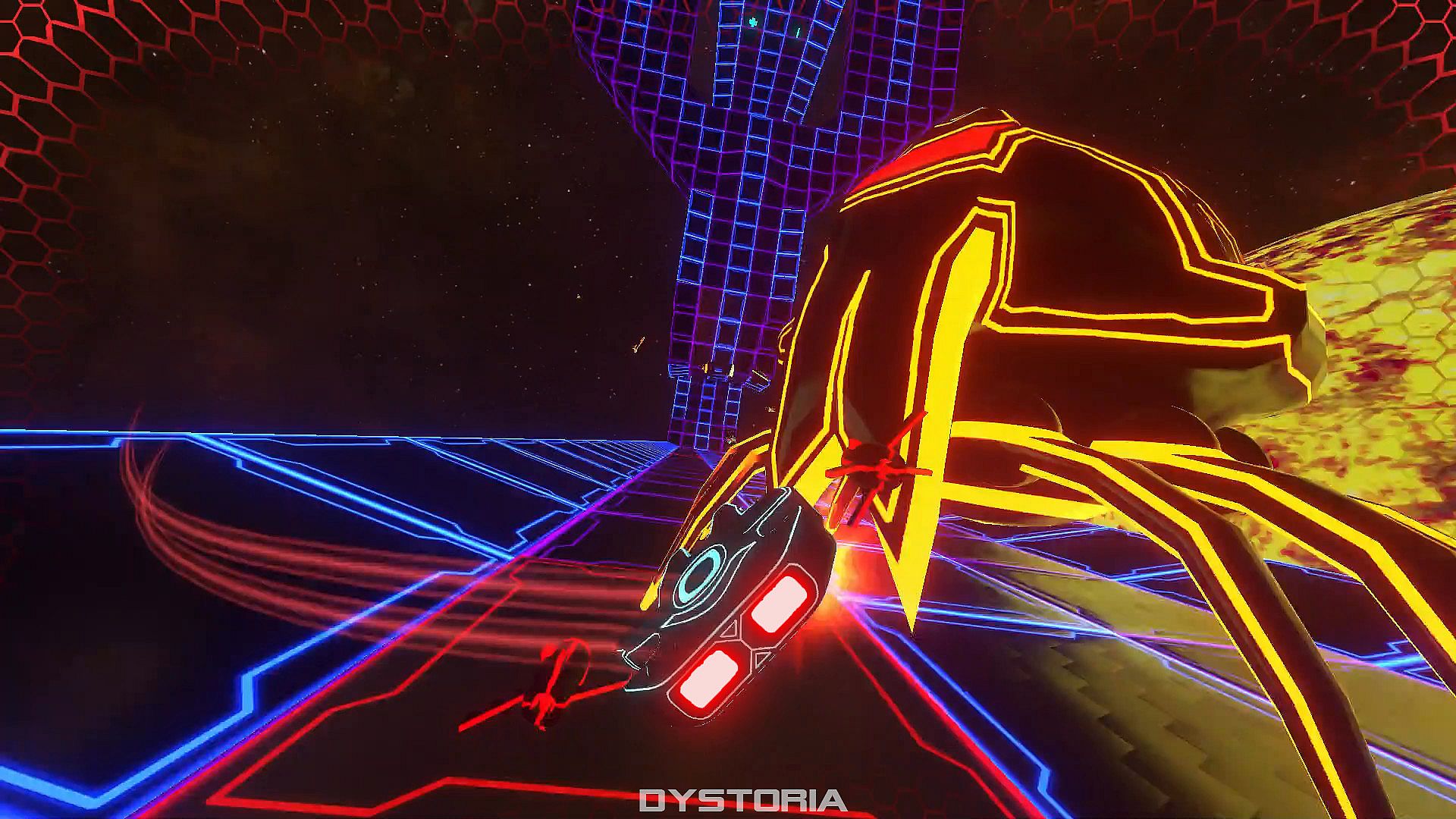
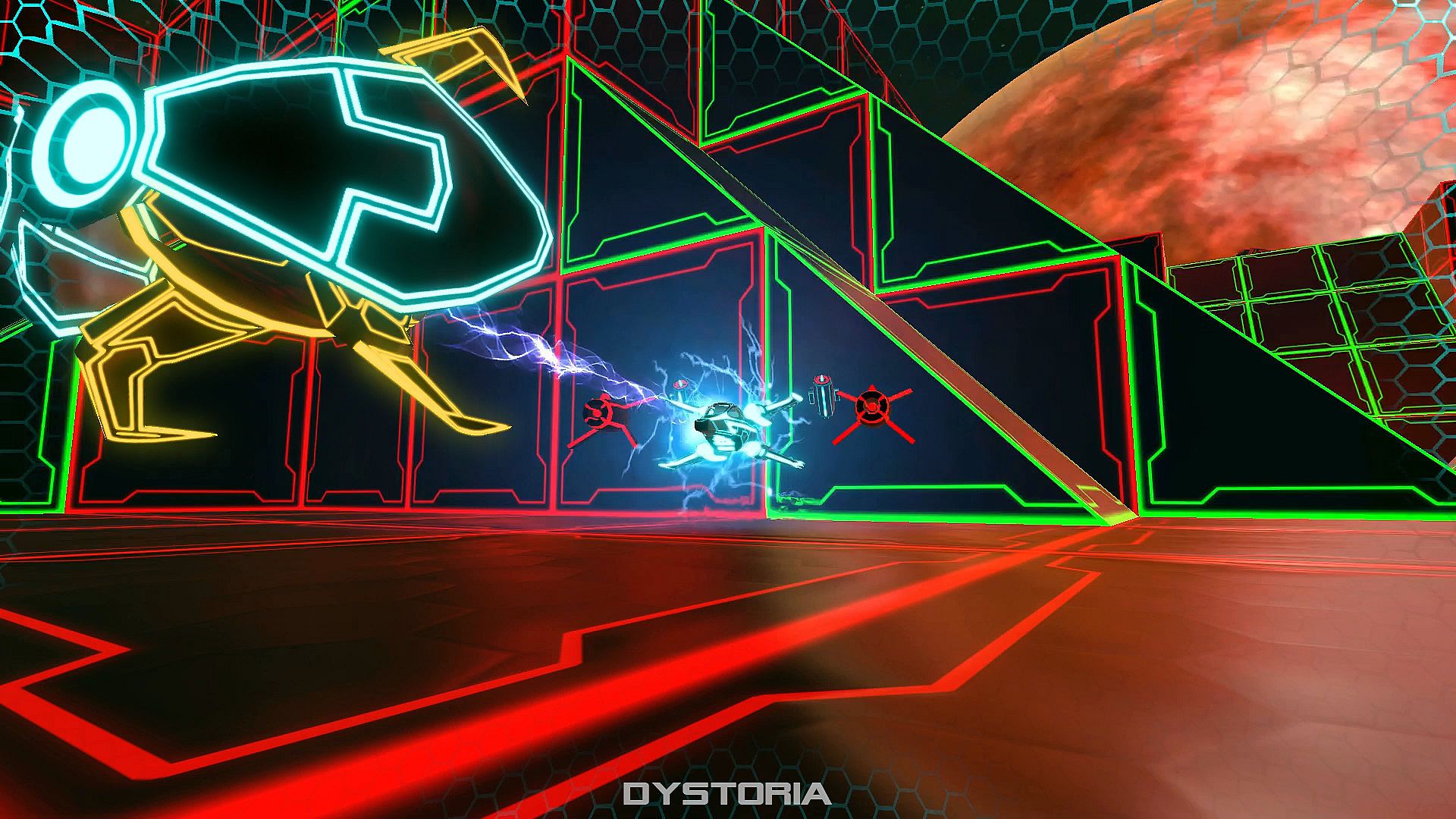
The core loop centers on piloting a ship that adheres to walls, ceilings, and floors while firing at alien crafts. Navigation requires constant adjustment to the six axes of movement, allowing the vessel to flip and skim surfaces without traditional flight constraints. Levels consist of maze-like structures filled with enemies, where progress involves clearing threats and collecting orbs that serve as resources for upgrades.
Ship customization draws from collected parts and orbs found during runs. Different craft options provide distinct profiles in speed, maneuverability, and shielding, encouraging players to adapt loadouts as challenges intensify. Enemy encounters mix direct shooting with evasion, while level geometry introduces navigation puzzles that demand precise pathing through increasingly complex layouts. The visual style features neon grids and synthwave-inspired backdrops that reinforce the retro-futuristic setting without distracting from the action.
Game Modes
DYSTORIA operates as a single-player arcade experience built around sequential levels. Each stage escalates in difficulty through denser enemy placements and more intricate spatial puzzles. Progression ties directly to performance in clearing labyrinth sections, with orb collection feeding into ship improvements that carry forward. No separate competitive or cooperative modes exist; the focus remains on mastering the six-axis controls and optimizing upgrades across the campaign structure.
Boss encounters appear at key points to test accumulated skills in larger arenas. The absence of branching paths or alternative modes keeps the emphasis on repeated attempts to refine routes and combat efficiency within the fixed level sequence.
Visuals and Atmosphere
The presentation captures a retro-future aesthetic with pulsating neon elements against dark grid backgrounds. Sound design incorporates electronic beats that align with the synthwave theme, providing rhythmic feedback during intense maneuvering sequences. Level design prioritizes spatial variety, using enclosed volumes to highlight the wall-crawling mechanic rather than open-space flight.
Is It Worth Playing?
Player reception stands at 90 percent positive across the available user reviews on its platform. The game delivers a focused arcade challenge suited to those who enjoy precise control schemes and incremental upgrades in a compact package. Its 2017 release means no ongoing seasonal content or major post-launch expansions, yet the core systems remain intact for new players seeking a niche six-axis shooter. Individuals drawn to strategy-infused shooting with puzzle navigation will find consistent engagement across its levels, while those preferring expansive multiplayer or frequent updates may look elsewhere. Availability on PC keeps it accessible for targeted play sessions.














