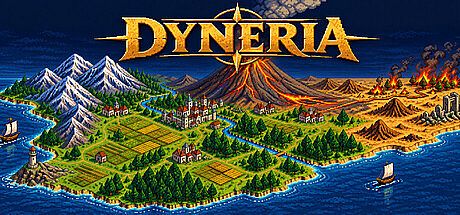


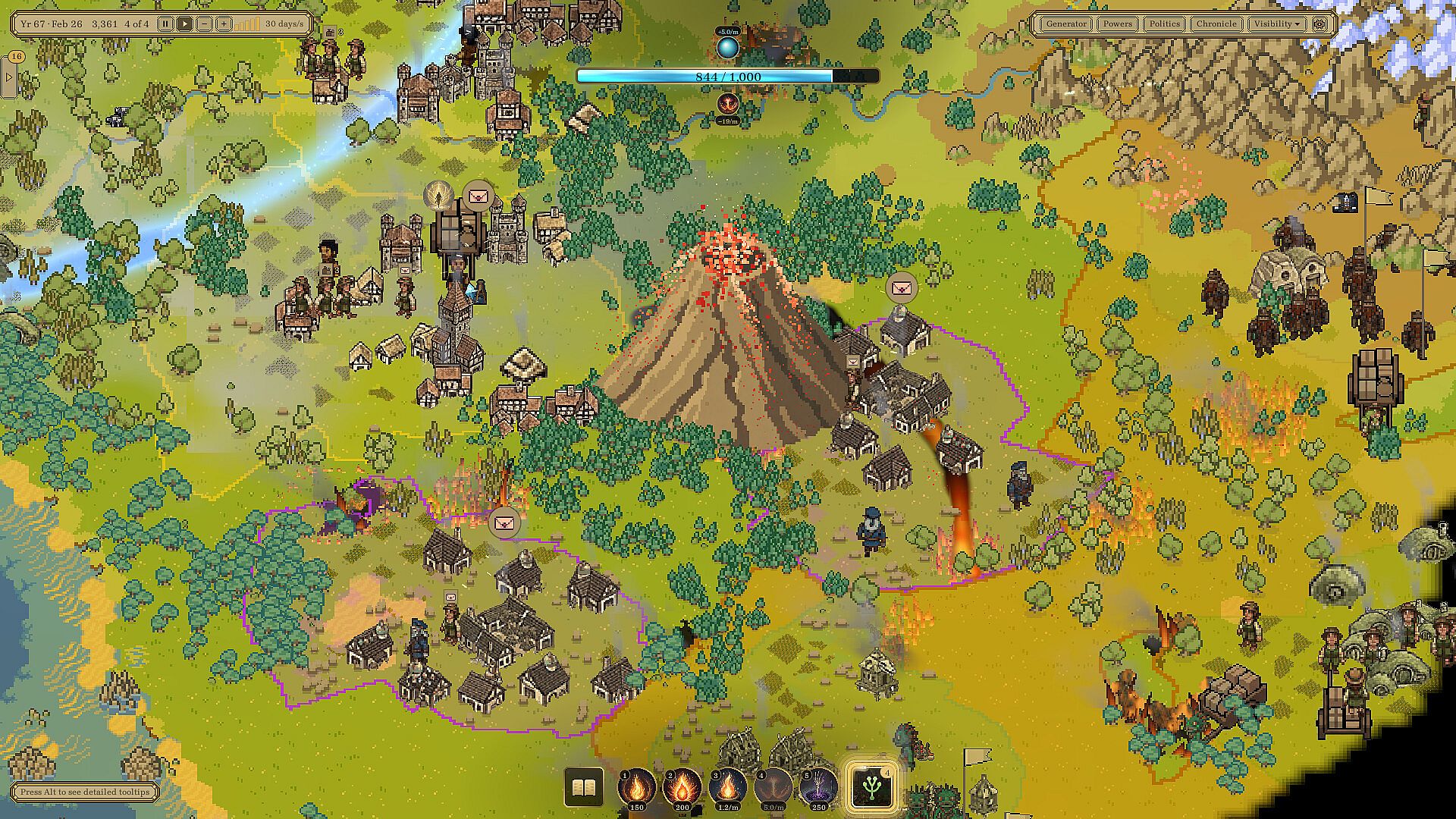
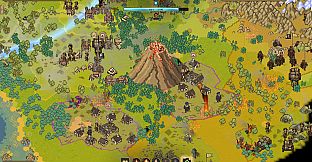
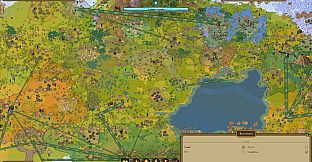
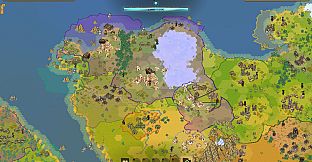
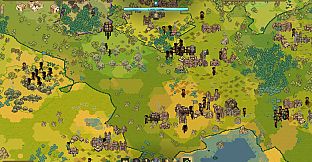
Dyneria is a single-player simulation game set on PC that builds an entire fantasy world from its climate and geography outward. Players act as a growing god who can influence weather, terrain, resources, and societies across a map that evolves on its own through seasons and cause-and-effect systems.
Gameplay
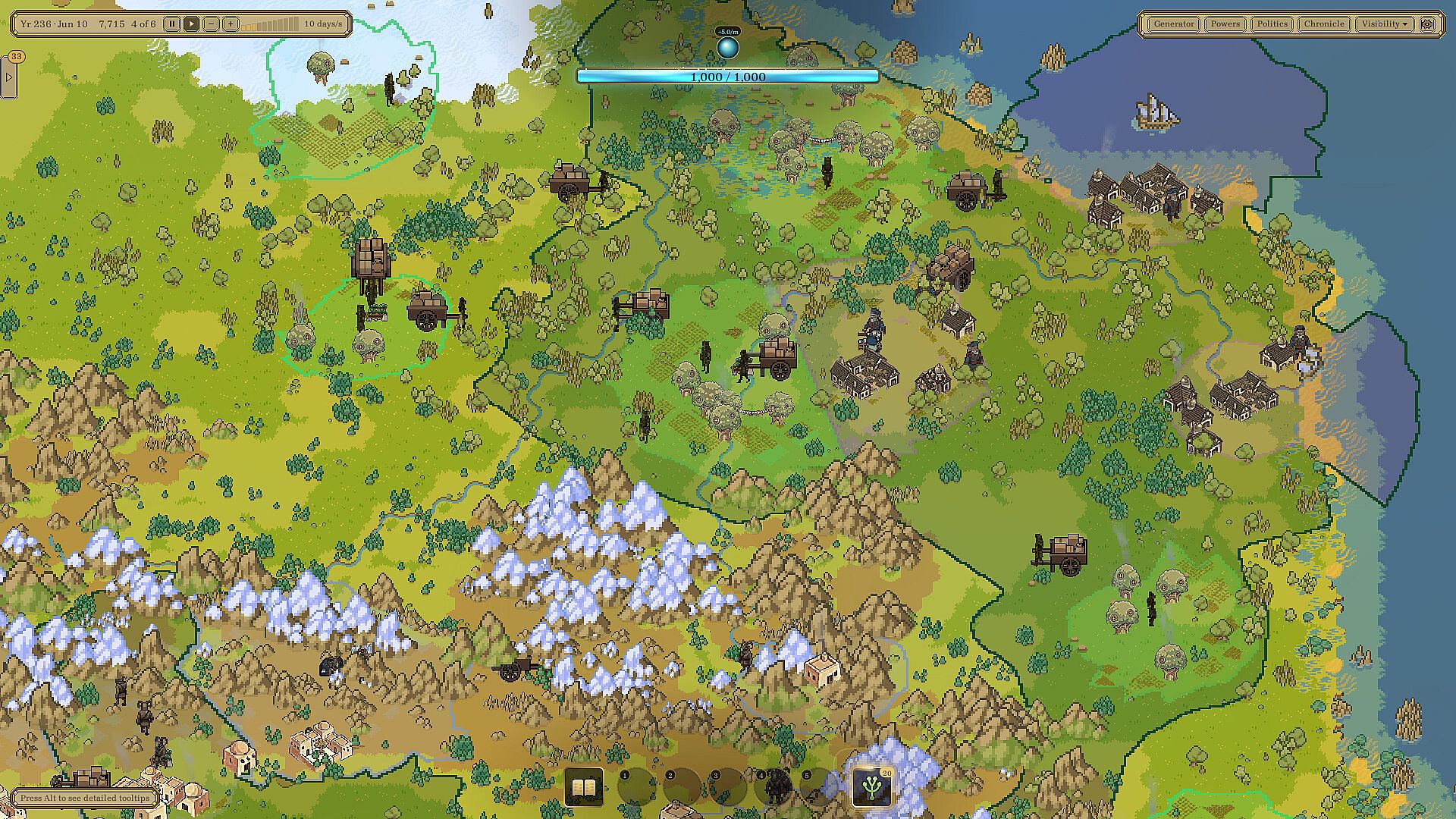
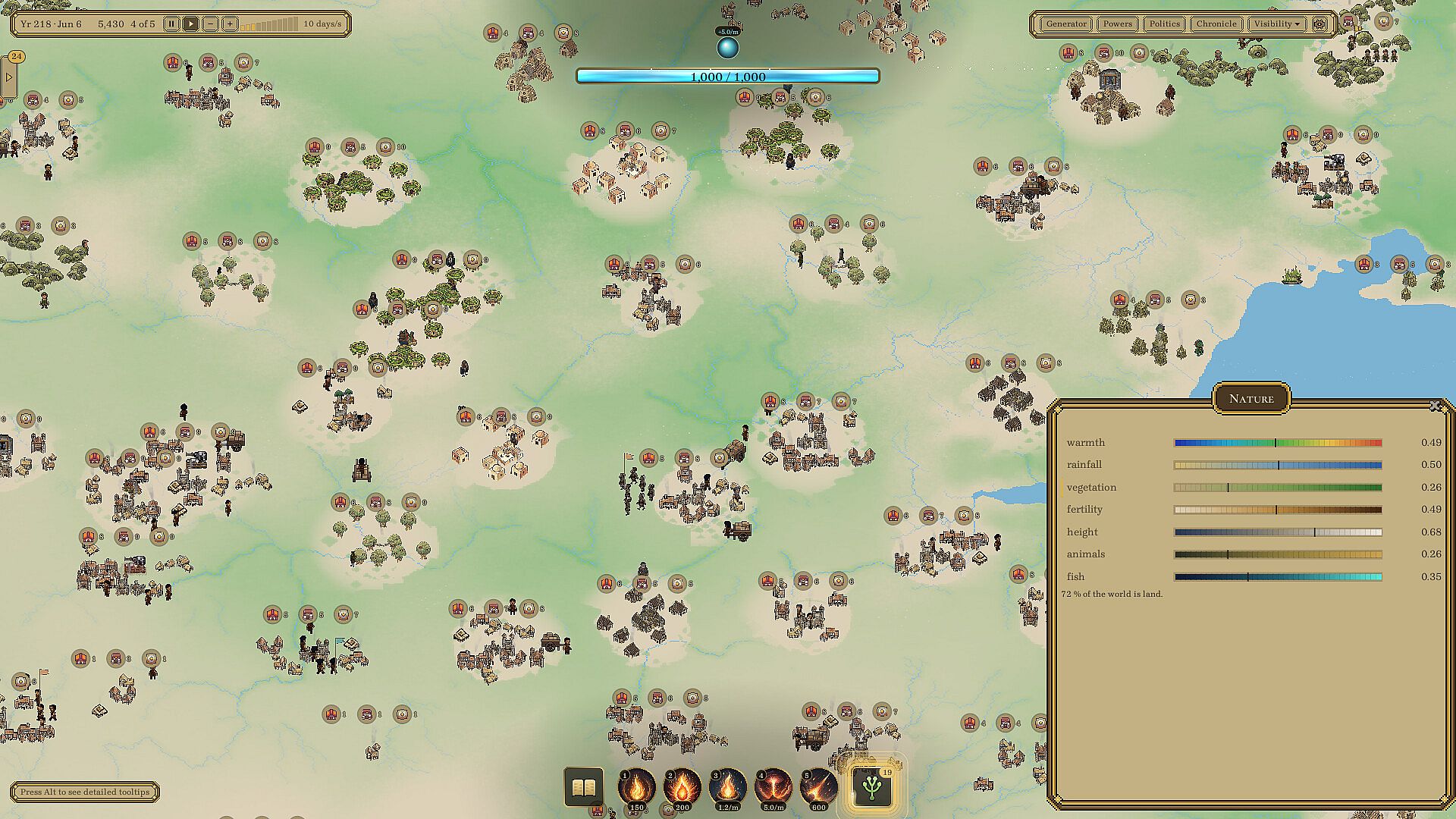
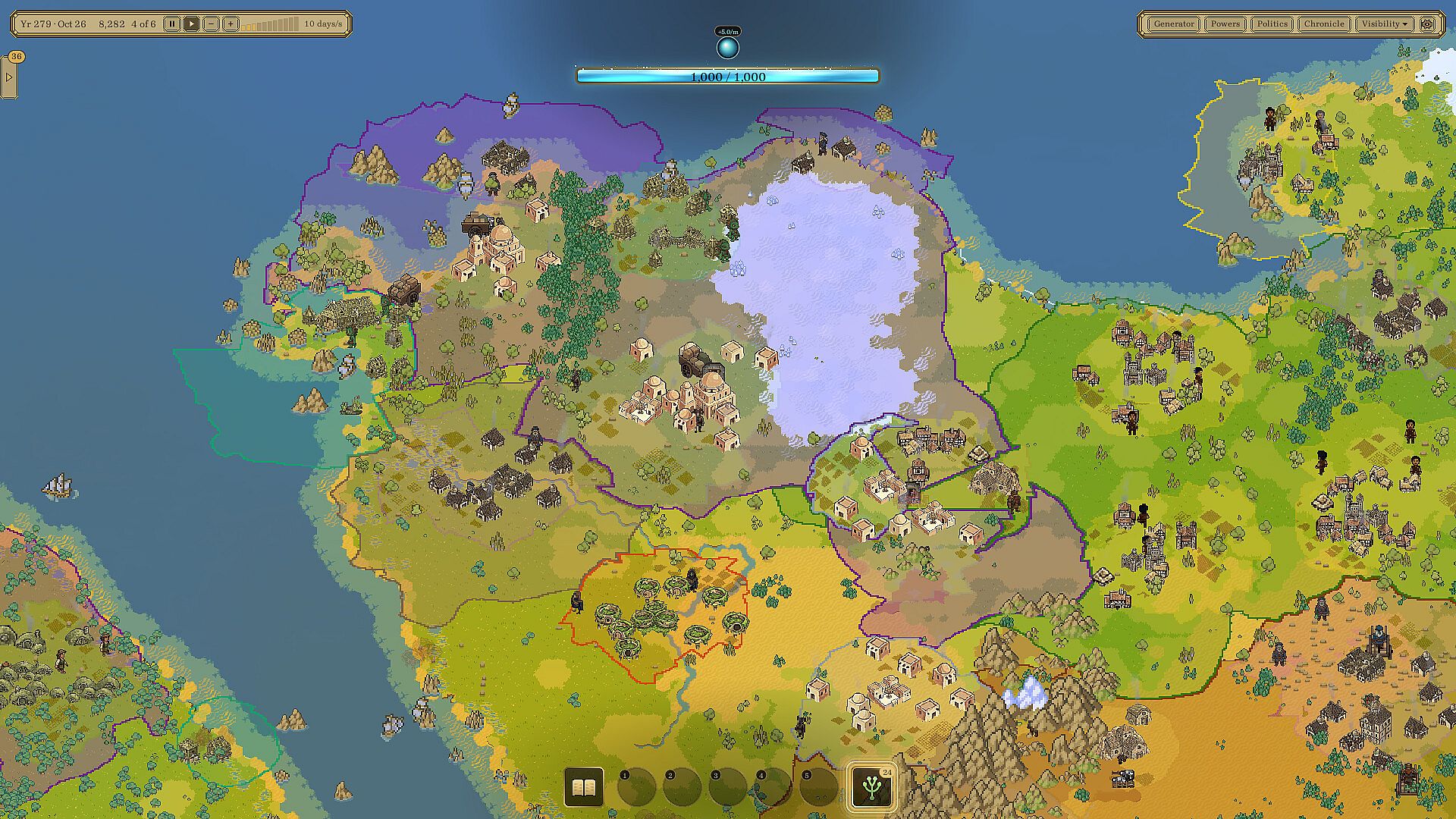
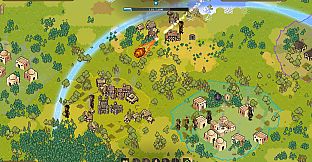
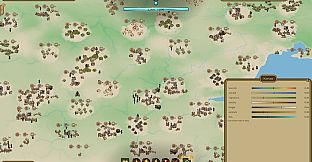
The core loop centers on observing and shaping a self-running world where temperature, moisture, and wind patterns drive rivers, forests, and deserts into existence. Settlements form naturally where food and water allow, and the eight races expand or migrate based on what the land provides. Nothing appears from random tables; every conflict or alliance traces back to supply shortages, resource competition, or population pressures.
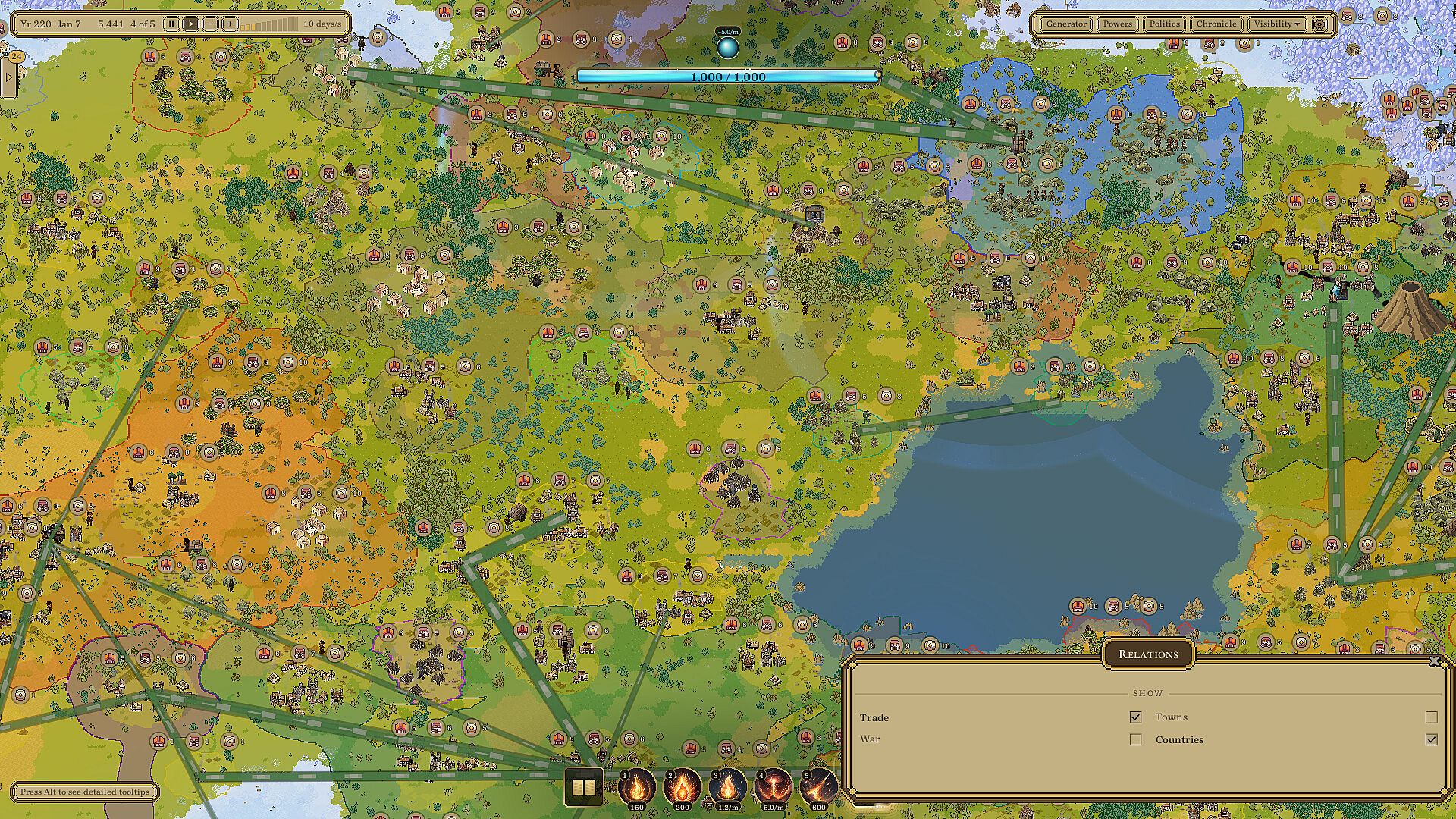
Supply chains form the heart of interactions. Races such as the Dwarfs require specific goods like whiskey that only grow in cold regions, while others seek rare materials like mithril. Towns trade or refuse requests, and repeated refusals build grudges that can escalate into wars. Limited iron deposits create strategic hotspots, as the first group to secure them gains better-equipped armies. Armies themselves draw from real villages and consume actual stored food, so prolonged fighting can starve the very forces involved.
Player intervention grows over time. Godly power increases with the years, unlocking aspects across five domains that let you alter the simulation at different scales. These changes ripple outward because the underlying systems respond consistently to every input.
Game Modes
Campaigns provide structured play sessions built around preset worlds and narrative situations. Each campaign presents a specific scenario, such as a Mirekin invasion of a swamp region or a Ravari tribe pressuring a lone Woodelf settlement. A third example involves rumors of an orc incursion threatening the broader map. Every campaign supports play from either side of the conflict, allowing different perspectives on the same events.
Outside campaigns the simulation runs freely, letting players experiment with long-term changes to climate, race development, or political structures without a fixed story goal. The map itself serves as the primary mode of engagement, with emergent events arising from the interplay of resources, migrations, and godly actions.
Races and Emergent Societies
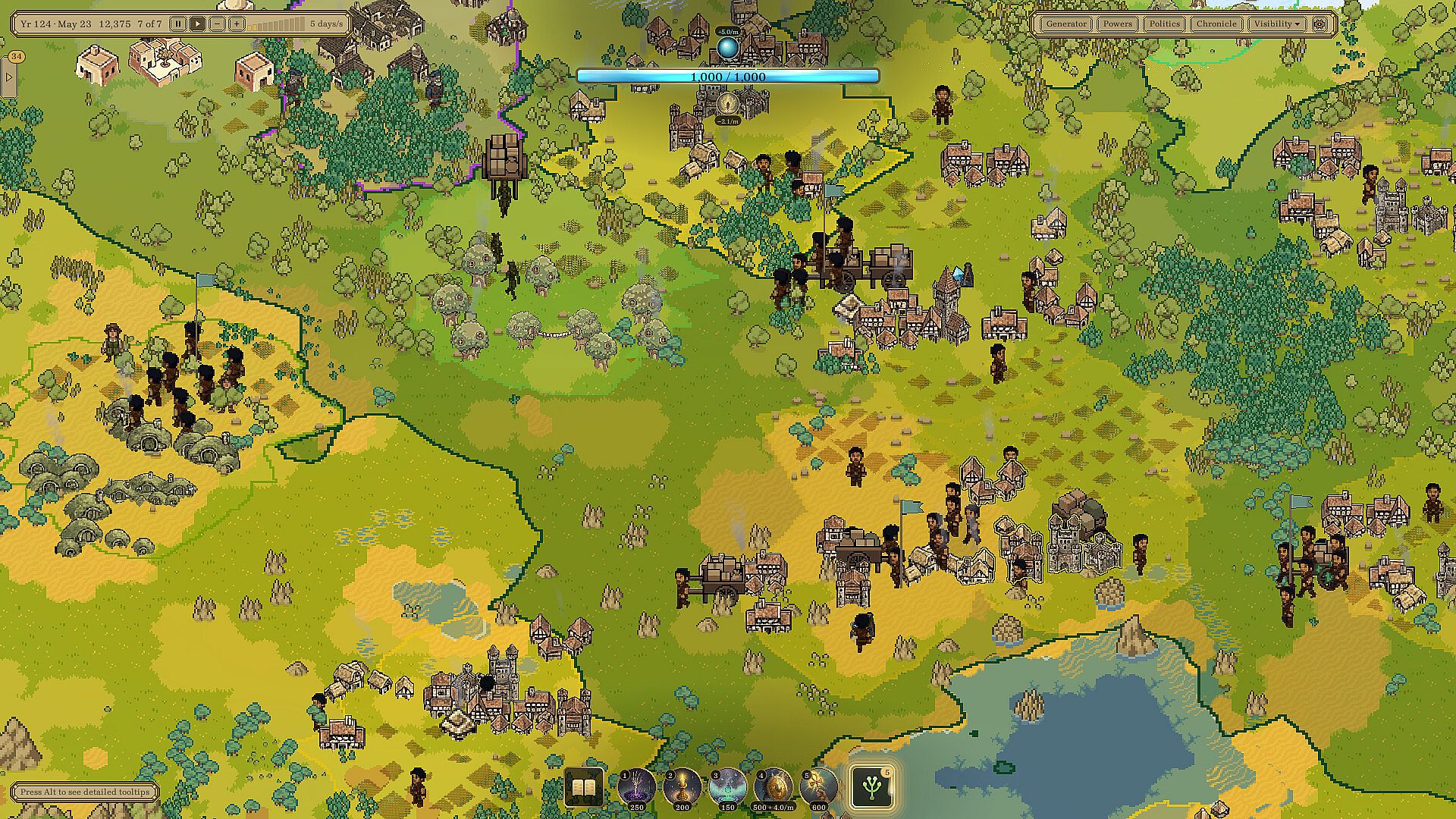
Eight distinct races populate the world, each with unique building styles and survival needs. Dwarfs excavate mountain strongholds yet struggle to sustain themselves locally. Ravari construct canopy nests and raid settlements below. Mirekin exhaust coastal fishing grounds before shifting along the shoreline. Woodelves and other groups follow similar patterns tied to terrain and available resources.
These societies interact through trade, diplomacy, and warfare driven by genuine shortages rather than scripted triggers. A town controlling scarce iron can leverage its position for alliances or become a target for conquest. Propaganda, debt, and political maneuvering add further layers as players install leaders or spread influence through the religion domain.
Godly Powers and Long-Term Influence
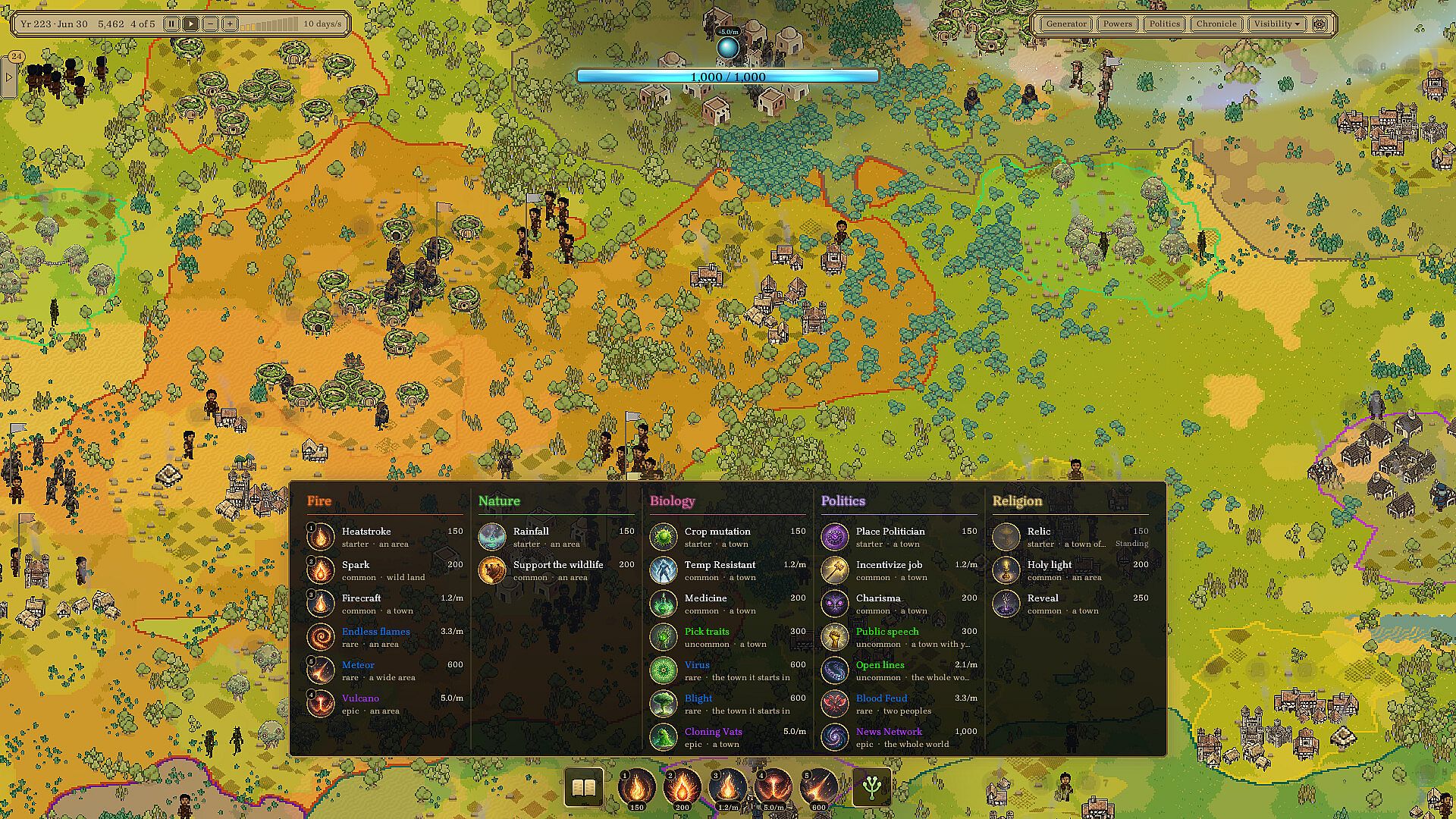
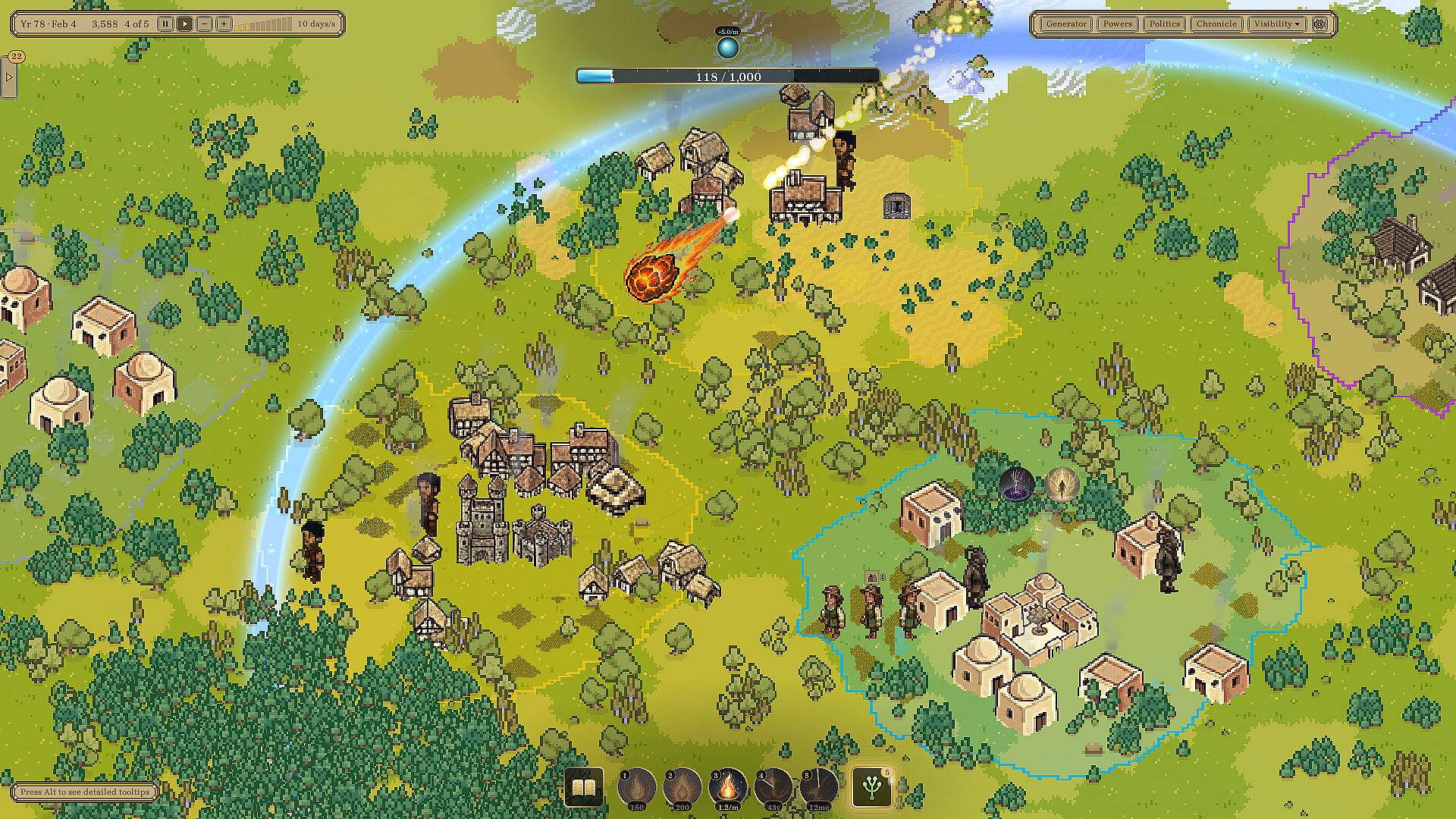
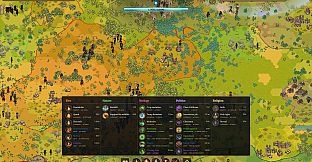
Power grows steadily, opening access to over fifty spells distributed across Fire, Nature, Religion, Biology, and Politics. Fire allows ignition of wildfires, meteor strikes, or industrial boosts to favored settlements. Nature covers weather control, forest growth, or swarms that move independently. Religion spreads belief across borders to generate passive power. Biology introduces genetic changes, mutations, or diseases. Politics lets players install compliant leaders, foster rivalries, or call in favors from indebted villages.
Each domain encourages different play styles, from direct environmental disasters to subtle social engineering. Because the simulation tracks every variable, a single well-placed change can cascade into new trade routes, migrations, or large-scale conflicts years later.
Is It Worth Playing?
Dyneria targets players who enjoy god games and detailed simulations where small actions produce large, traceable consequences. The emphasis on supply-driven politics and unscripted world evolution rewards patient observation and creative use of the five power domains. Campaigns add focused stories that can be approached from opposing sides, while open simulation supports extended experimentation.
Since the game remains in development with a coming-soon release date and no user reviews available yet, prospective players should watch for launch performance and any post-release patches. Those drawn to emergent storytelling, resource management, and god-like intervention in a living fantasy setting will find the described systems align closely with that preference. Others seeking fast-paced action or heavily scripted narratives may prefer different genres.