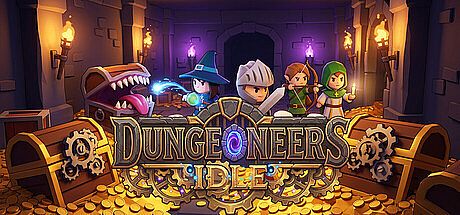





Dungeoneers Idle is a singleplayer idle strategy RPG that focuses on party building and long-term progression rather than direct control during combat. Players assemble teams from twelve hero classes and manage their skills and equipment before sending them into procedurally generated dungeons where fights resolve automatically. The game emphasizes decisions about team composition, loadouts, and resets over moment-to-moment action, with real offline progress that continues while the application is closed.
Gameplay
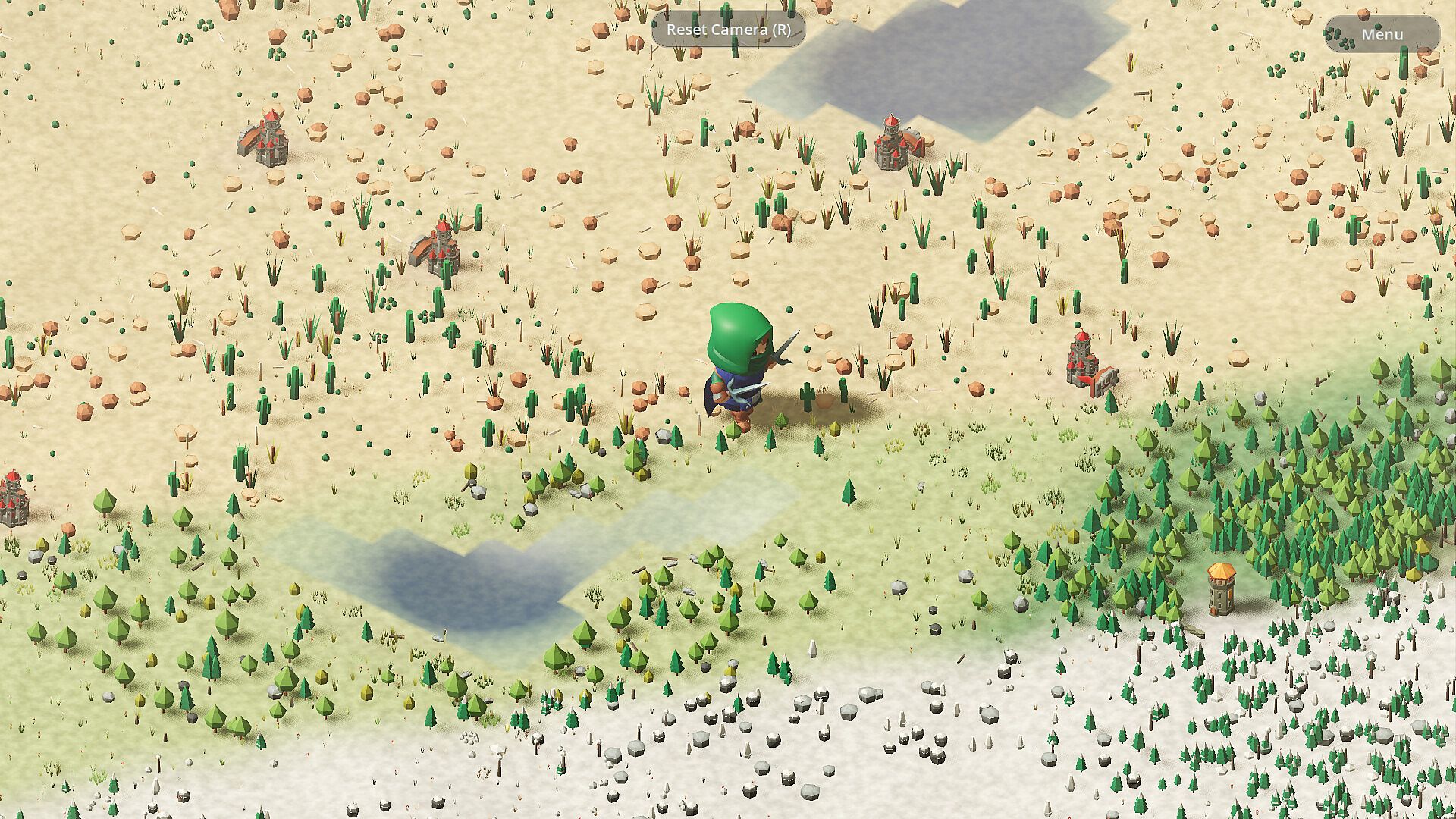
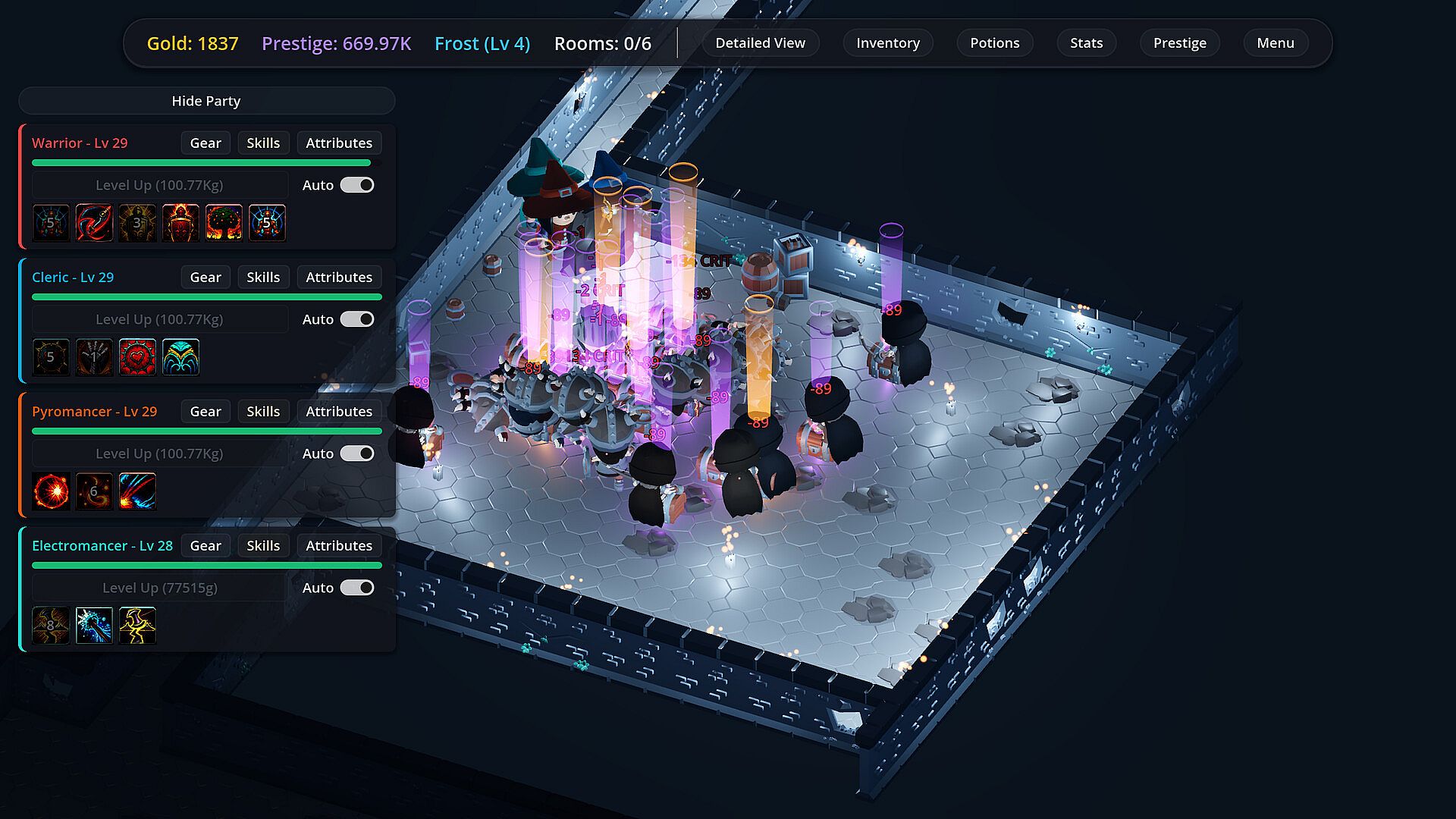
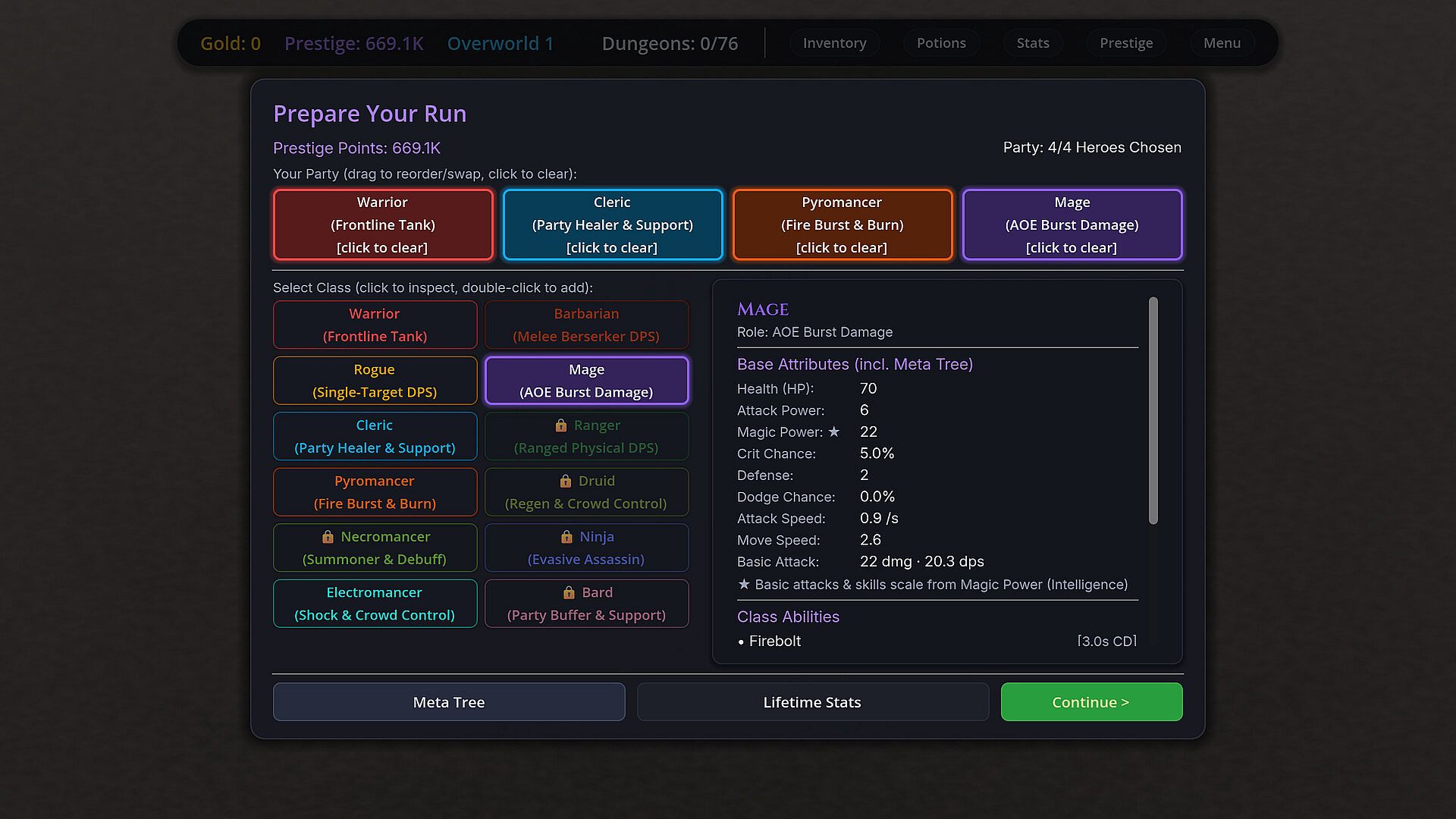
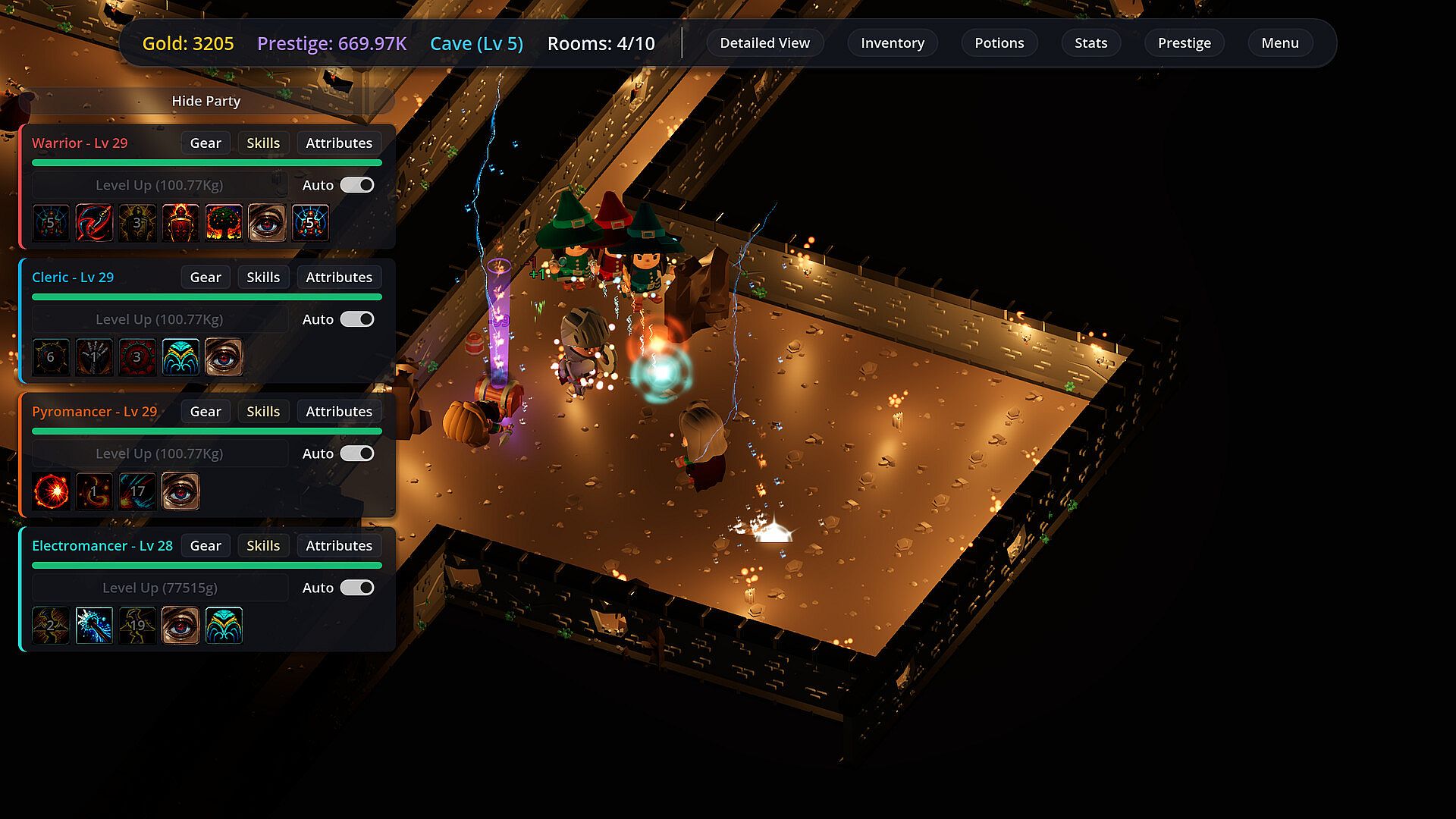
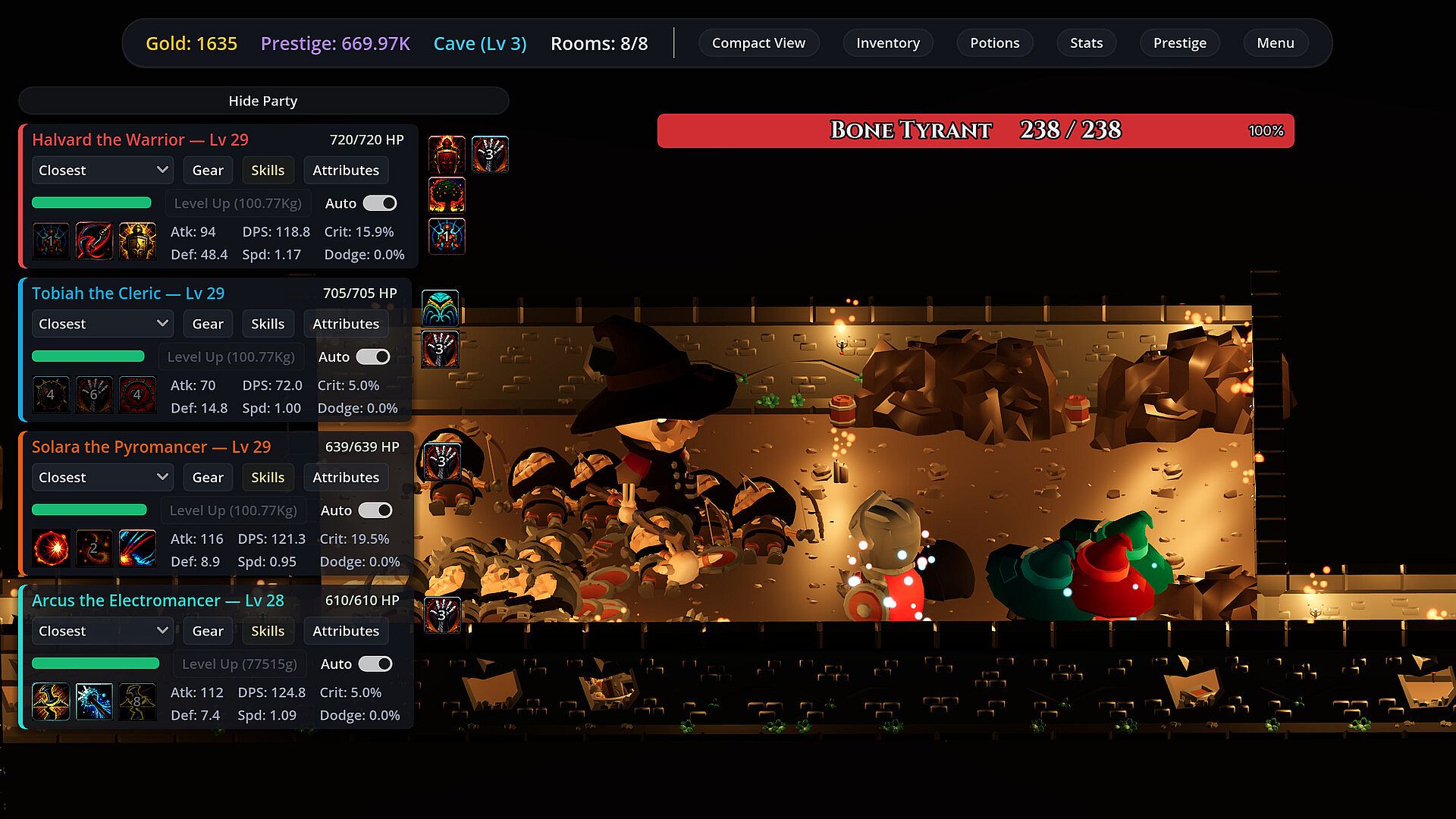
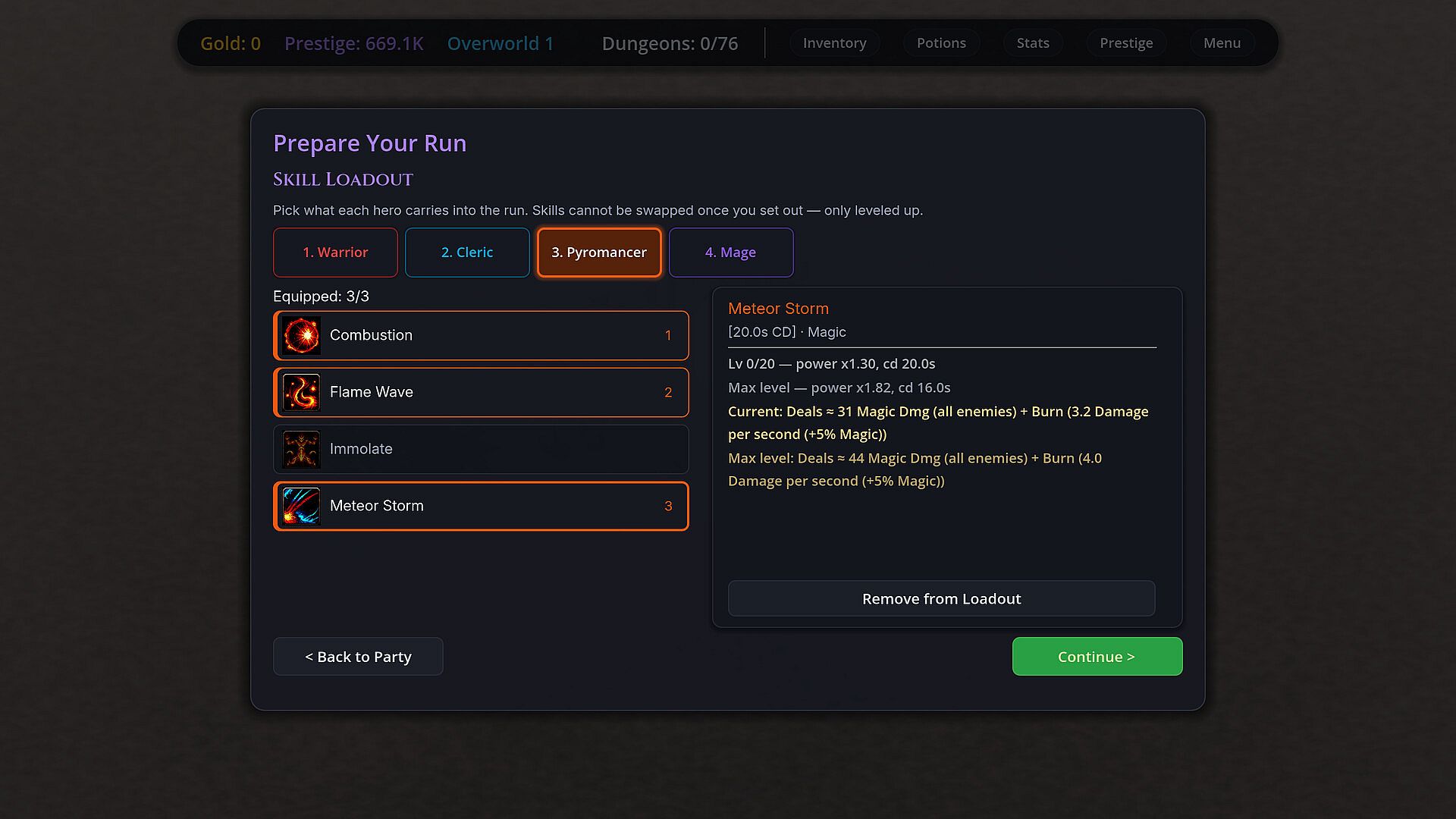
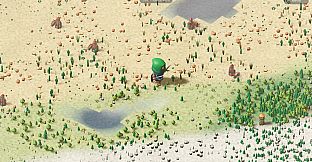
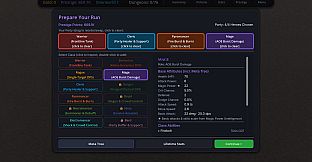
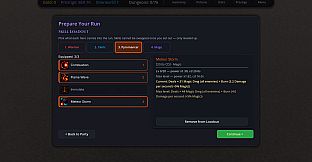
Core play revolves around selecting from twelve hero classes including Warrior, Mage, Rogue, Cleric, Ranger, Pyromancer, Druid, Necromancer, Barbarian, Ninja, Electromancer, and Bard. Five classes are available immediately, with the rest unlocked through play. Each hero equips two skills at the start of a run, making loadout choices meaningful. Party size begins at two heroes and expands to four through progression. Dungeons generate fresh each time across five types: Crypt, Cave, Fortress, Temple, and Frost. These feature themed enemies, status effects, elites, bosses, and summoned minions. An overworld with eight biomes provides additional exploration layers from plains and forests to volcanic areas.
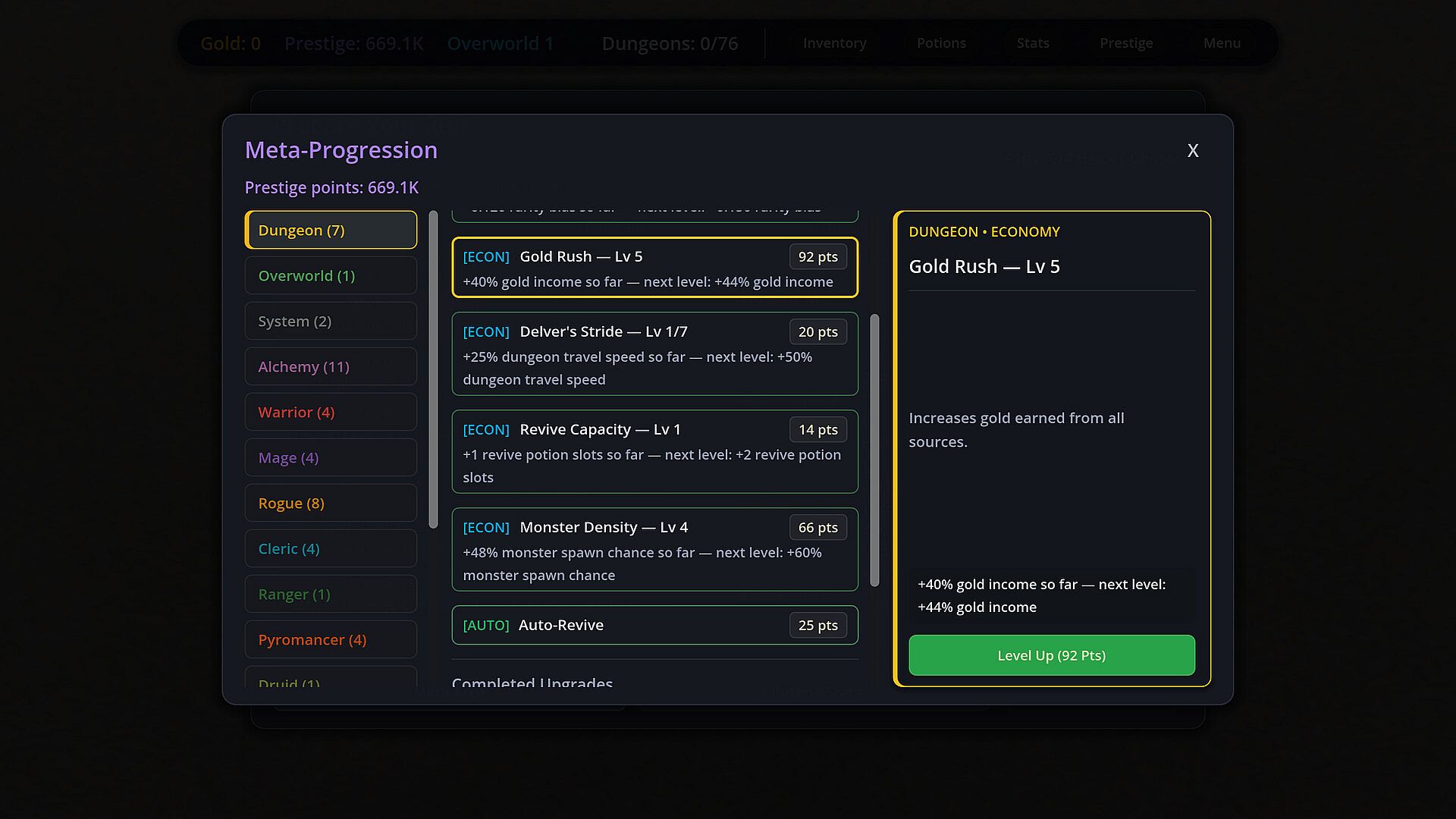
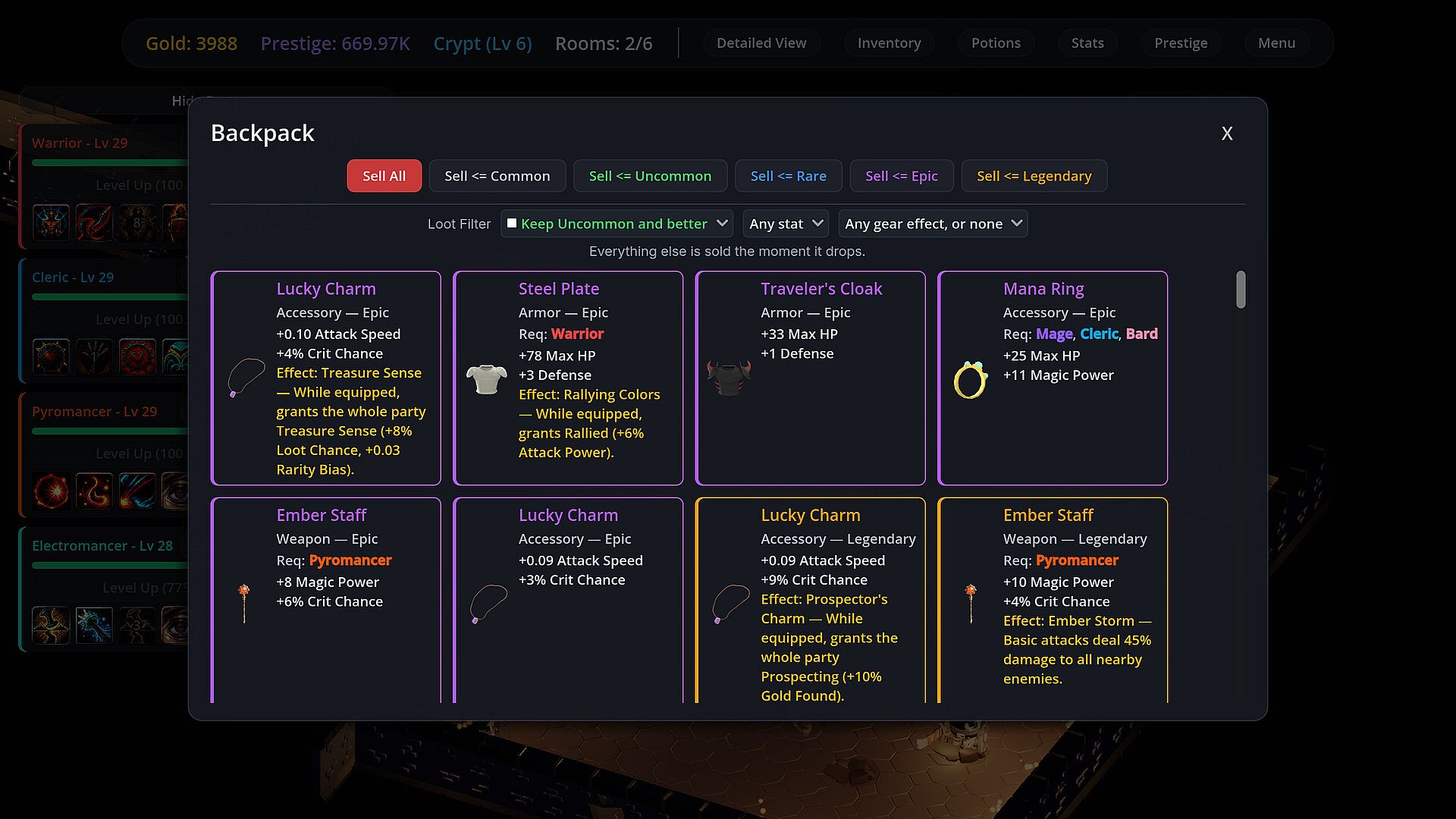
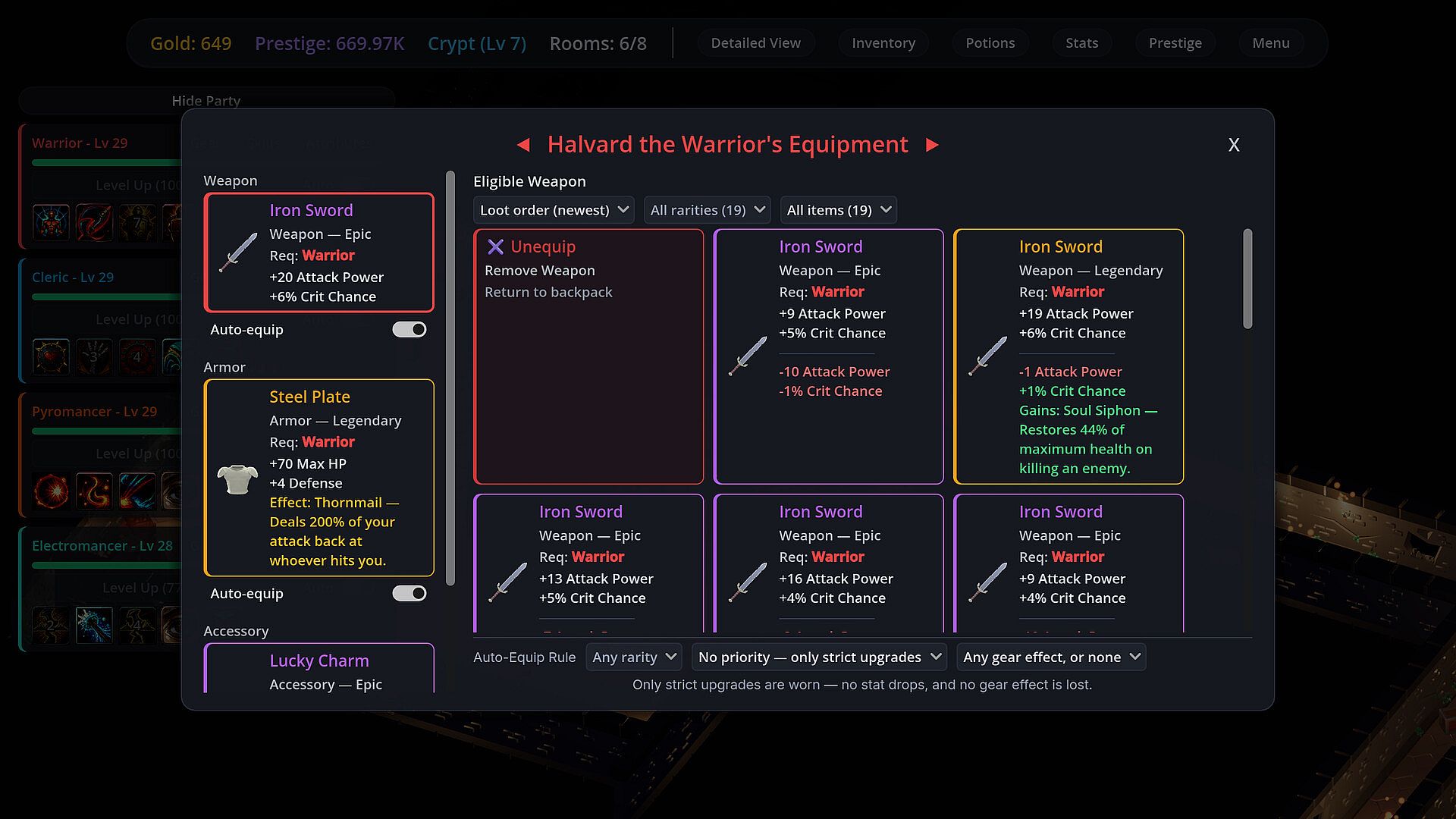
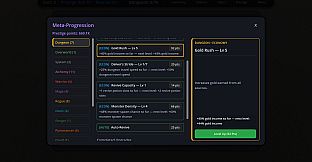
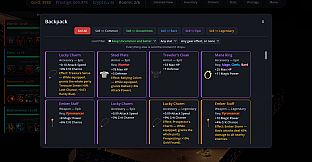
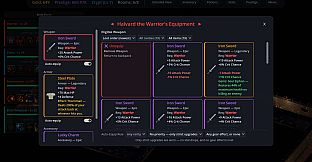
Loot drops in five rarity tiers from Common to Legendary, each with rolled stats and special effects such as on-hit procs, regeneration, area damage, or last-stand abilities. Players sort gear manually at first but unlock loot filters and auto-equip rules to reduce that workload. Gold serves as the primary currency for leveling heroes, purchasing attribute points, and advancing skills. Prestige resets occur when further depth yields diminishing returns, converting run progress into permanent meta upgrades via a branching tree that covers automation, economy, alchemy, and party size options.
Automation features become available over time, including auto-leveling, auto-attributes, auto-skill leveling, and auto-equip. These shift the focus from hands-on management to higher-level strategy. The game supports mouse-only input with no timed mechanics, and it maintains three named save slots for separate progress tracks.
Game Modes
Play centers on repeated dungeon runs that scale indefinitely. Early runs require manual hero leveling and gear decisions, while later stages rely on purchased automation to handle routine tasks. Prestige runs form the main loop, where players push dungeon depth, gather resources, and reset for stronger permanent gains measured against personal bests rather than fixed goals. The meta tree provides ongoing branches for customization, and potions add another layer of collectible and usable progression. No separate competitive or story modes exist beyond these core idle and prestige systems.
Progression and Automation
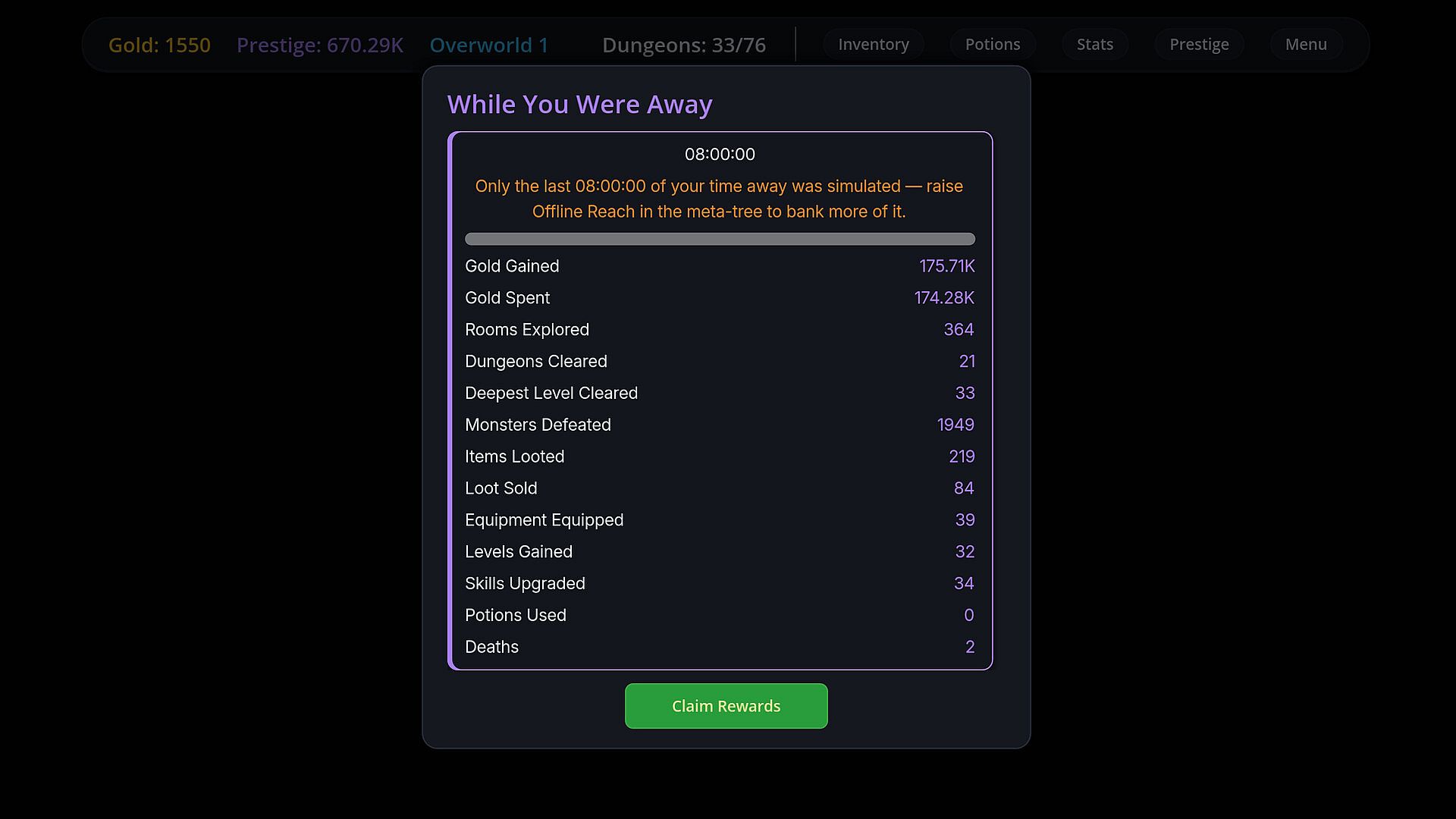
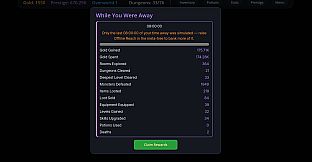
Hero levels have no upper limit, and dungeon depths compound in difficulty to match party strength. Offline simulation ensures that closing the game does not halt advancement, with the party continuing to explore, fight, and collect loot. The branching meta tree unlocks permanent improvements across multiple themes, supporting months of incremental decisions. Players unlock and configure automation tools progressively, effectively removing themselves from repetitive tasks while retaining control over strategic choices like team composition and prestige timing.
Is It Worth Playing?
Dungeoneers Idle suits players who enjoy idle games with deep customization and long-term scaling rather than quick sessions or direct combat. It offers a buy-once model with no microtransactions, offline progress, and endless depth that rewards consistent but low-effort engagement. The focus on party management and prestige systems provides ongoing decisions without requiring constant attention. Those seeking a hands-off experience with meaningful setup and automation will find the structure aligns well with the described mechanics. The game remains in active development based on its design for extended play.