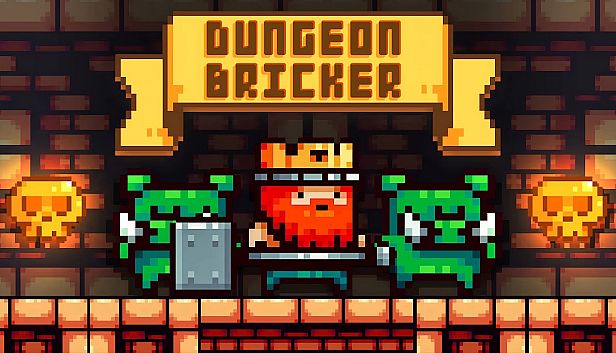



Dungeon Bricker is an action game developed for the PlayStation 4 and PlayStation 5 consoles. Players take control of a character whose main objective is to traverse the boundaries of each stage, moving from wall to wall or corner to corner in order to lay down a continuous path of bricks. The stage reaches completion only when every available space fills with these bricks, at which point the next level unlocks automatically.
Gameplay
The central mechanic requires careful planning of movement routes across the level boundaries. Each successful pass from one wall segment to another deposits bricks along the chosen path, gradually covering the open areas. Precision matters because overlapping or inefficient routes can leave gaps that demand extra navigation to fill. The process repeats across successive stages, with the challenge increasing as layouts grow more intricate and demand longer or more deliberate brick-laying sequences.
Progression depends entirely on achieving full coverage within each stage. Once the final brick is placed and the area is completely filled, the level ends and the player advances. This loop emphasizes spatial awareness and route optimization rather than combat or resource management. The pixel art presentation keeps the focus on the grid-like structure of the environments, making it easy to track which sections remain uncovered at any moment.
Skill testing comes from the need to adapt movement patterns to different stage shapes. Some layouts feature narrow corridors or awkward corner placements that force players to backtrack or find creative paths. The absence of time limits or competing elements allows full concentration on the brick-laying task itself, turning each stage into a self-contained puzzle of coverage and connectivity.
Game Modes
The experience consists solely of a sequential level progression system with no additional named modes. All play occurs within the same core loop of brick path creation and stage completion. There are no separate competitive, cooperative, or survival variants described, keeping the focus on the single ongoing campaign of more than 150 stages.
Each stage builds directly on the previous ones by introducing new boundary configurations that test the same fundamental movement and coverage skills. The structure encourages repeated attempts on individual levels until full brick coverage is achieved, after which the game moves forward without branching paths or alternative objectives.
Visual Style and Presentation
Cool pixel art defines the look of Dungeon Bricker, rendering the playable areas in a retro-inspired grid format that highlights the brick paths as they form. The simple color palette and blocky aesthetic align with the mechanical emphasis on filling space, allowing players to instantly recognize completed sections versus those still requiring attention. Sound design remains minimal, directing attention toward the visual feedback of brick placement and level completion.
Is It Worth Playing?
Dungeon Bricker suits players who enjoy methodical action games built around spatial problem solving and incremental progress through a large number of stages. With more than 150 levels available, the title provides substantial content for those willing to refine their route-planning approach over repeated play sessions. The straightforward mechanics and pixel art style deliver a focused experience without unnecessary complexity.
Anyone seeking a pure test of navigation and coverage skills on PlayStation hardware will find consistent challenge across the full set of stages. The game rewards persistence and pattern recognition, making it a solid choice for short or extended sessions depending on how quickly individual levels are cleared. Its availability on both PS4 and PS5 ensures accessibility for a wide range of console owners interested in this specific style of level-completion gameplay.