






















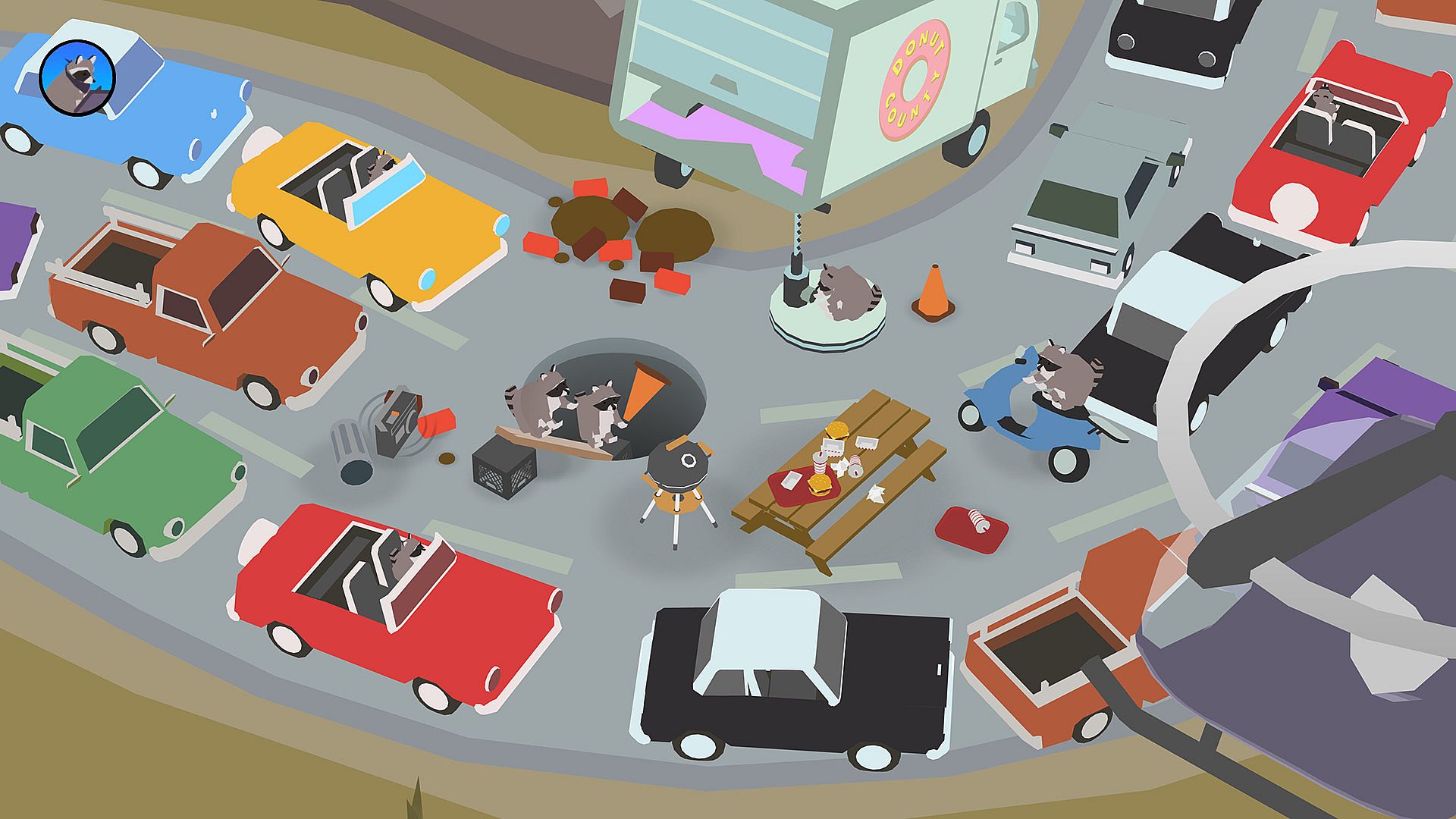

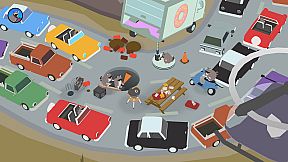
Donut County stands out as an indie casual adventure title built around physics-based puzzles on PC. Players take on the role of a raccoon named BK who operates a remote-controlled hole that expands by consuming objects and environments throughout a quirky county overrun by similar trash-stealing mechanisms.
Gameplay
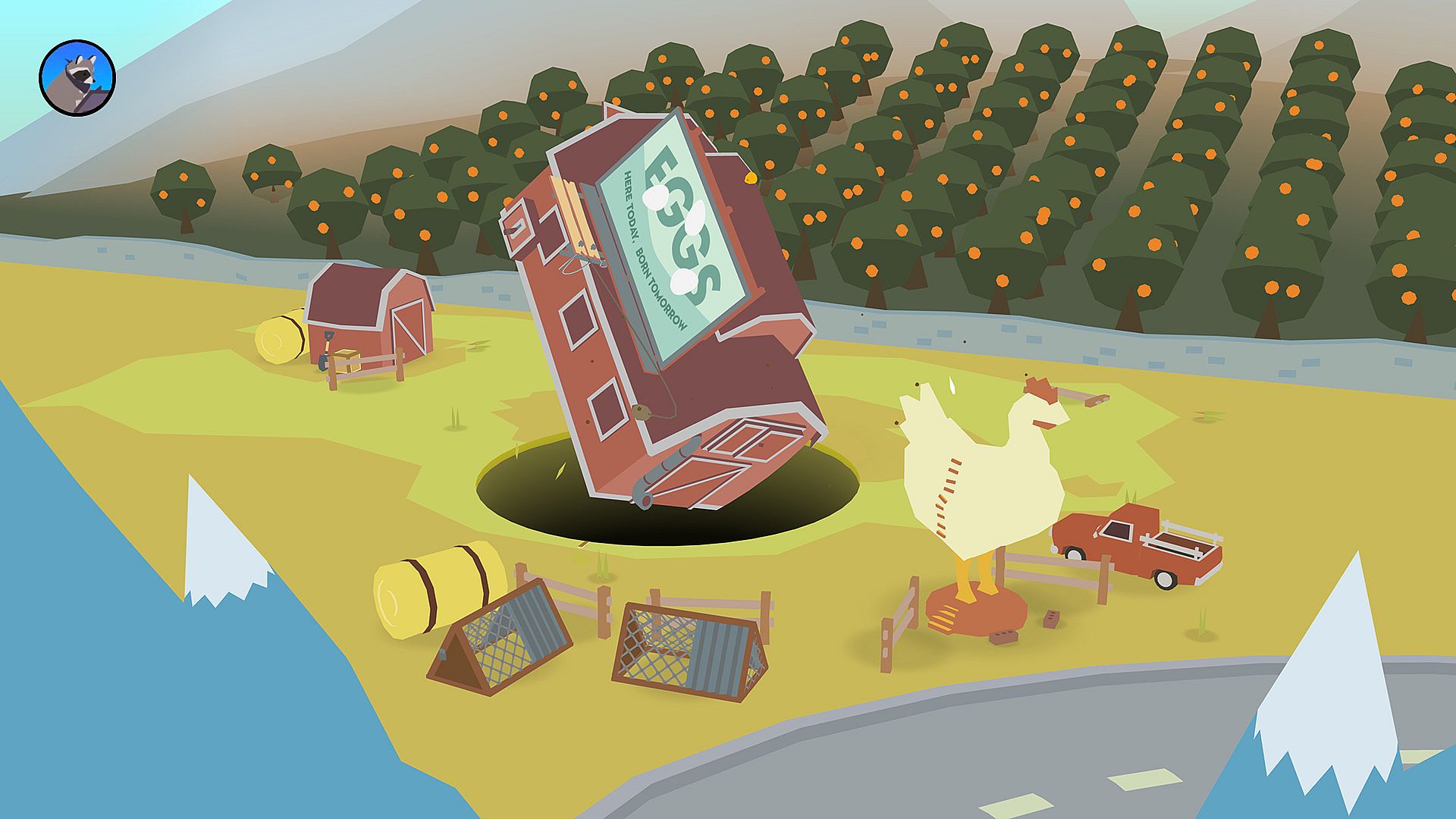
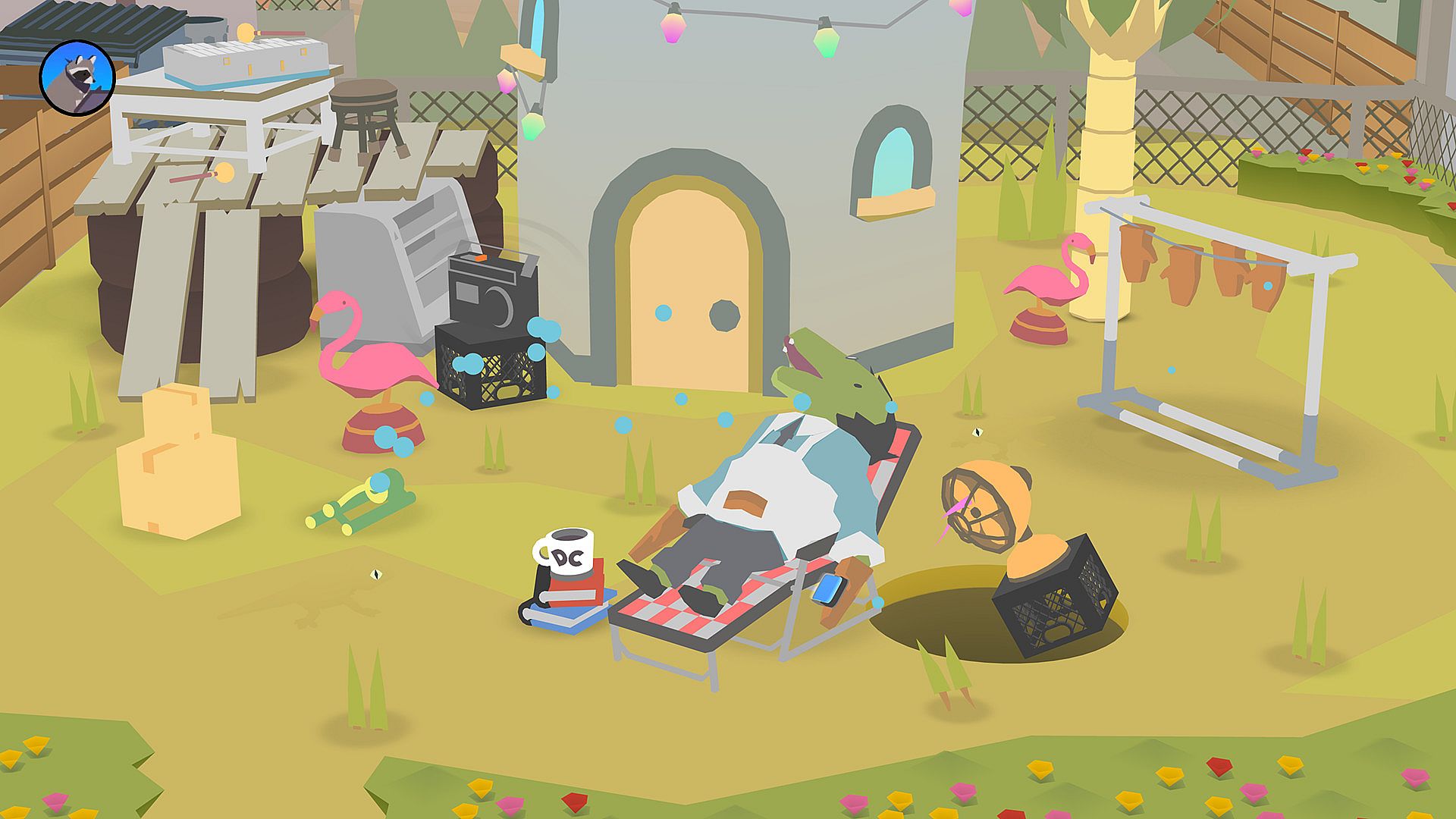
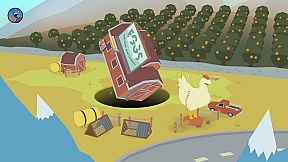
The core loop revolves around guiding an ever-expanding hole across distinct locations. Each area presents a self-contained setting filled with everyday items and characters that react when swallowed. Moving the hole allows collection of trash and objects, which increases its size and unlocks new interactions. Objects inside the hole can combine in unexpected ways, such as triggering reactions that produce soup, multiply animals, or set off displays of fireworks. Players can also expel items back into the world to trigger chain reactions or clear obstacles. The hole continues to grow until every element in the current scene has been absorbed, advancing the sequence of events.
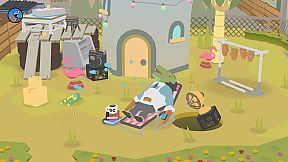
Exploration encourages close inspection of each home or locale, where unique props and layouts create opportunities for creative solutions. The physics system governs how items tumble, stack, and interact once inside the hole, leading to emergent outcomes that solve puzzles or simply cause chaos. Progression ties directly to the narrative, with the expanding hole serving as both tool and central character in the unfolding events.
Game Modes
Donut County operates as a single-player experience focused on sequential puzzle stages linked by story beats. There are no separate competitive or cooperative options, keeping the emphasis on personal progression through the county's environments. The structure follows a linear path of locations, each designed around the hole's growth mechanic and the need to clear every object before moving forward.
Story and Setting
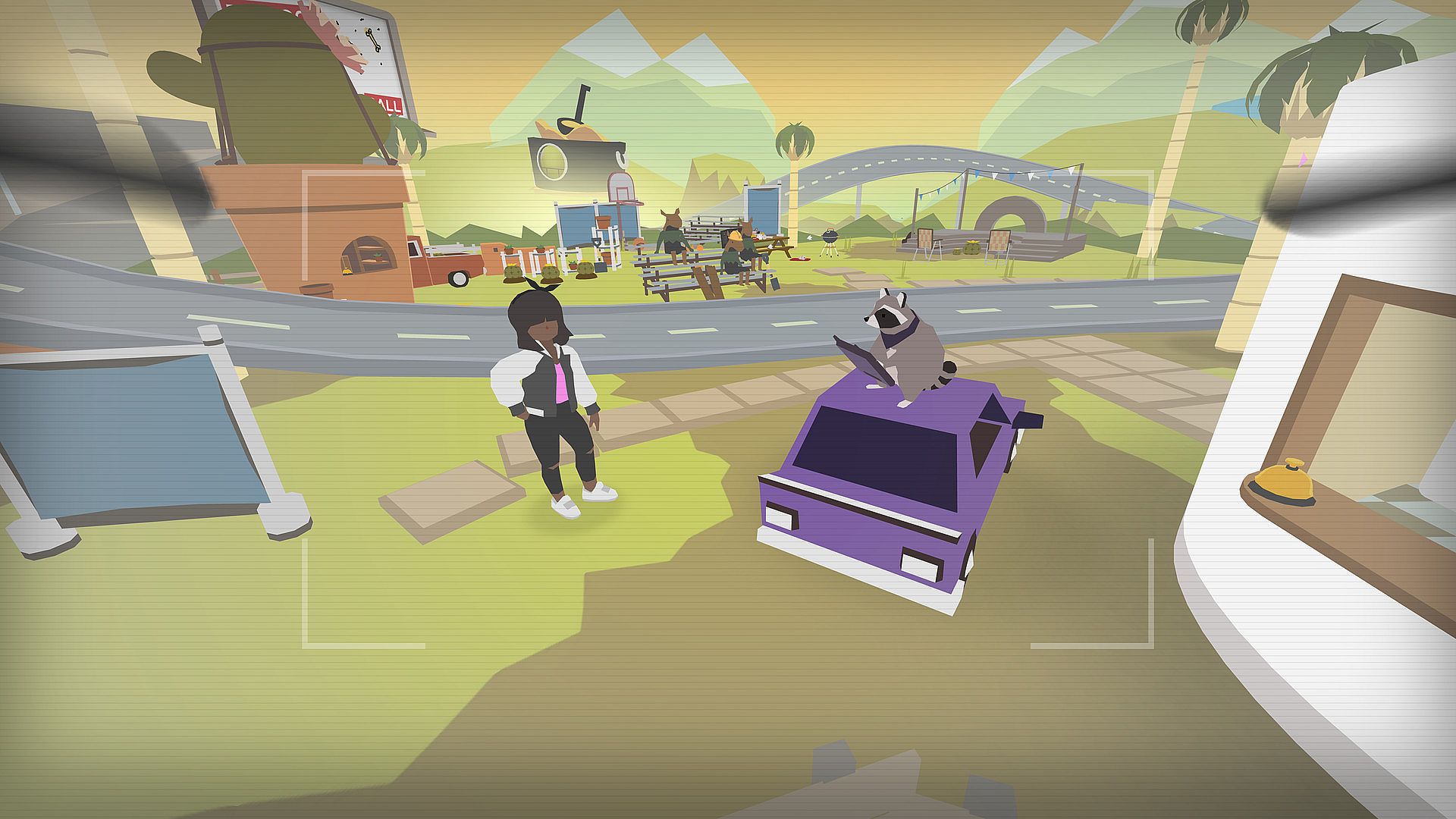
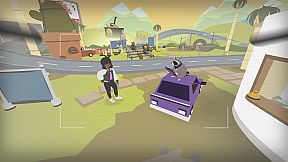
The narrative follows BK after a mishap sends him and the county's residents underground. Confrontations with friends and locals drive the plot, revealing the consequences of the hole operations. Characters appear as distinct residents with their own homes and belongings, adding personality to each puzzle area. The setting blends everyday suburban elements with absurd raccoon-led antics, creating a lighthearted tone that contrasts the scale of the destruction.
Development notes highlight six years of work by designer Ben Esposito, incorporating research into donuts and a real-world raccoon encounter that shaped the concept. The result delivers a compact tale centered on friendship, responsibility, and the strange appeal of swallowing an entire town.
Is It Worth Playing?
Donut County suits players seeking a short, inventive puzzle game with strong narrative ties and humorous moments. Its mechanics reward experimentation with object combinations and precise hole placement, while the story provides context without overwhelming the puzzle focus. Reception remains strongly positive years after release, with consistent praise for its originality and charm among those who enjoy casual adventure titles. The game runs well on modest PC hardware and offers a complete, self-contained experience without ongoing updates or additional content requirements. Those drawn to physics-driven interactions and quirky character-driven stories will find it a satisfying choice, particularly if they prefer contained sessions over extended campaigns.