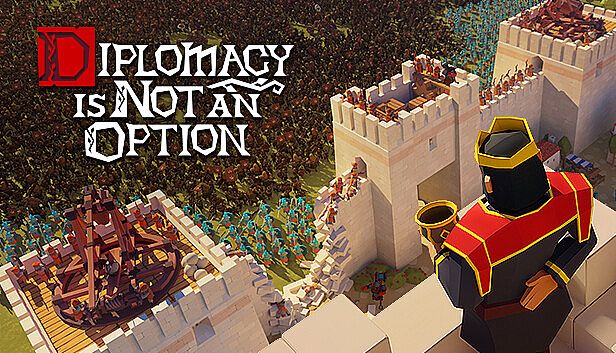






















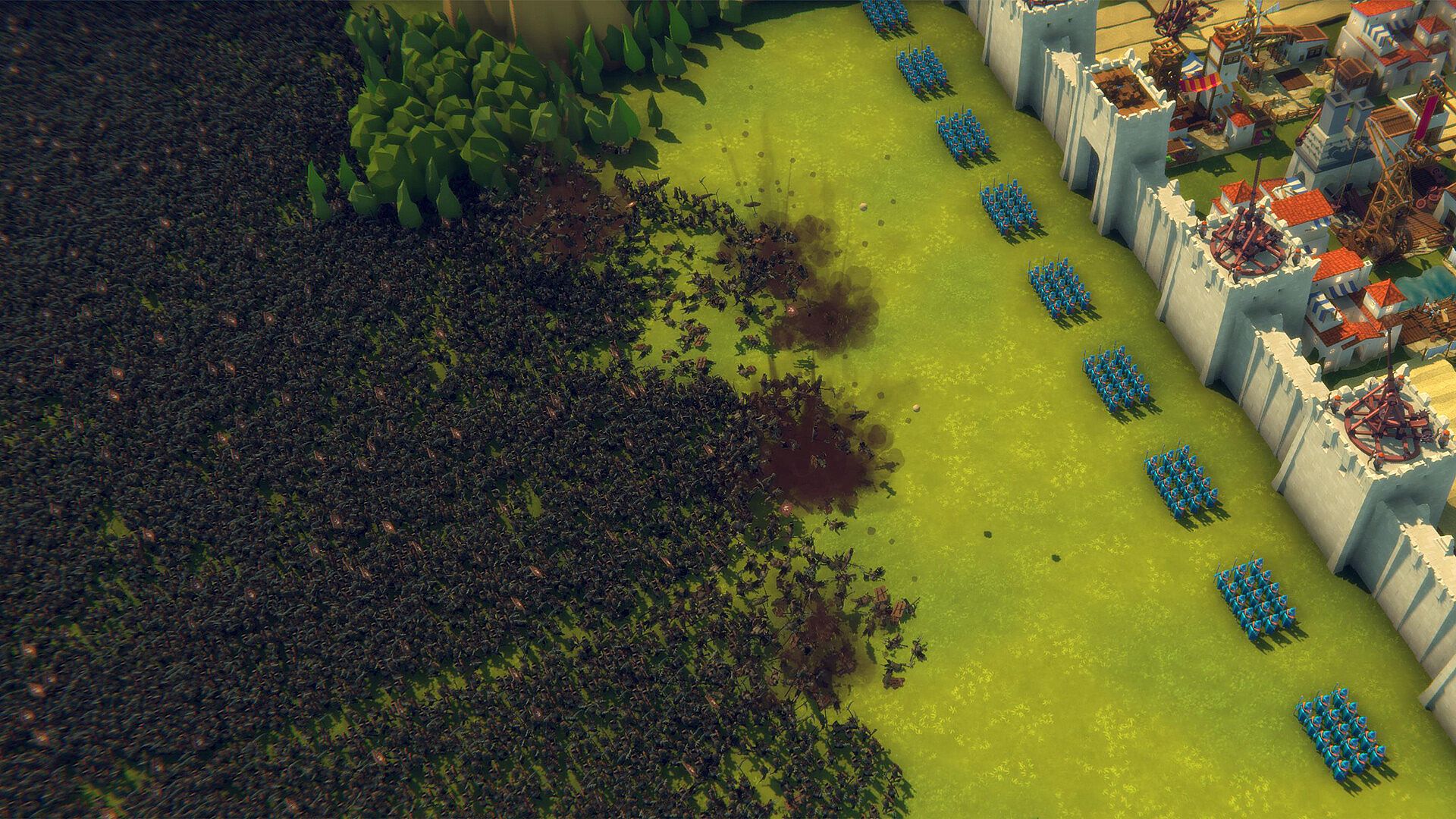
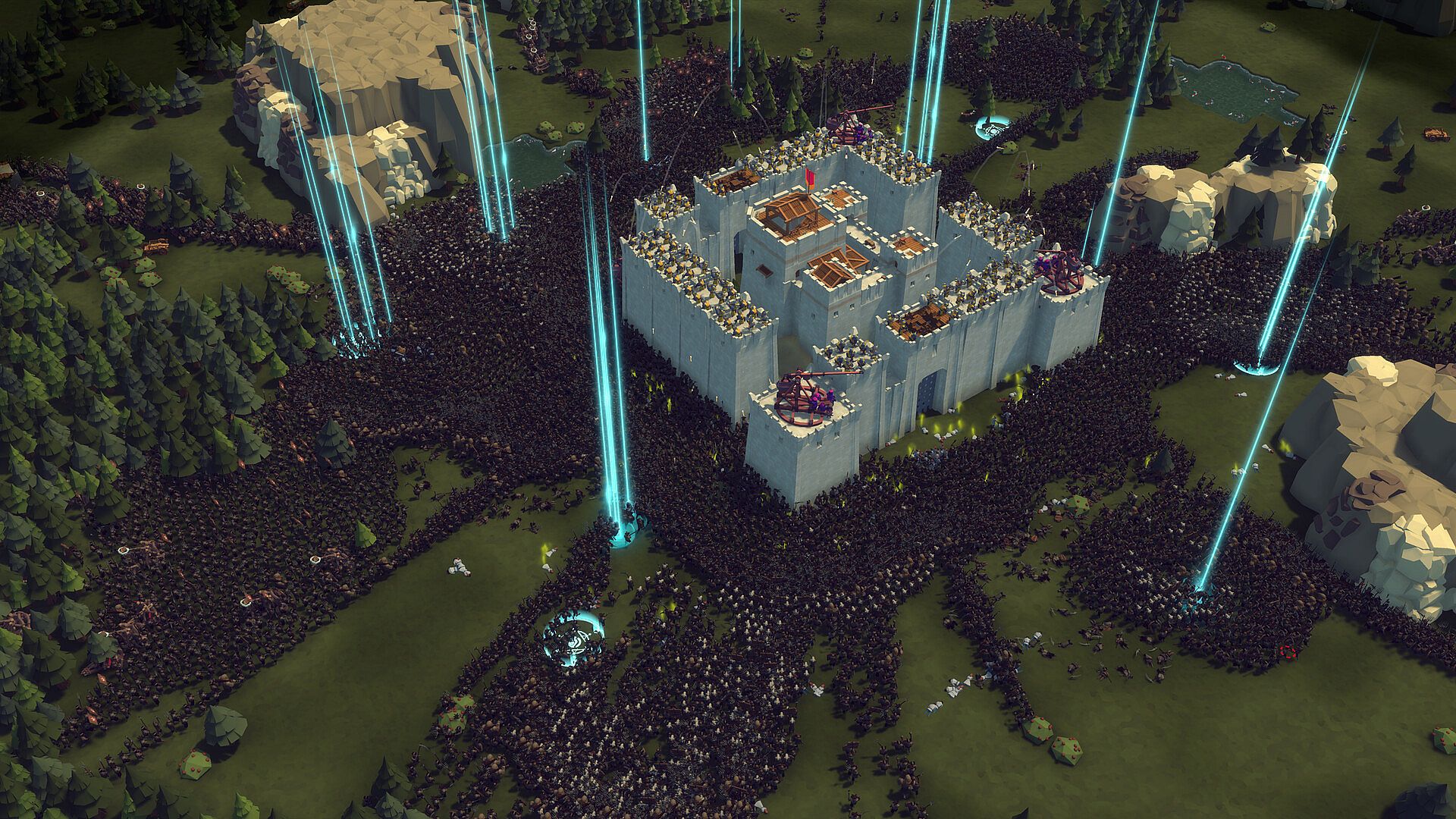
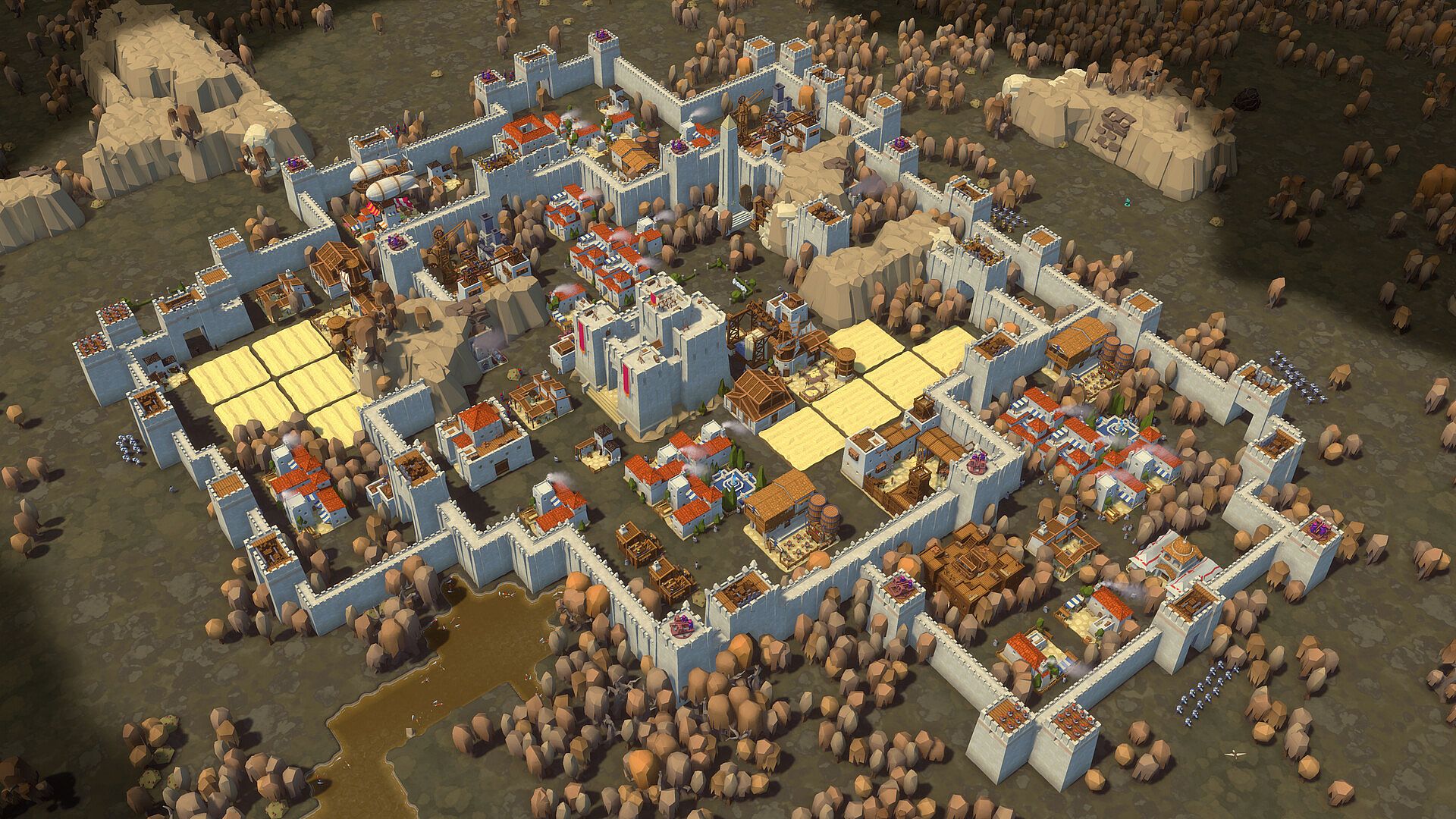
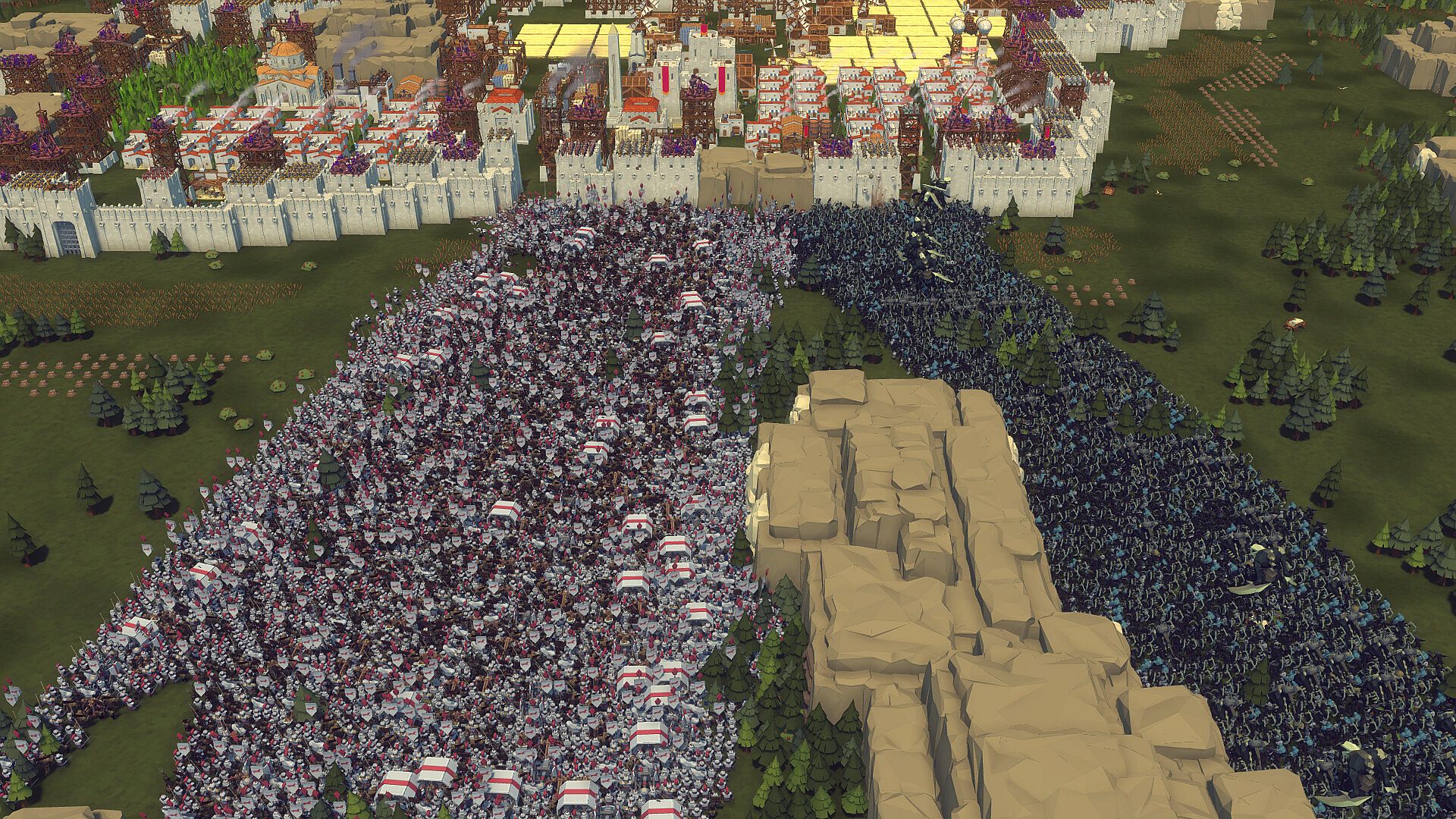
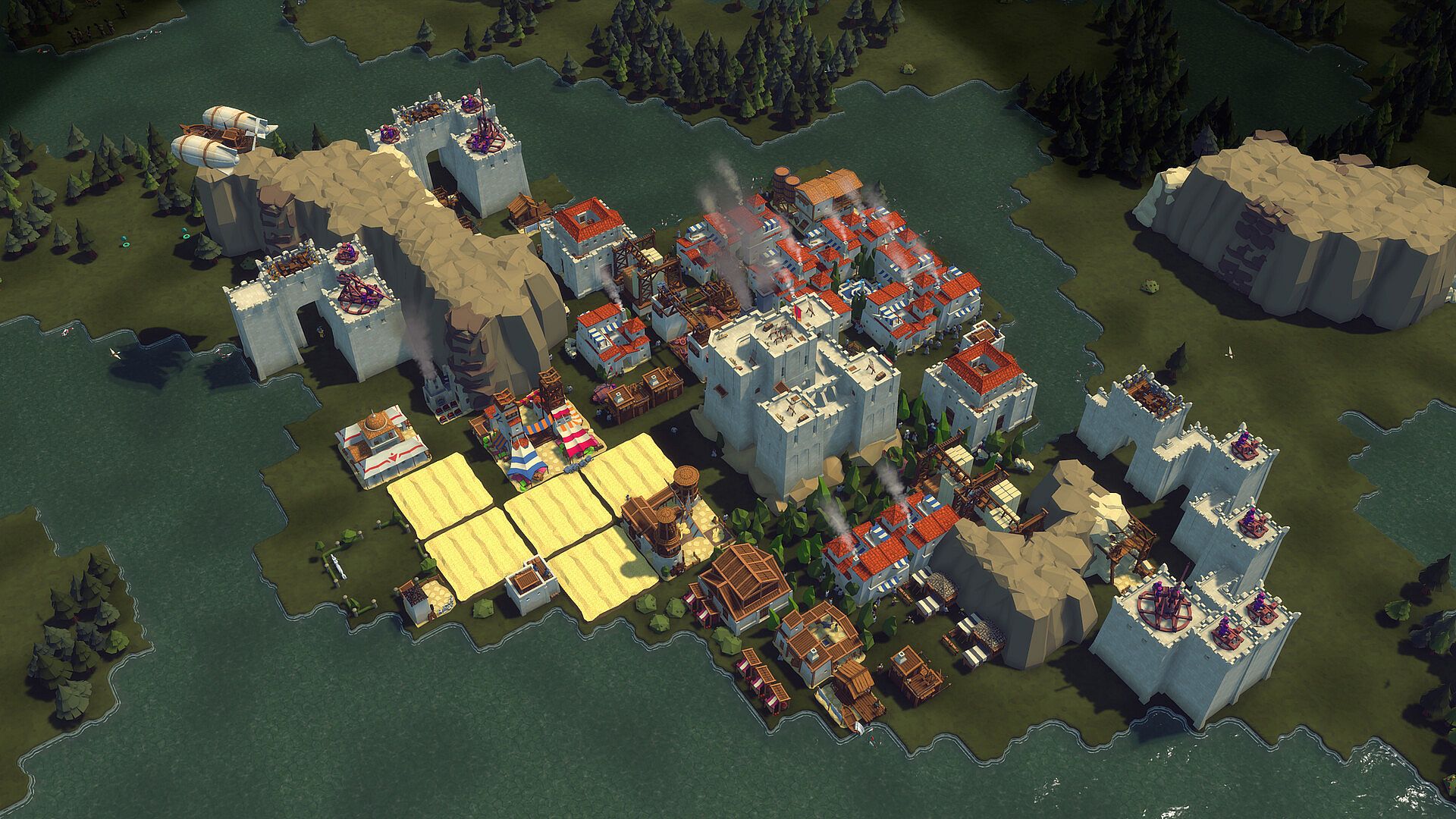
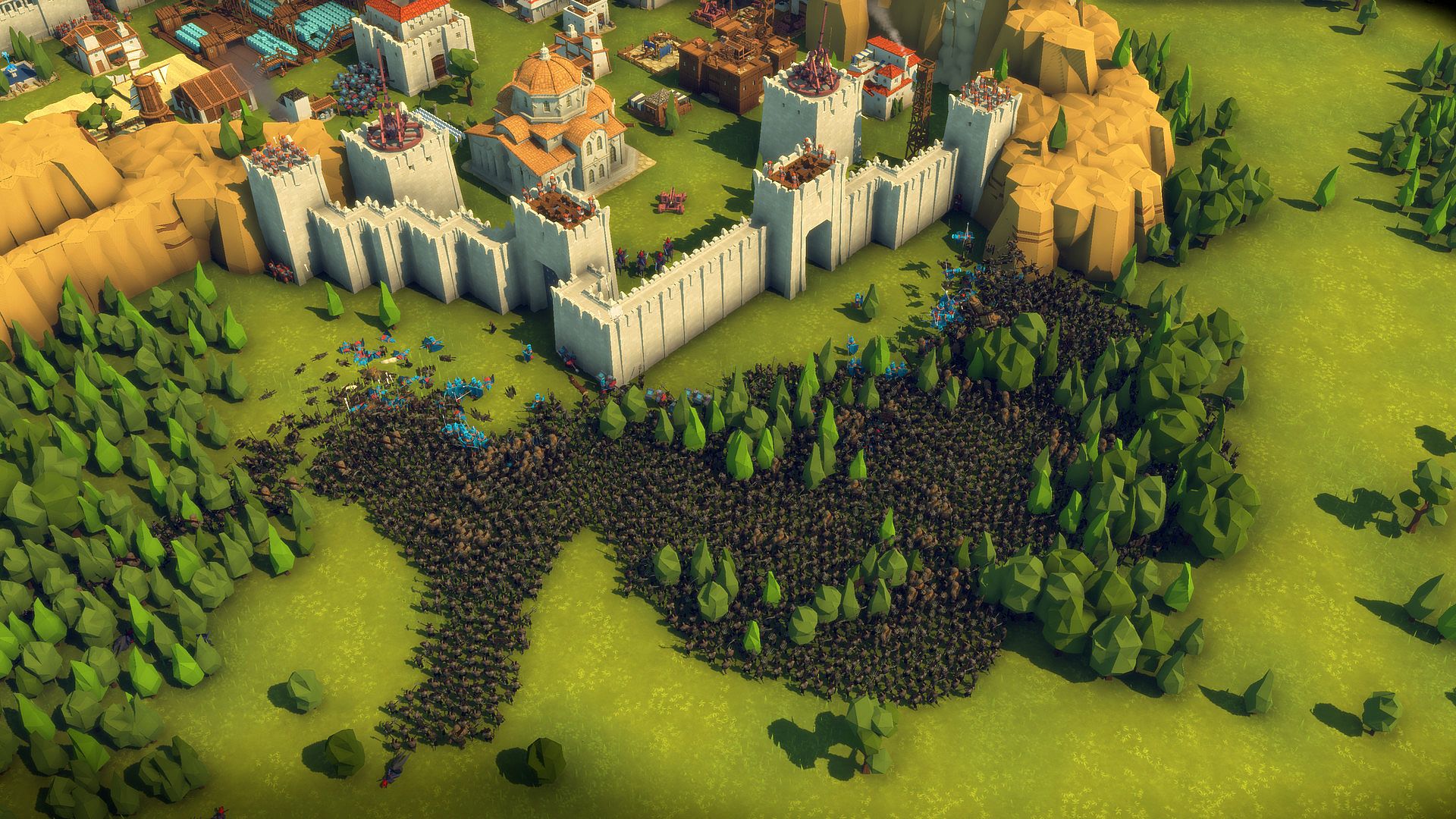
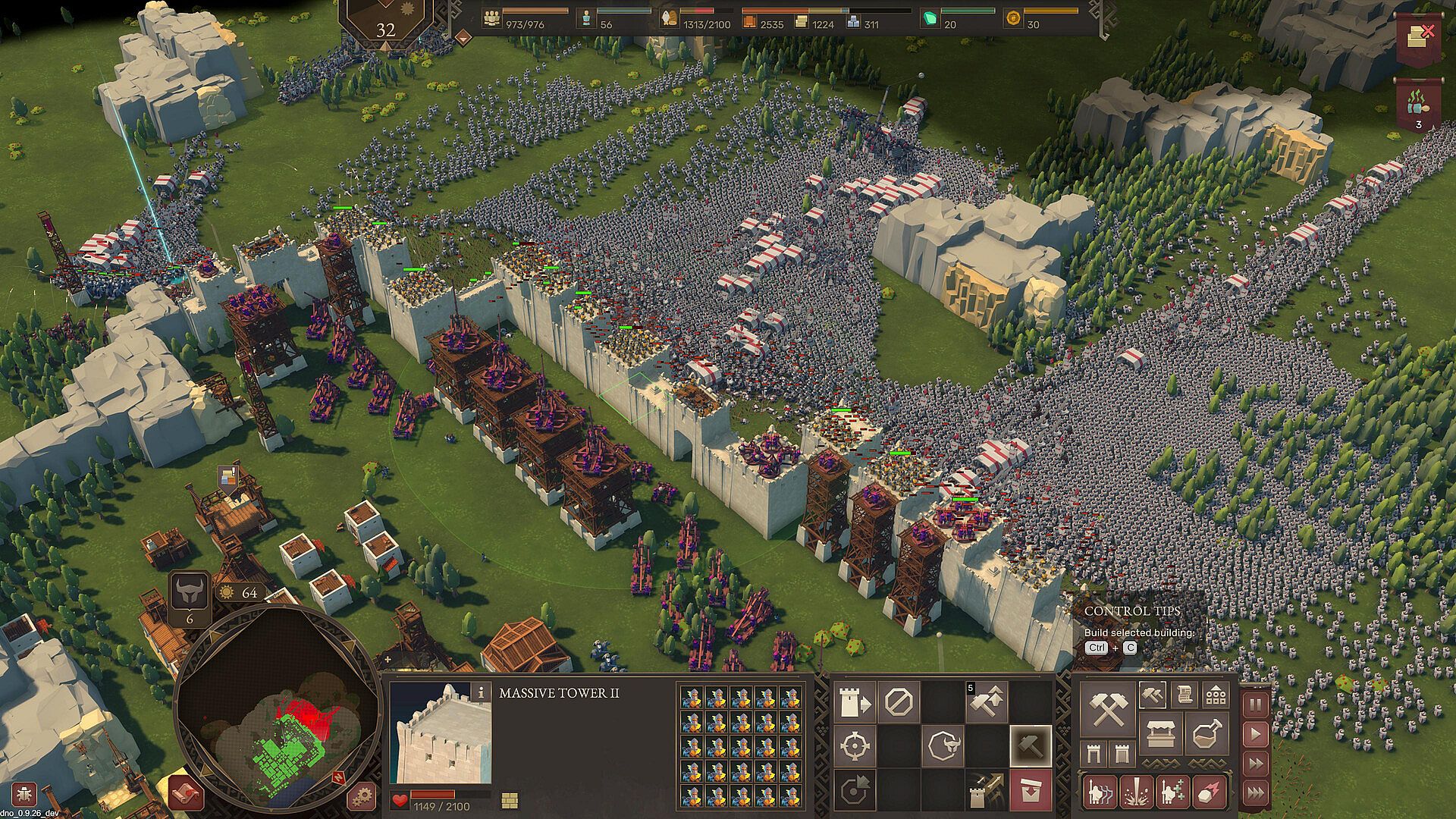
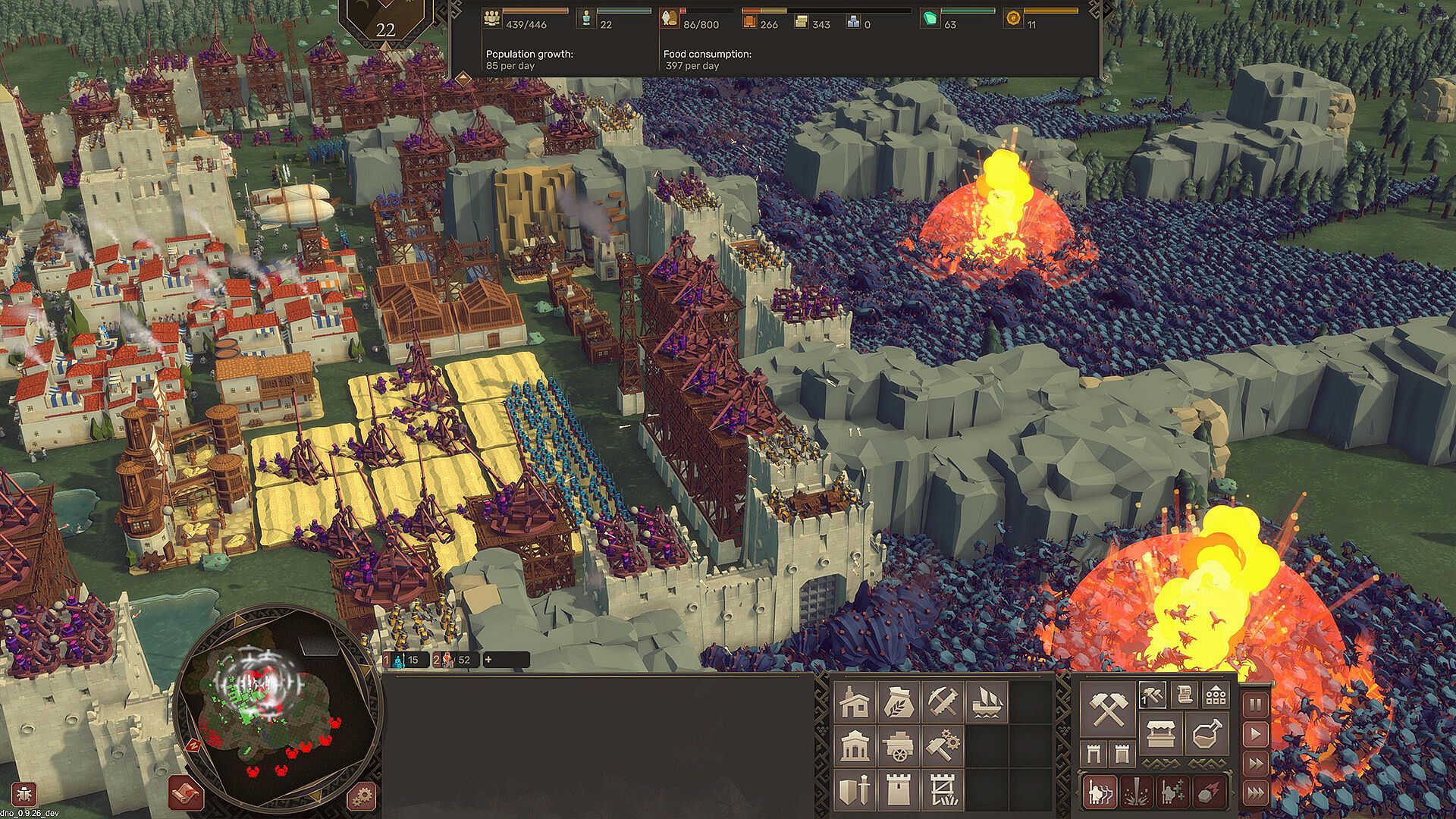
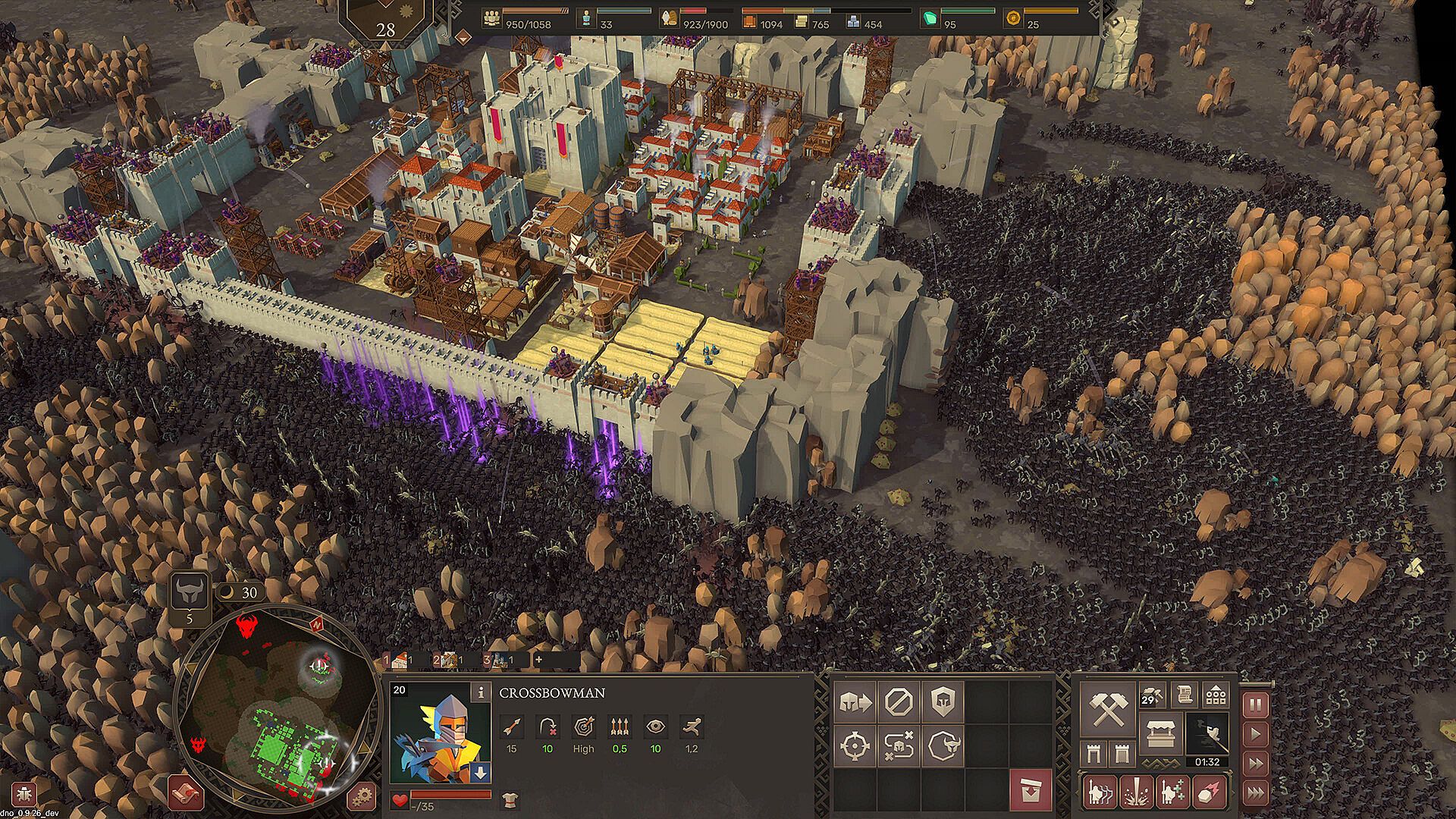
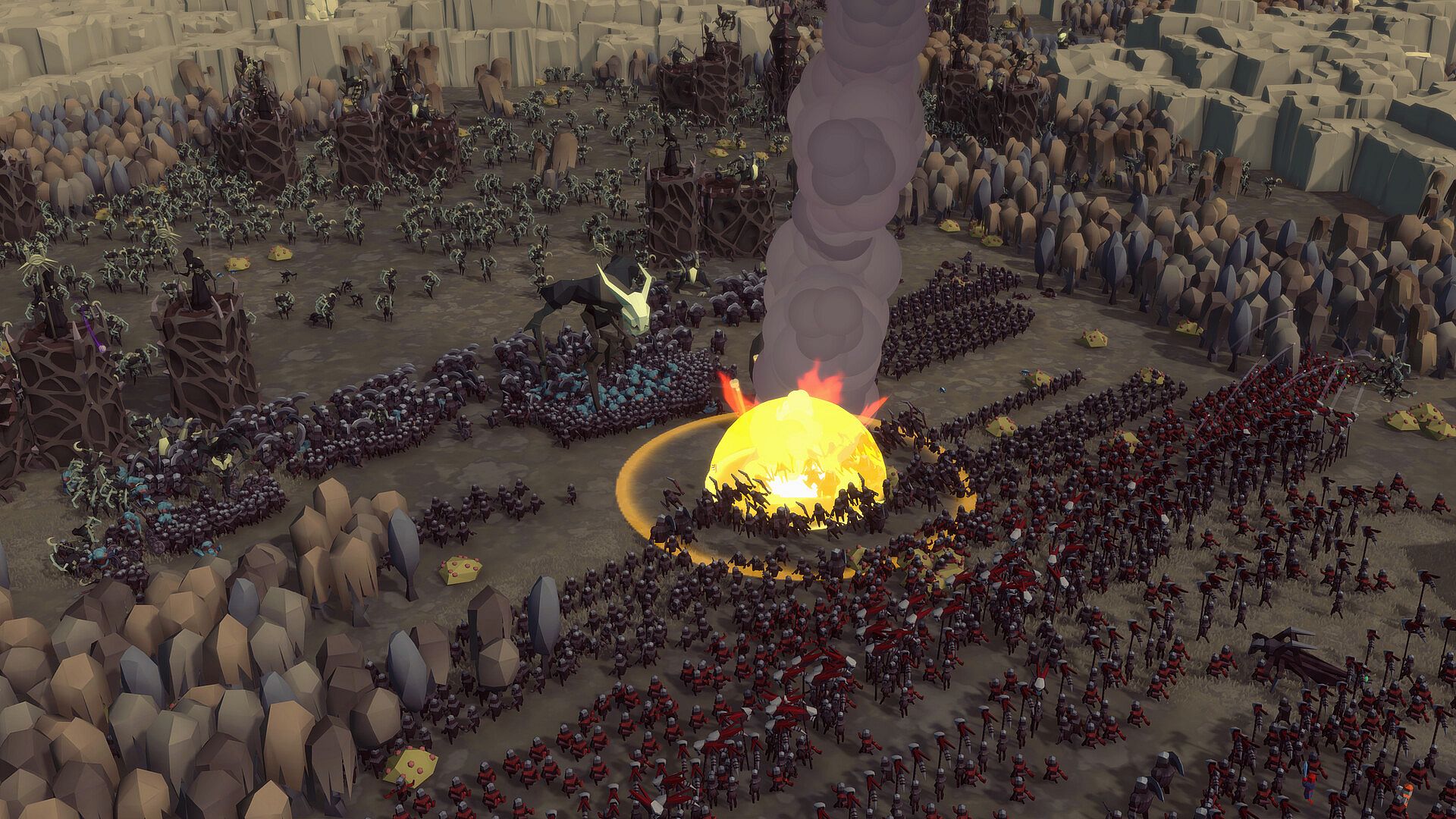
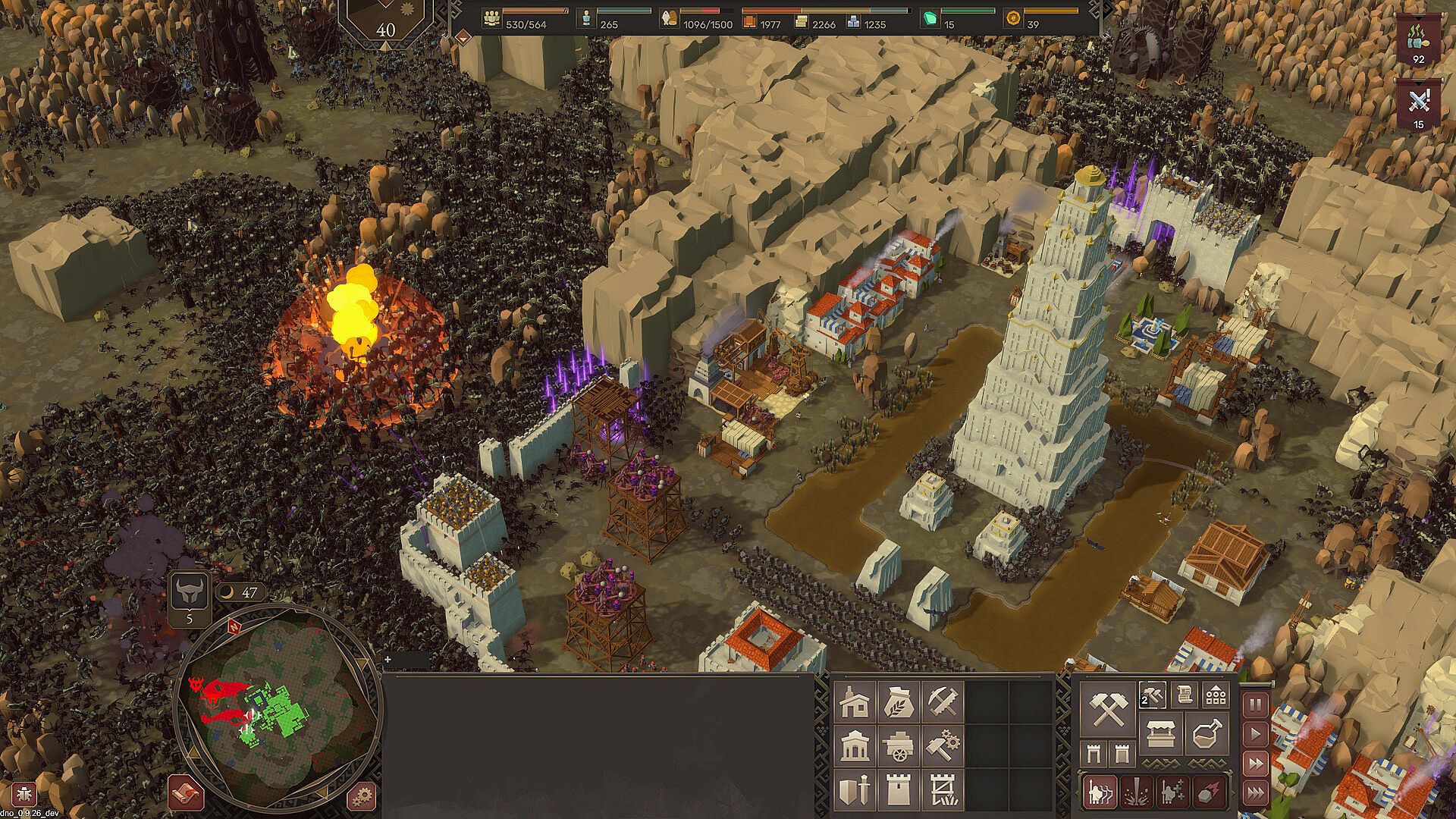
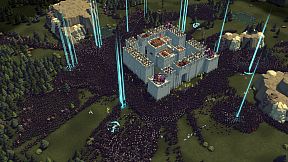
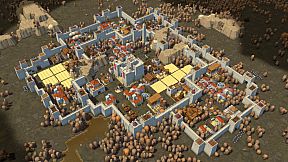
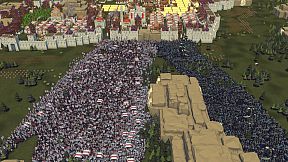
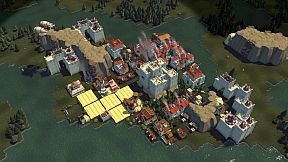
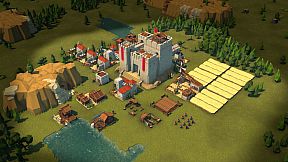
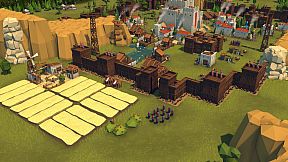
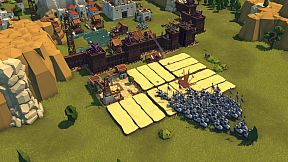
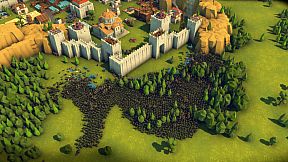
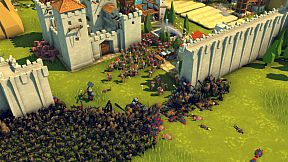
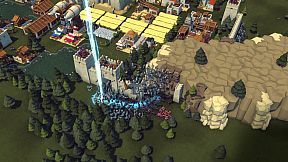
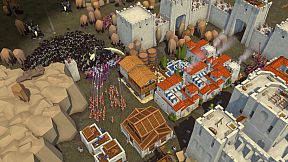
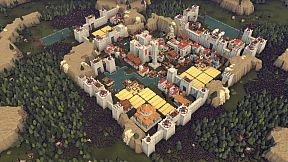
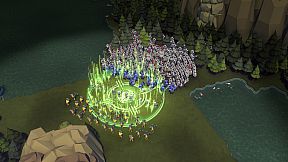
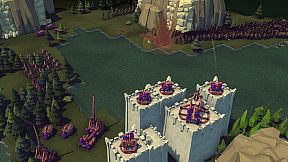
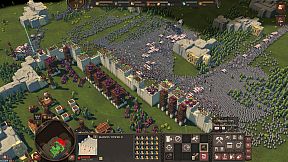
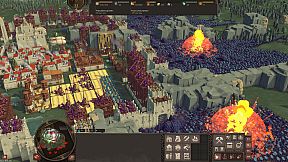
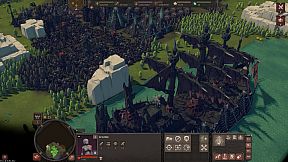
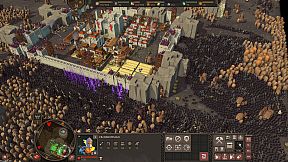
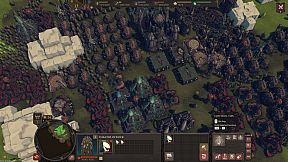
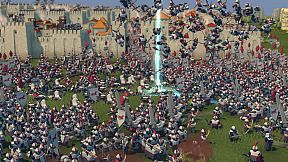
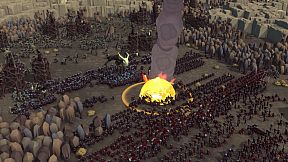
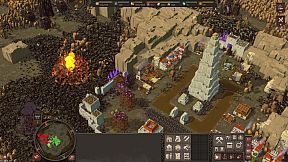
Diplomacy is Not an Option is a base-building real-time strategy game set in a medieval fantasy world. Players manage defenses, resources, and armies while facing overwhelming enemy forces on procedurally generated maps. The core experience centers on surviving massive assaults that can exceed twenty-five thousand units, requiring careful planning of fortifications, troop deployment, and economic systems to maintain a functional settlement under constant pressure.
Gameplay
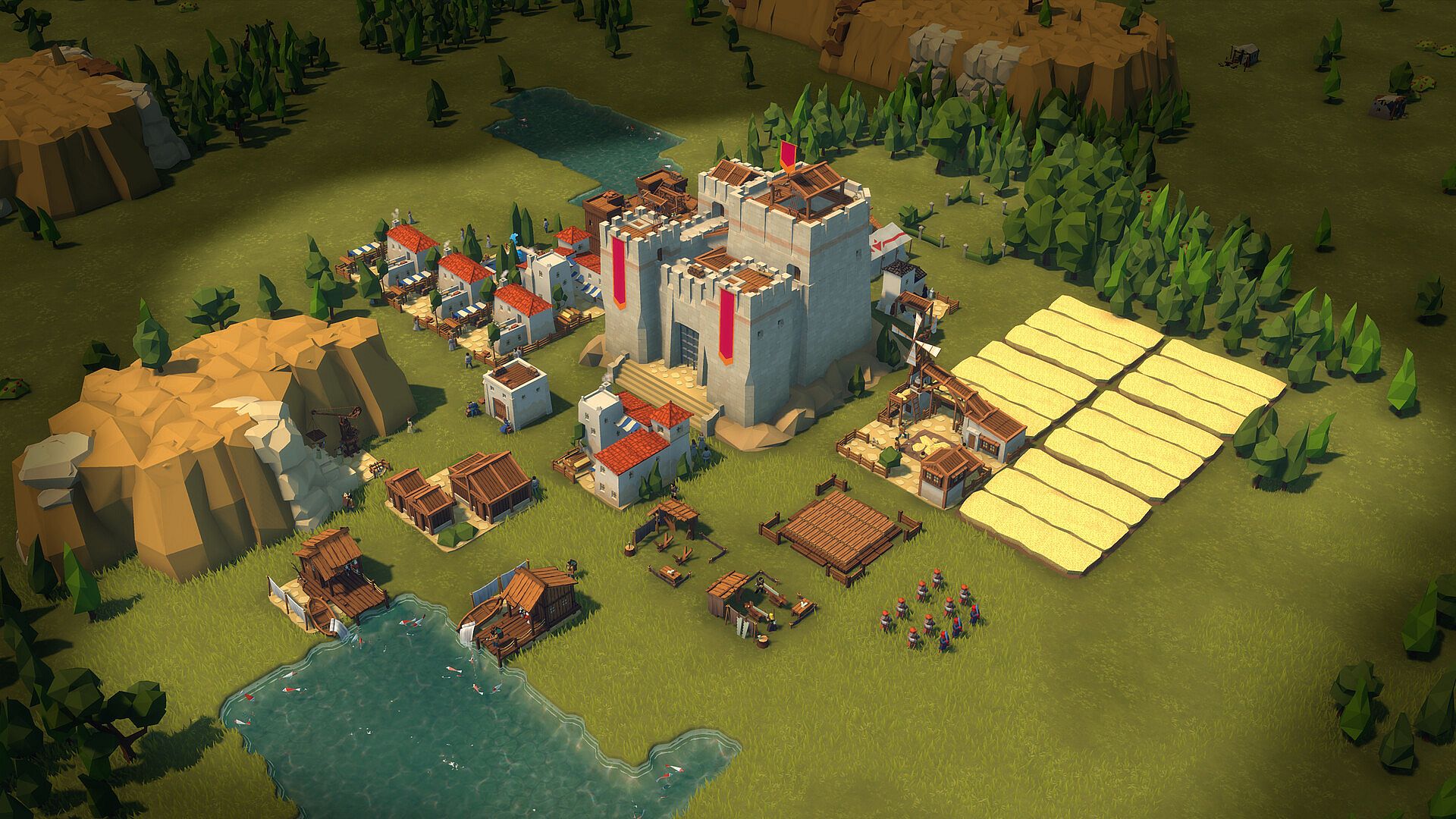
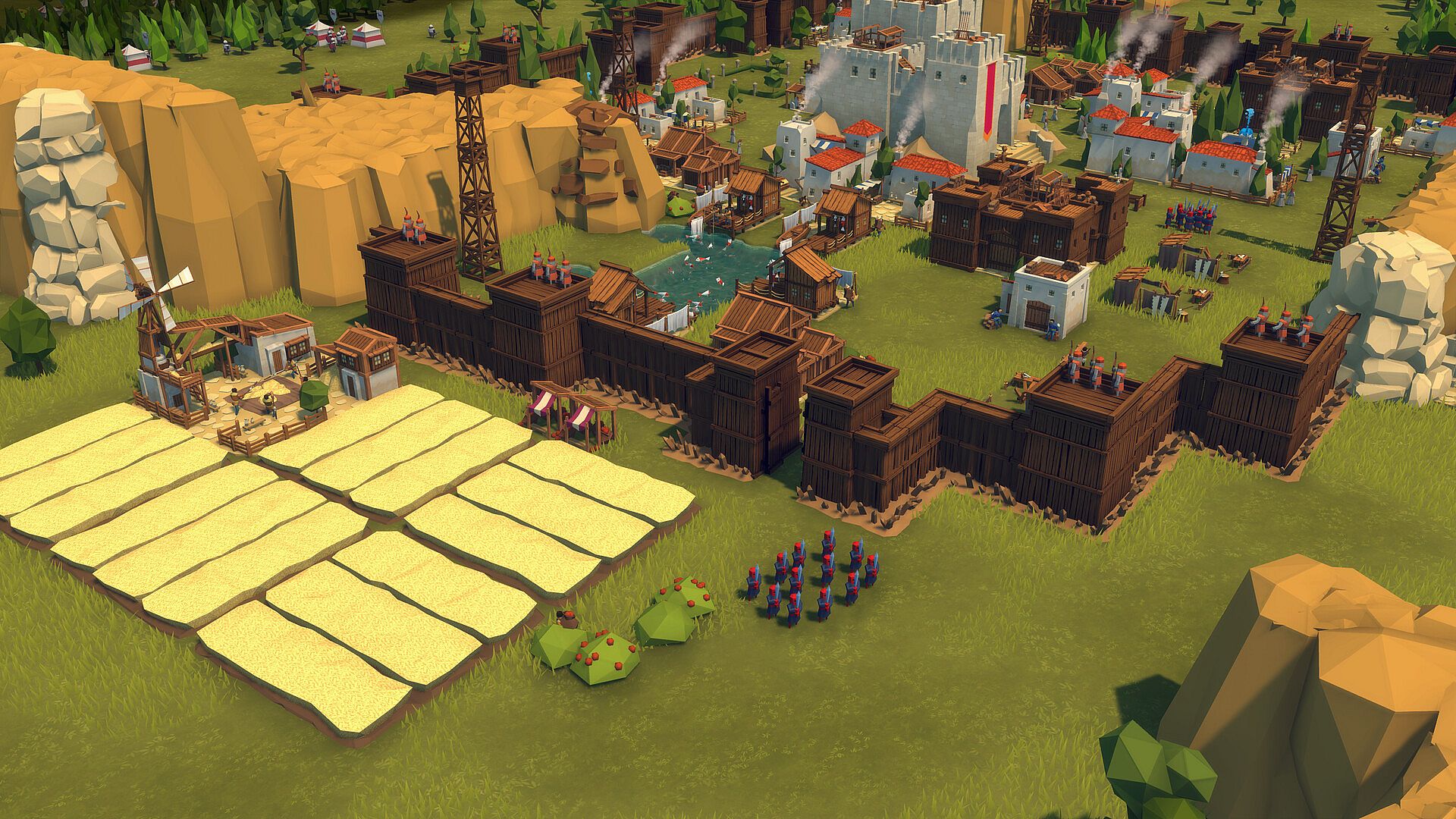
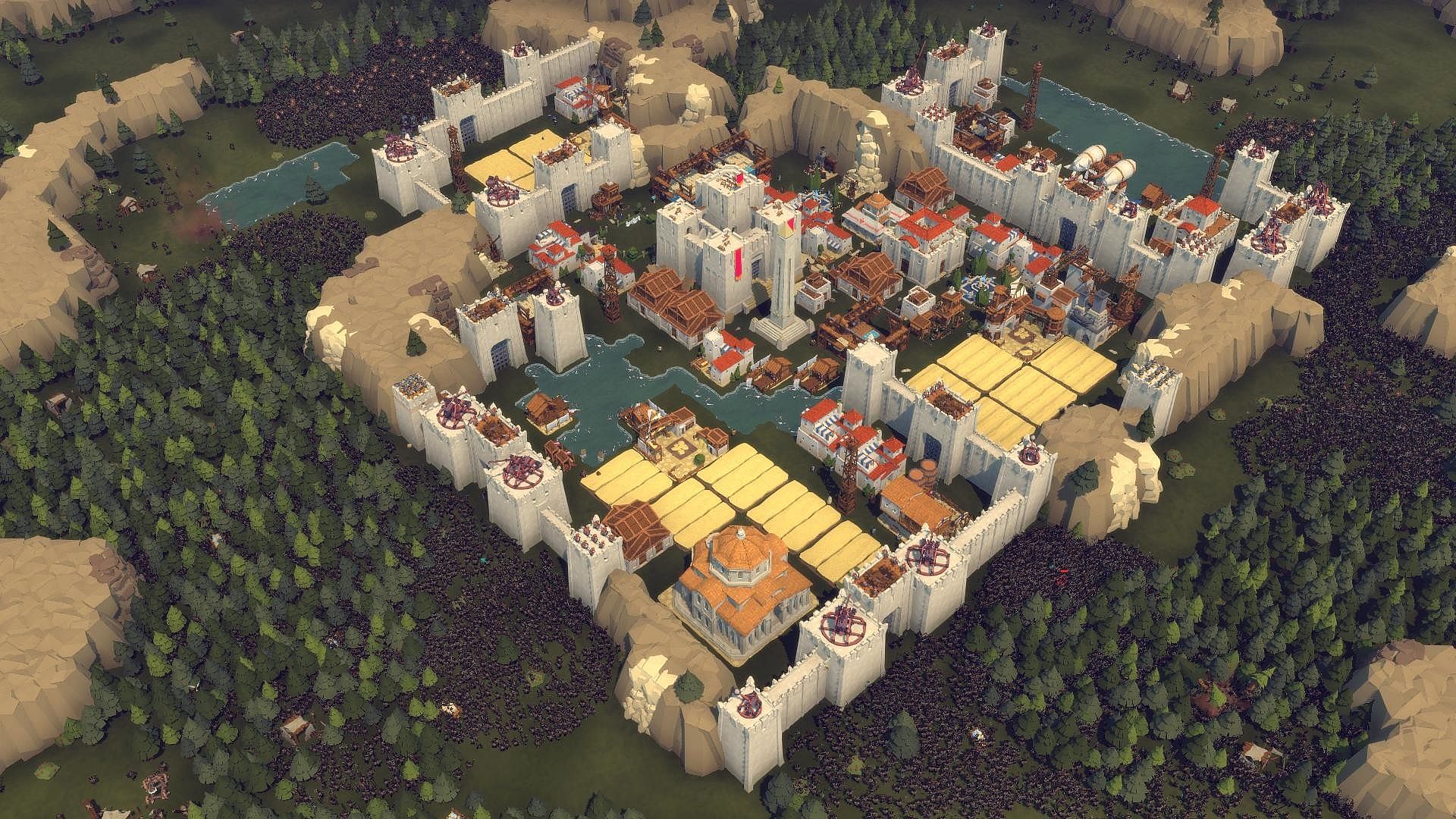
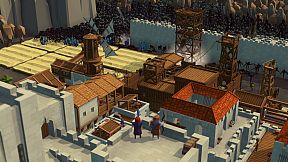
The gameplay loop revolves around constructing and upgrading a castle and surrounding structures while gathering essential resources such as food, wood, stone, iron, and gold. These materials support building expansions, army recruitment, and defensive improvements. Players must balance aggressive growth with security, as unprotected areas risk enemy incursions that can disrupt supply lines and lead to shortages.
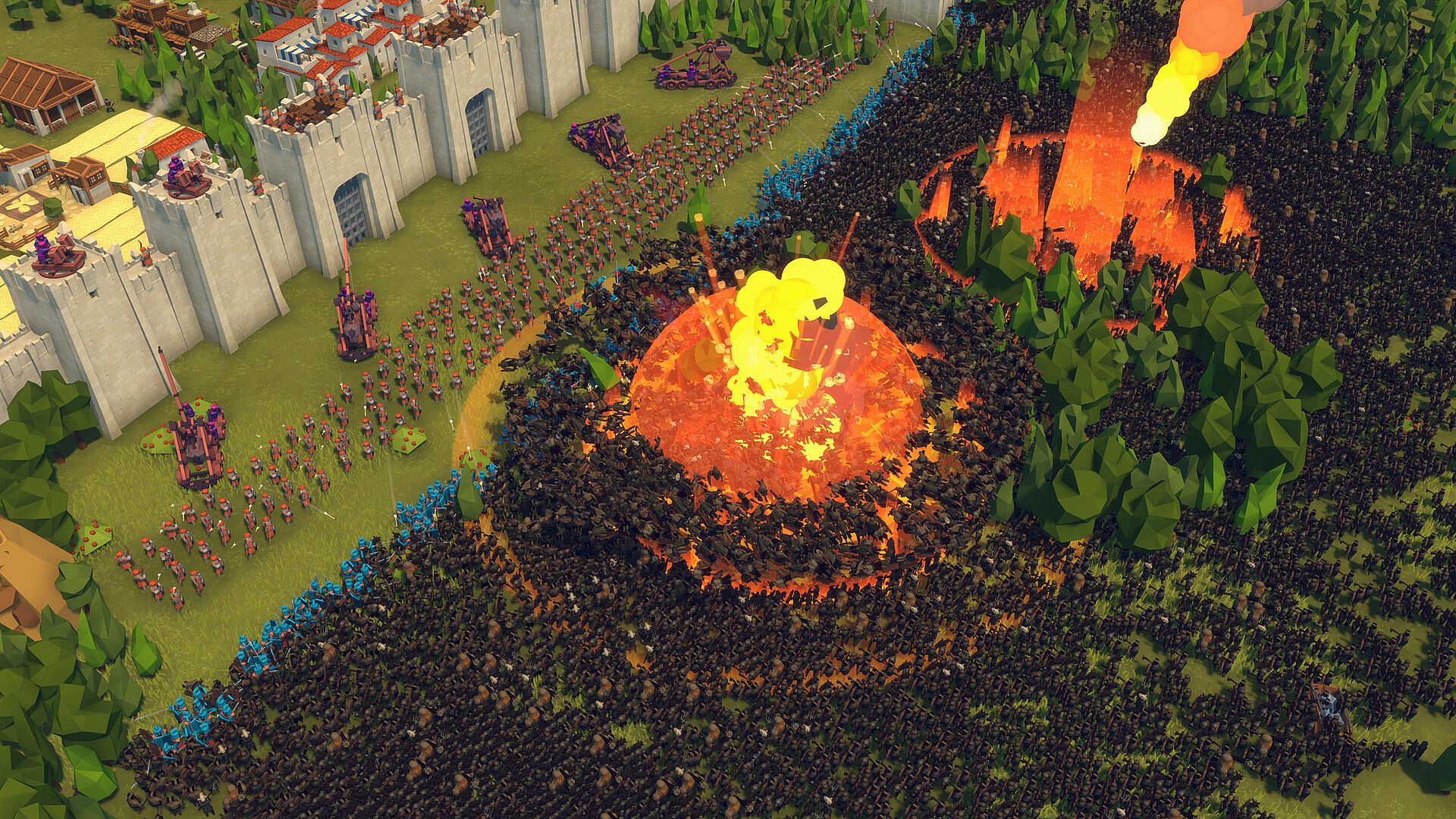
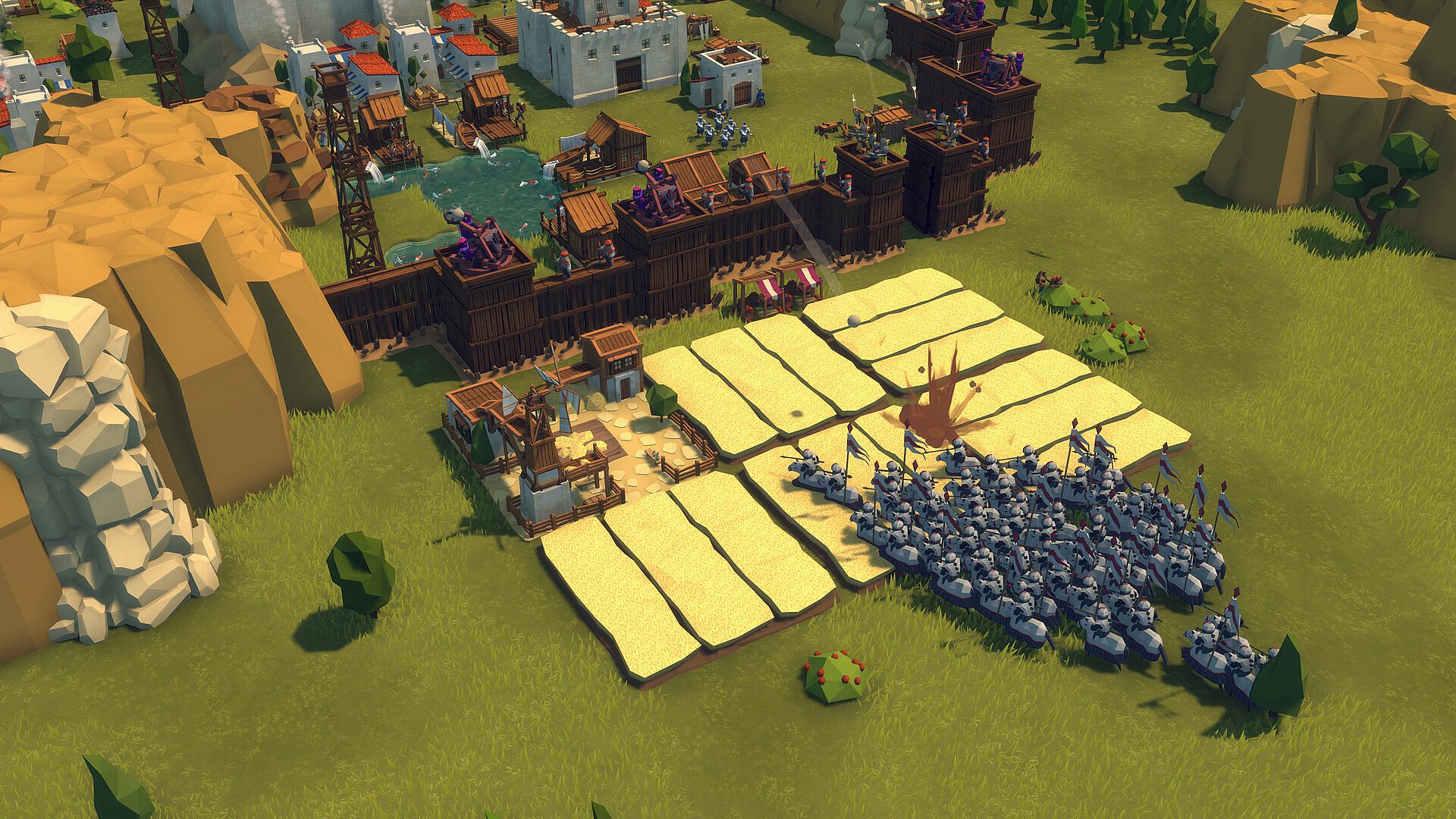
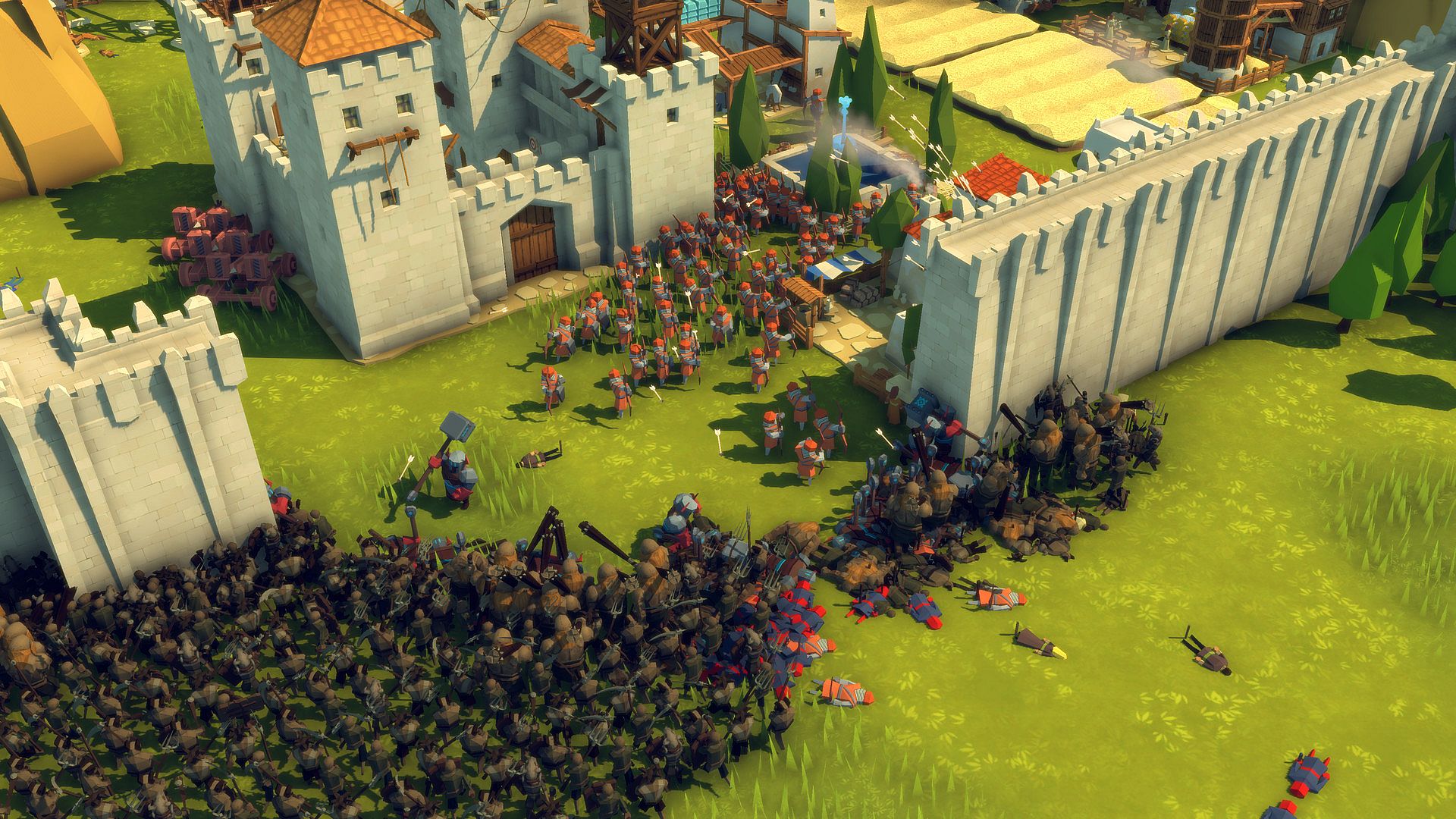
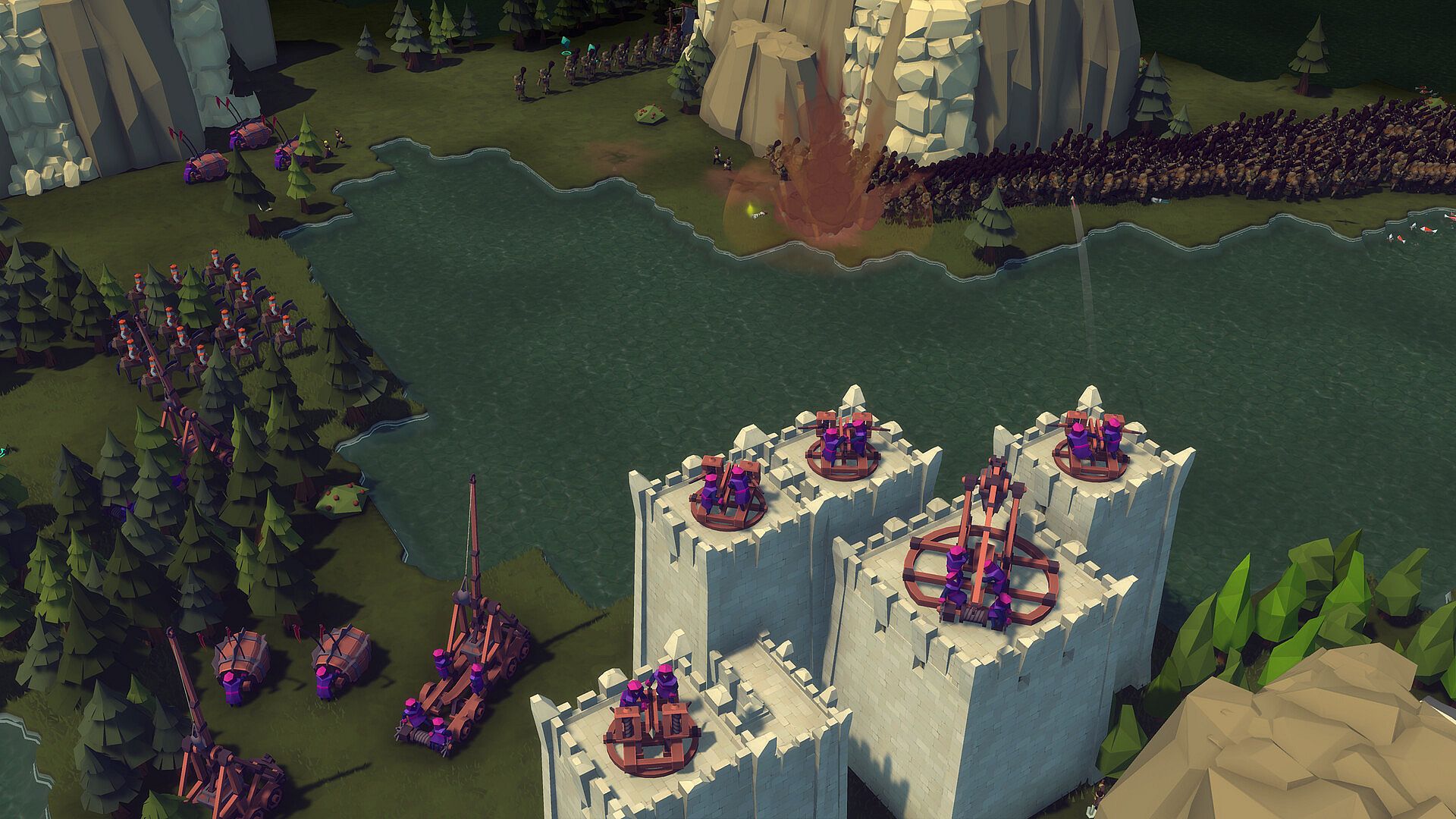
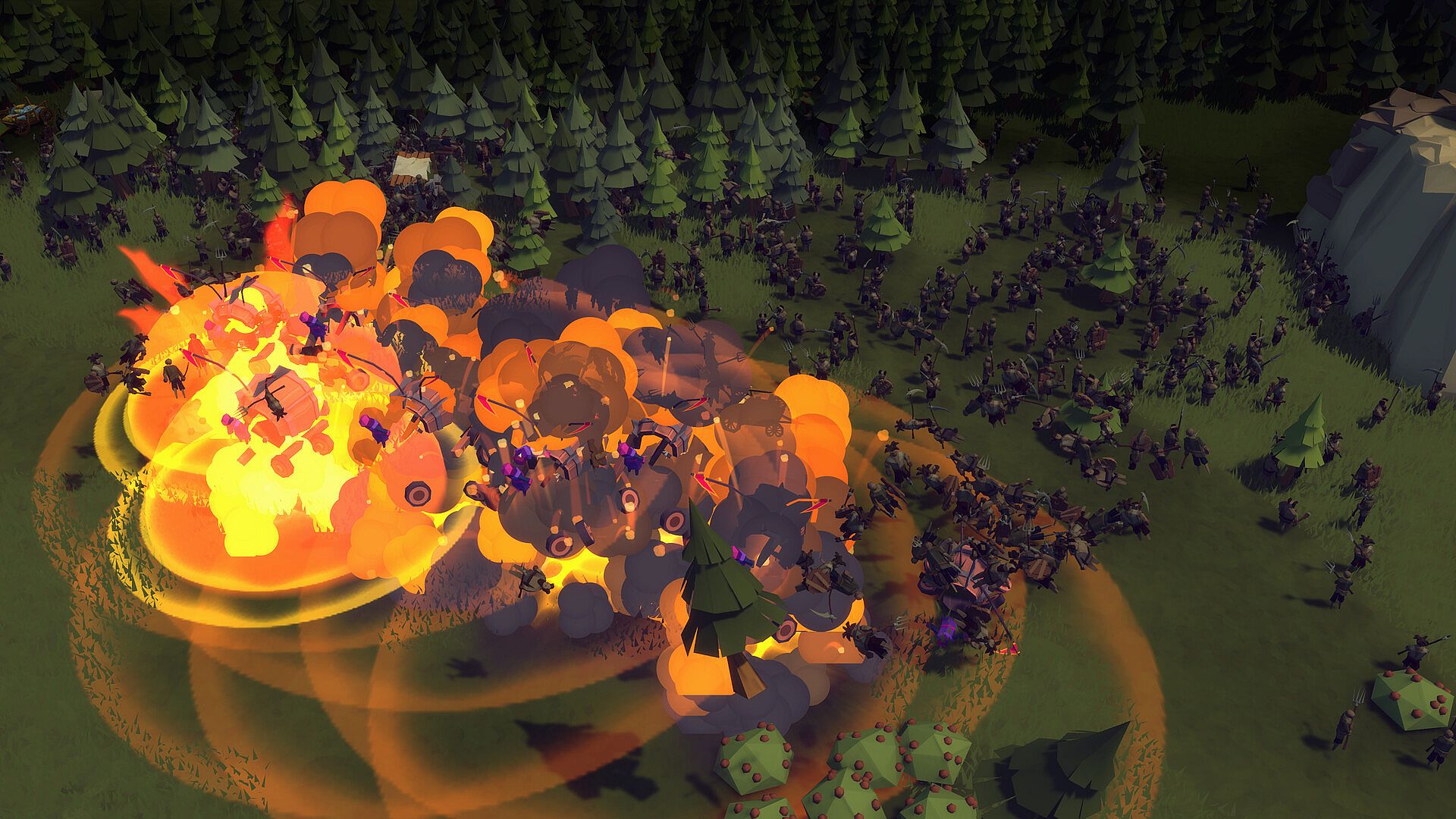
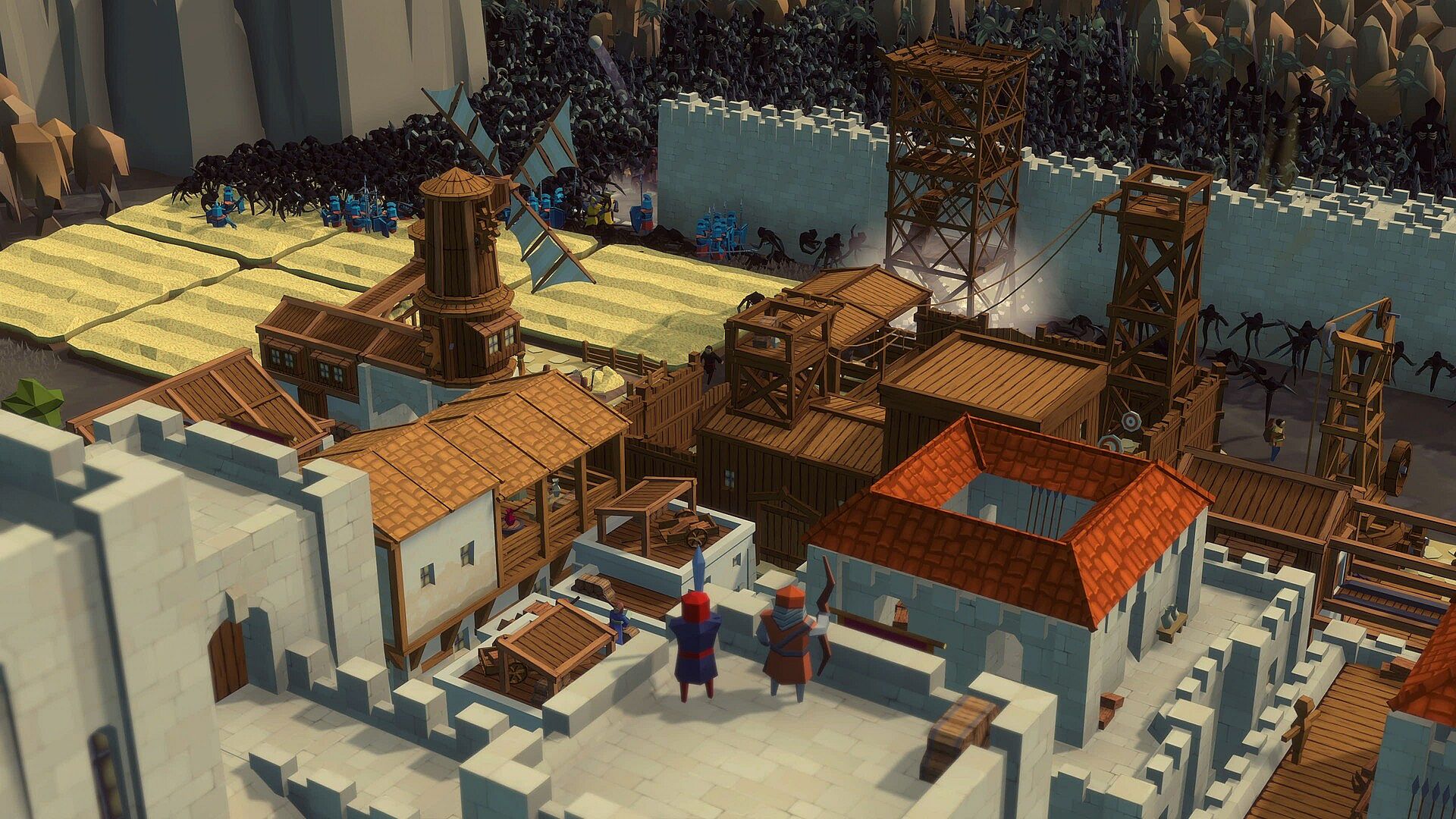
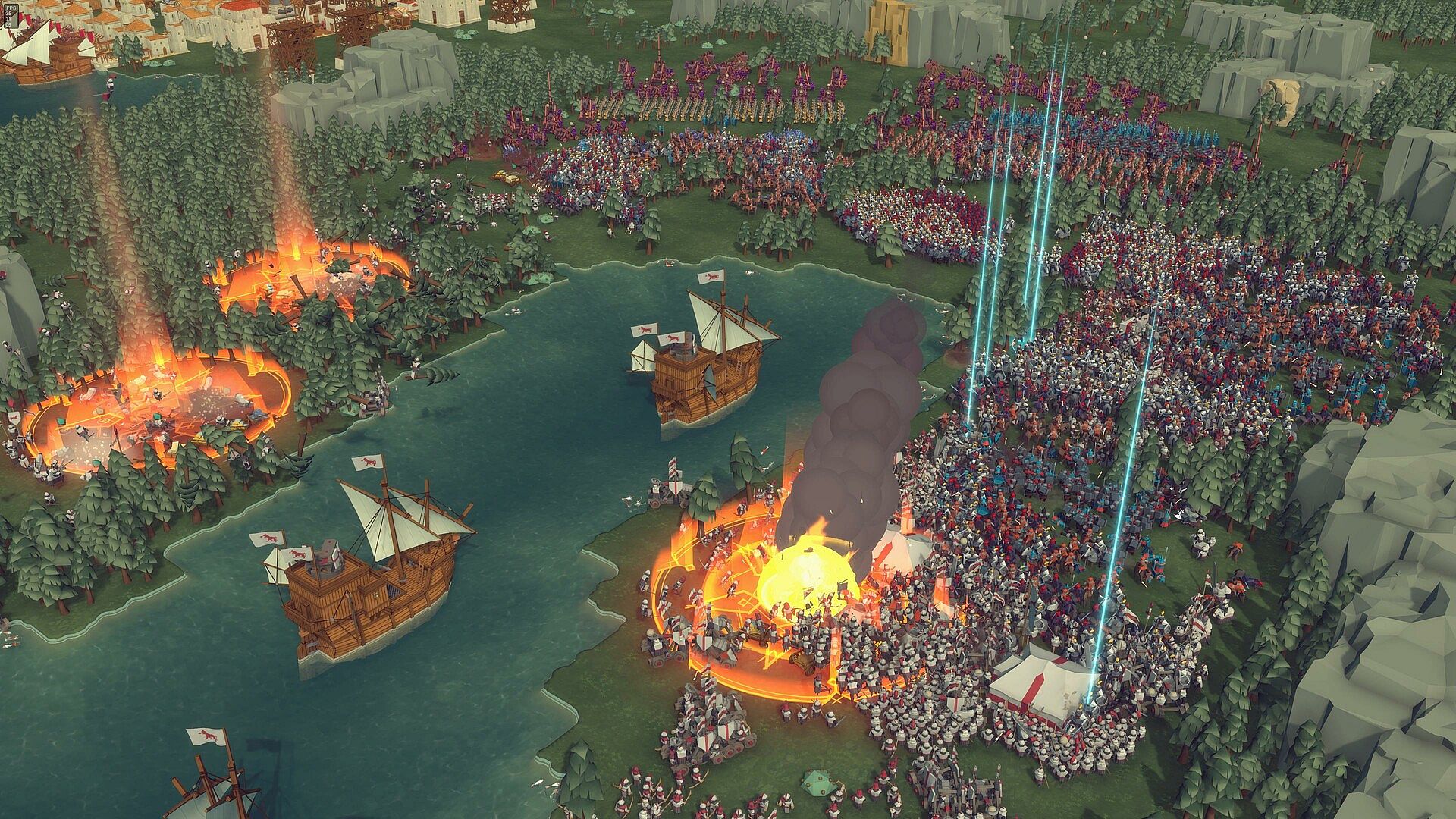
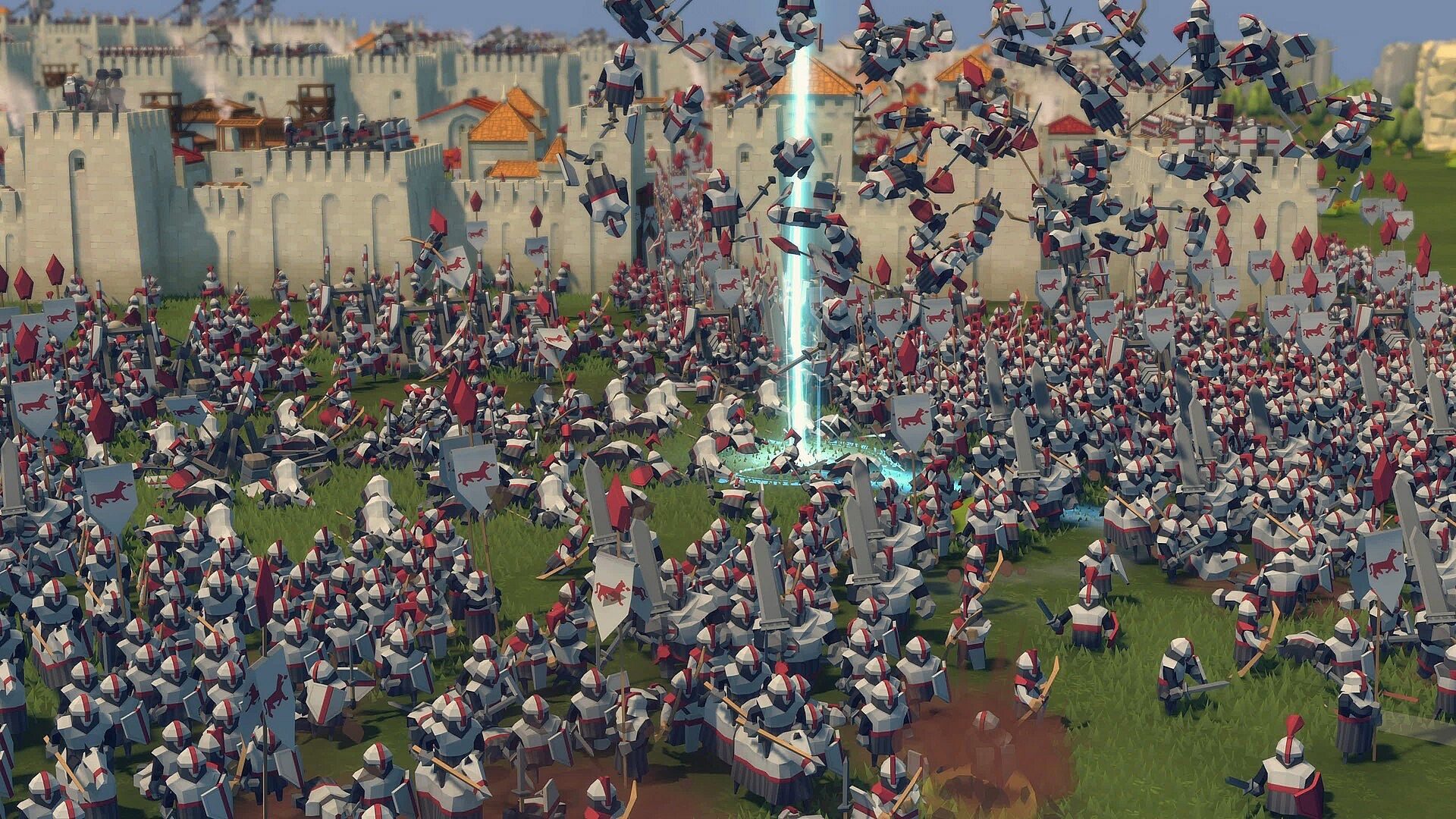
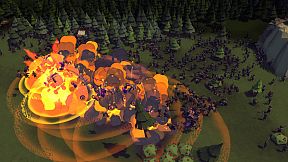
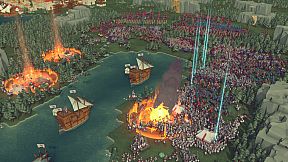
Combat incorporates detailed physics simulation for projectiles like arrows and catapult stones, along with enemy units launched into the air. Effective positioning of towers, gates, and kill zones becomes critical to maximize defensive efficiency and avoid self-inflicted obstructions from poorly placed walls. An active pause feature allows players to issue commands and adjust strategies without the pressure of real-time advancement.
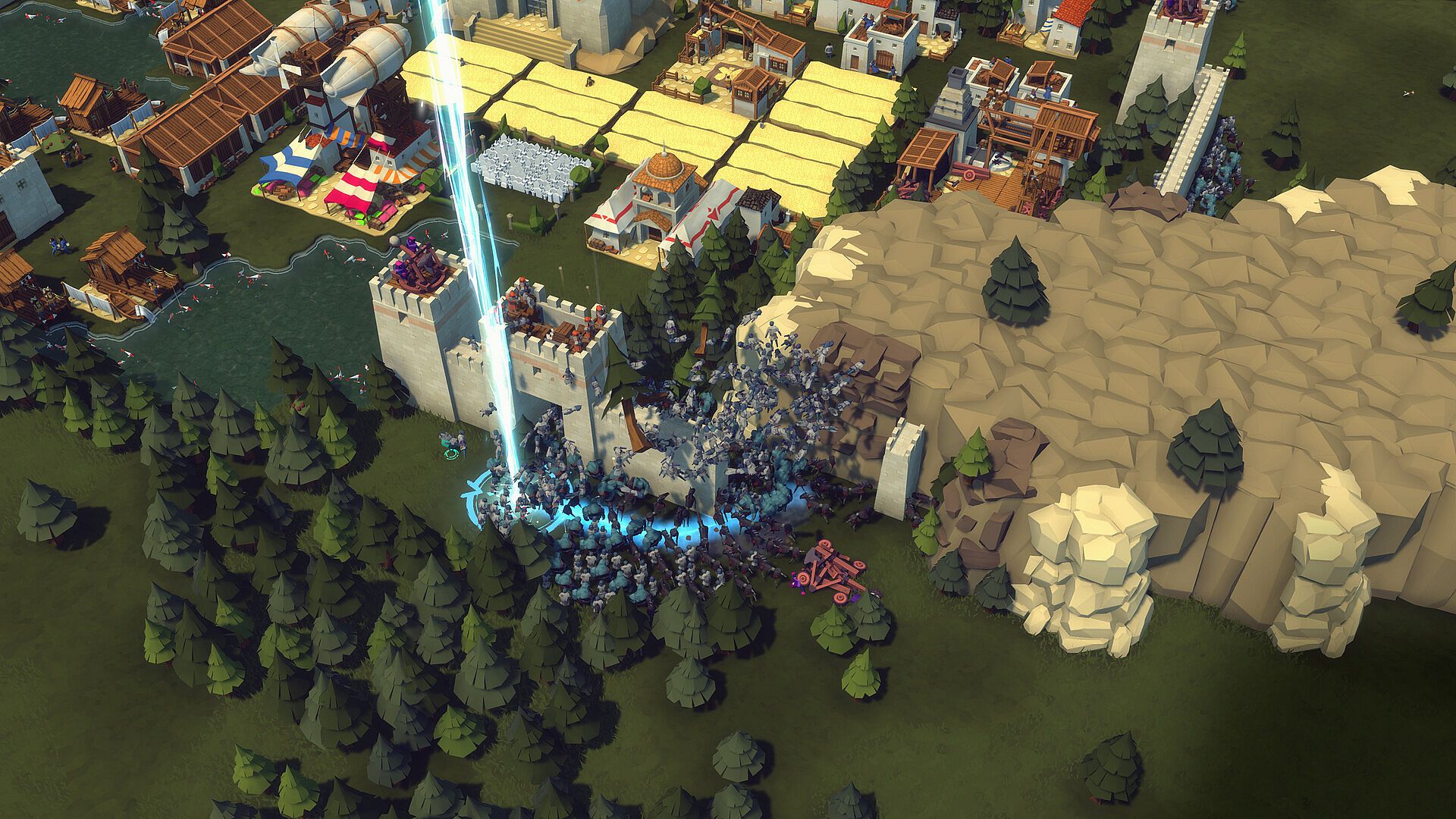
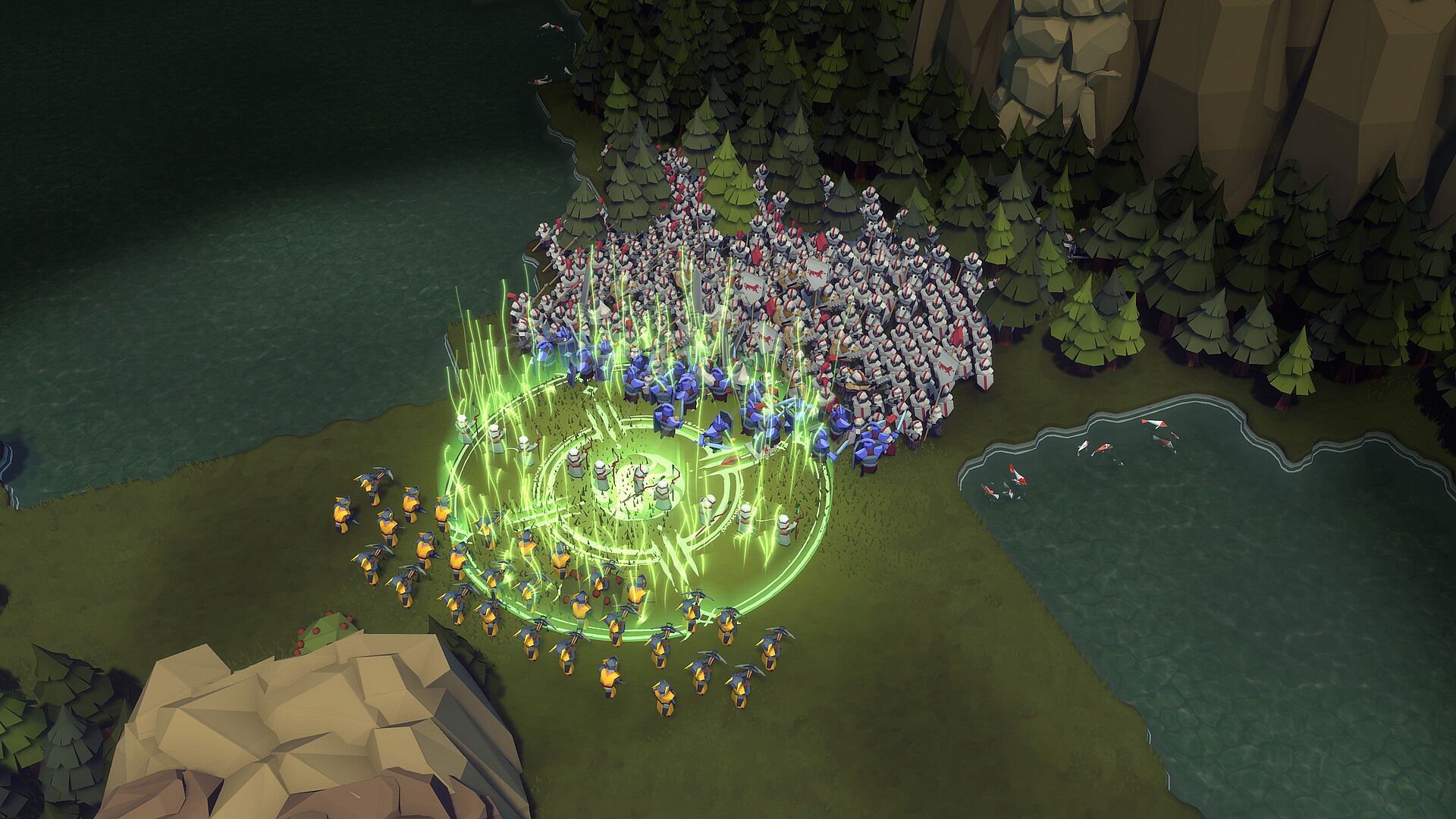
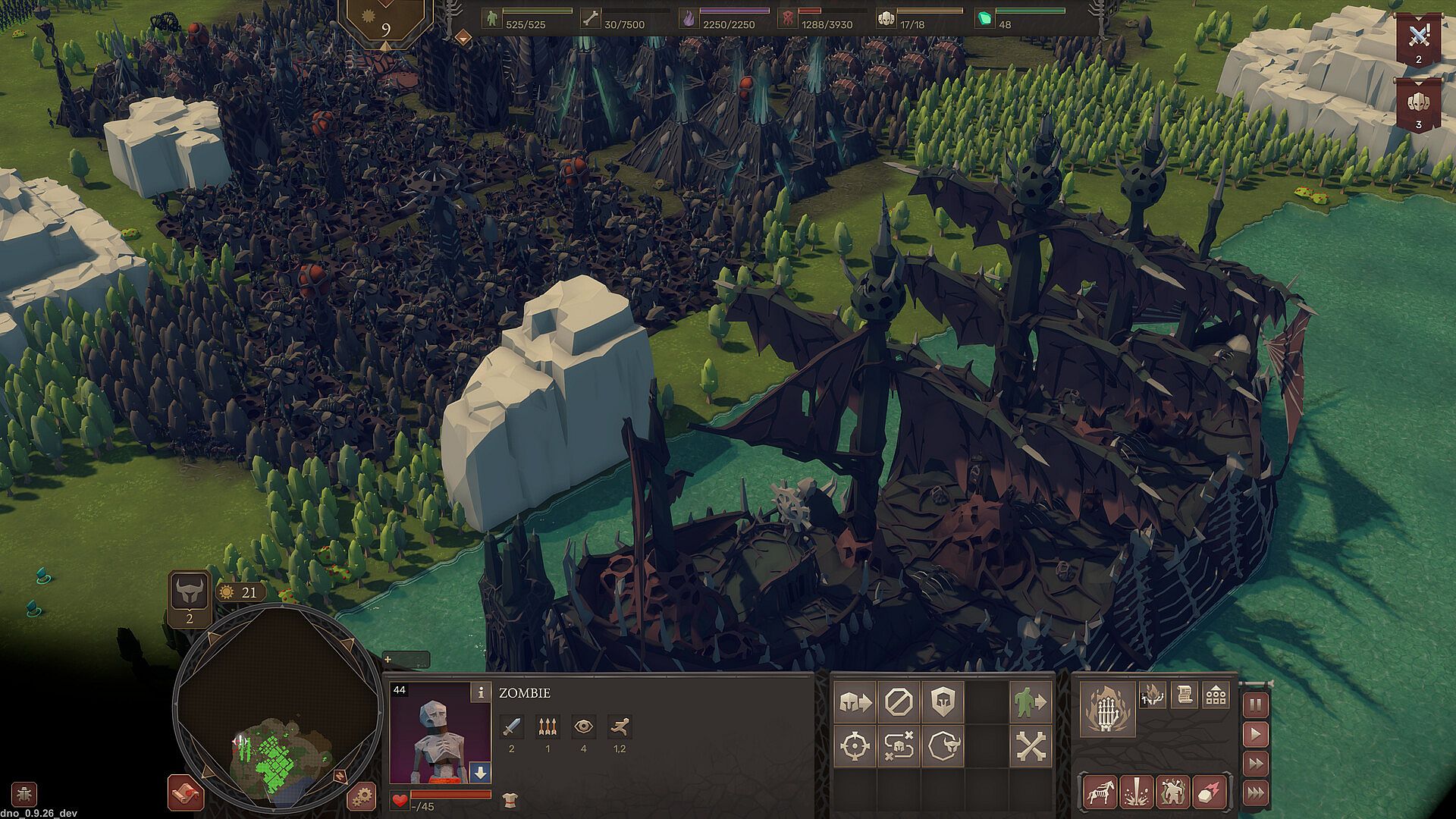
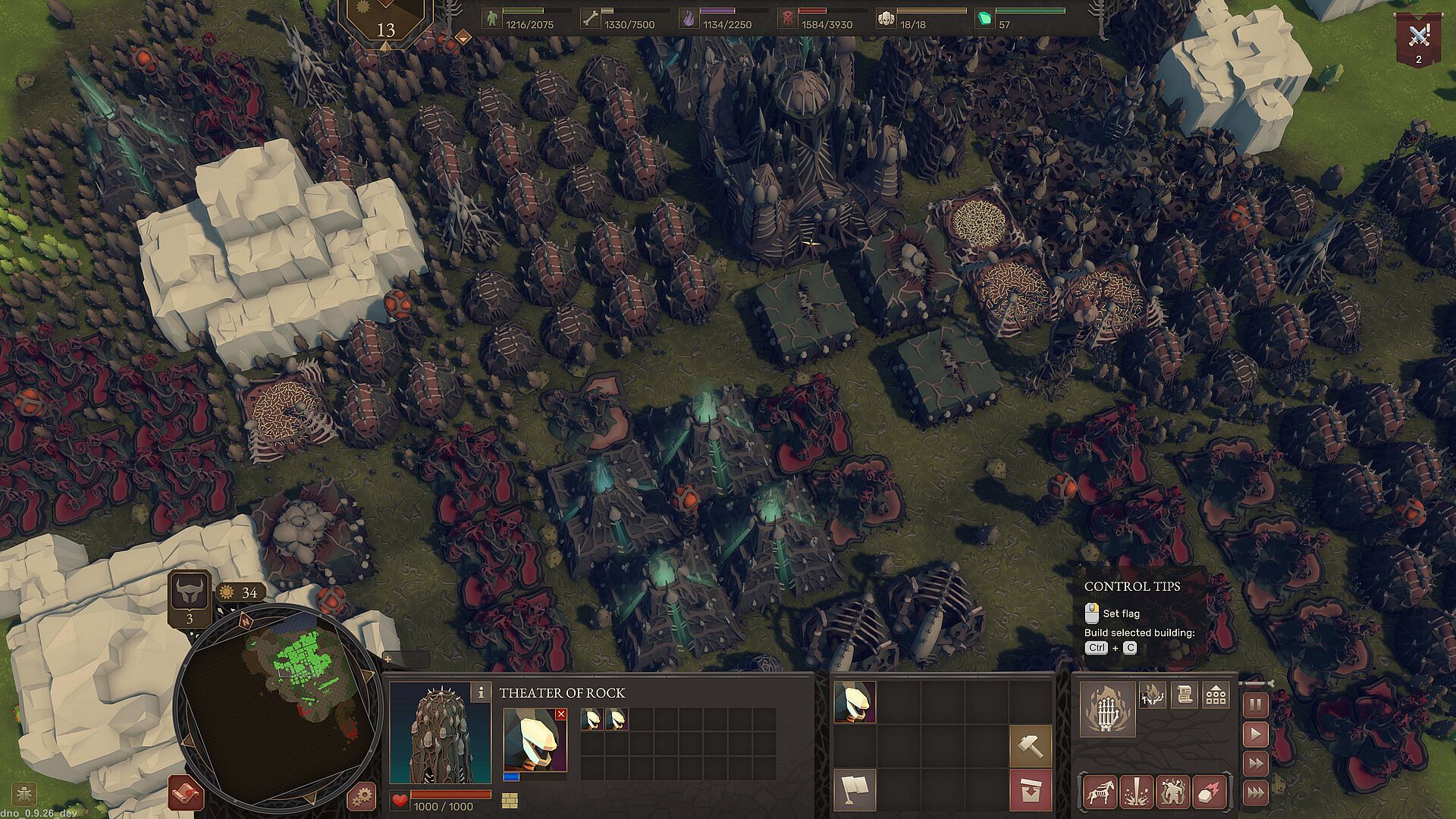
Economy and population management add layers of depth. Agriculture and farming sustain soldiers and civilians, while houses and burial practices help prevent disease outbreaks. Neglecting these systems can result in starvation, unrest, or even zombie incursions that compound existing threats. Magic provides an additional toolset, including spells for area damage and summoning, drawn from soul crystals harvested through magical monuments.
Trade via a merchant dirigible offers emergency resupply options for food or building materials during critical moments. The system encourages thoughtful expansion rather than unchecked sprawl, as distant outposts remain vulnerable without adequate protection.
Game Modes
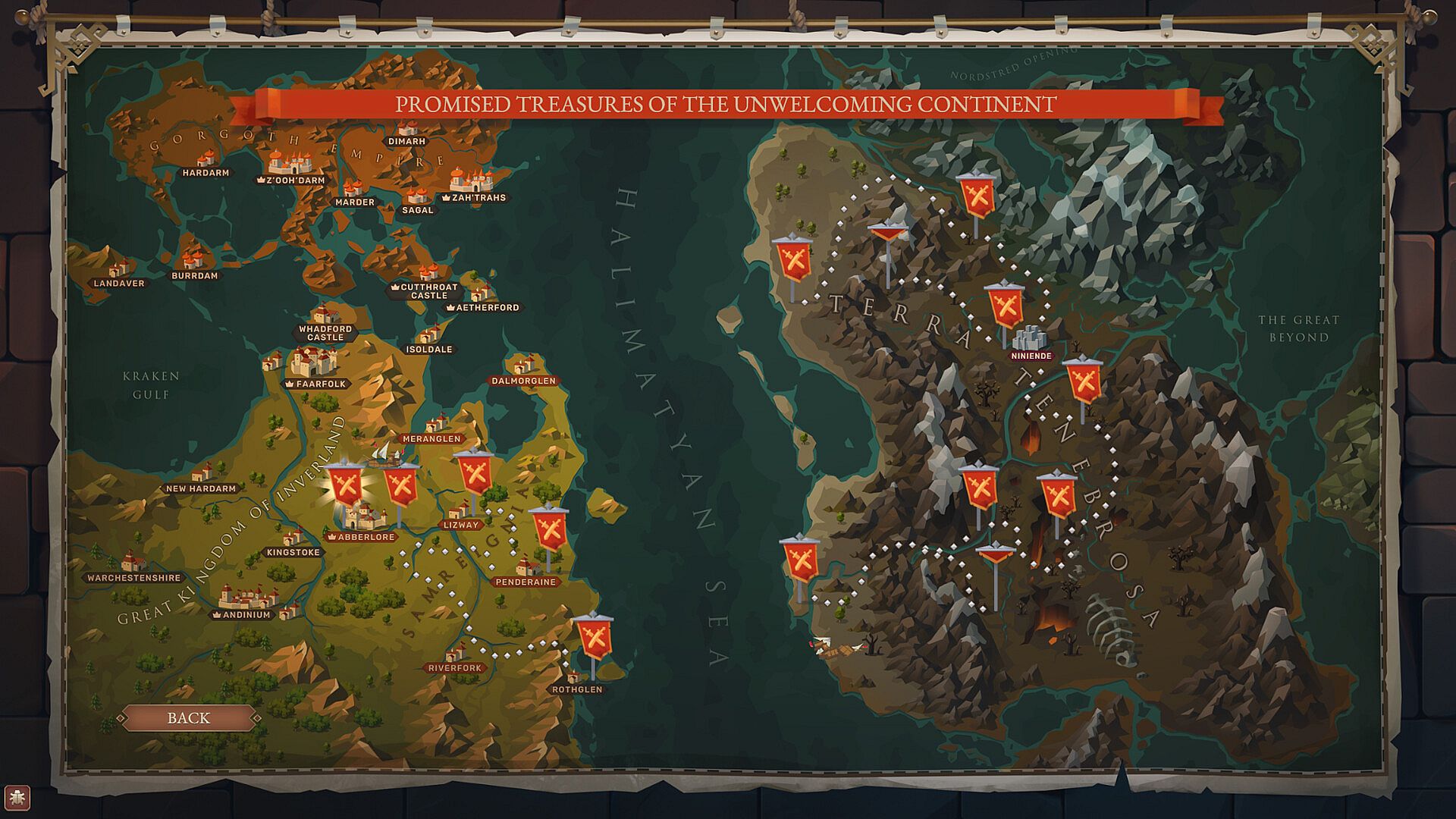
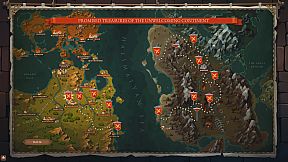
Four primary modes structure the experience. Story Campaign follows narrative branches tied to different factions, including paths aligned with the king, rebels, the Sarranga tribe, and the undead. Each branch presents distinct objectives and encounters within the medieval fantasy setting.
Endless Mode focuses on prolonged survival against escalating waves on procedurally generated maps. Challenge Mode introduces specific constraints and scenarios designed to test particular strategies. Sandbox Mode removes many limitations, allowing free experimentation with builds and army compositions.
A dedicated Map Editor supports creation of custom scenarios, extending replayability beyond the included content. These options cater to players seeking structured stories, competitive trials, or open-ended creativity.
Key Mechanics and Factions
Resource chains demand constant attention, with storage placement and upgrade paths influencing overall efficiency. Armies require ongoing support to avoid attrition from hunger or poor morale. Defensive layouts must account for lines of sight and fallback positions to handle the sheer volume of attackers.
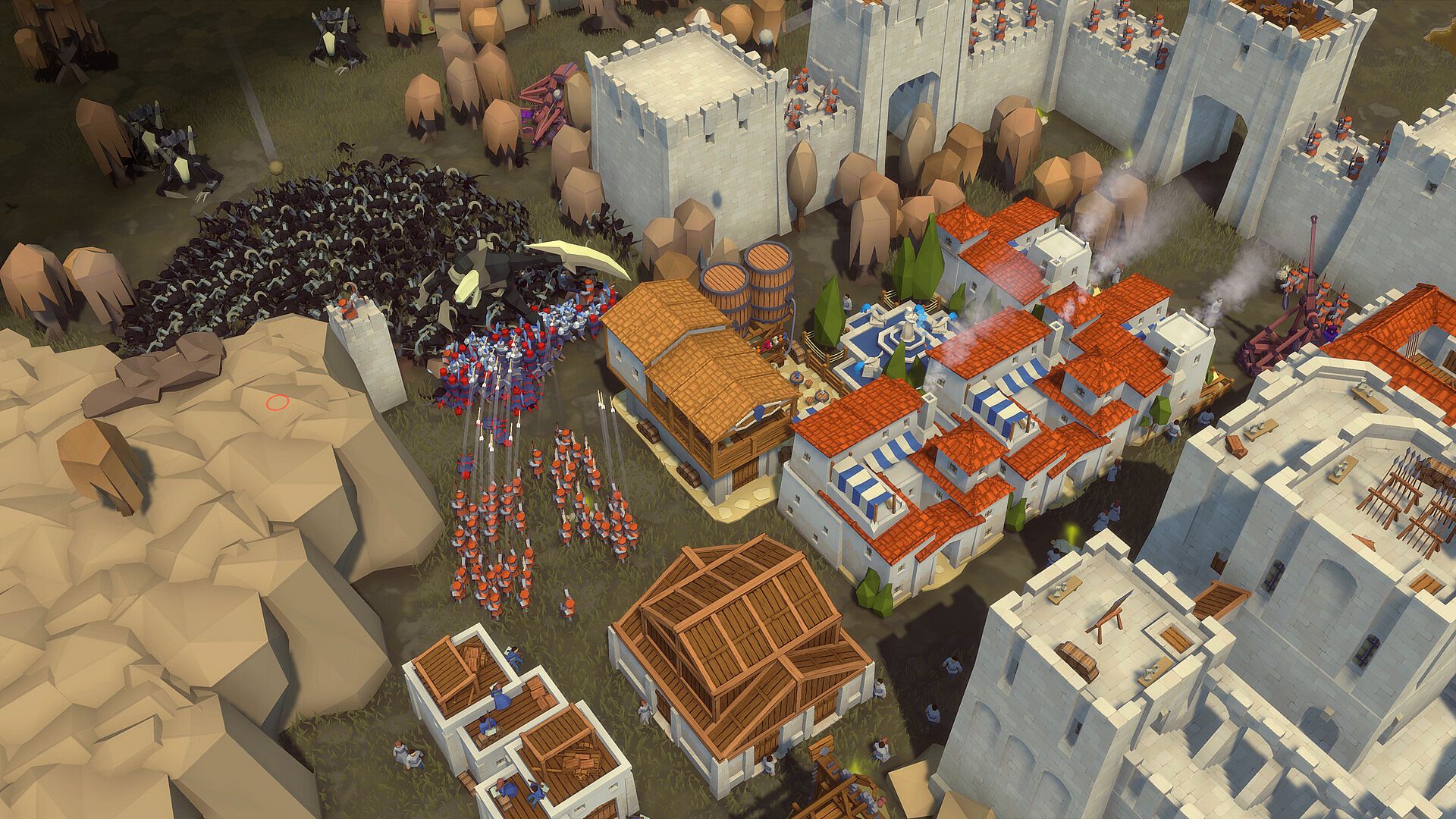
Enemy factions introduce variety in threats. The Sarranga tribe and undead forces bring unique behaviors, with the latter incorporating magical elements that players can counter or mirror through their own spellcasting. Physics-driven interactions make every engagement feel responsive, rewarding precise troop placement and timely interventions.
Population care ties directly into long-term viability. Healthy civilians contribute to production and defense, while neglect invites cascading failures such as empty barracks or unrepaired structures. These interconnected systems reward holistic planning over isolated focus on combat alone.
Is It Worth Playing?
The game reached full release in October 2024 and maintains Very Positive review ratings on its primary platform, with recent feedback also trending positively. Ongoing updates continue to refine maps, campaign elements, and balance as of mid-2026.
It suits players who enjoy real-time strategy titles that combine base building, resource management, and large-scale defensive battles. Those drawn to procedural maps, faction-specific campaigns, and the ability to experiment in sandbox environments will find substantial depth. The emphasis on physical simulation and economic trade-offs distinguishes it from lighter tower defense experiences.
Single-player focus with extensive mode variety makes it accessible for solo sessions of varying lengths. Individuals seeking a challenging medieval fantasy RTS with horde survival elements and meaningful progression systems will likely appreciate the layered decision-making required to succeed.