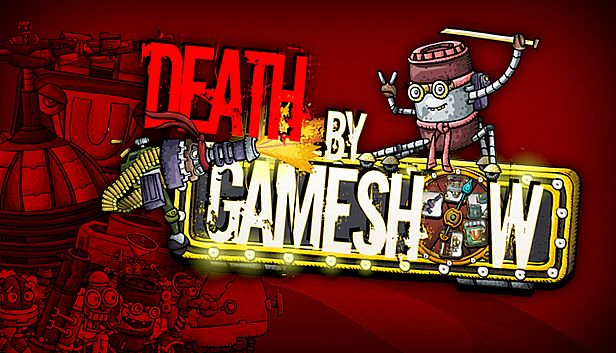















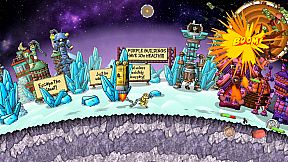
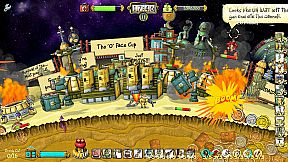
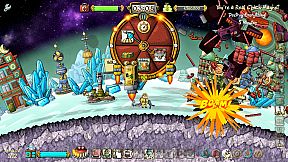
Death by Game Show is an action and strategy indie title developed for PC that blends quick decision making with resource management in a satirical setting. Players guide the character U.H. Wutt, a lead-footed tub of goo who represents the last vestige of intelligence in a future dominated by droid tyranny and widespread human ignorance. The core premise casts the player as the unseen strategist directing Wutt through a series of challenges framed as a rehabilitation program that doubles as a death sentence on a fictional game show.
Gameplay
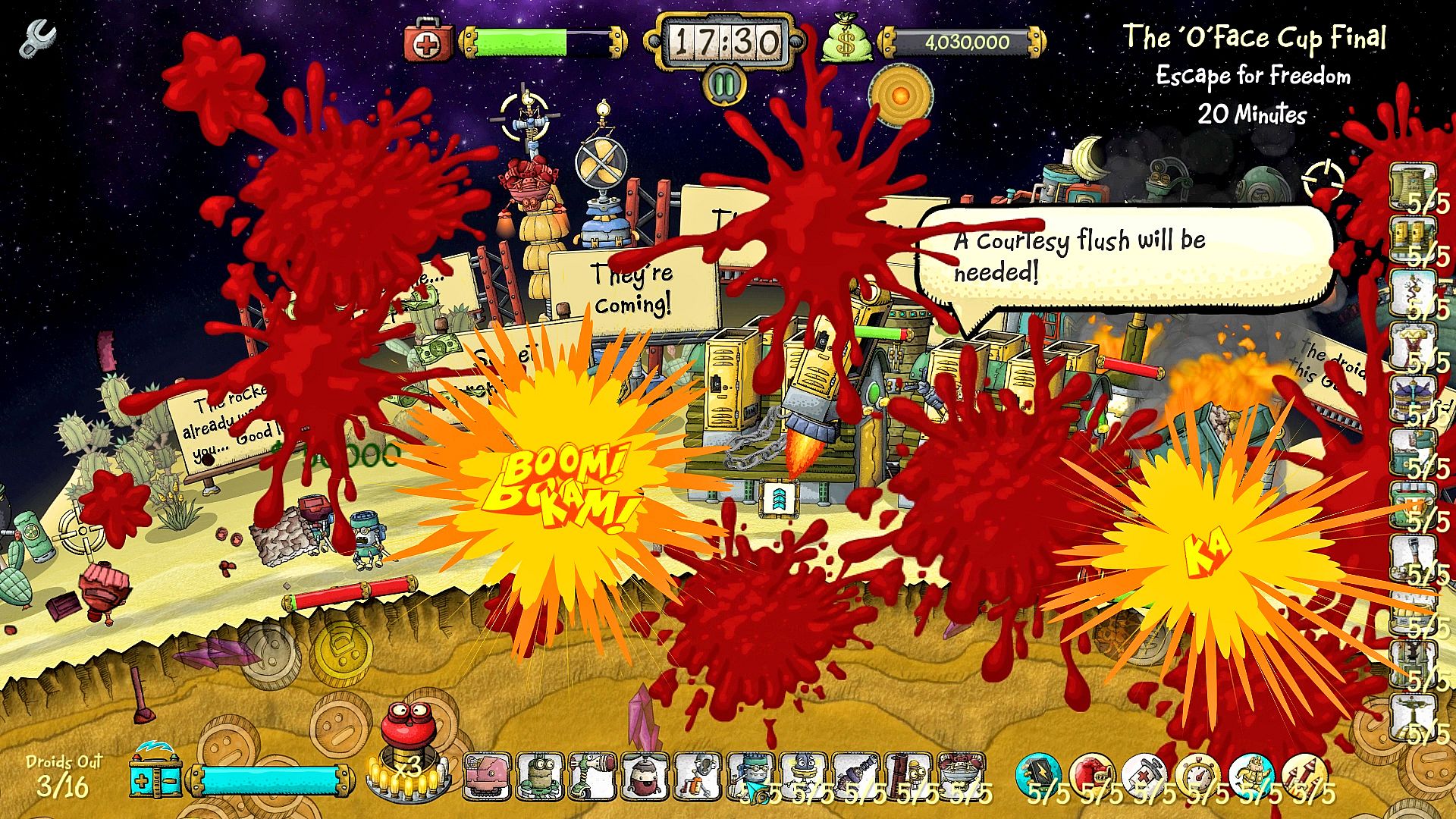
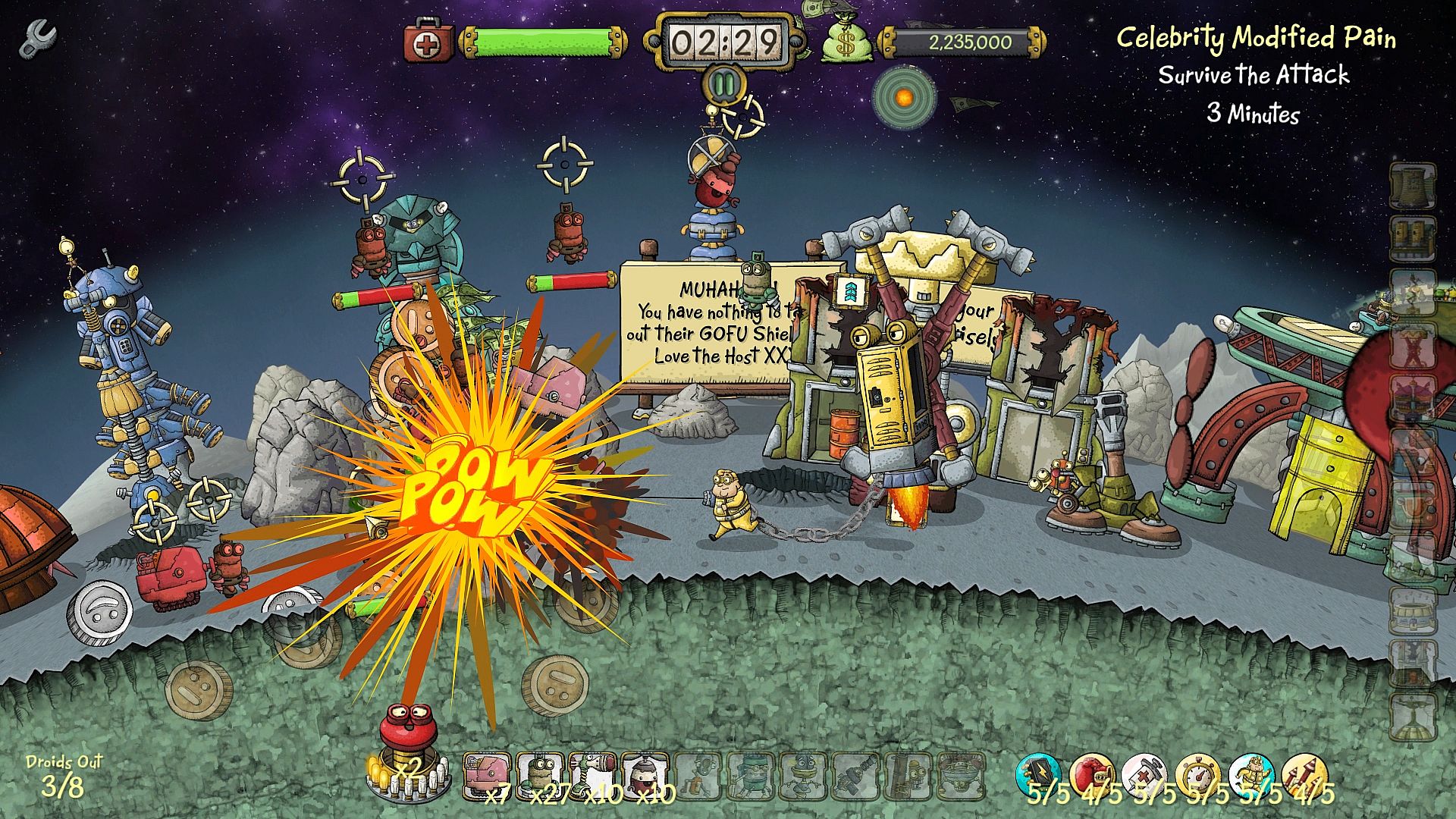
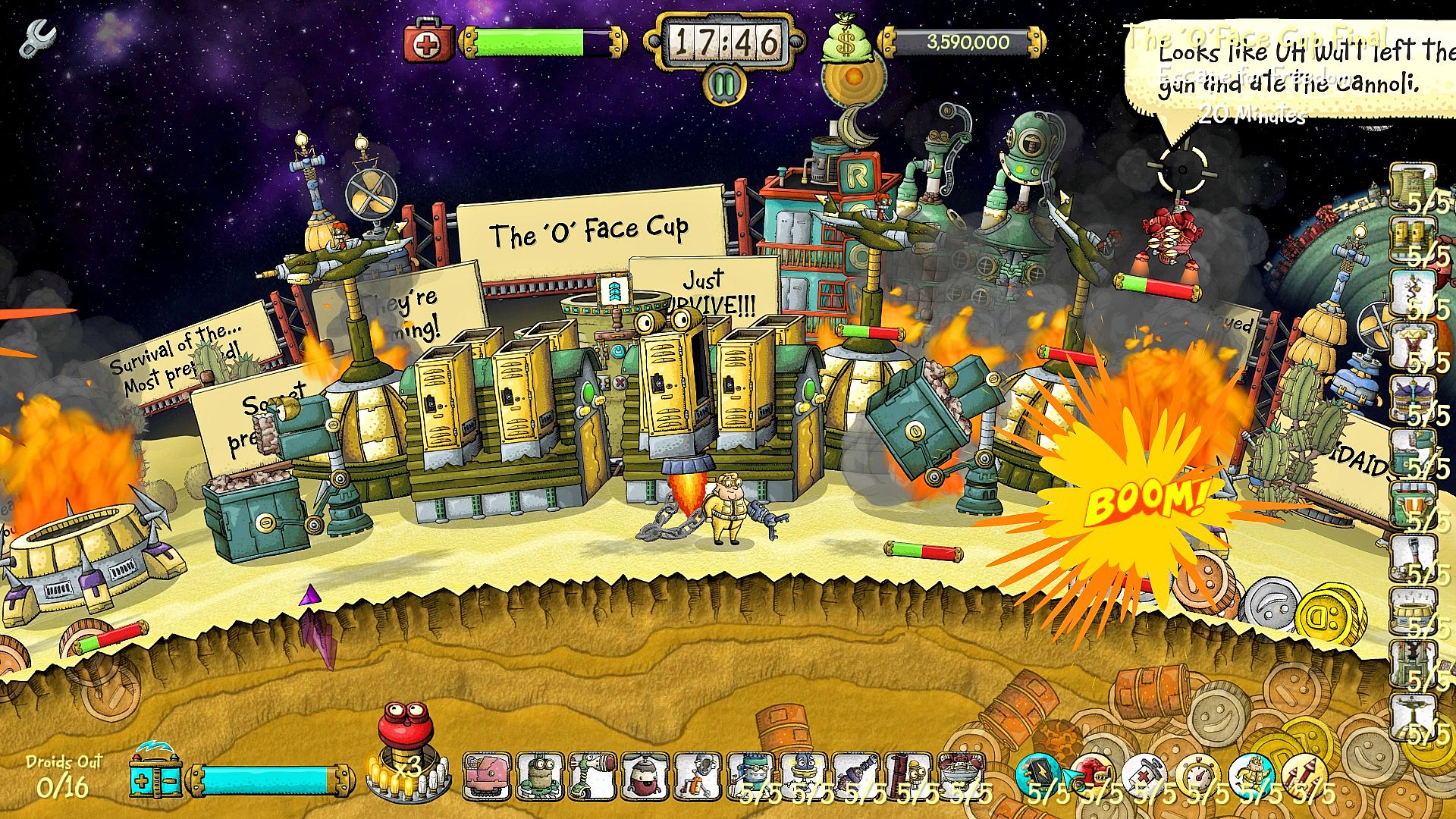
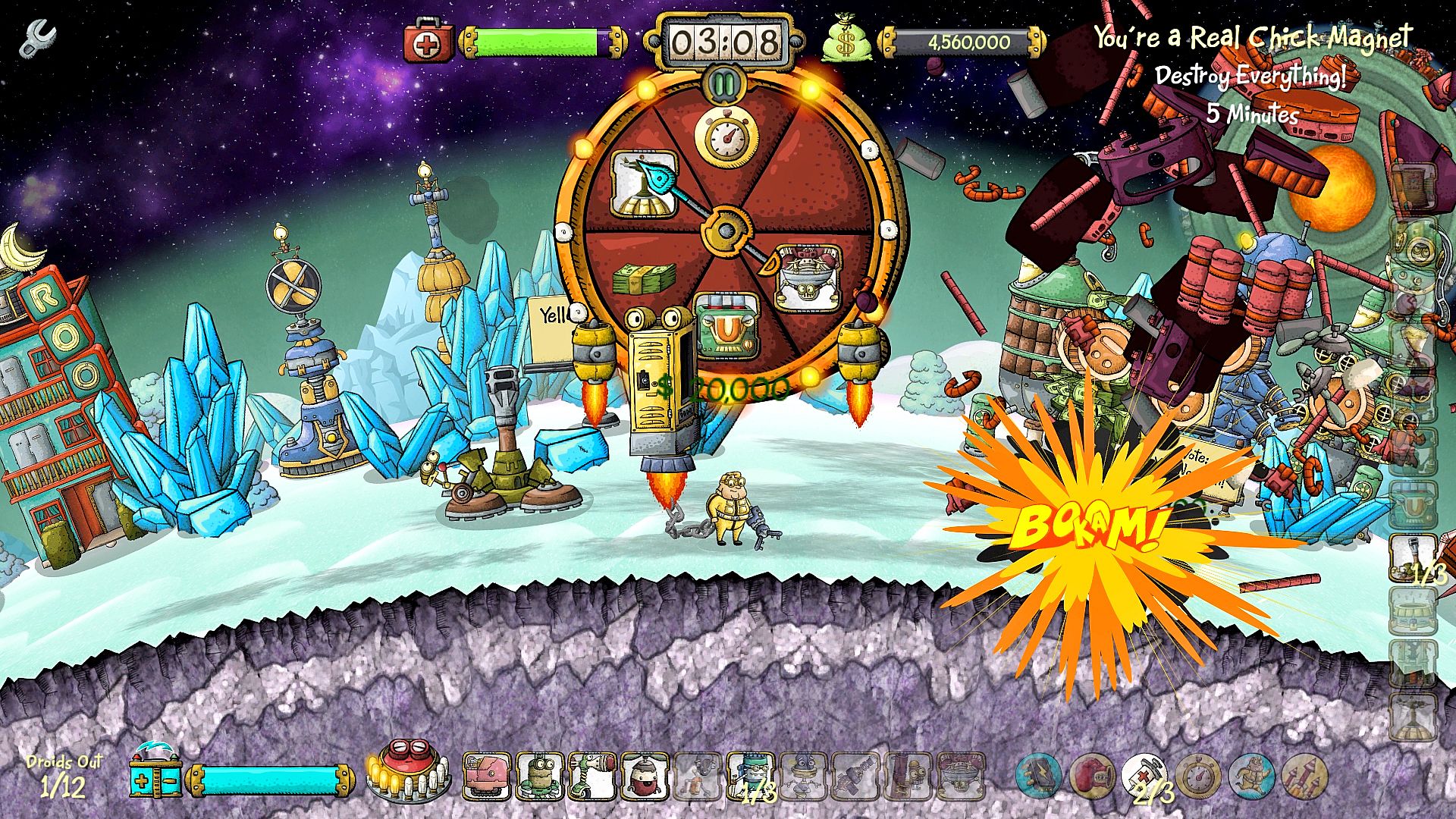
The gameplay centers on twitch strategy, where survival depends on rapid reactions combined with thoughtful resource allocation rather than raw power. Players must handle multiple simultaneous tasks such as spawning droids, collecting coins, constructing buildings, spinning for loot, and avoiding incoming attacks. Success requires balancing these actions without the safety net of automated systems, forcing constant attention to the screen and decisive inputs at every moment. The learning curve rewards practice, as even basic actions like droid deployment become complex when layered with movement and defensive maneuvers.
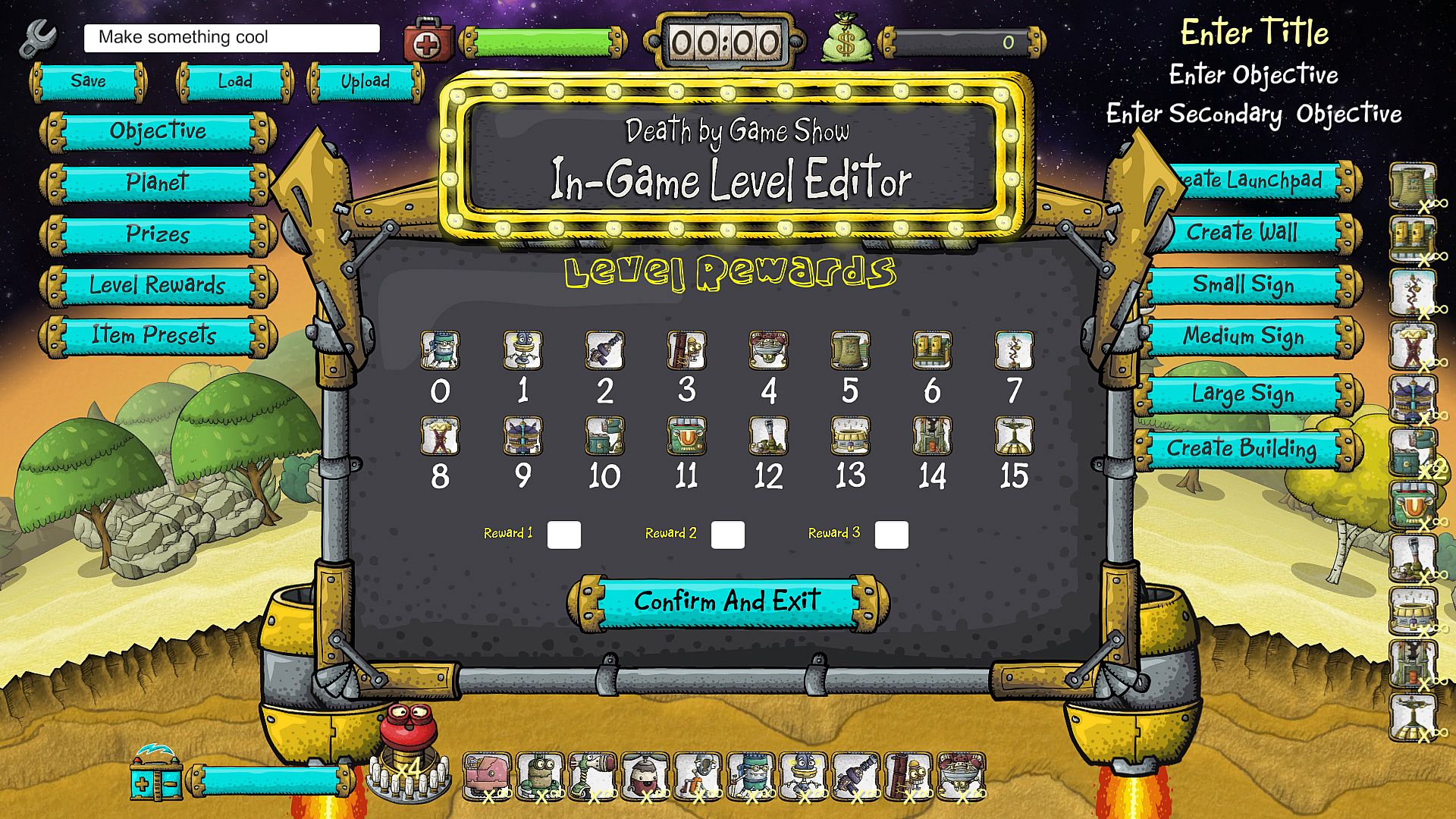
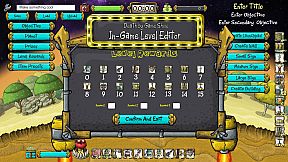
Customization options allow modification of in-game text, droid color schemes, and level layouts. These changes can be shared through workshop features, encouraging community contributions that expand the available content. The system supports creative expression while tying directly into the competitive aspect of creating standout experiences.
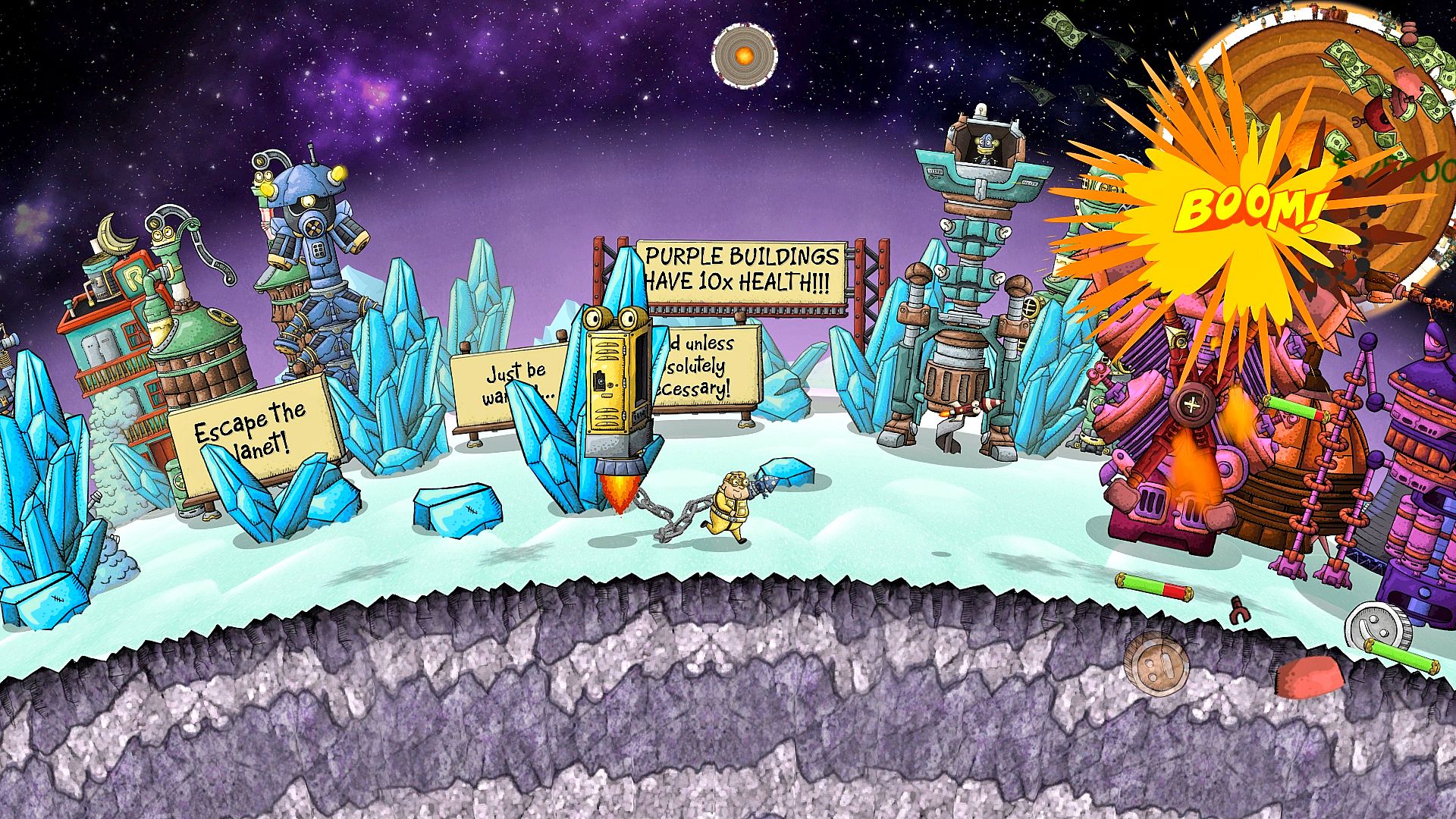
Story elements unfold through brief social exchanges, battlecries, and concealed messages scattered across the environment. Players piece together the narrative by observing these fragments, uncovering layers of meaning beneath the surface-level chaos. The satirical tone draws from observations of contemporary society, embedding parodies and metaphors that reward attentive play.
Game Modes
The experience revolves around a unified strategic loop that integrates action elements without separate named modes. Players engage in continuous sessions where decision making under pressure determines outcomes, blending defensive construction with offensive droid deployment and opportunistic resource gathering. This structure emphasizes adaptability, as each run demands fresh responses to evolving threats and opportunities on screen.
Progression ties into the rehabilitation narrative, with each successful sequence advancing Wutt toward greater autonomy while exposing the flaws in the surrounding droid-controlled world. The absence of traditional progression tracks keeps focus on immediate tactical choices and long-term pattern recognition.
Customization and Community Features
Level building tools and visual tweaks extend the base mechanics, letting players experiment with new configurations and share results. Workshop integration provides a platform for distributing these creations, where standout designs may receive recognition through prizes or community feedback. This layer adds replay value by transforming the core systems into a canvas for user-driven content.
Text modifications further personalize interactions, allowing alterations that can highlight or subvert the satirical elements already present in the dialogue and events. Such flexibility supports varied playstyles, from straightforward optimization to more experimental approaches that test the limits of the mechanics.
Is It Worth Playing?
Death by Game Show suits players who enjoy hybrid strategy experiences that demand both speed and planning in equal measure. The emphasis on reactive resource management and layered multitasking appeals to those comfortable with indie titles that prioritize mechanical depth over polished presentation. Its satirical framing and hidden narrative threads add an extra dimension for players interested in uncovering layers beyond the immediate action.
The game remains in a state of ongoing refinement, with the developers open to constructive input through community channels. Availability on PC makes it accessible for those seeking a distinctive take on strategy gameplay rooted in pop culture references and decision-making pressure. Individuals drawn to tower defense influences mixed with real-time demands will find the systems rewarding after an initial adjustment period, particularly if they value creative customization and community sharing.