

Dead Broke is a free-to-play action and strategy indie game for PC that blends fast-paced arena combat with roguelite progression. Money serves as life, ammunition, and currency in a single unified system, forcing players to balance aggressive shooting against careful resource management while navigating casino-themed environments filled with hostile debtors and powerful bosses.
Gameplay
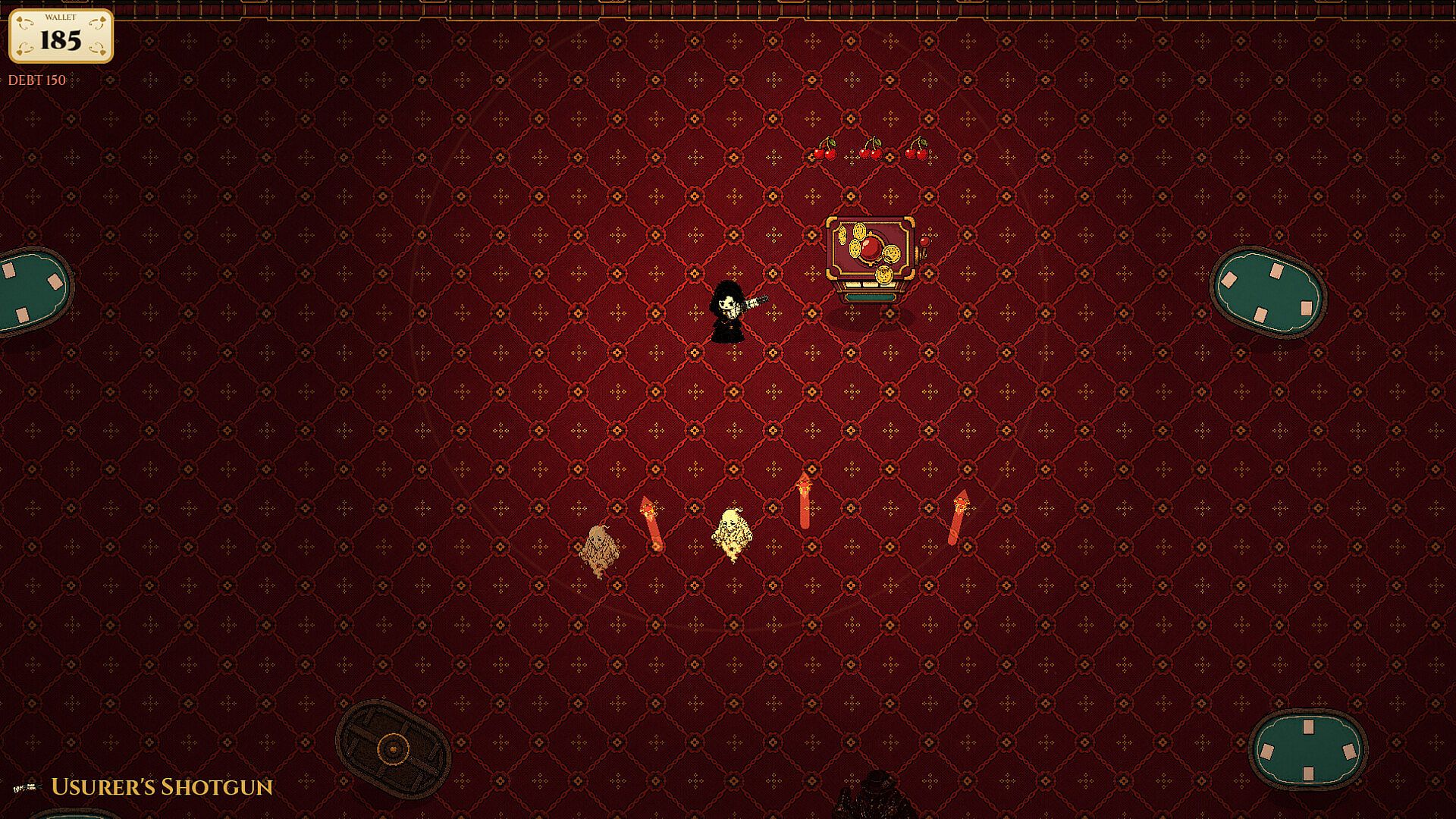
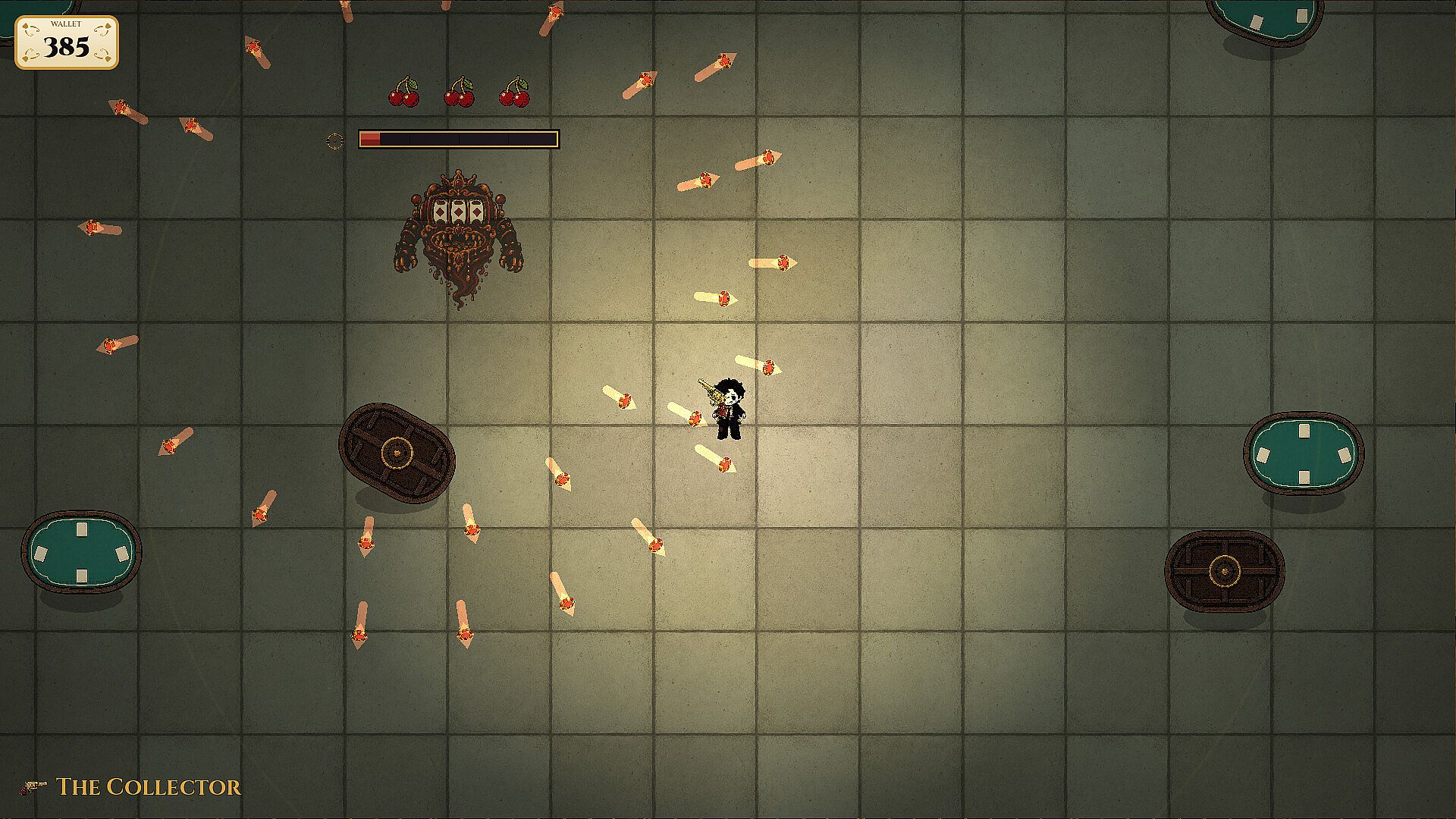
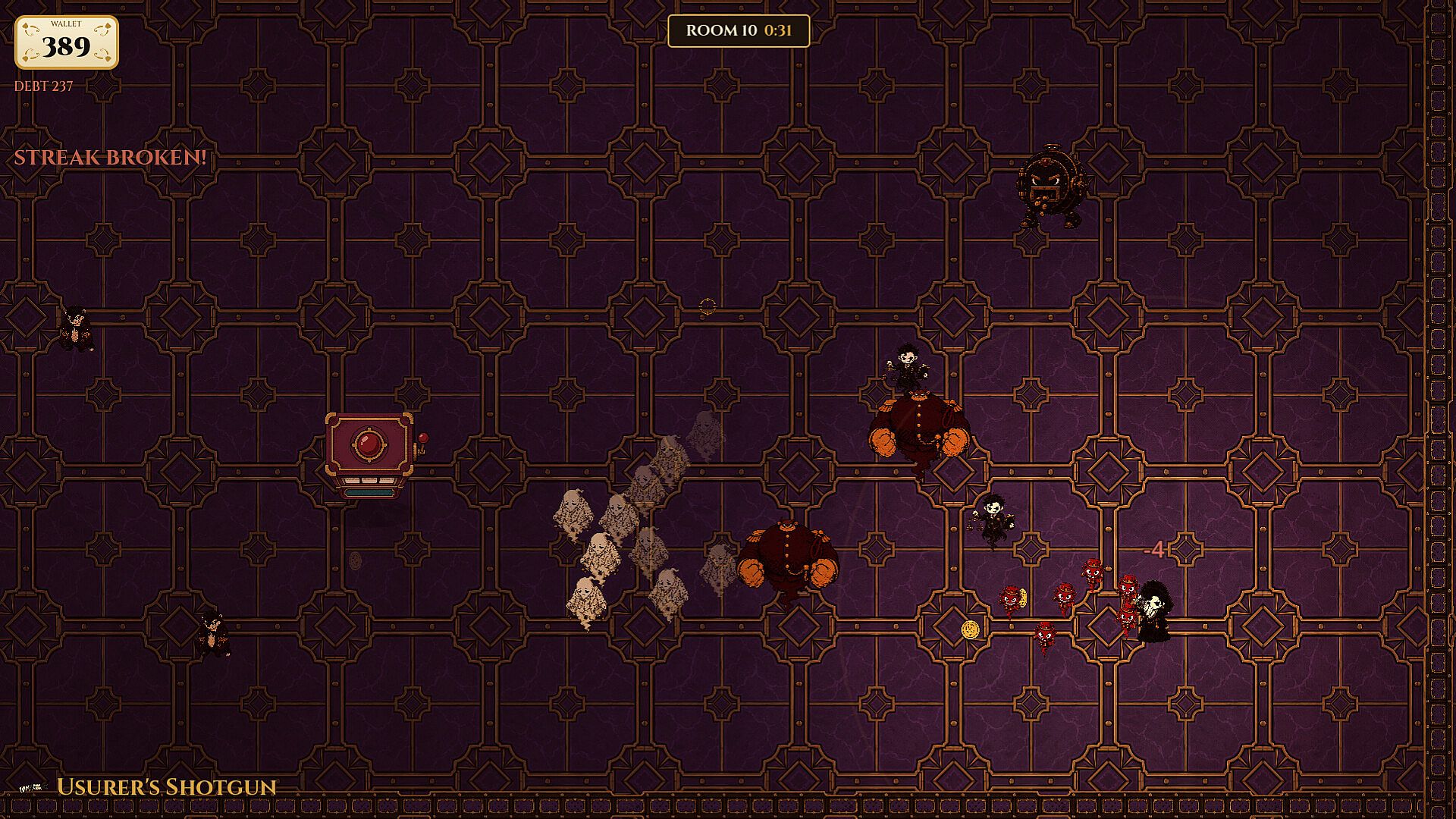
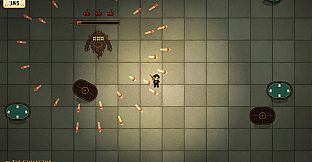
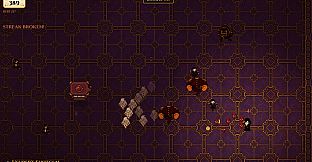
The core loop centers on a single wallet that tracks every resource. Firing a weapon deducts from the balance, taking damage reduces it further, and collecting coins restores both health and spending power. This economy-driven design turns every encounter into a calculated risk, where running out of funds ends the run. Players descend through arena-style halls, dodging waves of enemies while adapting to bosses that target the wallet directly.
Thirteen distinct characters each impose a unique rule that alters the economy. The Widow begins the run already in debt, requiring immediate aggressive play to recover. The Forger fires at reduced cost, encouraging sustained fire. The Twins maintain two separate wallets, allowing one to absorb damage while the other funds attacks. Additional characters unlock over time and reward experimentation with different starting conditions.
More than twenty weapons and forty items create layered synergies. Certain combinations lower firing costs dramatically, while others convert damage taken into temporary cash bonuses. Hidden interactions emerge only through repeated runs, encouraging players to test loadouts rather than rely on a single build.
Game Modes
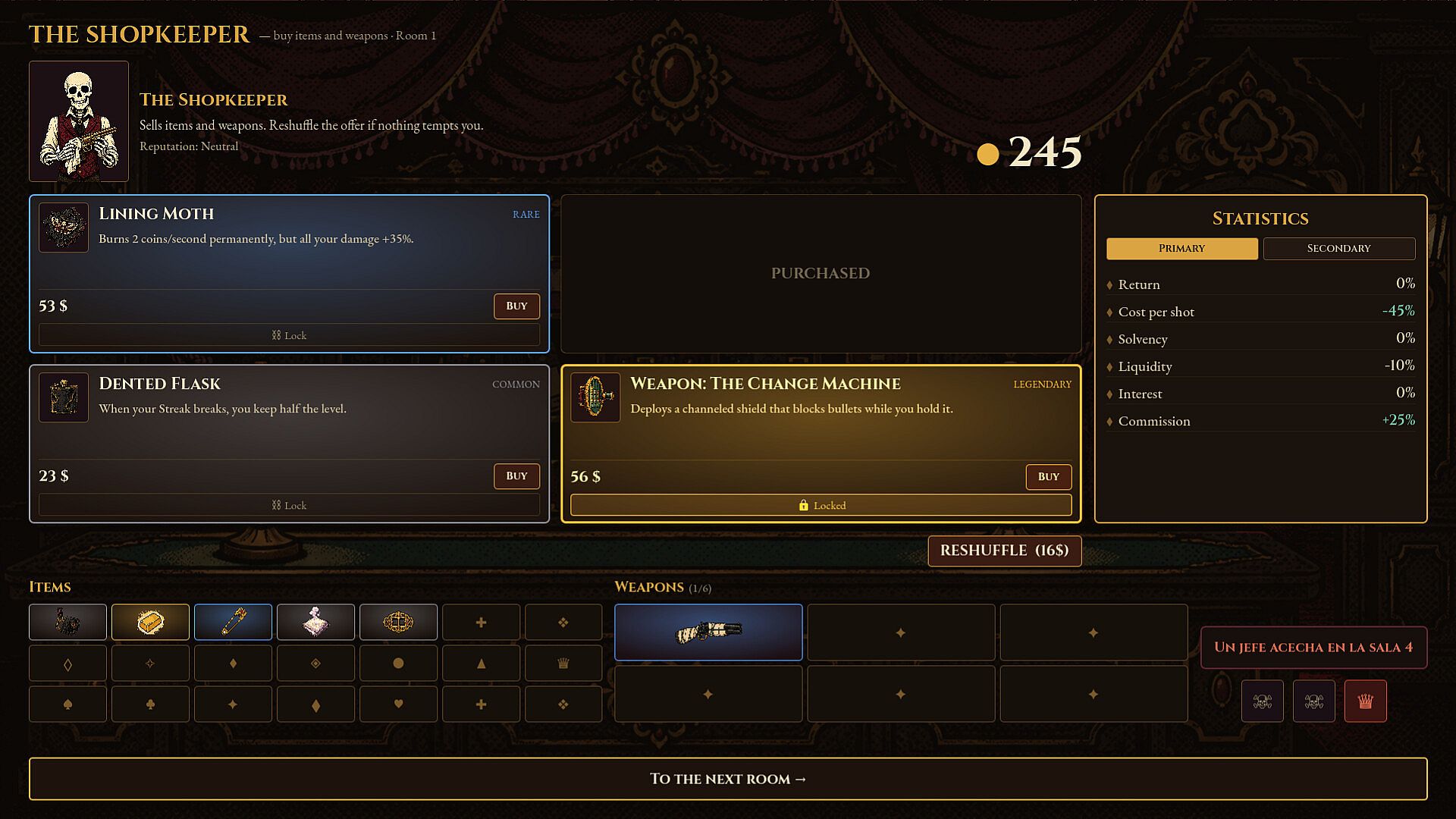
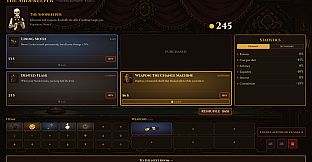
Runs unfold as arena roguelite sequences where players clear successive halls before reaching the Parlor. Between rounds, the Broker accepts bets that can multiply funds or drain them, the Shopkeeper sells upgrades, and the Lender offers high-risk loans with strict repayment terms. These choices directly influence the next arena segment.
Local co-op supports up to four players sharing one wallet. The group must coordinate spending and survival tactics, as a single depleted balance ends the session for everyone. Scaling difficulty adjusts enemy aggression and wallet penalties across runs, while a daily challenge imposes fixed rules for one attempt per day.
Five distinct endings depend on the final wallet state and path taken to confront the House. Reaching it rich, completely broke, or via an alternate route produces different outcomes, adding replay incentive beyond standard completion.
Characters and Progression
Unlocking the full roster of thirteen characters requires completing runs and mastering the economy. Each new rule set changes how money flows, from debt-heavy starts that demand quick kills to low-cost shooters that favor prolonged engagements. Dozens of achievements track mastery of specific characters, weapon combinations, and Parlor decisions.
Progression stays tied to the wallet system rather than traditional experience points. Stronger runs come from discovering item synergies and learning when to spend versus when to conserve, not from grinding levels.
The Parlor and Risk Management
The Parlor acts as the strategic hub between combat arenas. Bets with the Broker introduce volatility, shop purchases provide targeted upgrades, and Lender deals carry fine-print consequences that can cascade into later rounds. Reading the terms becomes essential, as a poorly chosen loan can bankrupt an otherwise promising run.
Absence of traditional menus means all decisions occur through in-world interactions. Players choose their approach by engaging with these figures directly, keeping the pace uninterrupted.
Is It Worth Playing?
Dead Broke suits players who enjoy roguelites built around a single, unforgiving resource rather than separate health and ammo systems. The local co-op option adds a layer for groups that like shared-economy challenges, while the daily challenge and multiple endings provide ongoing structure for solo players.
Its free-to-play model removes any upfront barrier, allowing direct testing of the money-as-life mechanic. Those drawn to tight economy management, character-specific twists, and arena combat will find consistent depth in the synergies and risk-reward decisions. Players seeking conventional health bars or expansive single-player campaigns may find the focused scope less appealing.