

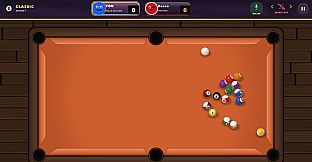
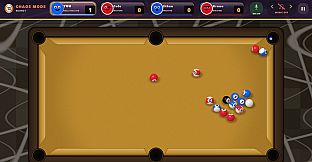
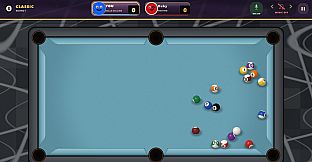
Cue Chaos is a billiards game built around sabotage and unpredictable table conditions. Players drop gadgets each round that alter ball paths, speeds, and outcomes, turning standard pool into a contest of adaptation rather than pure precision. The game supports one to four participants on PC through solo sessions against bots, online matches with others, or local play on a shared keyboard. It blends action, indie, casual, and sports elements into short rounds that reward quick thinking over long-term strategy.
Gameplay
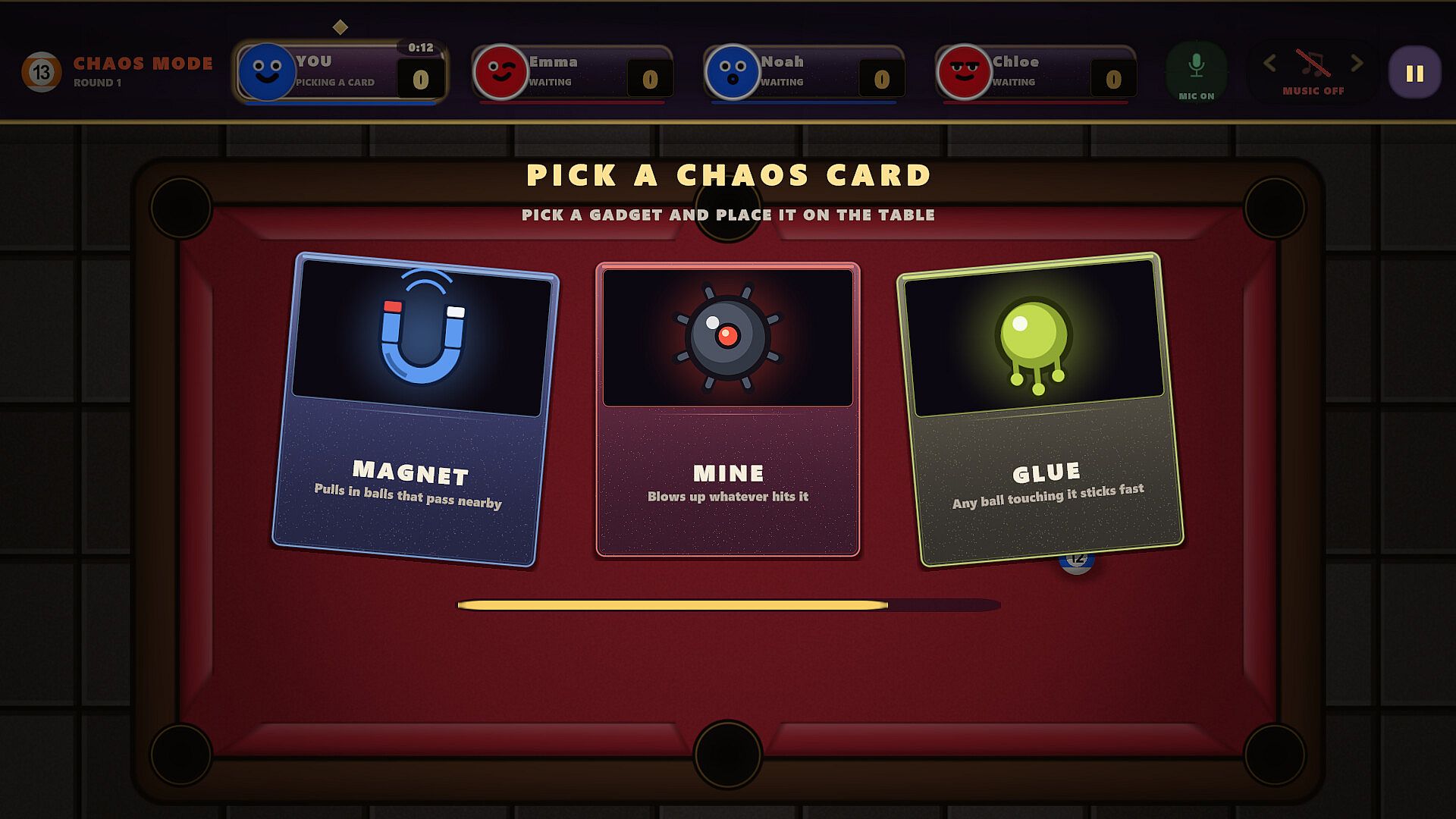
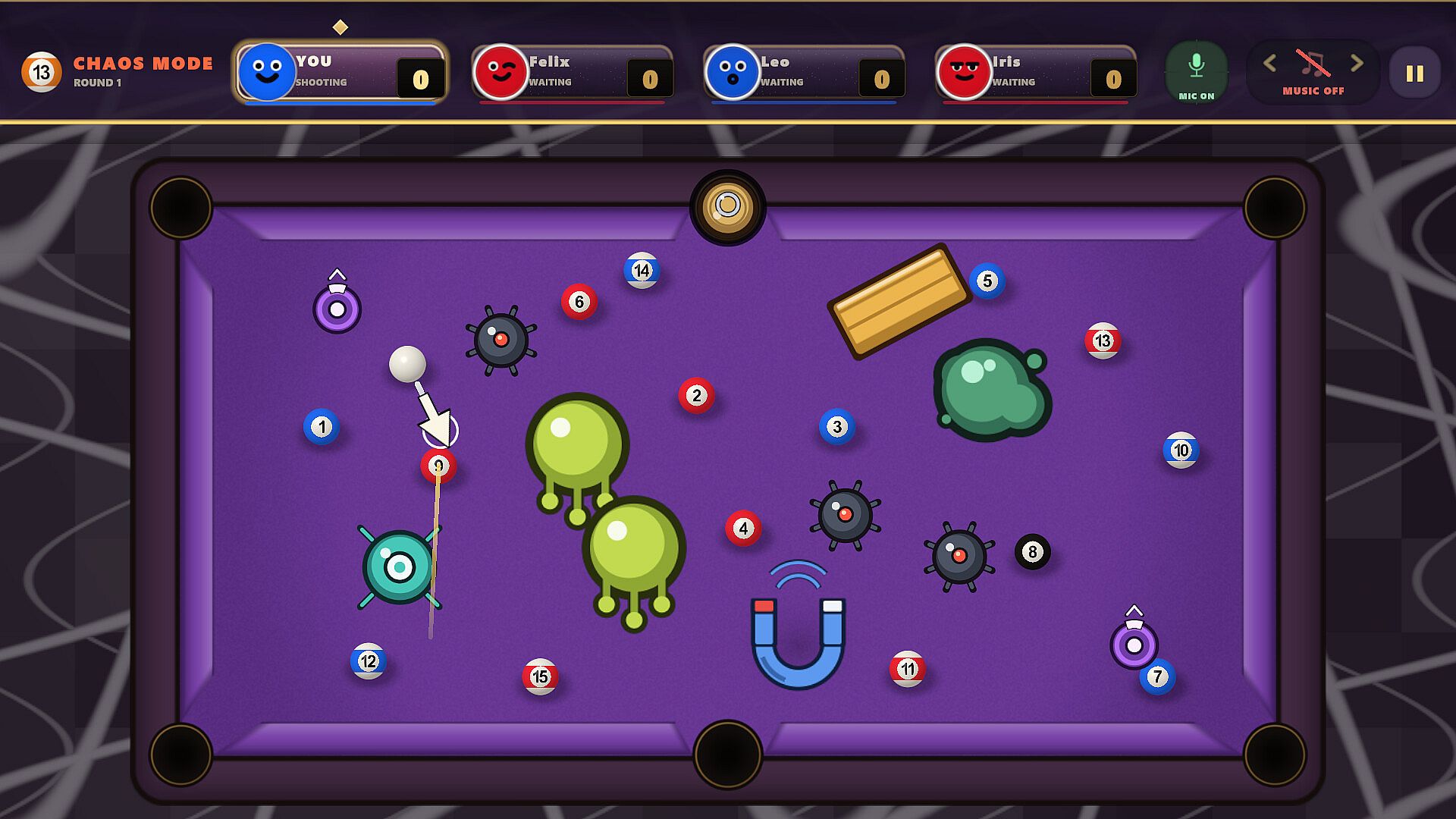
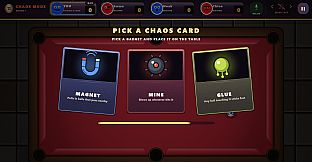
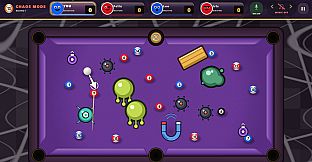
Each round begins with every participant placing one sabotage gadget on the table before shots are taken. These items interact with balls in distinct ways that force constant adjustments to angles and power. Mines detonate on contact and scatter balls wildly. Portals come in pairs so a ball entering one exits from the other. Magnets pull nearby balls off course. Glue halts any ball that touches it. Oil prevents balls from slowing down once they cross the surface. Bumpers rebound balls like pinball elements. Walls block paths and change rebound angles. Plugs seal pockets entirely so shots aimed there fail outright.
Matches emphasize reaction to these changes rather than memorized patterns. A single gadget can redirect a planned shot into an unintended pocket or trap a ball in place. The core loop repeats across rounds with fresh gadget placements, keeping every game session distinct even on repeated table layouts. Eight different table designs provide visual variety while the underlying rules stay consistent. Bots offer three difficulty settings that adjust aiming accuracy and decision speed for solo practice or filling empty spots in group play.
Game Modes
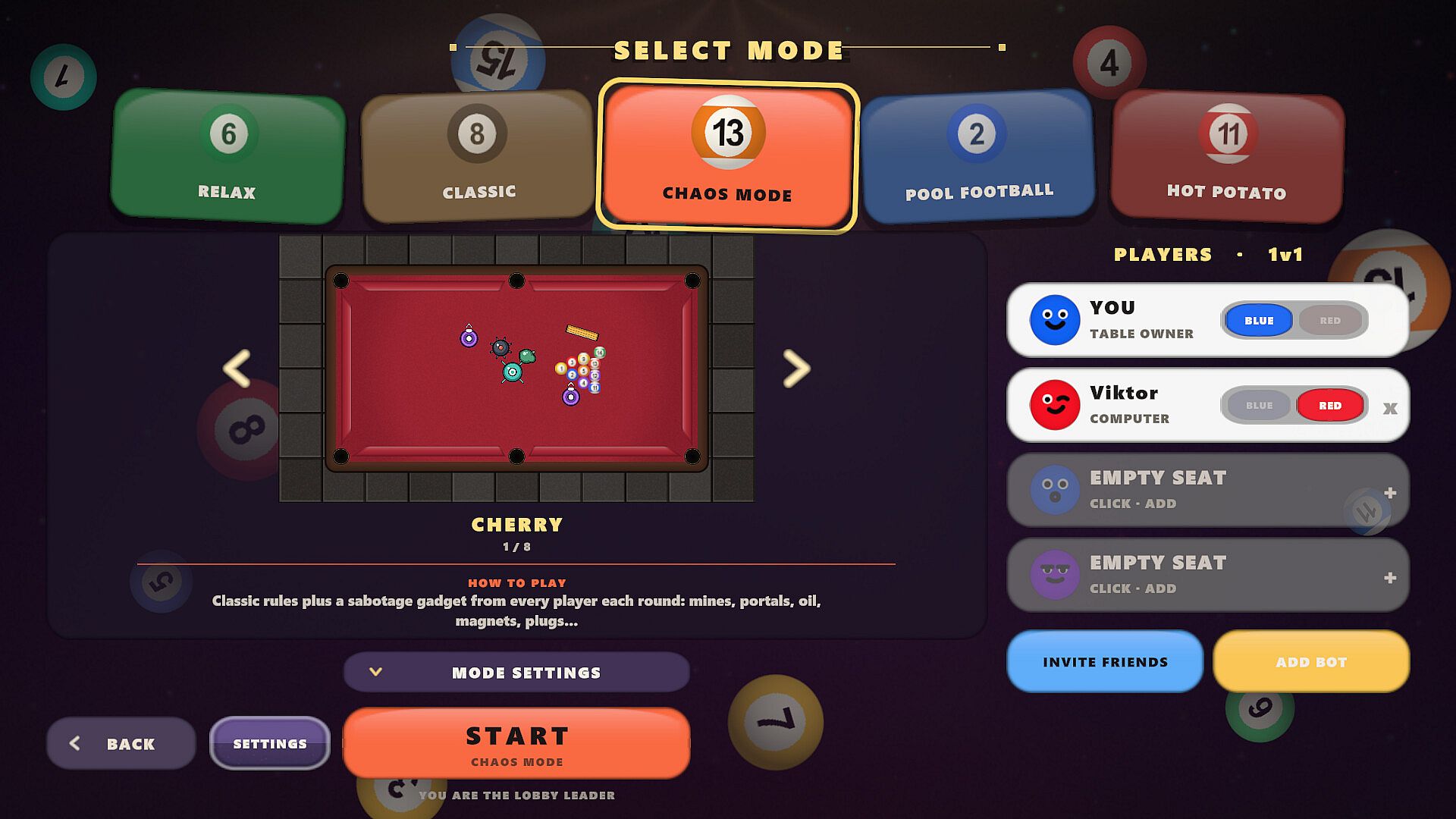
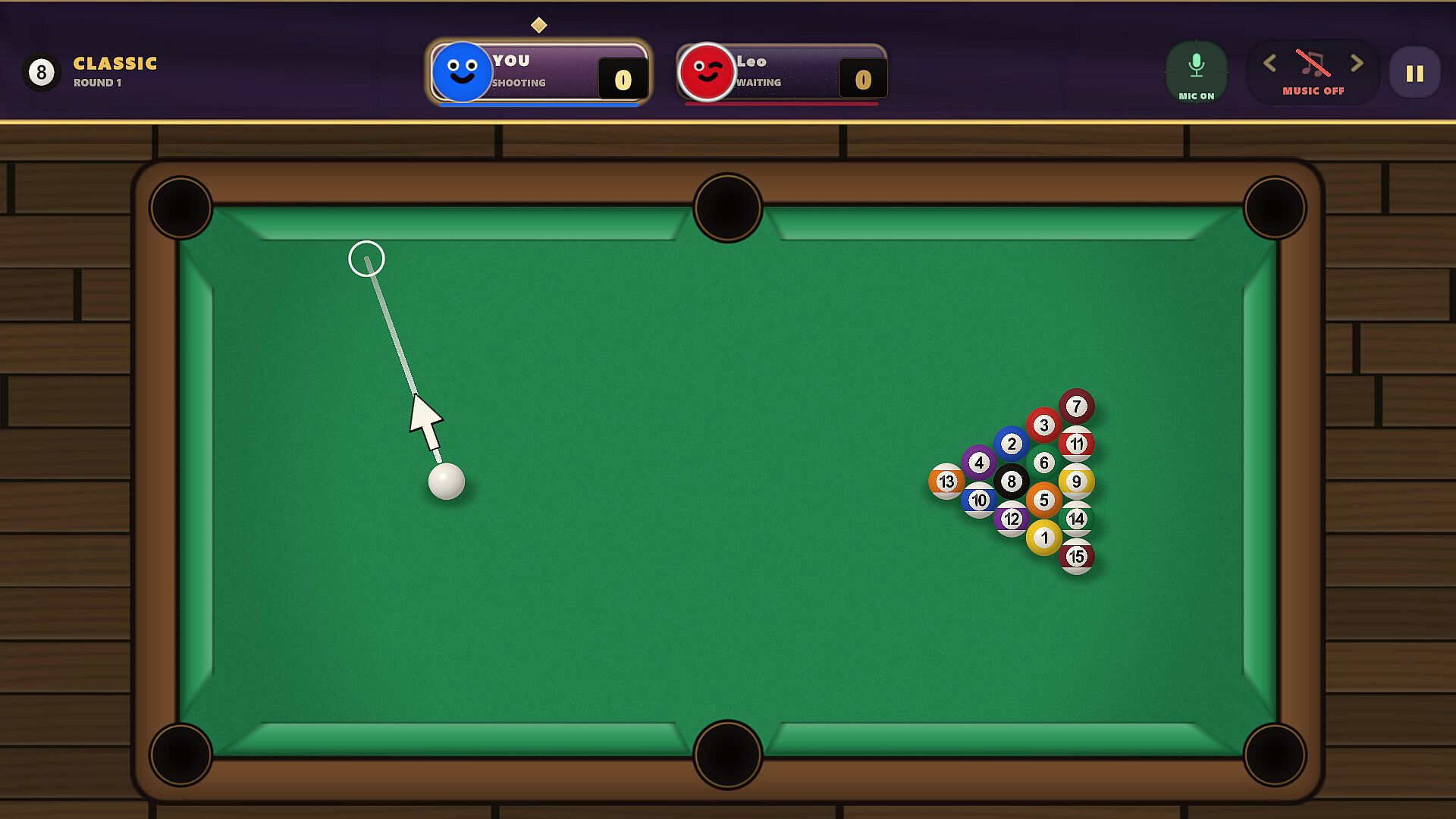
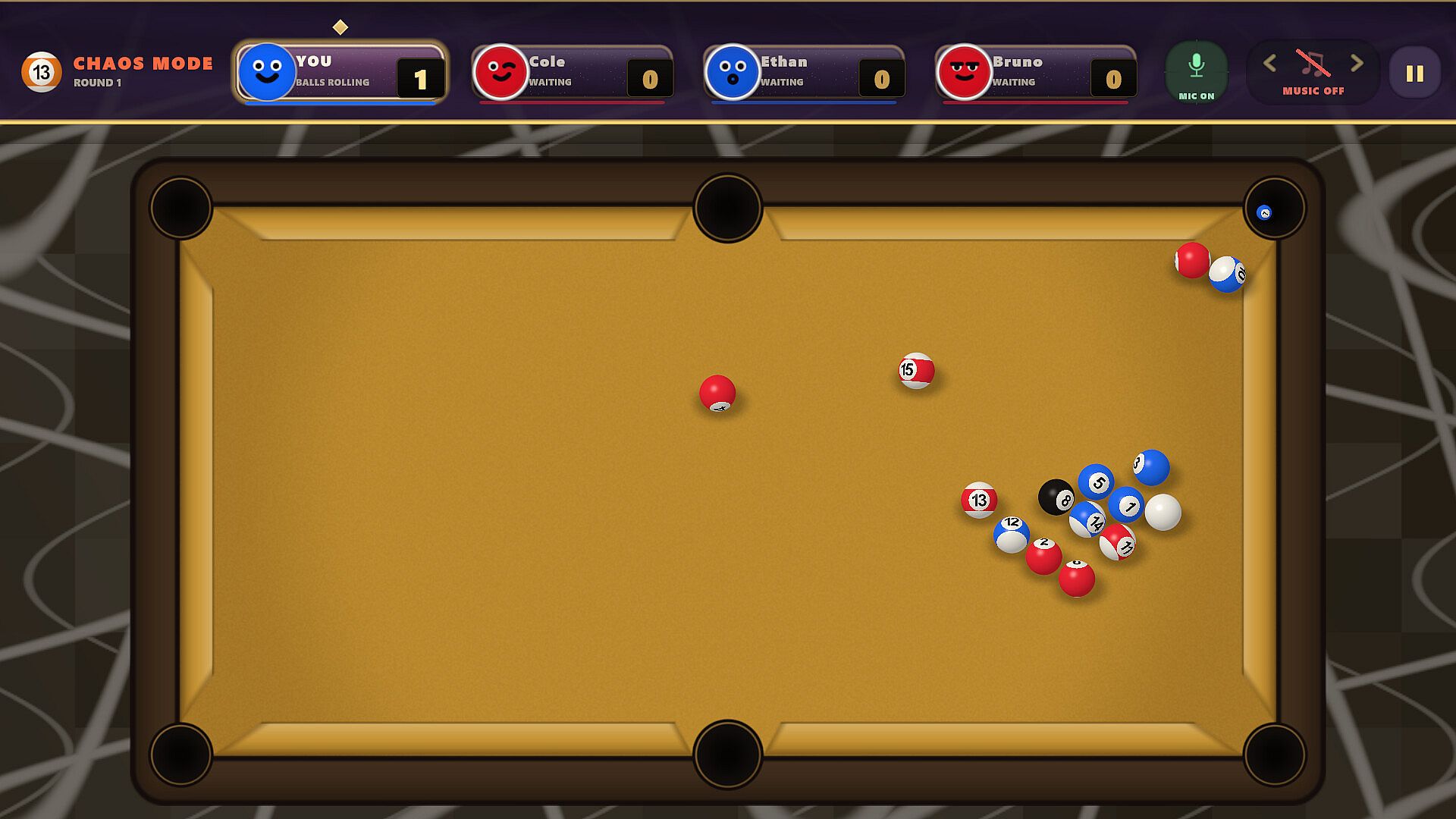
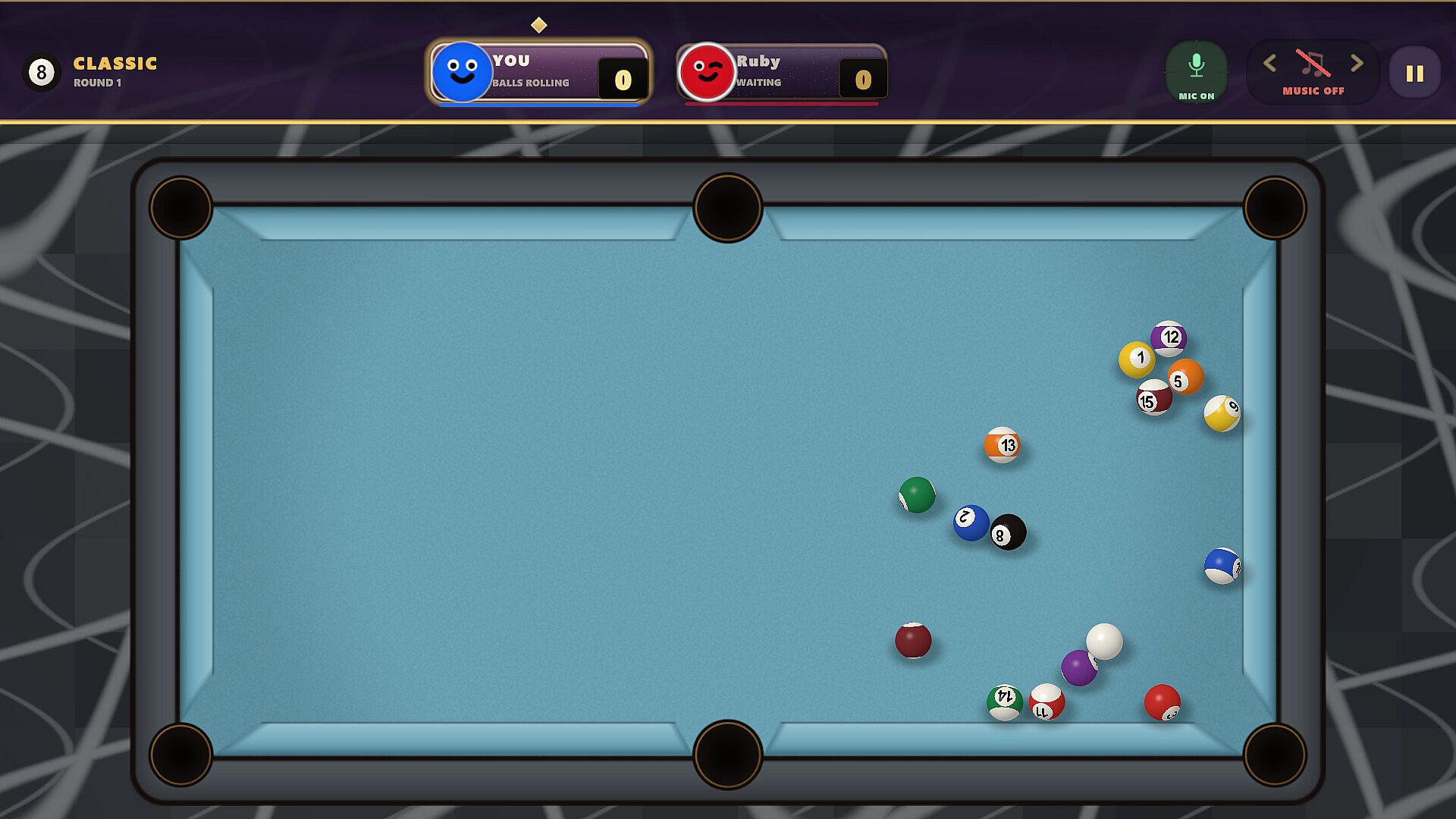
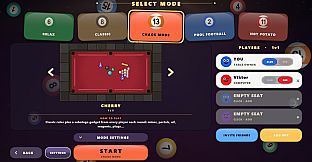
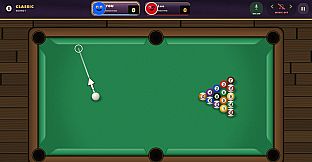
Five distinct modes alter the base rules to suit different preferences. Relax mode removes time pressure and bots entirely, returning pocketed balls to the table so play continues indefinitely for casual practice. Classic mode follows standard eight-ball rules where players claim a color and finish with the black ball, without any gadgets involved. Chaos mode adds the full gadget system to classic eight-ball, with each player contributing one item per round to reshape the table repeatedly.
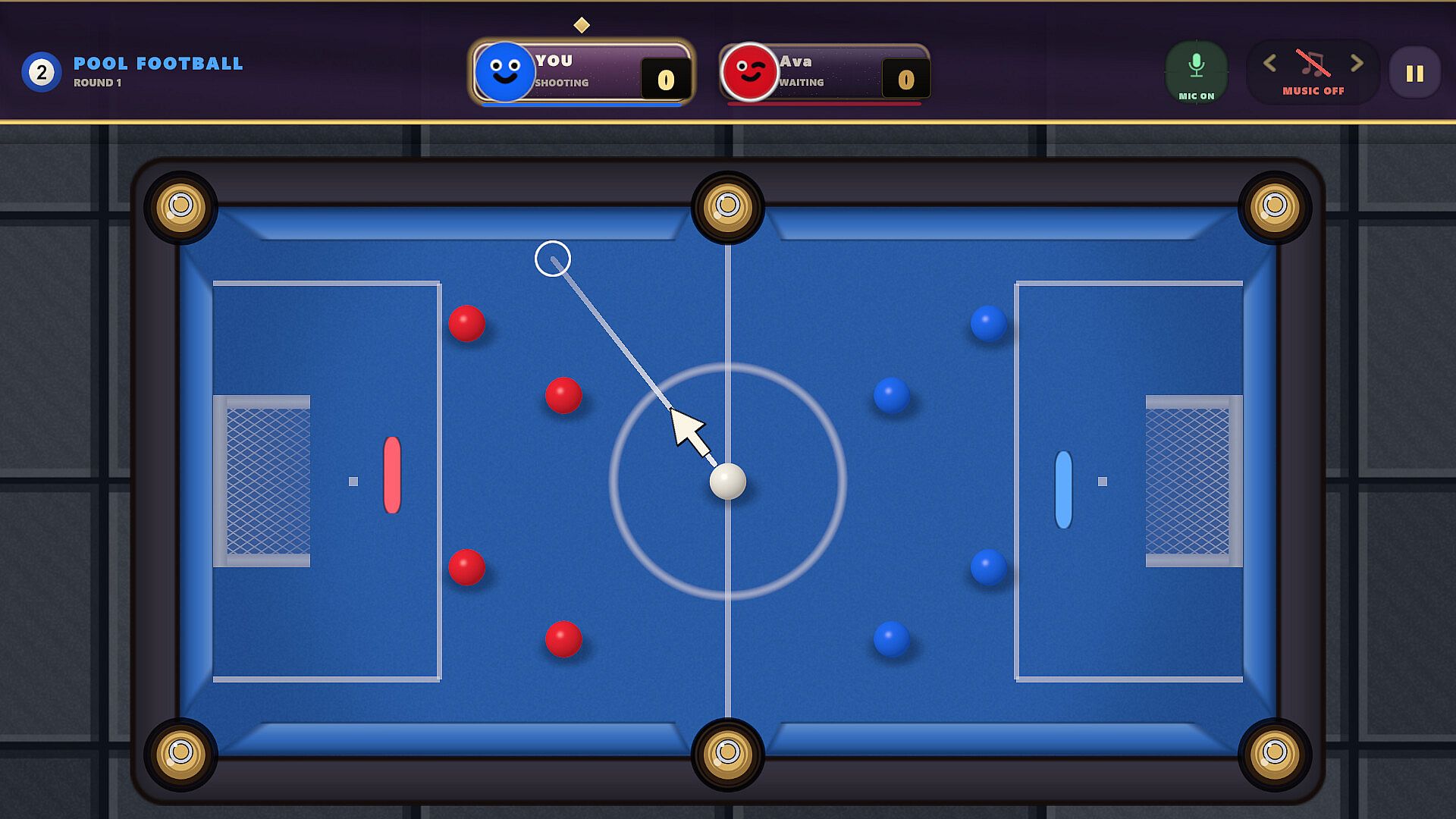
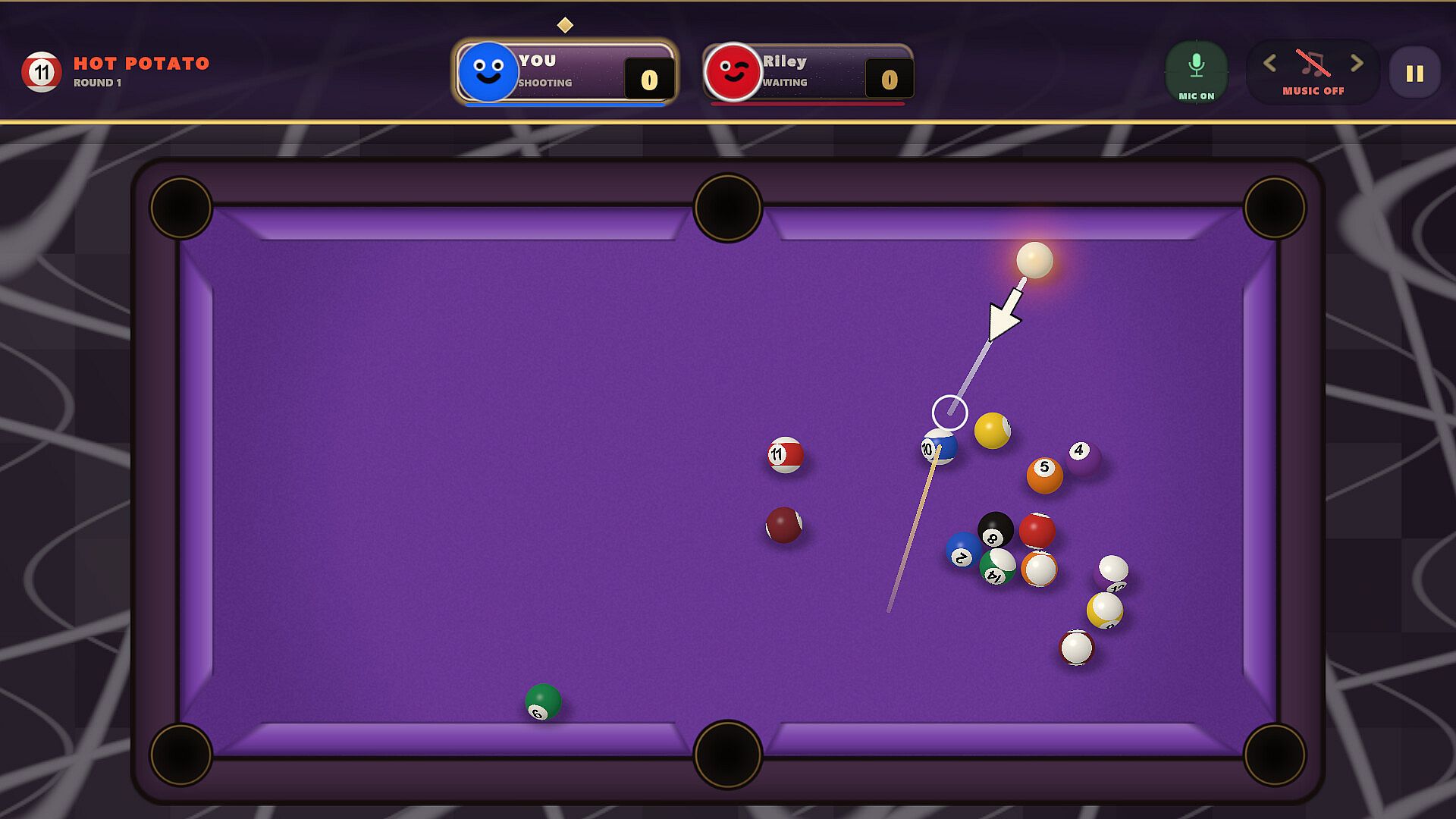
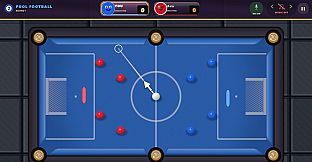
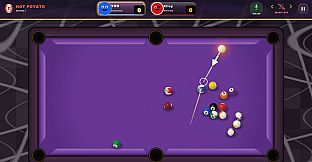
Pool Football replaces pockets with goals at either end and a keeper that patrols to block shots. The single ball must be maneuvered into the opposing goal while a player's own balls serve as a movable defensive line. Hot Potato keeps eight-ball structure but sets the cue ball on fire so it travels five times faster than normal, demanding precise control to avoid losing it. These modes allow groups to switch between straightforward competition and high-disruption chaos without changing the core controls.
Multiplayer and Accessibility
Local and online options support both free-for-all and team formats for up to four players. Built-in voice chat lets participants react in real time to gadget placements and unexpected ball movements. Thirty languages broaden access for international groups. The same-keyboard local mode suits couch sessions where friends share one device. Bots fill gaps when fewer than four humans join, maintaining round flow without ending the session early.
Is It Worth Playing?
Cue Chaos suits players who enjoy billiards with added layers of interference and social interaction. Those seeking pure traditional pool can stick to Classic mode, while groups looking for repeated surprises will find value in Chaos and the specialized variants like Pool Football or Hot Potato. The variety of gadgets and modes supports repeated sessions without quick repetition, and the option for mixed human-bot groups keeps games accessible even with uneven player numbers. Local play and voice integration add to its appeal for regular gatherings with friends. The game remains focused on its core sabotage mechanics without additional layers that complicate the experience.