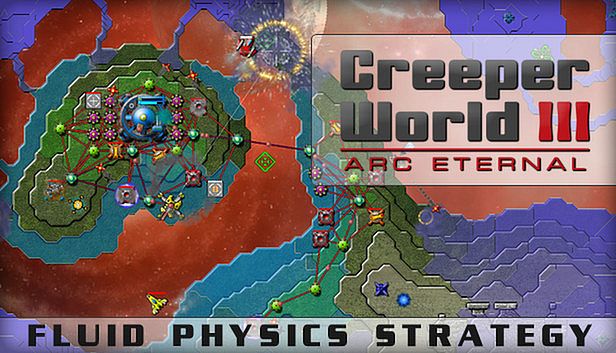















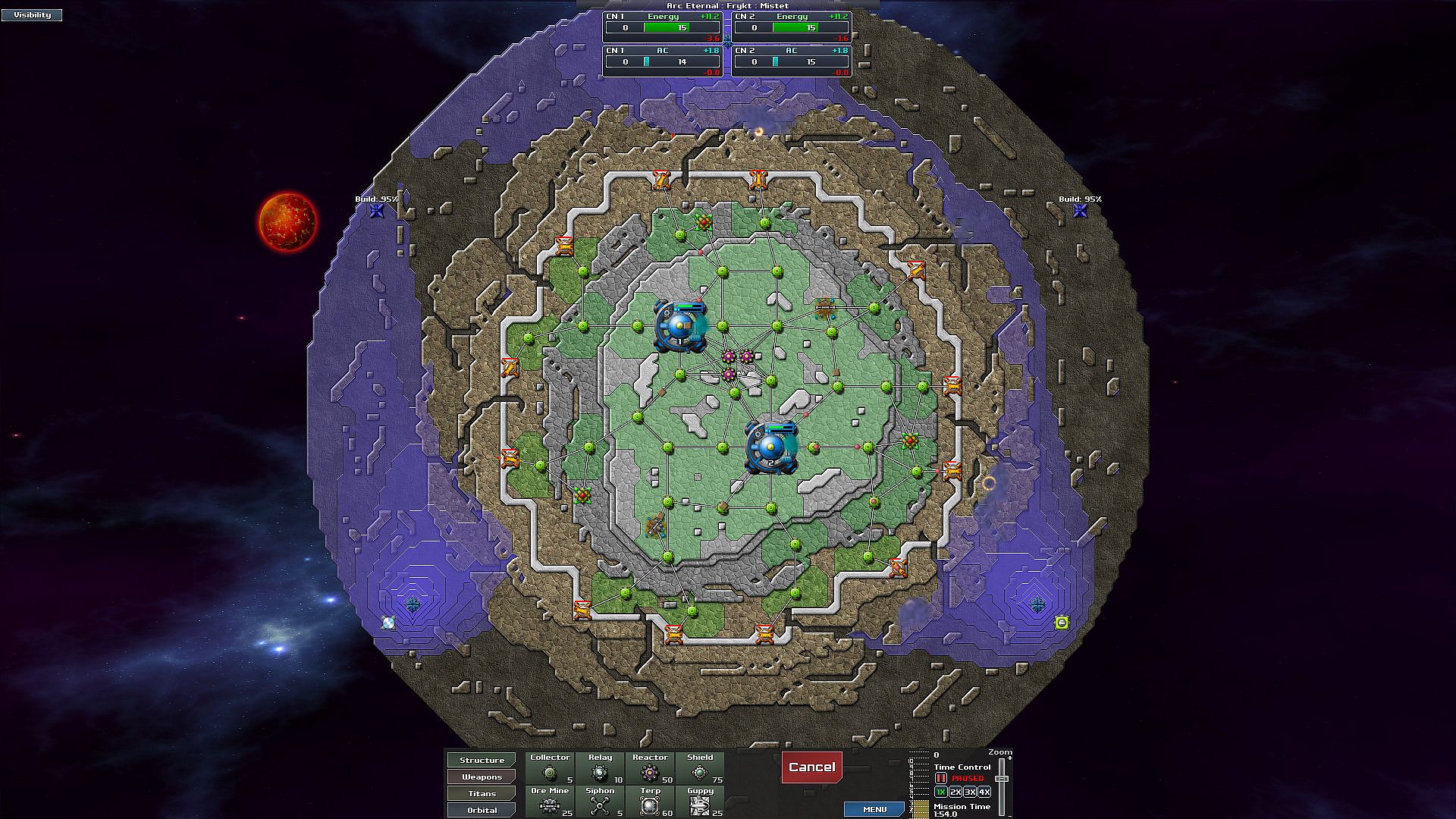
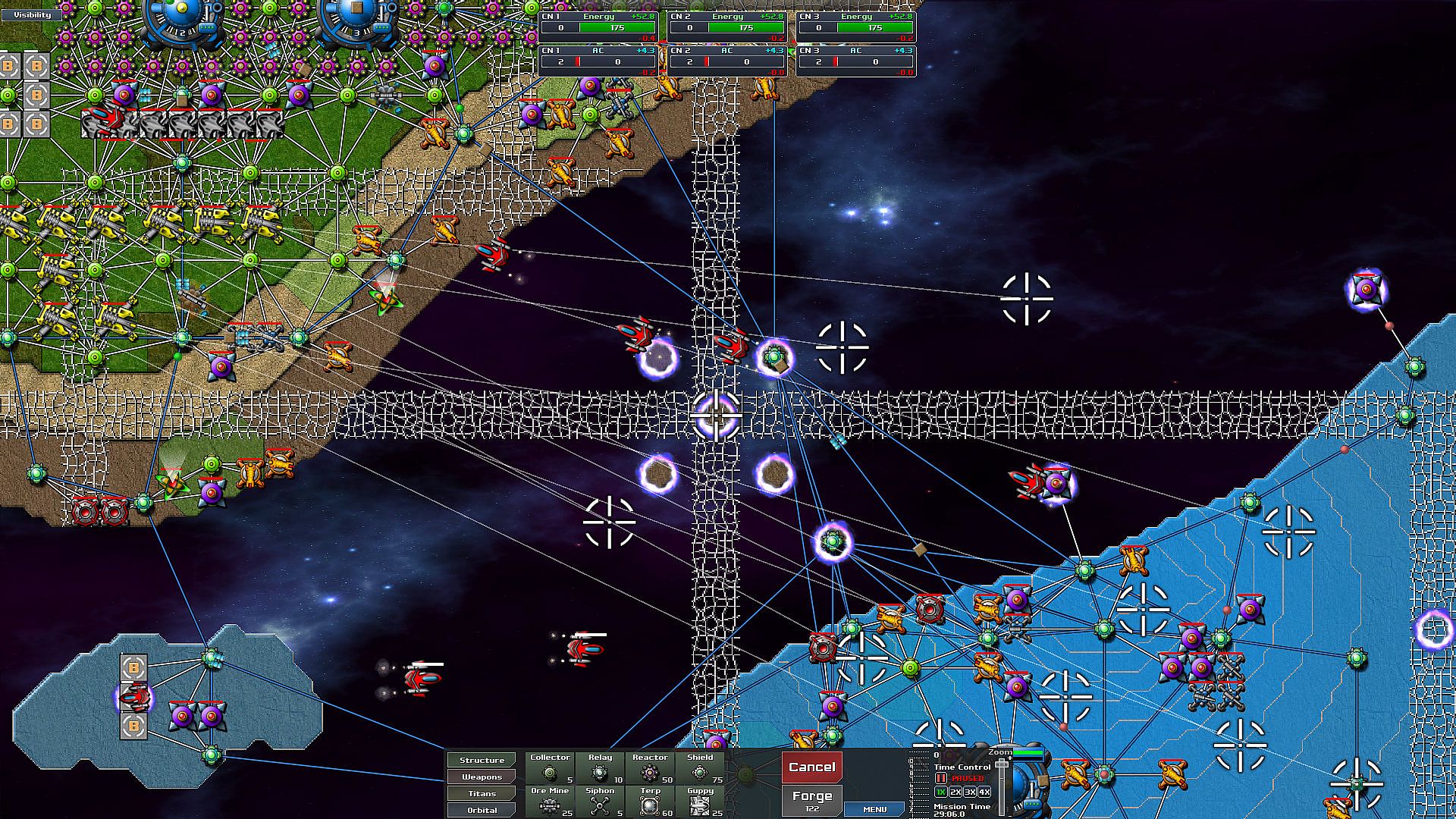
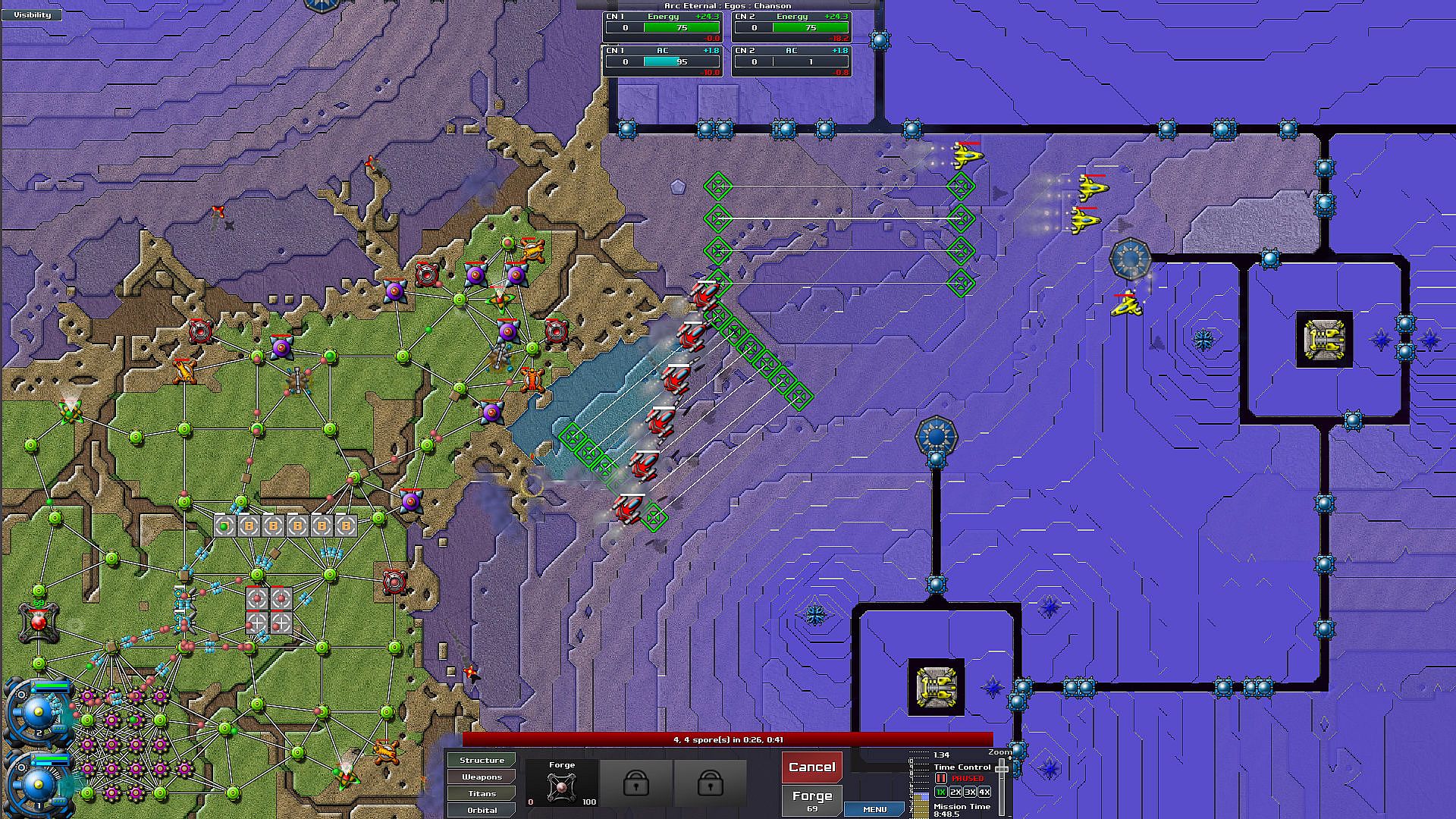
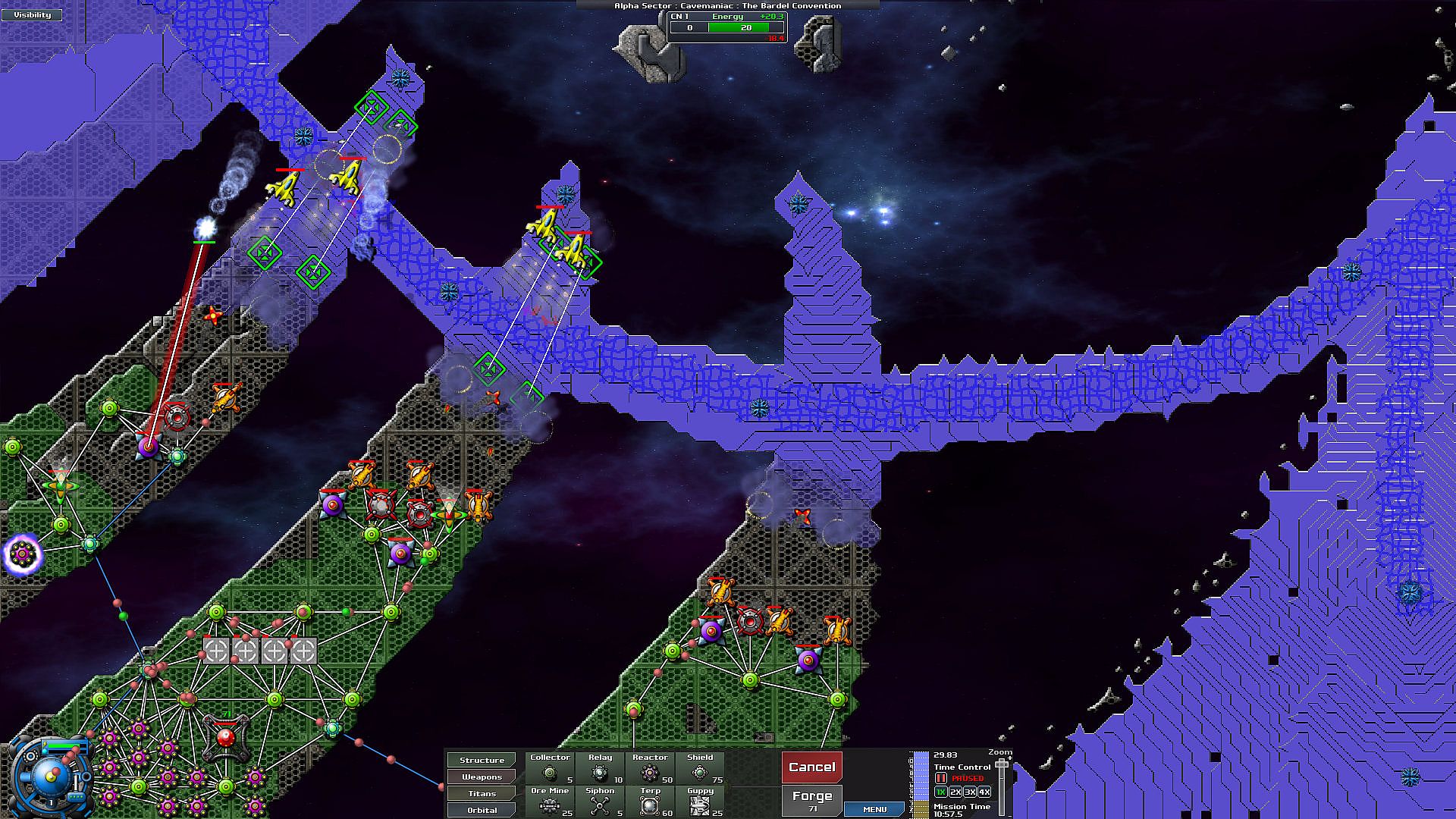
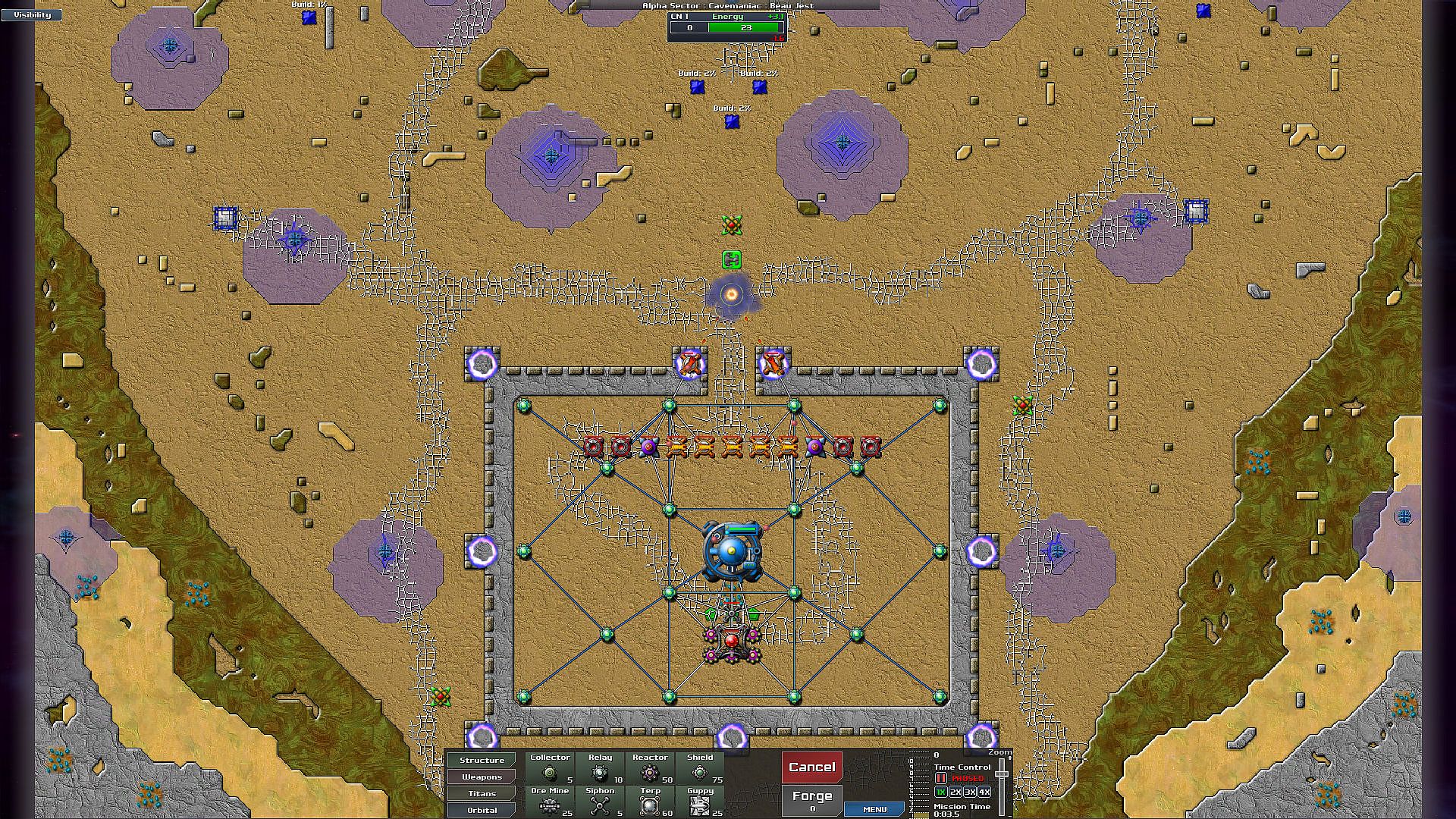
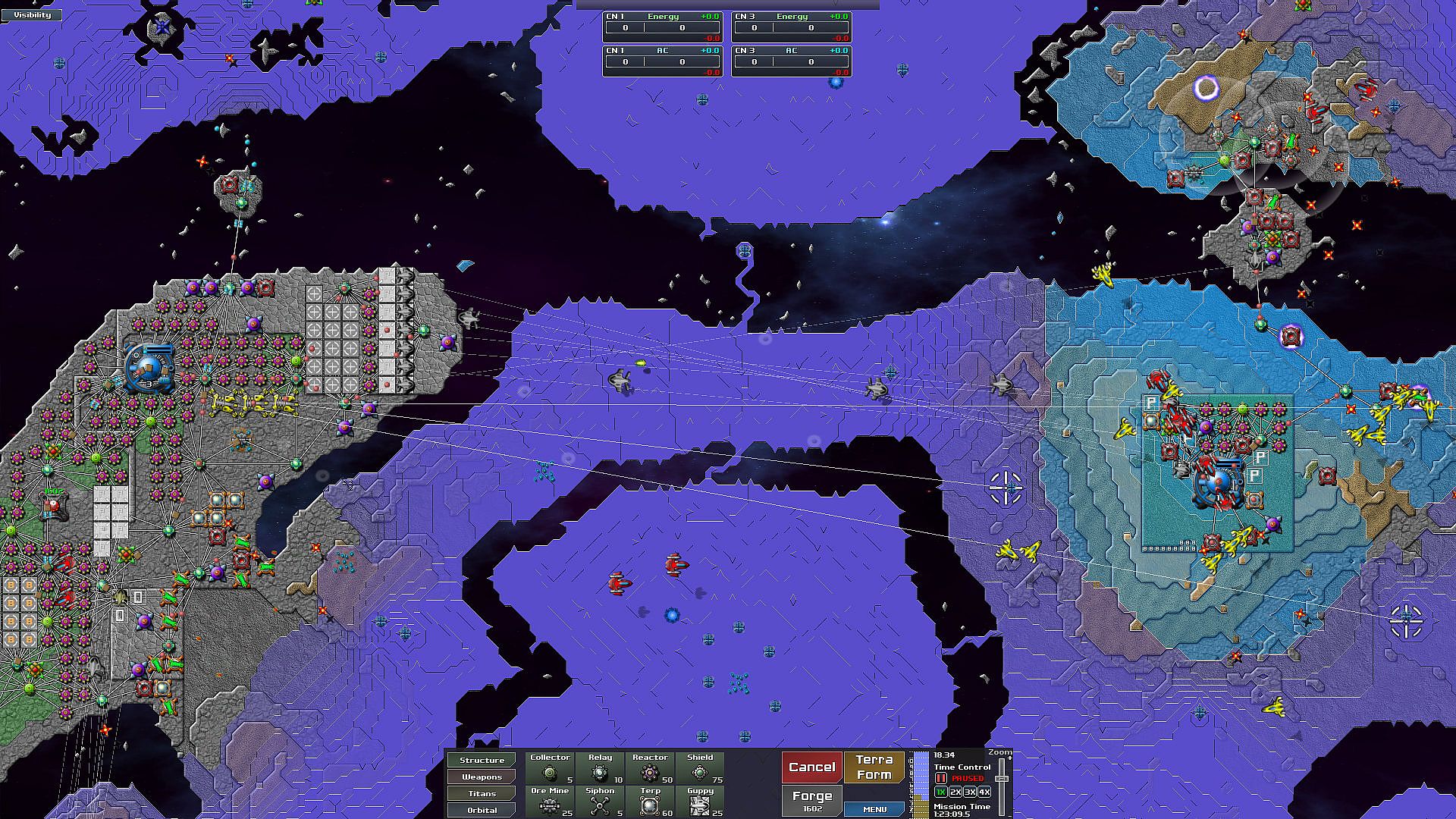
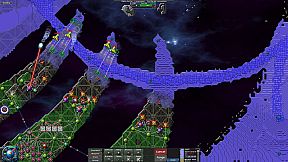
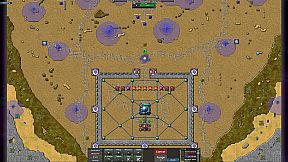
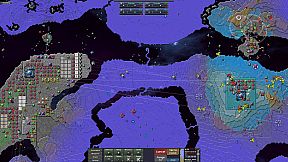
Creeper World 3: Arc Eternal stands out as a distinctive strategy simulation title built around cellular automata mechanics. The core conflict revolves around a fluid-like substance called the Creeper that spreads across terraformable terrain rather than advancing through discrete units. Players construct bases, deploy weapons, and reshape the landscape to contain or eliminate this threat while managing resources and adapting defenses on the fly.
Gameplay
The central loop centers on thermodynamic and fluid physics interactions. The Creeper behaves in a predictable yet emergent manner as it flows over maps of varying size and shape. Success depends on positioning structures to block or redirect its advance, upgrading weapons to deal area damage, and using terraforming tools to gain elevation advantages or create chokepoints. Experimental weapons unlock over time and provide devastating options against dense Creeper flows. The simulation handles both brief engagements and extended sessions without performance issues, allowing players to focus on long-term resource accumulation or rapid clearance strategies. Movement of turrets and flexible building placement add layers of tactical adjustment during each session.
Game Modes
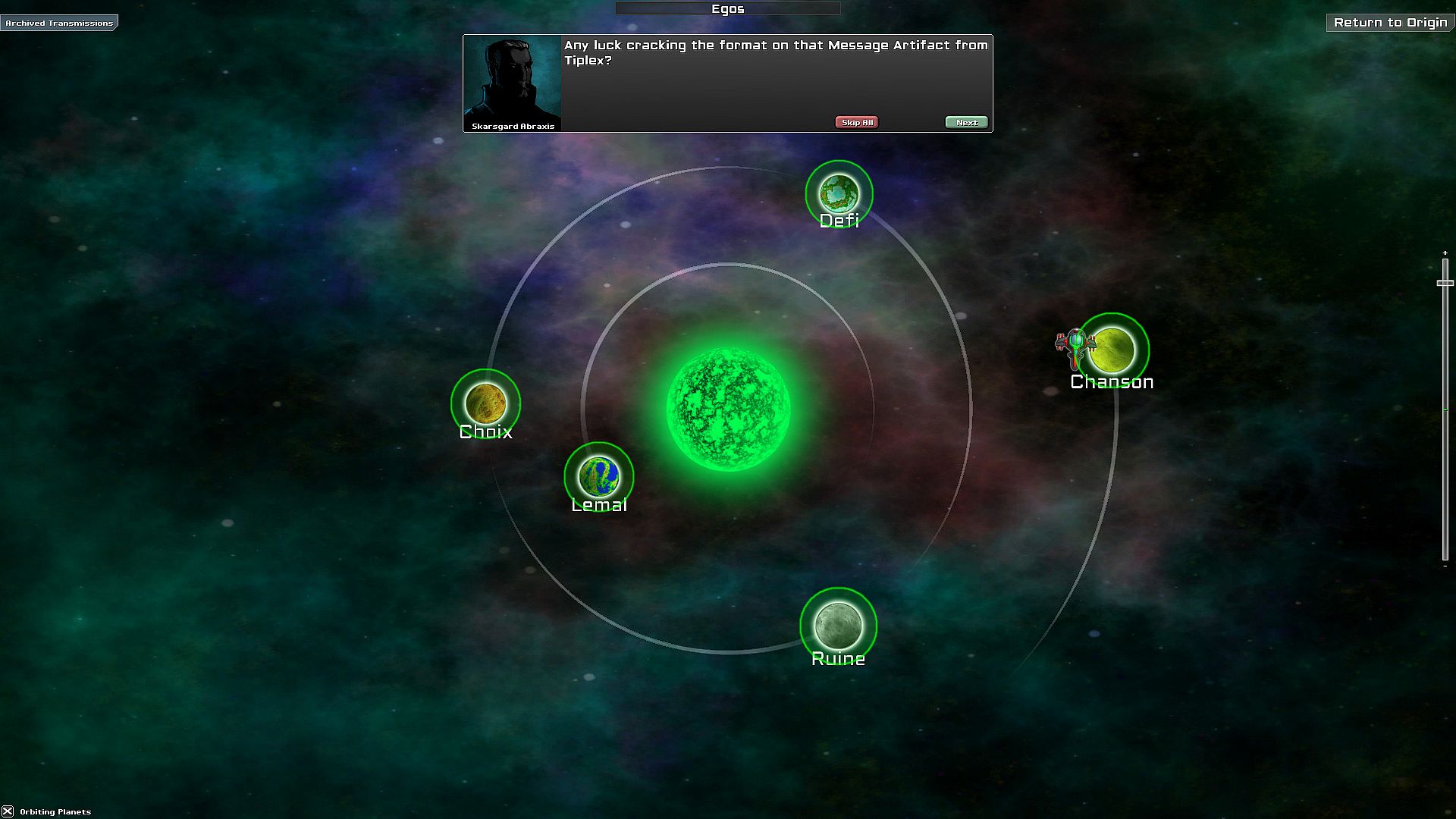
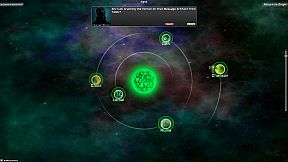
Multiple distinct approaches exist within the game. The main story arc unfolds across hand-crafted missions in the Alpha Sector, introducing escalating challenges and unique enemy types such as Digitalis and Runners alongside the primary Creeper threat. Prospector missions expand the scope further by sending players across hundreds of star systems and thousands of individual worlds for exploration and resource gathering. Custom content generation occurs through the Dial Map Device, which lets users adjust dozens of parameters to create new scenarios that can be shared via an online database. The built-in map editor supports creation of original layouts, while the CRPL scripting language enables modification of enemies, effects, units, and even entire missions. These tools scale from small quick-play maps to massive long-duration worlds.
Customization and Community Tools
Extensive support for user-generated content forms a major pillar of the experience. Players dial up worlds with specific constraints, upload them for others to try, or download thousands of existing maps created by the community. Scripting opens additional avenues for inventing new mechanics or altering existing ones, with hundreds of engine commands available and examples shared across forums. The same editor and scripting system used for official story missions remain fully accessible, encouraging experimentation that ranges from artistic map designs to optimized speed runs. This framework keeps the simulation fresh long after initial playthroughs by allowing endless variation in terrain, enemy behavior, and objectives.
Is It Worth Playing?
Players seeking a strategy experience outside conventional unit-based combat often find the fluid enemy mechanics and physics-driven interactions compelling. The combination of story missions, procedurally flexible prospector content, and robust creation tools appeals to those who enjoy both guided campaigns and open-ended sandbox sessions. Community feedback highlights the satisfying progression of weapon and building options, the depth of terraforming decisions, and the longevity provided by shared maps and scripts. The game remains available on PC with active player-created content continuing to expand its replay value. Those drawn to simulation elements, adaptive defense building, and creative customization will likely appreciate the systems on offer, while individuals preferring tightly scripted narratives or traditional real-time strategy unit management may prefer other titles.