




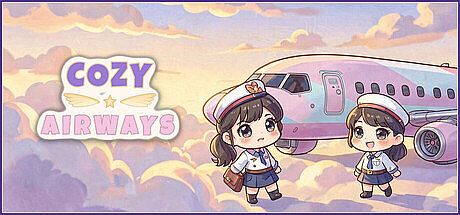


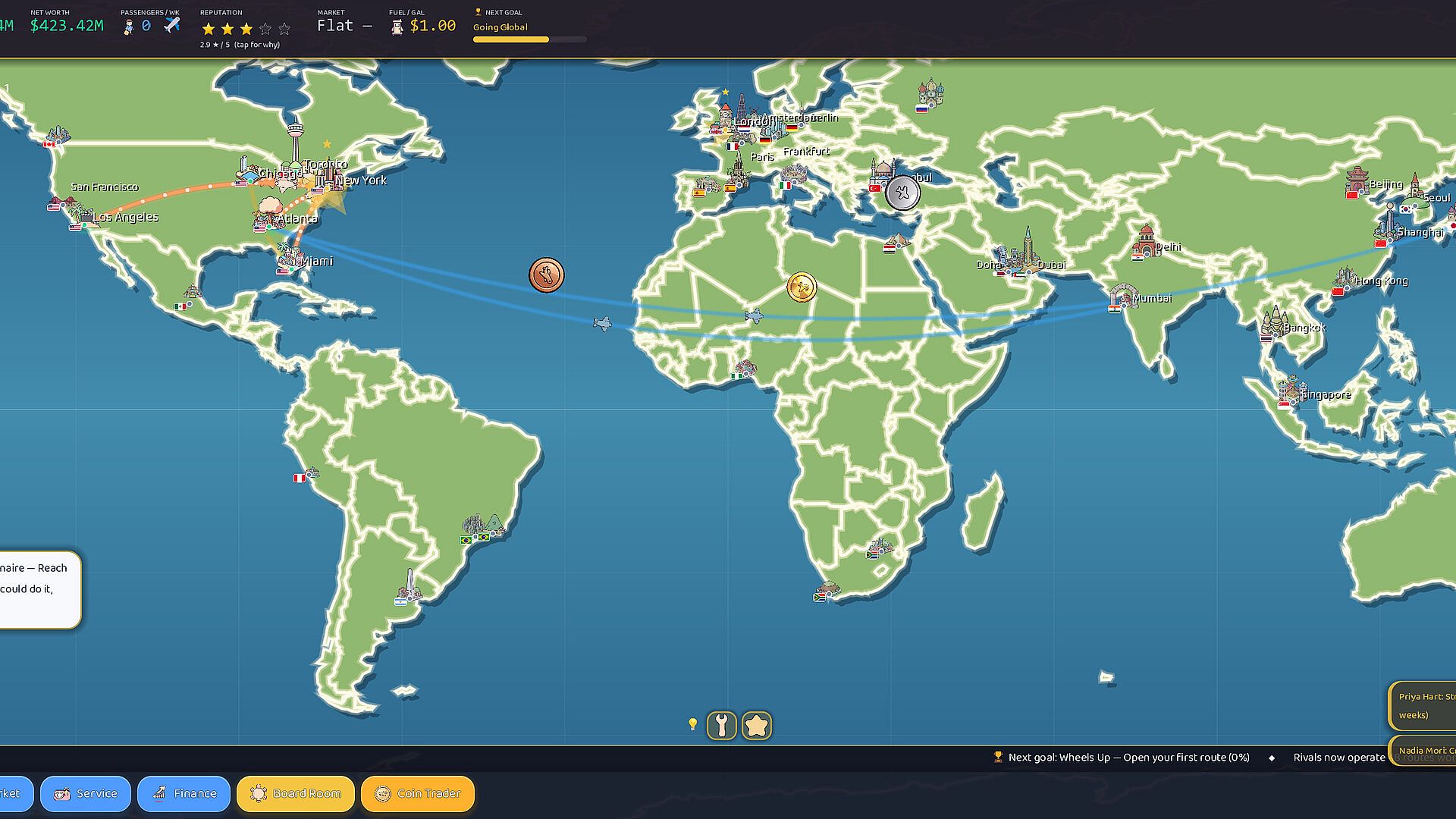
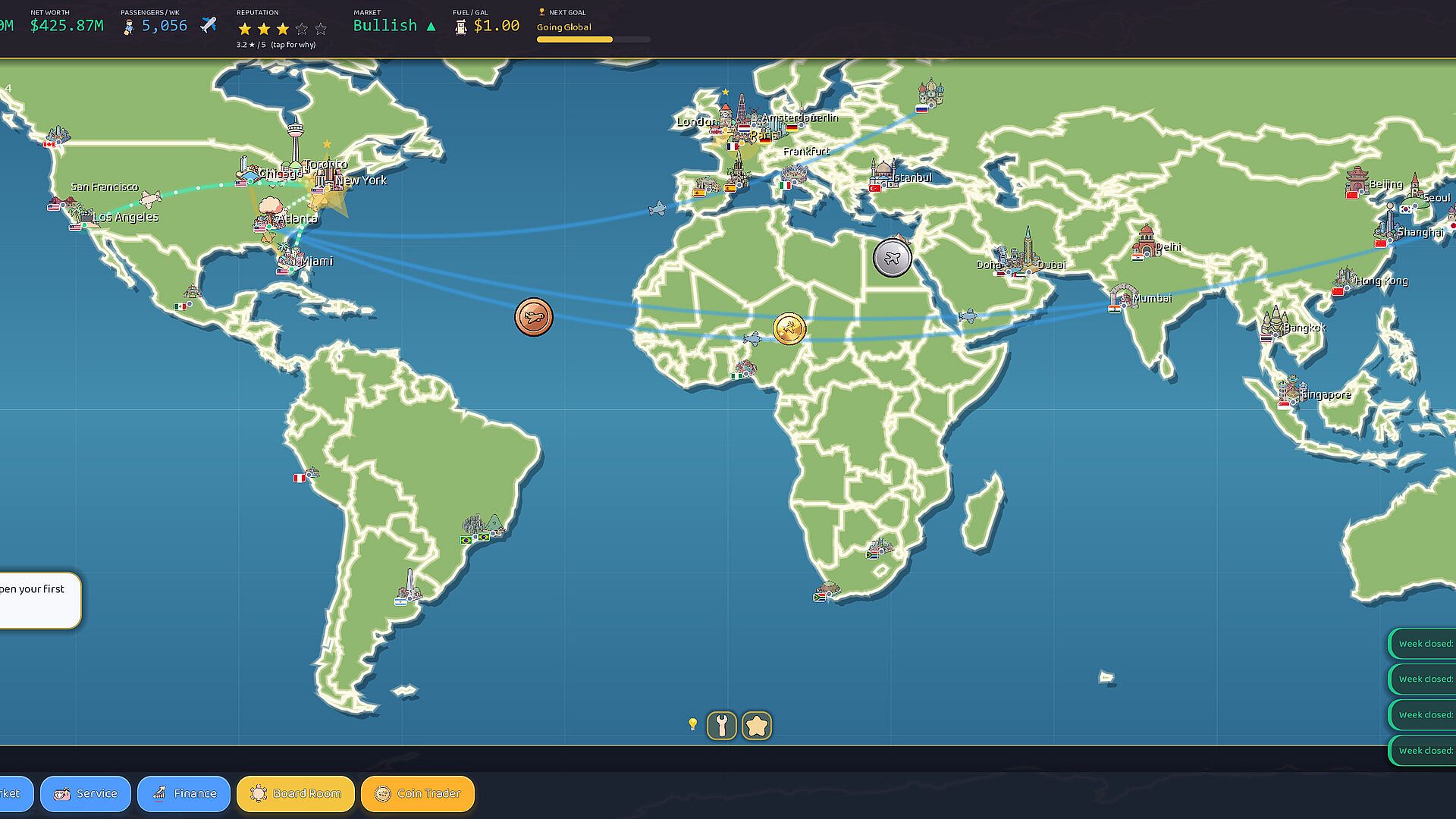
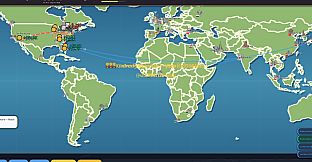
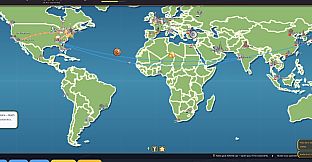
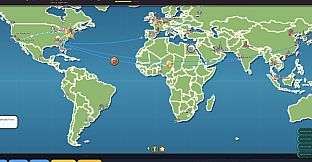
Cozy Airways is a strategy, indie, casual, and simulation game set on PC that puts players in charge of building and managing a small airline. The experience centers on steady growth across a storybook world map, where decisions about routes, service quality, and terminal comforts shape a relaxing progression from a single plane to a larger network. Emphasis falls on care for passengers and gradual expansion rather than intense competition or sudden setbacks.
Gameplay
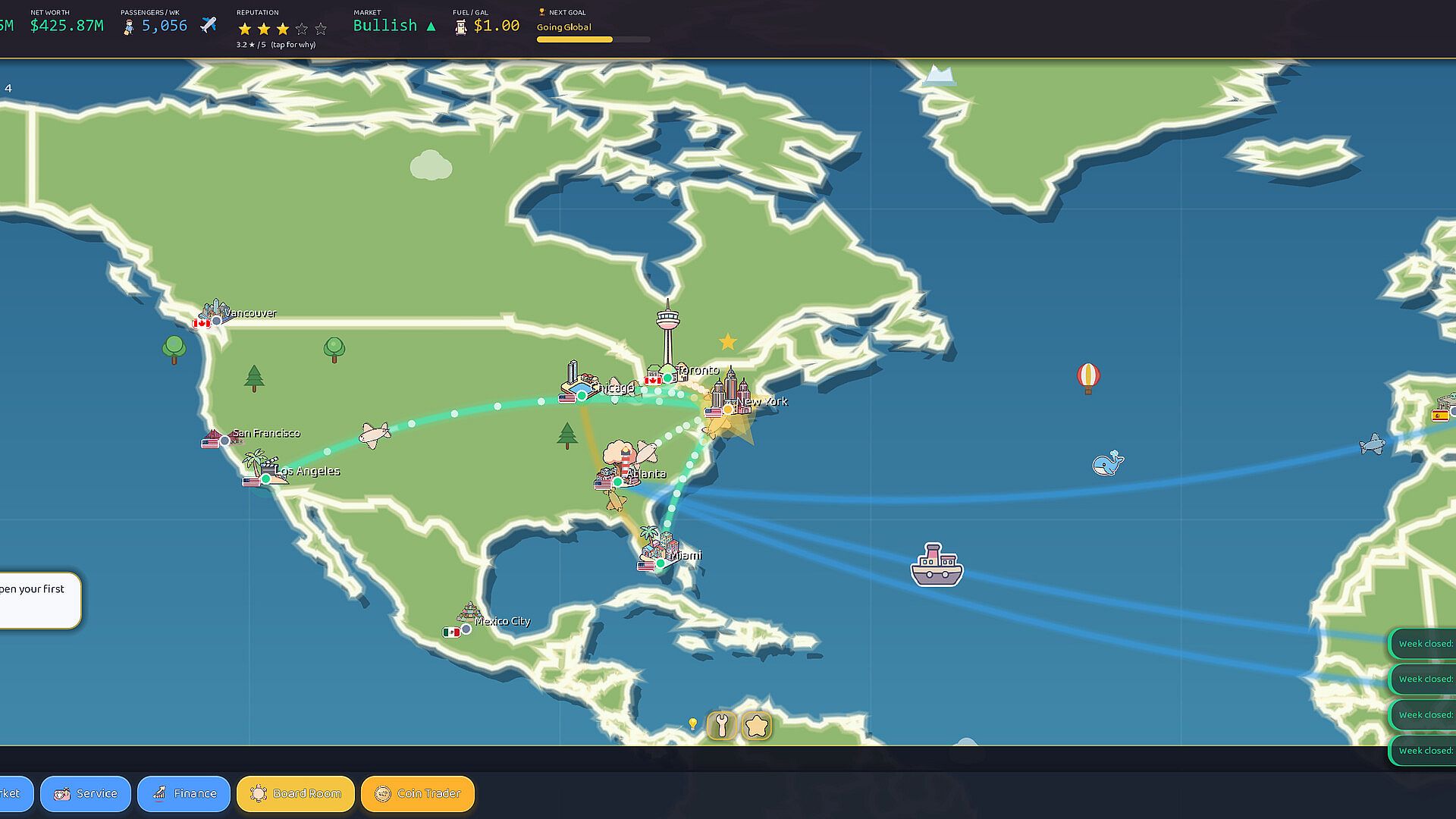
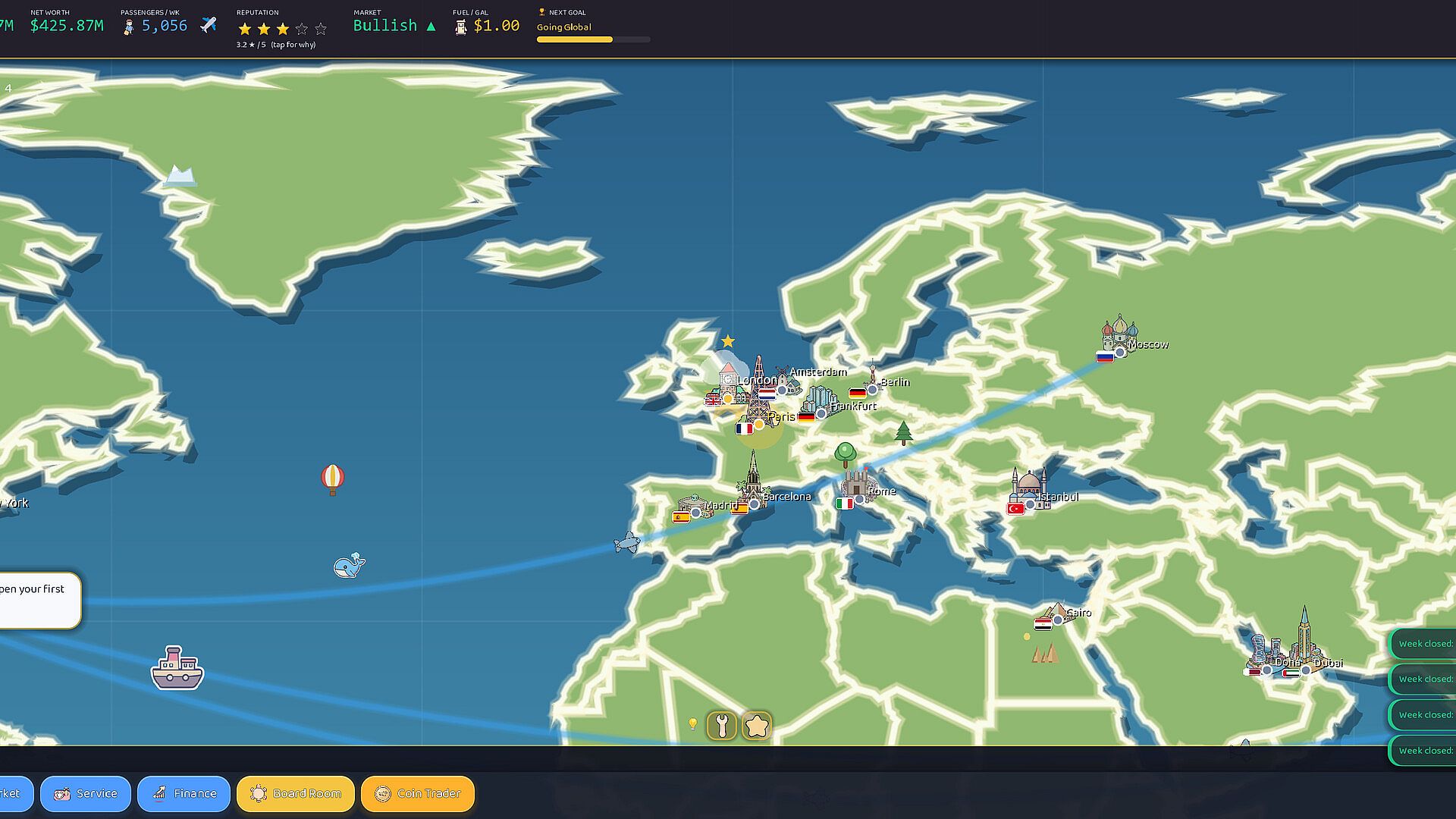
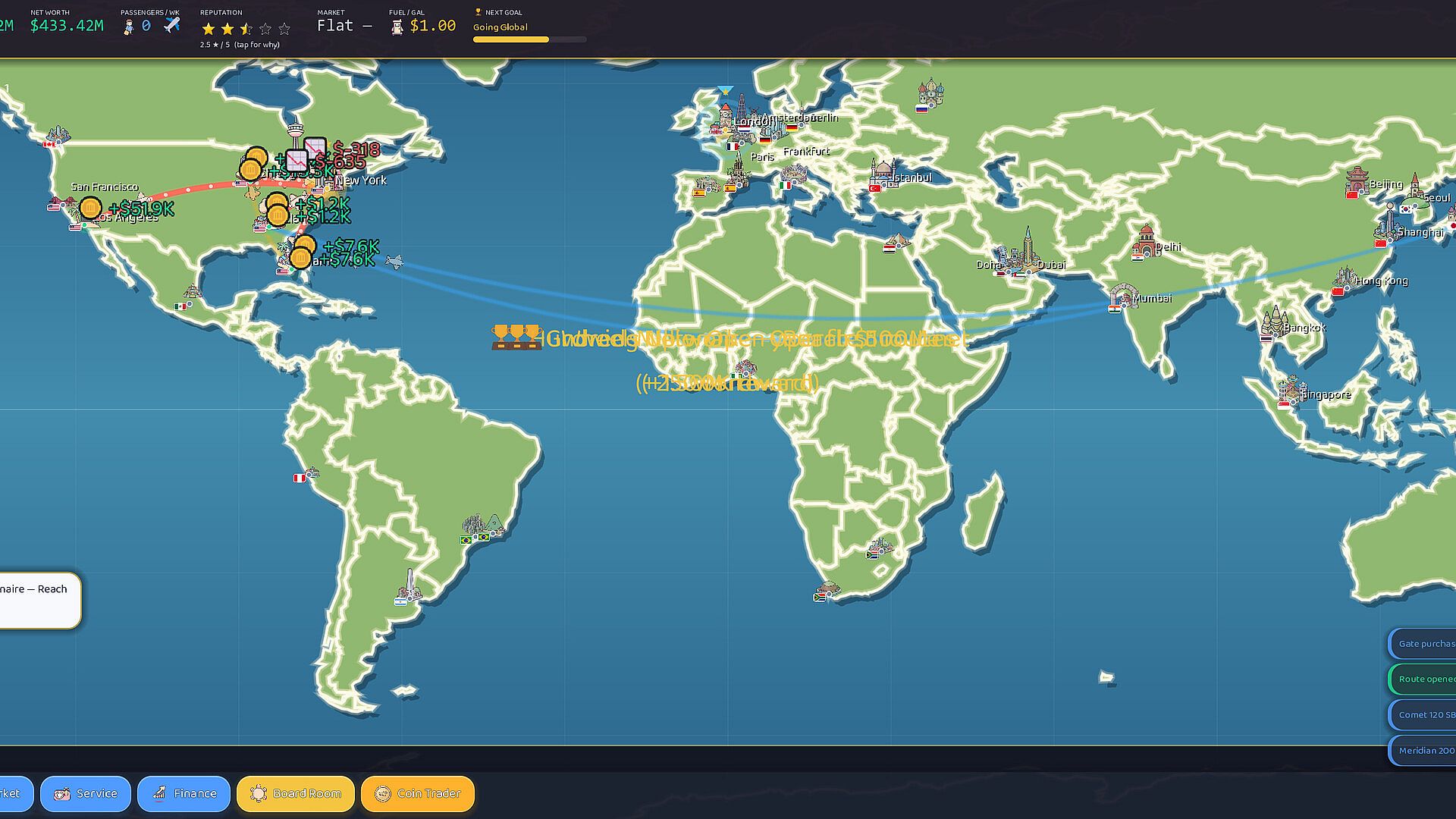
The core loop involves opening routes between cities on a flat-cartoon style map, adjusting fares, service levels, and advertising to generate steady income. Longer-running routes build customer loyalty, which feeds back into further earnings and stability. Profits support fleet upgrades, new hubs, and continental expansion, moving from basic puddle-jumpers toward a broader operation. A co-pilot named Sky provides ongoing guidance, tips, and encouragement throughout the process.
Terminal decoration forms another key layer. Adding items such as comfy couches, an indoor garden, a coffee bar, a bookshop, a water fountain, an art gallery, a kids corner, or a live music stage raises passenger happiness and overall reputation. A star-rating system tracks traveler satisfaction, with higher stars reflecting consistent attention to comfort and service details. Rival airlines appear as friendly competitors that upgrade over time, creating opportunities to respond through route planning or participation in an in-game stock market for share purchases.
Passengers arrive with individual details, such as a child holding a first boarding pass or someone knitting during a flight, turning management into a process of attending to these small stories. Weekly events introduce optional elements like overbooked flights or minor delays, along with gentle mini-games that affect reputation, finances, and a collection of decorations or collectibles. A prize wheel offers additional light rewards in a simulated format without real-world transactions.
Game Modes
The game operates as a single continuous management experience without separate named modes or competitive multiplayer elements. Progression unfolds at a self-set pace across an open world map, allowing players to focus on route development, hub customization, and fleet growth in one ongoing journey. Weekly opt-in activities integrate into this structure, providing variety while maintaining the low-pressure atmosphere that defines the overall design.
Passenger Experience and Terminal Management
Travelers function as more than statistics, each bringing personal touches that reward attentive service. Keeping routes active strengthens loyalty, which in turn supports a warmer economy built on care rather than aggressive tactics. Terminal upgrades directly influence happiness levels, turning the waiting area into a welcoming space that encourages repeat business and higher reputation scores.
Staff, schedules, and comfort settings remain fully under player control, with no fail states attached to choices. This setup allows experimentation with different service tones while the co-pilot offers steady support to keep the operation moving forward smoothly.
Expansion and Long-Term Growth
Reinvestment drives the shift from a modest startup to a globe-spanning network, with new hubs unlocking further route options and fleet improvements. The in-game economy rewards consistent route maintenance and passenger-focused decisions, leading to increased net worth over time. Rival interactions add a layer of strategic planning without introducing high-stakes conflict.
Is It Worth Playing?
Cozy Airways suits players who enjoy relaxed strategy and simulation titles focused on building and customization. The absence of fail states and emphasis on gentle progression make it accessible for those seeking a low-stress management experience on PC. As the game remains in a coming-soon state with no released version or player reviews available yet, interest depends on preference for cozy tycoon mechanics centered on airline operations, terminal decoration, and passenger care. Those drawn to similar indie simulation games may find the described systems align well with that style of play.











