







崇祯直聘:明末官场沉浮模拟器 is a strategy indie RPG simulation game set during the final years of the Ming dynasty under Emperor Chongzhen. Players take on the role of a low-level official whose background shapes the entire experience, from a poor scholar assigned to a struggling county to a palace eunuch or military descendant. The core loop centers on balancing limited resources, handling administrative tasks, and navigating political pressures across seventeen years of historical turmoil including famines, heavy taxation, and external threats.
Gameplay
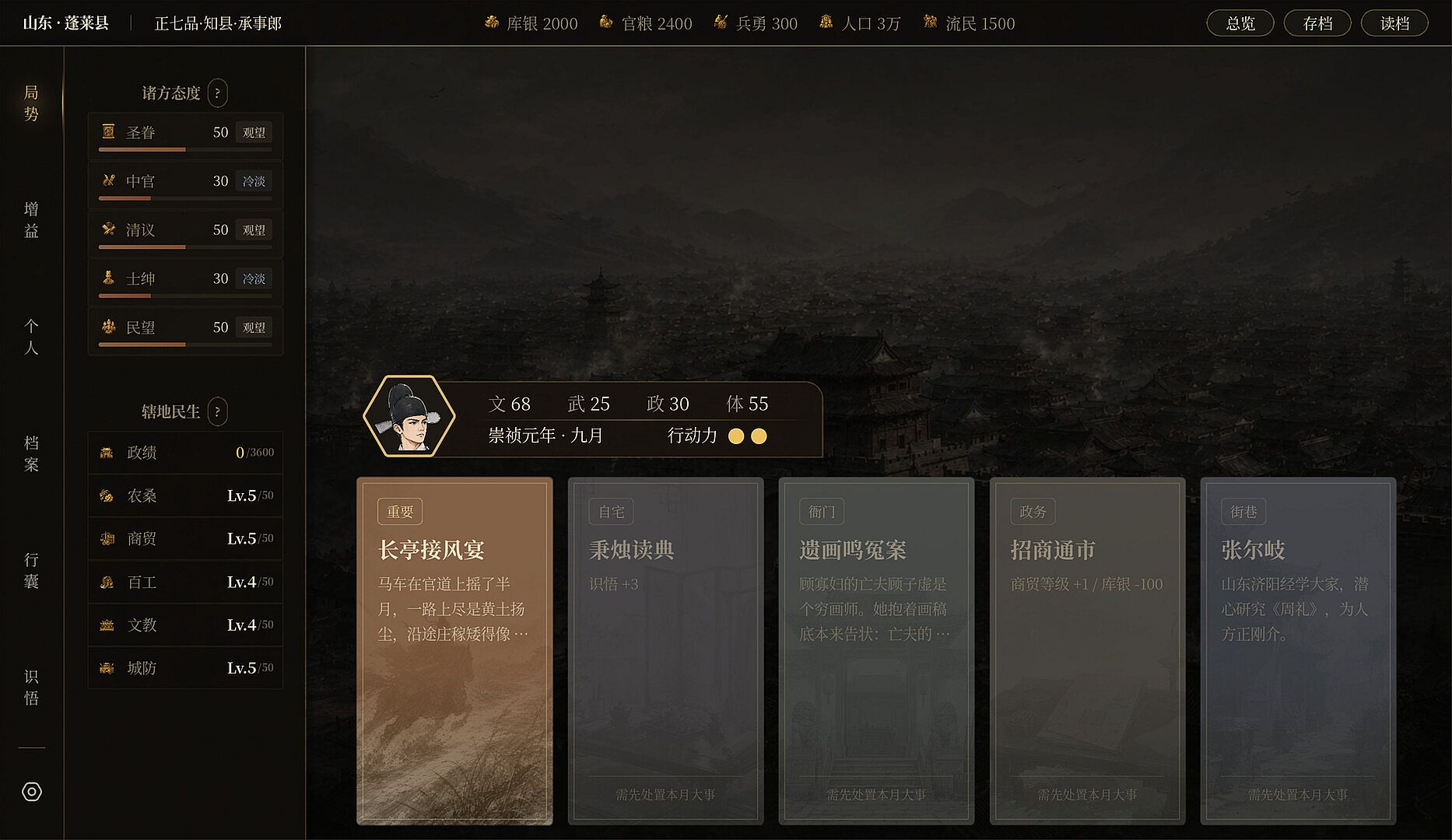
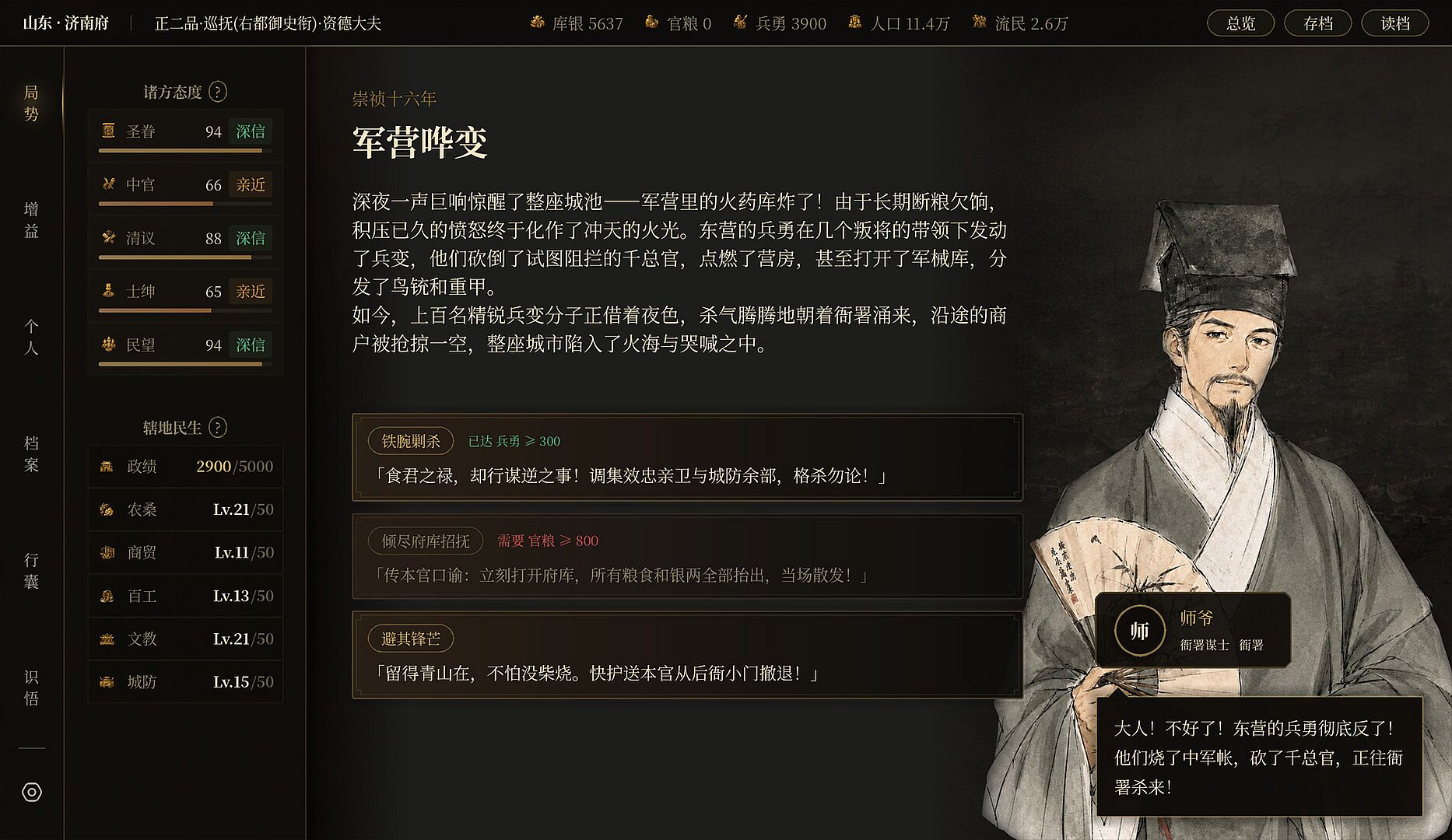
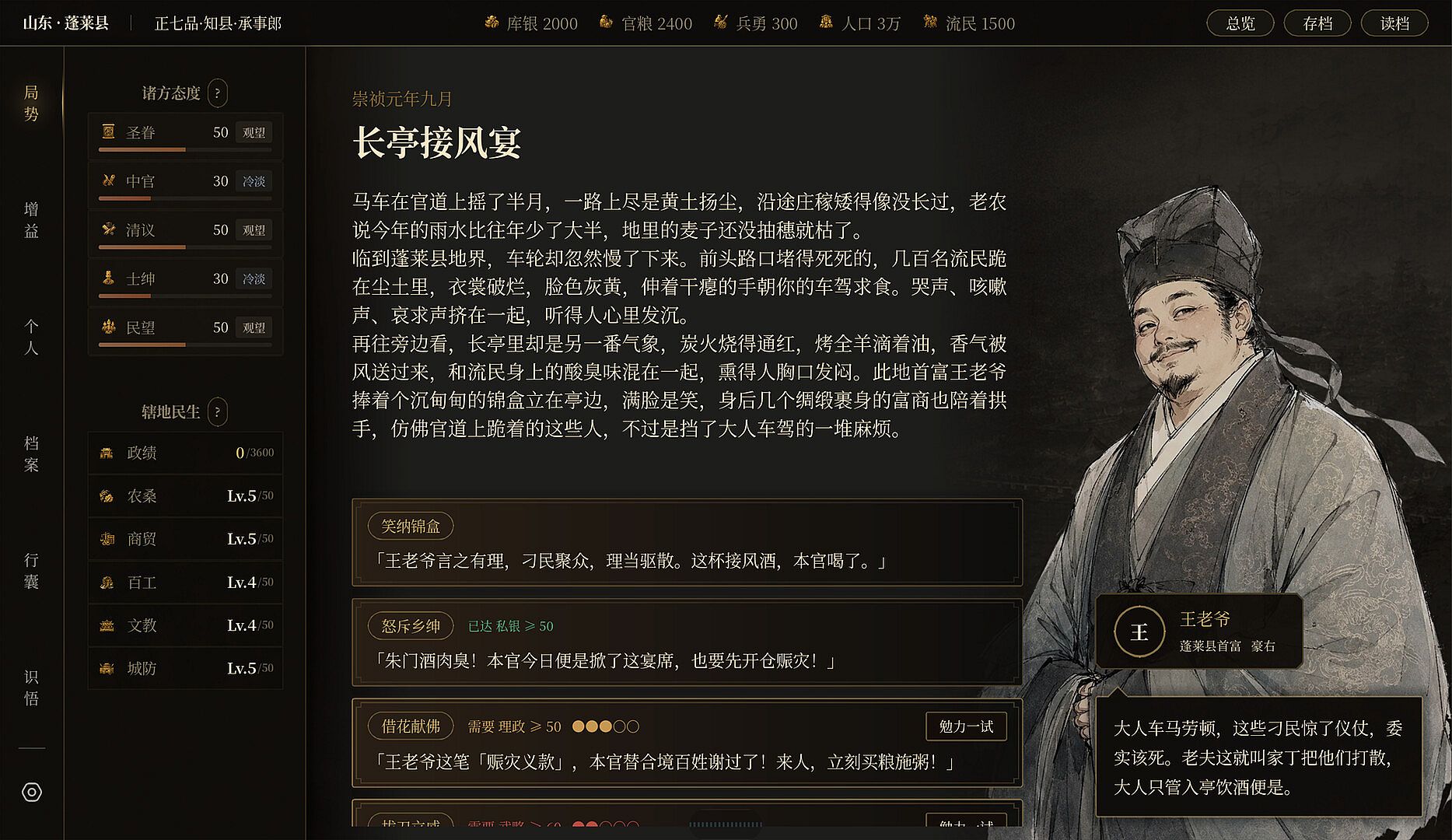
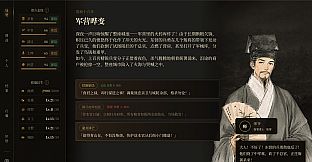
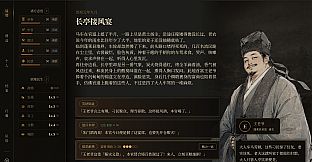
The gameplay revolves around managing a single city or district through dozens of governance decisions each cycle. Resources such as silver, grain, and manpower must be allocated across agriculture, trade, crafts, education, and defense, with shortages forcing constant trade-offs. Court cases appear regularly, ranging from tenant disputes to theft of grain shipments, and each ruling carries lasting consequences for local stability and personal standing. Events tied to real historical pressures unfold year by year, pushing players to respond through persuasion, enforcement, or compromise while dealing with superiors, colleagues, and local elites.
Character origins determine starting conditions and available paths. A scholar from humble roots begins with limited connections but strong local knowledge, while a gentry son enters with better initial access yet faces different expectations. Military heirs manage troops alongside civilian duties, and eunuchs operate within palace networks. Advancement occurs through periodic evaluations that reward demonstrated results, whether achieved through strict adherence to rules or more flexible arrangements. Every decision branches into visible outcomes without any overlaid morality meter or alignment system.
Game Modes
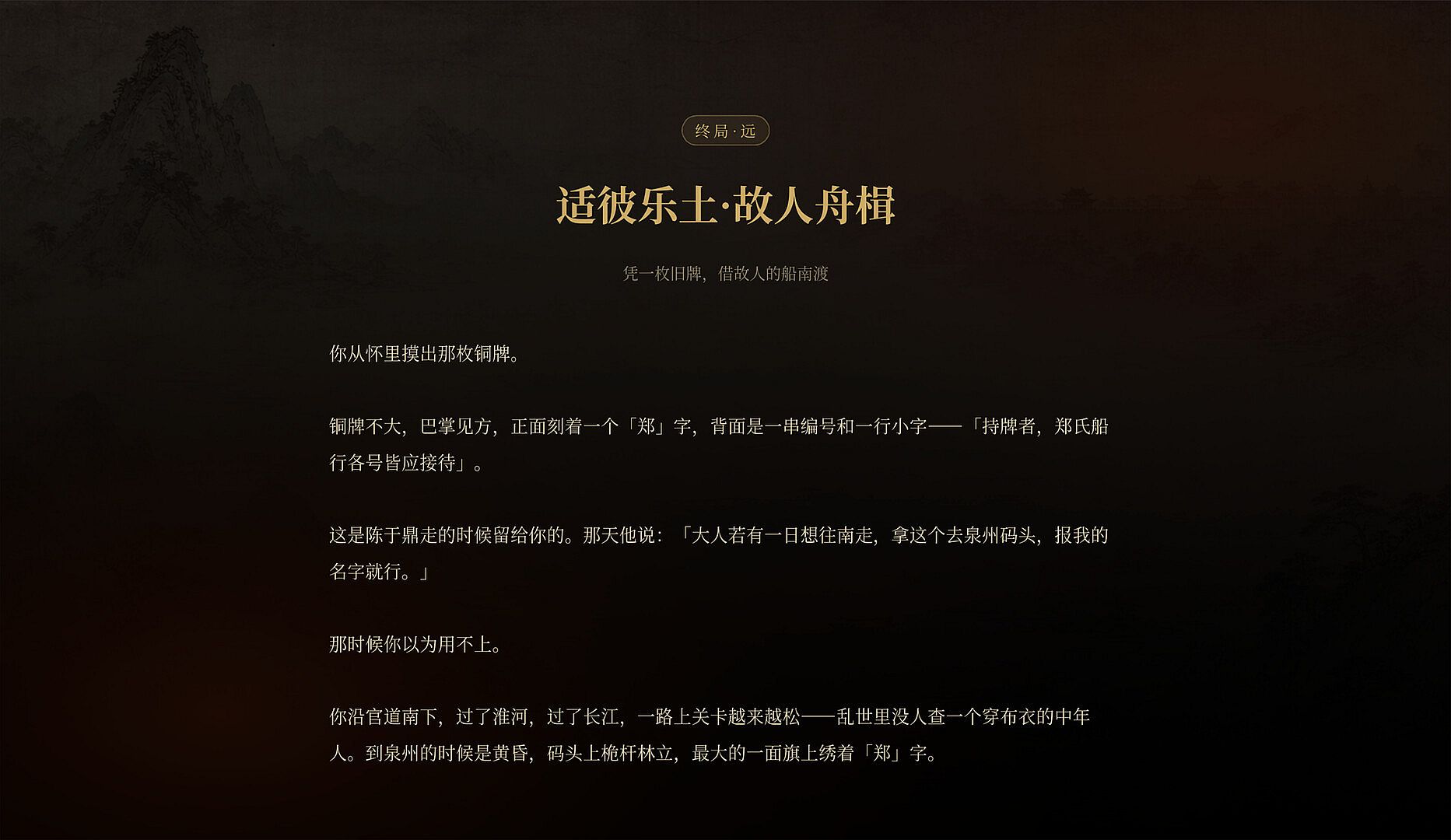
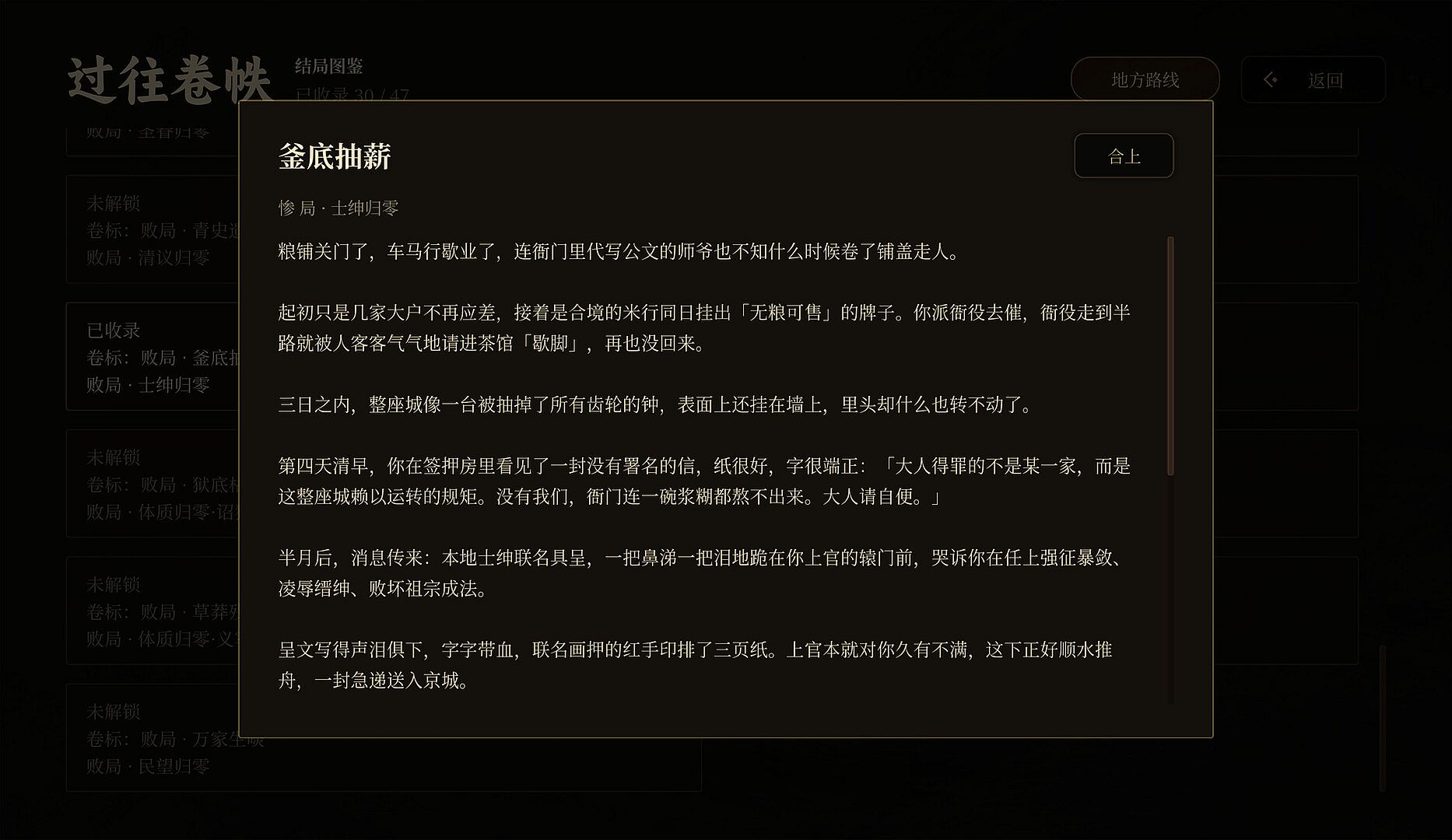
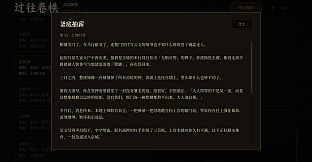
The game operates as a single continuous campaign spanning from the first year of Chongzhen's reign to the dynasty's fall. Different starting origins function as distinct entry points that alter available story branches and long-term possibilities. One path emphasizes local administration and disaster relief, another focuses on military logistics and border concerns, while others explore court intrigue or more independent power consolidation. Players can pursue various endings by maintaining records of prior choices, with outcomes determined by accumulated decisions rather than preset victory conditions.
Progression follows a three-year evaluation cycle that influences rank increases and new responsibilities. No separate multiplayer or competitive modes exist; the experience remains focused on personal narrative choices within the historical setting.
Historical Context and Choices
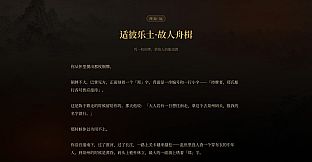
Events draw from documented Ming dynasty crises, including successive natural disasters, rising refugee populations, and military demands. Players encounter these through specific incidents such as tax collection shortfalls, bandit activity, or official inspections. Responses range from strict legal application to negotiated settlements or resource redirection, each producing different ripple effects on city prosperity and personal security. The absence of a single correct path encourages repeated playthroughs to explore alternate routes from the same origin or entirely new backgrounds.
Is It Worth Playing?
This title suits players interested in choice-driven simulations that emphasize realistic constraints over heroic power fantasies. Those who enjoy managing systems under pressure and observing the long-term results of incremental decisions will find the structure engaging. The game supports multiple complete playthroughs through varied origins and branching outcomes, with no requirement for prior historical knowledge beyond what the events themselves present. Availability on PC makes it accessible for those seeking a focused single-player experience centered on late Ming official life.











