




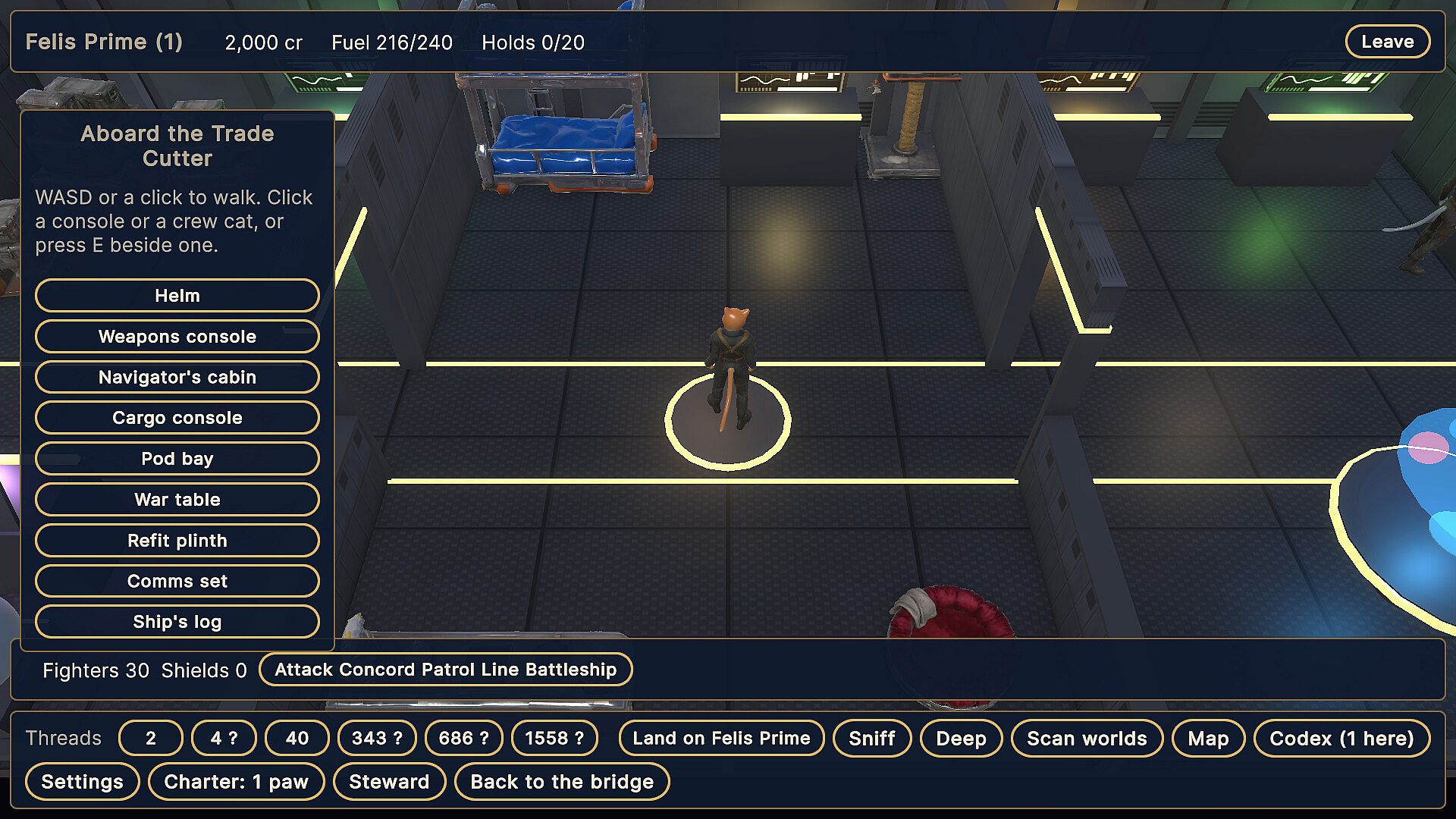
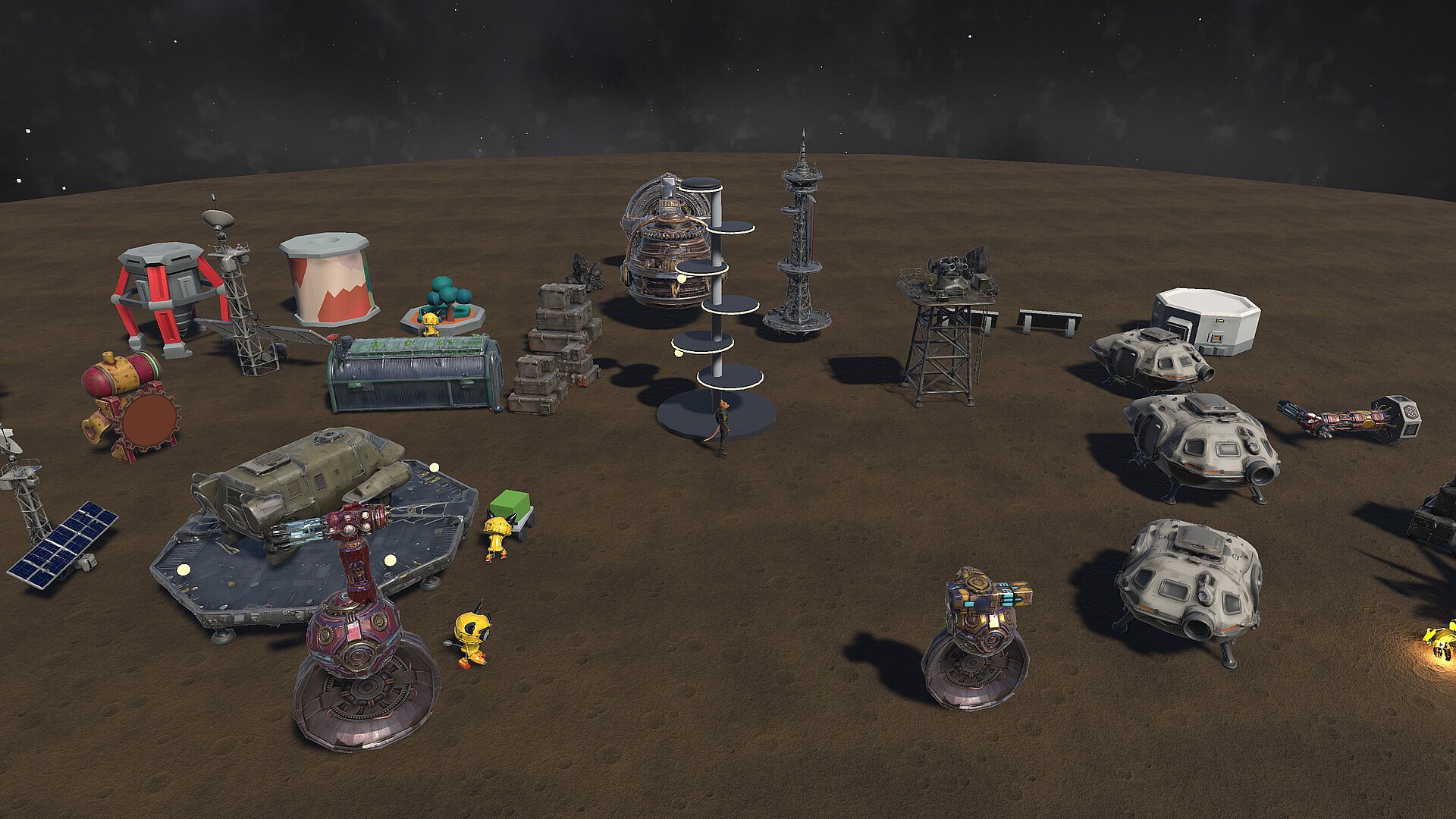
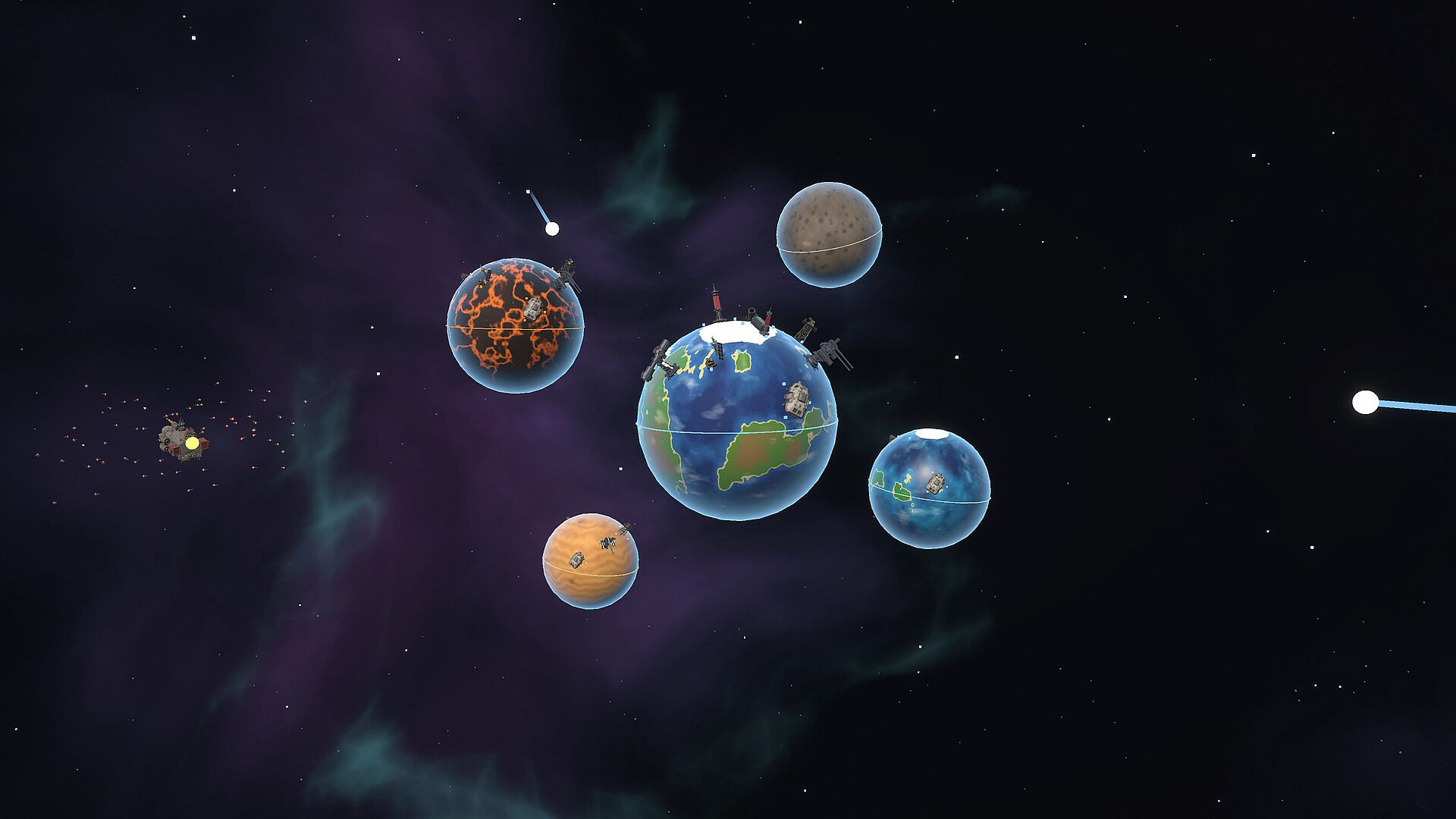
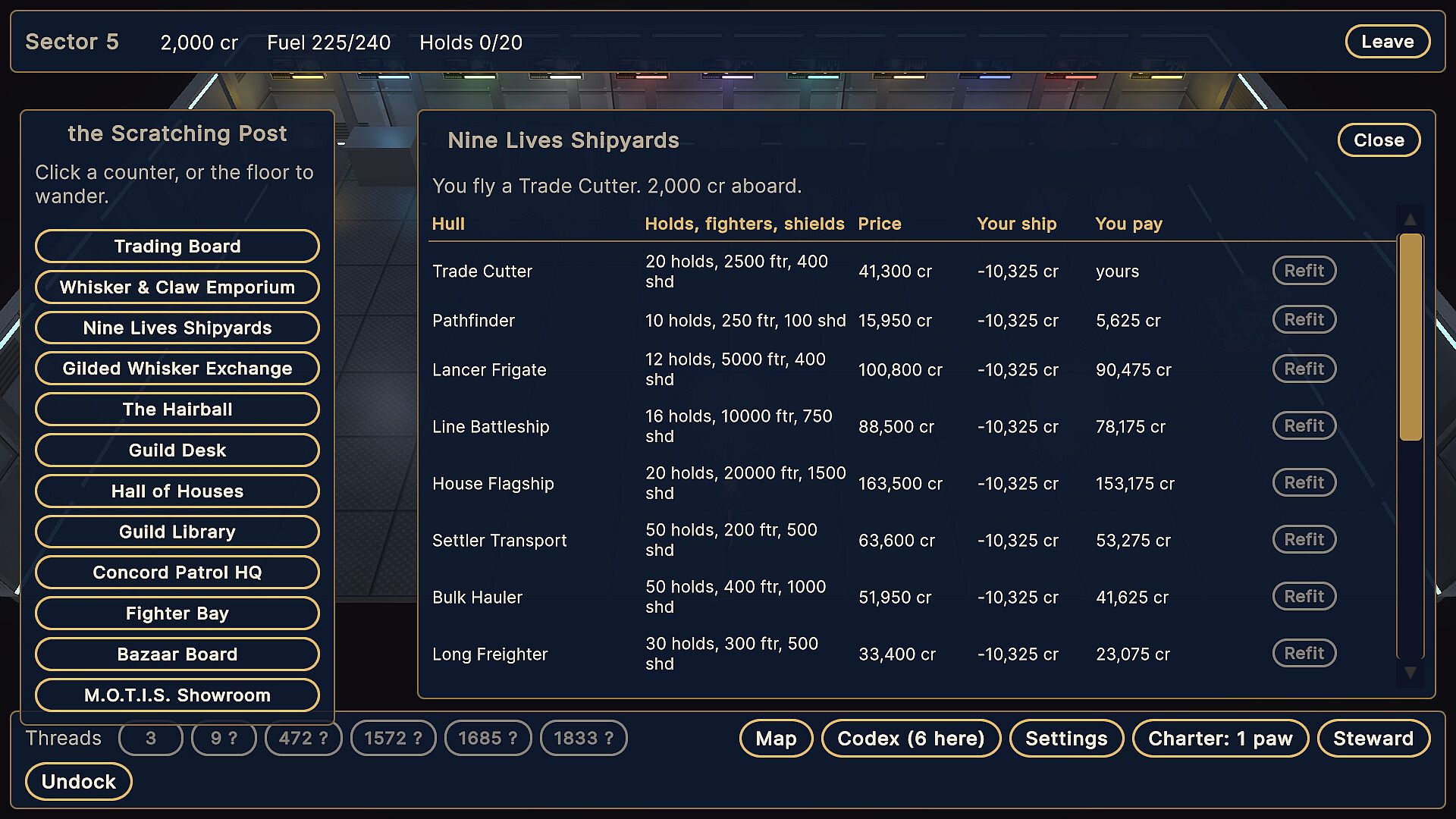

Catnip Wars 2: Empires is an indie simulation game set in a vast space-trading galaxy populated by cats and rival factions. Players begin with a single freighter and limited credits, then expand into a full empire by buying and selling goods across ports while navigating a universe that continues to evolve even when offline.
Gameplay
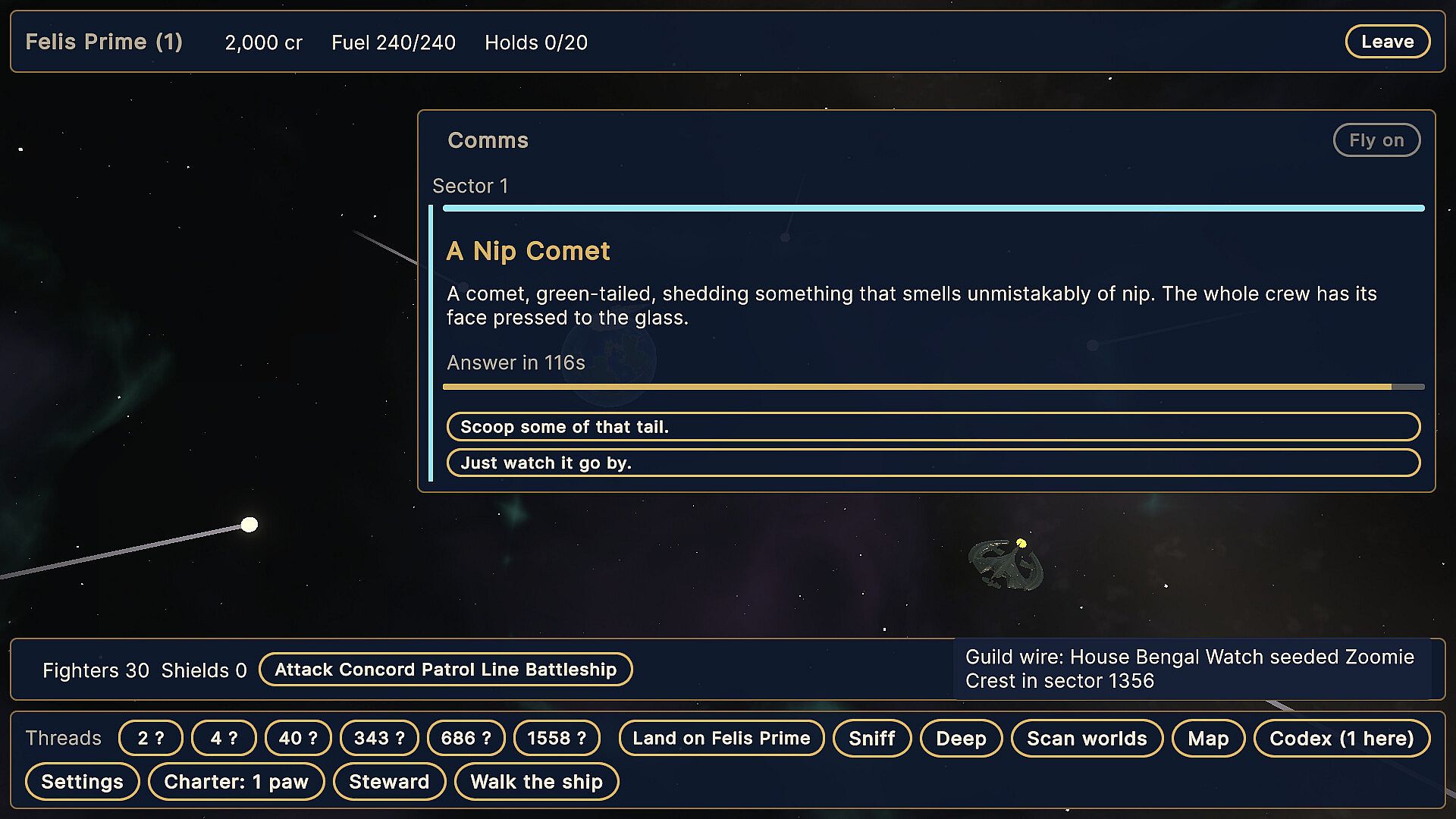
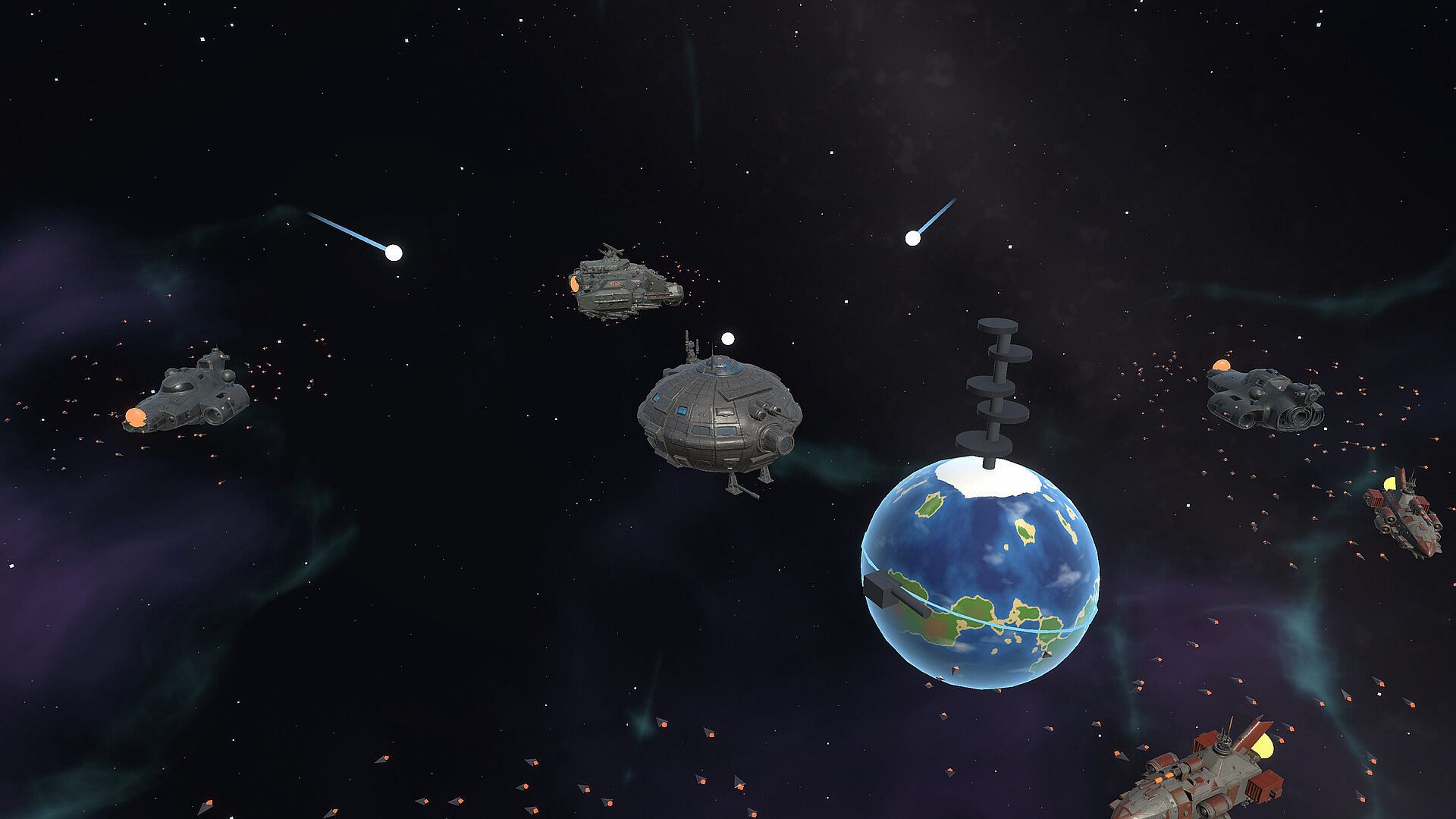
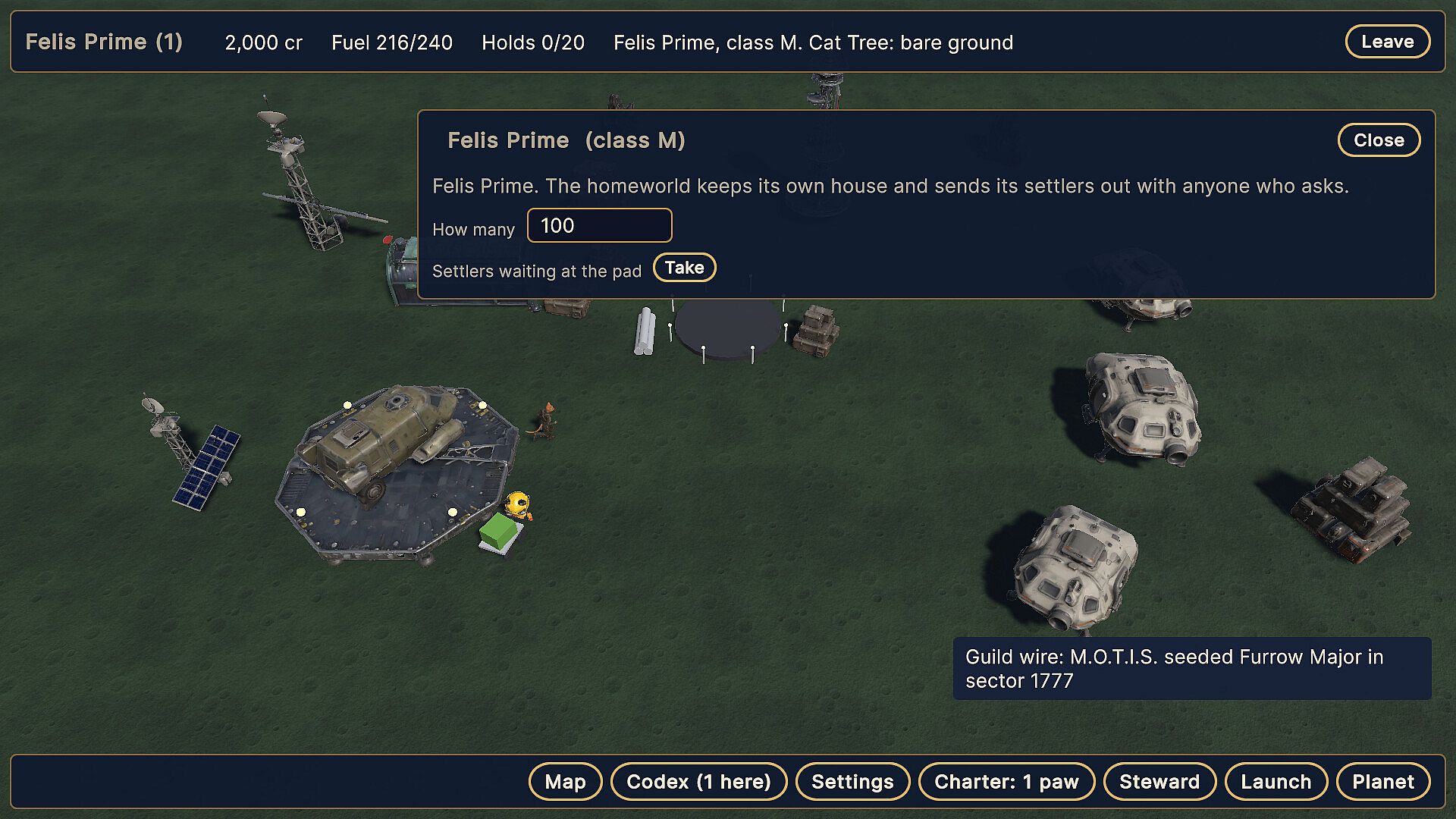
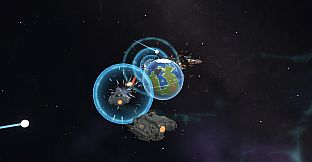
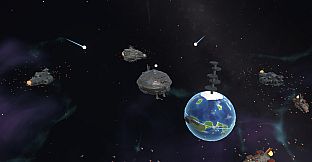
The core loop centers on trade and expansion in a connected galaxy. Ports restock in real time, planets generate resources hourly, and rival Houses grow their influence sector by sector. Every jump consumes actual seconds, turning encounters into events that unfold visibly rather than resolving instantly in menus.
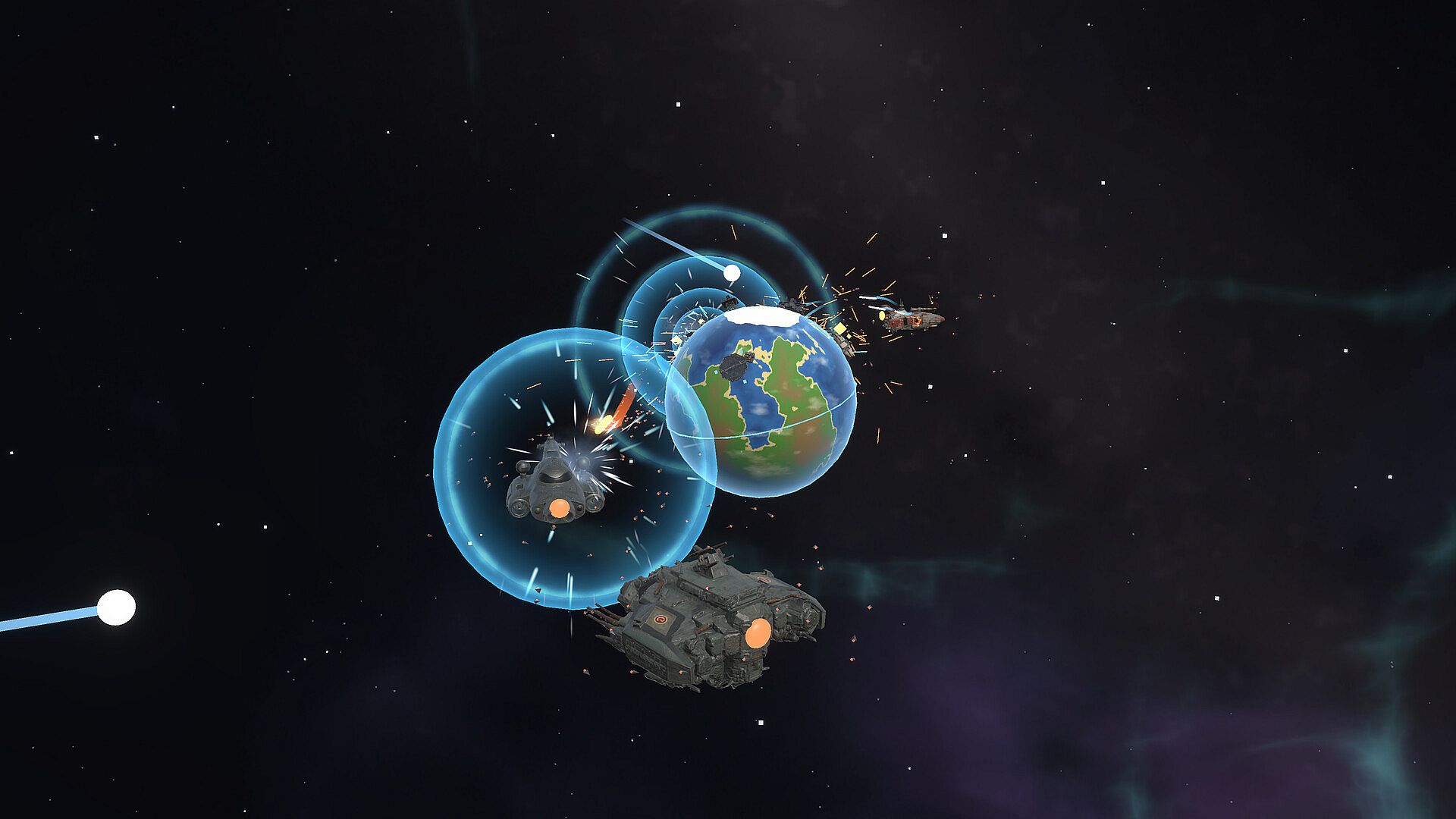
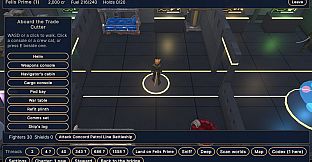
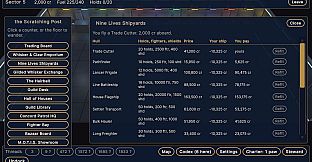
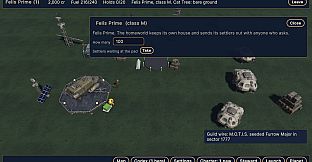
Systems link together through trade routes that require protection, defensive fighters and mines for sector control, cloaking devices, scouting drones, and worldseeds for colonizing planets. Players can arm those worlds, share fleets within Houses, place bounties, and use the Gilded Whisker Exchange to manage credits. A tavern offers a dice game for additional risk and reward.
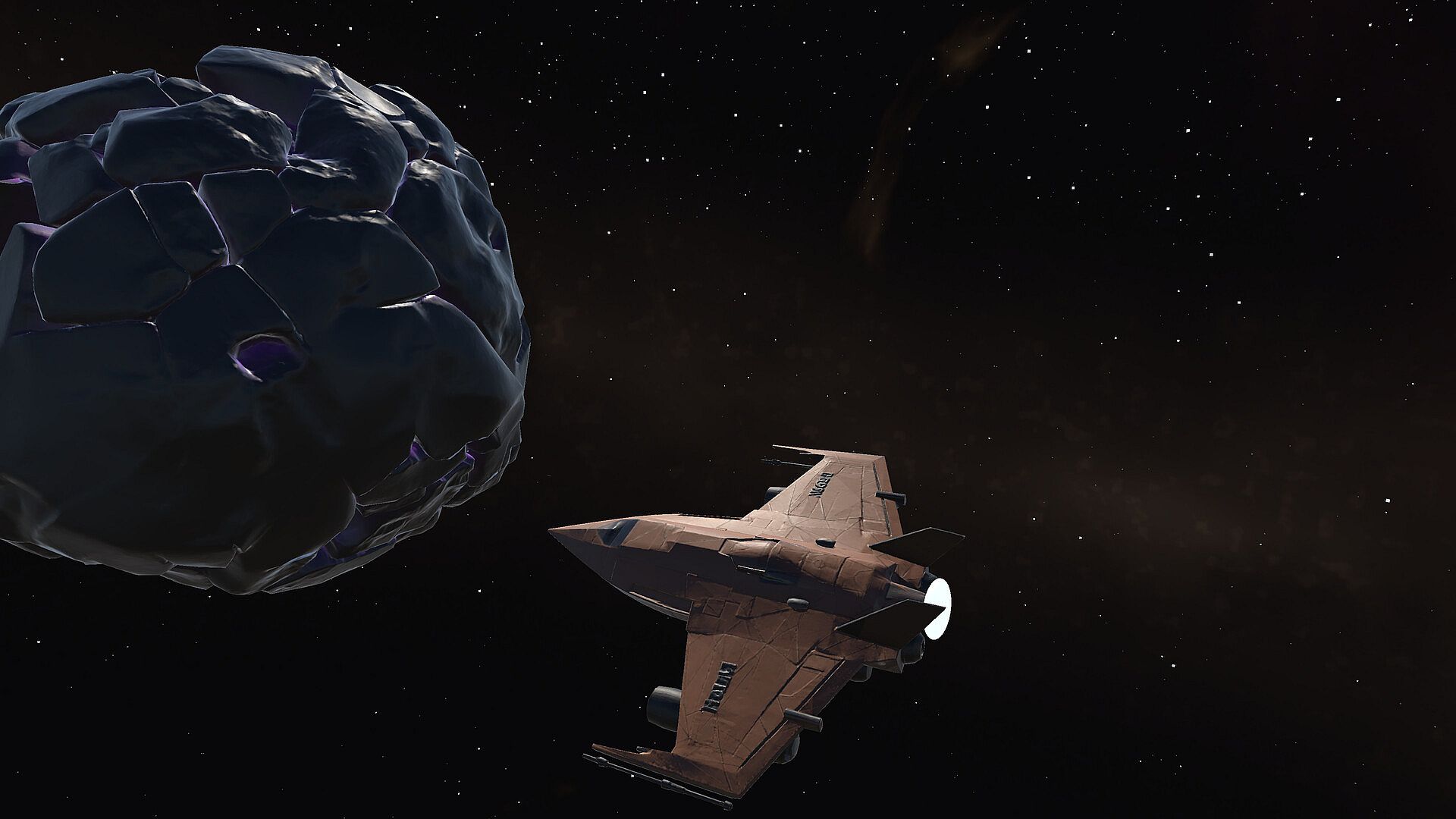
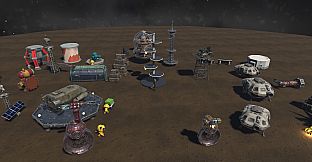
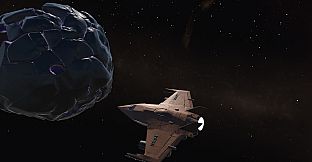
Certain dense sectors force a shift in approach. Capital ships cannot navigate the wreckage, so players dock and transfer to a single-seat fighter for first-person flight. Salvaged parts can be stripped from wrecks and reverse-engineered to customize a chassis slot by slot. Ritual Combat provides a way to claim sectors when the Bristleback Clans arrive to contest them.
M.O.T.I.S. supplies advanced prototypes through its Showroom and equips every captain with an escape pod for emergencies. Its founder maintains direct involvement, creating opportunities for negotiation during play.
Game Modes
Players can experience the galaxy alone in single-player sessions. Friends can join directly from the main menu for shared play. Dedicated servers allow full control over a persistent universe that runs independently, with adjustable speed and starting size that can expand later without a reset.
Server hosts set access rules, apply bans, and choose whether to impose a player limit. The design supports long-term worlds that continue operating for months, with automatic saves and recovery after interruptions. A captain's progress transfers between different server instances.
The Live Universe and Factions
Thirteen NPC factions operate alongside the player in a galaxy that does not pause. The Concord maintains order in core areas, Raccoon packs target trade lanes, the Otter Freehold favors its allies in commerce, and the Kennel Compact announces conflicts in advance. Beyond the Black Knot lies uncharted territory whose nature remains uncertain.
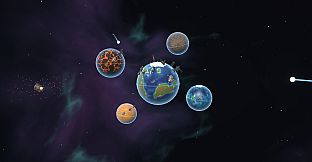
The map begins with around 20,000 sectors and extends further as exploration continues. New regions appear with increasing strangeness the farther out captains travel, and some reports from the edges prove more than rumor.
Is It Worth Playing?
Catnip Wars 2: Empires targets players who enjoy detailed space-trading simulations combined with persistent multiplayer worlds. The real-time economy, sector defense options, and first-person salvage mechanics create a layered experience that rewards ongoing attention to trade routes and territorial control.
Those who prefer solo empire building can run private sessions, while groups or larger communities can host dedicated servers with custom rules. The absence of a hard player cap on hosted instances supports flexible scaling. Because the title remains in development ahead of its Q4 2026 release, current details rest on the described systems rather than post-launch performance data.
Fans of connected simulation gameplay with faction interactions and expandable universes will find the most direct appeal here. The option to start small and grow a shared world over time distinguishes it for players seeking long-term engagement without fixed session limits.












