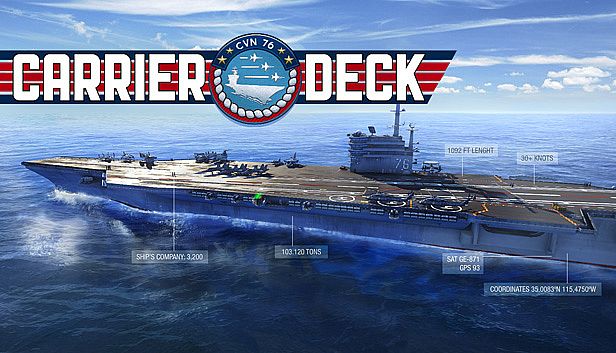











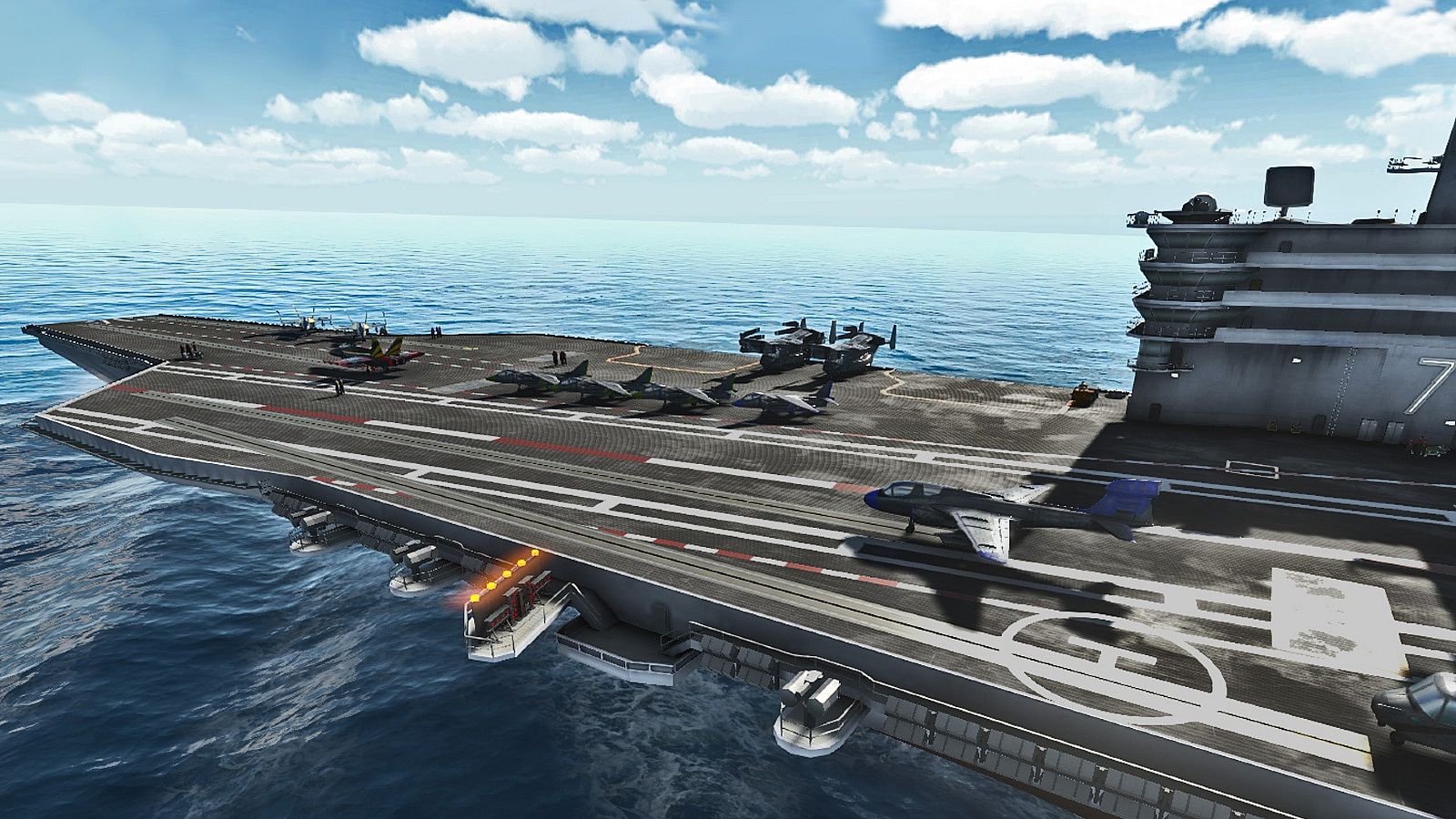
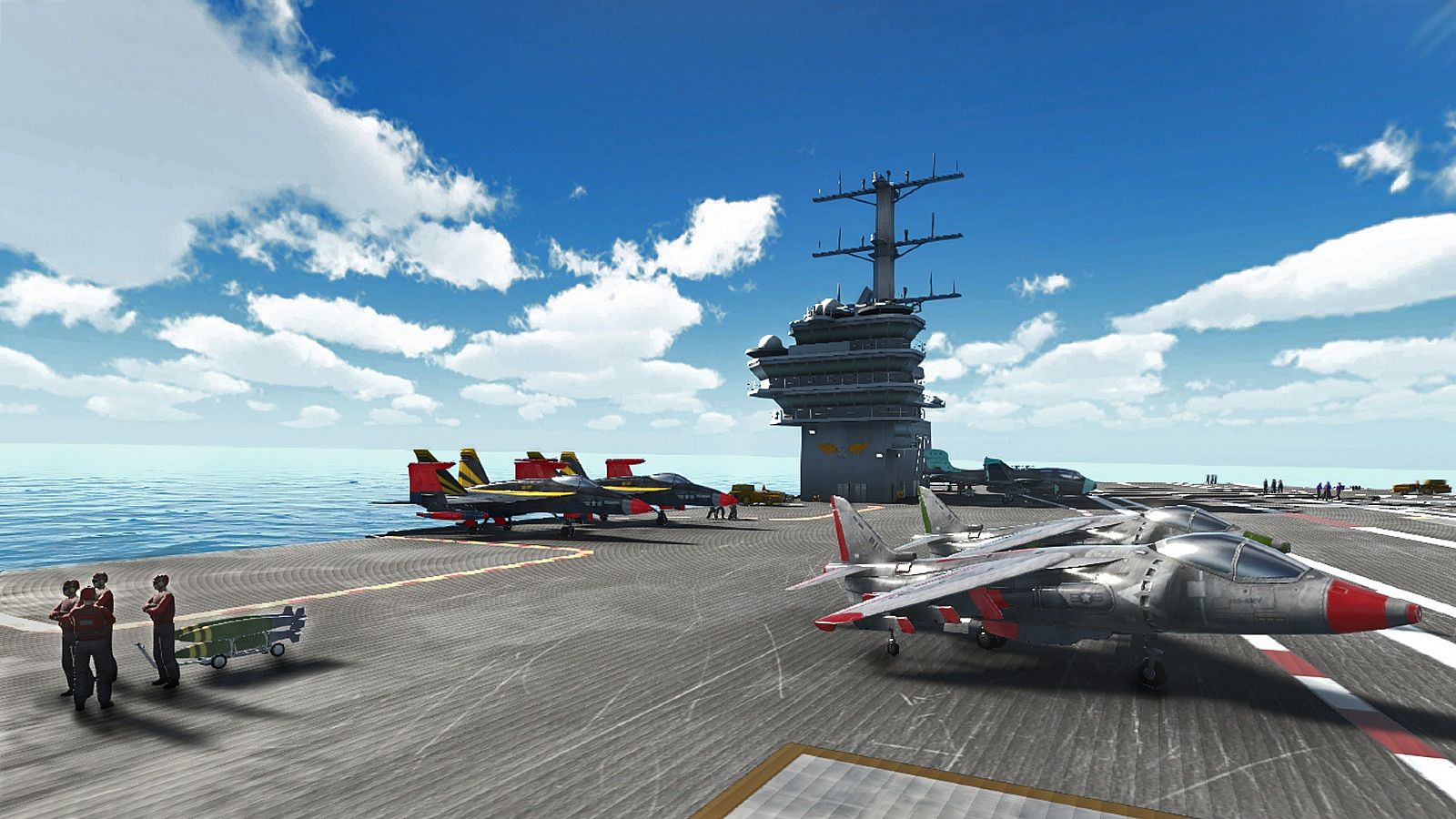
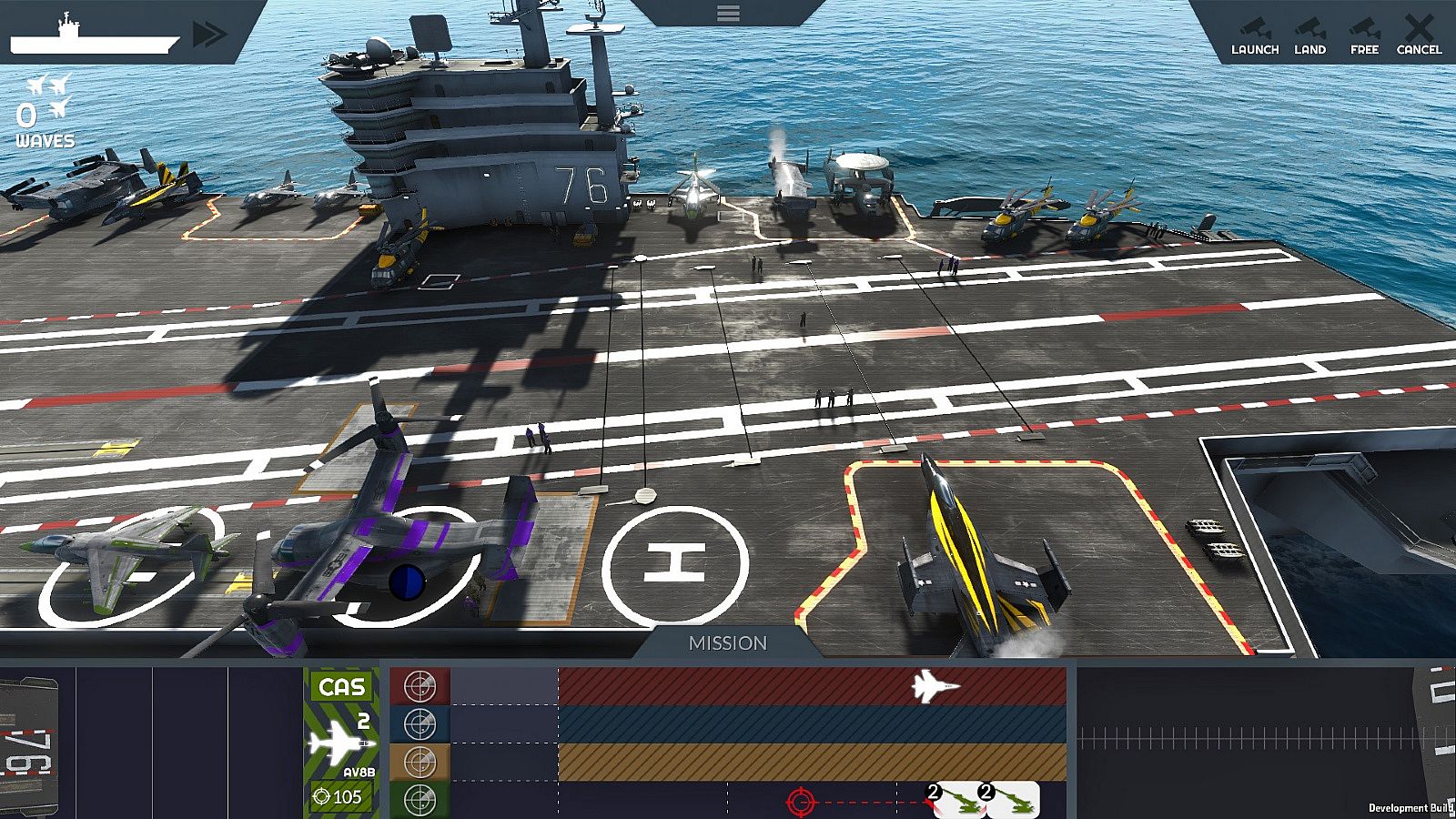
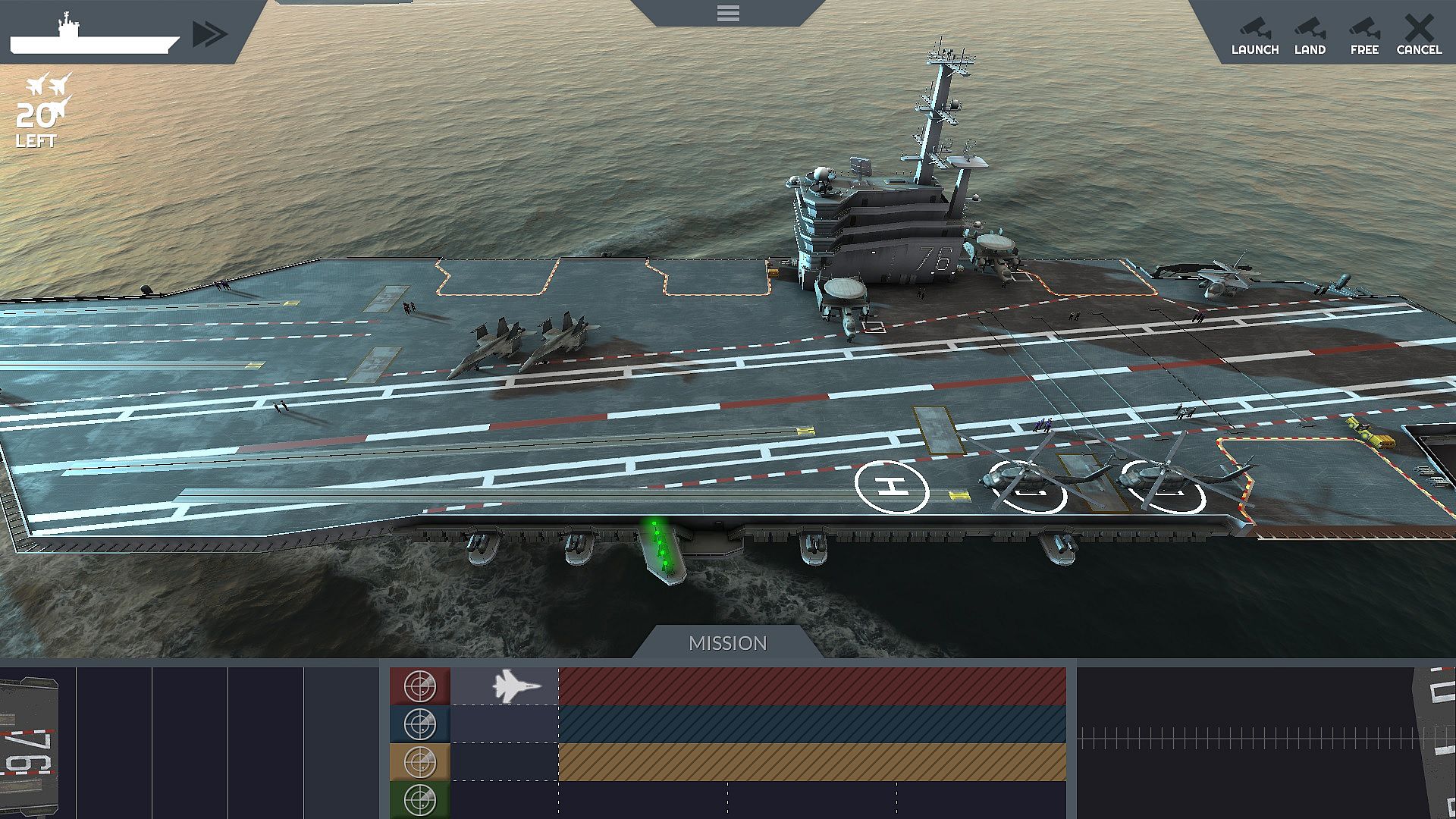
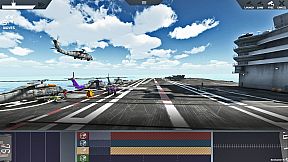
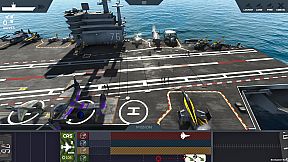
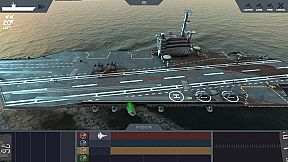
Carrier Deck is a simulation game focused on time management and operational decision making aboard a nuclear powered aircraft carrier. Players take on the role of the Air Officer responsible for every aspect of flight deck activity during active combat operations. The experience centers on the USS Ronald Reagan, a Nimitz class supercarrier, where rapid coordination of aircraft movement, preparation, and deployment determines mission success or failure.
Gameplay
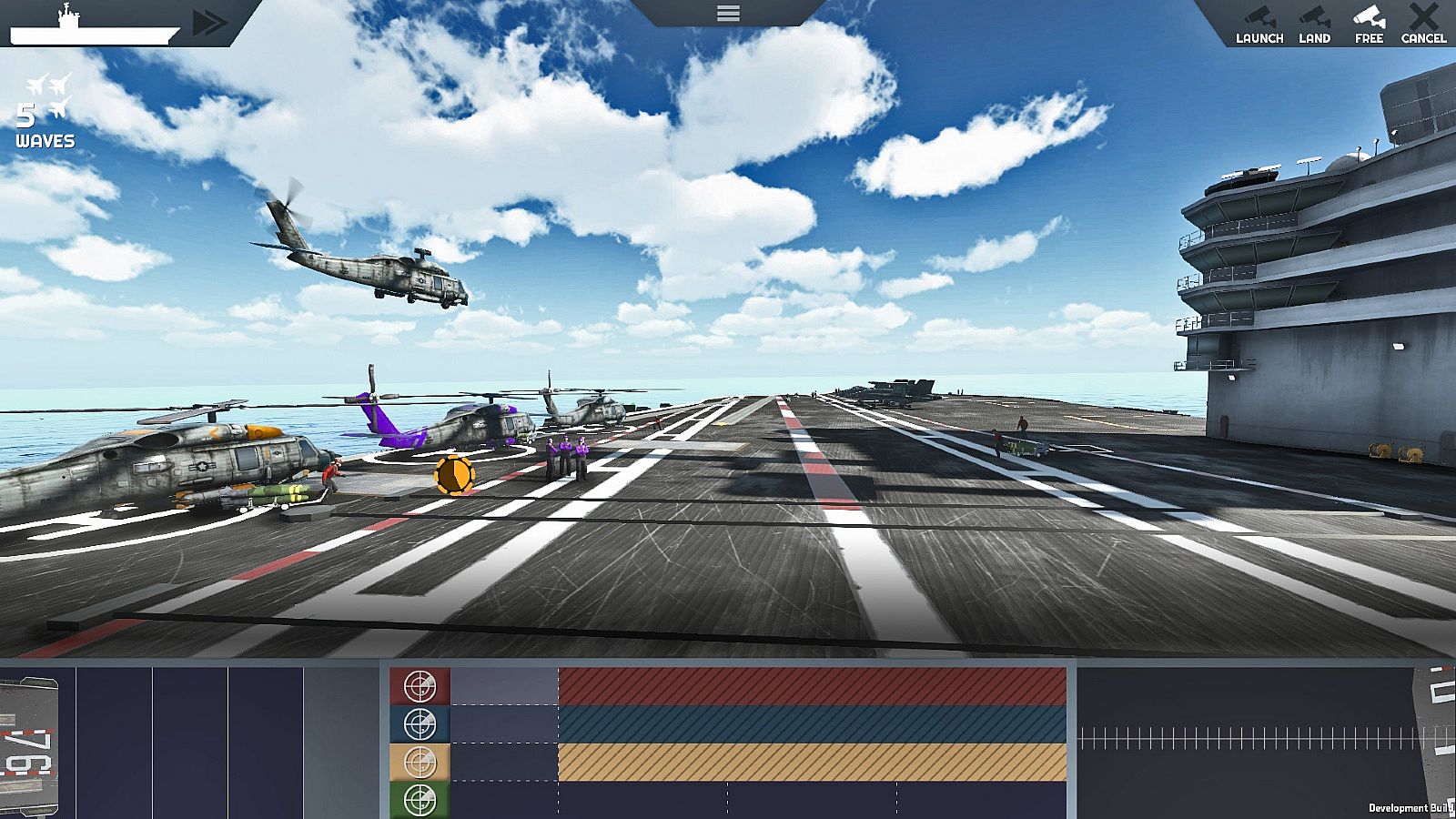
The core loop requires constant attention to the flight deck and hangar areas. Aircraft must be moved into position, fueled, armed, and maintained before they can launch. Landing operations run simultaneously, and any collision or mishandled plane can trigger chain reactions that damage multiple assets and the ship itself. Players juggle a roster that includes F 18 Hornets and Super Hornets for air superiority, S 3 Vikings for anti submarine work, Chinooks for transport, and additional fixed wing and rotary wing types for reconnaissance and support roles.
Mission planning involves selecting appropriate aircraft for each task and sequencing their departures and recoveries within tight time windows. Search missions locate enemy air, surface, and submarine contacts, while intercept flights respond to detected threats. Ground attack and close air support sorties require precise loadouts and timing, and cargo or special forces insertions add further layers of scheduling complexity. The hangar deck serves as a secondary workspace where damaged planes receive repairs and spare aircraft are staged for quick deck swaps.
Game Modes
Campaign mode places the player in charge of operations across multiple ocean regions. Missions progress through a global theater, with objectives that escalate in complexity and require sustained management of limited resources and aircraft availability. Success depends on maintaining operational tempo while adapting to changing threat profiles.
Skirmish mode offers standalone scenarios that isolate specific challenges. These sessions test rapid decision making without the longer progression structure of the campaign, allowing focused practice on deck traffic control, emergency response, or high volume launch and recovery sequences.
Key Mechanics and Systems
Every aircraft on deck has individual status indicators for fuel, ordnance, and mechanical condition. Players issue direct commands to move planes between spots, initiate refueling or rearming cycles, and clear landing areas. Early warning and detection aircraft extend situational awareness, feeding information that informs which missions to prioritize. Amphibious and special forces operations require coordination of helicopter assets with surface objectives, while cargo runs maintain supply lines between the carrier and other units.
Time pressure remains constant. Delays in one area cascade into missed launch windows or unsafe landing conditions. The simulation emphasizes prevention of deck fires and collisions through proactive spacing and sequencing rather than reactive firefighting.
Is It Worth Playing?
Carrier Deck delivers a focused simulation of carrier air operations that appeals to players who enjoy detailed resource and schedule management. The verified review aggregate stands at Very Positive, drawn from more than one thousand user submissions. The game remains available as a complete single player experience with no ongoing seasonal content or live service elements.
Those drawn to realistic naval aviation logistics and short to medium length sessions will find the campaign and skirmish options provide repeatable challenges. The title suits players comfortable with real time oversight of multiple concurrent tasks rather than direct vehicle control or narrative driven campaigns. Its modest system requirements and straightforward interface keep the emphasis on operational choices rather than graphical spectacle.