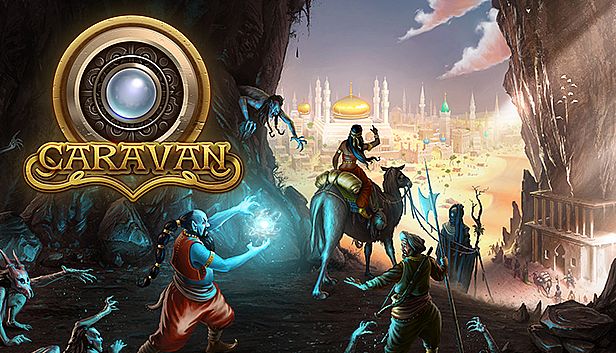


















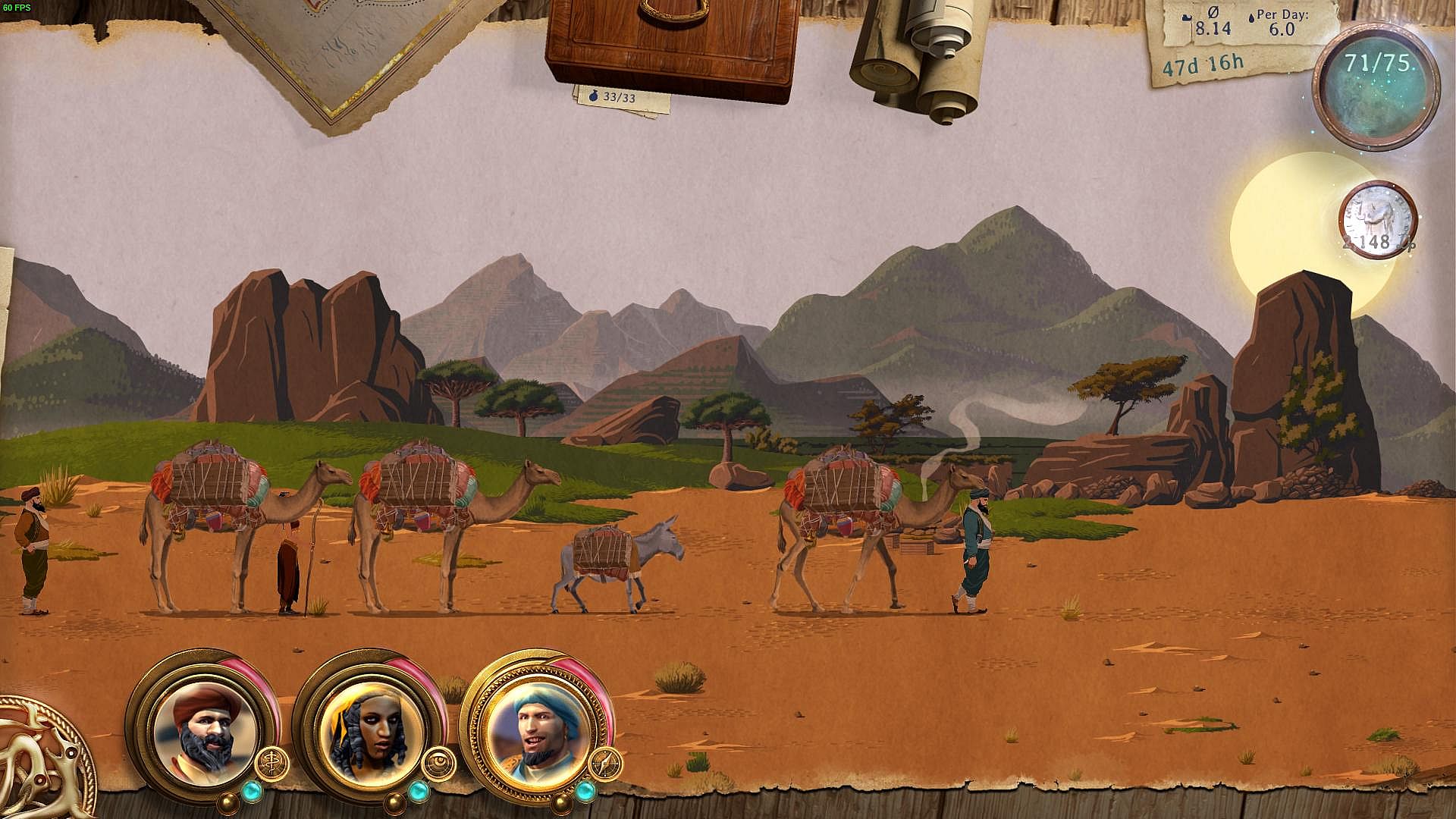

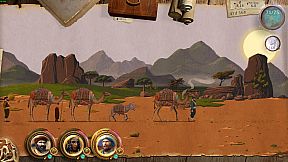
Caravan is a strategy simulation adventure game with RPG elements that places players in charge of a trading caravan traveling across a pre-medieval Oriental world inspired by Arabian legends and geography. The story follows a royal heir who leaves behind a life of luxury after a devastating storm disrupts the kingdom, setting out on a personal quest tied to family and destiny while navigating the dangers of the desert.
Gameplay
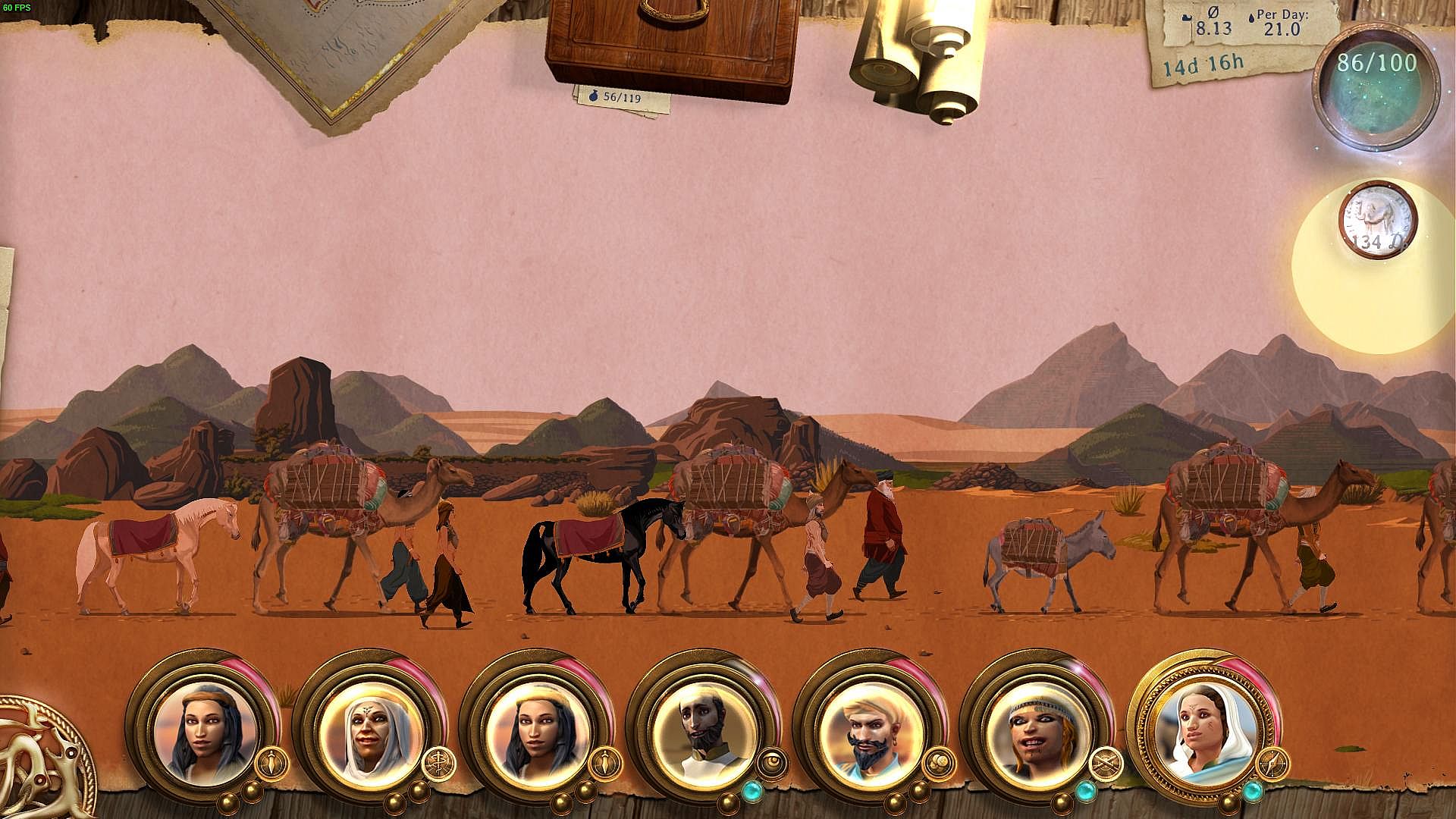
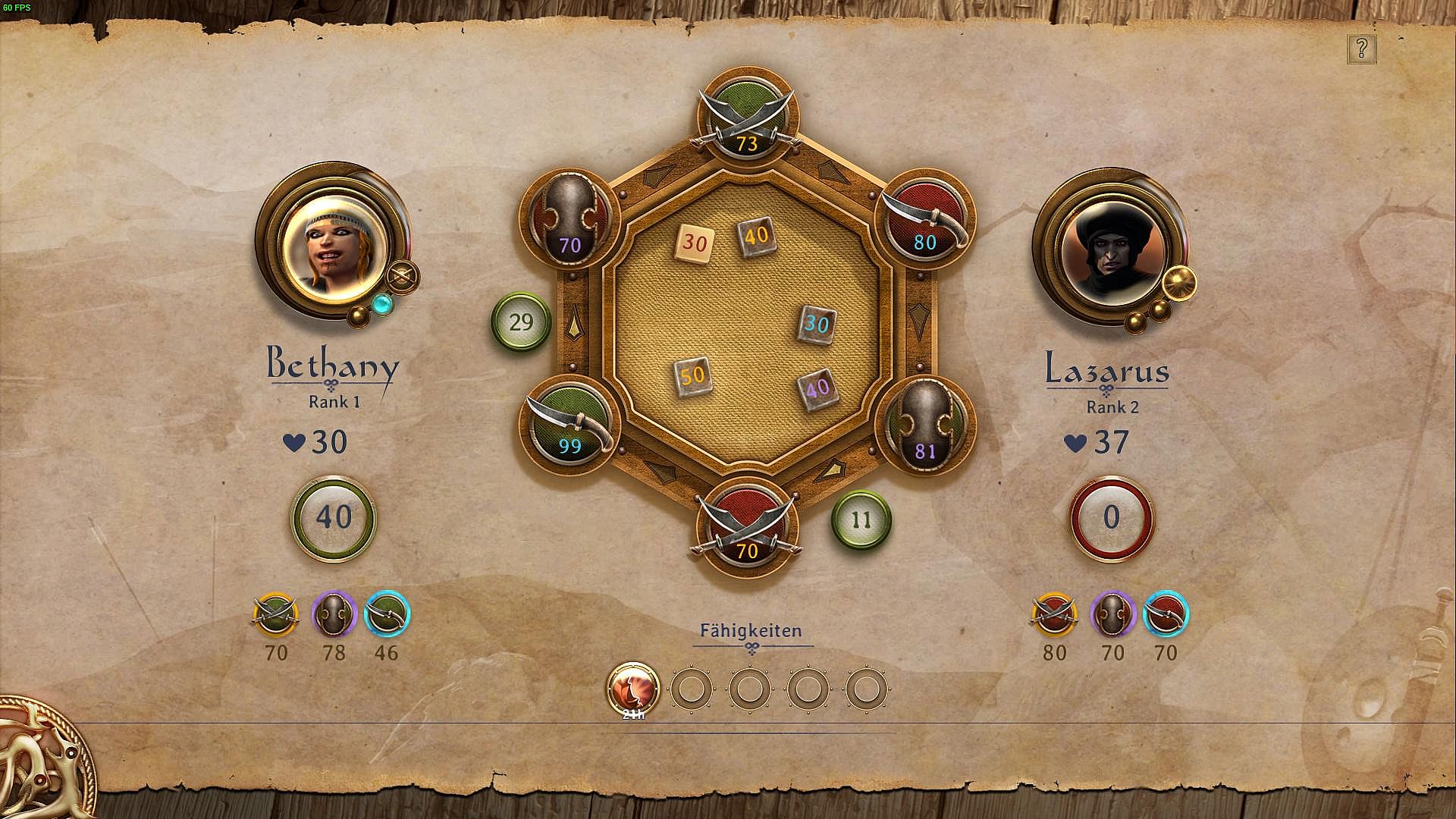
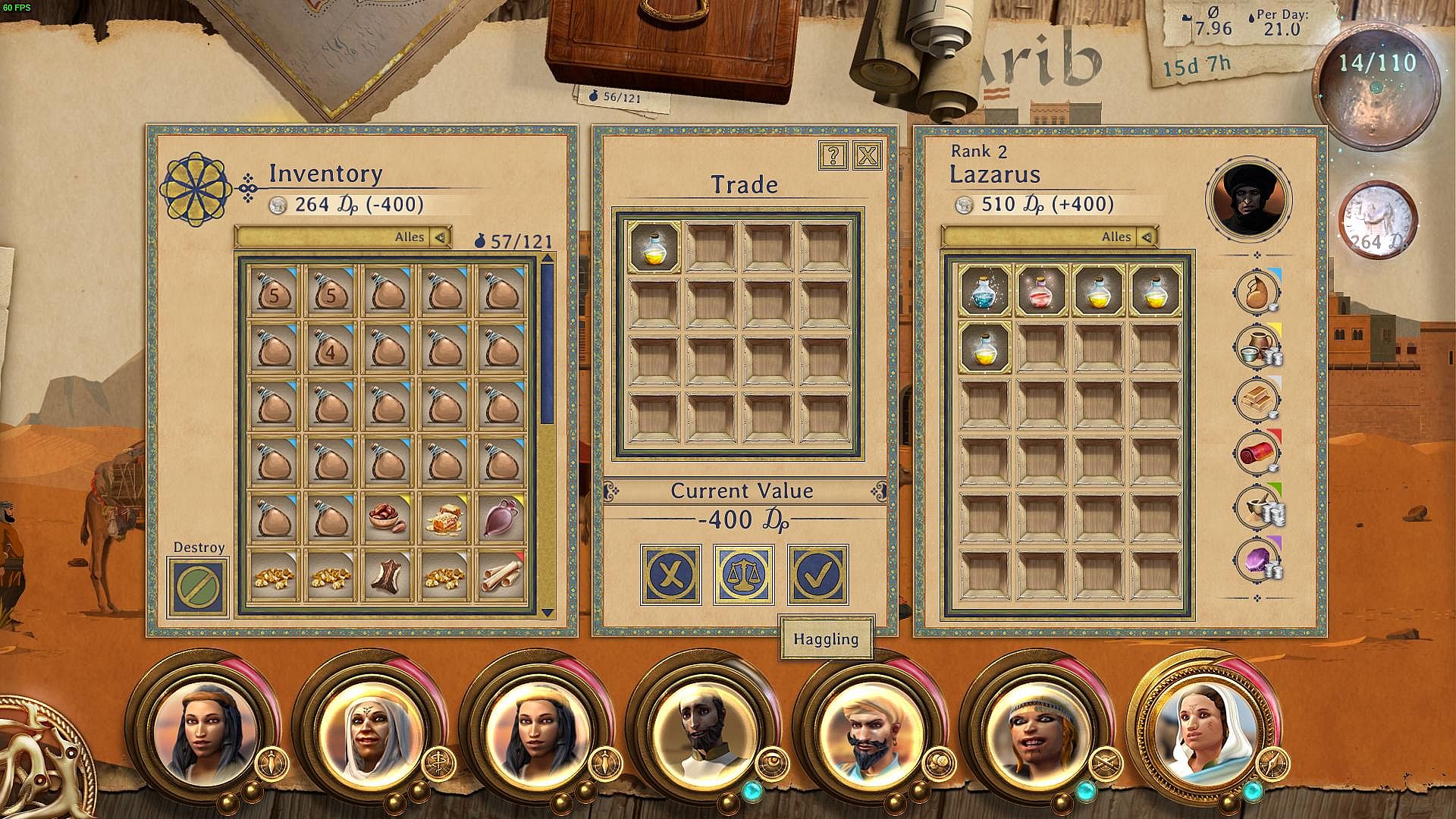
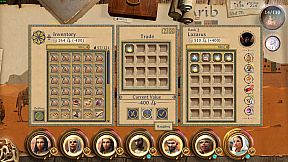
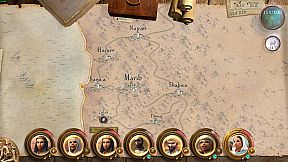
The core loop centers on managing resources, planning routes between settlements, and balancing trade profits against risks. Players equip and upgrade their caravan, decide what goods to buy and sell in each town, and allocate limited supplies for the journey ahead. Encounters along the way introduce combat against bandits, wild beasts, supernatural creatures, and djinns, where tactical choices determine outcomes. Quests in towns add layers of narrative and reward, often involving local folklore drawn from Arabian Nights tales. The system blends economic decisions with light character progression, as successful trades and completed tasks improve the caravan's capabilities and open new paths.
Exploration emphasizes careful preparation rather than speed. Routes present varying threats based on terrain and time of year, forcing players to weigh speed against safety when stocking food, water, and defensive items. Combat resolves through direct confrontations that reward positioning and resource use, while bartering in towns hinges on supply and demand fluctuations that change with player actions and world events. This creates a steady rhythm of departure, travel hazards, arrival negotiations, and restocking that defines each leg of the journey.
Game Modes
The game operates as a single-player experience focused on one continuous journey from the starting kingdom toward the legendary city of Iram. There are no separate competitive or cooperative modes. Instead, progression unfolds through the main narrative arc, where players advance by completing trade runs, fulfilling town requests, and overcoming the obstacles that appear on the road. Side activities such as optional quests and repeated trading loops provide additional depth within this structure, allowing different playstyles to emerge from the same core path. The emphasis remains on personal decision-making and adaptation rather than branching campaigns or multiplayer sessions.
Setting and Mechanics
The world draws from historical and geographic details of the Arabian Peninsula, incorporating regional myths and cultural elements to ground the fantasy. Towns feature distinct economies and personalities shaped by their locations, while the wilderness includes mystical threats that tie into the overarching legend of Iram. Mechanics reinforce this authenticity through systems for haggling, route selection, and encounter resolution that reflect the challenges of pre-medieval caravan travel. Resource management extends to both material goods and the well-being of the caravan members, with consequences for neglecting either aspect during long stretches between safe havens.
Progression systems reward consistent performance across multiple trips. Improved equipment and knowledge of trade patterns allow players to tackle more ambitious routes and tougher adversaries. The mix of strategy and light RPG growth keeps the focus on long-term planning, as early choices influence later options in both commerce and combat effectiveness.
Is It Worth Playing?
Caravan suits players who appreciate deliberate pacing in trading and exploration games. Its 79 percent positive rating from hundreds of Steam reviews reflects appreciation for the setting and the satisfaction of successful caravan runs, though some note repetition in the travel and combat loops. The title remains available as a complete single-player package with no ongoing seasonal content or required updates. Those drawn to strategy titles that combine economic simulation with light adventure elements in a distinctive historical-fantasy environment will find the most value here, particularly if they enjoy managing risks over extended journeys rather than fast-paced action. The experience delivers a focused narrative through its mechanics without additional modes or expansions.