

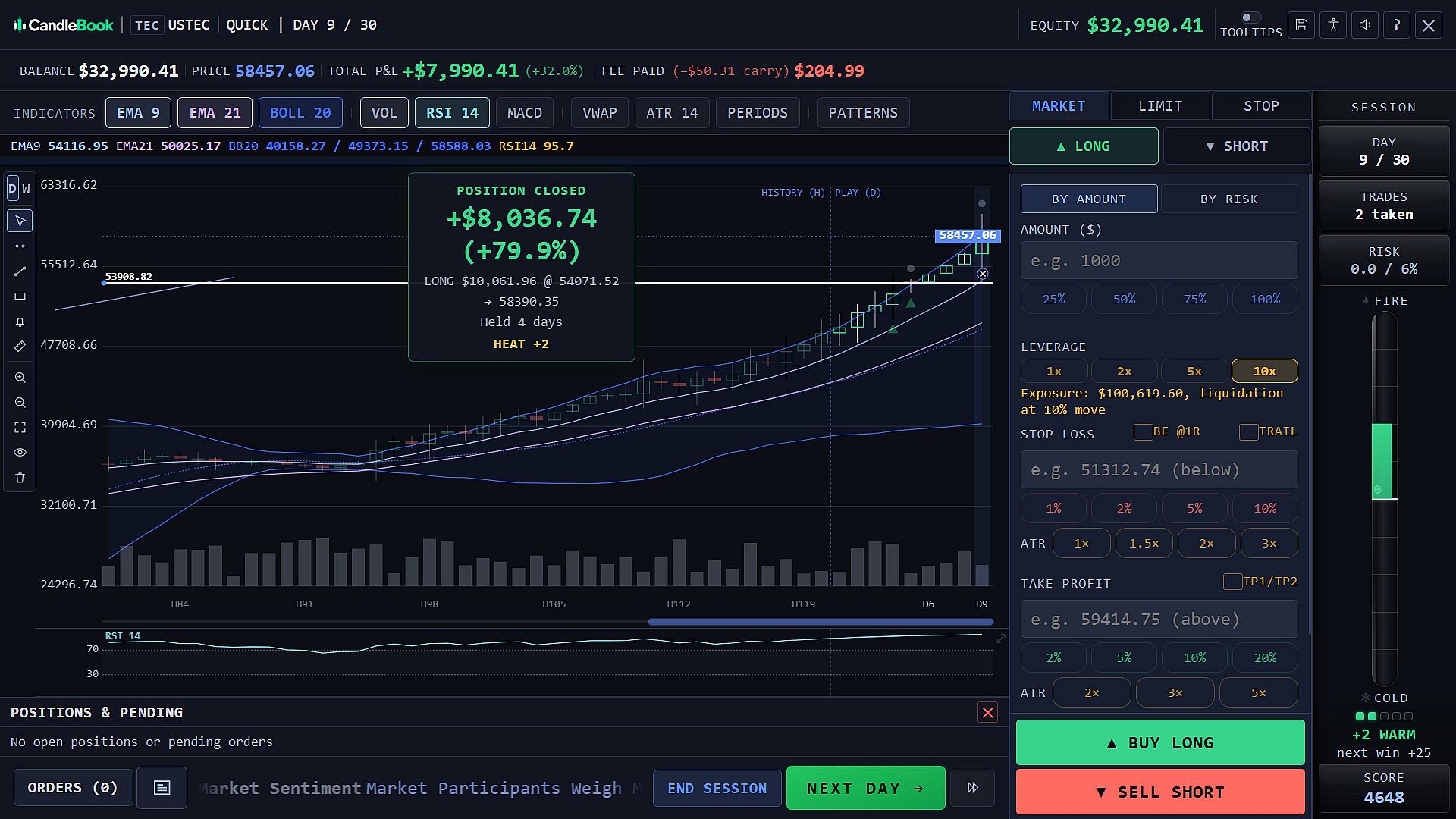
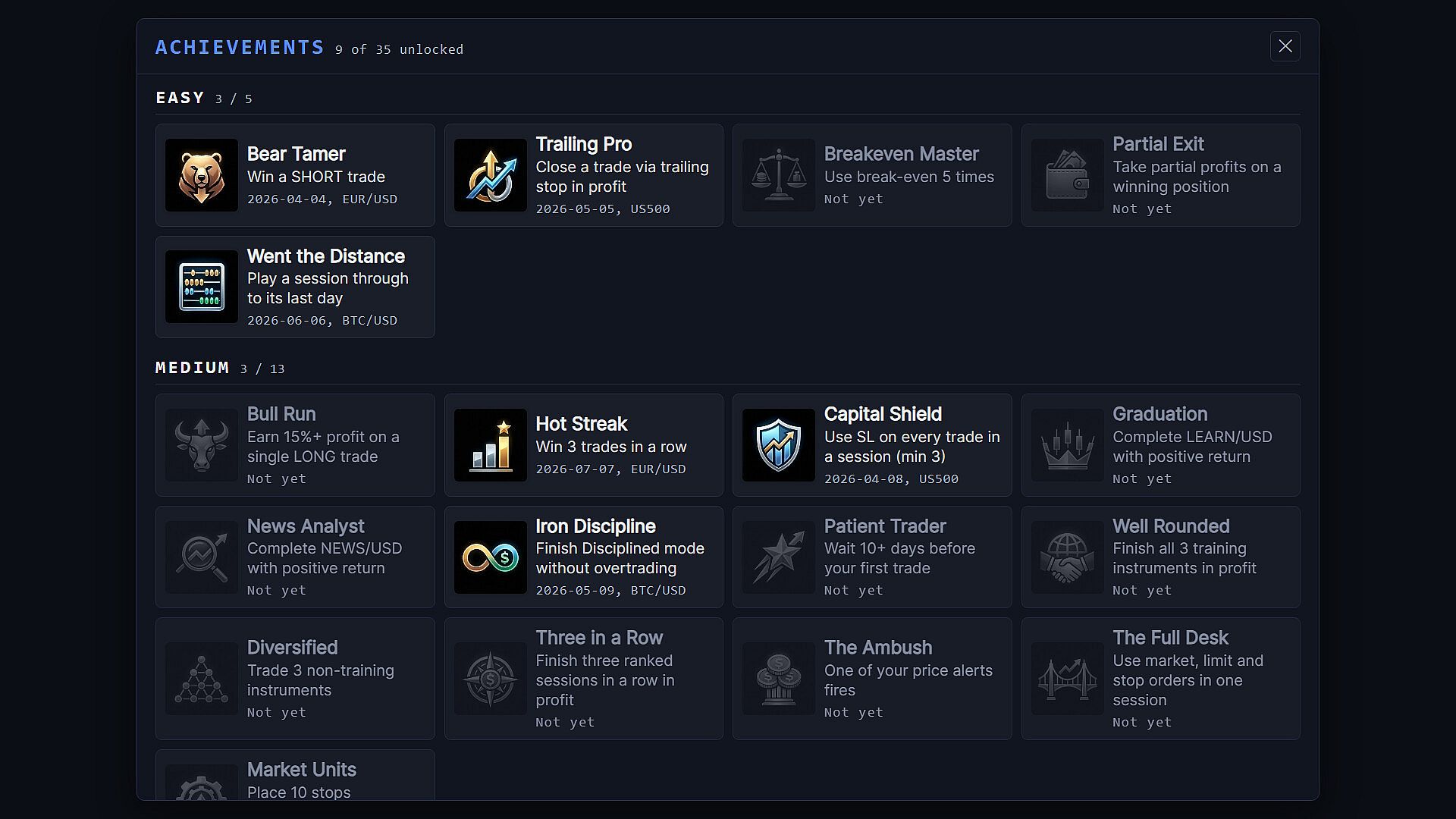
CandleBook: Trading Simulator is a single-player strategy and simulation game focused on chart reading, position sizing, and risk management in synthetic markets. Players advance through generated price action one candle at a time on PC, making decisions about entries, exits, and capital allocation without relying on historical replays or real-world data feeds.
Gameplay
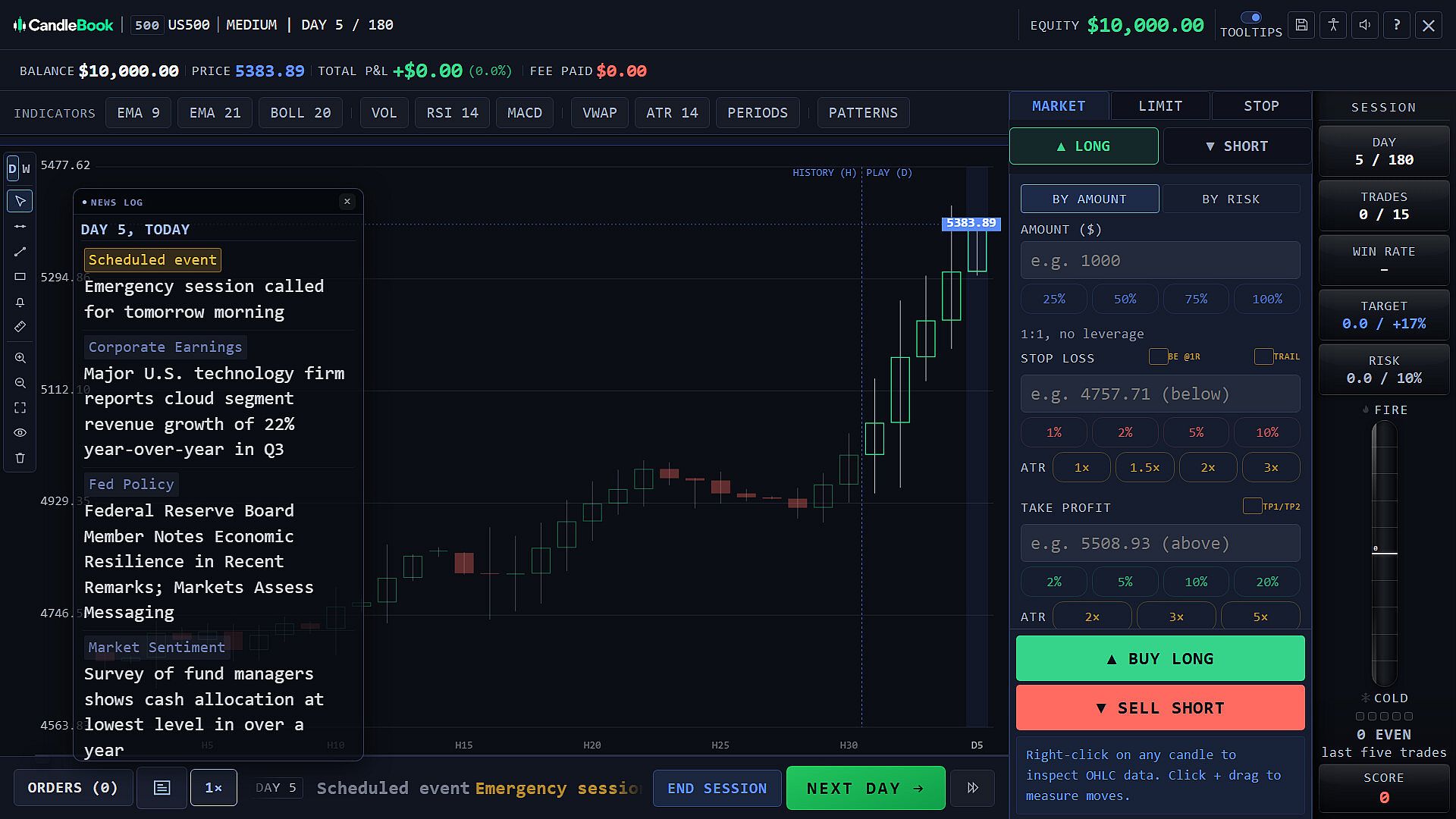
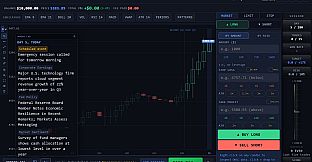
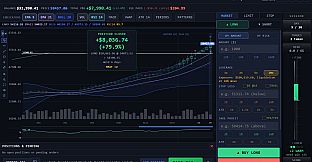
The core loop centers on advancing a chart one simulated day at a time. Traders read the visible price action, place market, limit, or stop orders, set stops and targets, and then observe the next candle. Sessions can run manually or automatically at variable speeds, pausing automatically when orders fill, stops trigger, or alerts activate. Execution details matter: market orders can slip based on liquidity, stops may fill within the candle range or gap, and costs such as spreads, commissions, and overnight carry apply by default. Leverage ranges from 1x to 10x with a visible liquidation level on the chart. Position sizing occurs by risk percentage or fixed amount, with the order ticket displaying maximum loss in both dollars and account percentage before confirmation.
Indicators including fast and slow EMAs, Bollinger Bands, RSI, MACD, ATR, VWAP, and volume sit alongside drawing tools like trendlines and rectangles. Timeframes switch between daily and weekly views, with indicators adjusting accordingly. Portfolio risk aggregates across open positions, and the interface supports light, dark, high-contrast, and color-blind modes plus optional audio cues that can be disabled.
Game Modes
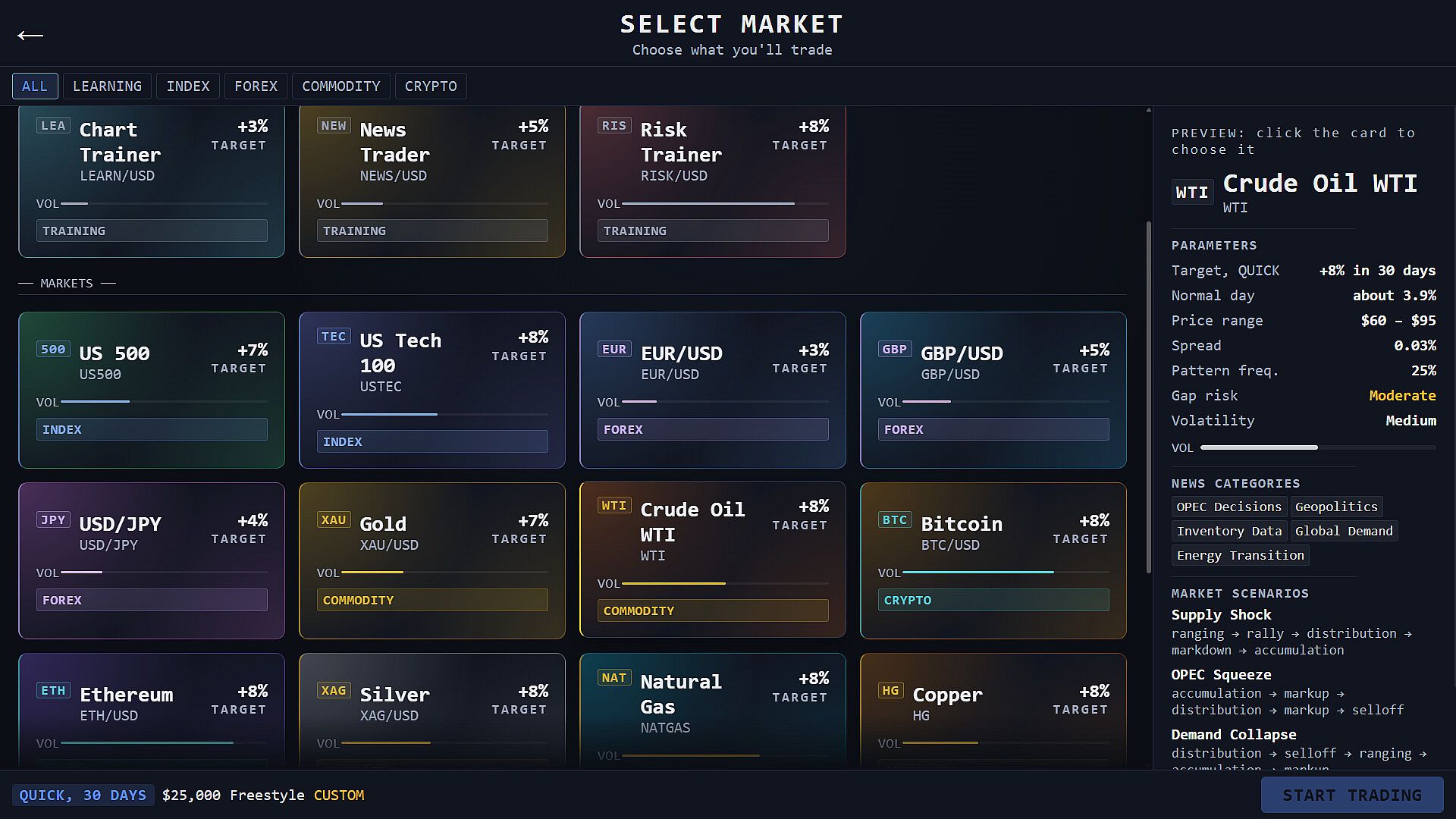
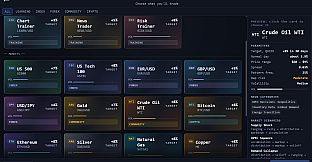
Three dedicated training markets isolate specific skills. Chart Trainer removes news to emphasize pure price action reading. News Trader presents a stream of fictional headlines that must be filtered for relevance. Risk Trainer uses a market tuned to penalize oversized positions or poor stop placement. Across the full set of 21 markets, volatility, liquidity, spreads, gaps, and headline categories differ by asset class, covering indices, forex pairs, metals, energy, agriculture, and cryptocurrencies.
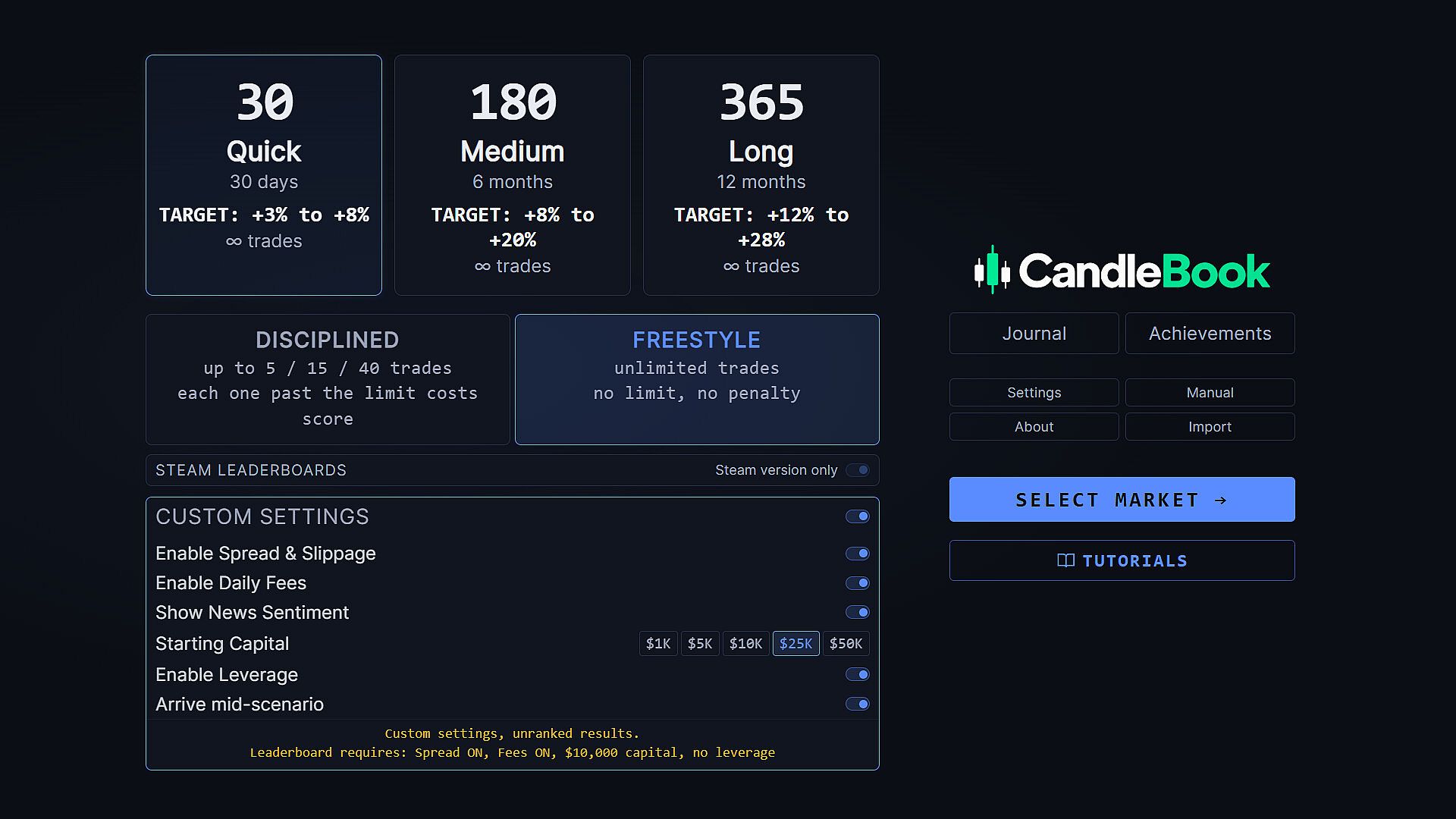
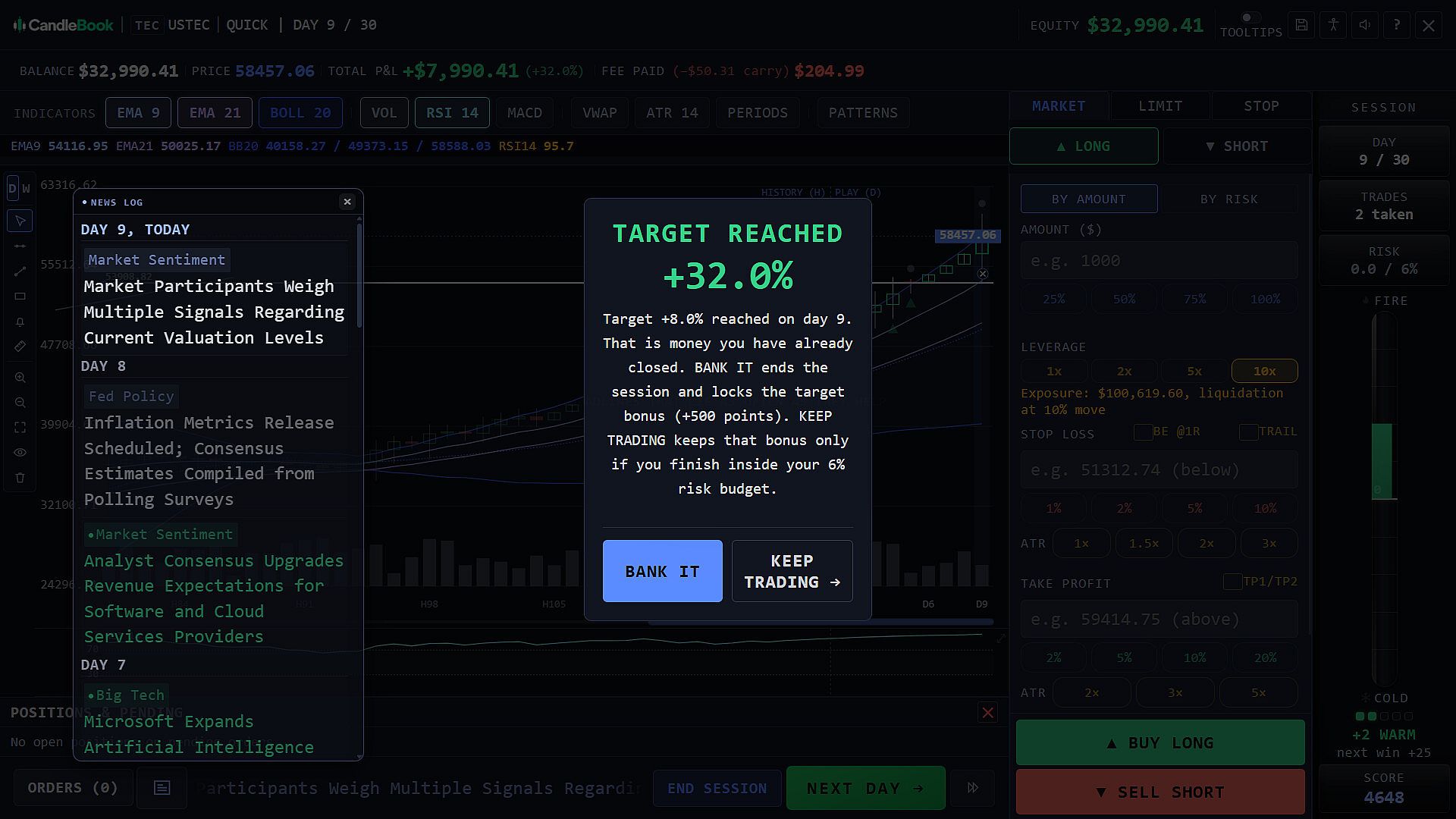
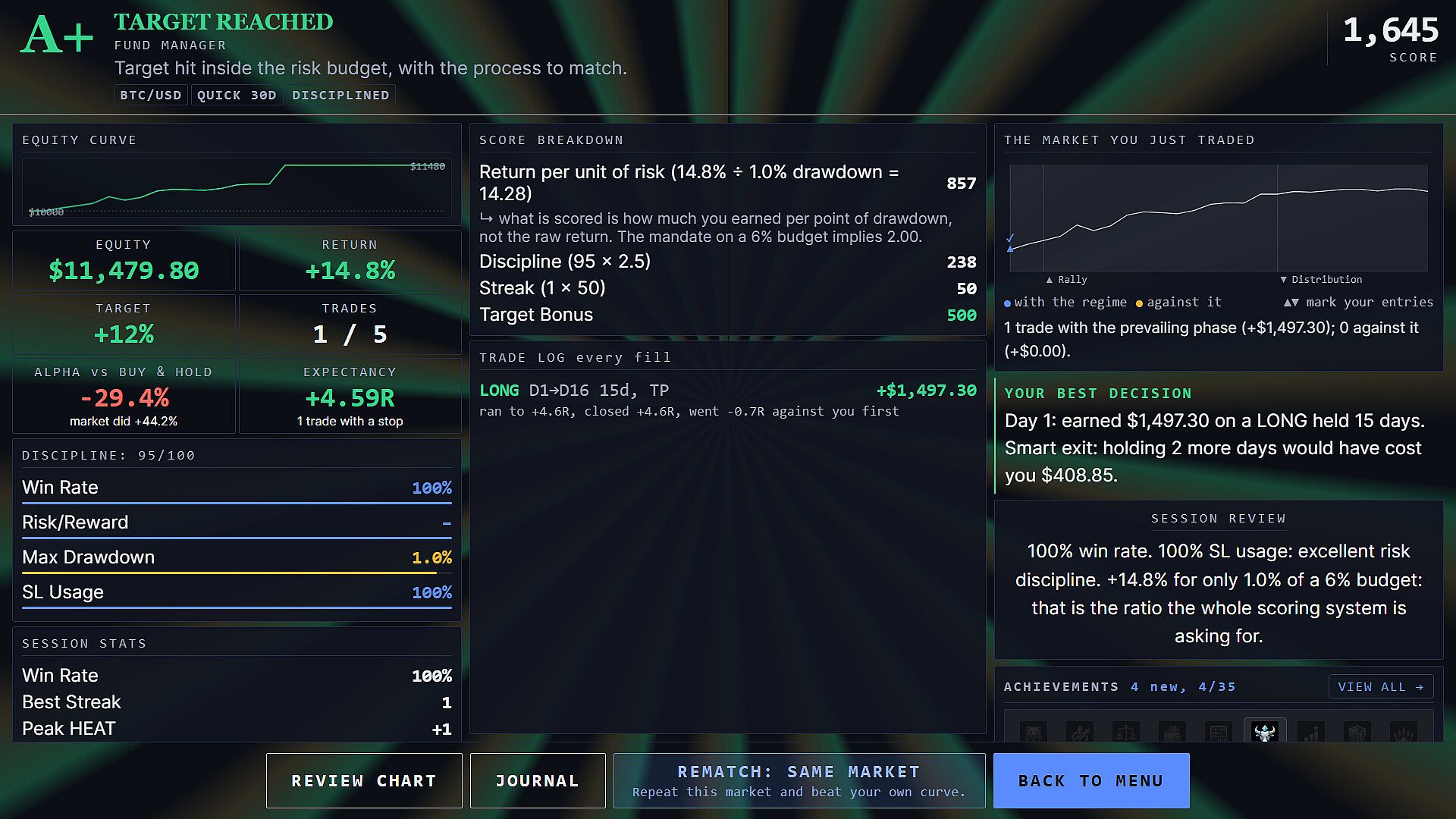
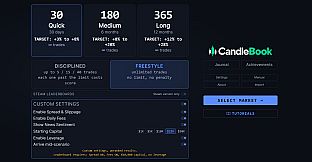
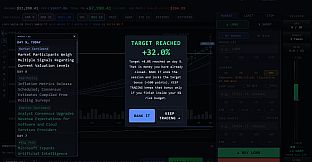
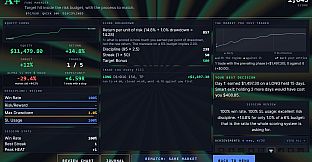
Every session carries a market-adjusted return target and loss budget. Performance receives a grade from S to F along with an explanation such as Market Wizard, Fund Manager, Efficient, Over-Risked, or Liquidated. Return only counts when it stays inside the risk parameters.
Learning and Review Systems
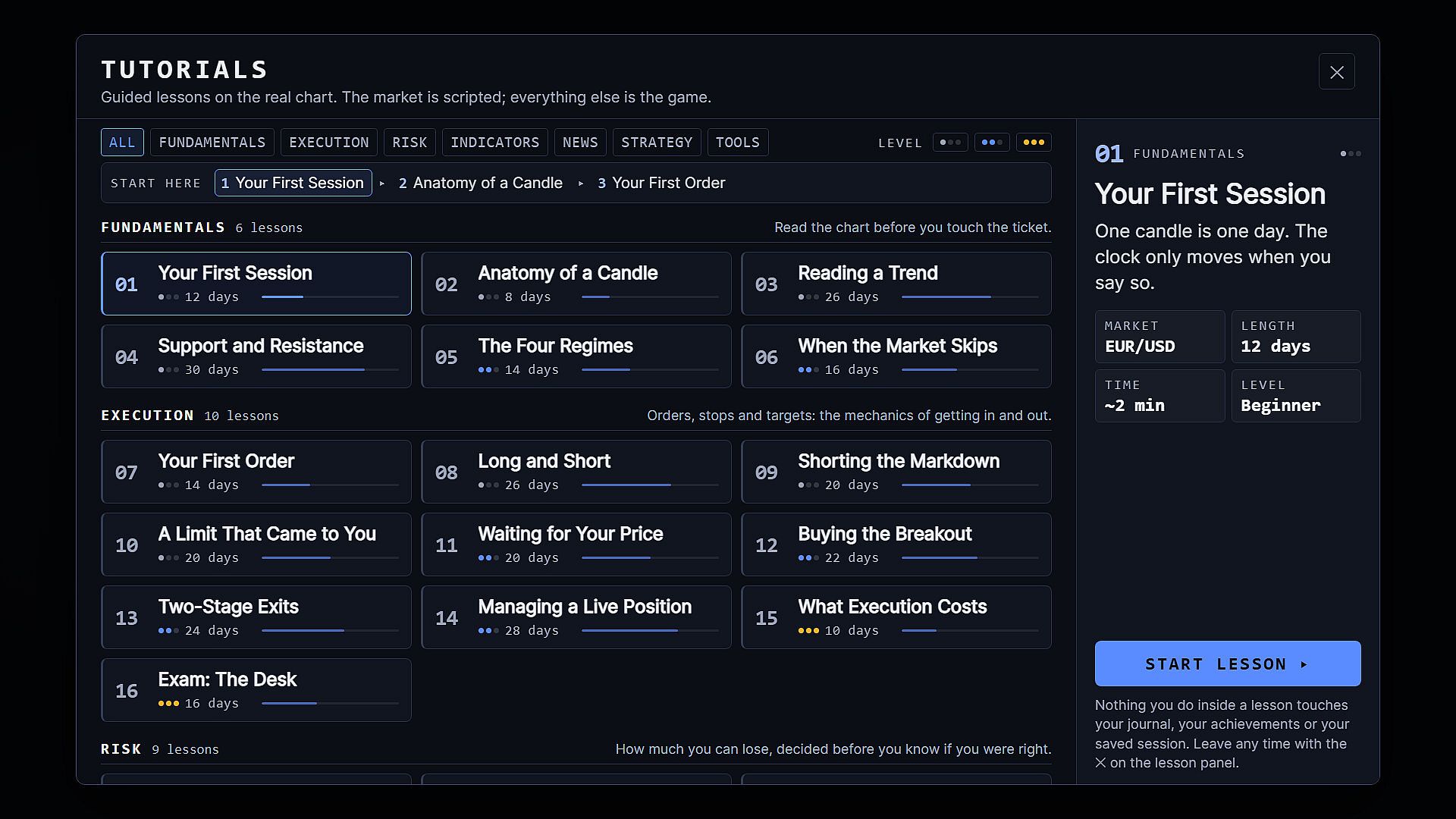
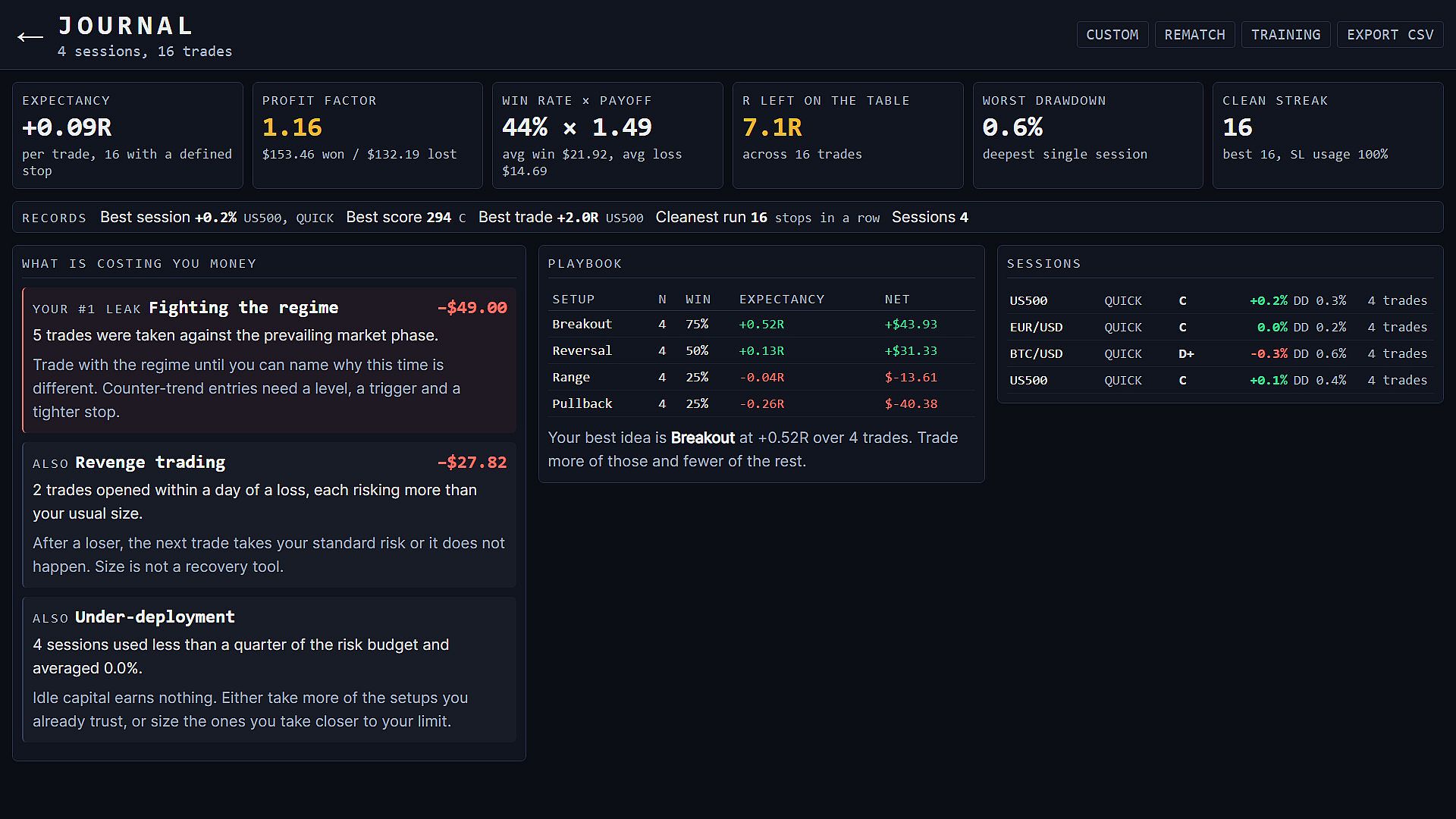
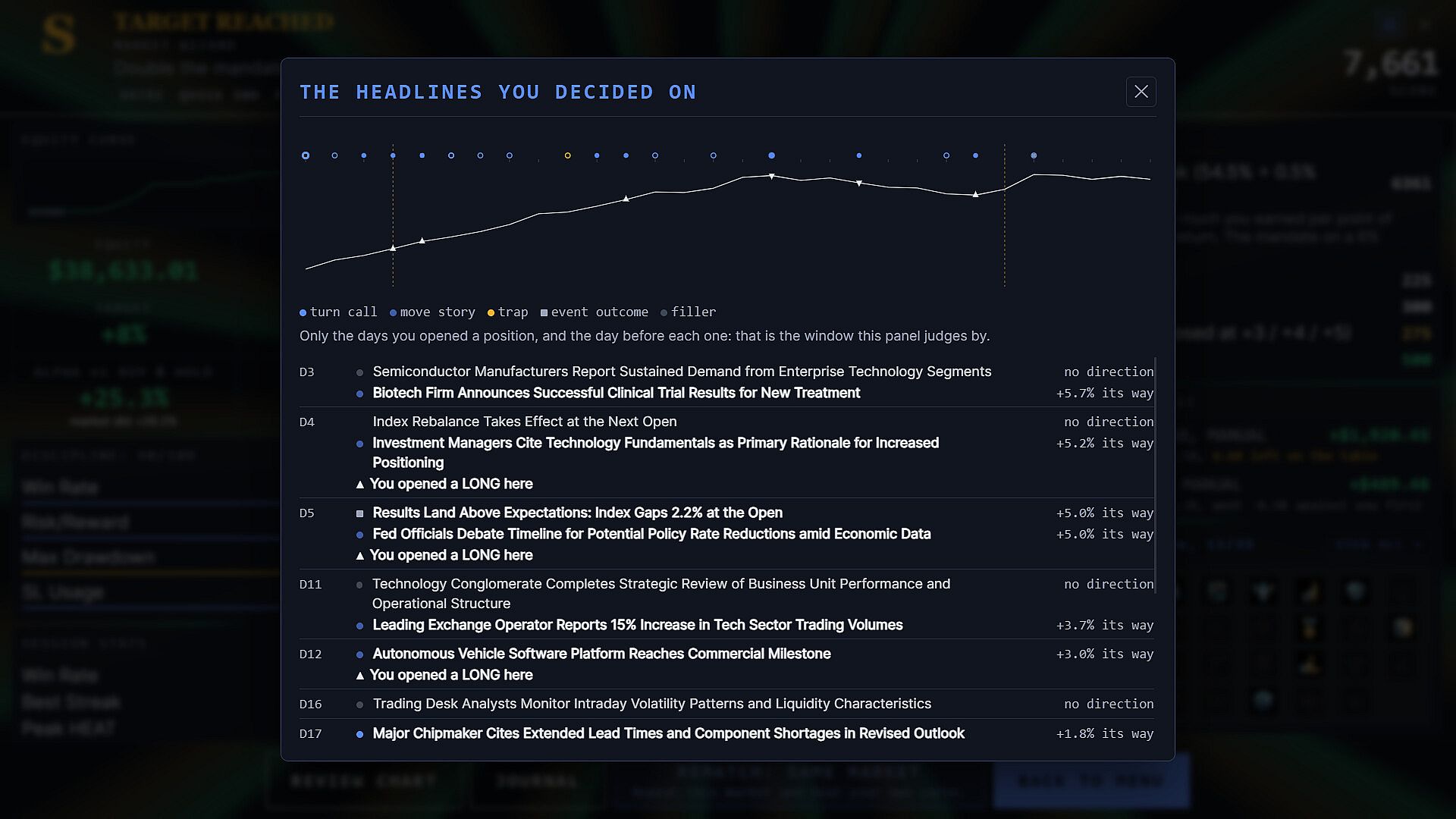
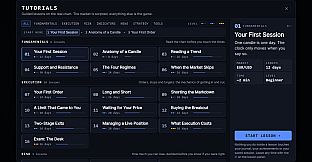
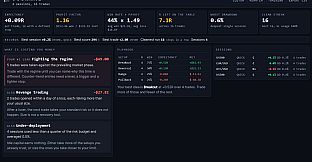
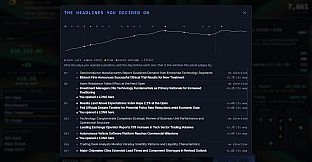
Forty-five interactive lessons teach concepts directly on the trading desk while the market moves. Topics range from candlestick anatomy and market regimes to moving averages, ATR-based stops, R-multiples, partial exits, trailing stops, and news filtering. Exams remove guidance and present an unaided chart. After each session a journal records expectancy, profit factor, win rate, average payoff, maximum drawdown, and performance broken down by market and regime. It automatically flags seven recurring behavioral leaks, including cutting winners too early, revenge trading, and oversizing, and estimates their virtual cost. Full trade history exports as CSV, and printable reports include the equity curve plus headline audit.
Is It Worth Playing?
CandleBook suits players who want deliberate practice in reading charts and managing risk without financial exposure or reliance on memorized historical patterns. Its offline design, one-time purchase model, and focus on unrepeatable synthetic sessions make it a self-contained training environment. Those seeking quick entertainment or real-market data will find the deliberate pace and emphasis on process review less appealing. The combination of structured lessons, immediate feedback through session grades, and journal-driven insight into personal habits provides a focused way to build trading discipline over repeated sessions of varying length.