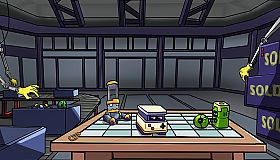


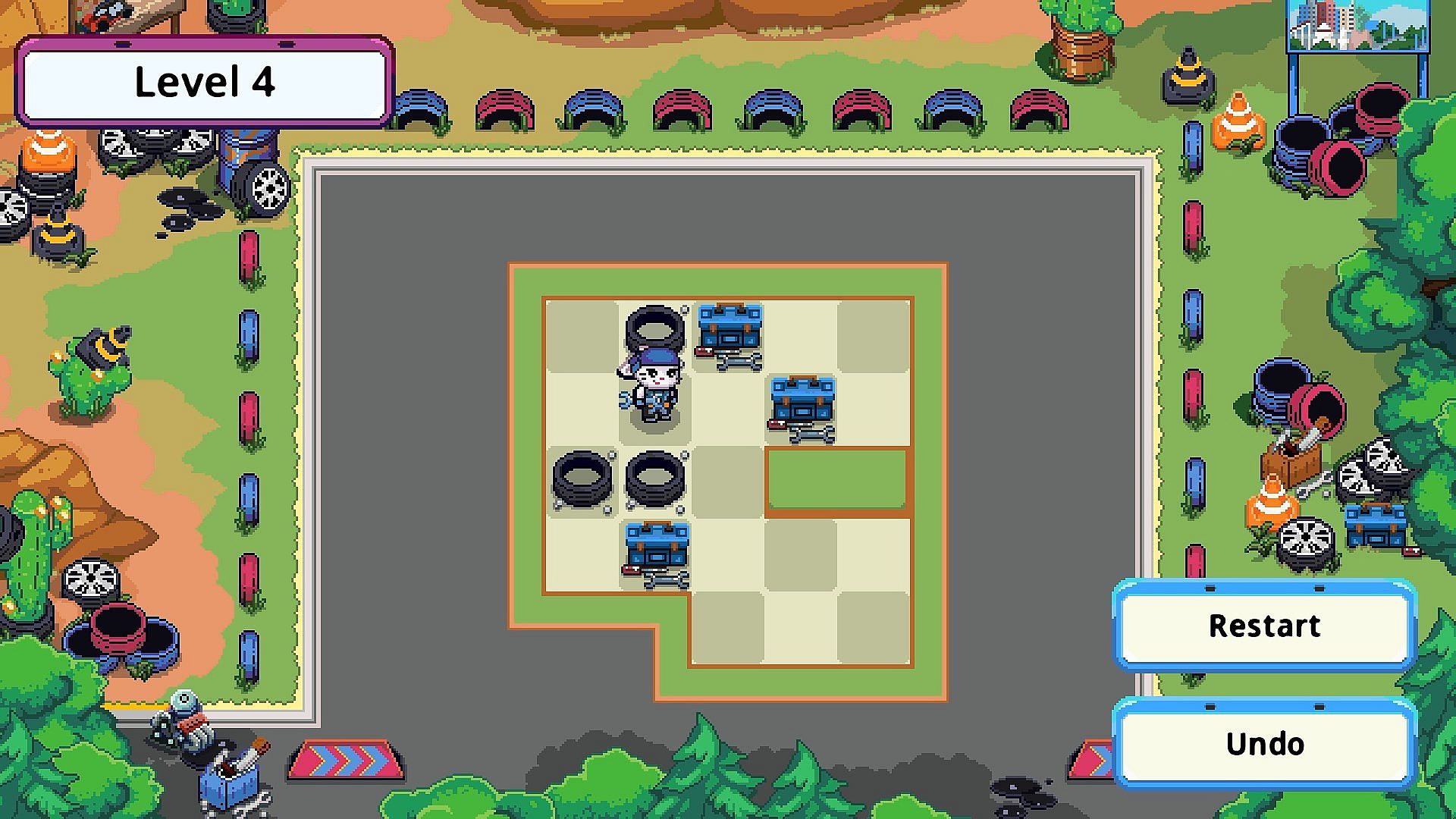
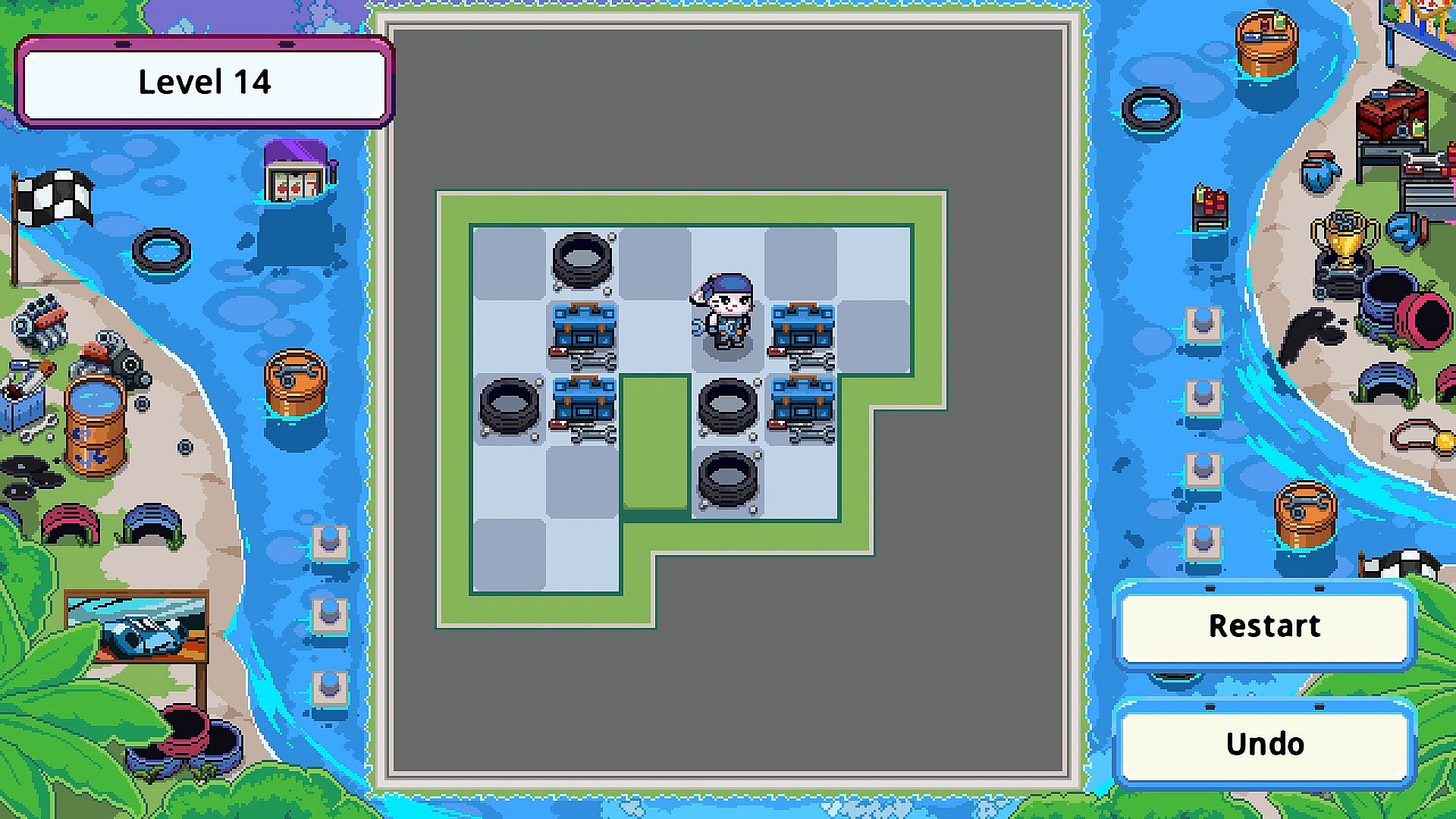
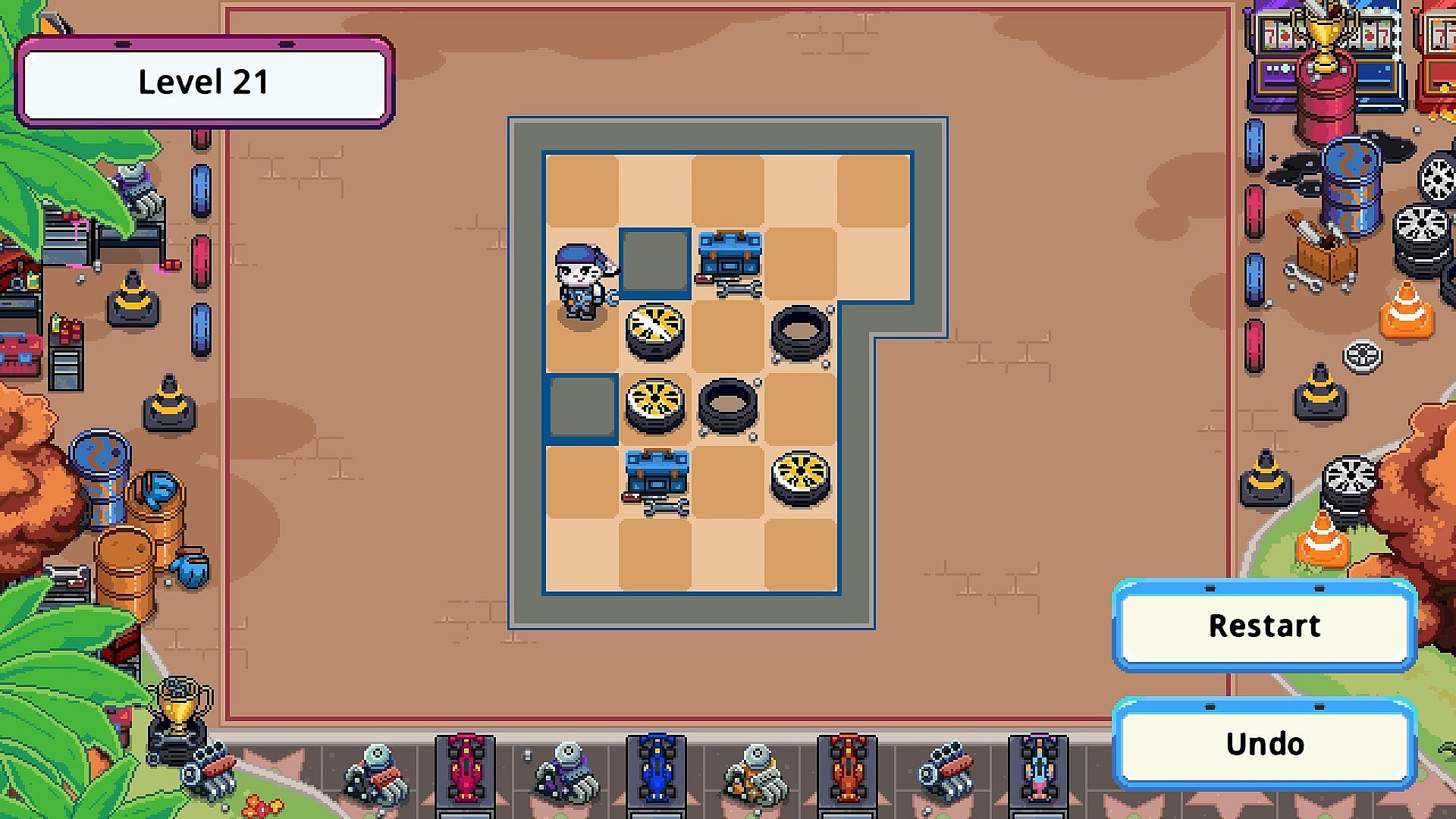
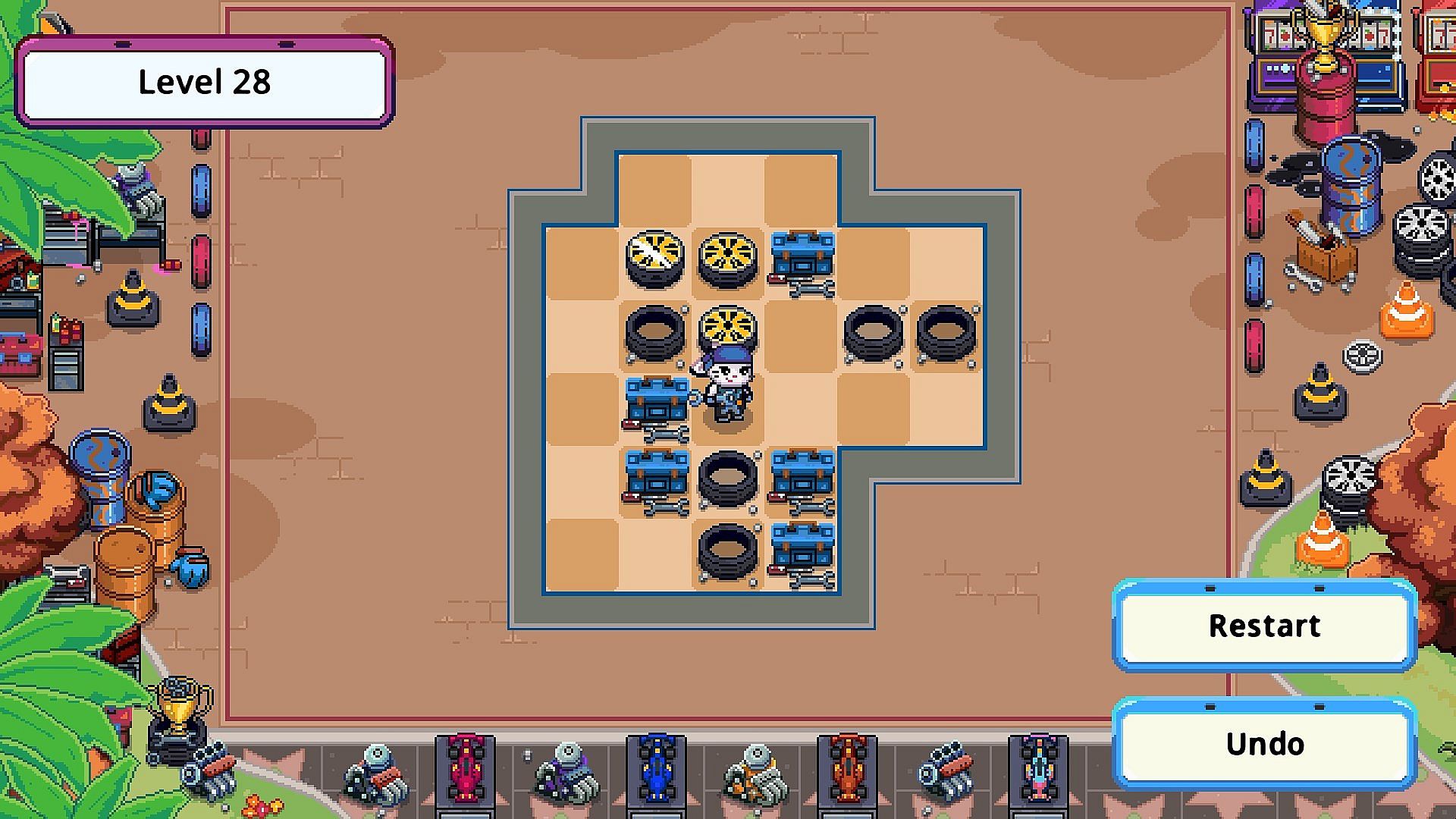
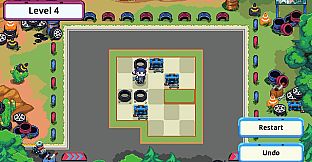
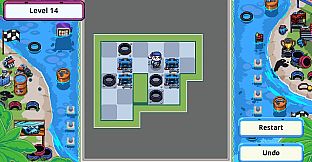
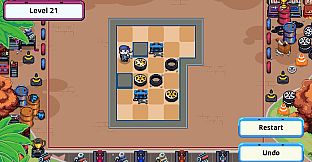
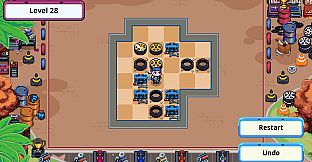
Bunny Pit Stop: Vegas Rush is a strategy and casual puzzle game developed for PC that places players in control of a mechanical bunny managing pit crew duties ahead of races in Las Vegas. The core experience revolves around Sokoban-style box pushing mechanics set against a racing theme, where the goal is to organize toolboxes and equipment across increasingly complex layouts without any time pressure or combat elements.
Gameplay
Players guide the bunny through tight pit lanes filled with obstacles, flat tires, and limited space. The main actions involve pushing toolboxes into precise positions to clear paths and complete each stage. Every level demands careful planning because moves cannot be wasted in confined corridors or around scattered items. The absence of timers allows full focus on experimenting with routes and sequences until the optimal order emerges.
Three distinct environments provide variety in layout design. Desert pit lanes feature open stretches mixed with sand-related barriers, bustling garages introduce stacked equipment and narrow service bays, and tropical-inspired areas add curved paths and decorative elements that alter navigation. These settings refresh the visual palette while maintaining the same emphasis on spatial reasoning and step-by-step execution.
Undo functions and instant restarts support trial-and-error approaches without frustration. Players can test multiple strategies on the same puzzle, backtrack immediately from errors, and refine solutions for efficiency. The 30 levels scale in difficulty gradually, starting with straightforward arrangements and progressing to intricate configurations that test observation and foresight.
Game Modes
The game operates entirely in a single-player puzzle format with no separate competitive or cooperative modes. Progression occurs through sequential levels grouped by the three environments, each presenting fresh challenges built around the same toolbox-pushing rules. Completion relies on logical arrangement rather than speed or external objectives, keeping the focus on pure puzzle satisfaction.
Levels function as self-contained challenges that reward methodical thinking. There are no branching paths, unlockable variants, or alternate rule sets; instead, the experience builds through consistent mechanics applied to increasingly demanding spatial problems. This structure suits sessions of any length, as individual stages can be attempted, paused, and resumed without losing progress.
Visuals and Accessibility
Colorful, cartoon-style graphics keep the presentation light and readable across all environments. The bunny character and toolboxes stand out clearly against backgrounds, aiding quick identification of movable objects and blocked routes. Sound design remains minimal, emphasizing the satisfying click of successful placements over any distracting audio cues.
Controls stay simple and responsive, relying on directional movement and push actions. The design avoids complex inputs or precision timing, making the title approachable for casual players while still offering depth for those who enjoy optimizing solutions. Unlimited undos and restarts further lower barriers for newcomers to Sokoban-style games.
Is It Worth Playing?
Bunny Pit Stop: Vegas Rush delivers a focused puzzle experience centered on spatial logic and incremental problem solving. Its relaxed pace and forgiving systems appeal directly to players who enjoy methodical challenges without external stressors. The 30 levels provide enough content for several hours of engagement, with difficulty that builds steadily to maintain interest.
Those familiar with classic Sokoban games will recognize the core loop and appreciate the added thematic framing, even if the racing motif serves mainly as visual dressing. Newcomers benefit from the clear tutorials implicit in early levels and the freedom to experiment freely. As a recent release on PC, the game stands as a straightforward option for anyone seeking accessible strategy puzzles that emphasize satisfaction over spectacle.
Overall, it suits solo play sessions where the goal is mental engagement and the reward comes from completing each layout. Players who value precision, planning, and the absence of failure penalties will find consistent value in its structure.