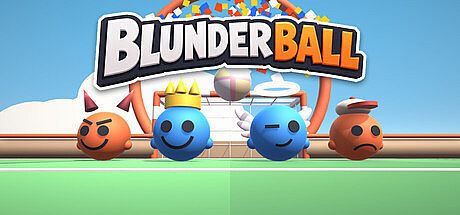


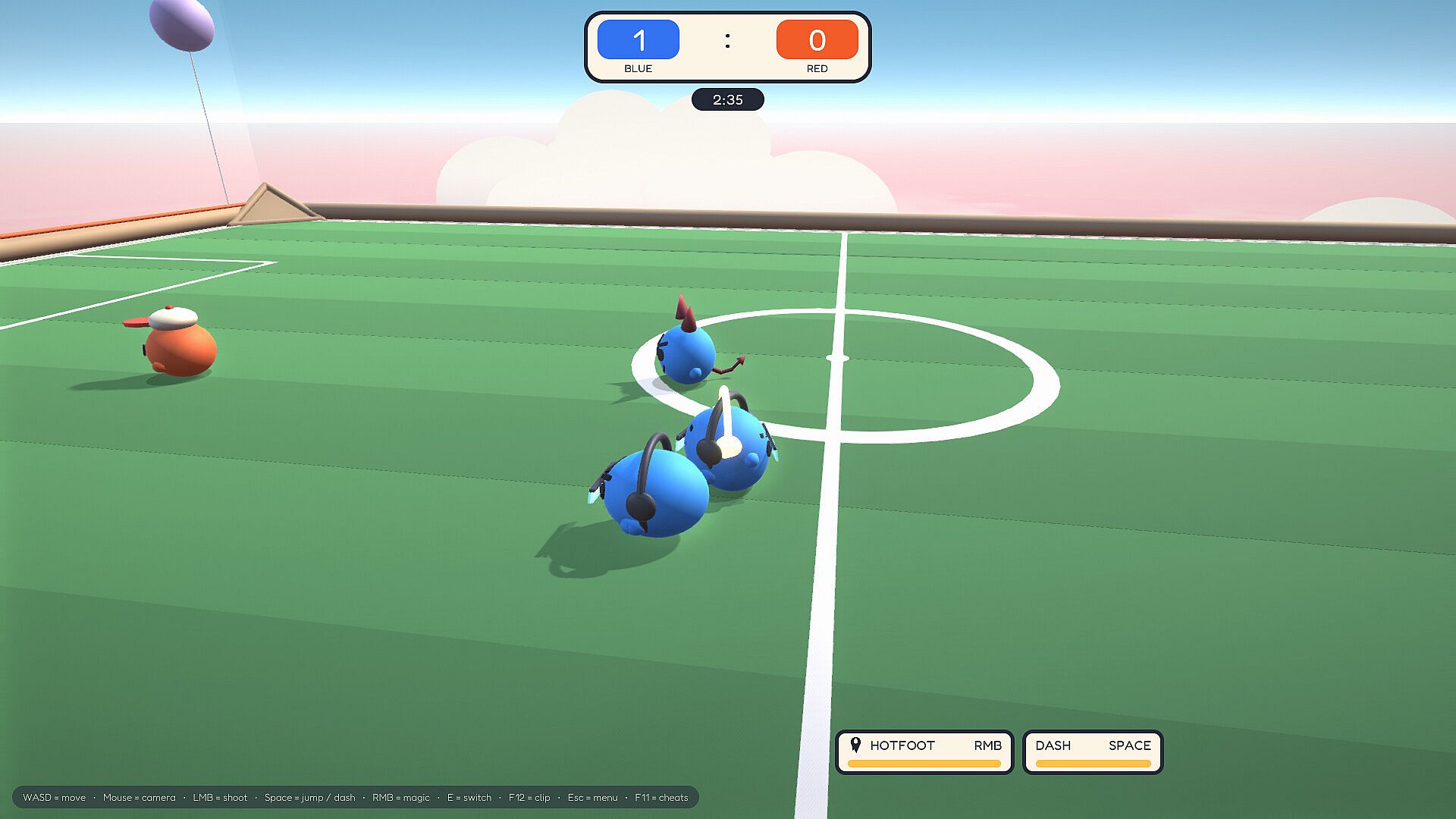
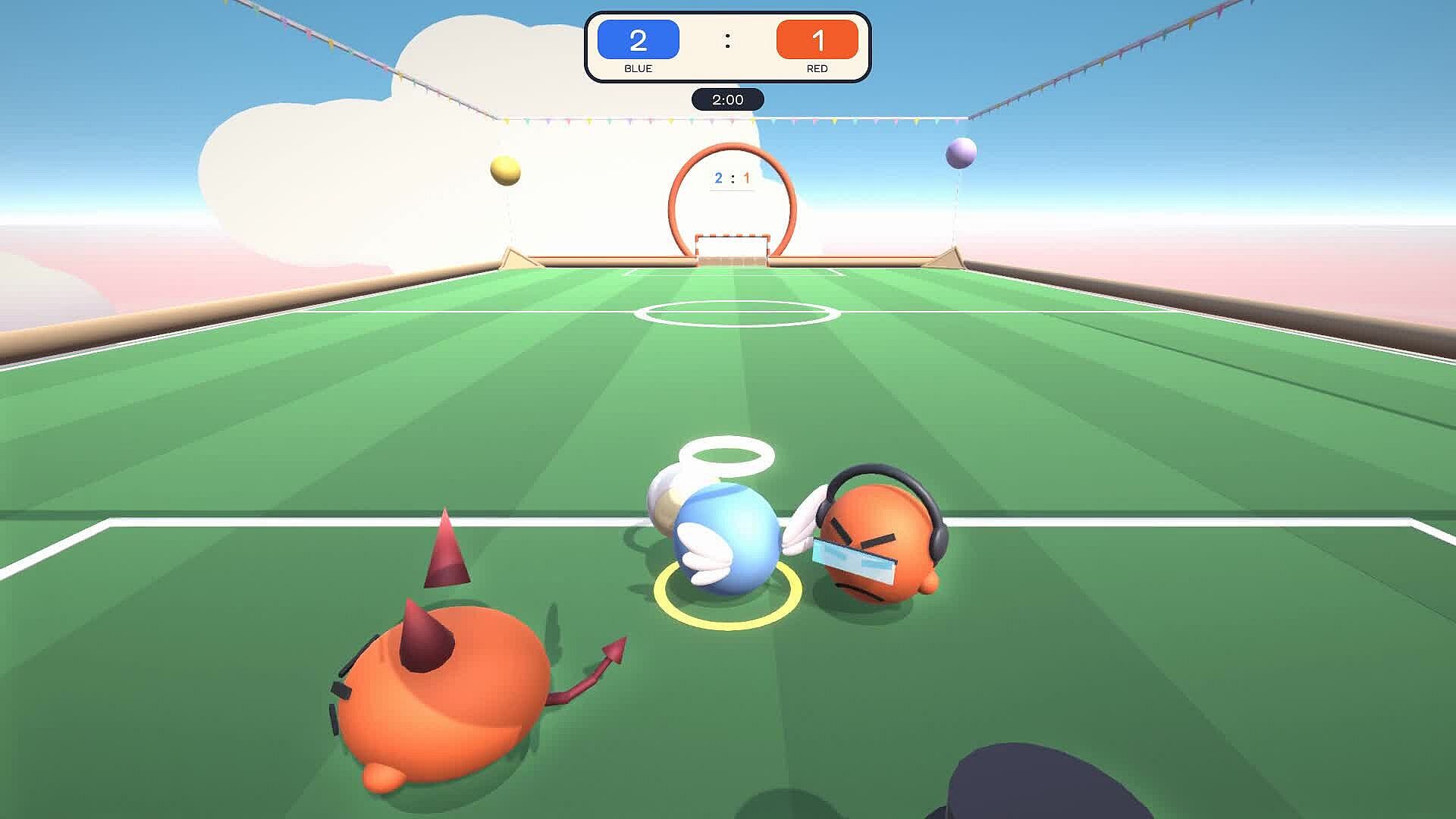
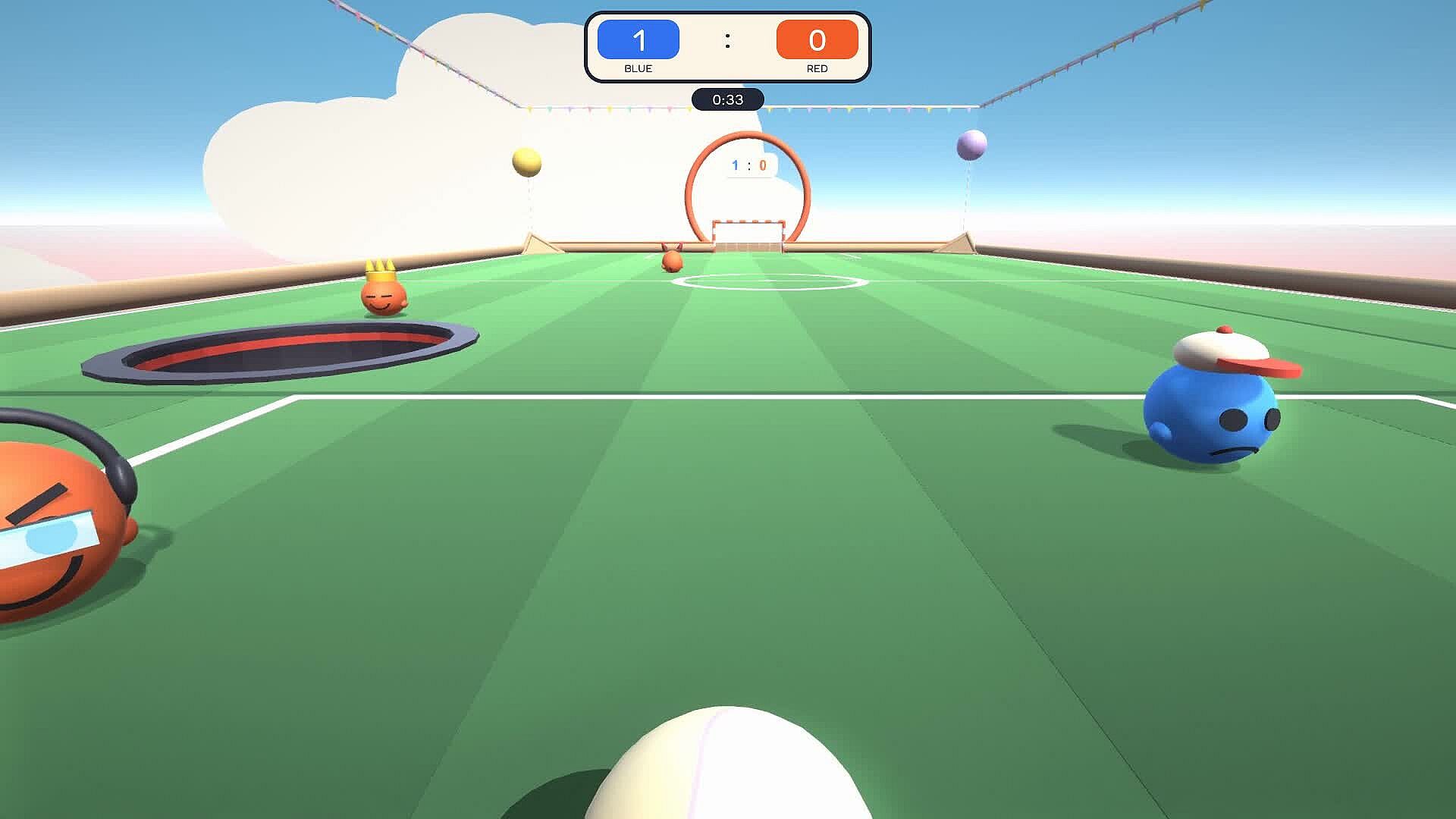
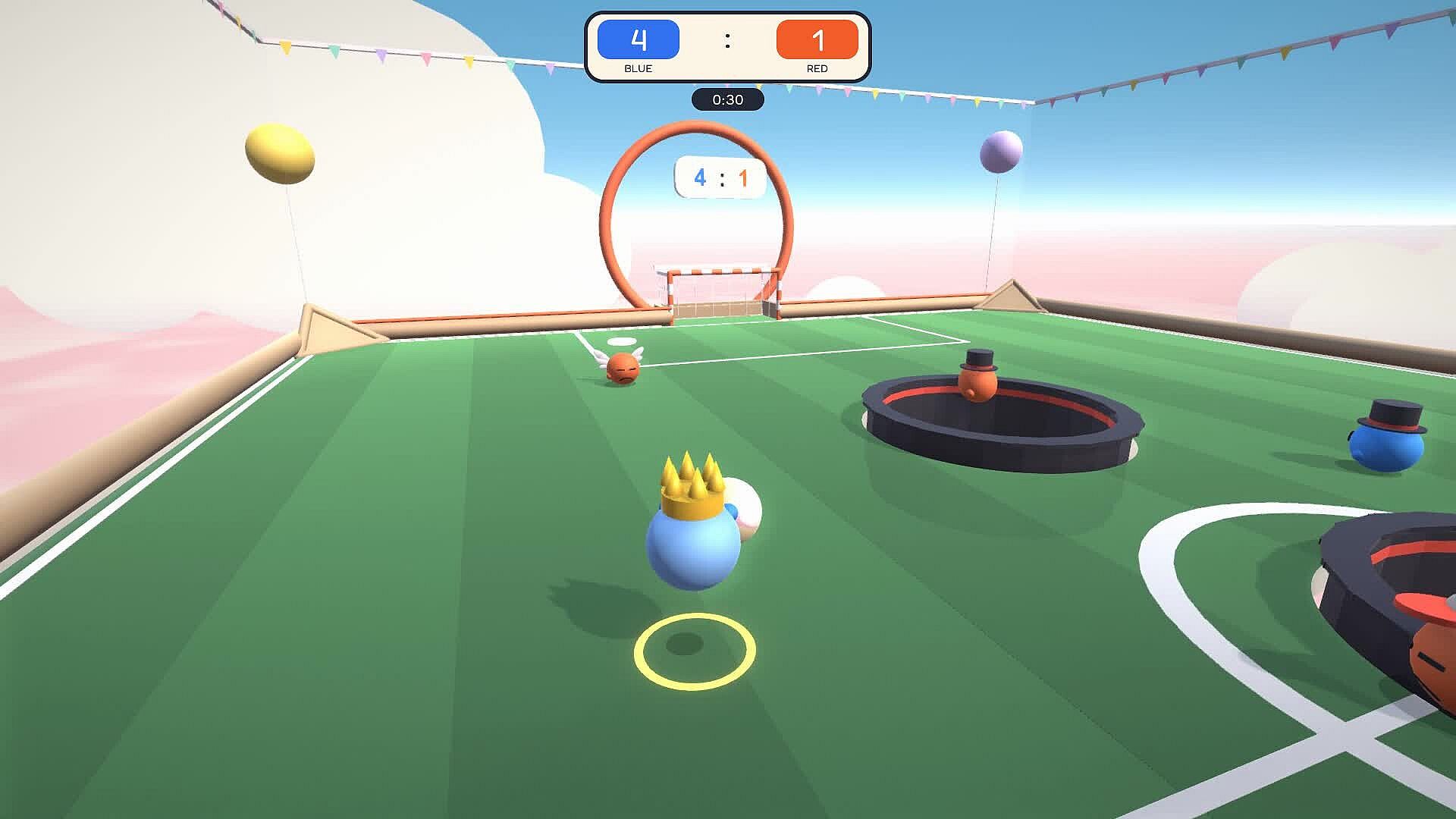
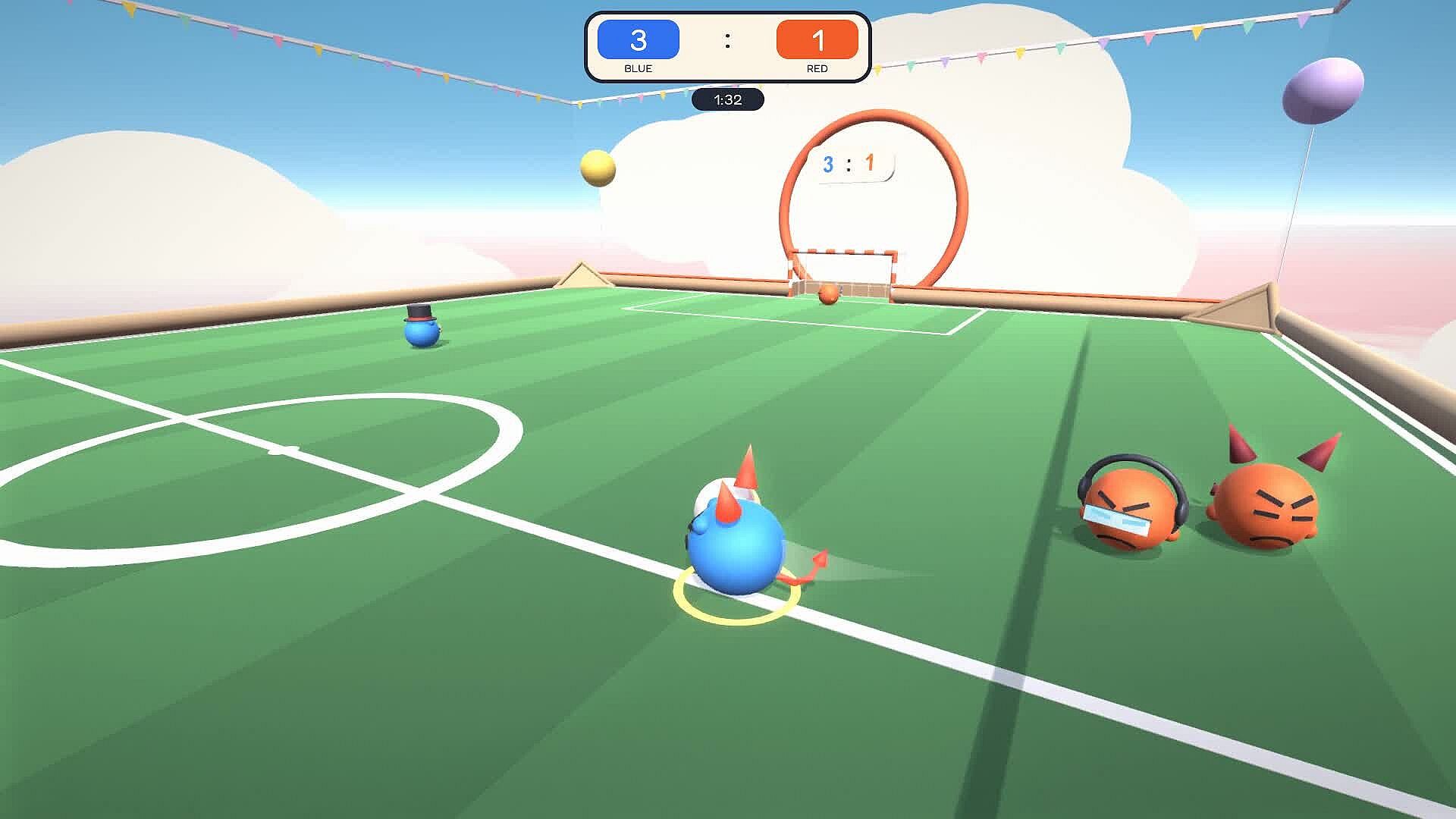
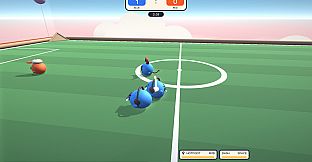
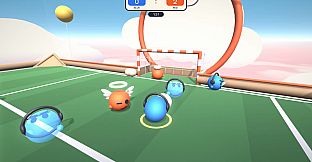
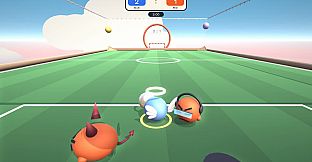
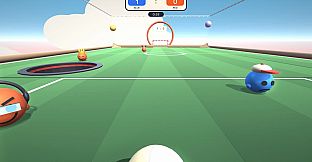
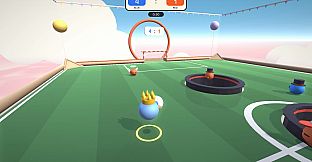
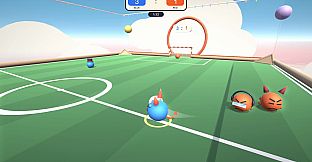
Blunderball is an arcade sports game built around simplified football rules that focus entirely on physical interaction with the ball and other players. On PC, matches emphasize direct control where running into the ball claims possession, dashing into a carrier steals it, and shooting happens by pushing the ball along a chosen line. No separate kick input or complex menus interrupt the flow, and games run on a strict three-minute timer that can end early at a four-goal deficit.
Gameplay
The core loop centers on constant movement and positioning. The ball adheres to the first player who touches it, creating immediate scrambles for possession. Players steer the ball while carrying it before releasing it along their movement line, which allows curving shots or passes around obstacles. A dedicated dash sends opponents flying on contact and serves as the primary way to dispossess carriers. Jumping lifts the ball into the air, where it becomes available for anyone to claim without interference from ground-based grabs.
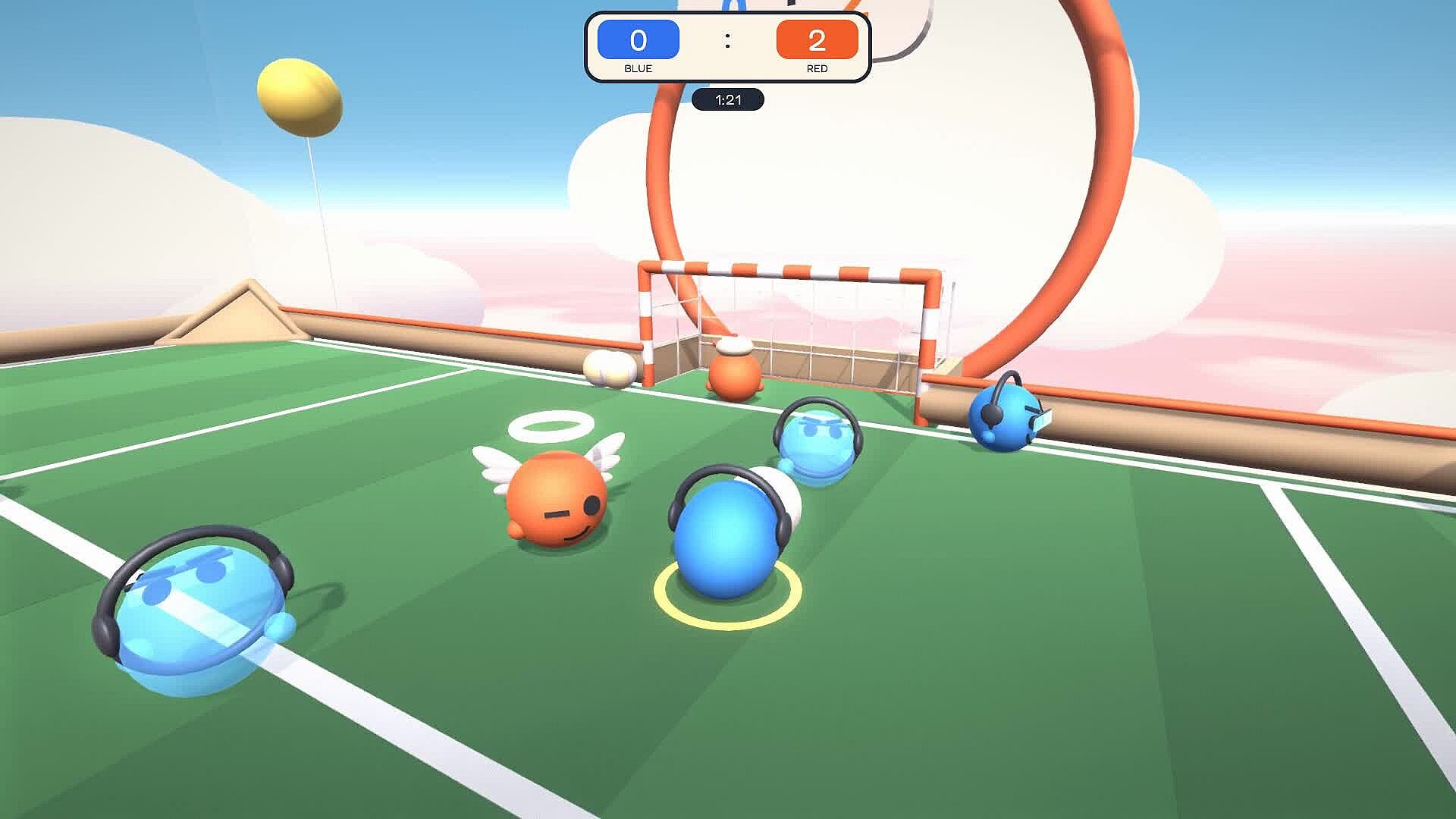
Each of the six characters brings a unique magic ability activated on a cooldown. The King generates a gust of wind that affects the entire pitch and both players and the ball for three seconds. The Imp gains superior acceleration, deceleration, and turning for six seconds. The Rookie can blink forward fourteen meters in the direction pushed, instantly claiming the ball by landing on an opponent. The Angel slows every other player for two seconds while remaining at normal speed. The Hacker deploys two decoys that run in different directions, one carrying a fake ball if the real one is held. The Gentleman launches a hat that creates a temporary hole in the pitch, swallowing anyone standing on it before ejecting them.
These abilities integrate directly into the physical play rather than replacing it, encouraging players to combine dashes, jumps, and timing with the right moment to activate a magic. The result is a fast, readable system where every action stems from body positioning and momentum.
Game Modes
Matches support both 1v1 on a compact pitch and 3v3 on a larger field. In the team format, players switch between their three characters, and starting positions rotate after each goal to keep the action balanced. Bots fill any empty slots at one of three difficulty levels and demonstrate passing, pressing, and shooting behaviors that mirror human play.
Single-player options include an outnumbered mode where a team of three faces four, five, or six opponents. Online play allows up to six participants to join a hosted lobby, select sides and characters together, and chat before starting. A five-level tutorial covers every mechanic in short, focused sessions. After each match, a replay of the final goal plays back from multiple angles, including the ball's perspective, any player's viewpoint, or a free camera at adjustable speeds.
Three distinct arenas provide visual variety, each set against a backdrop of clouds with lighting that shifts between day, night, and sunset conditions. These environments remain consistent in layout but alter the atmosphere without changing core rules.
Character Abilities and Tactics
Success depends on learning how each character's magic complements the shared movement tools. Gust can clear space or redirect the ball across the pitch, while Hotfoot turns the Imp into a rapid harasser during critical moments. Blink offers sudden repositioning that punishes overextended carriers. Sanctum creates brief windows of advantage for the entire team. Decoys confuse defenders and create passing lanes. Hat Trick punishes clustered opponents by removing them from play temporarily. Players experiment with combinations in quick matches against bots before testing them in online lobbies.
Is It Worth Playing?
Blunderball suits players who enjoy stripped-down sports games that reward timing, positioning, and creative use of limited tools over simulation depth or management layers. The short match length and bot support make it accessible for quick sessions or practice, while the lobby system and character switching support coordinated play with friends. The game remains in development with a planned release in Q1 2027 and currently shows no user reviews, so expectations should center on the confirmed mechanics rather than unverified long-term support. Those drawn to arcade-style football with magical twists and flexible multiplayer options will find a focused experience that avoids unnecessary complexity.