




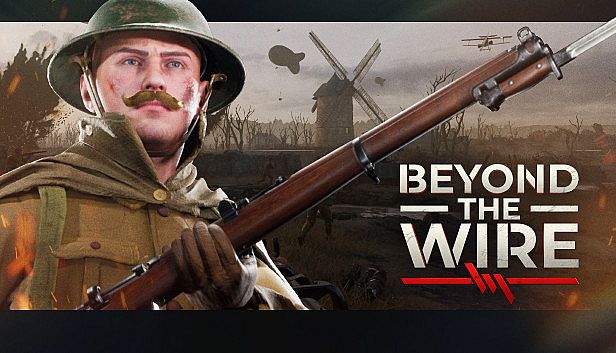

















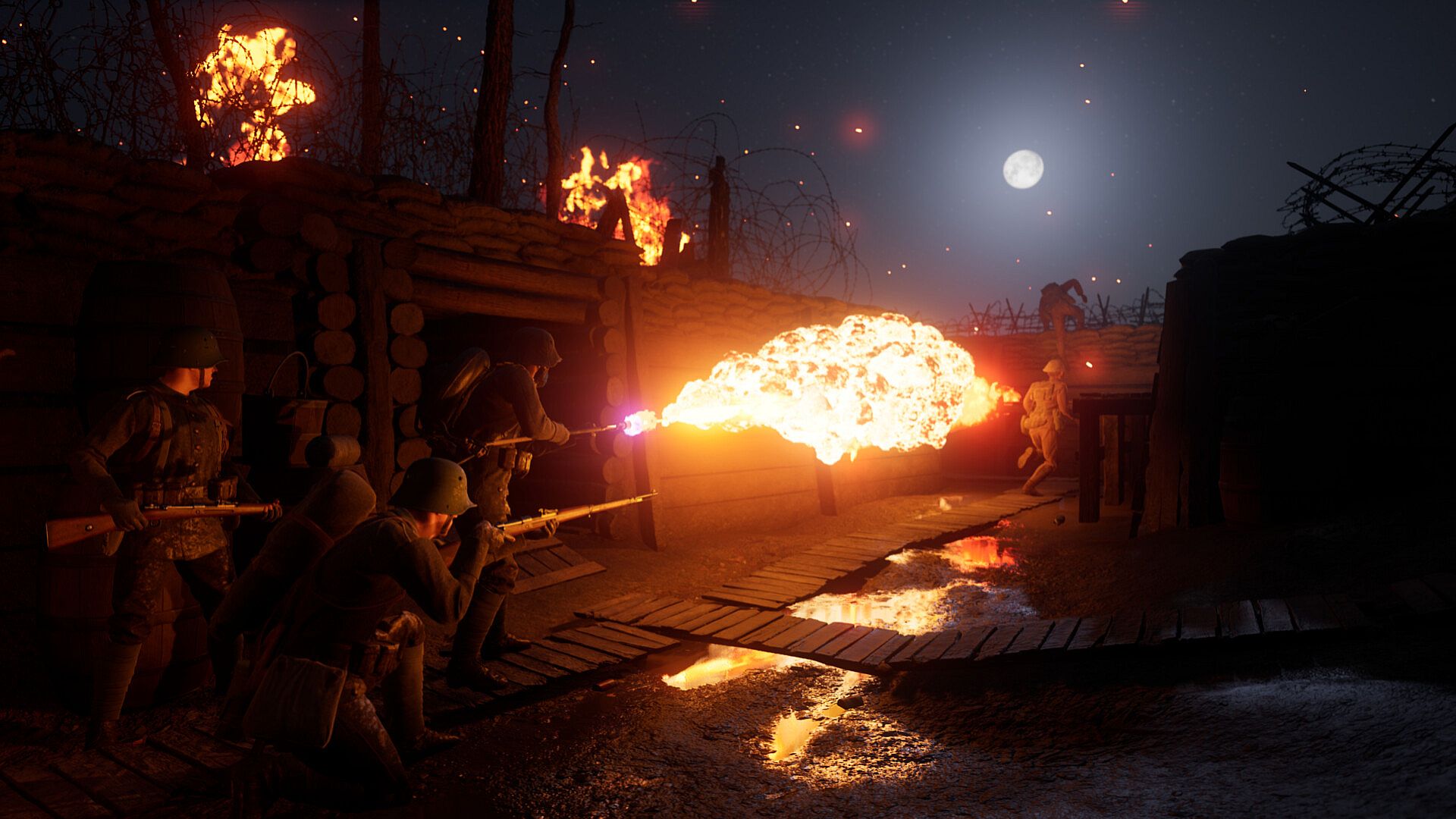
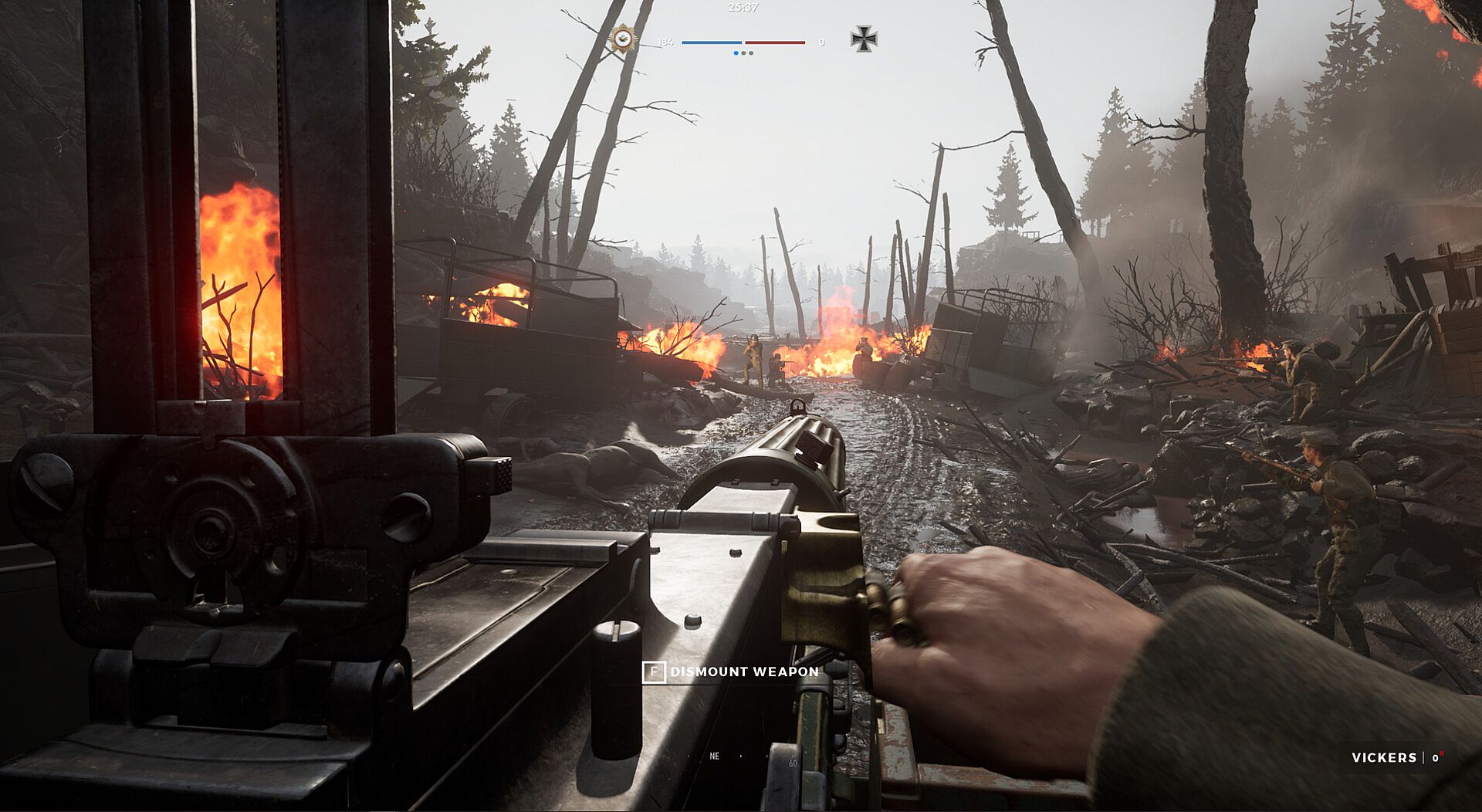
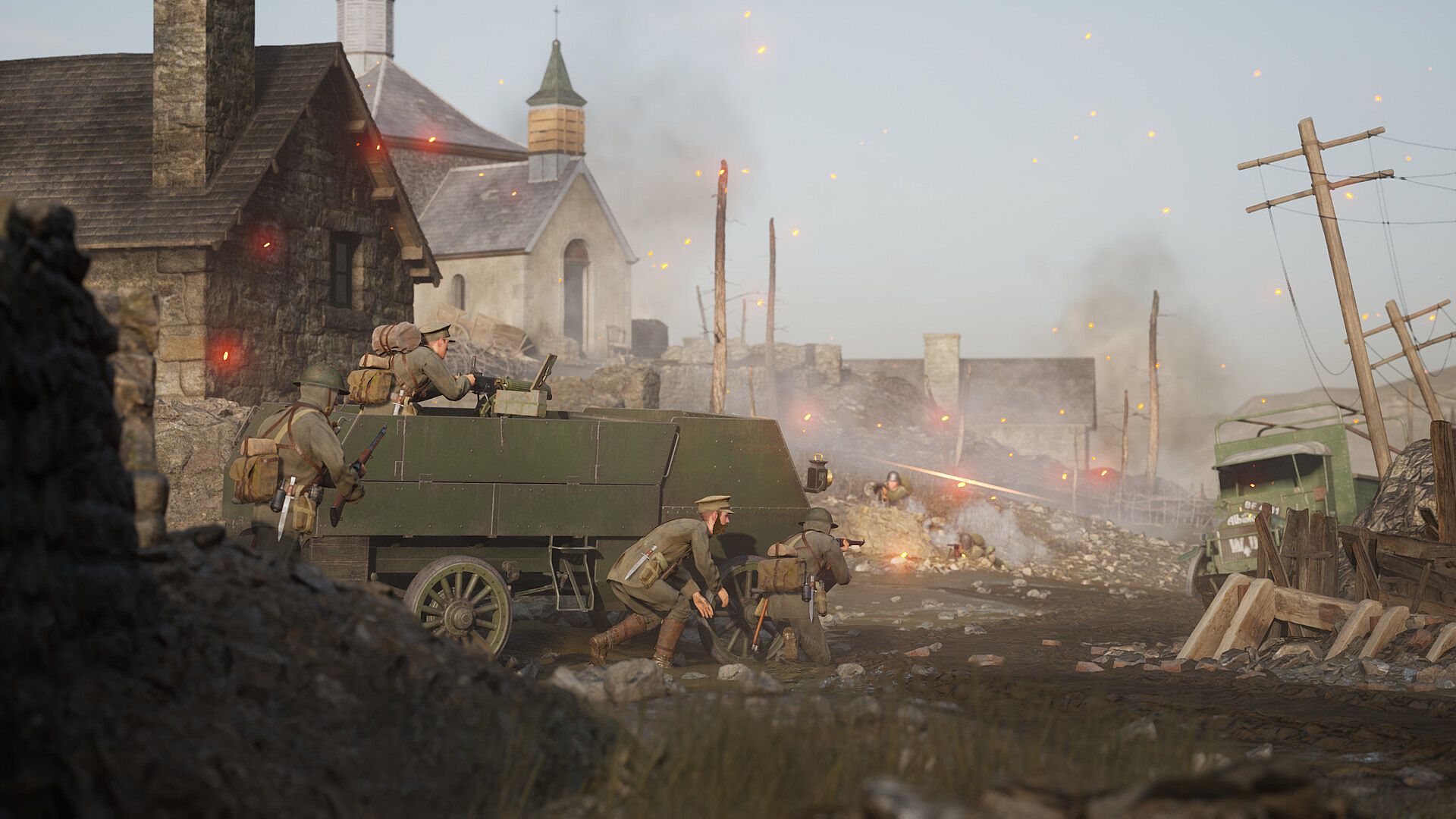
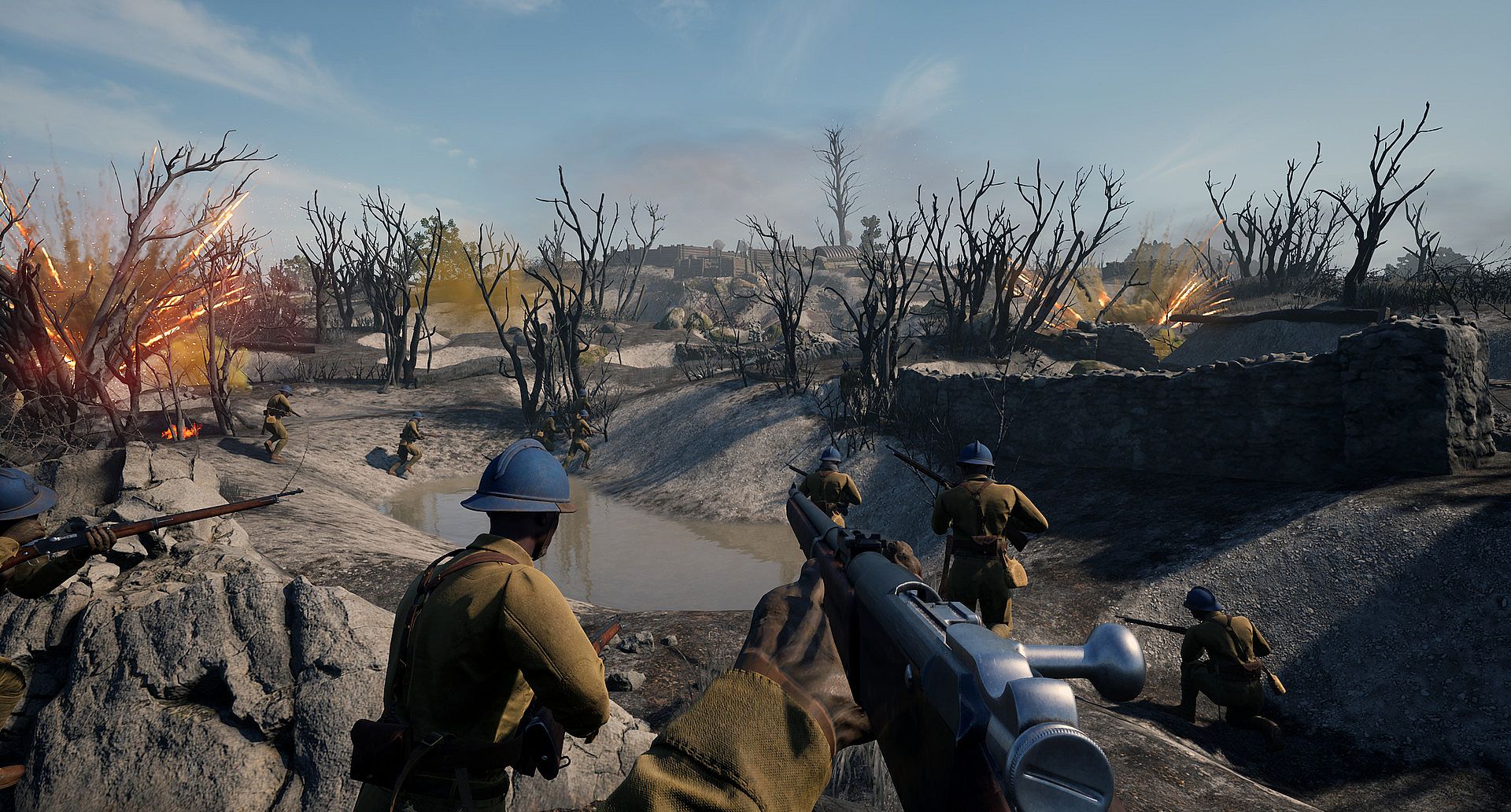
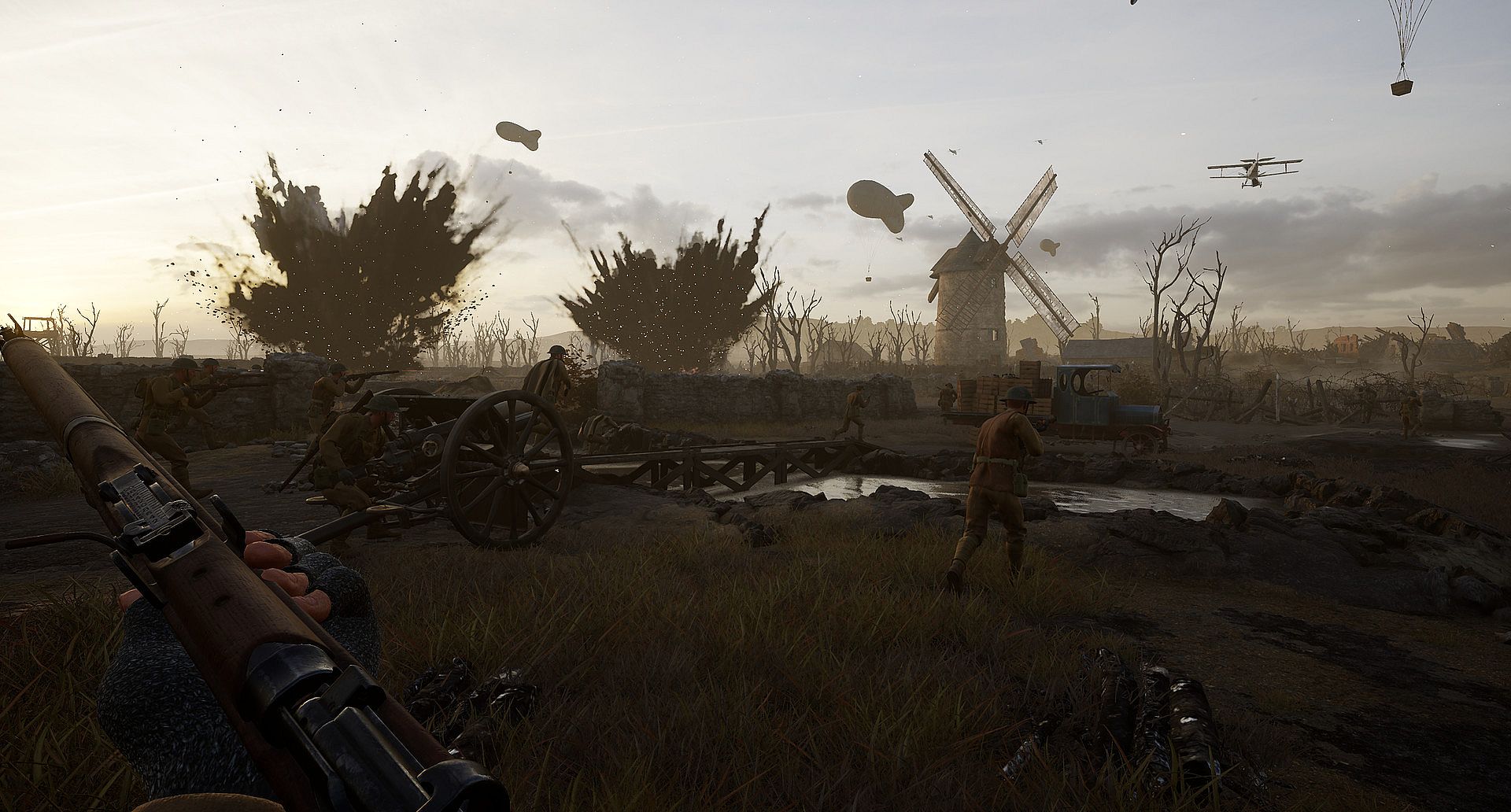
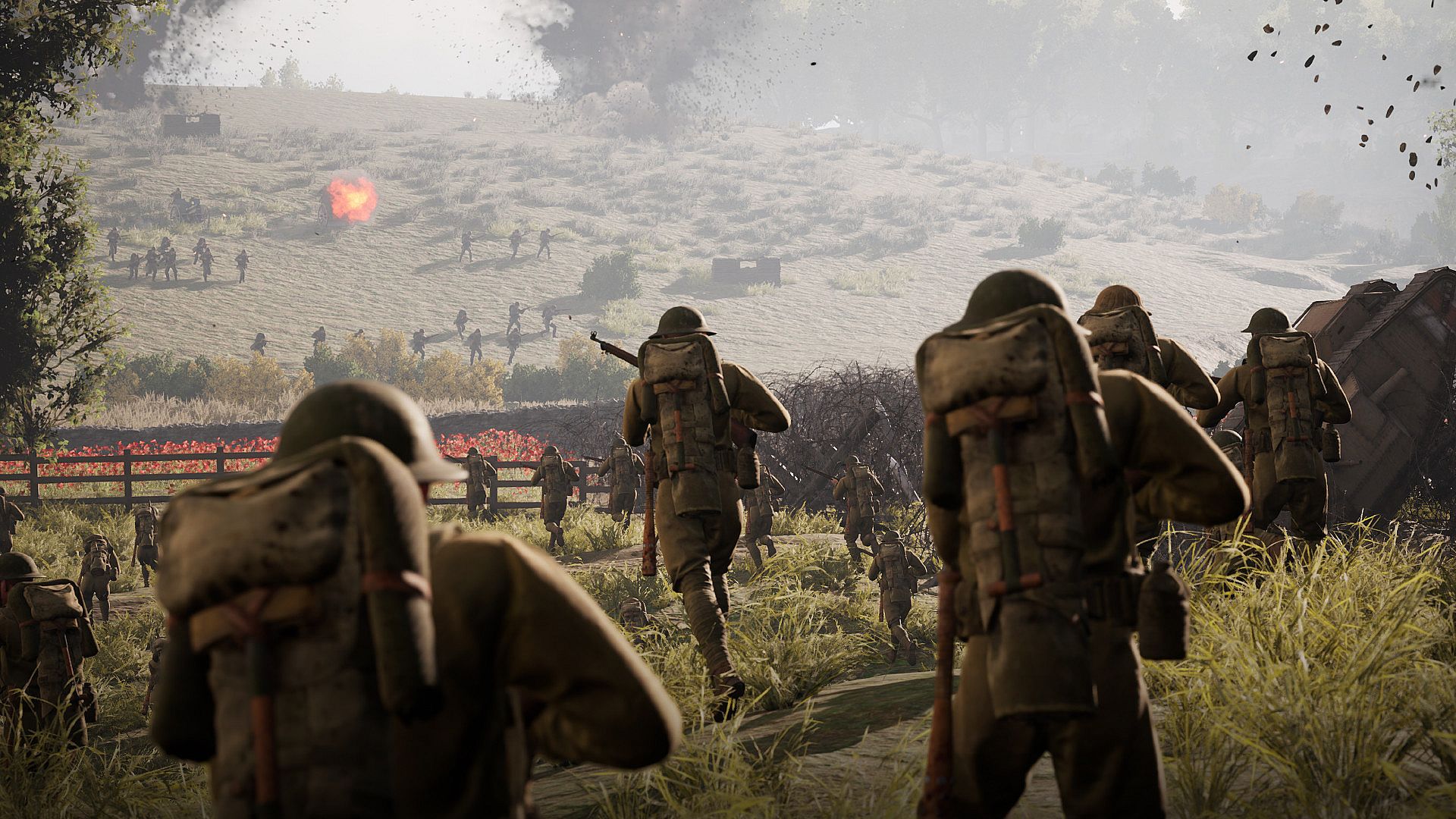
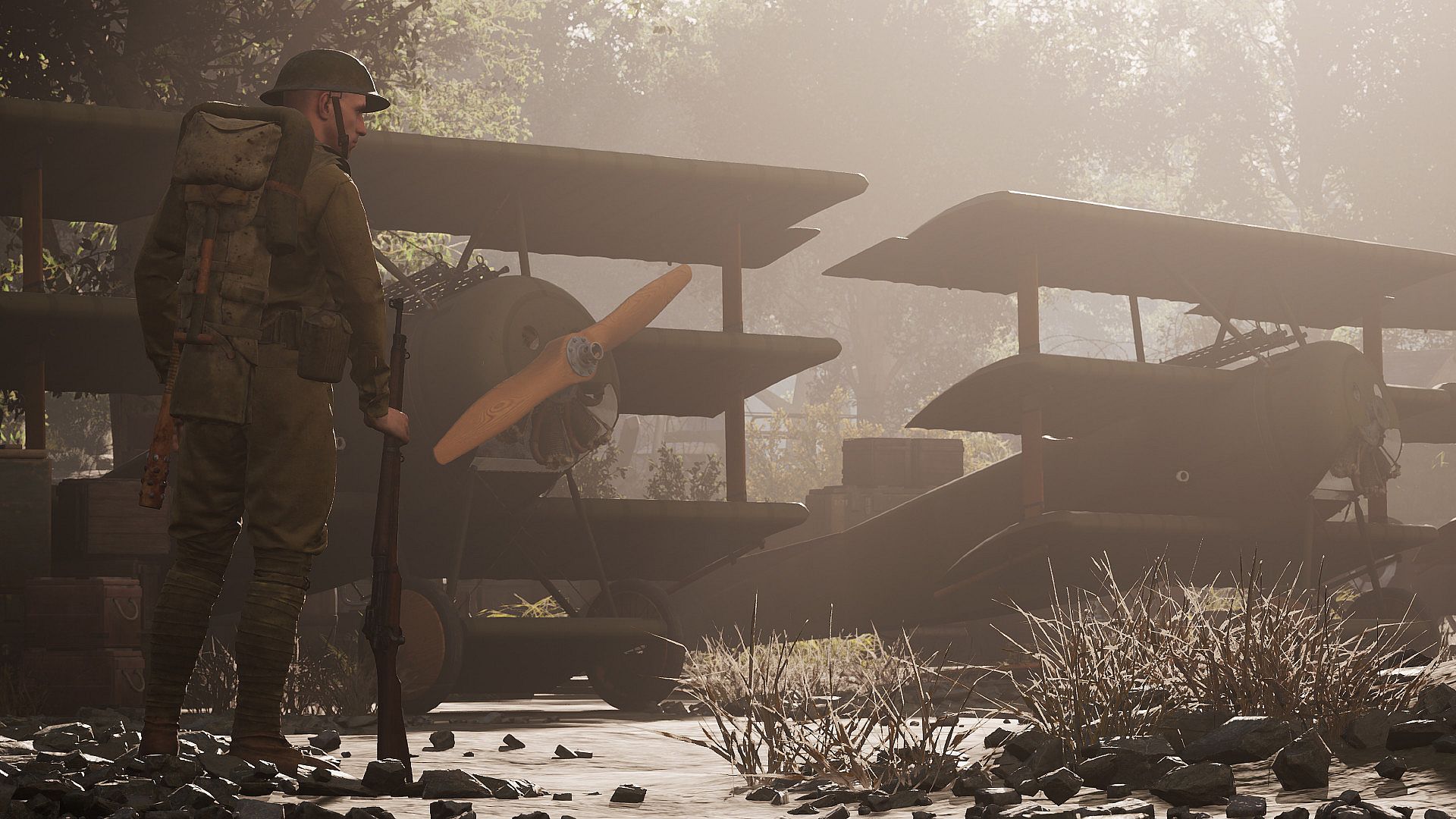
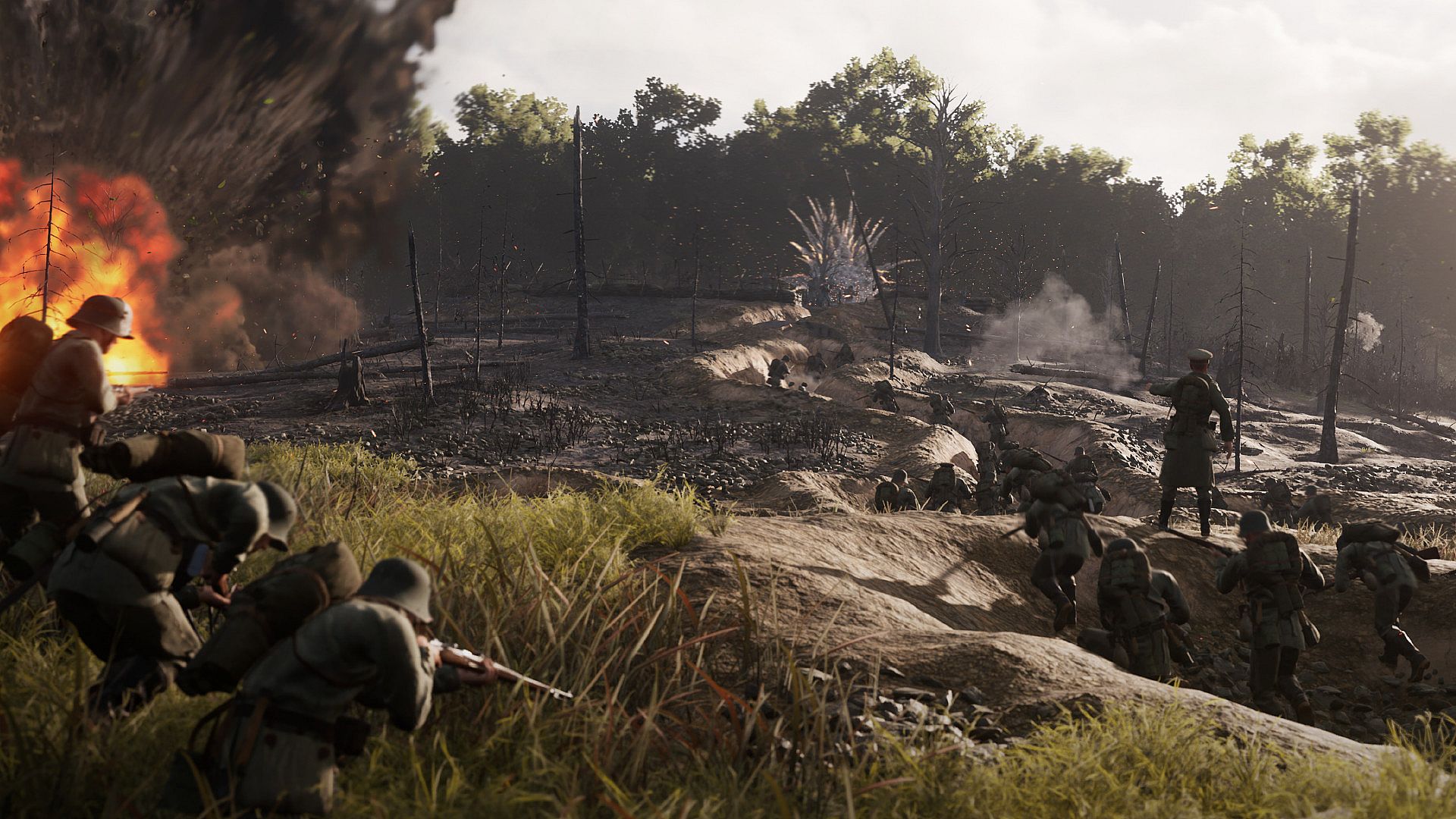
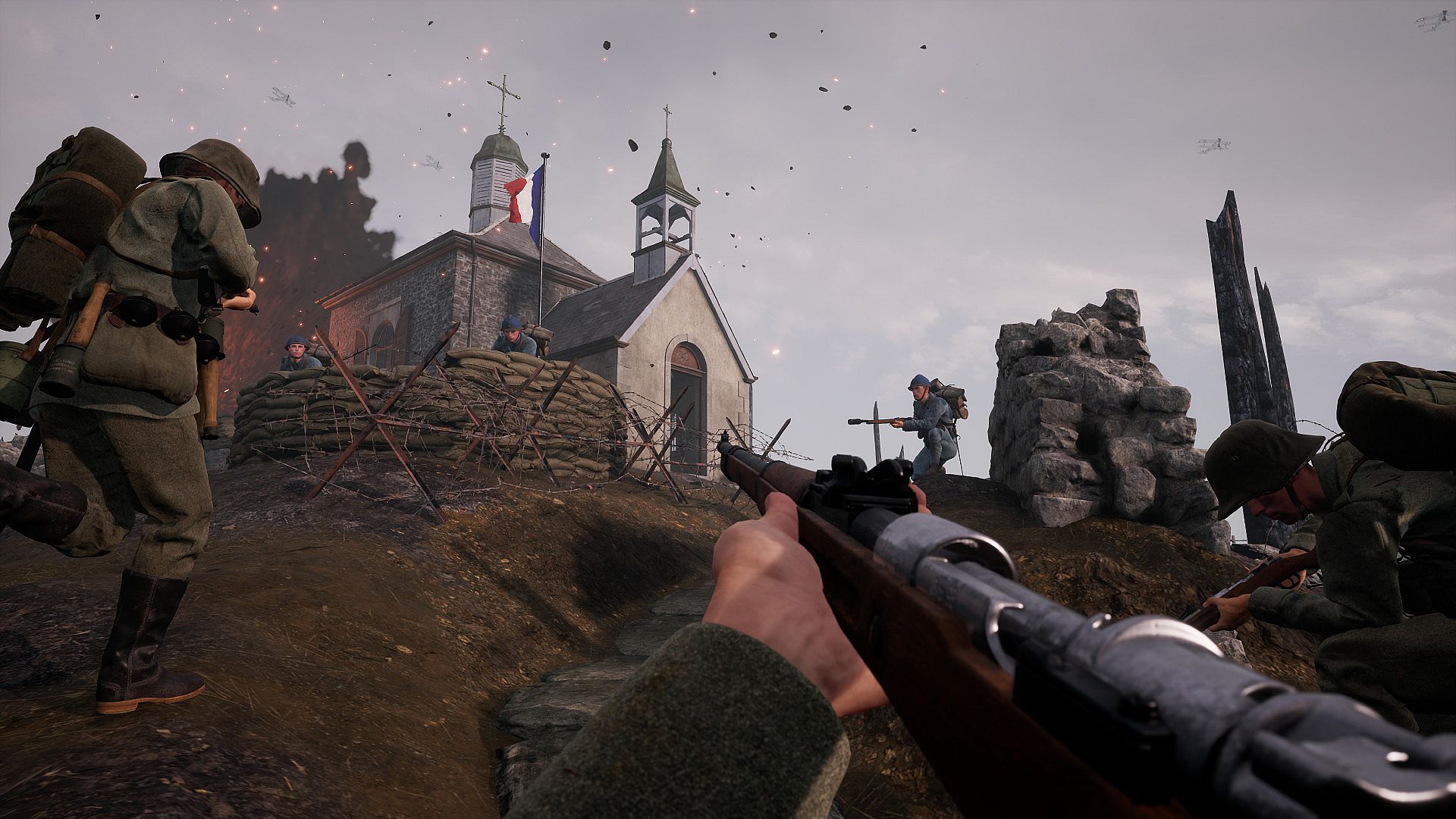
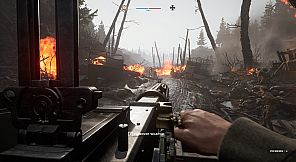
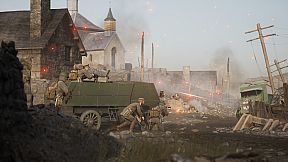
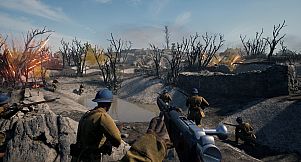
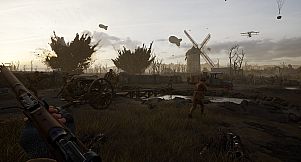
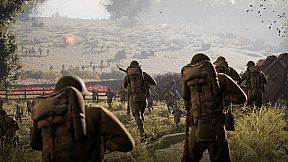
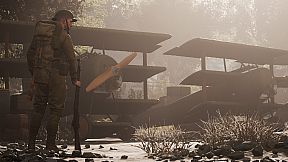
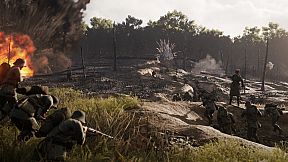
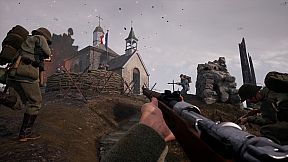
Beyond The Wire is a large-scale multiplayer first-person shooter set during the Western Front of World War I. Players engage in intense infantry combat supported by period vehicles and melee weapons across expansive trench networks and open ground. The game emphasizes squad coordination and role selection within teams of up to 100 participants divided evenly between opposing sides.
Gameplay
Core action revolves around communication and positioning within nine-person squads led by a commander. Soldiers coordinate to assault or defend emplacements while navigating trenches and no-man's-land terrain. Each engagement requires calling out threats, adjusting tactics mid-fight, and managing limited resources under artillery and machine-gun fire.
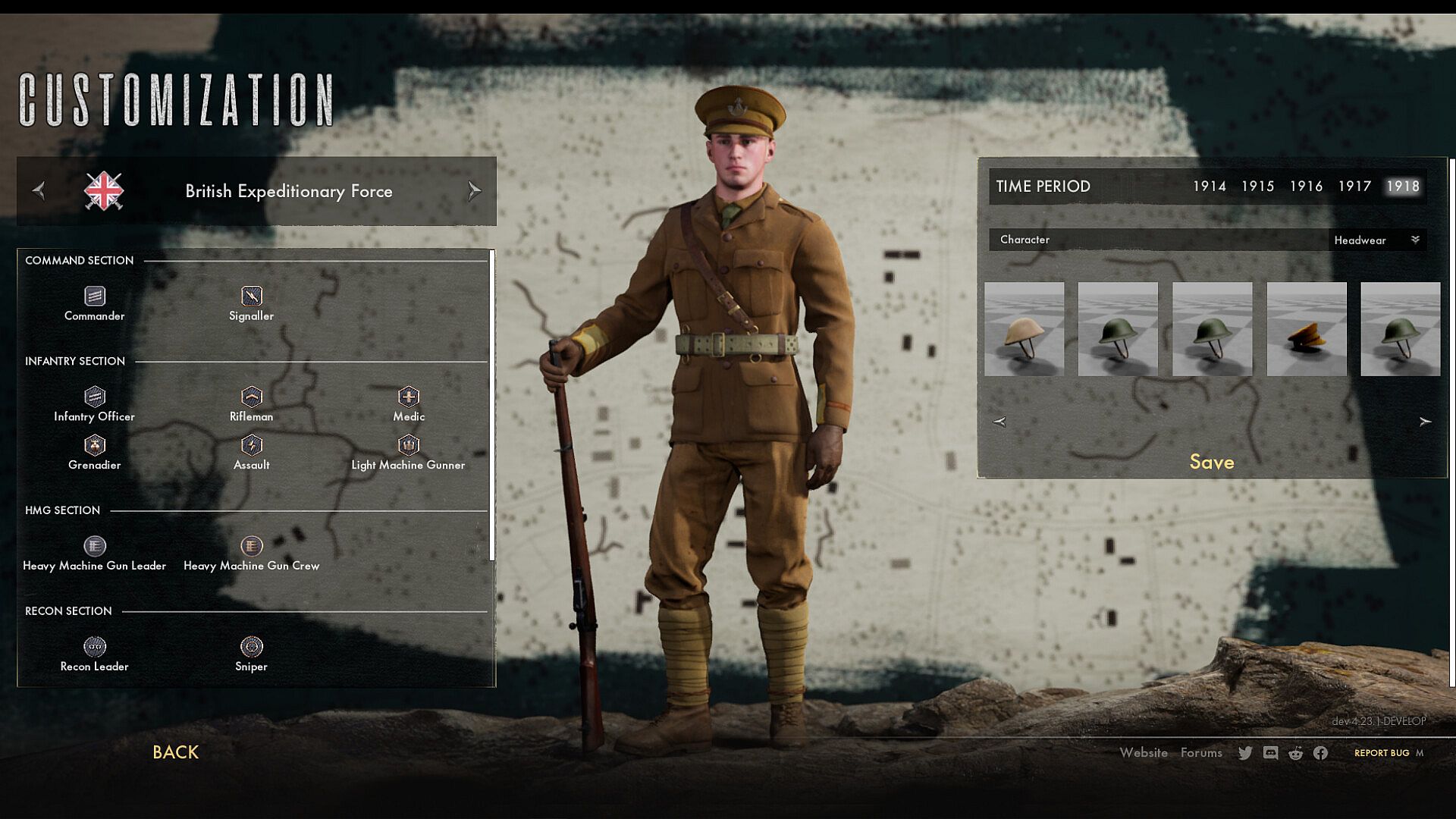
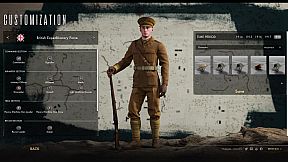
Role choice directly influences squad survival. Available classes include Infantry Officer for leadership, Rifleman for standard engagements, Medic for sustaining teammates, Grenadier for explosive support, Sniper for long-range overwatch, and Artillery Gunner for indirect fire. Additional positions cover heavy machine gun operation, reconnaissance, and anti-tank duties. Loadouts reflect historical equipment with adjustments for fluid play.
Vehicle combat introduces armored options such as the British Mark IV tank and German A7V for factions that field them. These machines alter battlefield control by providing mobile cover and firepower in key sectors. Melee encounters add close-quarters tension through bayonets, clubs, and a parry mechanic that rewards precise timing for counters.
Game Modes
Battles unfold as extended team confrontations where one side attempts to advance across maps while the other holds defensive lines. Objectives center on capturing ground, neutralizing strongpoints, and ultimately reaching the enemy headquarters. Matches scale to full 100-player capacity with squads operating under unified command to execute pushes or counterattacks.
Ten large maps showcase varied trench layouts, open fields, and fortified positions that reward flanking and coordinated assaults. Each map supports faction-specific equipment and vehicles, creating distinct tactical demands depending on the chosen side from the Central Powers or Entente alliances.
Factions and Equipment
Ten factions drawn from historical combatants offer unique weapon sets, vehicles, and map access. Central Powers and Entente forces differ in available rifles, machine guns, and support tools, encouraging repeated play to experience contrasting styles. Historical accuracy guides most designs, with minor tweaks applied only to maintain engaging pacing.
Brutal close combat remains a constant threat alongside ranged fire. The melee system integrates with standard movement and cover mechanics, forcing players to weigh when to close distance or maintain separation during advances.
Is It Worth Playing?
Beyond The Wire suits players who prefer deliberate, communication-heavy multiplayer experiences modeled on World War I tactics. Those familiar with squad-focused titles will recognize the emphasis on role specialization and map control through coordinated movement.
Player feedback highlights strong atmosphere and weapon handling alongside persistent challenges with server population. Matches often struggle to fill, which can extend wait times and limit consistent play. The title receives no ongoing seasonal content or major updates based on available records, leaving the core experience unchanged since its primary release period.
Prospective buyers should consider their tolerance for low-activity servers when deciding on purchase. The game delivers detailed trench warfare for dedicated groups willing to organize sessions, but casual or solo participants may find engagement limited by available opponents.














