


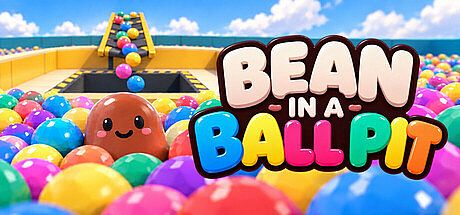


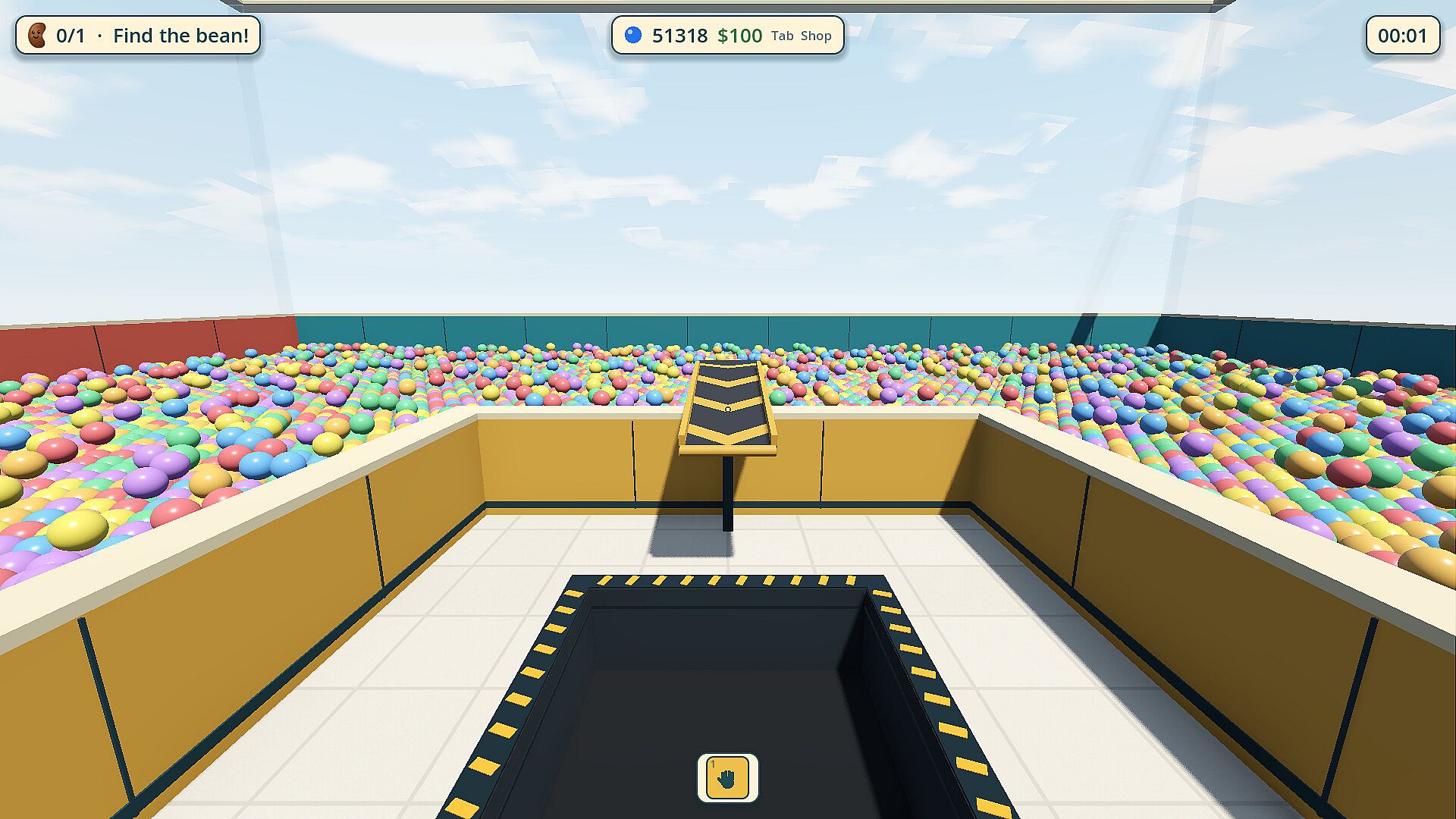
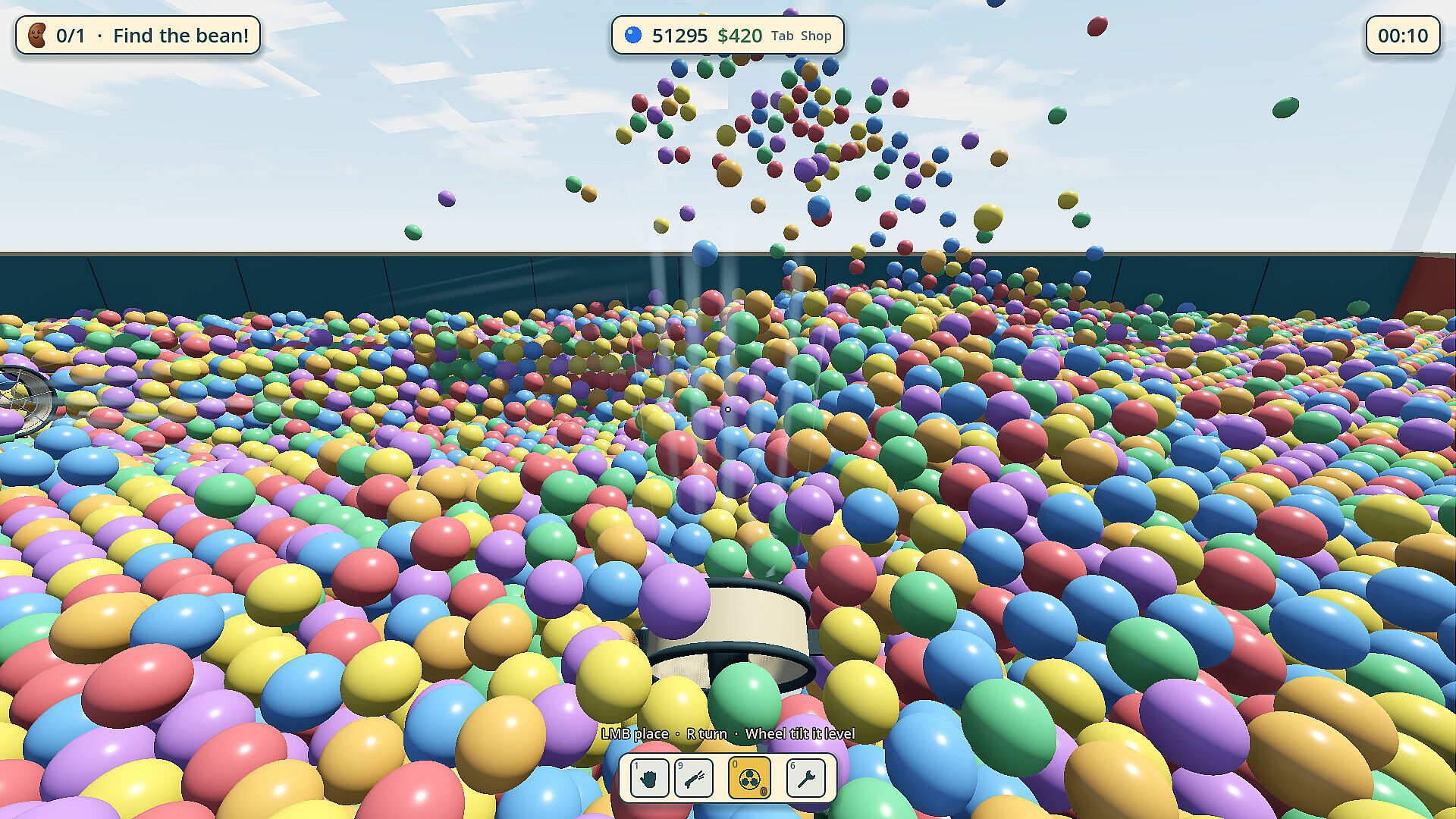
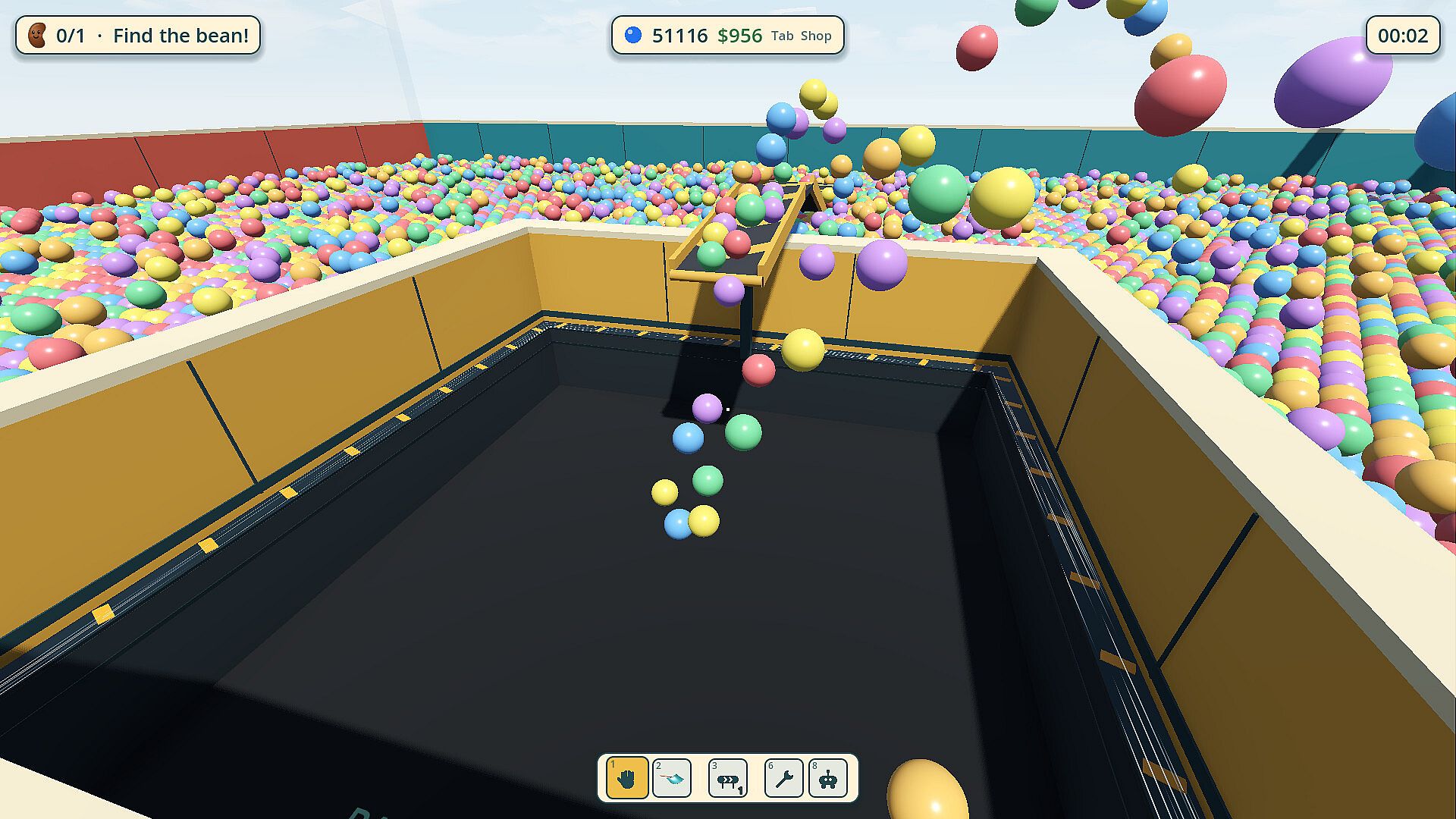
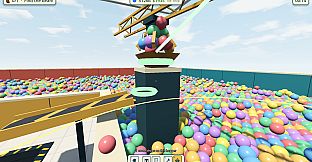
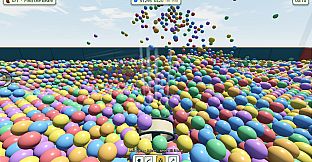
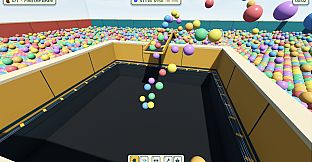
Bean in a Ball Pit is a single-player first-person strategy simulation game built around physics interactions in a massive pile of colorful balls. Players search for hidden beans by manually clearing space and constructing automated systems to move balls toward a collection point. The core loop revolves around direct manipulation of the environment combined with incremental upgrades and machine placement that turns a simple retrieval task into an elaborate operation.
Gameplay
The experience centers on wading through the ball pit, grabbing individual balls by hand or using tools to shift large volumes at once. Basic actions include throwing balls toward the collection hole, which generates money for further purchases. Upgrades improve reach, capacity, and efficiency, such as a bucket for scooping multiple balls or a vacuum that draws in and expels material. Additional tools like a leaf blower push piles aside while an echo pinger helps locate the nearest bean without revealing direction.
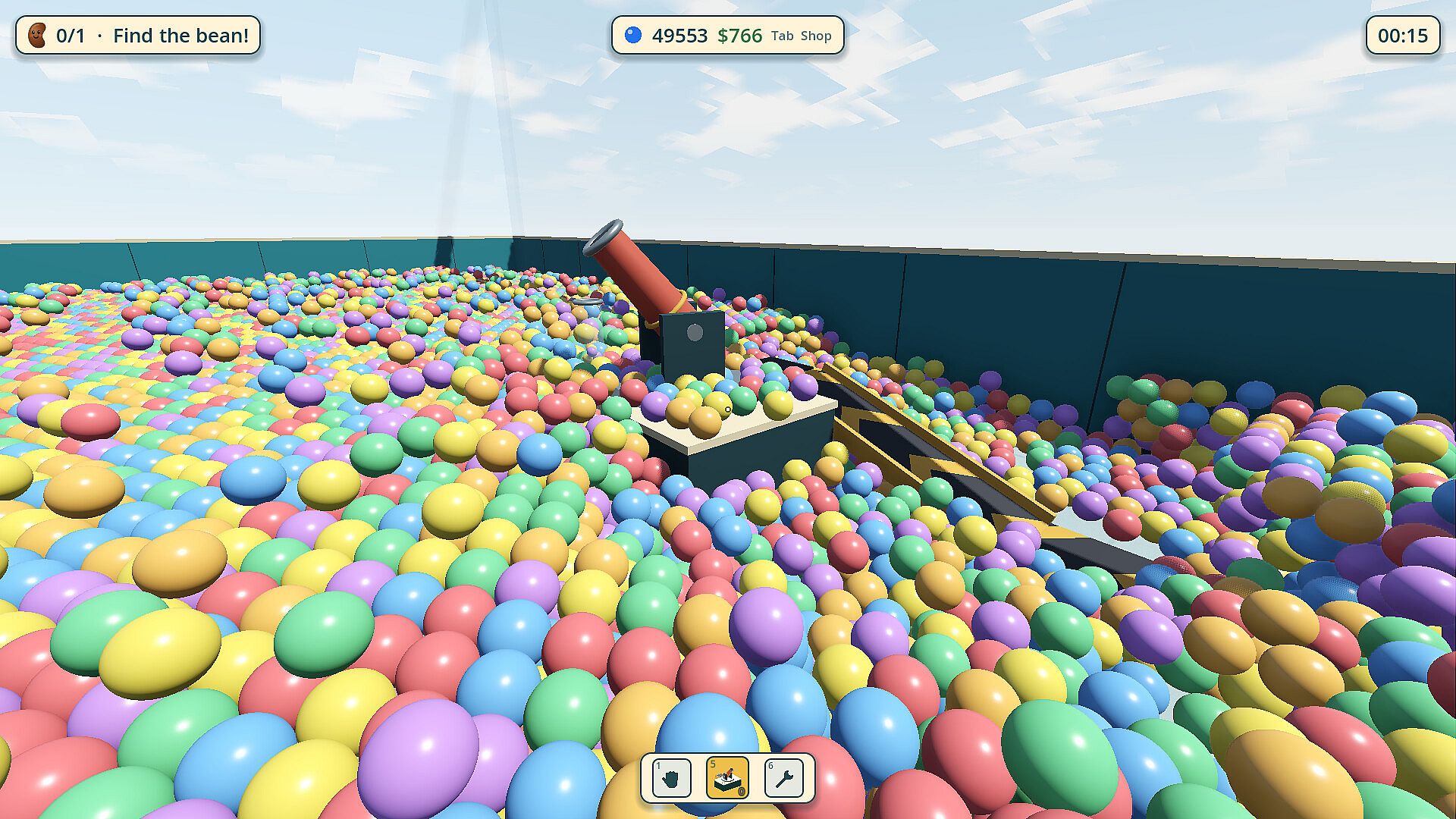
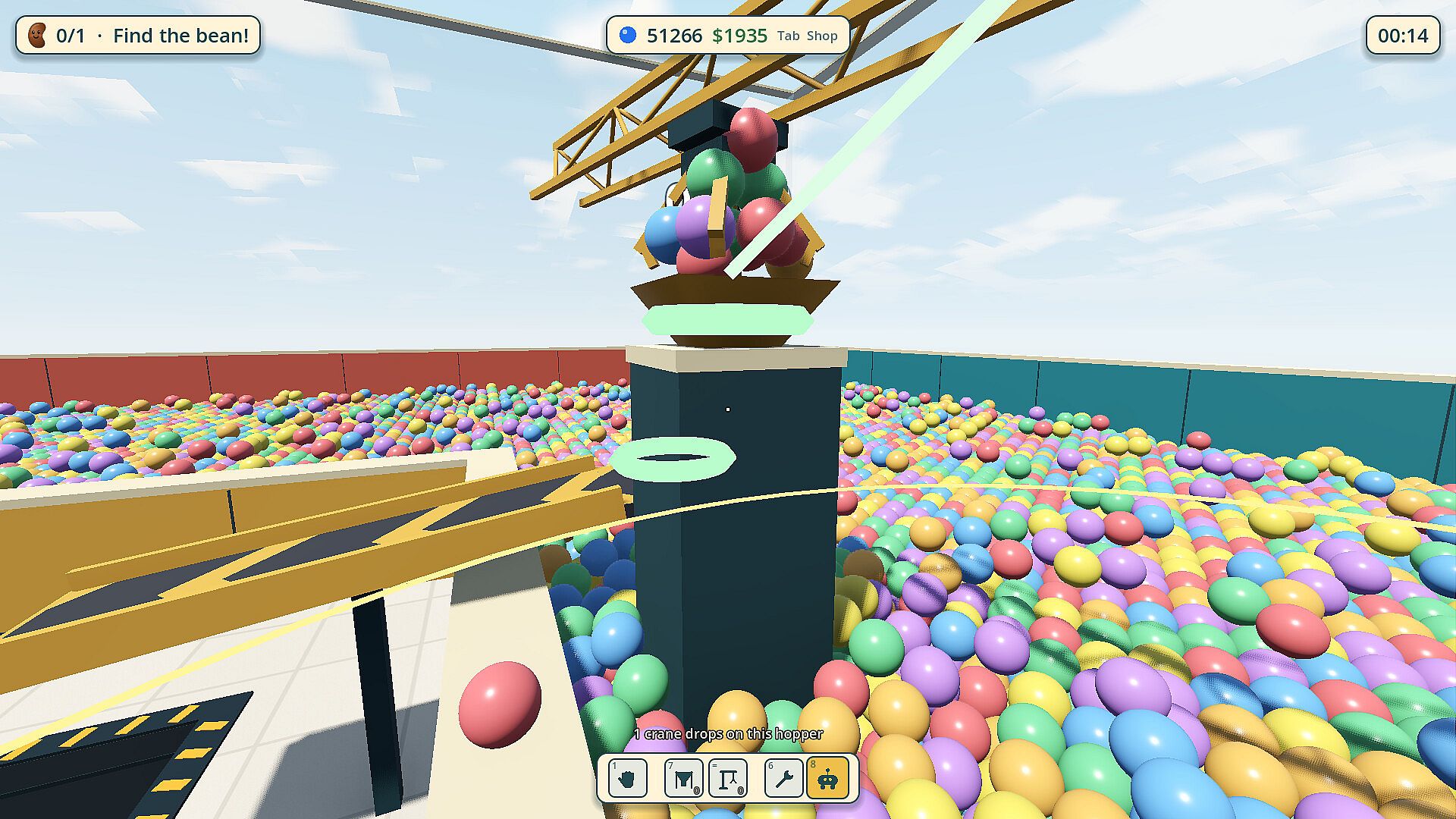
Once resources accumulate, players access a build mode to place and connect machines. Conveyor belts curve and split to route balls efficiently, while hoppers feed into cannons or elevators. Fans and wind rings create airflow to move balls across distances, and trampolines or ziplines launch them in specific patterns. Claw cranes and sweeper bots handle collection autonomously after assignment to work orders, with hauler bots transporting loads between stations. These systems can remain simple or grow into sprawling networks that handle thousands of balls simultaneously.
Progress carries forward across rounds through saved money and unlocked items. The physics engine responds realistically to every interaction, so rearranging the pit changes how balls flow and settle. Three save slots support multiple sessions, with autosaving and a stopwatch tracking search times for personal improvement.
Game Modes
Game modes consist of different pit configurations that scale the challenge. Players select from four sizes ranging from Easy to Extreme, each containing between four and twelve beans. Layout options include Classic, Long, Deep, Round, and Pillars, which alter the shape and depth of the playable area. Smaller pits suit initial attempts or quick sessions, while the largest versions hold over a million balls and demand extensive automation to finish within reasonable time.
Each round places the beans in new locations, requiring fresh exploration even after prior successes. The wallet carries over between rounds, allowing accumulated earnings to fund more advanced setups on subsequent attempts. No separate multiplayer or competitive modes exist, keeping the focus entirely on solo optimization and experimentation with machine combinations.
Tools and Automation Systems
Direct tools form the foundation before automation takes over. Hands and a pusher move balls individually or in small groups, while a grenade launcher clears clusters when needed. Once machines enter the picture, the emphasis shifts to logistics. Splitters and mergers direct flow along belts, and brushes keep paths clear. Elevators and chutes handle vertical movement, and fountains add upward momentum. Bots operate from dedicated garages and accept upgrades that increase speed or capacity, freeing the player to focus on locating beans or expanding the collection hole itself with pull upgrades.
Layouts encourage creative routing. Curved belts navigate around obstacles, and combinations of fans with tilted surfaces bounce balls toward targets without constant manual intervention. The system rewards planning that accounts for ball volume and pit geometry, turning each session into an exercise in incremental engineering.
Is It Worth Playing?
Bean in a Ball Pit appeals to players who enjoy physics-driven simulation and automation mechanics in a single-player setting. The progression from hands-on digging to large-scale machine networks provides a clear sense of growth, with pit sizes and layouts offering adjustable difficulty. Those who appreciate building efficient systems and experimenting with tool combinations will find repeated value in optimizing searches across different configurations. The game remains in development ahead of its planned release, so current details reflect the verified feature set without post-launch changes. It suits anyone seeking a focused, self-contained experience centered on problem-solving through physics and incremental construction rather than combat or narrative elements.












