








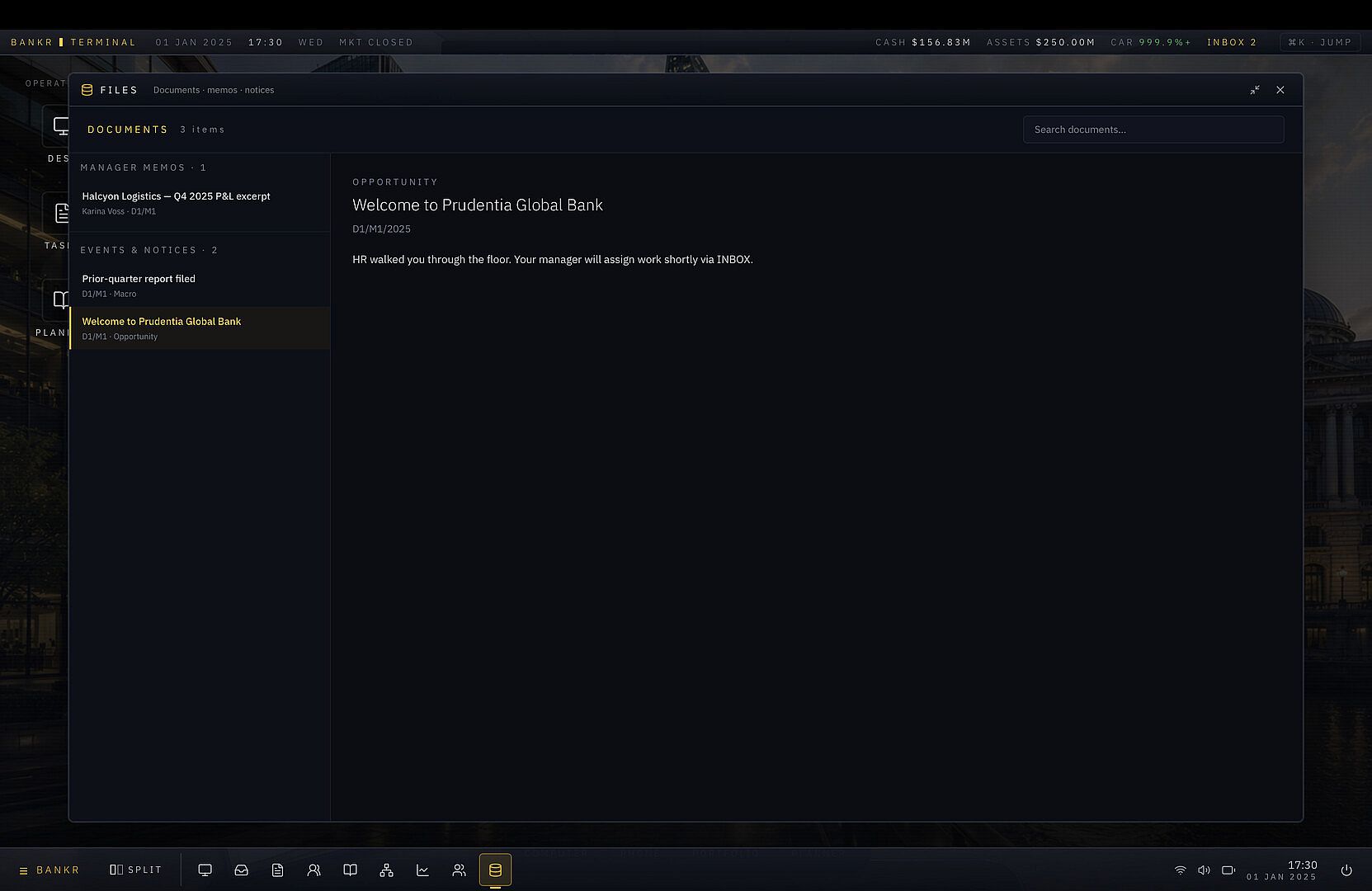
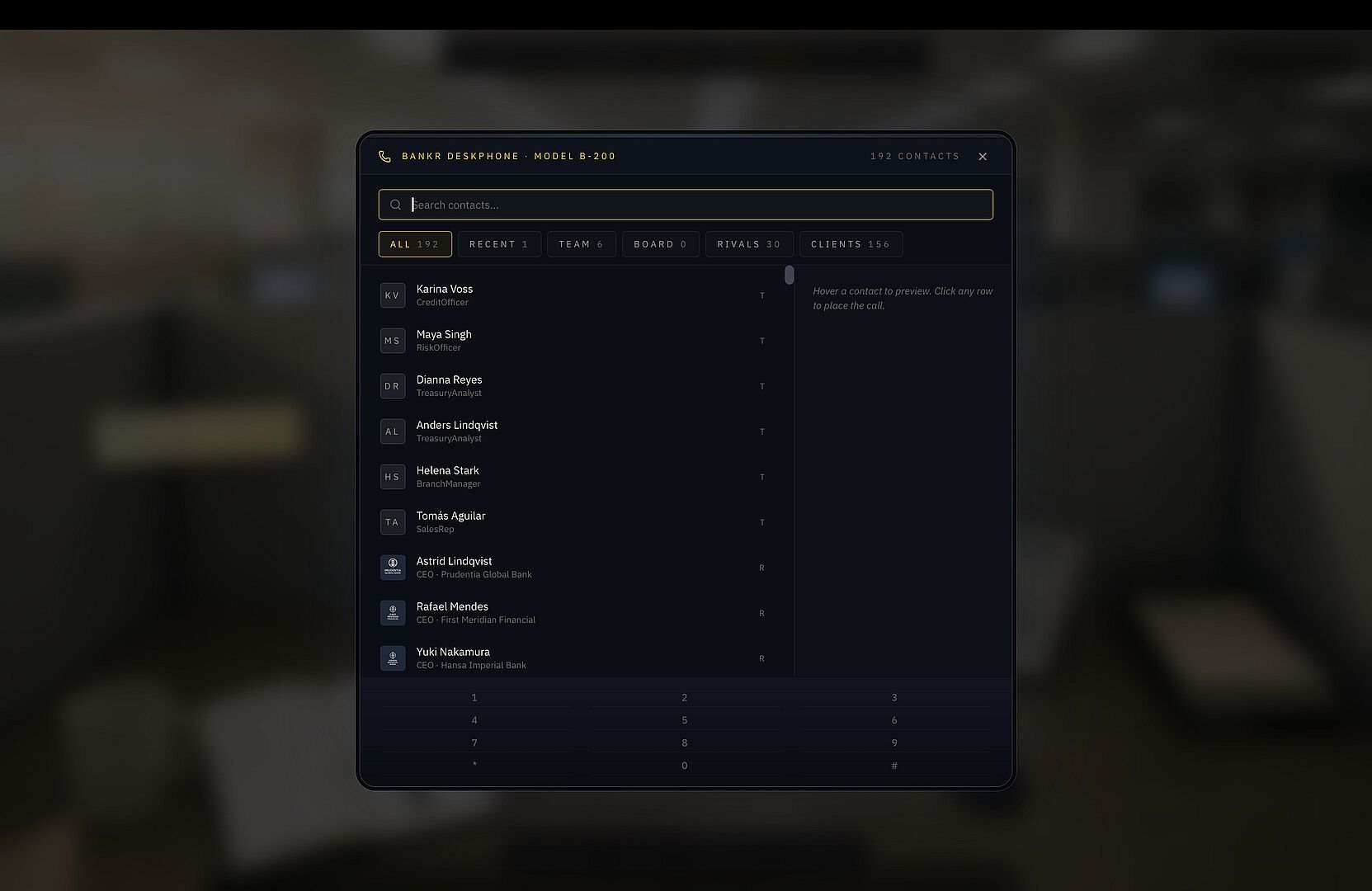

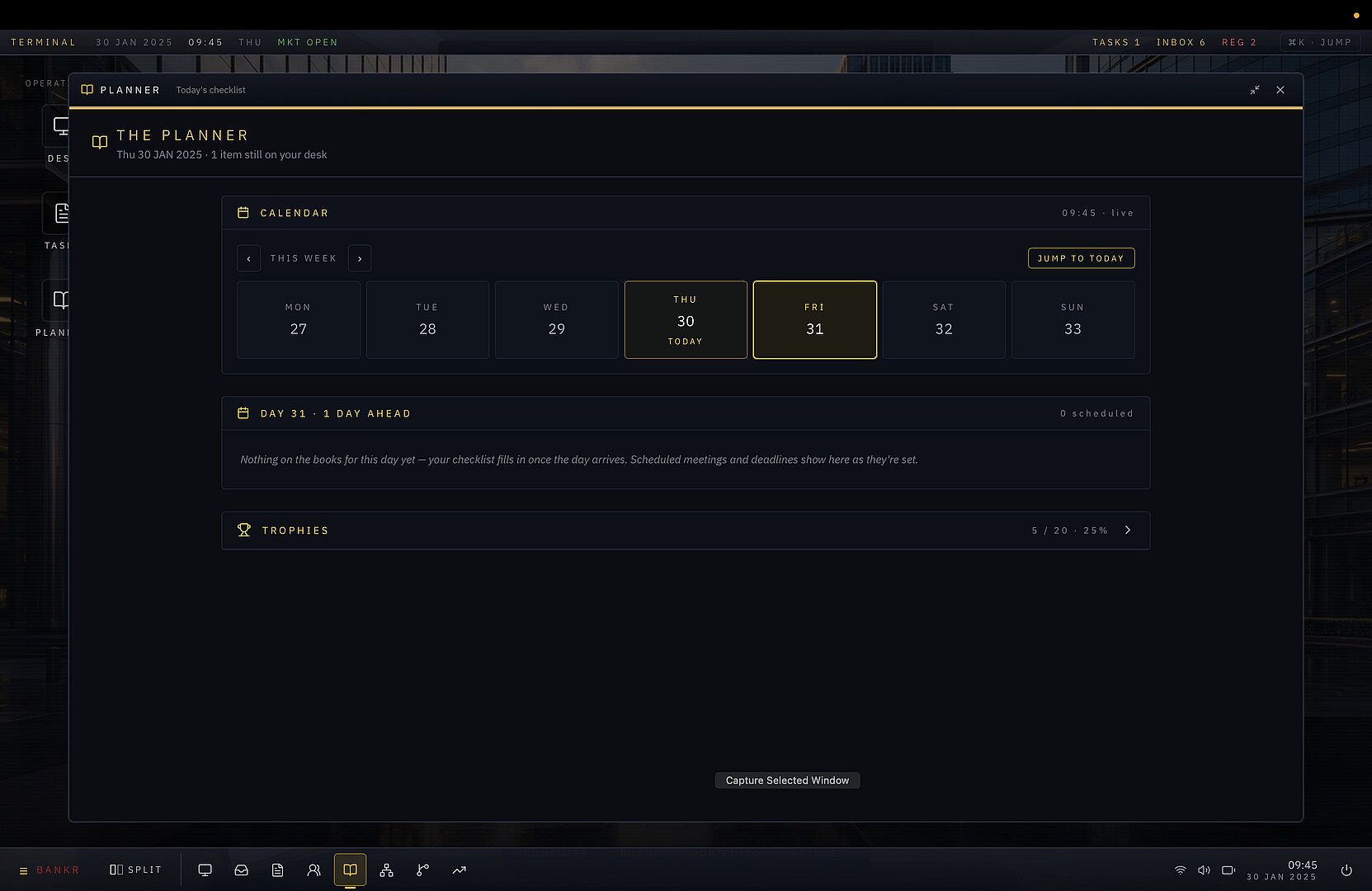



Bankr is a strategy and simulation game that places players in the role of a bank CEO managing every aspect of operations through detailed financial modeling. Set on PC in early access, the experience centers on originating loans, securing deposits, maintaining capital ratios, and responding to regulatory pressures in a system built around real accounting principles rather than simplified abstractions.
Gameplay
The core loop revolves around time advancing at a rate of one in-game day every two seconds, requiring frequent decisions across credit, funding, and liquidity. Players originate and monitor seven distinct loan types that progress through IFRS 9 stages including performing, watchlist, delinquent, default, and write-off. Deposits come from eight categories, with rate setting influencing the loan-to-deposit ratio and overall funding costs. Eleven divisions become available through unlocks, each generating its own profit and loss statement with metrics such as revenue, provisions, and return on allocated capital.
Rival banks operate in the same environment, expanding or contracting based on market conditions and player actions. Hostile takeovers can be launched or defended using tools like poison pills and white knights. A compliance score tracks regulatory adherence, triggering capital plans, funding plans, or stress tests when thresholds are breached. An enforcement clock runs for 180 days before potential seizure if issues remain unresolved. The simulation runs on a Rust engine with a 10 Hz tick loop, updating balance sheet items in real time so that interest accrues on loans and expenses on deposits without manual intervention.
A personality quiz at the start establishes four axes that influence seven multipliers, leading to twelve archetypes that alter how scenarios unfold. Five macro environments set the broader difficulty and economic backdrop, from steady growth periods to sudden shocks. Every session produces a narrative summary of events alongside a quarterly performance score and achievement tracking.
Game Modes
Intern Career Mode offers a structured entry point by assigning players to roles such as credit analyst, treasury analyst, risk officer, or branch manager. Progress occurs through 90-day review cycles and a final capstone evaluation that leads to promotion. Full CEO runs allow direct control over the entire balance sheet and all divisions without the intern progression constraints.
Macro scenarios function as selectable starting conditions that shape the economic environment and available challenges. These include Growth Sprint, Stable Years, Regulatory Crunch, Global Shock, and High Stakes, each altering how quickly capital and liquidity pressures build. No separate multiplayer modes exist, keeping the focus on single-player strategic depth across repeated runs that generate unique outcomes based on personality and choices.
Key Systems and Mechanics
Capital adequacy, non-performing loans, liquidity coverage, net stable funding, net interest margin, and return on equity all emerge directly from the live model rather than serving as static displays. Actions flow through a single command bus that supports reversals and state saving. Divisions operate with independent financials while contributing to the overall regulatory view that the player must satisfy. The system emphasizes trade-offs between credit expansion, deposit gathering, and liquidity buffers, with rival behavior adding competitive pressure through market share shifts or acquisition attempts.
Is It Worth Playing?
Bankr targets players who enjoy precise, numbers-driven strategy simulations and are comfortable with financial terminology and ongoing ratio management. The honest simulation engine delivers consistent cause-and-effect outcomes across sessions, rewarding careful planning and rapid adaptation to regulatory events or rival moves. Early access status means the experience centers on the core banking systems described, with potential for further refinement based on ongoing development. Those seeking a lightweight tycoon title may find the depth and real-time metric tracking too demanding, while fans of detailed management games will appreciate the absence of abstracted or inconsistent mechanics. The combination of career progression options and varied macro starts provides replayability for those who value systems that produce distinct stories each time.











