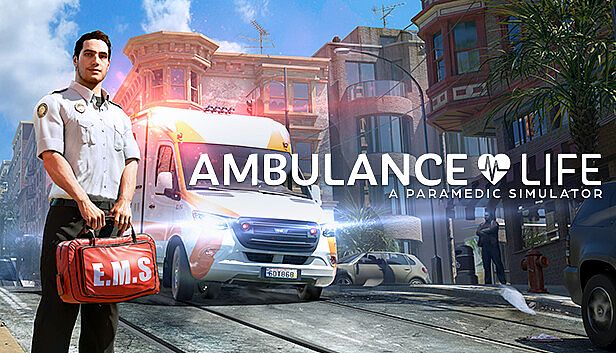



























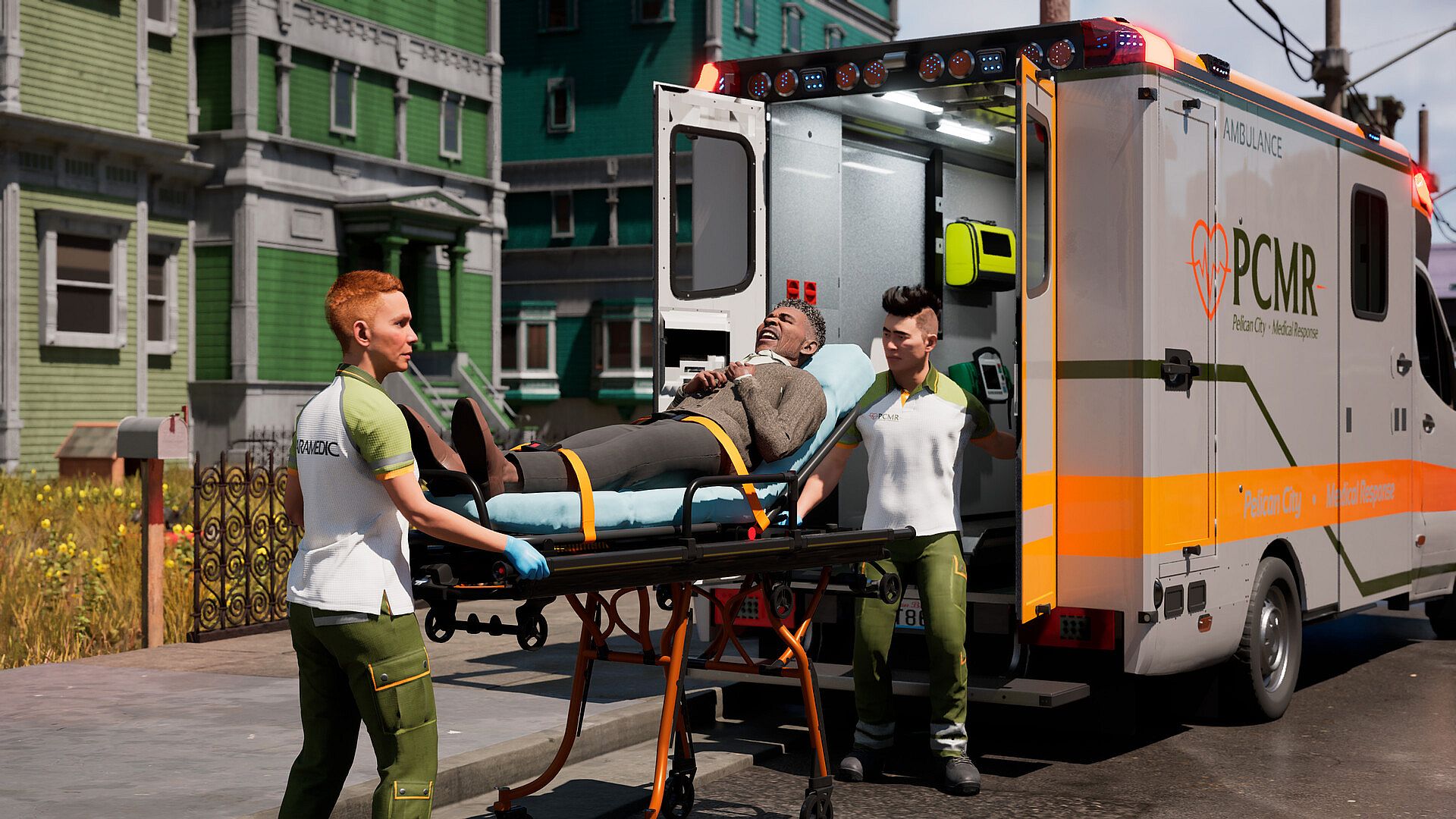
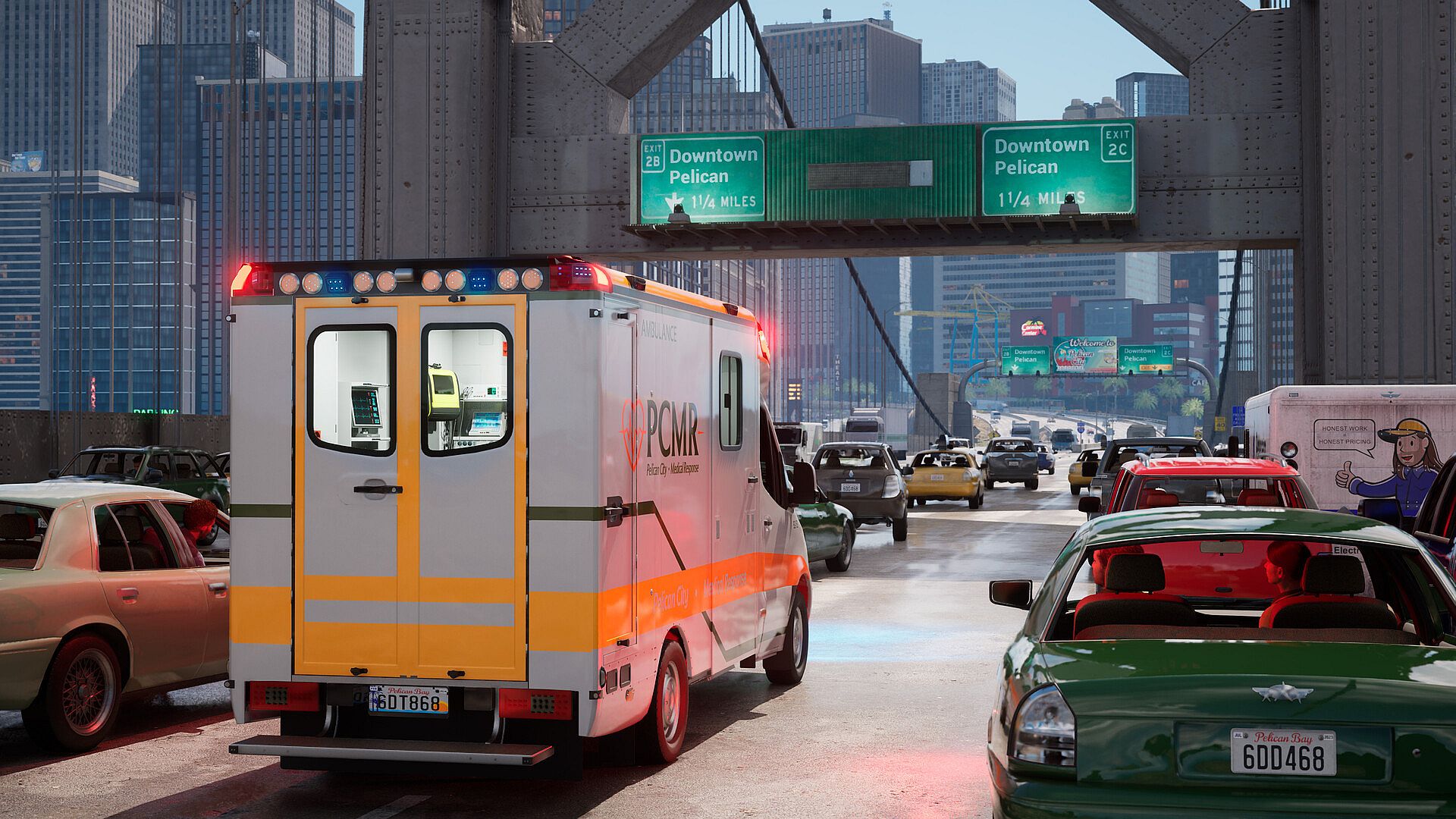

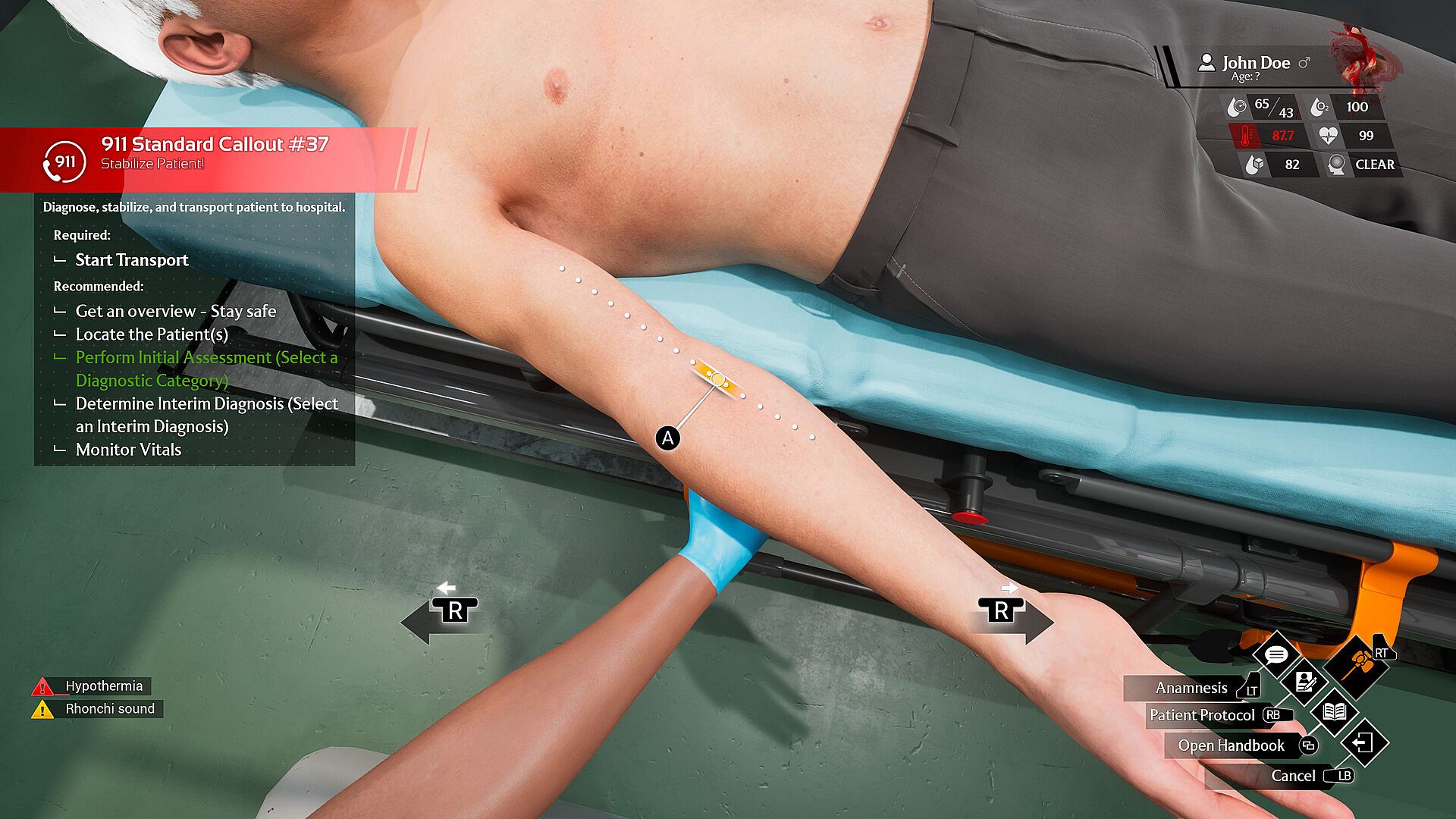

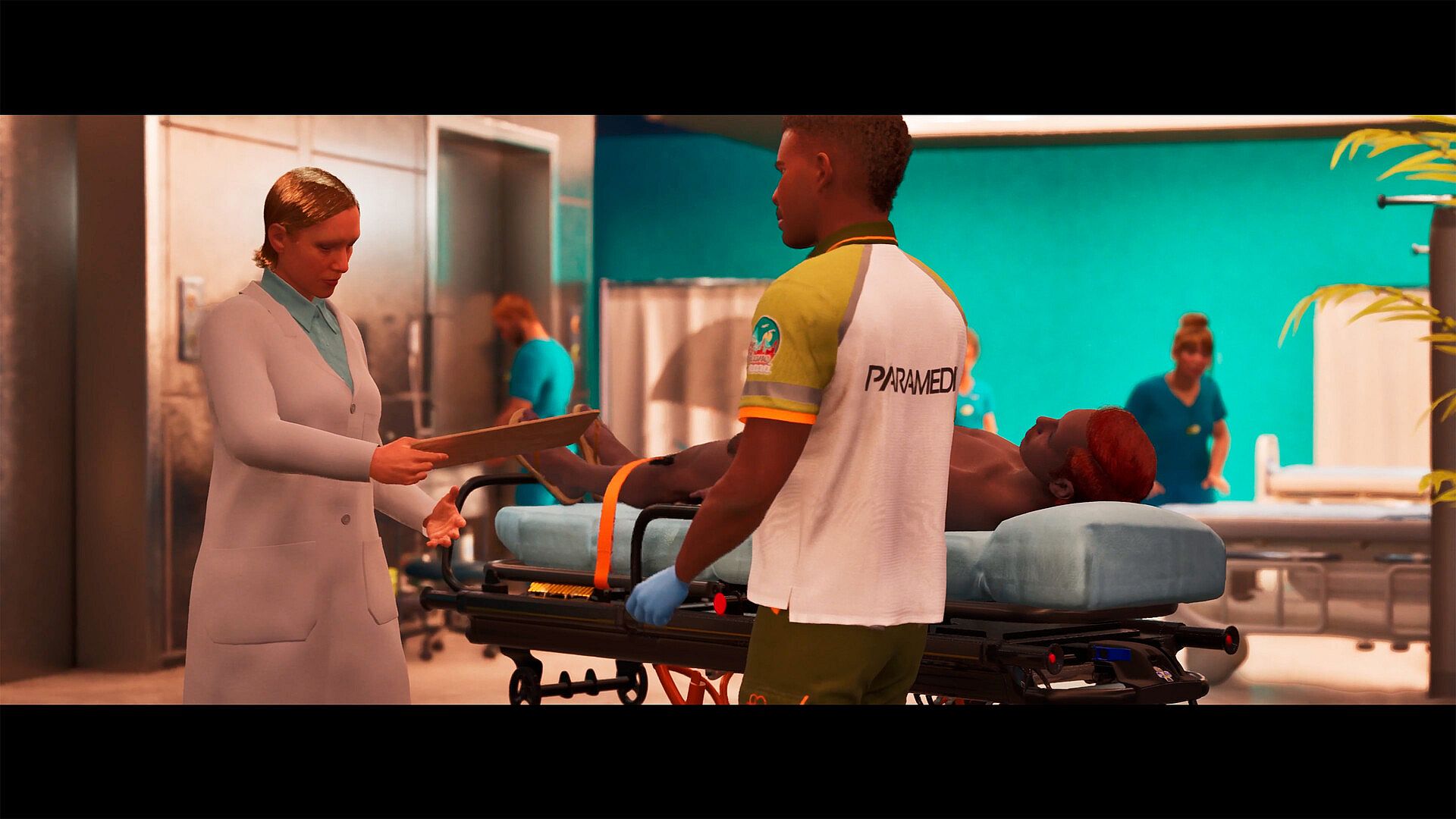



Ambulance Life: A Paramedic Simulator is a singleplayer simulation game that places players in the role of a paramedic responding to emergencies across the fictional city of San Pelícano on the West Coast of the United States. The experience centers on driving an ambulance through traffic, assessing patients at accident scenes, applying first aid with available instruments, and transporting the injured to hospitals while managing time and resources effectively.
Gameplay
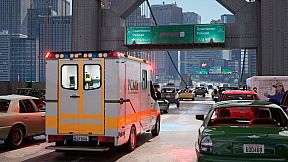
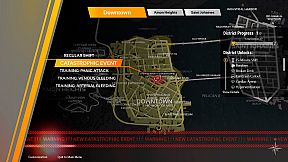
The core loop involves receiving dispatch calls and racing to incident locations in one of three distinct districts. These areas feature varied environments such as historic quarters, business districts, and industrial zones, each with its own patterns of daily citizen activities that can trigger different types of calls. Driving requires navigating realistic street traffic while using the siren and adapting routes for speed and safety.
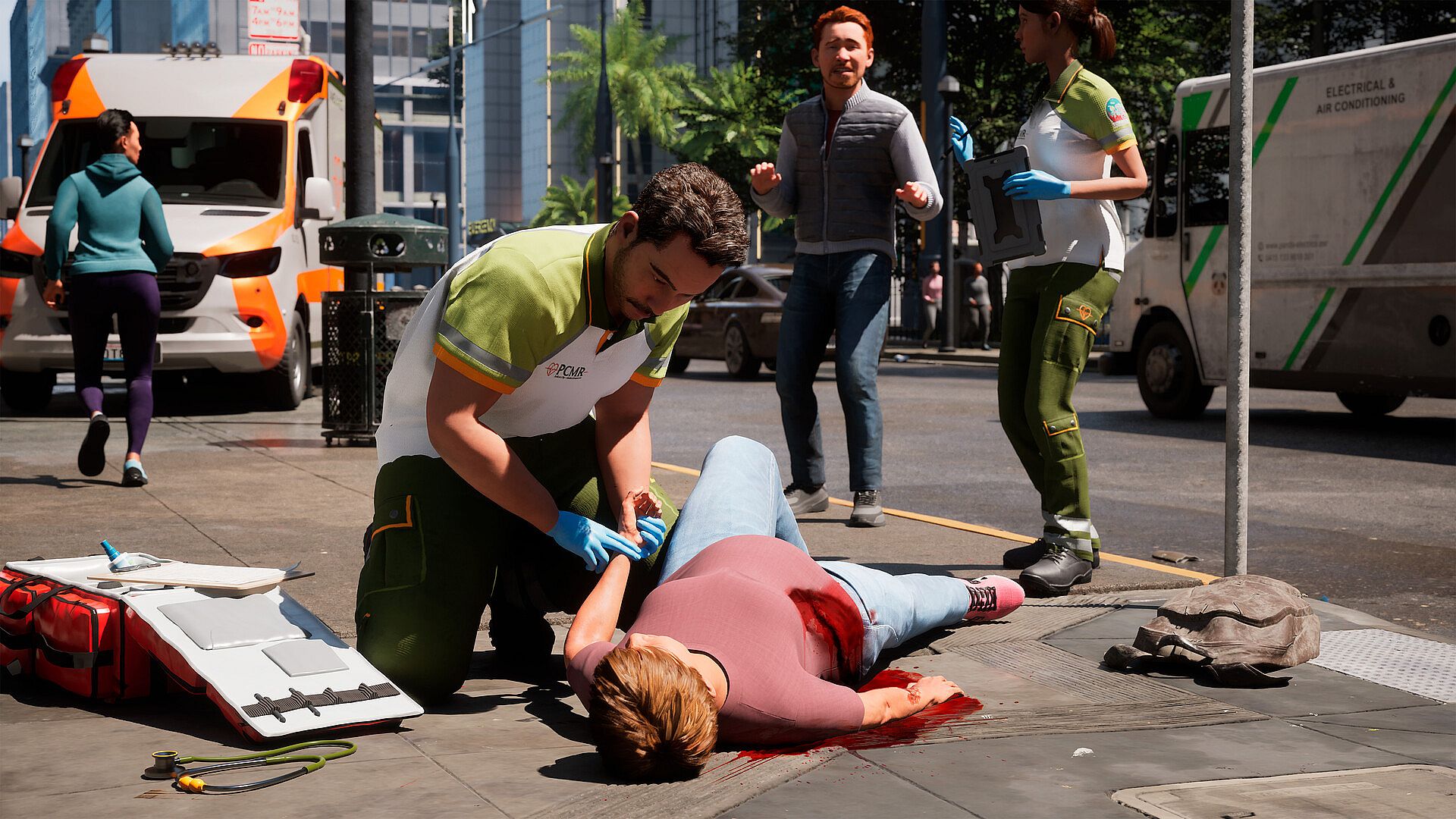
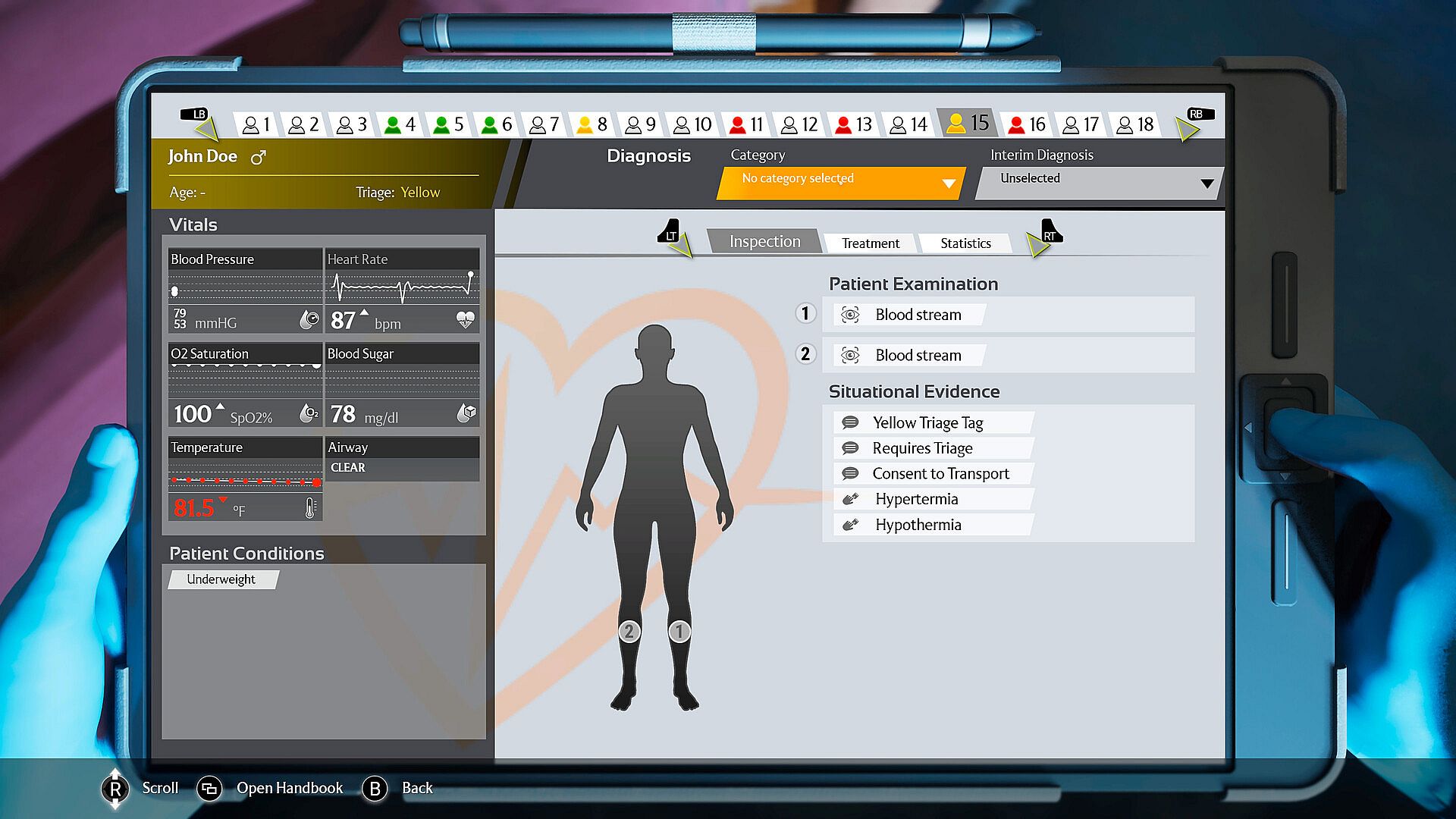
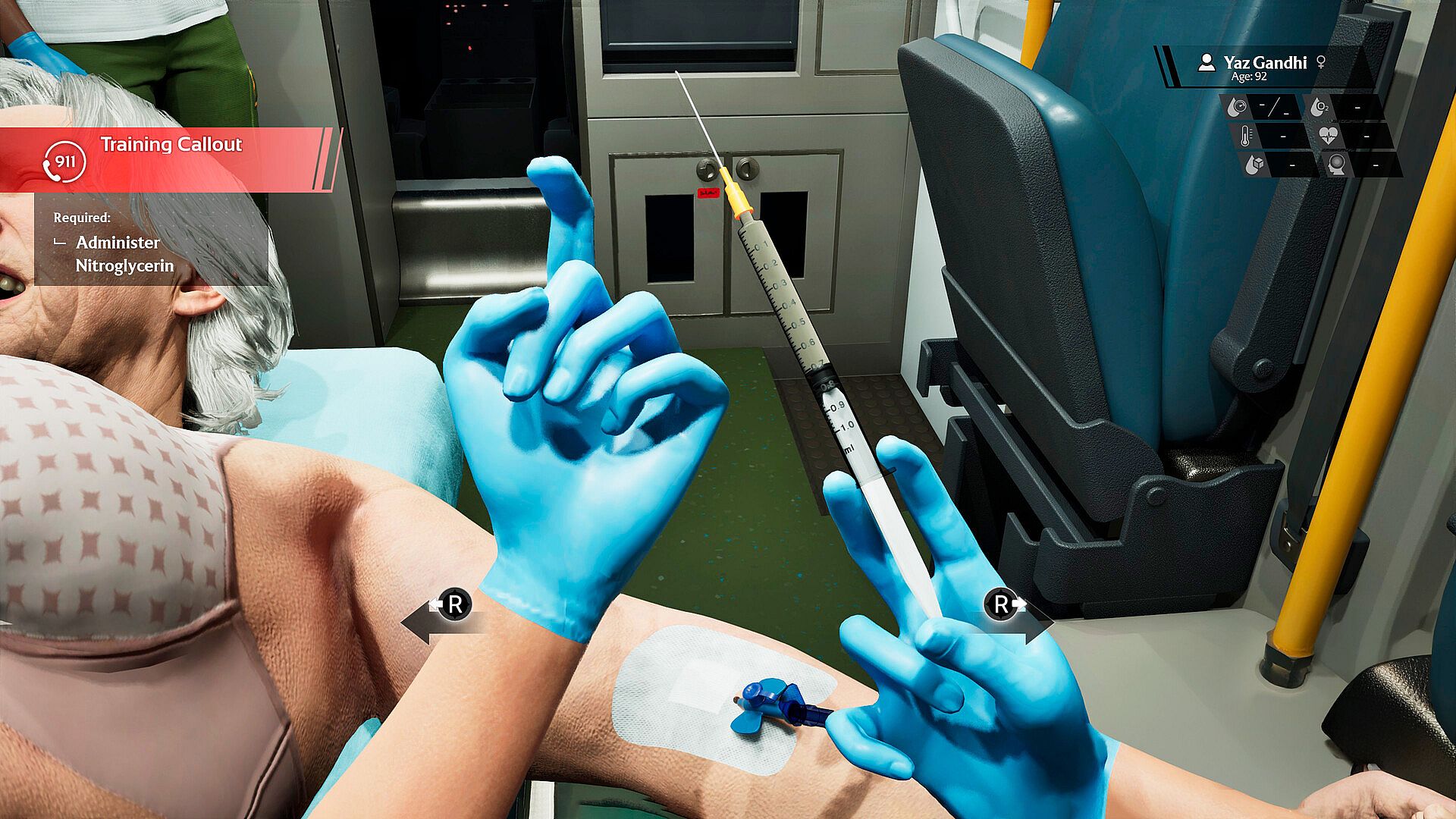
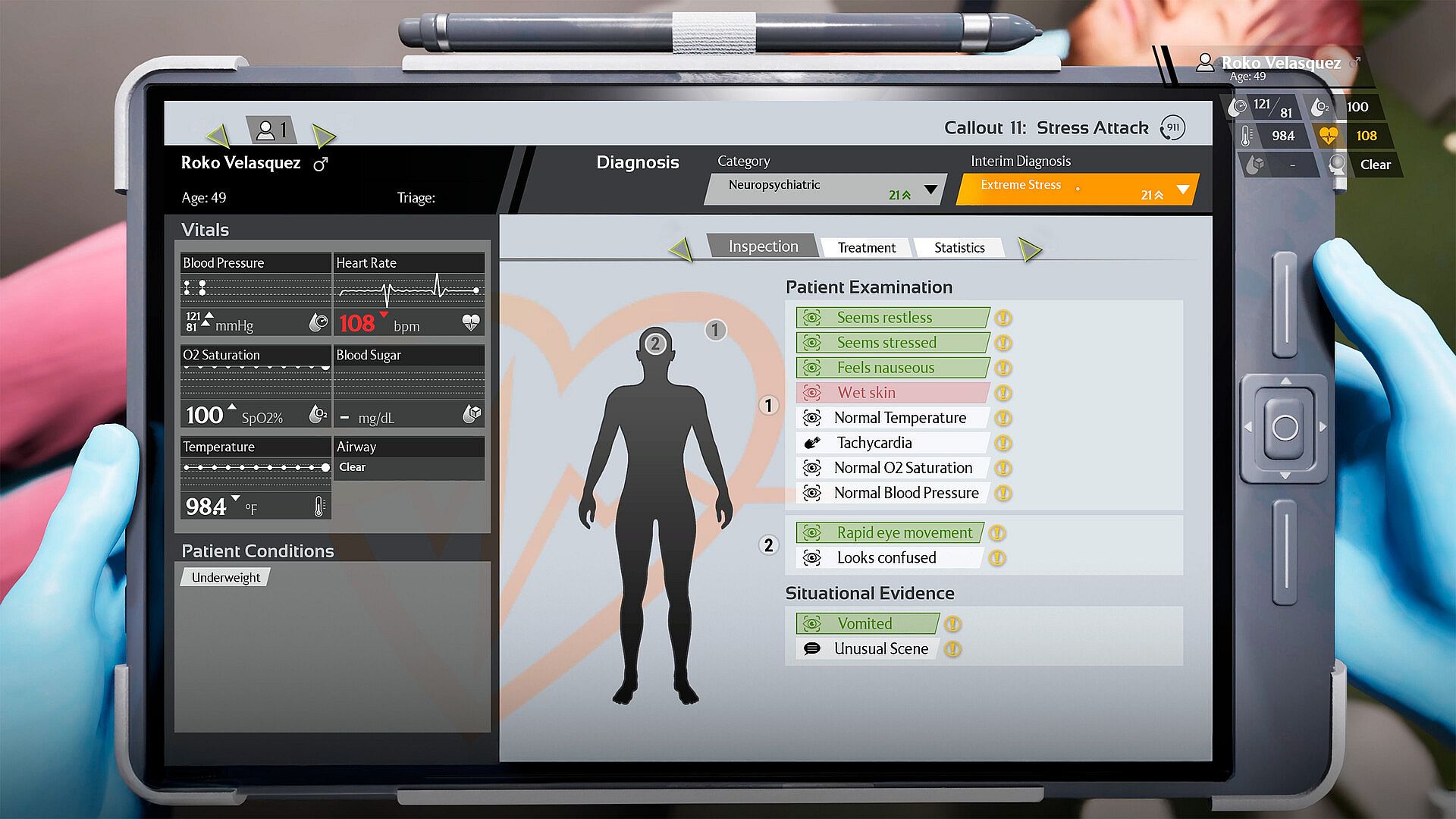
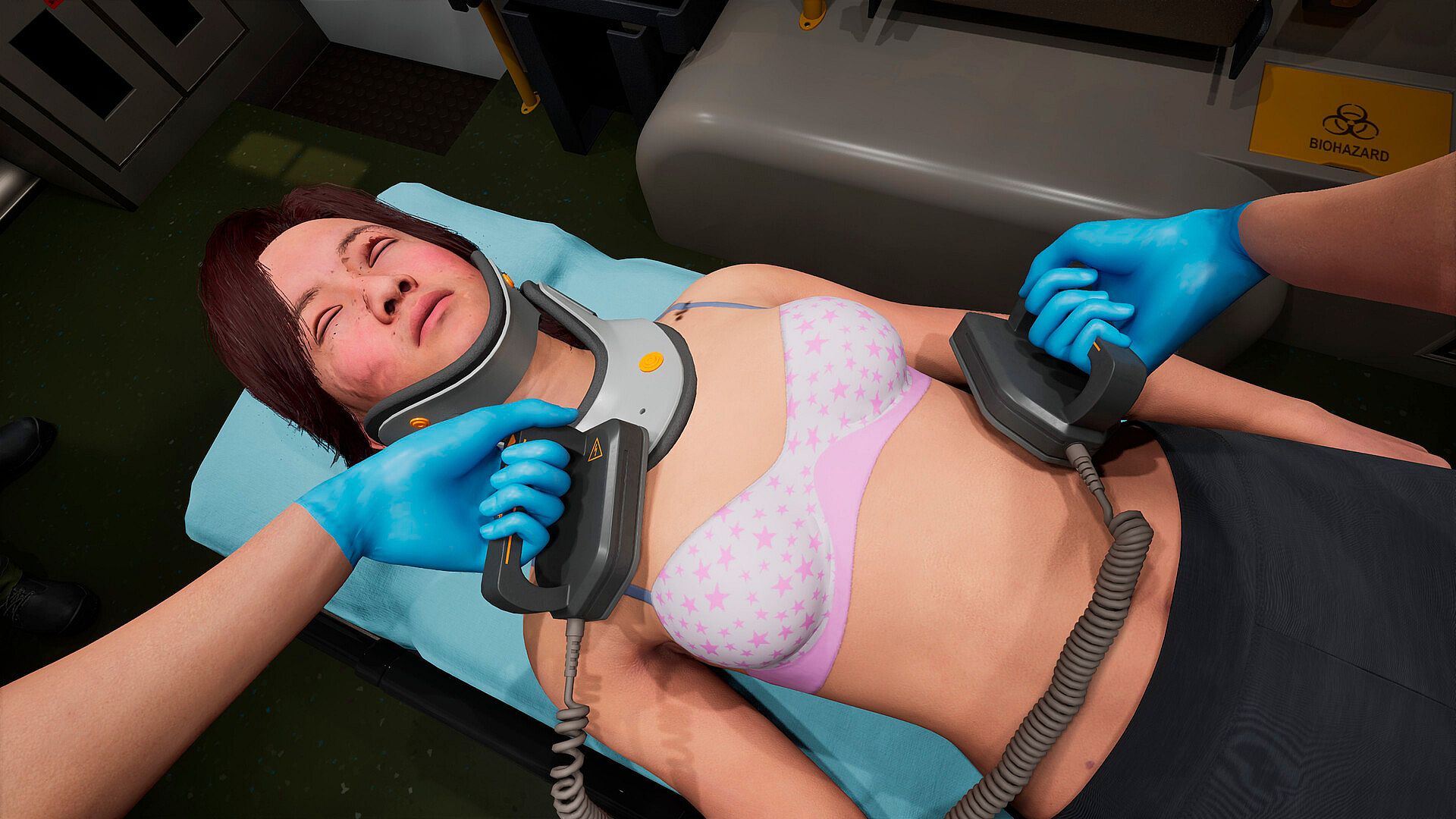
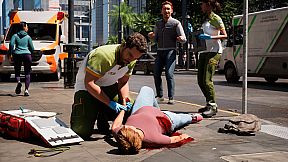
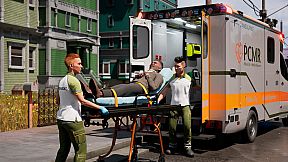
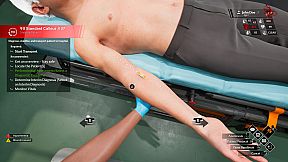
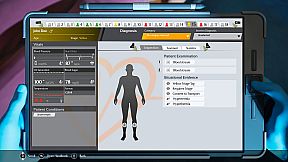
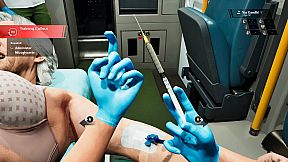
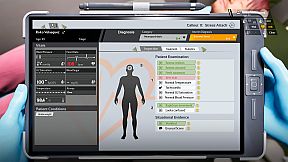
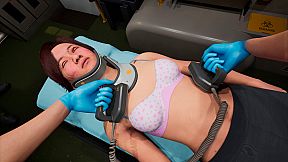
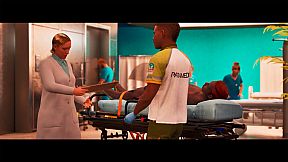
At the scene, players examine patients through conversation to gather details about the incident, perform checks with instruments like a stethoscope or oxygen mask, and form an initial diagnosis. Treatments must account for factors such as allergies or pre-existing conditions that can complicate standard procedures. Severe cases lead to loading patients into the ambulance for transport. The game includes 36 different medical complaints ranging from minor cuts to severe burns, supported by 17 instruments and realistic procedures documented in an in-game manual. As reputation builds through successful shifts, new districts unlock along with additional tools for the ambulance.
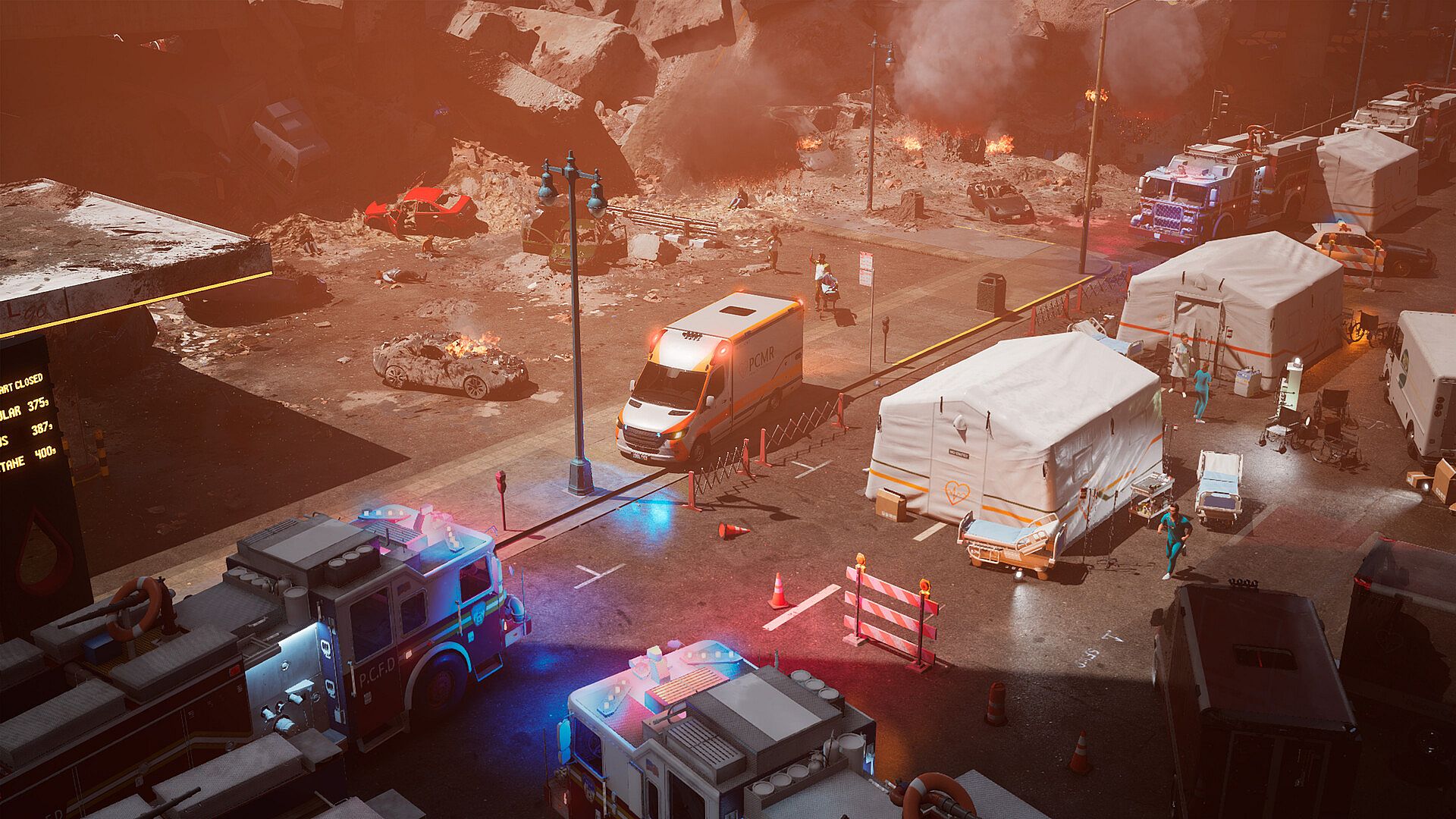
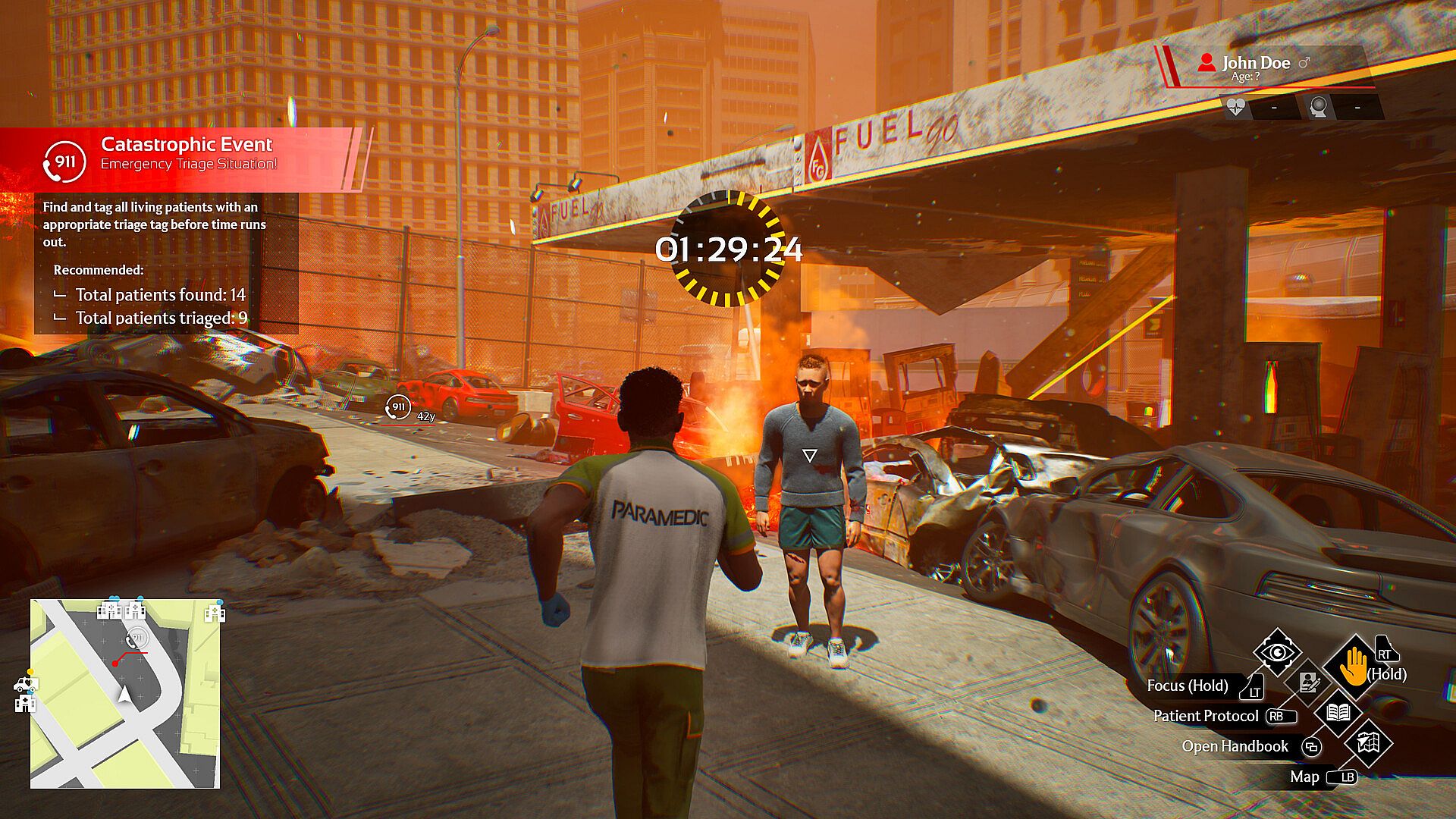
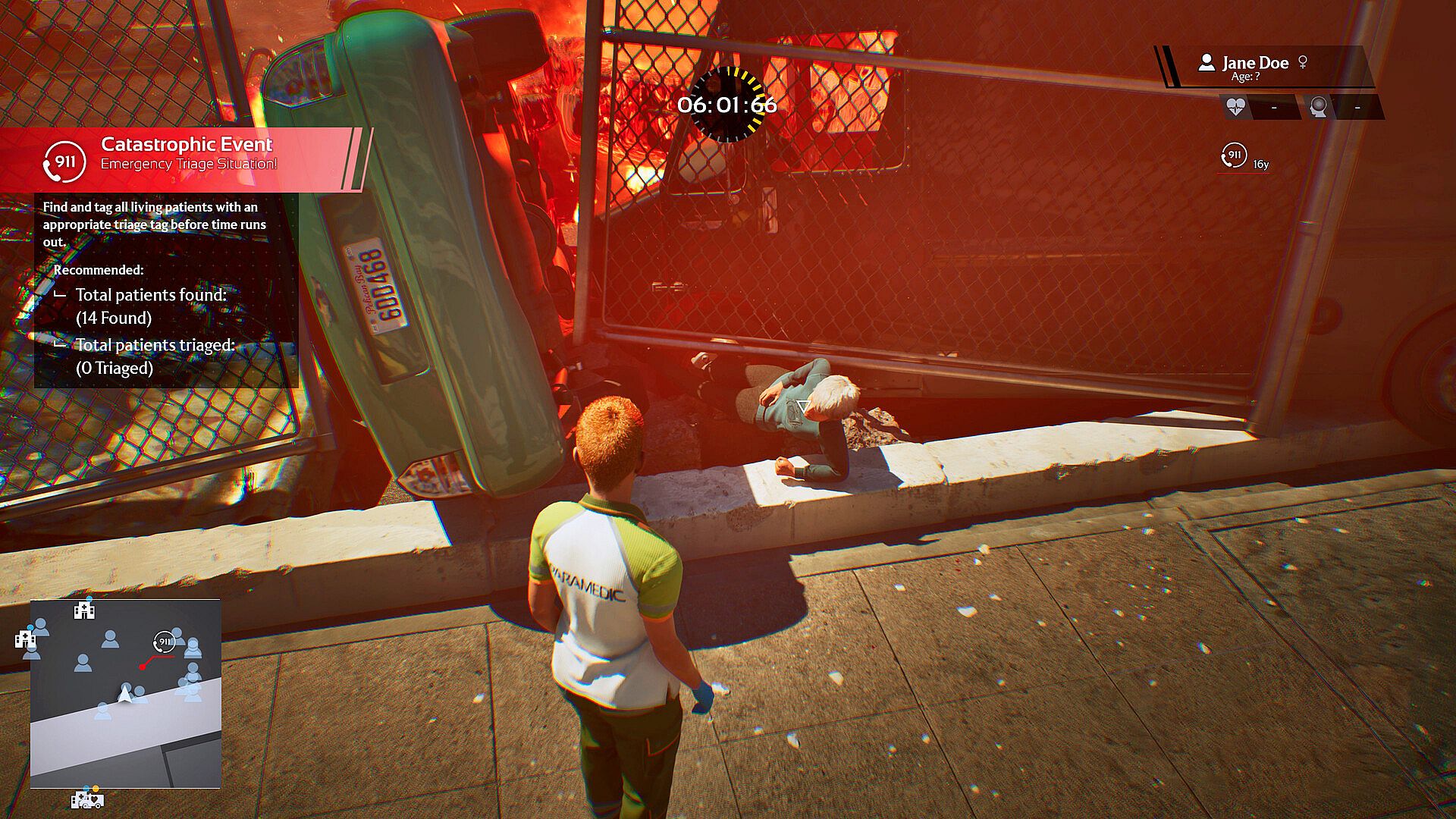
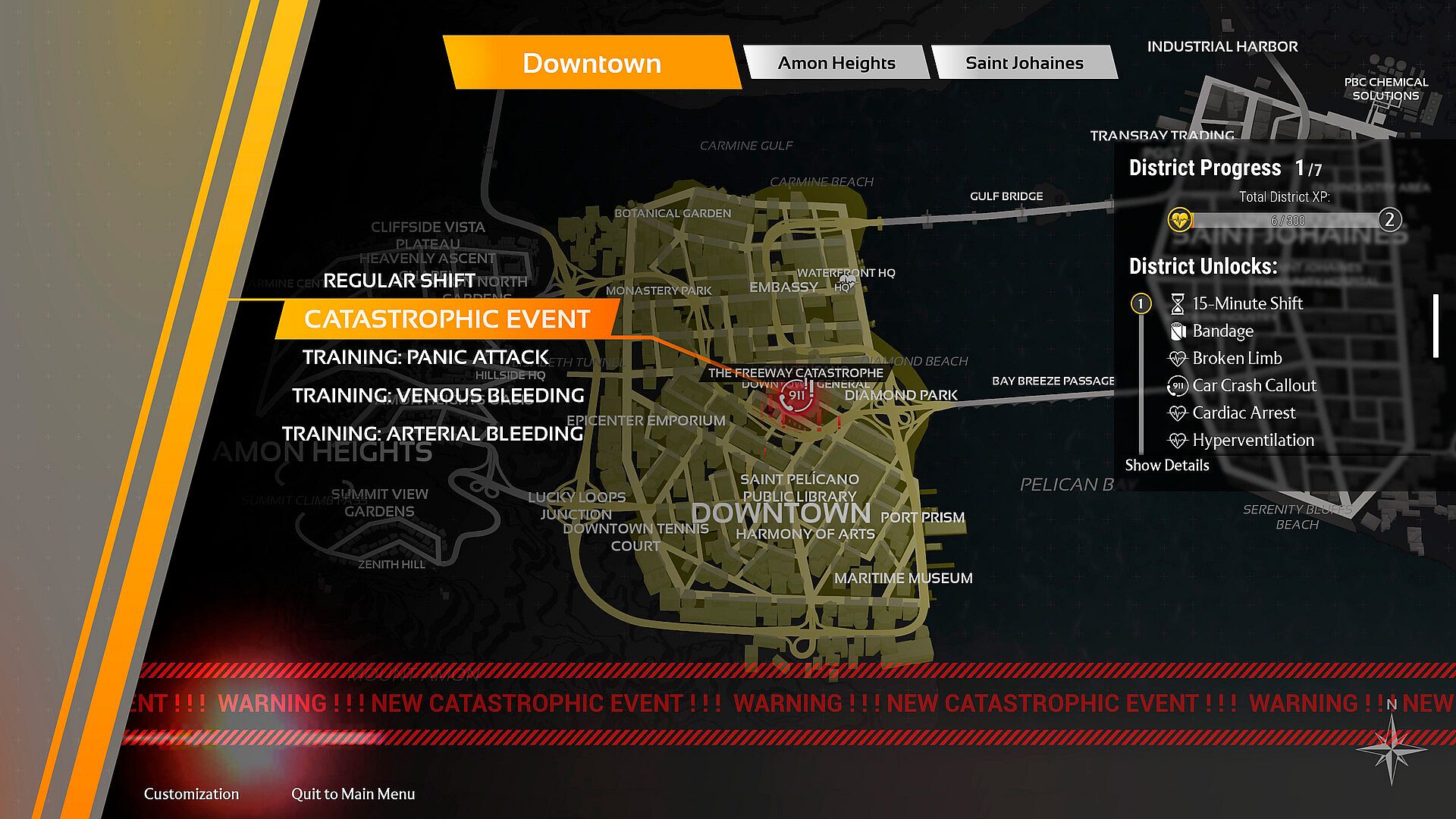
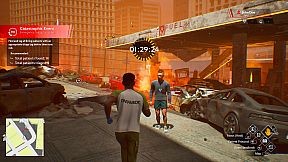
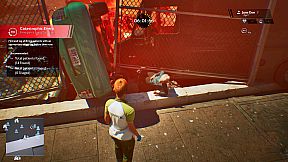
Catastrophic events introduce larger-scale incidents with multiple victims, requiring systematic triage based on injury severity. These situations present moral dilemmas where choices affect survival outcomes, and not every patient can be saved despite best efforts.
Game Modes
Two modes are available from the start. Classic mode provides guidance suitable for initial shifts and learning the systems. Simulation mode removes hand-holding elements and suits players already familiar with the mechanics, demanding independent decision-making throughout each response.
Shifts typically last between 15 and 45 minutes. Performance during these periods determines experience points that unlock further content such as equipment, scenarios, and districts. Catastrophic events appear as special challenges within each district once unlocked.
Progression and Challenges
Progression revolves around completing shifts and handling both routine accidents and major events. Each successful response contributes to unlocking new areas and tools, expanding the range of situations players encounter. The three districts offer distinct incident types tied to local environments and citizen routines, encouraging adaptation in both driving and medical approaches.
Challenges include managing multiple patients during larger incidents, making rapid yet accurate diagnoses under pressure, and dealing with the consequences of triage decisions. The system emphasizes efficiency and precision, with patient reactions and complications adding layers to otherwise straightforward cases.
Is It Worth Playing?
The game appeals to players interested in detailed medical simulation combined with driving and decision-making elements. Reviews highlight strengths in the patient assessment mechanics and city design, while noting issues such as repetition in the shift structure and occasional technical problems. On Steam it holds mixed overall user reviews. Those who enjoy methodical paramedic work and are prepared for a learning curve in the simulation mode may find value in the experience, particularly after unlocking more districts and tools. Classic mode offers a more accessible entry point for newcomers. The title is available on PC and focuses entirely on singleplayer progression without additional multiplayer features.