




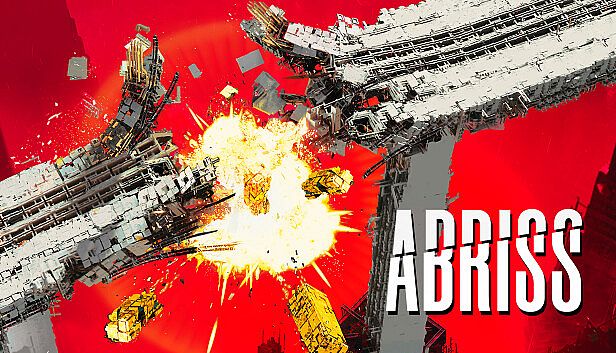























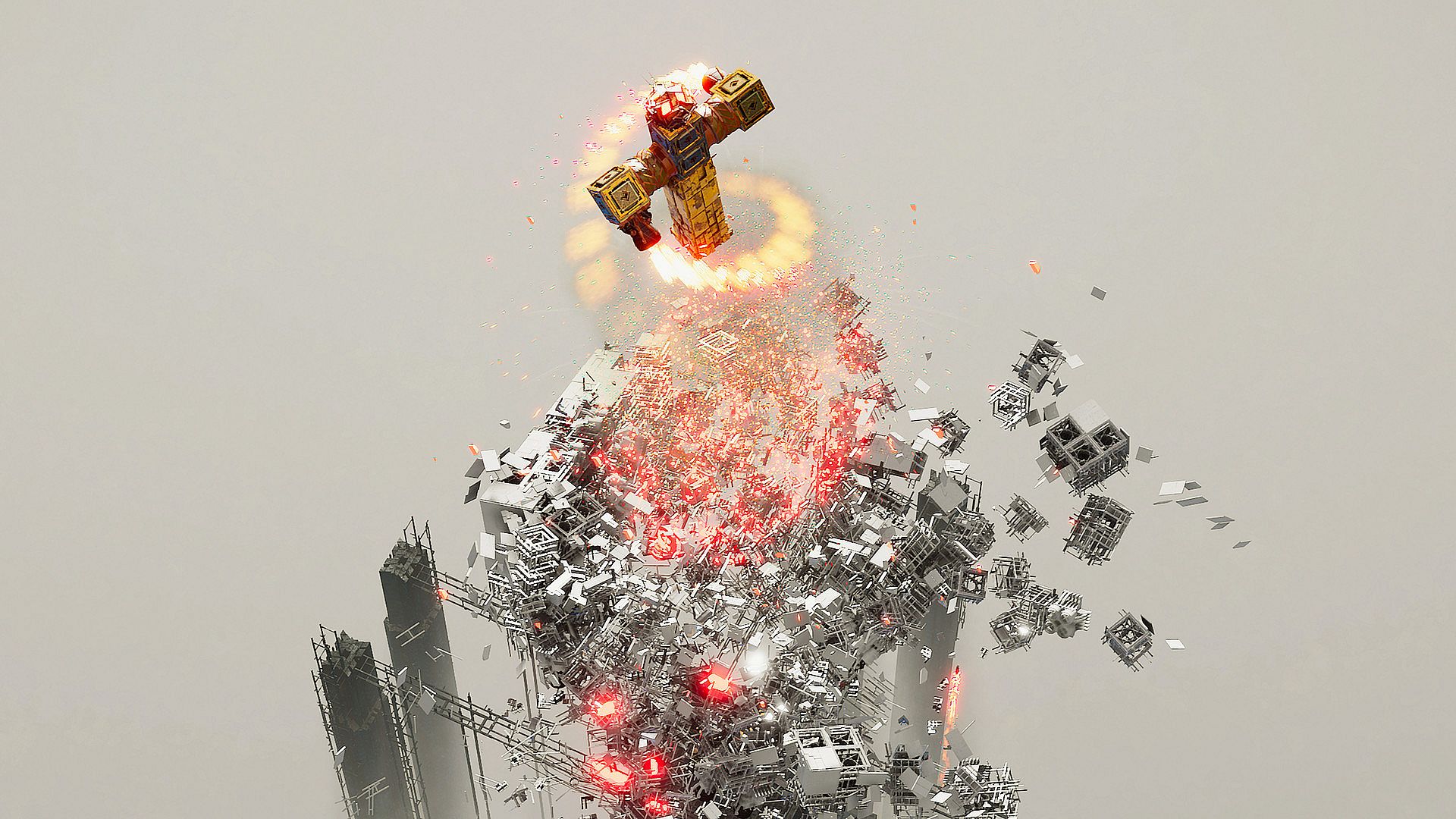
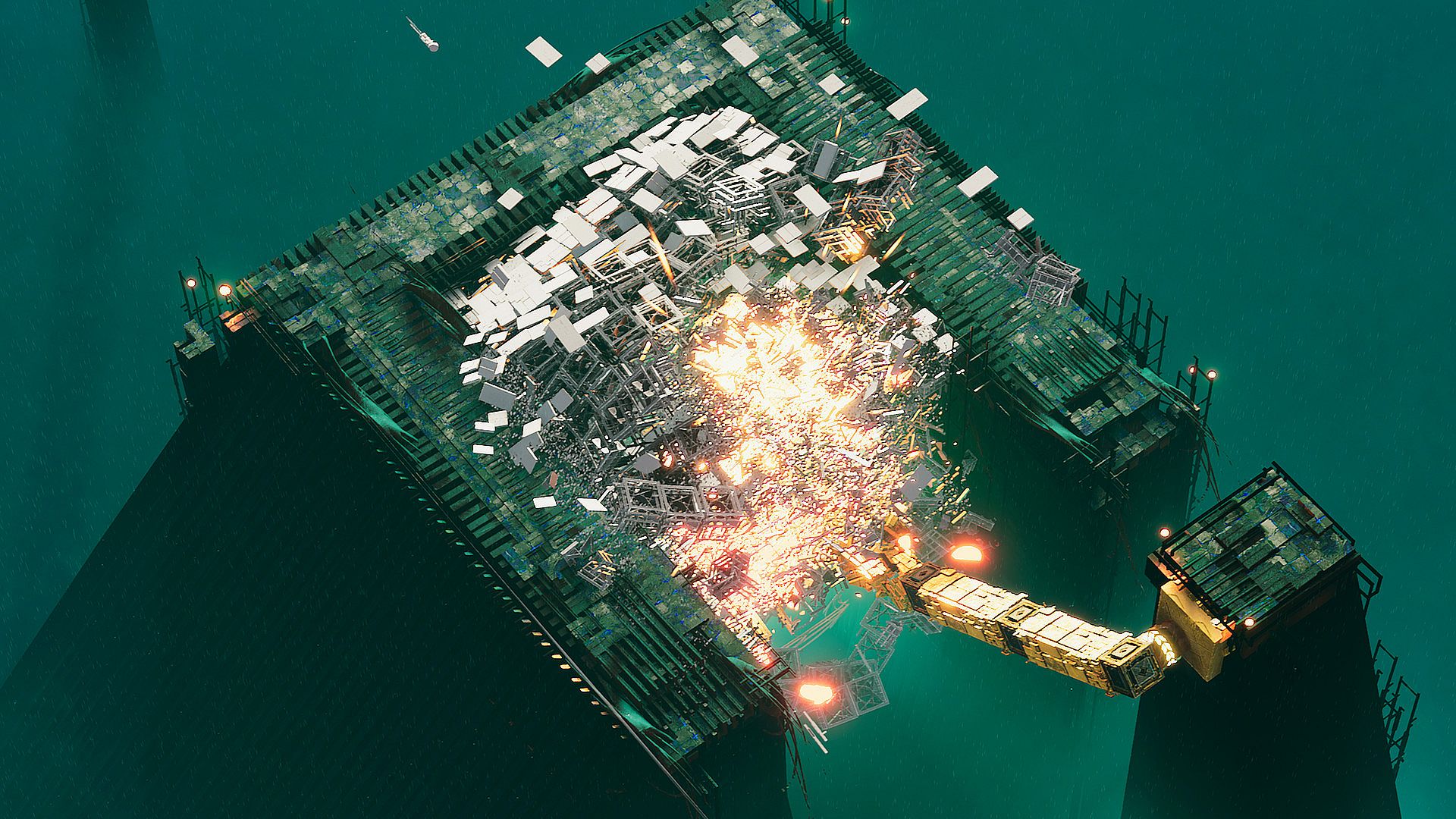
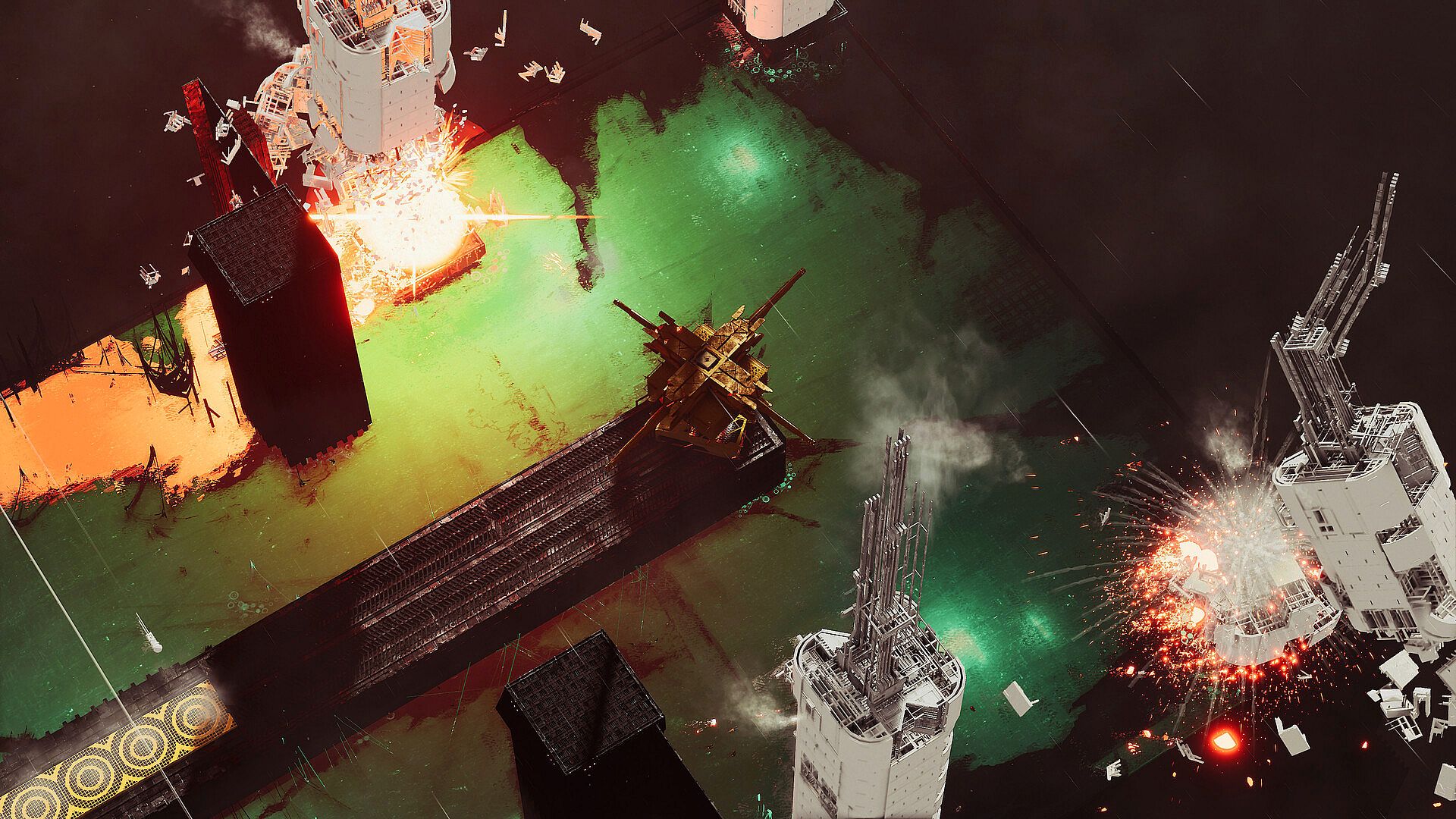
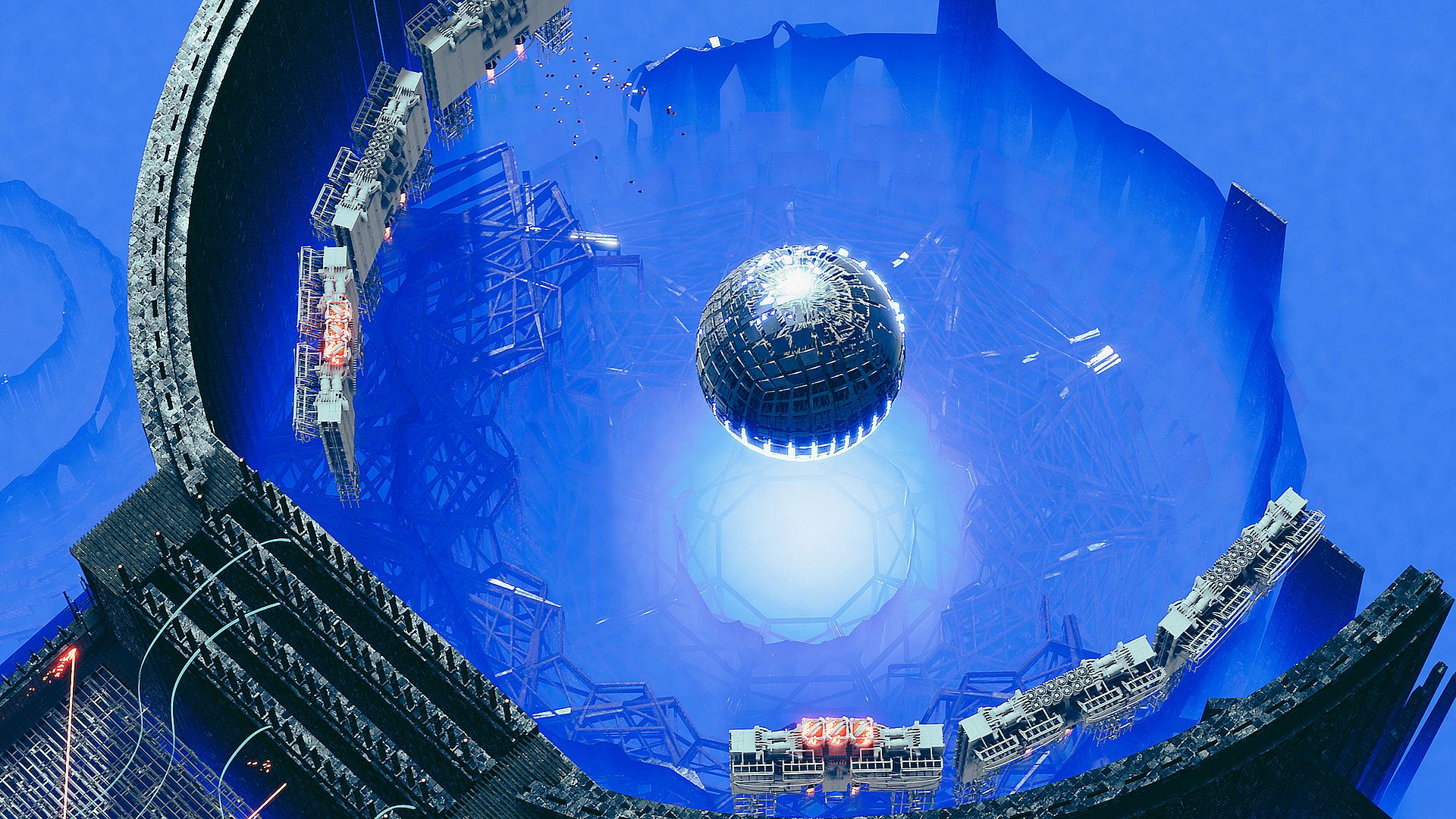
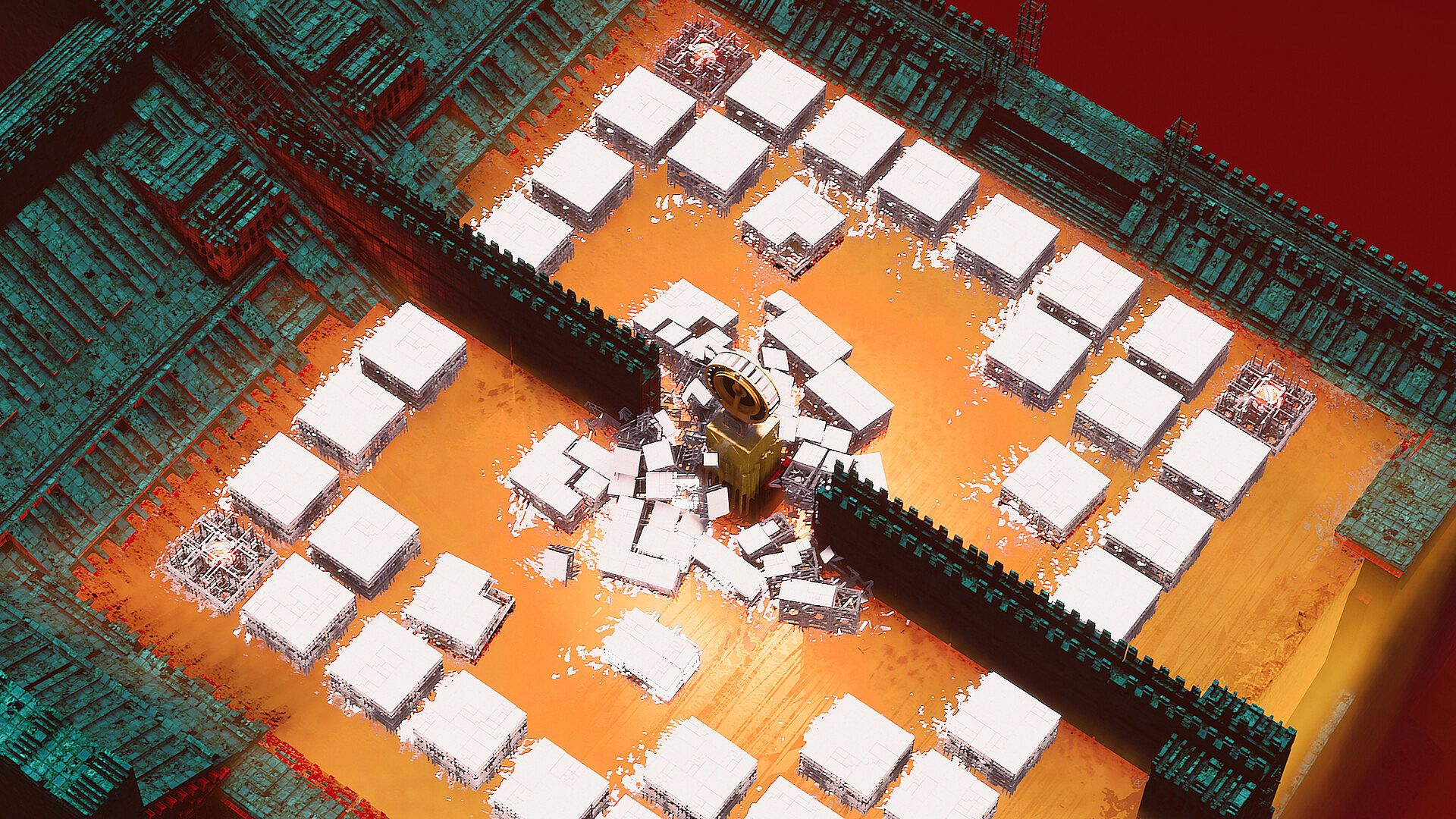

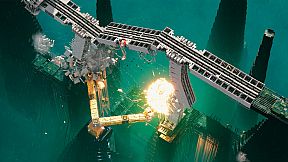
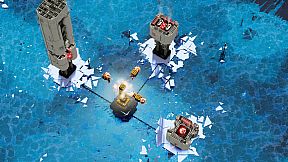
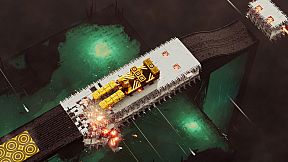
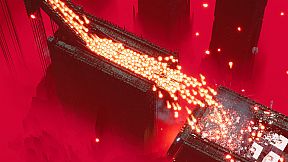
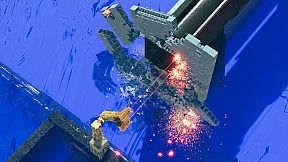
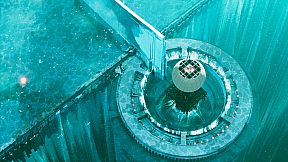
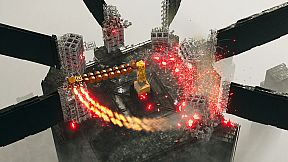
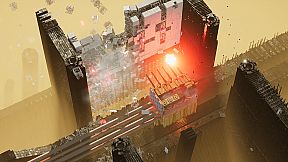
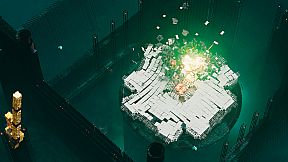
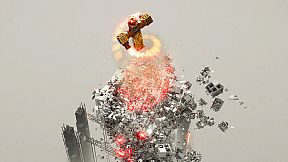
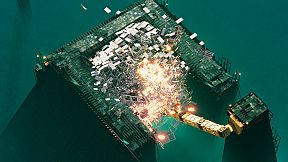
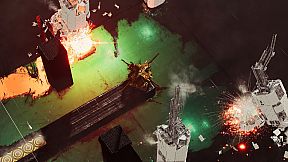
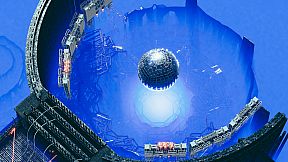
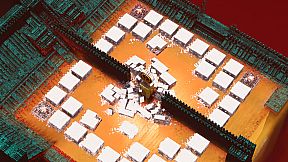

ABRISS - build to destroy is a physics-based strategy and simulation game where players construct structures from modular parts and send them crashing into targets across digital-brutalist environments. The core loop centers on creative assembly and calculated destruction, with emphasis on efficient part usage and environmental interactions rather than direct control.
Gameplay
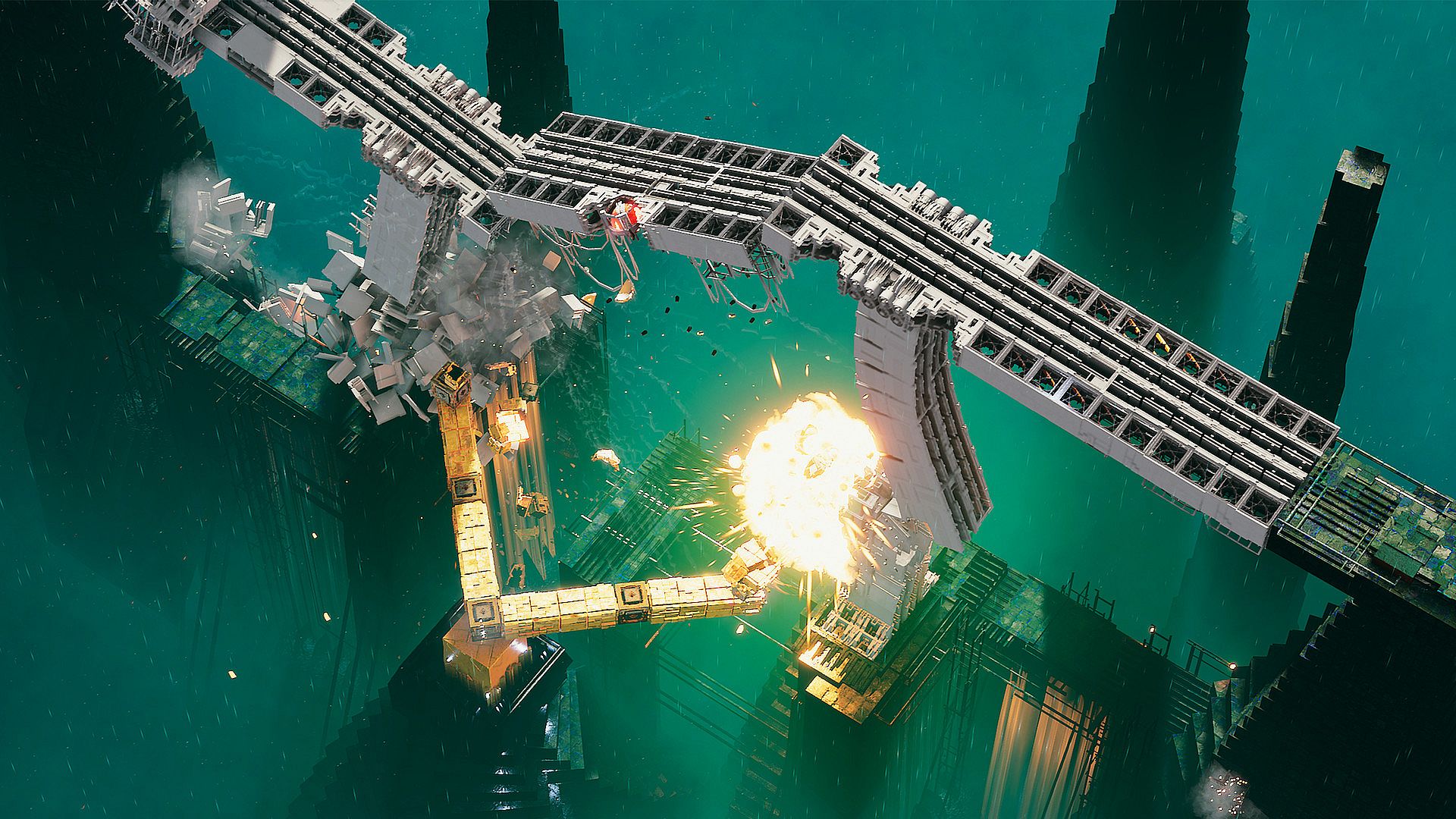
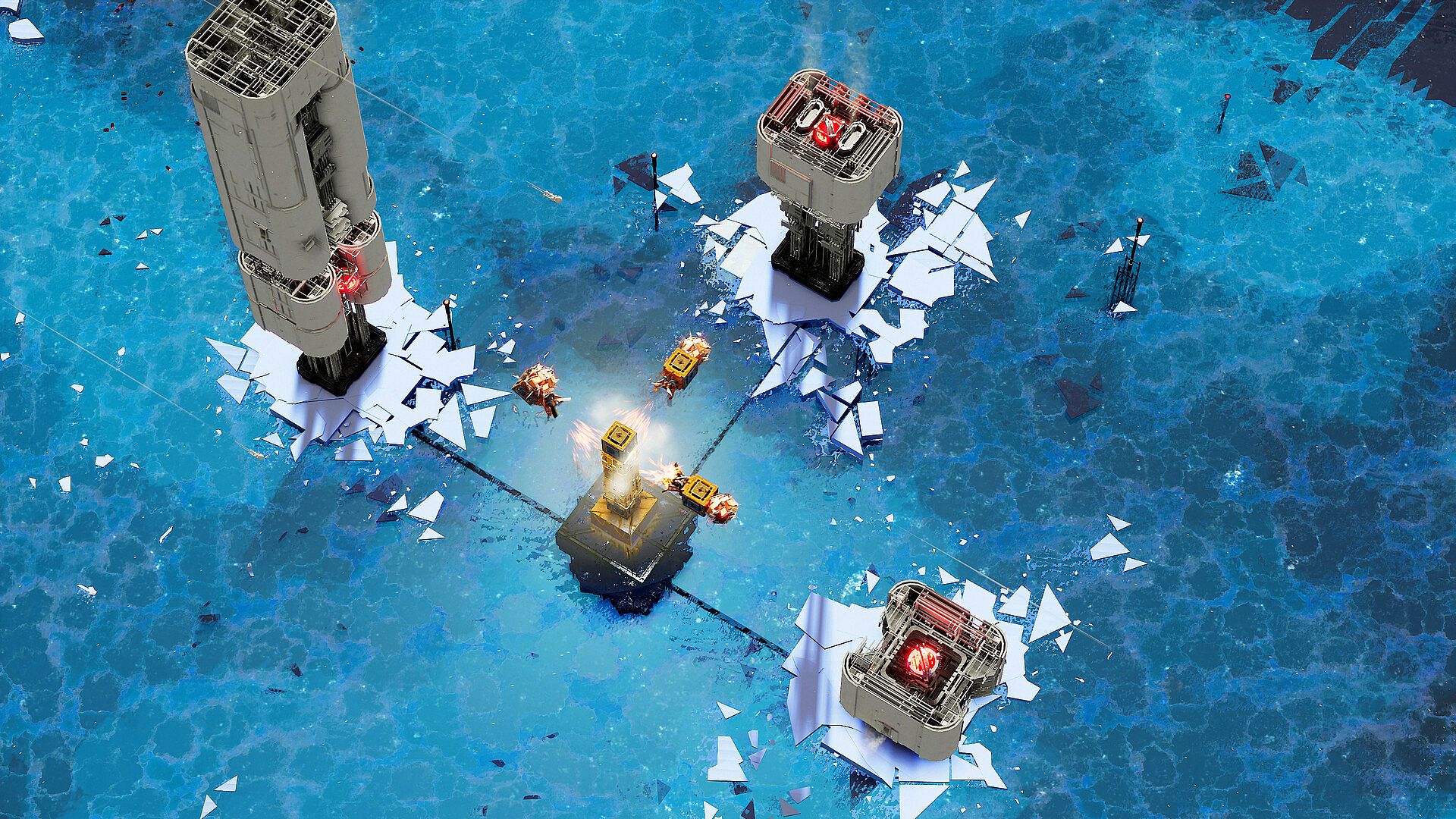
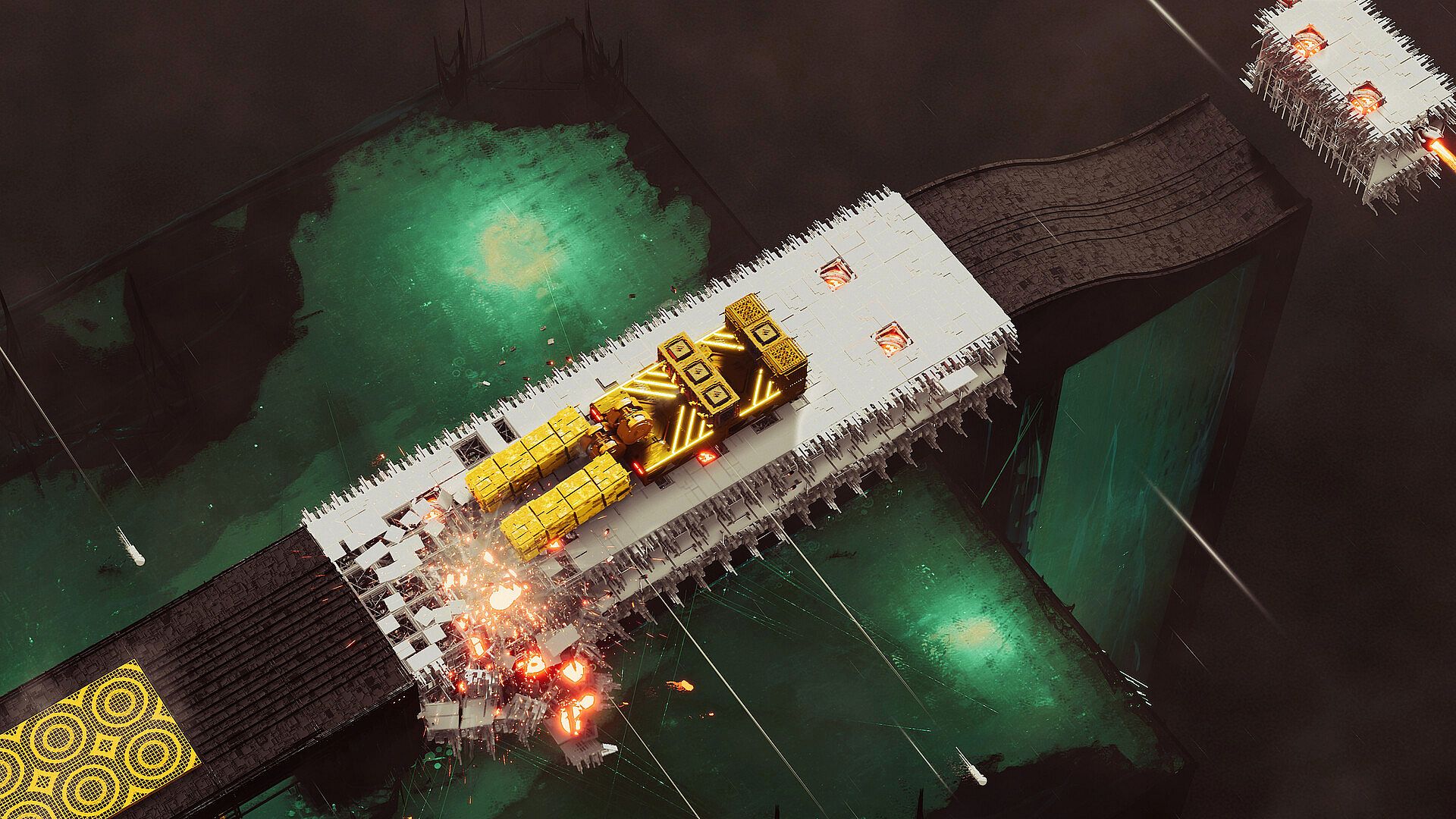
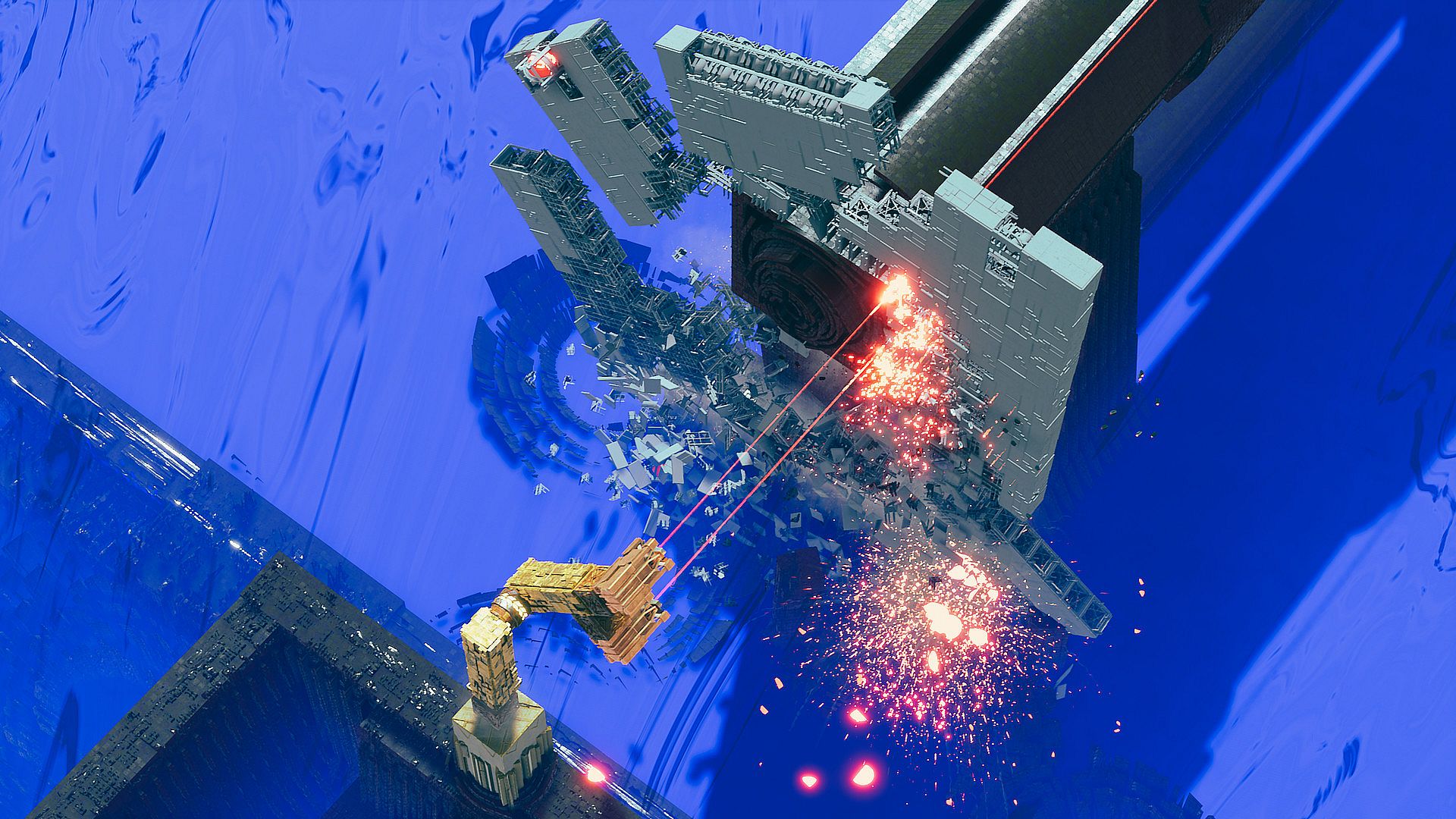
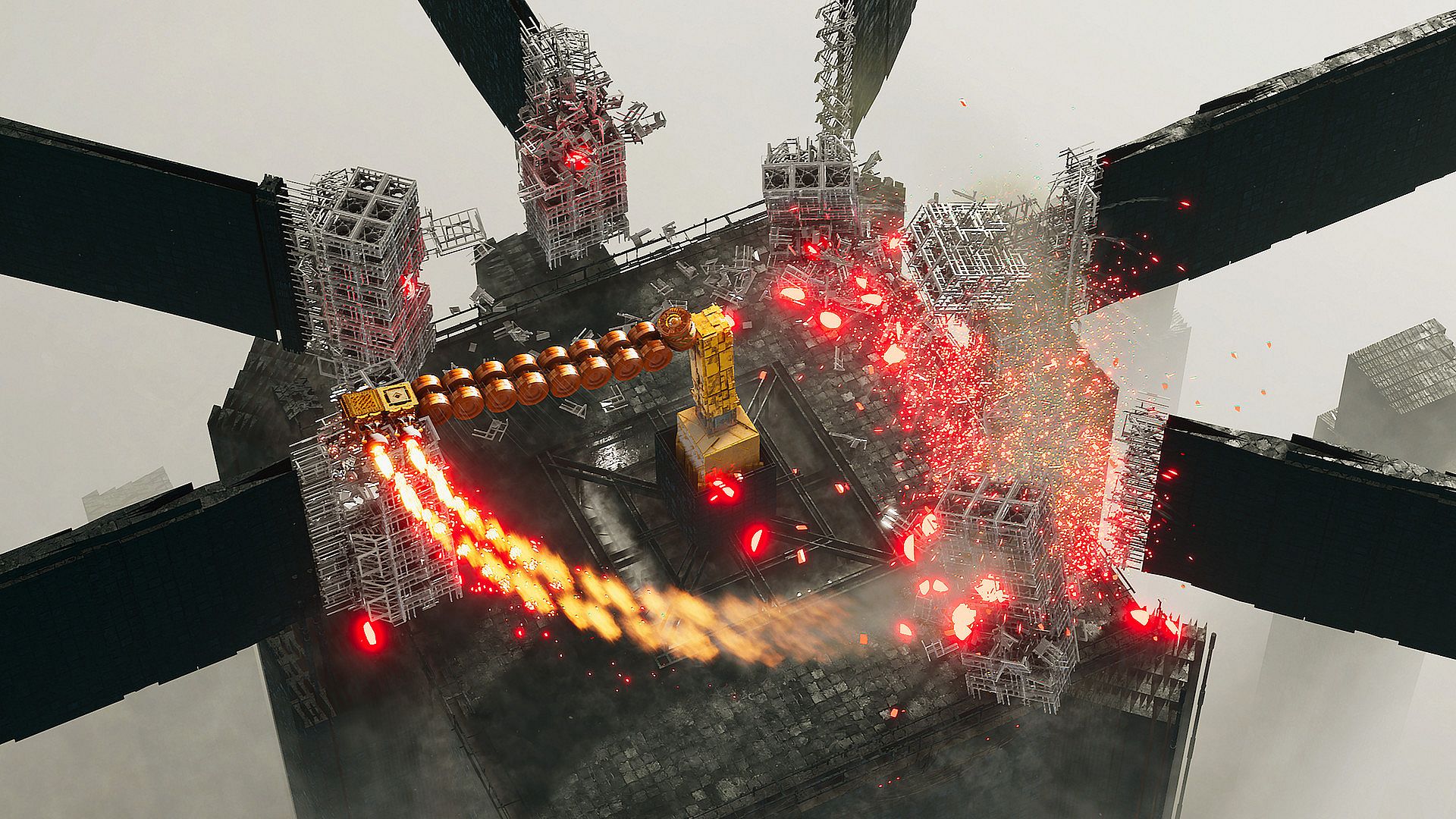
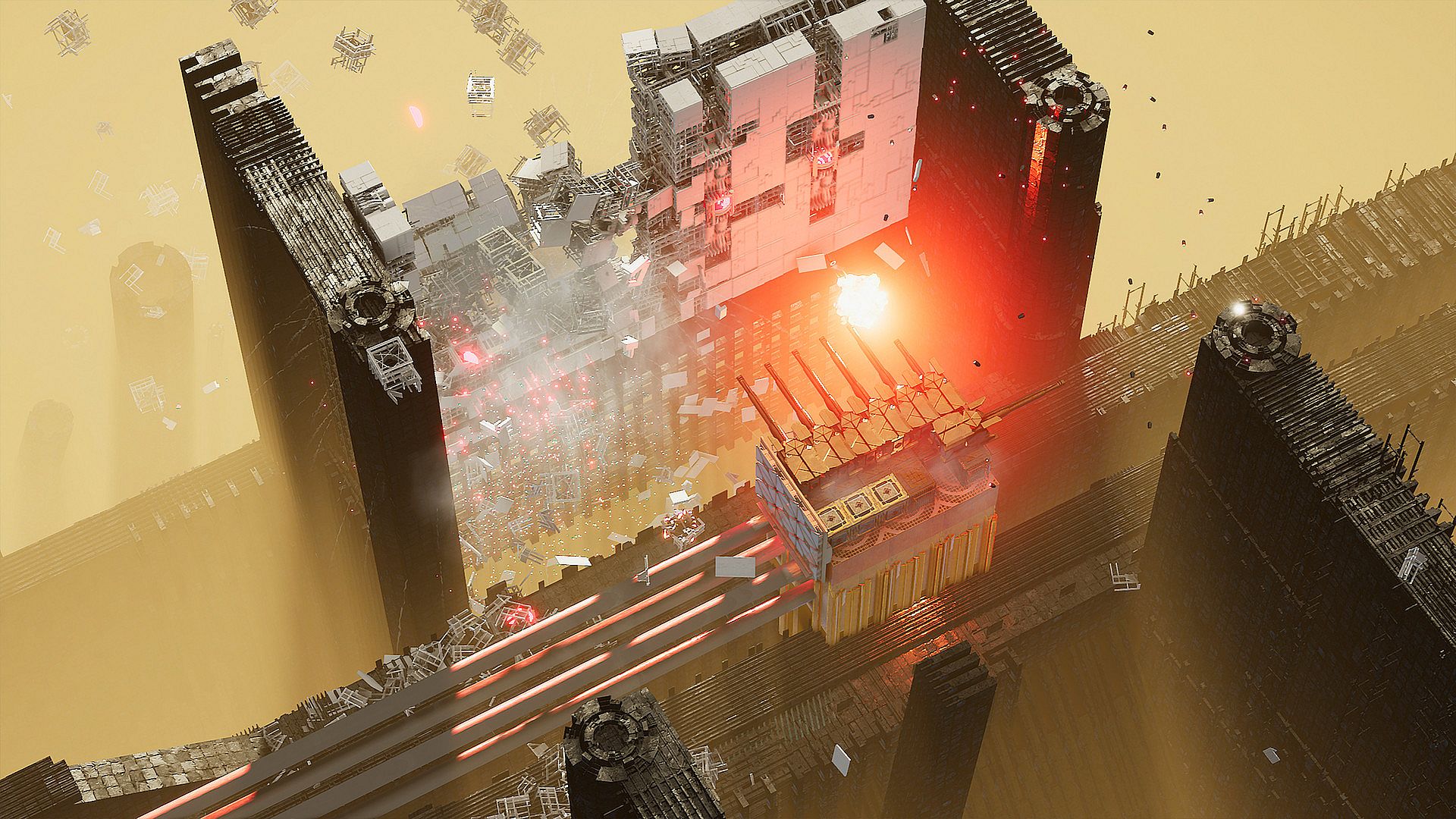
Players select components such as thrusters, connectors, bombs, rotators, lasers, pillars, and ultra heavy cubes to form custom builds. Combinations produce varied results, from guided rockets to rotating laser arrays or massive swinging hammers. The physics engine handles statics simulation, debris particles, and large-scale structural failure without major performance drops. Targets often feature armored sections that require specific approaches, like breaching walls before striking inner vulnerabilities, while environmental elements such as pistons can launch heavy objects into position.
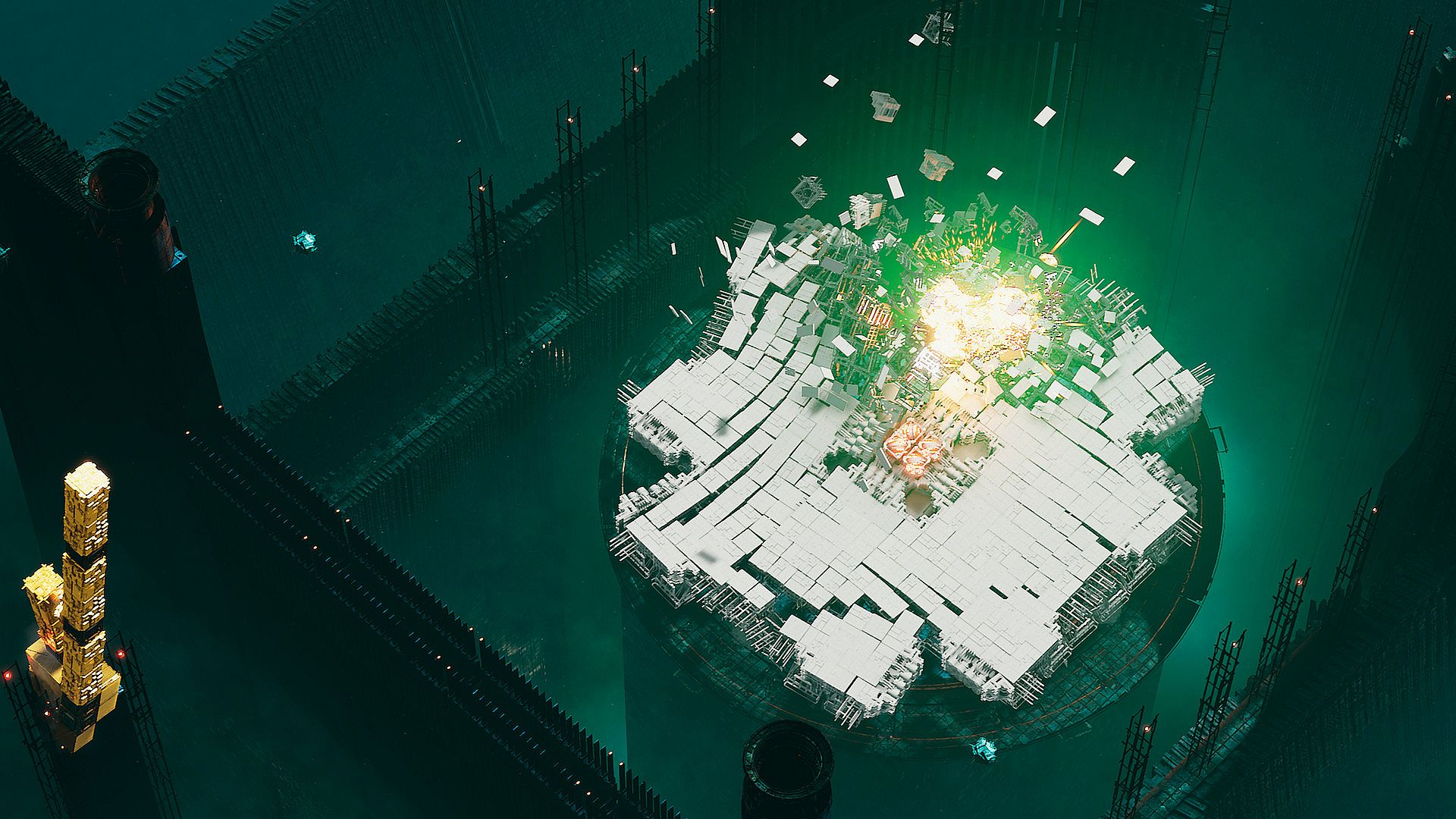
Progression involves unlocking additional parts through campaign advancement, encouraging experimentation with limited resources per stage. Destruction emphasizes spectacle through flying chunks and particle effects, rewarding both minimal-part solutions and more chaotic methods that still achieve the objective.
Game Modes
The campaign consists of seven distinct worlds, each containing multiple hand-crafted stages and bonus levels set in destructible cityscapes. Every world introduces a unique environmental mechanic, and stages begin with restricted part selections that force strategic planning to eliminate all main target blocks. Players can revisit completed stages to improve destruction percentages or reduce the number of moves required.
Sandbox mode provides unrestricted access to parts for testing builds and patterns, including combinations not yet unlocked in other modes. Endless mode challenges players to achieve the highest possible score through repeated destruction attempts. Photo mode offers free camera movement, time controls for capturing action, filter options, and 4K JPEG exports. Additional tools include controller support with full remapping, a turnaround GIF camera for looping animations, and Steam Workshop integration for sharing and loading custom creations directly in sandbox.
Destruction and Physics Systems
The game features a robust simulation that tracks structural integrity, allowing entire sections of targets to detach and interact realistically with the environment. Thousands of debris particles contribute to the visual feedback during collapses, while the system maintains stability even during large-scale events. Environmental mechanics integrate directly into strategies, such as using pistons to propel objects or exploiting bombs placed in the level itself.
Part variety supports multiple approaches to each challenge, from precision strikes with lasers to blunt force with heavy assemblies. The emphasis remains on observing cause and effect rather than repetitive actions, with outcomes varying based on build design and timing.
Is It Worth Playing?
ABRISS suits players who enjoy physics puzzle games and creative construction mechanics in a single-player setting. The verified campaign structure, combined with sandbox experimentation and the added endless mode, provides substantial replay value through optimization challenges and high-score pursuits. Controller support and workshop features enhance accessibility and community sharing.
Player reception stands at very positive, with 82 percent approval across more than 440 reviews, highlighting the satisfying destruction and atmospheric presentation. Those drawn to indie strategy simulations focused on building and breaking will find consistent depth without reliance on multiplayer elements or ongoing seasonal content. The full release includes all listed modes and tools, making it a complete package for the target audience.














